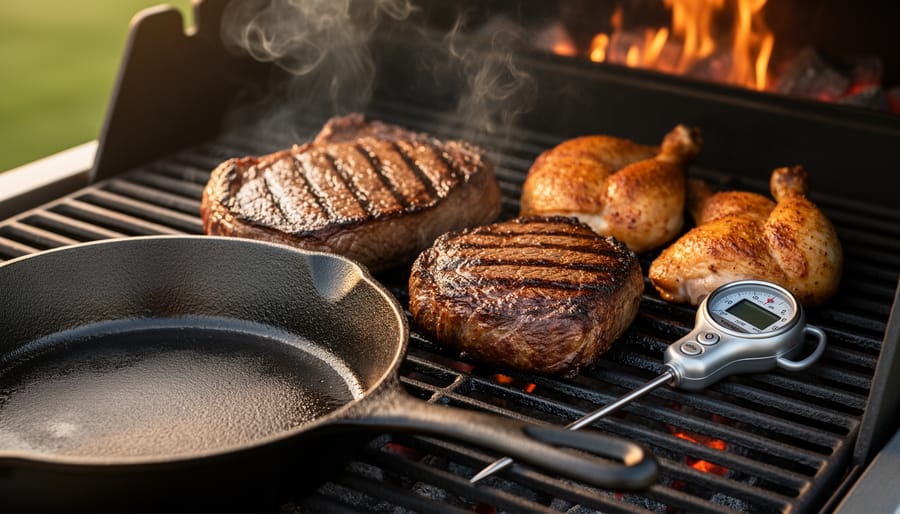
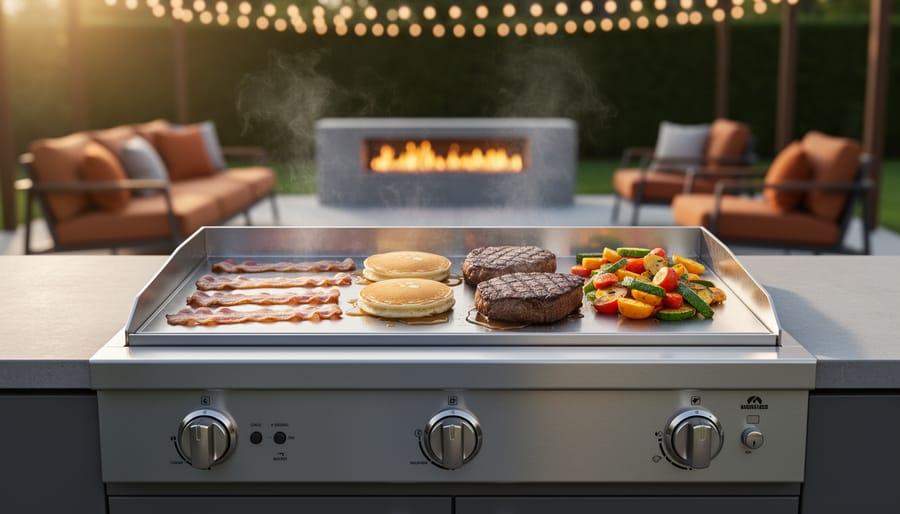


Picture this: sizzling bacon on a cool Sunday morning, perfectly seared steaks for your neighbor’s birthday gathering, or restaurant-quality stir-fry under the stars. An outdoor flat top gas griddle transforms your backyard into a versatile cooking destination that extends your living space beyond four walls.
Unlike traditional grills with grates that limit what you can cook, a flat top griddle offers a spacious, even-heating surface that handles everything from delicate fish and vegetables to smash burgers and breakfast spreads. This single piece of equipment replaces multiple cooking tools while creating a natural gathering spot that brings the warmth and comfort of your indoor kitchen outside.
Whether you’re replacing an aging grill or building your first outdoor cooking station, choosing the right griddle requires understanding the features that matter most. Heat output measured in BTUs, cooking surface size, portability versus built-in installation, and material quality all significantly impact your cooking experience and long-term satisfaction.
The market offers options ranging from compact two-burner models perfect for small patios to professional-grade stations with four or more burners that rival commercial kitchens. Some griddles integrate seamlessly into outdoor entertainment zones alongside fire features, creating cohesive spaces designed for year-round enjoyment.
This guide cuts through marketing hype to compare real-world performance, durability, and value across popular models, helping you select a griddle that matches your cooking style, space constraints, and budget while prioritizing safety and ease of maintenance.
What Makes Outdoor Flat-Top Gas Griddles Different
The Solid Surface Advantage
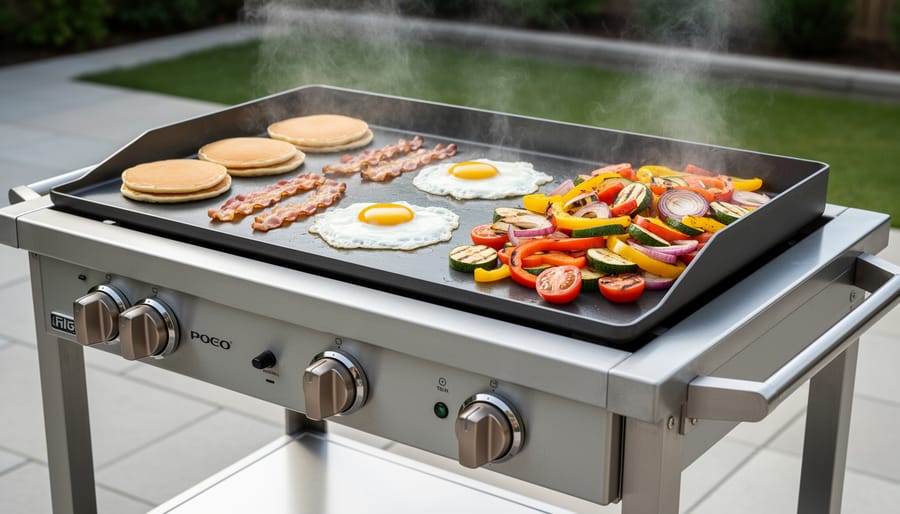
One of the most practical advantages of an outdoor flat top gas griddle is its continuous cooking surface that transforms how you prepare meals for family and friends. Unlike traditional grills with grates, this solid surface means no more losing asparagus spears, sliced onions, or delicate shrimp between the bars. Everything stays securely on the cooking platform where it belongs.
This seamless design opens up incredible versatility in your outdoor cooking adventures. You can easily flip pancakes for weekend brunch, sear steaks to perfection, sauté vegetables, or even prepare fried rice with authentic restaurant-style results. The flat surface gives you complete control over your ingredients, allowing you to move food around to hotter or cooler zones as needed.
Perhaps the biggest game-changer is the ability to cook an entire meal simultaneously. Picture this: bacon sizzling on one section, eggs cooking nearby, hash browns crisping up alongside, and toast warming on the edge, all at the same time. This efficiency means everyone eats together while the food is hot, creating those memorable outdoor dining experiences that bring warmth and connection to your home’s outdoor living space. The griddle becomes an extension of your kitchen, expanding your home’s comfort zone into the fresh air.
Gas Power and Temperature Control
Gas-powered outdoor griddles bring the same reliable performance to your backyard that you’d expect from professional kitchens, making them a natural choice for homeowners who value both functionality and outdoor ambiance. The beauty of gas fuel lies in its instant responsiveness. Turn the knob, and you’re cooking within minutes, no waiting for charcoal to heat or worrying about running out of fuel mid-meal.
What truly sets gas griddles apart is their precise temperature control across multiple zones. You can sear steaks at high heat on one side while keeping pancakes warm on the other, all on the same cooking surface. This versatility transforms your outdoor space into a true extension of your indoor kitchen, creating that welcoming atmosphere where family and friends naturally gather.
Gas griddles also perform consistently regardless of weather conditions. Whether it’s a breezy spring evening or a crisp fall afternoon, your griddle maintains steady heat output. The adjustable burners let you dial in exact temperatures, giving you the confidence to explore everything from delicate fish to hearty breakfast spreads. This reliability means your outdoor cooking space becomes a year-round destination, much like a well-tended fireplace draws people together during cooler months.
Key Features to Compare Across Models
Cooking Surface Size and Material
Choosing the right cooking surface size transforms your outdoor entertaining experience from stressful to spectacular. Think of your griddle as an extension of your home’s welcoming atmosphere, where the warmth of good food brings people together.
Griddle sizes range from compact 17-inch portable models perfect for couples or small patios, to impressive 36-inch and larger built-in units that can handle neighborhood gatherings. A good rule of thumb: plan for about 100 square inches of cooking space per person you typically serve. If you regularly host weekend barbecues for eight to ten guests, a 28 to 36-inch griddle gives you room to cook pancakes, burgers, and vegetables simultaneously without playing Tetris with your food.
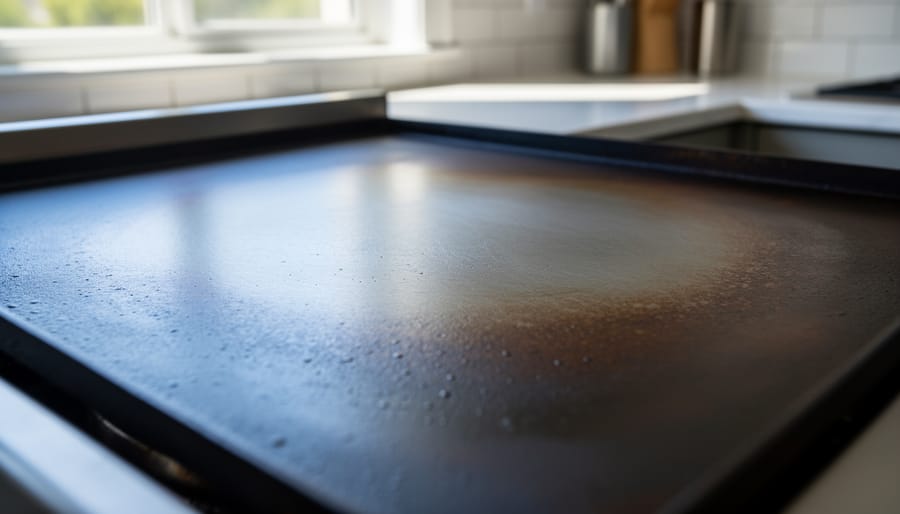
The cooking surface material significantly impacts performance and longevity. Cold-rolled steel is the traditional choice, prized for its superior heat retention and natural non-stick seasoning that develops over time, much like a beloved cast-iron skillet. It requires regular seasoning and protection from moisture, but many outdoor cooking enthusiasts appreciate this ritual as part of the experience.
Stainless steel surfaces offer a lower-maintenance alternative with excellent corrosion resistance, making them ideal for coastal environments or humid climates. While they don’t develop the same seasoned patina, they’re virtually rust-proof and easier to clean between uses.
Consider your entertaining style and commitment to maintenance when selecting your griddle. A well-chosen cooking surface becomes the heart of outdoor gatherings, creating memories alongside perfectly seared meals that draw family and friends together in your outdoor living space.
BTU Output and Heat Zones
Understanding BTU output is essential when choosing an outdoor flat top gas griddle, much like selecting the right heating capacity for your outdoor living space. BTU, or British Thermal Units, measures the heat energy your griddle produces per hour. Higher BTU ratings mean more cooking power, but the real magic lies in how that heat is distributed and controlled across your cooking surface.
Most quality outdoor griddles range from 30,000 to 60,000 BTUs total. A griddle with 40,000 BTUs spread across a 36-inch cooking surface provides sufficient heat for most family gatherings and weekend cookouts. However, total BTU output only tells part of the story. What truly enhances your outdoor cooking experience is having multiple independently controlled heat zones.
Look for griddles with at least two separate burner controls, though three or four zones offer even greater versatility. This feature allows you to sear steaks at high heat on one section while keeping pancakes warm on another, or sauté vegetables at medium temperature alongside high-heat proteins. It’s the difference between simply cooking outdoors and creating a complete outdoor culinary experience that extends your home’s comfort zone into the backyard.
Independent heat zones also improve energy efficiency, letting you use only the burners you need rather than heating the entire surface, which aligns with eco-friendly cooking practices while reducing propane consumption.
Portability vs. Permanence
Your choice between portability and permanence shapes how you’ll enjoy your griddle for years to come. Freestanding cart models offer the sweet spot for most homeowners, featuring wheels that let you reposition your griddle for different gatherings while providing sturdy cooking surfaces and storage underneath. You can roll them closer to your dining area for intimate dinners or tuck them away during winter months.
Portable tabletop units work beautifully if you’re testing the griddle lifestyle before committing, or if you enjoy tailgating and camping adventures beyond your backyard. These compact options typically weigh 30-50 pounds and require a separate propane tank, making them perfect for renters or those with limited patio space.
Built-in griddles create a permanent outdoor kitchen centerpiece that genuinely enhances your home’s value, much like a quality outdoor fireplace becomes a gathering focal point. This investment makes sense when you’re committed to outdoor cooking as a lifestyle element and want that seamless, professional look. However, you’re trading flexibility for permanence. Consider your long-term plans and how outdoor cooking fits into your vision for creating warmth and connection in your outdoor living spaces before making this substantial commitment.
Grease Management Systems
Think of grease management as your griddle’s safety net and your secret weapon against messy cleanup. The best outdoor flat top gas griddles feature well-designed grease collection systems that make a real difference in your cooking experience.
Most quality griddles include a rear-mounted grease channel that slopes gently downward, guiding fats and oils away from your cooking surface into a removable collection cup or drawer. Look for stainless steel grease traps rather than plastic ones, as they’re more durable and easier to clean thoroughly. Some premium models offer angled cooking surfaces that naturally direct grease flow, reducing the chance of flare-ups and keeping your food from sitting in excess oil.
The ease of removing and cleaning these components matters more than you might think. Quick-release grease cups positioned at the front of your griddle are far more convenient than rear-mounted options that require reaching over a hot surface. Dishwasher-safe components save time and ensure proper sanitation. A well-functioning grease management system not only protects your outdoor cooking space from messy spills but also reduces fire hazards, keeping your backyard gatherings safe and enjoyable for everyone.
Popular Outdoor Flat-Top Gas Griddle Types
Cart-Style Freestanding Griddles
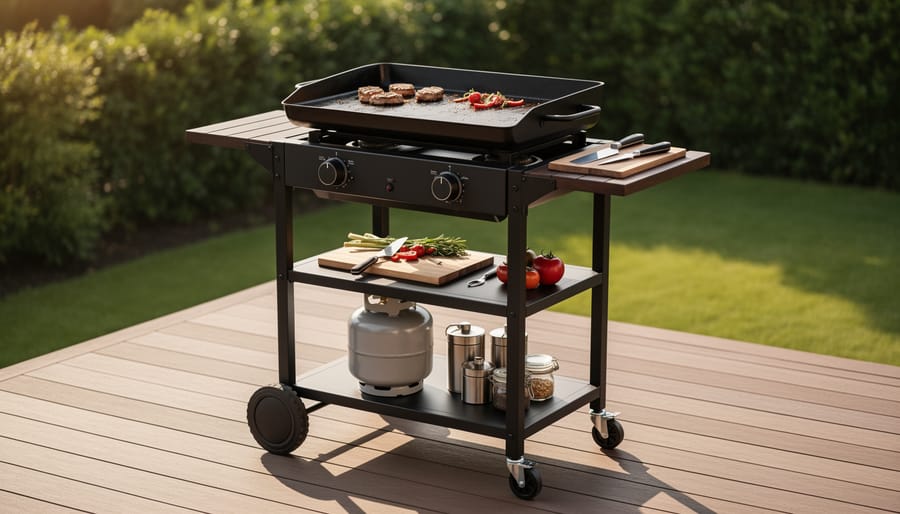
Cart-style freestanding griddles represent the sweet spot for most backyard cooking enthusiasts, blending portability with serious cooking power. These versatile units transform your patio or deck into an inviting outdoor kitchen space, extending your home’s warmth beyond four walls.
What makes cart-style griddles so popular? They’re designed with convenience in mind. Most feature sturdy wheels that let you reposition your cooking station to catch the perfect breeze or follow the shade throughout the day. The integrated cart design typically includes helpful side shelves for prepping ingredients and keeping tools within arm’s reach, while enclosed cabinets provide secure storage for your propane tank and cooking accessories.
These griddles generally offer cooking surfaces ranging from 28 to 36 inches, providing ample space for feeding family gatherings without overwhelming smaller outdoor spaces. The freestanding design means no permanent installation required, making them perfect for renters or anyone who values flexibility in their outdoor setup.
When choosing a cart-style model, look for units with powder-coated steel frames that resist weather damage and maintain their appearance season after season. Quality models include grease management systems with easy-access drip trays, keeping cleanup simple and your cooking area tidy. Many feature fold-down side shelves, which helps minimize their footprint during storage while maximizing workspace when you’re entertaining guests and creating memorable outdoor dining experiences.
Portable Tabletop Models
Portable tabletop models bring the joy of outdoor griddle cooking to wherever your adventures take you. These compact powerhouses typically weigh between 20-40 pounds and feature cooking surfaces ranging from 200-300 square inches, making them ideal companions for camping trips, tailgating parties, or balcony cooking in smaller outdoor spaces. Unlike their larger built-in cousins, these griddles often run on small propane canisters, offering incredible flexibility without the need for permanent gas connections.
The main benefit of portable models lies in their versatility and storage convenience. You can easily tuck them away during off-seasons or transport them in your vehicle. They heat up quickly and deliver surprisingly even cooking performance, rivaling some portable gas grills in efficiency. Most models feature foldable legs and removable grease traps for hassle-free cleanup and transport.
However, these compact griddles do have limitations. The smaller cooking surface means you’ll need to work in batches when feeding larger groups, and they typically lack the powerful BTU output of full-sized models. Wind can also affect heat distribution more significantly. That said, for casual outdoor cooking and creating warm gathering moments in intimate settings, portable tabletop griddles offer an accessible entry point into the griddle lifestyle.
Built-In and Drop-In Options
For homeowners ready to make outdoor cooking a permanent part of their lifestyle, built-in and drop-in griddles transform your patio into a true outdoor kitchen destination. These installations represent a meaningful home improvement investment, much like adding a fireplace indoors—they create gathering spaces where memories are made over perfectly seared meals.
Built-in models integrate seamlessly with existing countertops and cabinetry, creating a cohesive outdoor living space that feels like an extension of your home’s warmth and comfort. Drop-in griddles offer similar permanence with slightly more flexibility in design. Both options typically connect to natural gas lines, eliminating propane tank swaps and ensuring you’re never without fuel during weekend gatherings.
Natural gas connections provide consistent heat and lower operating costs over time, making them eco-friendly choices compared to constantly replacing disposable tanks. Professional installation ensures proper gas line sizing and ventilation, critical safety considerations for any permanent outdoor cooking equipment.
Consider placement carefully—proximity to your indoor kitchen makes meal prep easier, while positioning near existing seating areas enhances the social atmosphere. These permanent installations increase property value and create dedicated spaces for year-round outdoor entertaining, turning your backyard into a true extension of your home’s living space.
Performance Factors That Actually Matter
Heat-Up Time and Temperature Range
When you’re planning to cook outdoors, understanding how quickly your griddle heats up can make the difference between a relaxed gathering and a hungry crowd. Most quality outdoor flat top gas griddles reach their optimal cooking temperature within 10 to 15 minutes, though this varies by model and BTU output. Higher-end units with powerful burners can hit 500°F or more in less than 10 minutes, perfect for achieving that restaurant-quality sear on steaks and burgers.
Temperature range is equally important for versatile cooking. The best griddles offer a broad spectrum, from gentle 200°F warming zones ideal for keeping pancakes toasty to scorching 600°F zones for professional-grade searing. Look for models with multiple independently controlled heating zones, allowing you to simmer delicate vegetables on one side while charring meat on another. Built-in temperature monitoring features help you maintain consistent heat across the cooking surface.
Budget models typically max out around 450°F and may have uneven heating, while premium options deliver consistent, adjustable heat that transforms your outdoor cooking experience into something truly special for family and friends.
Weather Resistance and Durability
When you’re investing in an outdoor flat top gas griddle, you want something that’ll stand up to the elements year after year. Think of it like choosing a quality outdoor fireplace—it’s all about materials that can handle whatever Mother Nature throws their way.
The best outdoor griddles feature heavy-duty stainless steel or cold-rolled steel cooking surfaces with protective coatings. Premium models often include powder-coated bodies and weather-resistant control panels that won’t corrode when exposed to morning dew or coastal humidity. Look for griddles with stainless steel burners rather than basic cast iron, as they resist rust significantly better over time.
Wind can be a real challenge for outdoor cooking. Models with wind guards or reinforced side panels maintain more consistent heat, while open designs may struggle on breezy days. In colder climates, griddles with higher BTU outputs recover heat faster, making winter cooking more practical.
Long-term durability comes down to protective features. Many manufacturers now offer fitted covers that shield your griddle from rain and snow. If you live in particularly harsh climates, consider models with removable components that you can store indoors during off-seasons. Regular seasoning of the cooking surface creates a natural barrier against rust, much like maintaining cast iron cookware.
Remember, a well-constructed griddle isn’t just about cooking today—it’s an investment in countless gatherings around warmth and good food for years to come.
Fuel Efficiency and Operating Costs
Understanding how much your outdoor griddle costs to operate helps you plan your budget and choose the right fuel setup for your needs. Most portable flat top griddles run on standard 20-pound propane tanks, which typically provide 8-12 hours of cooking time depending on how many burners you’re using and their heat settings. If you’re planning frequent cookouts or entertaining large groups, this means you’ll go through several tanks per season.
Propane consumption varies significantly between models. A basic two-burner griddle might use around 20,000-30,000 BTUs per hour at full blast, while larger four-burner commercial-style units can consume 60,000 BTUs or more. At current propane prices, expect to spend roughly two to four dollars per hour of high-heat cooking.
Built-in griddles offer an appealing alternative: natural gas connections. While installation requires professional help and upfront costs, natural gas typically runs 30-40 percent cheaper than propane over time. For homeowners who view their outdoor cooking space as an extension of their living area, much like adding a cozy fireplace enhances indoor ambiance, this long-term savings makes sense. Natural gas also eliminates the inconvenience of monitoring tank levels and making refill runs, giving you one less thing to worry about during your gatherings.
Safety and Installation Considerations
Safe Placement and Clearance Requirements
Creating a safe outdoor cooking zone for your flat top gas griddle is essential for both enjoyment and peace of mind. Your griddle needs proper breathing room, so maintain at least three feet of clearance from any combustible materials like wood siding, fences, or overhanging branches. This distance protects your home while giving you comfortable space to move around while cooking.
While outdoor griddles are designed for open-air use, they shouldn’t be placed under fully enclosed structures. If you’re cooking under a patio cover or pergola, ensure there’s adequate ventilation with open sides and sufficient height clearance. The heat and cooking vapors need somewhere to go, much like how proper ventilation matters with any heating appliance in your home.
Position your griddle on a stable, level, non-combustible surface like concrete, stone pavers, or a dedicated outdoor cooking station. Avoid placing it directly on wooden decks without proper protection. Keep a clear zone around all sides, especially near the gas connections and control knobs where you’ll need easy access.
Consider the wind patterns in your outdoor space too. Strategic placement can protect your flame from gusty conditions while keeping smoke away from gathering areas, creating that perfect combination of safety and comfort for memorable outdoor cooking experiences.
Gas Line Connections and Regulations
Setting up your outdoor gas griddle properly ensures both safety and optimal performance, much like installing any heat-producing appliance in your home. For propane models, you’ll connect a standard 20-pound tank using the included regulator hose, making setup straightforward and portable. Natural gas installations require a dedicated gas line with proper sizing, typically half-inch diameter, running from your home’s main supply to your cooking area.
Before installation, always check your local building codes and homeowner association regulations. Many municipalities require permits for permanent natural gas connections and mandate specific clearances from structures, typically 10 feet from windows and combustible materials. Professional installation is strongly recommended for natural gas lines to ensure leak-free connections and code compliance. While propane connections are generally DIY-friendly, hire a licensed technician if you’re uncertain about any aspect of setup.
Think of this investment in professional help as creating a safe, enjoyable outdoor cooking environment that extends your home’s living space. Proper installation protects your family while maximizing your griddle’s lifespan, making those weekend cookouts worry-free and environmentally responsible through efficient fuel usage.
Child and Pet Safety Features
When choosing a family-friendly outdoor griddle, safety features deserve your careful attention. Look for models with cool-touch handles that protect hands from burns during cooking sessions, especially when kids are nearby. Locking wheels provide stability on your patio or deck, preventing unexpected movement while you’re flipping burgers or pancakes. Sturdy grease management systems with enclosed drip trays keep hot liquids contained and away from curious pets and little ones. Some griddles include protective side guards that create barriers around the cooking surface, adding an extra layer of security. Consider models with secure lid locks and child-safe ignition systems that require deliberate action to start. These thoughtful features let you focus on creating memorable outdoor meals while maintaining a safe cooking environment for everyone.
Maintenance and Longevity Comparison
Seasoning and Surface Care
Properly seasoning your griddle creates a natural, non-stick cooking surface that transforms your outdoor cooking experience. For steel surfaces, start by washing your new griddle with warm, soapy water to remove factory coatings. Dry thoroughly, then apply a thin layer of high-smoke-point oil like flaxseed or vegetable oil across the entire surface. Heat the griddle on medium-high until the oil begins to smoke and form a dark, bronze patina. This polymerization process bonds the oil to the metal, creating your first protective layer. Repeat this process three to four times for optimal results.
Stainless steel griddles require less intensive seasoning but benefit from light oiling before cooking. After each use, scrape away food residue while the surface is still warm using a griddle scraper, then wipe clean with a damp cloth. Apply a thin oil layer to prevent rust and maintain that beautiful cooking surface. Think of this routine as caring for a cherished piece of your outdoor living space, much like maintaining a fireplace creates warmth and gathering points in your home. Regular care ensures your griddle remains a reliable centerpiece for memorable outdoor meals for years to come.
Winter Storage and Protection
Protecting your outdoor flat top gas griddle during winter months is essential for extending its lifespan and maintaining peak performance. Just as you’d protect your home’s heating investment, your griddle deserves similar care during harsh weather.
The winterization process varies by griddle type. Stainless steel models naturally resist rust but still require thorough cleaning and a protective cover. Cast iron surfaces need extra attention with a generous coating of cooking oil to prevent oxidation during dormancy. Enameled griddles fall somewhere between, offering better rust resistance than bare cast iron while needing less maintenance than you might expect.
Invest in a high-quality, weather-resistant cover that fits snugly without touching the cooking surface directly. Look for breathable materials that prevent moisture buildup, which can cause more damage than winter weather alone. UV-resistant covers protect year-round, not just in winter.
For optimal protection, store your griddle in a garage or covered patio if possible. If outdoor storage is your only option, elevate the griddle slightly to prevent water pooling underneath. Disconnect and store propane tanks separately in a well-ventilated area, following local safety guidelines.
Remember, proper winter care today means enjoying perfectly seared meals when warm weather returns, making your outdoor cooking space a true extension of your home’s comfort zone.
Making Your Outdoor Cooking Space Feel Like Home
Your outdoor cooking area deserves to feel just as welcoming as your kitchen or the space around your fireplace. An outdoor flat top gas griddle becomes more than just cooking equipment when you think of it as a gathering point that extends your home’s warmth into the open air.
Think about how a fireplace naturally draws people together inside your home. Your griddle can create that same magnetic effect outdoors. The sizzle of breakfast on a Saturday morning, the aroma of fajitas on a summer evening, or the simple pleasure of making grilled cheese sandwiches with your kids under the stars—these moments transform a backyard into a living space.
Creating inviting outdoor living spaces means considering comfort alongside functionality. Position your griddle where family and friends can gather around comfortably. Add warm lighting that mimics the glow of a hearth. Include seating that encourages people to linger while you cook, making the chef part of the conversation rather than isolated in a separate kitchen.
The flat top griddle’s design naturally encourages this togetherness. Unlike traditional grills where the cook stands alone flipping burgers, a griddle station lets you face your guests while preparing food. You’re creating an experience, not just a meal.
Consider eco-friendly propane options or connect to natural gas for cleaner burning that aligns with conscious living. Add touches that reflect your indoor style—weather-resistant textiles, ambient lighting, or even an outdoor sound system. Your outdoor cooking space should feel like a natural extension of your home’s personality, where the boundaries between inside and outside blur into one cohesive, welcoming environment.
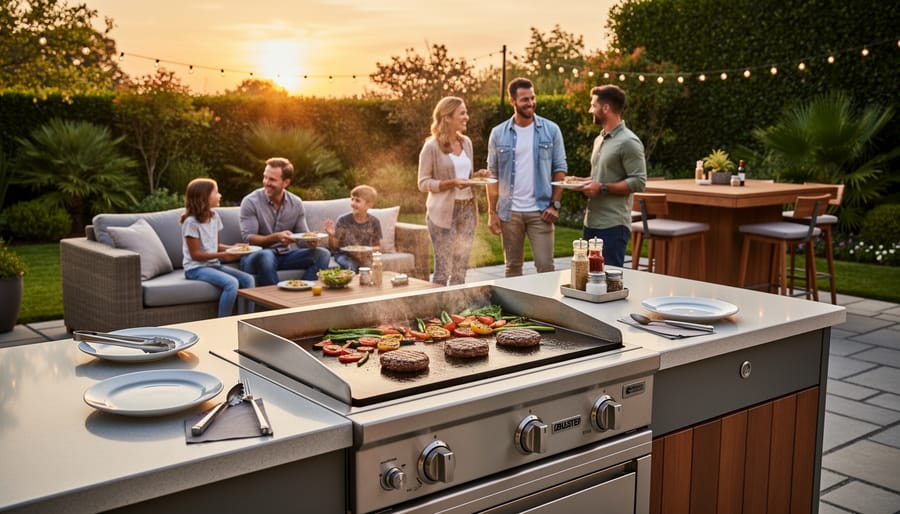
Choosing the right outdoor flat top gas griddle ultimately comes down to understanding your specific cooking needs and how the equipment fits into your outdoor living space. Just as selecting the perfect fireplace transforms your indoor environment, the right griddle becomes a centerpiece for outdoor gatherings, extending your home’s warmth and hospitality beyond four walls. Consider how often you’ll use it, the typical size of your gatherings, and whether portability matters for your lifestyle. A compact two-burner might be perfect for weekend breakfasts on the patio, while larger families or frequent entertainers will appreciate the cooking real estate of four-burner models.
Quality construction and safety features should never be compromised for price alone. Look for griddles with reliable ignition systems, sturdy legs, and adequate grease management. Just as we prioritize safety with indoor heating solutions, your outdoor cooking equipment deserves the same attention. Stainless steel and cast iron surfaces may cost more upfront, but they deliver superior performance and longevity that makes them worthwhile investments. When you choose thoughtfully and maintain your griddle properly, you’re not just buying cooking equipment—you’re enhancing your outdoor living experience and creating a gathering space that brings people together season after season.