
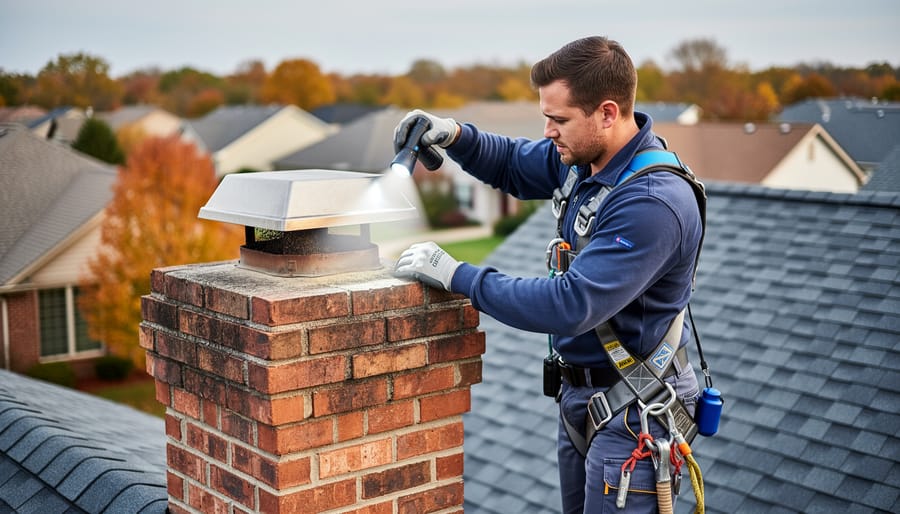
Schedule annual professional inspections before burning season begins, typically in late summer or early fall. A certified chimney sweep will identify creosote buildup, structural damage, and blockages that compromise both safety and efficiency. Check your flue damper monthly during active use to ensure it opens and closes completely. A stuck or warped damper wastes energy ... Read more
Elevate cinder blocks on edge to create airflow channels beneath your firewood stack, allowing moisture to escape from below while keeping wood off the damp ground. Space blocks 16-24 inches apart in parallel rows, creating a sturdy foundation that prevents rot and accelerates seasoning time by up to 30% compared to ground-level storage. Build vertical ... Read more

Stack firewood in alternating perpendicular rows, known as crisscross stacking, to maximize airflow and prevent moisture buildup that leads to mold and rot. This traditional method creates natural ventilation channels while providing excellent stability for stacks up to six feet tall. Position your woodpile at least five feet from your home’s exterior walls to deter ... Read more

Choose hardwoods over softwoods to nearly double your heat output per cord. Oak, hickory, and ash deliver 24-28 million BTUs per cord, while pine and spruce provide only 14-18 million BTUs, meaning you’ll burn through softwood twice as fast to achieve the same warmth. Match your firewood selection to your burning timeline. Dense hardwoods like ... Read more

Split firewood four times faster by driving a grenade wedge into logs with a sledgehammer, letting its multi-directional blade design fracture wood along natural grain lines without the repeated swings traditional methods demand. This cone-shaped splitting tool, named for its resemblance to a military grenade, transforms wood preparation from an exhausting afternoon ordeal into a ... Read more

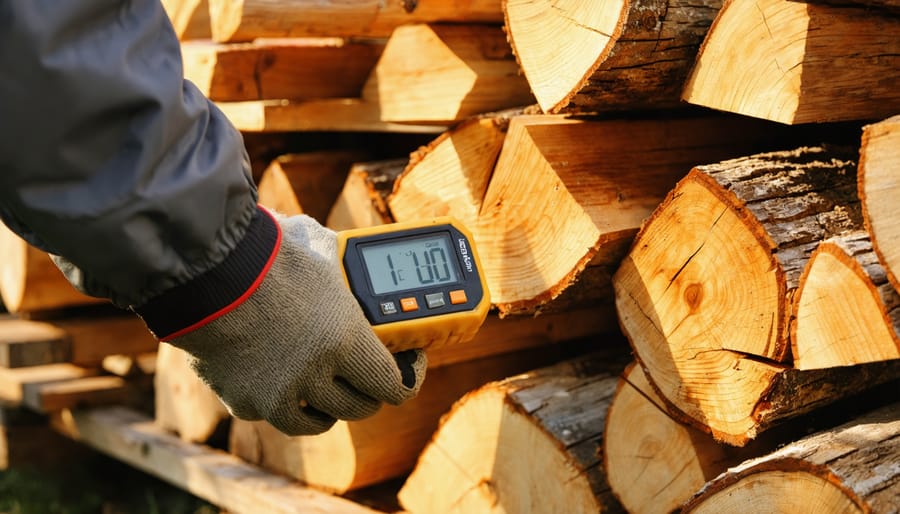
Plan your firewood purchases 6-18 months before you need them, depending on species—dense hardwoods like oak require a full year or more, while softer woods like pine can be ready in just six months. Stack your split wood in a sunny, wind-exposed location with the top covered but sides open, allowing air circulation to drop ... Read more
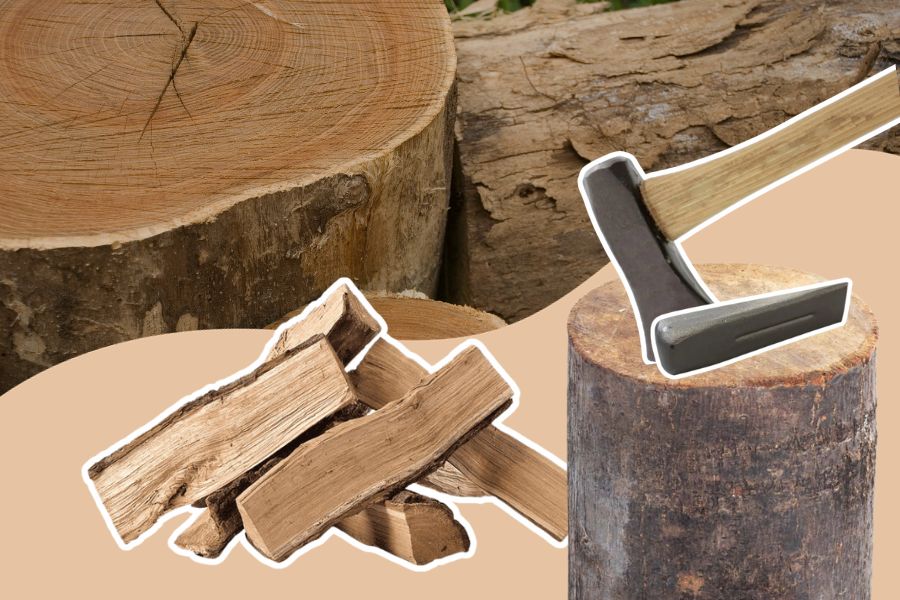
Split wood with a single, well-placed strike rather than multiple blows by aiming for existing cracks and the outer edge of the round instead of dead center. Position your maul to follow the wood’s natural grain lines, which radiate from the center like wheel spokes, and you’ll use half the energy while doubling your productivity. ... Read more

Transform your firewood preparation with the raw power and efficiency of a chainsaw – a modern evolution beyond traditional wood splitting methods. While axes and mauls have their place, chainsaw splitting techniques can reduce hours of labor to minutes when properly executed. Master this advanced method by understanding three critical elements: proper log positioning on ... Read more

Welcome to our handy guide on how to split wood with a wedge. You might think splitting is time-consuming, but it’s a breeze with the right tools, like a splitting wedge or a second wedge, and proven techniques. It’s more than just swinging a hammer’s handle. We typically split along the existing crack, using a ... Read more

Welcome to the art of splitting wood! If you’ve ever wanted to turn a wood log into useful pieces, this guide is for you. You’ll learn about different splitting tools, like the axe, maul, and wedge. Each has a unique role in wood splitting. A splitting axe handle has a sharp blade for cutting wood. ... Read more