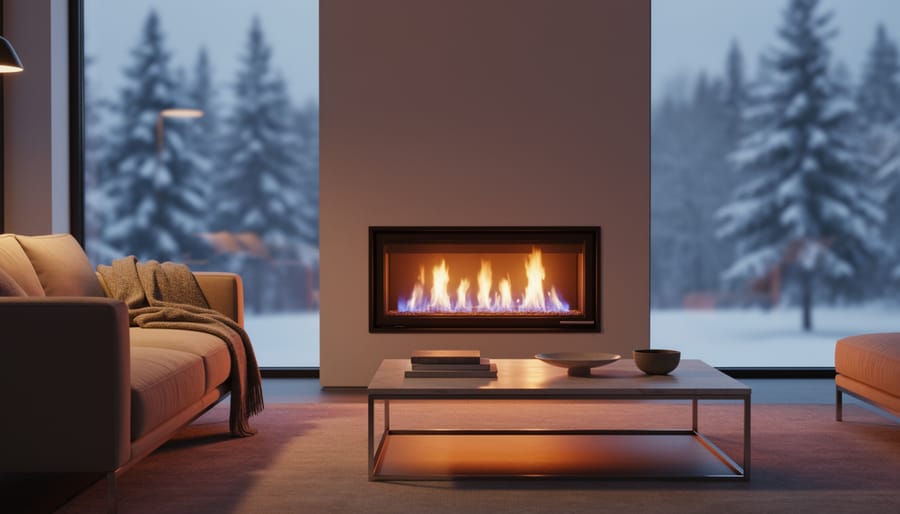


Understanding BTU output transforms your gas fireplace from a decorative feature into a practical heating solution. Most gas fireplaces range between 20,000 and 40,000 BTUs, with smaller direct-vent models starting around 10,000 BTUs and large statement pieces reaching 60,000 BTUs or higher. This measurement directly determines how much warmth your fireplace delivers and which rooms it can effectively heat.
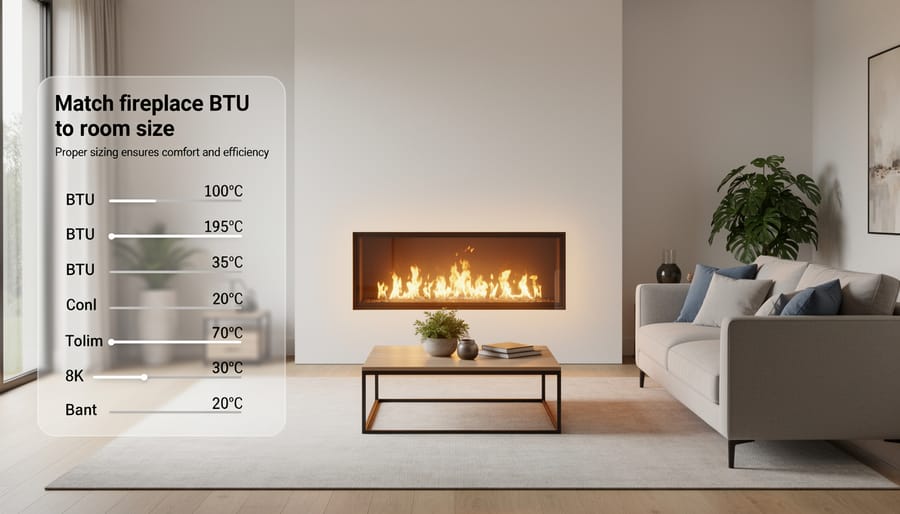
Match your fireplace BTU to your space using this practical guideline: every 1,000 BTUs heats approximately 50 square feet in a well-insulated room. A 30,000 BTU fireplace comfortably warms a 1,500-square-foot living area, while a 20,000 BTU unit suits bedrooms or smaller gathering spaces. Consider your climate zone and insulation quality, as homes in colder regions or older constructions need higher BTU outputs to achieve the same comfort level.
Recognize that higher BTUs don’t automatically mean better performance. Oversized units cycle on and off frequently, wasting energy and creating uncomfortable temperature swings. Right-sizing your fireplace ensures steady, efficient heat distribution while reducing your carbon footprint and utility costs. Modern gas fireplaces with variable flame controls let you adjust BTU output based on actual needs, combining ambiance with eco-friendly heating flexibility.
Your existing fireplace likely displays its BTU rating on a label inside the firebox or in the owner’s manual. Compare this number against your room dimensions to evaluate whether you’re maximizing your fireplace’s heating potential or if an upgrade makes practical sense for your lifestyle and comfort goals.
What BTU Means for Your Gas Fireplace
If you’ve ever shopped for a gas fireplace, you’ve probably encountered BTU ratings and wondered what those numbers really mean for your home. Let’s break it down in simple terms that actually make sense.
BTU stands for British Thermal Unit, which is the standard measurement for heat energy. Think of it as the fireplace world’s version of horsepower for cars. Specifically, one BTU represents the amount of energy needed to raise the temperature of one pound of water by one degree Fahrenheit. While that’s the technical definition, what really matters is understanding what those BTU numbers mean for keeping your living space cozy.
In practical terms, the BTU rating tells you how much heating power your gas fireplace can deliver. A fireplace rated at 30,000 BTUs produces significantly more warmth than one rated at 15,000 BTUs. It’s that straightforward. However, more isn’t always better. Choosing a fireplace with excessive BTUs for your space is like using a sledgehammer to hang a picture frame—overkill that can leave you uncomfortable and waste energy.
Here’s why BTU matters when you’re choosing a gas fireplace: it helps you match the heating capacity to your actual needs. A fireplace with too few BTUs will struggle to warm your room, leaving you disappointed on chilly evenings. Meanwhile, an oversized unit might make your space uncomfortably hot, forcing you to run it at minimal settings where it operates less efficiently.
Understanding BTU ratings empowers you to make smart decisions about which fireplace will truly enhance your home’s comfort and ambiance. It’s about finding that sweet spot where performance meets efficiency, creating the warm, inviting atmosphere you’re looking for while being mindful of energy consumption.
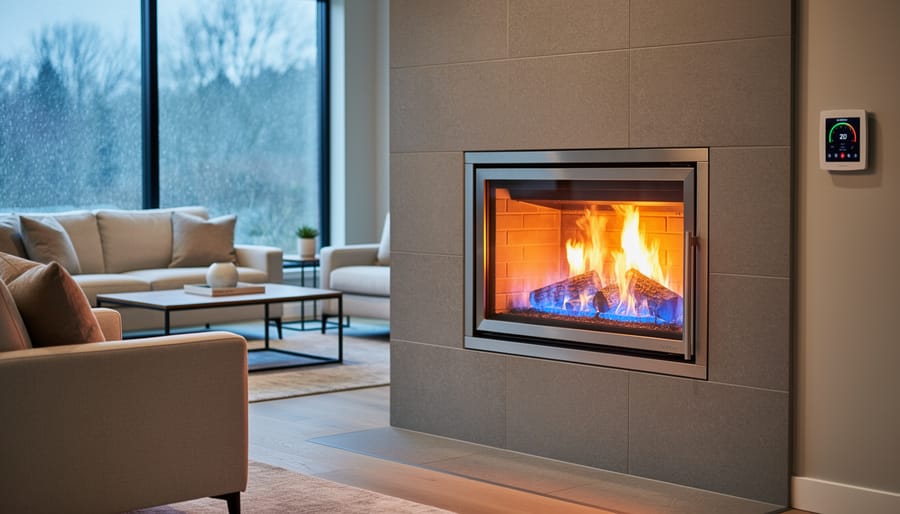
The BTU Range You’ll Find in Most Gas Fireplaces
Small Gas Fireplaces (10,000-20,000 BTU)
Small gas fireplaces in the 10,000-20,000 BTU range are perfect for those who prioritize ambiance and supplemental warmth over primary heating power. These compact units work beautifully in smaller spaces, typically heating rooms between 200-400 square feet effectively—think cozy bedrooms, home offices, or intimate sitting areas.
What makes these lower BTU models particularly appealing is their versatility as a lifestyle element. They create that inviting fireplace glow without overwhelming smaller spaces with excess heat, which is especially appreciated during shoulder seasons when you want the visual comfort of flames without cranking up the temperature. Many homeowners choose these models for master bedrooms, where the gentle warmth creates a relaxing retreat without making the room uncomfortably hot.
From an eco-friendly perspective, smaller BTU fireplaces consume less fuel, reducing both your carbon footprint and utility costs. They’re also ideal for newer, well-insulated homes that don’t require substantial supplemental heating. If your primary goal is creating atmosphere rather than heating your entire home, a 10,000-20,000 BTU fireplace delivers that flickering charm efficiently. Consider these units as decorative focal points that offer just enough warmth to take the chill off without dominating your home’s heating strategy.
Medium Gas Fireplaces (20,000-30,000 BTU)
This is the sweet spot for most homeowners, and there’s a good reason this range dominates residential installations. A fireplace producing 20,000-30,000 BTU strikes that perfect balance between cozy ambiance and practical heating performance, making it ideal for the heart of your home.
These medium-output fireplaces excel in living rooms, family rooms, and open-concept spaces ranging from 400 to 800 square feet. They provide enough warmth to reduce your reliance on central heating during shoulder seasons and truly comfortable heat on chilly evenings without overwhelming smaller spaces. Think of them as your home’s comfort zone creators—powerful enough to make a difference on your heating bills, yet refined enough to maintain that inviting atmosphere.
What makes this range so versatile is its adaptability to different home layouts. Whether you have standard ceiling heights or slightly vaulted ceilings, these fireplaces can handle the challenge. They’re also energy-efficient enough that running them regularly won’t shock your utility bills, offering an eco-friendly way to zone-heat your most-used spaces.
Many manufacturers design their most feature-rich models in this BTU range, giving you access to advanced thermostatic controls, realistic flame technology, and remote operation. You’re getting the full fireplace lifestyle experience with practical heating benefits that genuinely contribute to your home comfort throughout the cooler months.
Large Gas Fireplaces (30,000-40,000+ BTU)
When you’re looking to make your fireplace a primary heat source or warm a truly expansive living area, large gas fireplaces in the 30,000-40,000+ BTU range deliver serious heating power. These high-output models can effectively heat spaces of 1,500 to 2,000+ square feet, making them ideal for great rooms, open-concept floor plans, or homes where the fireplace serves as more than just an accent feature.
These powerhouse units do come with important considerations. First, proper ventilation is absolutely critical at this BTU level. Most models require direct vent systems that safely exhaust combustion gases while bringing in fresh air from outside, ensuring both safety and efficiency. You’ll also want to factor in propane consumption or natural gas usage, as these larger units naturally use more fuel to generate their impressive heat output.
Installation typically requires professional expertise and may involve reinforced hearth structures or specific clearances from combustible materials. The good news? Modern large-capacity fireplaces often feature zone heating capabilities and programmable thermostats, letting you maximize efficiency while minimizing environmental impact. When sized correctly for your space, these units create a wonderfully cozy atmosphere while genuinely contributing to your home’s overall heating strategy.
Matching BTU Output to Your Space
Finding the perfect gas fireplace for your space doesn’t have to feel like solving a complex equation. While there’s a simple formula to get you started, understanding a few key factors will help you choose a fireplace that keeps your family cozy without overheating your room or wasting energy.
The basic rule of thumb is straightforward: you’ll need approximately 20 BTUs per square foot of space. For a 300-square-foot living room, that means you’re looking at around 6,000 BTUs. A larger 500-square-foot great room would need roughly 10,000 BTUs. This formula gives you a solid starting point, but your home’s unique characteristics might shift those numbers up or down.
Climate plays a surprisingly significant role in determining your ideal BTU output. If you’re enjoying mild winters in the southern states, you might get away with 15-18 BTUs per square foot since your fireplace is supplementing your heating system rather than working overtime. However, homeowners in northern climates with harsh winters typically need the full 25-30 BTUs per square foot, especially if the fireplace serves as a primary heat source.
Your home’s insulation quality can dramatically affect heating efficiency. Well-insulated newer homes with energy-efficient windows retain heat beautifully, meaning you might need fewer BTUs than the standard formula suggests. Older homes with drafty windows and minimal insulation will require more heating power to maintain comfortable temperatures. Think of it like filling a bucket—good insulation keeps the warmth in, while poor insulation lets it leak away.
Ceiling height is another consideration that often catches homeowners by surprise. The standard formula assumes eight-foot ceilings, but if you have soaring cathedral ceilings or a two-story great room, you’ll need to account for that extra volume. For ten-foot ceilings, increase your BTU calculation by about 25 percent. A vaulted ceiling might require up to 50 percent more heating capacity.
Remember, choosing a gas fireplace is about creating the perfect balance for your lifestyle. A properly sized unit operates more efficiently, reduces energy costs, and provides that ideal ambient warmth without turning your living space into a sauna. When in doubt, consulting with a fireplace professional ensures you’ll select a model that matches your specific needs while embracing eco-friendly heating practices.
Why Your Fireplace Might Not Heat Like You Expected
You’ve probably noticed that your gas fireplace’s impressive BTU rating doesn’t always translate to the cozy, room-warming experience you expected. This disconnect frustrates many homeowners, but understanding what’s happening can help you set realistic expectations and make better decisions about your home heating.
First, let’s talk about efficiency losses. That 30,000 BTU rating on your fireplace represents the total heat input, not what actually makes it into your room. Direct vent and vent-free models operate at different efficiency levels. Direct vent fireplaces, which exhaust outside through a pipe system, typically deliver only 60-75% of their BTUs into your living space. The rest escapes through the venting system along with combustion gases. Think of it like this: a 30,000 BTU direct vent fireplace might only provide 18,000-22,500 BTUs of actual heat to your room.
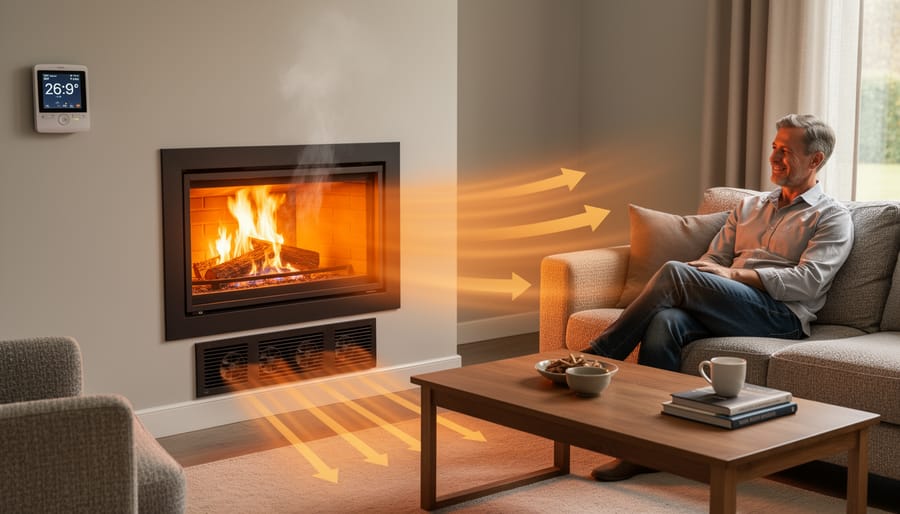
The type of heat your fireplace produces also matters tremendously. Many gas fireplaces primarily offer radiant heat, which warms objects and people directly in front of the unit rather than circulating warm air throughout the space. This creates that wonderful feeling of sitting by a campfire, but it won’t necessarily heat your entire room evenly. If you’re standing across the room, you might barely feel the warmth.
Convection heating models or those with built-in blowers distribute heat more effectively, but they’re often noisier and require electricity to operate. Without a fan system, natural convection alone struggles to move warm air efficiently, especially in larger or poorly insulated rooms.
Location plays a crucial role too. A fireplace installed on an exterior wall loses more heat to the outdoors, while high ceilings allow warm air to rise away from your living space. Additionally, if your home has significant air leaks or poor insulation, even a properly sized fireplace will struggle to maintain comfortable temperatures.
Understanding these realities helps you appreciate your gas fireplace for what it does best: creating ambiance and supplemental zone heating rather than serving as your primary heat source.
Getting the Most Heat From Your Gas Fireplace
Understanding your gas fireplace’s BTU output is just the beginning—getting the most from those BTUs is where the real magic happens. Think of it like this: you wouldn’t leave money on the table, so why leave precious heat floating away unused?
First things first, blower fan usage can be a game-changer for your heating efficiency. These fans distribute warm air throughout your room instead of letting it rise and collect at the ceiling. If your fireplace has a blower, use it. If it doesn’t, consider adding one—it can increase heat distribution by up to 25 percent, making those BTUs work harder for you.
Your thermostat settings matter more than you might think. Position your thermostat away from the fireplace itself to get accurate room temperature readings. Set it to maintain your desired temperature rather than constantly cycling on and off, which wastes energy and reduces the cozy ambiance that makes a fireplace special.
Regular maintenance practices are essential for peak BTU performance. Clean glass doors allow maximum heat radiation into your room, while dirty ones can reduce efficiency. Have your unit professionally serviced annually to ensure burners are clean and gas flow is optimized. A well-maintained fireplace burns cleaner and hotter, giving you more heat per BTU.
Seasonal adjustments can make a significant difference too. During colder months, close off unused rooms to concentrate heat where you need it most. Use ceiling fans on low, running clockwise to push warm air down from the ceiling. Consider adding a hearth rug or seating arrangement that won’t block heat flow but helps create a warm gathering space.
Remember, maximizing your fireplace’s BTU efficiency isn’t just about staying warm—it’s about being a smart, eco-conscious homeowner who values both comfort and sustainability.
Safety Considerations for High-BTU Gas Fireplaces
When it comes to high-BTU gas fireplaces, more power doesn’t always translate to a better experience for your home. Understanding the safety implications of BTU output is essential for creating a warm, cozy atmosphere without compromising your family’s wellbeing.
First and foremost, proper ventilation requirements become increasingly critical as BTU ratings climb. Higher-output fireplaces consume more oxygen and produce more combustion byproducts, making adequate airflow non-negotiable. This is where understanding your specific model’s needs becomes part of responsible fireplace ownership.
Clearance distances matter significantly with higher-BTU units. These powerful fireplaces generate substantial heat that can damage nearby walls, furniture, and decor items. Always follow manufacturer specifications for minimum distances to combustible materials—typically ranging from 6 to 36 inches depending on your unit’s output. Think of it as giving your fireplace the breathing room it needs to operate safely.
The carbon monoxide concerns associated with gas fireplaces intensify with higher BTU ratings. While modern units include excellent safety features, regular maintenance and carbon monoxide detector installation remain essential safeguards for your household.
Professional installation cannot be overstated, especially for units exceeding 30,000 BTUs. A certified technician ensures proper gas line sizing, venting configuration, and compliance with local building codes. This investment protects both your home’s safety and your fireplace’s efficiency.
Remember, the goal is finding the right BTU range for your specific space rather than simply choosing the highest output available. An oversized fireplace creates uncomfortable temperature swings, wastes energy, and contradicts eco-friendly heating solutions. Match your BTU output to your actual heating needs for the safest, most comfortable experience.
Understanding BTU output is truly the foundation for making smart decisions about your gas fireplace. Whether you’re looking to heat your entire living space or simply create a cozy focal point for those chilly evenings, knowing what to expect from your fireplace’s heating capacity puts you in control. Remember, a typical gas fireplace producing between 20,000 and 40,000 BTUs can be the perfect solution for the right room size, but it’s not a one-size-fits-all answer.
Take time to assess your specific needs honestly. Are you hoping to reduce your heating bills, or are you more focused on the warm ambiance and dancing flames that make a house feel like home? Both goals are completely valid, and understanding BTU helps you set realistic expectations either way. Consider your room dimensions, insulation quality, and how you actually use your space.
When you match the right BTU output to your heating goals, your gas fireplace becomes more than just an appliance. It transforms into an eco-friendly heating solution that efficiently warms your home while creating that inviting atmosphere we all crave during colder months.