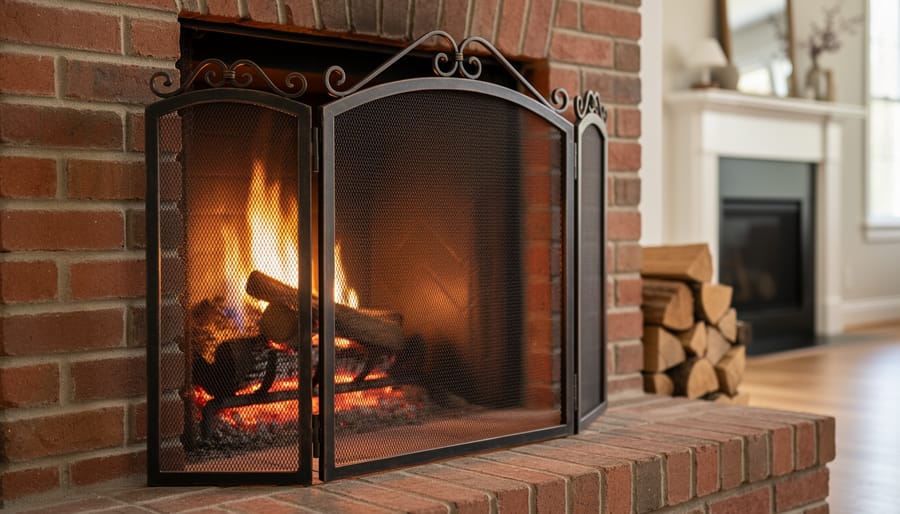


Choose a three-panel fireplace screen based on your fireplace opening width, ensuring the center panel covers at least two-thirds of the opening while the angled side panels create a protective barrier that blocks stray sparks without gaps. Measure your fireplace width at its widest point and add 6-8 inches to determine the ideal screen width, allowing the hinged side panels to angle forward and create that essential safety buffer zone.
Position the side panels at 25-30 degree angles from the center to maximize spark protection while maintaining proper airflow for your fire. This configuration transforms your screen from a flat barrier into a three-dimensional guard that catches embers trying to escape from multiple directions, making it significantly more effective than single-panel alternatives.
Select screens with mesh density appropriate for your fuel type. Wood-burning fireplaces require fine mesh (typically 1/4 inch or smaller openings) to catch the smaller embers that hardwoods and softwoods produce, while gas fireplaces can accommodate slightly larger mesh since they generate fewer sparks. The mesh material matters too—steel mesh offers durability and heat resistance, while brass and wrought iron add decorative appeal without sacrificing safety.
Verify the screen height extends at least 2-3 inches above your fireplace opening to prevent sparks from arcing over the top, a commonly overlooked safety feature. The freestanding design of three-panel screens makes them perfect for homeowners seeking both protection and the flexibility to move the screen for easy fireplace access, cleaning, and seasonal storage. This combination of safety engineering and practical design explains why three-panel screens remain the most popular choice for traditional wood-burning fireplaces in homes prioritizing both ambiance and peace of mind.
What Makes 3-Panel Fireplace Screens Different
The Folding Design Advantage
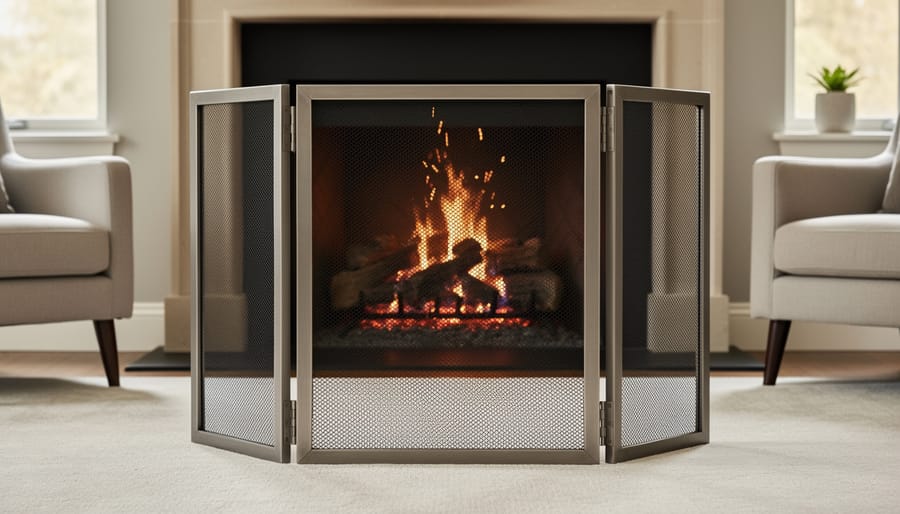
The beauty of a three-panel fireplace screen lies in its thoughtful, adaptable design. Unlike flat, single-panel screens that can leave gaps or overwhelm smaller hearths, the tri-fold configuration features hinged side panels that angle forward, creating a protective barrier that conforms to your fireplace’s unique dimensions and shape.
This folding design offers remarkable versatility for homeowners. The adjustable wings allow you to customize the screen’s width and stance, ensuring complete coverage whether you have a compact traditional fireplace or a sprawling stone hearth. The angled panels naturally redirect heat into your living space while containing sparks and embers safely behind the mesh or glass.
What makes this particularly valuable is how the design complements different architectural styles. For a cozy cottage fireplace, you can fold the panels inward for a snug fit. With a grand, open hearth, extend them outward to command the full space. The screen essentially becomes part of your room’s character, adapting to both the physical structure and your aesthetic vision.
This flexibility means you’re not locked into a one-size-fits-all solution. Whether your fireplace is the centerpiece of a rustic family room or an elegant accent in a modern living space, a well-chosen three-panel screen adjusts to meet your needs while maintaining that essential protective function that keeps your home safe and comfortable.
How They Compare to Other Screen Types
Understanding how 3-panel screens stack up against other options helps you make the best choice for your hearth. Single-panel screens offer simplicity and work well for smaller fireplaces, but they lack the adjustability that makes 3-panel designs so versatile. They’re essentially flat barriers that can’t conform to your fireplace opening or expand to provide wider coverage.
Flat screens without panels create a clean, minimalist look and typically cost less, but they don’t stand independently as securely as hinged designs. This makes them less stable, especially on uneven hearths. Glass door screens provide the tightest seal and maximum heat reflection back into your room, making them excellent for energy efficiency. However, they’re permanently mounted and lack the decorative flexibility of freestanding options.
The 3-panel design shines when you want the perfect balance of safety, stability, and visual appeal. The folding side panels create a self-supporting structure that adjusts to various fireplace widths, while the decorative elements add character to your living space. If you frequently rearrange your home or rent rather than own, the portability of 3-panel screens gives you flexibility that built-in options can’t match.
Safety Features That Matter Most
Spark and Ember Protection
The primary job of any fireplace screen is keeping sparks and glowing embers safely contained within your hearth, and three-panel screens excel at this protective function. The secret lies in the mesh construction and the wraparound design that creates multiple barriers between your fire and your living space.
Quality three-panel screens feature fine mesh sizing, typically ranging from 1/4 inch to 1/2 inch openings. This tight weave catches even tiny sparks before they can escape and potentially damage flooring, rugs, or nearby furnishings. When evaluating screens, look for mesh made from heavy-gauge steel or wrought iron that won’t warp under intense heat. Some premium models incorporate brass or copper mesh, which not only provides excellent spark protection but also develops a beautiful patina over time.
The three-panel configuration offers superior containment compared to single-panel alternatives because the angled side panels extend the protective barrier beyond the fireplace opening. This wider coverage area catches sparks that might travel at angles, especially important during those moments when you’re adjusting logs or adding fuel. The overlapping design also eliminates gaps that could allow embers to slip through, creating a more complete shield around your fire. This thoughtful engineering means you can enjoy your fireplace’s warmth with greater peace of mind, knowing your home and family are well-protected.
Stability and Tip-Resistance
One of the most appealing features of 3-panel fireplace screens is their exceptional stability. Unlike single-panel designs that require mounting hardware, these screens stand independently thanks to their tri-fold design, which creates a natural base that distributes weight evenly across three points of contact. This self-supporting structure makes them incredibly secure when properly positioned.
The angled side panels act as stabilizing legs, widening the footprint and lowering the center of gravity. This configuration is particularly valuable for families with children or pets who might accidentally brush against the screen. While no screen is completely tip-proof, the three-panel design offers substantially better resistance to accidental bumps than flat alternatives.
When selecting a screen for homes with active kids or curious pets, consider models with weighted bases or those crafted from heavier materials like wrought iron. The extra heft provides additional security without sacrificing the decorative appeal that makes these screens so popular. Position your screen far enough from the firebox to prevent overheating while maintaining adequate spark protection.
Remember that even stable screens require attention to fireplace safety considerations. Always ensure the screen is fully opened and properly positioned before lighting your fire, and teach children to maintain a safe distance from both the screen and flames.
Heat-Resistant Materials Explained
When choosing a three-panel fireplace screen, understanding the materials is essential for both safety and longevity. The most common heat-resistant materials each offer distinct advantages for protecting your home.
Wrought iron stands as a traditional favorite, withstanding temperatures exceeding 2,000 degrees Fahrenheit while adding rustic charm to your living space. Its durability means your screen will last for generations, making it an excellent investment for homeowners who value both function and timeless design.
Steel screens provide similar heat resistance at a more accessible price point. Modern steel screens often feature powder-coated finishes that resist rust and maintain their appearance even with regular use. They’re particularly practical for families who use their fireplace frequently throughout the colder months.
Brass screens offer exceptional heat tolerance while developing a beautiful patina over time. This living finish adds character and warmth to your hearth, complementing other brass fixtures in your home. Like heat-powered fans, brass components efficiently manage heat while enhancing your fireplace’s functionality.
Quality screens in any material should feel substantial and feature sturdy construction with reinforced joints. Avoid flimsy materials or those with unknown composition, as they may warp under high temperatures, compromising your family’s safety.
Choosing the Right 3-Panel Screen for Your Fireplace
Getting Your Measurements Right
Getting the right measurements is essential for both safety and aesthetics when choosing your three-panel fireplace screen. Start by measuring the width of your fireplace opening at its widest point, typically along the front face. Your screen should extend at least 3 to 4 inches beyond each side of the opening to provide adequate spark protection and create a finished look.
Next, measure the height from the hearth floor to the top of the opening. The screen should be tall enough to cover the entire opening with a bit of overlap. For most standard fireplaces, screens range from 28 to 32 inches in height, but taller openings may require larger sizes.
Don’t forget to measure the depth of your hearth. Three-panel screens need sufficient floor space to stand securely without tipping. Ideally, you’ll want at least 6 to 8 inches of hearth depth for stable positioning.
Here’s a helpful tip: if your measurements fall between standard sizes, always size up rather than down. A slightly larger screen provides better protection and can be adjusted with the side panels folded at different angles. Take your measurements twice to ensure accuracy, and consider the screen’s placement when your fireplace is in use to guarantee it won’t interfere with doors, mantels, or other nearby features.
Material and Finish Choices
When selecting your three-panel fireplace screen, the material and finish you choose will dramatically impact both its longevity and how it complements your home’s aesthetic. Let’s explore the most popular options to help you find the perfect match.
Wrought iron remains a timeless favorite among fireplace accessories, prized for its exceptional durability and ability to withstand high temperatures. These screens often feature intricate scrollwork designs that add an elegant, traditional touch to any room. The robust construction means minimal maintenance—just occasional dusting and checking for rust if you live in humid climates. Black or bronze finishes work beautifully with classic and rustic home styles.
Brass and bronze screens offer a warmer, more sophisticated appearance that pairs wonderfully with contemporary and transitional interiors. These metals develop a lovely patina over time, adding character to your fireplace area. While they require occasional polishing to maintain their shine, many homeowners appreciate the natural aging process as part of their charm.
Steel screens with powder-coated finishes provide excellent heat resistance and come in various colors to match modern décor preferences. They’re relatively low-maintenance and offer good value for budget-conscious homeowners.
For those seeking eco-friendly options, look for screens made from recycled metals or sustainable manufacturing processes. Mesh materials should be tightly woven to effectively contain sparks while allowing heat to radiate into your living space. Consider how the finish will coordinate with your existing fireplace surround and room furnishings to create a cohesive, inviting atmosphere that celebrates the warmth of your home.
Style Considerations for Your Space
Your 3-panel fireplace screen should feel like a natural extension of your home’s personality while keeping safety at the forefront. For traditional spaces with classic mantels and period details, look for screens with ornate scrollwork, antique brass finishes, or wrought iron craftsmanship that echo timeless elegance. These designs complement wood-burning fireplaces beautifully while providing essential spark protection.
Contemporary homes benefit from sleek, minimalist screens featuring clean lines, brushed nickel, or matte black finishes. These streamlined options maintain the modern aesthetic without compromising on safety features like proper mesh density and heat-resistant materials.
Transitional designs bridge both worlds, offering versatile options that work across various décor styles. Think simple geometric patterns or mixed metal finishes that adapt to your evolving tastes.
Remember that your screen’s design shouldn’t sacrifice functionality. The most beautiful screen is one that properly fits your fireplace opening, stands stable on your hearth, and effectively contains sparks and embers. Consider how the folding panels will look both fully extended and partially closed, as this flexibility becomes part of your room’s visual rhythm. A well-chosen screen transforms from a safety necessity into a lifestyle element that enhances your home’s warmth and character.
Proper Installation and Placement
Positioning for Maximum Protection
Proper positioning of your 3-panel fireplace screen is essential for both safety and effectiveness. Start by placing the screen close enough to the fireplace opening to contain sparks and embers, but maintain at least 6 inches of clearance from the flames themselves. This distance allows adequate airflow for combustion while preventing the screen from overheating, which could warp the panels or create a fire hazard.
Your screen should completely cover the fireplace opening from edge to edge, with no gaps where sparks could escape. The beauty of 3-panel designs is their adaptability—you can adjust the side panels to create a custom fit that hugs the contours of your hearth. Check that the screen sits flush against your hearth floor, eliminating any spaces underneath where embers might roll through.
Consider your hearth’s dimensions when positioning the screen. If you have a raised hearth, ensure the screen’s base rests securely on the elevated surface. For floor-level fireplaces, position the screen so its weight is evenly distributed, preventing tipping. Always verify that the center panel stands directly in front of the opening’s center, with side panels angled slightly inward for stability. This triangular formation creates the most reliable barrier while maintaining proper ventilation for your fire.
Adjusting the Panels for Best Fit
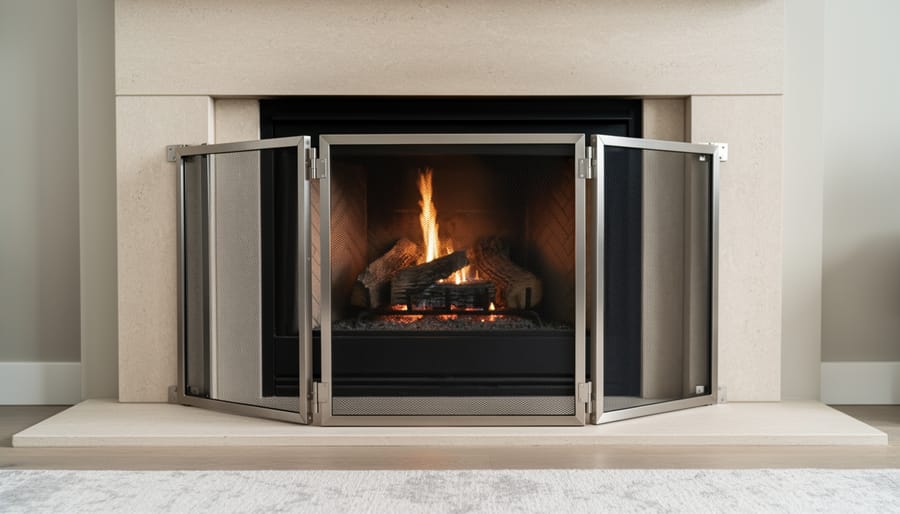
Getting the perfect fit from your three panel fireplace screen is easier than you might think, and it’s essential for both safety and aesthetics. The beauty of these screens lies in their adjustable design, which lets you customize the positioning to match your unique fireplace opening.
Start by positioning the center panel flat against your fireplace opening, then gently angle the side panels outward. Most fireplaces work best with side panels set at 20 to 45-degree angles, creating a gentle arc that naturally contains sparks while maintaining stability. The wider you angle the panels, the more floor space they’ll occupy, so find a balance that feels secure without overwhelming your hearth area.
For deeper fireplace openings, angle the panels more dramatically to create better coverage. Shallower fireplaces often need less aggressive angles. Test the stability by gently pressing on the top of the screen—it should feel firmly planted without wobbling.
Don’t forget about seasonal adjustments. During active burning seasons, you might prefer a wider stance for maximum protection, while a tighter configuration works beautifully during warmer months when your fireplace becomes more of a decorative focal point. This flexibility makes three panel screens a smart, eco-friendly choice that adapts to your lifestyle throughout the year.
Maintenance and Care for Long-Lasting Protection
Cleaning Without Damaging the Finish
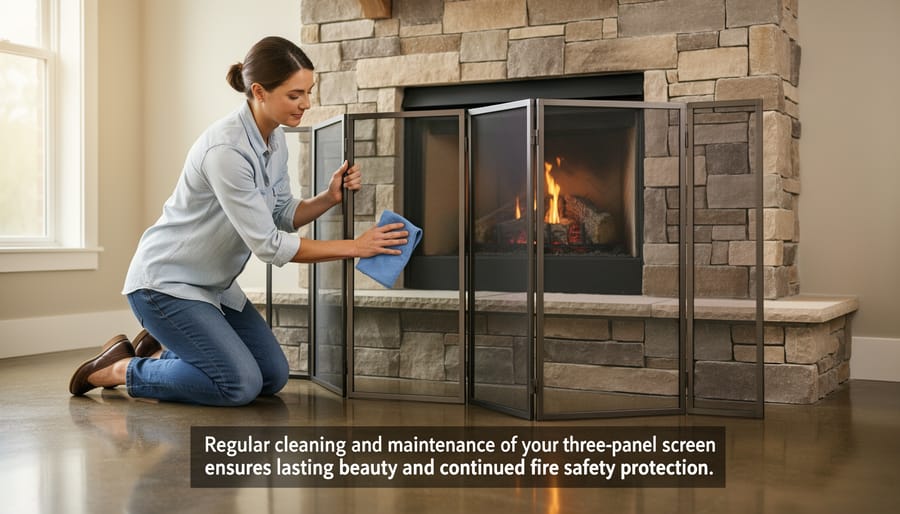
Keeping your 3-panel screen looking beautiful doesn’t require harsh chemicals or complicated techniques. For most finishes, regular dusting with a soft, dry cloth prevents buildup and maintains that welcoming glow. When soot and ash accumulate, let your screen cool completely before cleaning—patience here protects both you and the finish.
For wrought iron and steel screens, use a slightly damp cloth with mild dish soap, wiping gently to avoid scratching decorative details. Brass and bronze screens benefit from specialized metal cleaners that restore their natural luster without damaging protective coatings. Always test cleaning products on an inconspicuous area first.
Stubborn ash residue responds well to a soft-bristled brush, worked gently into mesh panels and ornamental scrollwork. Avoid abrasive scrubbers that can scratch surfaces or remove protective finishes. For screens with glass panels, use standard glass cleaner once the surface is ash-free.
This gentle approach to maintenance keeps your screen functioning as an effective safety barrier while preserving its role as a beautiful focal point in your home’s cozy gathering space.
Regular Safety Inspections
Your 3 panel fireplace screen works hard to protect your home, but it needs regular attention to keep doing its job safely. Make it a habit to inspect your screen at the start of each heating season and monthly during active use.
Start by checking all hinges and connection points where the panels meet. Give each panel a gentle shake to test for loose joints or wobbling, which can compromise the screen’s protective barrier. Look closely at the mesh for any tears, burn marks, or areas where the material has pulled away from the frame. Even small holes can allow sparks to escape, so don’t overlook minor damage.
Examine the feet or base of your screen to ensure they’re sitting level and stable. Uneven floors or worn protective pads can cause tipping hazards, especially with taller screens. If your screen has adjustable feet, make sure they’re all making solid contact with your hearth.
Finally, test the screen’s positioning by placing it at its normal distance from the fireplace opening. It should stand firmly without support and fully cover the opening. Taking these few minutes to inspect your screen isn’t just about maintenance—it’s about preserving the safe, cozy atmosphere that makes your fireplace a true lifestyle centerpiece.
A 3-panel fireplace screen truly brings together the best of both worlds: robust protection for your family and home, paired with timeless aesthetic appeal that enhances your living space. By choosing a quality screen that fits your fireplace dimensions properly and complements your décor, you’re not just adding a functional safety barrier—you’re investing in a piece that elevates your entire room’s ambiance. Remember, the right screen becomes part of your home’s lifestyle, creating a cozy focal point while quietly safeguarding against sparks and embers. Whether you prefer classic wrought iron, elegant brass, or contemporary designs, prioritizing both protection and style ensures your fireplace remains a source of warmth and comfort for years to come. We invite you to continue exploring our comprehensive fireplace solutions to discover more ways to create a safer, more beautiful, and eco-friendly hearth that your whole family will cherish.