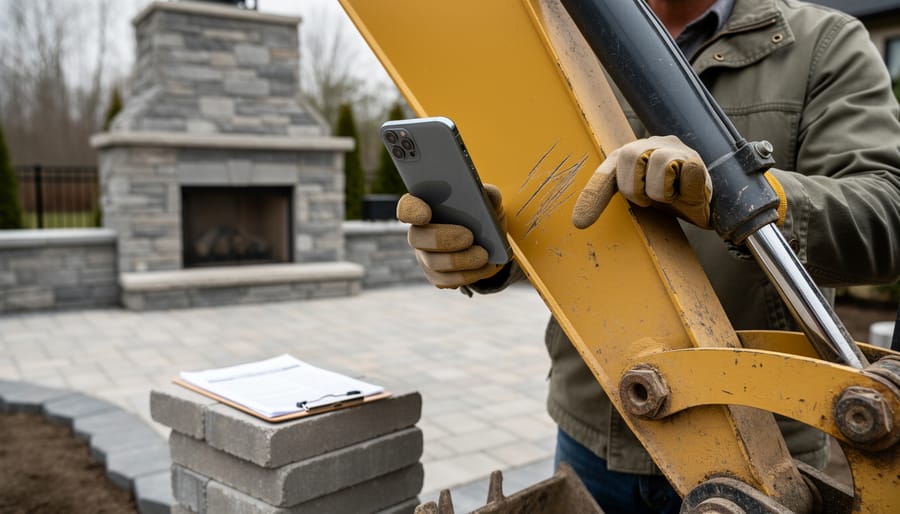


Review sample contracts from at least three rental companies before signing anything to understand standard terms and identify red flags. Request written agreements that clearly specify daily or weekly rates, overtime charges, delivery fees, and damage deposit requirements—verbal promises won’t protect you when disputes arise.
Examine the equipment condition clause carefully, documenting any existing damage with timestamped photos before accepting delivery. Many homeowners planning outdoor fireplace installations or patio renovations get charged hundreds for pre-existing scratches on excavators or trenchers they didn’t cause.
Verify insurance requirements and liability coverage limits in writing, as most contracts place responsibility for theft, vandalism, and operator error squarely on your shoulders. When renting excavation equipment for projects like digging foundation trenches for outdoor fireplaces or installing gas lines, understand whether your homeowner’s policy covers rental equipment or if you need supplemental coverage.
Check cancellation policies and weather-related provisions, particularly for multi-day rentals during unpredictable seasons. The best contracts include flexible rescheduling options without penalty fees when rain delays your stone patio or outdoor kitchen installation.
Clarify fuel expectations—whether you’re receiving equipment with a full tank and must return it filled, or if fuel costs are included in your rental rate. This seemingly minor detail can add unexpected expenses to your project budget.
Understanding equipment rental contracts transforms what feels like intimidating legal jargon into a protective tool for your home improvement projects. Whether you’re creating a cozy outdoor gathering space around a new fire feature or tackling landscaping that complements your home’s warmth and character, knowing contract basics ensures your focus stays on bringing your vision to life rather than navigating costly misunderstandings.
What Makes Equipment Rental Contracts Different for Homeowners
When you’re planning to install a new stone veneer around your fireplace or need to excavate for an outdoor fire pit, you’ll likely encounter equipment rental contracts that look quite different from what professional contractors use. Understanding these differences can save you money, time, and potential headaches.
The most significant distinction lies in complexity and scope. Commercial construction contracts often span multiple pages with detailed liability clauses, insurance requirements, and technical specifications that address long-term, large-scale projects. As a homeowner renting a compact excavator for a weekend fireplace patio project, you need something much more straightforward. Your rental agreement should be clear enough to read through in just a few minutes, with transparent pricing and simple terms you can understand without a law degree.
Homeowner-focused rental contracts typically emphasize shorter timeframes, usually ranging from a few hours to several days rather than weeks or months. The equipment itself tends to be smaller and easier to operate. When you’re renting a concrete mixer for your DIY outdoor fireplace foundation or a skid steer for landscaping around your fire feature, rental companies recognize you’re not a certified operator. Your contract should reflect this reality with clear operating instructions and reasonable expectations for wear and tear.
Another key difference involves deposit structures and damage policies. While contractors often have established credit lines and insurance coverage, homeowners typically pay upfront deposits with credit card holds. The good news is that rental companies serving homeowners usually have more forgiving damage policies for minor scratches or normal use, understanding that you’re learning as you go.
Your contract should also include accessible customer support contact information and straightforward return procedures. Unlike contractors who maintain ongoing relationships with rental yards, you need immediate assistance if something goes wrong during your fireplace project. Look for agreements that clearly outline emergency contacts and after-hours support, ensuring your weekend renovation doesn’t turn into a nightmare because of confusing contract terms or unavailable help.
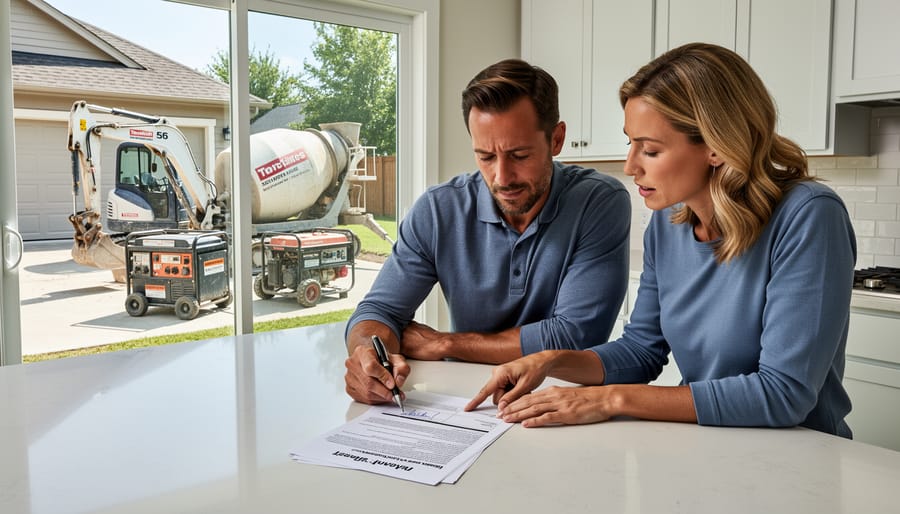
Essential Elements Every Rental Contract Should Include
Rental Period and Rate Structure
Understanding rental rates helps you budget appropriately for your fireplace installation project. Most equipment rental companies structure their pricing in tiers to accommodate different project lengths.
Daily rates typically apply to short-term needs, ranging from $150-$400 for smaller excavators or skid steers needed for outdoor fireplace foundations. Weekly rates offer better value, usually calculated at three to four times the daily rate rather than seven, saving you money on longer projects. Monthly rates provide the best deal for extensive renovations, often priced at eight to twelve times the daily rate.
Here’s a realistic example: A compact excavator might rent for $250 daily, $700 weekly, or $2,000 monthly. If your fireplace patio project spans ten days, you’d pay $700 for the first week plus $750 for three additional days, totaling $1,450.
Grace periods matter significantly in project timeline planning. Many contracts include a one to two-hour grace period before charging for an additional day. Return your equipment by 9 AM if you rented at 9 AM to avoid extra charges.
Late fees generally run 150-200 percent of the daily rate, making punctual returns essential. Weather delays present special considerations for outdoor fireplace projects. Some contracts include weather clauses allowing extensions without penalty when documented rain or snow prevents work. Always request this provision in writing. Others charge reduced standby rates, typically 25-50 percent of the daily rate, keeping equipment on-site during weather interruptions without full charges accruing.
Damage Responsibility and Insurance Coverage
Understanding who covers equipment damage can save you from unexpected costs when building your dream outdoor fireplace. Most rental contracts spell this out clearly, but the details matter tremendously.
Typically, rental agreements distinguish between normal wear and tear versus damage caused by misuse or accidents. When renting an excavator to prepare the foundation for your outdoor fireplace, you’re generally responsible for any damage beyond routine use. For example, if you accidentally back the excavator into your fence while positioning materials, you’ll likely pay for repairs. However, if the hydraulic system fails during normal operation, that’s usually the rental company’s responsibility.
Here’s a real-world scenario: A homeowner rented a concrete mixer for their fireplace patio project. While mixing, a blade broke loose. The contract showed this as equipment failure covered by the rental company. However, when the same homeowner overloaded the mixer beyond its capacity specifications and burned out the motor, the contract held them liable for repair costs.
Most rental companies offer damage waiver insurance, similar to what car rental agencies provide. This coverage typically costs 10-15% of the rental fee but can protect you from paying thousands in repair costs. For a weekend excavator rental at $400, spending an extra $50 for coverage provides peace of mind.
Always photograph equipment before use, documenting any existing damage. Review the contract’s damage clause carefully, understanding your maximum liability and what the insurance actually covers. Some policies exclude certain damage types or have substantial deductibles.
Delivery, Setup, and Return Terms
When renting equipment for your fireplace installation or chimney work, delivery and return terms can significantly impact your project budget. Many homeowners focus solely on the daily rental rate, only to discover additional fees that weren’t immediately apparent.
Transportation costs are typically the first surprise. While some rental companies include delivery within a certain radius, others charge based on distance or apply flat fees each way. For a mini excavator needed to dig out a gas line for your outdoor fireplace, you might pay $75-150 per delivery and another $75-150 for pickup. Always ask whether fuel costs for delivery are included or calculated separately.
Setup assistance varies considerably between providers. Some companies will unload equipment at your curb and expect you to handle the rest, while others offer full setup services for an additional fee. If you’re renting scaffolding for chimney repairs, professional setup might cost extra but ensures safety compliance.
Fuel policies deserve careful attention. Equipment is usually delivered with a full tank, and you’re responsible for returning it the same way. The hidden cost here is that rental companies often charge premium rates for fuel if you return equipment empty, sometimes double the market price.
Cleaning requirements can catch you off guard too. Standard wear is expected, but if you’re renting a concrete mixer for your outdoor fireplace project and return it caked in dried concrete, expect cleaning fees ranging from $50-200. Review the contract’s definition of acceptable return condition and photograph the equipment before and after use to protect yourself from unfair charges.
Real Contract Examples for Common Fireplace Projects
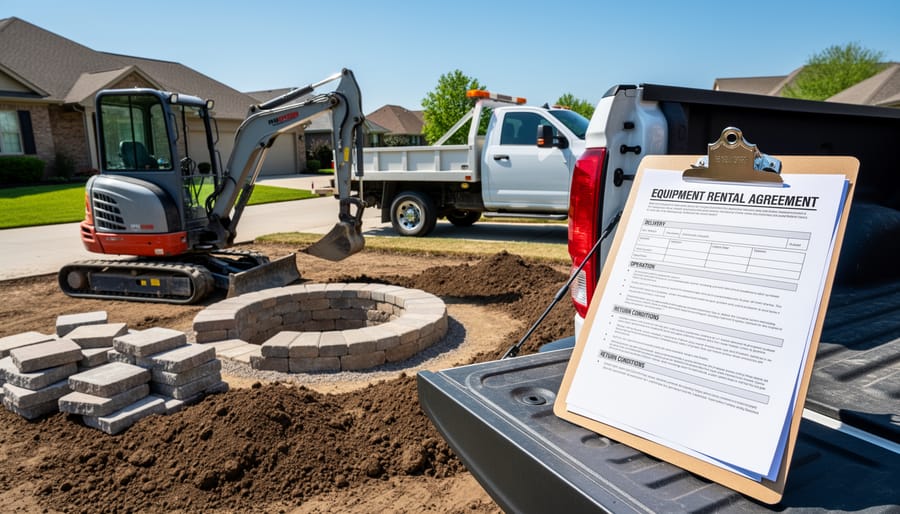
Mini Excavator Rental for Outdoor Fire Pit Installation
Creating an outdoor fire pit transforms your backyard into a cozy gathering space, but proper excavation is essential for safety and longevity. When renting a mini excavator for this project, you’ll encounter a contract that protects both you and the rental company while ensuring your fire pit foundation is built correctly.
A typical mini excavator rental contract for fire pit installation includes several key components. First, you’ll see operator requirements clearly stated. Most rental companies allow homeowner operation after a brief training session, though some require proof of previous experience or offer optional operator services for an additional fee. The contract specifies whether fuel costs are included and who’s responsible for routine maintenance during the rental period.
Site preparation responsibilities form another crucial section. You’ll need to mark underground utilities before digging begins, and the contract typically requires proof that you’ve contacted your local utility notification service. There are several things to consider when renting excavation equipment, including access routes for delivery and pickup.
Duration estimates help you budget appropriately. Most fire pit foundation work requires a one to two-day rental, depending on soil conditions and pit size. The contract outlines daily rates, late return fees, and damage deposit requirements. Standard terms include liability coverage, specifying who’s responsible if the equipment damages your property or nearby structures. Understanding these provisions ensures your outdoor fire pit project starts on solid ground, both literally and contractually.
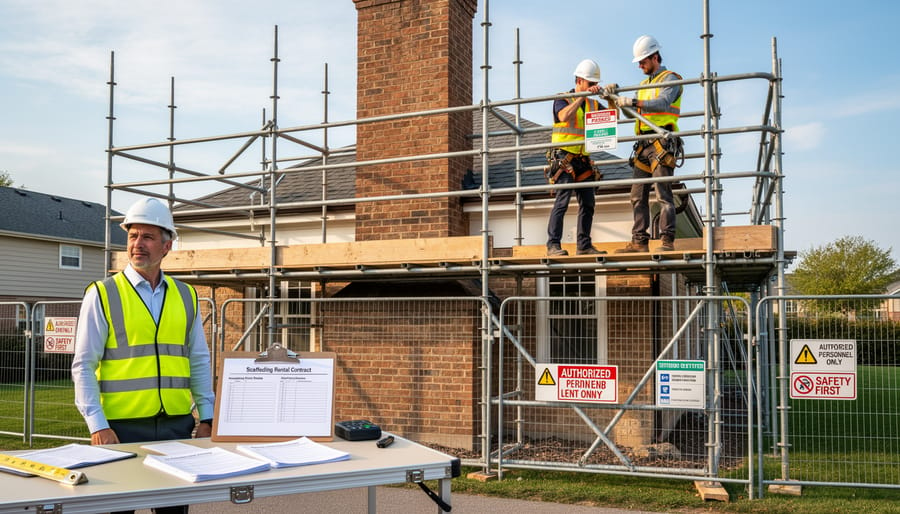
Scaffolding Rental for Chimney Work
When you’re planning that stunning stone fireplace facade or need chimney repairs to keep your home safe and cozy, scaffolding rental becomes essential. A well-structured scaffolding contract protects both you and the rental company while ensuring your project stays on track.
A typical scaffolding rental agreement should specify the assembly details upfront. Your contract needs to clarify who handles setup and takedown—some companies include professional installation in the rental fee, while others expect you to manage it yourself. For chimney work, professional assembly is worth every penny since safety is paramount when working at heights around your home’s heating system.
Safety compliance requirements deserve special attention in these contracts. Look for language addressing weight capacity limits, inspection schedules, and compliance with local building codes. The rental company should provide documentation showing their equipment meets current safety standards and include liability coverage details.
Extended rental scenarios are particularly important for fireplace projects, which often take longer than anticipated. Your contract should outline daily, weekly, and monthly rates, with clear terms about how extensions are handled. Some companies offer discounted rates for longer rentals, which works perfectly when you’re transforming your home’s heating centerpiece into something truly special.
Always ensure the contract includes pickup and delivery schedules, damage deposit terms, and weather-related extension policies. These provisions keep your chimney project moving smoothly while maintaining the safe, warm environment your family deserves.
Concrete Mixer for Hearth Construction
For shorter projects like building an outdoor hearth or fireplace foundation, you’ll encounter daily or weekly rental agreements that look quite different from month-long commitments. Let’s examine a typical concrete mixer rental contract for a weekend project.
A standard short-term agreement might specify a daily rate of $65 with a three-day minimum, totaling $195 for your project timeline. Unlike longer contracts, these agreements focus on immediate concerns: exact pickup and return times (often within specific hours to avoid additional day charges), fuel requirements (return it full or pay a premium), and rapid damage assessment procedures.
The liability section in quick-turnaround contracts tends to be more straightforward. You’re responsible for the equipment from the moment you sign until you return it and receive confirmation. Many rental companies require a credit card hold rather than separate insurance for short rentals, making the process faster but potentially exposing you to higher out-of-pocket costs if something goes wrong.
Payment terms are typically upfront, with the full amount plus deposit charged immediately. Late return fees can be steep, sometimes 150 percent of the daily rate, so plan your hearth construction timeline carefully. These contracts also commonly include mileage restrictions if the equipment is trailer-mounted, which matters when sourcing materials from multiple suppliers for your eco-friendly outdoor heating feature.
Red Flags to Watch For in Rental Agreements
When you’re renting equipment for your fireplace installation or renovation project, certain contract clauses should immediately raise concerns. Being aware of these red flags can save you from financial headaches and project delays.
Watch out for vague damage definitions that don’t specify what constitutes normal wear and tear versus actual damage. A contract stating you’re responsible for “any damage” without clear parameters leaves you vulnerable to charges for minor scuffs or scratches that naturally occur during legitimate use. Request specific examples and photographic documentation of the equipment’s condition before rental.
Excessive security deposits or fees are another warning sign. While deposits are standard, be cautious of amounts that seem disproportionate to the equipment’s value. Some rental companies bury additional charges in fine print, including excessive late fees that compound daily, unexpected cleaning charges, or environmental fees that mysteriously appear on your final bill. Calculate all potential costs upfront, including delivery, fuel, and return charges.
Liability clauses that make you responsible for theft or damage beyond your control are particularly problematic. Some agreements hold renters liable even when equipment fails due to manufacturer defects or inadequate maintenance by the rental company. Look for language requiring you to carry specific insurance amounts that may exceed standard homeowner policies.
Beware of automatic renewal clauses or penalties for early returns, even if you’ve completed your fireplace project ahead of schedule. Some contracts lack clear termination procedures, making it difficult to end the agreement without penalties.
Unclear maintenance responsibilities can also cause disputes. The contract should specify who handles routine maintenance, fuel refills, and minor repairs during your rental period. If these expectations aren’t documented, you could face unexpected charges or work stoppages that delay your cozy fireplace dreams. Always request clarification on ambiguous terms before signing.
How to Negotiate Better Terms as a Homeowner
You have more negotiating power than you might think when renting equipment for your fireplace installation or renovation project. Start by bundling your needs—if you’re tackling a complete hearth makeover that requires multiple pieces of equipment like a concrete mixer, demo hammer, and mortar saw, ask about package discounts. Rental companies often prefer securing multiple items in one contract and may reduce your overall costs by 10-20%.
Don’t hesitate to request waived delivery fees, especially if the rental location is nearby or if you’re renting for an extended period. Many companies will accommodate this request to secure your business, particularly during slower seasons. Speaking of timing, off-season discounts can be significant—renting equipment in late spring or summer when demand for heating projects drops can save you considerable money compared to fall rush periods.
The damage deposit deserves your attention too. These amounts are often negotiable, particularly if you have references from previous rentals or can demonstrate your commitment to proper equipment care. Consider asking for a reduced deposit in exchange for purchasing their damage waiver insurance, which might actually cost less while providing better protection.
Finally, longer rental periods usually unlock better daily rates. If your fireplace project timeline is flexible, extending your rental from three days to a week might only add a small incremental cost while giving you breathing room to work at a comfortable pace. Remember, rental companies want your repeat business—approach negotiations confidently and you’ll likely be pleasantly surprised by their flexibility.
Before you break ground on your fireplace construction project, take the time to thoroughly read and understand every equipment rental contract. These agreements aren’t just formalities—they’re your protection against unexpected costs, liability issues, and project delays. Don’t hesitate to ask questions about anything unclear, from damage policies to insurance requirements. Your rental company expects questions and should be happy to explain every detail.
Always request copies of all signed agreements and keep them accessible throughout your project. Document equipment condition with photos before and after use, and be realistic when estimating your rental period. Underestimating can lead to costly extensions, while overestimating ties up your budget unnecessarily.
Remember, creating a beautiful fireplace starts long before the first stone is laid. Proper planning and careful contract review ensure your project proceeds smoothly from start to finish. When you understand your rental agreements completely, you can focus on what truly matters—bringing warmth and ambiance into your home while enjoying peace of mind knowing you’re protected every step of the way.