

Your gas fireplace needs professional servicing once a year, ideally before the heating season begins in early fall. This annual maintenance isn’t just a recommendation—it’s essential for your family’s safety, your home’s efficiency, and the longevity of your investment.
Gas fireplaces create a cozy ambiance and reliable warmth, but they also produce carbon monoxide, accumulate debris, and experience wear on critical components like thermocouples, pilot assemblies, and gas valves. Without regular attention, these issues can lead to dangerous gas leaks, inefficient heating that increases your energy bills, or complete system failure when you need warmth most.
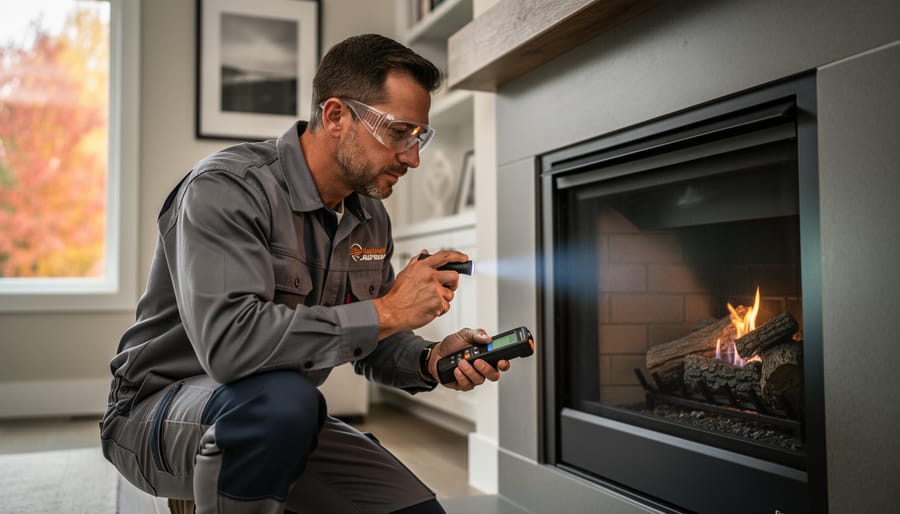
During a professional service visit, a certified technician inspects gas connections for leaks, cleans the burner and glass, tests safety controls, and ensures proper venting to prevent carbon monoxide buildup in your living space. This comprehensive checkup typically takes 45 to 90 minutes and costs between $100 and $200—a small price compared to emergency repairs or the health risks of neglected equipment.
Between annual services, you play an important role too. Monthly visual checks of the flame pattern, keeping the glass clean, and ensuring vents remain unobstructed all contribute to safe, efficient operation. Think of your gas fireplace as both a lifestyle element that enhances your home’s comfort and an eco-friendly heating solution that deserves the same maintenance attention as your furnace or water heater.
The Short Answer: Annual Servicing Is Your Safety Net
Here’s the bottom line: your gas fireplace needs professional servicing once a year. Think of it as a yearly checkup, similar to maintaining your heating system or getting your car inspected. The best time? Before heating season begins, typically in late summer or early fall.
This isn’t just a suggestion we’re throwing out there. It’s the industry standard recommendation from fireplace manufacturers, safety organizations, and the National Fire Protection Association. And there’s good reason behind this timeline.
Gas fireplaces might seem like they run cleanly and efficiently without much fuss, but a lot happens behind those dancing flames. Over the course of a year, your fireplace accumulates dust and debris, seals can deteriorate, and components experience normal wear and tear. The gas valves, thermocouples, and pilot assemblies all work hard to keep your fireplace functioning safely. An annual inspection catches small issues before they become safety hazards or expensive repairs.
Think of annual servicing as your safety net. A certified technician will examine critical components, check for gas leaks, clean essential parts, and ensure everything operates as it should. This isn’t just about keeping your fireplace running, it’s about protecting your home and family from potential carbon monoxide issues or gas leaks that you can’t see or smell.
Now, if you’re someone who runs your gas fireplace daily throughout the winter months, or if it’s your primary heat source, you might benefit from servicing twice a year. Heavy use means more wear on components and more buildup that could affect performance. Your fireplace works hard to create that cozy atmosphere you love, so giving it the care it deserves keeps it burning beautifully for years to come.
Why Your Gas Fireplace Can’t Skip Its Annual Checkup
The Silent Dangers Lurking Inside
Your gas fireplace creates a cozy ambiance on chilly evenings, but hidden beneath that dancing flame are potential hazards that aren’t always visible to the untrained eye. Understanding these risks isn’t about creating panic—it’s about protecting your home and loved ones through informed care.
Carbon monoxide stands as the most serious concern. This odorless, colorless gas can silently accumulate when your fireplace doesn’t burn fuel completely or when ventilation systems develop blockages. Even small amounts exposure over time can cause health issues, while significant leaks pose immediate danger. Professional technicians use specialized equipment to detect carbon monoxide levels that you simply cannot see, smell, or feel.
Gas leaks present another invisible threat. While natural gas is treated with that distinctive sulfur smell for detection, small leaks around connections and valves might go unnoticed until they become serious problems. Trained professionals know exactly where to check for these vulnerabilities and can identify early warning signs before they escalate.
Ventilation problems develop gradually as debris, bird nests, or corrosion restrict airflow through your chimney or venting system. Poor ventilation doesn’t just reduce efficiency—it can force dangerous combustion byproducts back into your living space. The dangers of gas fireplaces become very real when ventilation fails.
Regular professional servicing catches these silent dangers early, transforming your fireplace from a potential risk into the safe, reliable heat source it should be. This preventive approach protects both your investment and what matters most—your family’s wellbeing.
How Neglect Costs You Money
Skipping regular servicing might seem like a money-saver, but it actually costs you more in the long run. When your gas fireplace isn’t properly maintained, it operates less efficiently, meaning you’re burning more gas to produce the same amount of warmth. This inefficiency translates directly to higher utility bills month after month.
A neglected fireplace also works harder to heat your home, putting unnecessary strain on its components. Dirty burners, clogged vents, and worn parts force your system to compensate, driving up energy consumption while reducing your comfort. Over time, these small inefficiencies compound, costing you significantly more than an annual service visit.
Beyond wasted energy, skipped maintenance often leads to expensive repairs that could have been prevented. A small issue caught during routine servicing might cost minimal dollars to fix, but left unaddressed, it can cascade into major component failures requiring hundreds or thousands of dollars to repair.
Regular professional maintenance keeps your fireplace running at peak efficiency, supporting your commitment to eco-friendly heating while protecting your wallet. Think of annual servicing as an investment that pays dividends through lower energy bills, extended equipment life, and the peace of mind that comes from knowing your cozy fires aren’t quietly draining your bank account.
Your Warranty Probably Requires It
Here’s something many fireplace owners don’t realize until it’s too late: skipping annual professional servicing could void your manufacturer’s warranty. Most gas fireplace warranties explicitly require yearly inspections by a certified technician as a condition of coverage. This isn’t just fine print manufacturers hide in contracts—it’s actually a reasonable requirement that protects both you and them. Think of it like maintaining your car’s warranty by getting regular oil changes. If your fireplace develops a problem down the road and you can’t prove you’ve kept up with professional maintenance, you might find yourself paying out of pocket for repairs that would otherwise be covered. The cost of an annual service call, typically between $100-$200, is minimal compared to replacing major components or the entire unit without warranty protection. Keep those service receipts in a safe place—they’re proof you’ve held up your end of the warranty agreement.
What Actually Happens During a Professional Service Visit
The Essential Inspection Checklist
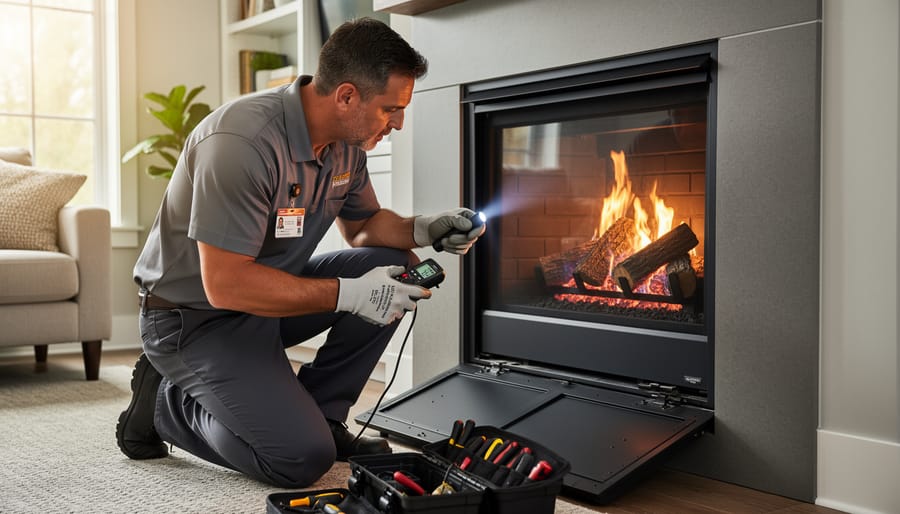
When a certified technician arrives for your annual service appointment, they’ll conduct a thorough examination of several critical components that keep your gas fireplace running safely and efficiently. Understanding what they’re checking helps you appreciate the value of professional maintenance and recognize potential issues between visits.
The burner assembly receives careful attention, as technicians clean away dust, debris, and carbon buildup that can create uneven flames or inefficient heating. They’ll inspect the pilot light to ensure it burns with that characteristic steady blue flame—any yellow or orange coloring signals incomplete combustion that needs addressing.
The thermocouple, a small but mighty safety device, gets tested to verify it’s properly shutting off gas flow if the pilot light goes out. This component is your first line of defense against dangerous gas leaks, making its inspection non-negotiable.
Gas connections throughout the system undergo pressure testing and leak detection using specialized solutions that reveal even the smallest escapes. Your technician will examine every fitting, valve, and line for signs of corrosion or wear.
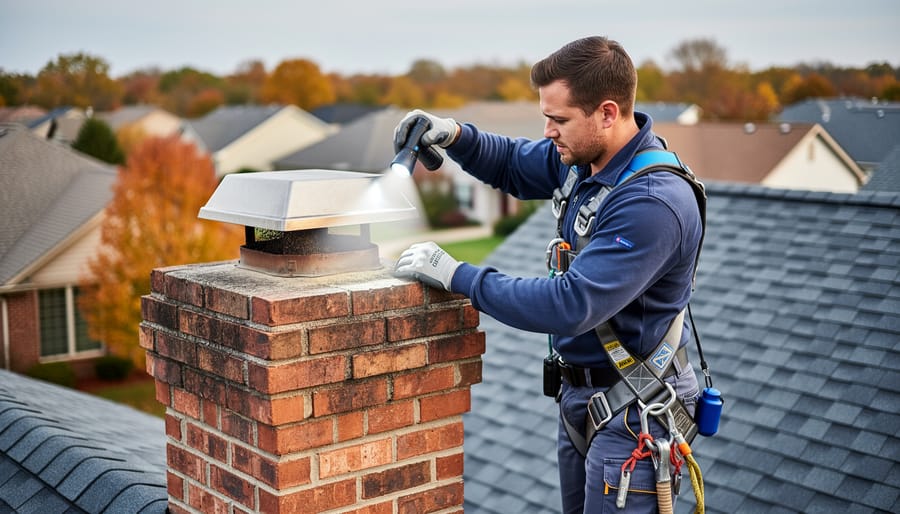
The venting system inspection ensures combustion gases exit your home properly. Technicians check for blockages, proper draft, and secure connections—issues here can allow carbon monoxide to enter your living space.
Finally, they’ll assess the condition of your glass door or panel, examining the gasket seal and checking for cracks that could compromise efficiency. They’ll also inspect decorative logs or media placement, as improper positioning can affect flame patterns and create incomplete combustion. This comprehensive checklist protects both your investment and your family’s wellbeing.
Cleaning and Adjustments That Keep Things Running Smoothly
During your annual professional service, technicians perform several key tasks that keep your gas fireplace operating safely and efficiently. Understanding what happens during these visits helps you appreciate why regular maintenance matters for both performance and your family’s safety.
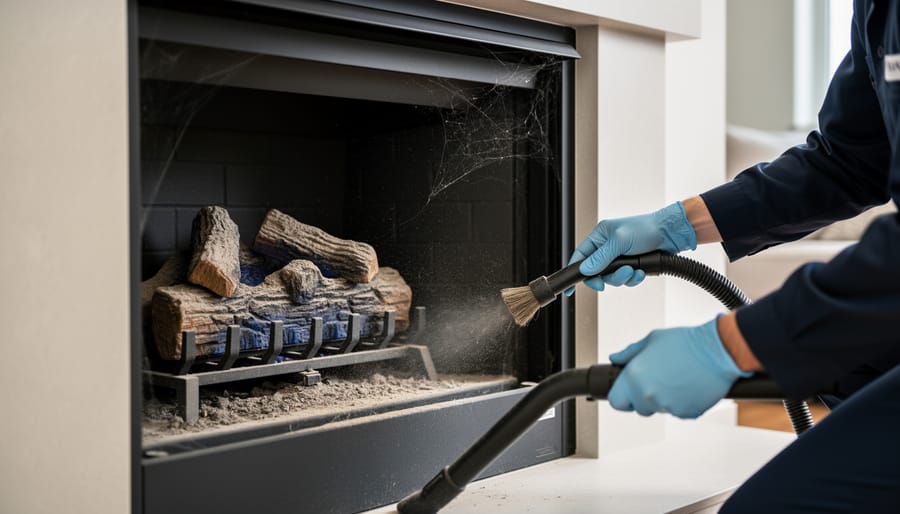
The cleaning process focuses on components that directly affect flame quality and combustion. Technicians carefully clean the gas fireplace logs, removing dust, soot, and debris that accumulate over time. They’ll also clean the burner ports, those small openings where gas flows through, ensuring they’re free from blockages that could create uneven or discolored flames. The glass doors receive special attention too, as buildup here not only blocks your view but can indicate combustion issues worth investigating.
Testing forms another crucial part of service. Your technician will measure gas pressure to confirm it meets manufacturer specifications, ensuring your fireplace burns cleanly and efficiently. They’ll observe flame appearance, looking for that ideal blue flame with just hints of yellow, which signals complete combustion. Flames that are too yellow, orange, or dancing erratically suggest adjustments are needed.
Common adjustments include fine-tuning the air-to-gas ratio for optimal combustion, repositioning logs for proper flame pattern, and calibrating thermostat controls. These tweaks might seem minor, but they significantly impact your fireplace’s efficiency and your heating costs. Think of it as keeping your cozy gathering spot running at its absolute best, ready to provide warmth and ambiance whenever you need it.
Between Services: Simple Maintenance You Can Handle Yourself
Monthly Visual Checks That Take Just Minutes
Between professional visits, a simple monthly visual check keeps you connected with your fireplace’s health and can alert you to potential issues before they become serious. Think of it as a quick wellness check that takes just a few minutes.
Start by firing up your fireplace and observing the flames. A healthy gas fireplace produces steady blue flames with yellow tips. If you notice predominantly yellow or orange flames, this could indicate incomplete combustion or dirty burners that need attention. The flame pattern should be consistent and even across the burner, without excessive flickering or dancing.
Listen carefully during operation. Your fireplace should run quietly with minimal noise. Any unusual sounds like hissing, popping, or whistling might signal gas pressure issues or debris in the burner system. While a gentle whooshing when igniting is normal, persistent odd noises warrant investigation.
Check your glass doors for excessive soot buildup or a white film, which can indicate combustion problems. A little cleaning between services is normal, but heavy deposits suggest something’s off.
Finally, verify your pilot light status remains consistent. These quick monthly observations help you catch small issues early, protecting both your investment and your family’s comfort.
Easy Cleaning Tasks for Between Professional Visits
Between professional visits, you can keep your gas fireplace looking beautiful and functioning safely with a few simple maintenance tasks. Think of these as the everyday care that extends the life of your investment while keeping your home cozy and inviting.
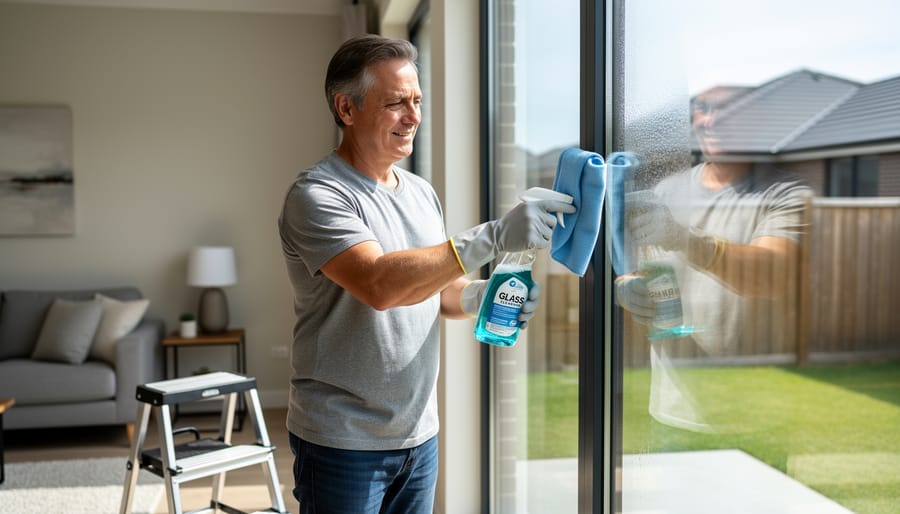
Start with the glass doors, which tend to accumulate a white film or haze from combustion byproducts. Once the fireplace is completely cool, clean the glass with a specialized fireplace glass cleaner or a mixture of vinegar and water. Use a soft cloth to avoid scratching, and you’ll restore that warm, welcoming glow in minutes. Regular glass cleaning also helps you monitor the flame pattern for any changes that might signal a problem.
Gently dust the exterior surfaces, logs, and decorative media with a soft brush or cloth when the unit is off and cool. This prevents buildup that can affect both appearance and performance. Check that exterior vents remain clear of dust, debris, pet hair, and seasonal decorations. Blocked vents can create dangerous conditions and reduce efficiency.
However, there are critical boundaries every homeowner should respect. Never attempt to clean internal components, adjust gas connections, or remove the fireplace front panel. Don’t use abrasive cleaners on the glass or try to repair any mechanical parts yourself. Resist the temptation to vacuum inside the firebox, as this can damage delicate components or disturb critical connections. These tasks require professional expertise to maintain both your safety and your fireplace’s warranty. When in doubt, wait for your annual service appointment.
When to Call for Service Before Your Annual Appointment
While annual servicing keeps your gas fireplace running smoothly, some situations simply can’t wait until your next scheduled appointment. Think of these warning signs as your fireplace’s way of asking for immediate help—and when it comes to gas appliances, it’s always better to err on the side of caution.
If you notice any unusual odors beyond the typical first-fire-of-the-season smell, don’t wait to call a professional. A persistent gas smell, musty odor, or burning plastic scent could indicate anything from a gas leak to debris buildup or damaged components. While gas fireplaces are designed with multiple safety features, unusual smells should never be ignored.
Pay attention to changes in your flame pattern too. A healthy gas fireplace flame should burn blue with occasional yellow tips. If you’re seeing excessive yellow or orange flames, flickering where there shouldn’t be any, or flames that seem lazy and weak, these changes often point to combustion issues that need immediate attention. Not only do these problems affect your fireplace’s efficiency, but they can also create dangerous carbon monoxide situations.
Performance issues are another red flag. If your fireplace suddenly won’t ignite, keeps shutting off unexpectedly, or produces noticeably less heat than usual, something’s amiss. Similarly, strange sounds—popping, whistling, or rumbling—deserve prompt investigation. These noises often signal gas pressure problems, ventilation issues, or loose components that could worsen over time.
The bottom line? Your safety and comfort matter more than sticking to a maintenance schedule. When your fireplace acts differently, trust your instincts and call a qualified technician. A small repair today beats a major safety issue or costly replacement tomorrow. Your fireplace is a lifestyle investment that deserves attention whenever it needs it, not just once a year.
Finding the Right Professional and What to Expect
Finding the right professional to service your gas fireplace is just as important as the service itself. Think of it like choosing a doctor for your home’s heating system—you want someone qualified, experienced, and trustworthy.
Start by looking for technicians certified by the National Fireplace Institute (NFI). This certification demonstrates that the professional has undergone rigorous training and stays current with industry standards and safety protocols. NFI-certified technicians understand the nuances of different fireplace models and can spot potential issues before they become serious problems.
When vetting potential service providers, don’t hesitate to ask questions. Inquire about their experience with your specific fireplace brand and model, whether they carry liability insurance, and what their service includes. A reputable technician should be happy to explain their process and provide references. Ask if they offer written estimates and warranties on their work.
Typical service costs for gas fireplaces range from $100 to $300, depending on your location and the extent of cleaning and repairs needed. While this might seem like an investment, regular maintenance prevents costly emergency repairs and ensures your fireplace remains an eco-friendly heating solution that operates at peak efficiency.
Schedule your annual service during the off-season, typically late summer or early fall, before you need your fireplace for winter warmth. You’ll often find better availability and sometimes even off-season discounts.
Before your appointment, clear the area around your fireplace and make sure the technician has easy access. Note any unusual sounds, odors, or performance issues you’ve noticed to discuss during the visit. Keep your fireplace manual handy, along with records of previous services. This preparation helps your technician work efficiently and ensures you get the most value from your service call.
Your gas fireplace is more than just a heating appliance—it’s a cornerstone of your home’s warmth and comfort, creating those cherished moments of coziness on cold evenings. To keep these moments safe and sustainable, annual professional servicing isn’t just a recommendation; it’s an essential investment in your family’s wellbeing and your home’s efficiency.
By scheduling yearly maintenance, you’re ensuring that your fireplace operates at peak performance, uses fuel efficiently, and most importantly, keeps your household safe from potential carbon monoxide risks and gas leaks. Between professional visits, taking just a few minutes each month to visually inspect your fireplace, check for unusual odors, and ensure proper ventilation can help you catch small issues before they become costly problems.
Think of fireplace maintenance as part of your home care routine—just like changing air filters or testing smoke detectors. These simple habits create a foundation for years of reliable, eco-friendly warmth. When you combine regular professional servicing with mindful monthly checks, you’re not just maintaining an appliance; you’re protecting your investment and creating a truly sustainable home environment where comfort and safety go hand in hand. Schedule your next service today and enjoy the peace of mind that comes with knowing your fireplace is ready to welcome you home.