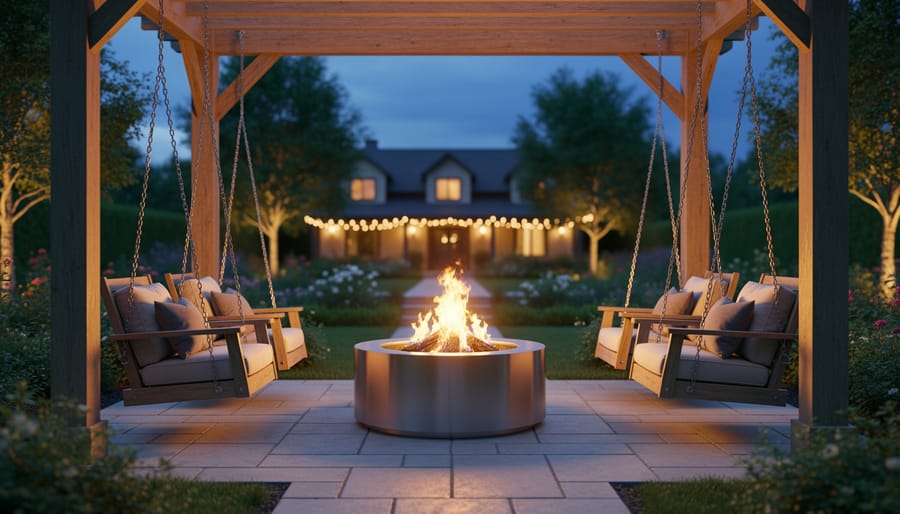


Picture yourself swaying gently beside dancing flames as cool evening air settles around your backyard. A swing fire pit transforms ordinary outdoor spaces into enchanting gathering spots where comfort meets captivating warmth. These ingenious designs combine the soothing motion of a porch swing with the mesmerizing ambiance of an open fire, creating an experience that elevates any outdoor entertaining area.
Building your own swing fire pit isn’t just achievable—it’s one of the most rewarding DIY projects you’ll tackle. Whether you’re working with a compact patio or a sprawling backyard, the right plan matches your available space, carpentry skills, and design vision. The beauty lies in customization: from rustic wooden frames with metal fire rings to modern steel structures with stone bases, each design offers unique character while delivering that irresistible combination of movement and firelight.
Safety stands at the foundation of every successful swing fire pit installation. Proper clearances, heat-resistant materials, and stable anchoring systems ensure your creation provides years of worry-free enjoyment. You’ll need to consider fuel type, seating capacity, and how the structure integrates with your existing landscape. These aren’t just functional considerations—they directly impact how often you’ll actually use this incredible outdoor feature.
The three plans ahead range from beginner-friendly weekend projects to more advanced builds requiring intermediate skills. Each includes complete materials lists, cutting diagrams, and step-by-step assembly instructions. You’ll discover how to select the right location, source eco-friendly materials, and incorporate design elements that complement your home’s aesthetic. By project’s end, you’ll have created more than outdoor furniture—you’ve built a destination where memories spark to life alongside the flames.
Why Swing Fire Pits Are the Perfect Integration Solution
There’s something magical about combining the gentle motion of swinging with the mesmerizing dance of flames. Swing fire pits transform the traditional fire pit experience into something extraordinary, creating a gathering space that naturally draws people together while offering comfort that standard patio chairs simply can’t match.
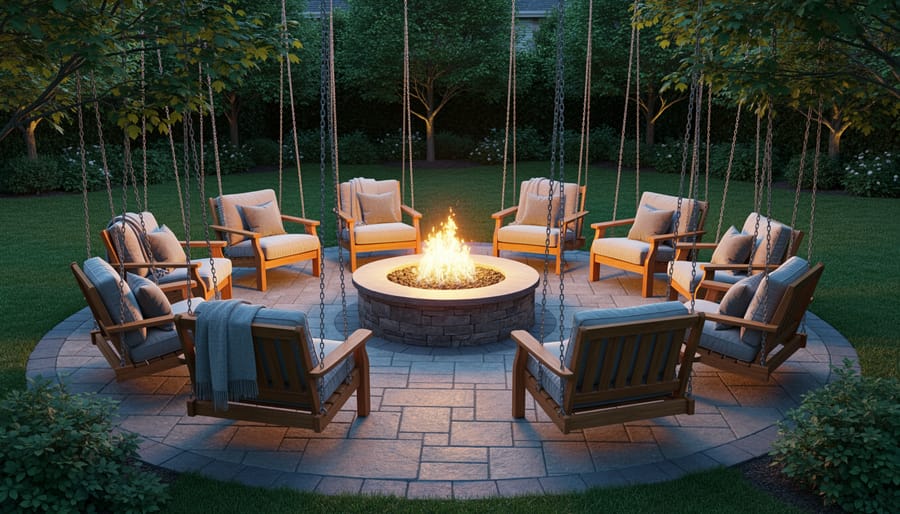
The beauty of swing fire pits lies in their intelligent use of space. Unlike bulky outdoor furniture that dominates your yard year-round, swings arranged around a fire pit create an intimate circle without feeling cramped. This arrangement maximizes every square foot, making them ideal for compact backyards where you want warmth and seating without sacrificing valuable outdoor space. The swings can hang from a pergola structure that serves double duty, providing afternoon shade and evening ambiance.
Adjustable comfort sets swing fire pits apart from conventional seating. Each person can find their perfect distance from the flames, gently rocking to control their proximity to the heat. On cooler evenings, swing closer for warmth. When the fire burns especially hot, simply push back a bit. This flexibility means everyone stays comfortable, from kids who prefer a bit more distance to adults who love feeling the fire’s full warmth.
The nostalgic appeal creates an emotional connection that standard backyard fire pit designs can’t replicate. Swings remind us of carefree childhood moments, and when paired with a crackling fire, they create a sanctuary from daily stress. This combination encourages longer conversations, deeper relaxation, and genuine connection among family and friends.
Integration into existing landscapes proves surprisingly versatile. Whether your style leans rustic farmhouse, modern minimalist, or cottage cozy, swing fire pits adapt beautifully. Natural wood beams complement country settings, while sleek metal chains suit contemporary spaces. The circular arrangement naturally enhances the social experience, eliminating the awkward “head of the table” dynamic and ensuring everyone feels equally included in the warmth and conversation.
What You Need to Know Before Building Your Swing Fire Pit
Safety First: Critical Clearances and Materials
Before you start building your swing fire pit, understanding safety requirements isn’t just recommended—it’s essential for protecting your family and property. Think of these guidelines as the foundation for countless evenings of worry-free enjoyment around your new outdoor centerpiece.
Start with proper fire pit placement by maintaining at least 10 feet of clearance from your home, garage, shed, or any structures. Keep a 25-foot distance from trees with overhanging branches, as rising sparks can reach surprisingly high. Your swing mechanism needs even more consideration—ensure at least 12 feet of overhead clearance to prevent chains from conducting heat downward during use.
Chain selection matters tremendously for both safety and longevity. Choose heavy-duty steel chains rated for at least 300 pounds per swing, treating them annually with high-temperature resistant coating. Stainless steel offers superior rust resistance in outdoor environments, making it worth the extra investment.
Your fire pit should be constructed at least 12 inches deep to contain embers effectively, with an interior lined with fire brick or heat-resistant refractory cement rated to 2000 degrees Fahrenheit. The base requires 4-6 inches of compacted gravel for drainage and stability.
For the swing seats themselves, opt for heat-treated hardwoods like oak or metal frames with weather-resistant cushions positioned at least 6 feet from the fire’s edge. Install a spark screen that’s easily removable for tending the fire but secure enough to catch flying embers.
Keep a fire extinguisher or garden hose within 20 feet, and never leave your fire pit unattended while burning.
Choosing Eco-Friendly Materials
Building your swing fire pit with eco-friendly materials doesn’t mean compromising on durability or style. In fact, sustainable choices often result in longer-lasting, more beautiful outdoor features that you can feel great about.
For the framework and swing mechanism, consider reclaimed or sustainably harvested hardwoods like oak, cedar, or black locust. These woods naturally resist rot and insects without chemical treatments, making them perfect for outdoor use. Salvaged lumber from old barns or deconstructed buildings adds character while giving new life to materials that might otherwise end up in landfills.
When choosing your fuel type and fire pit materials, recycled steel and cast iron are excellent options. Many suppliers now offer fire pit bowls and cooking grates made from reclaimed metal, which performs just as well as new materials while reducing environmental impact. Look for powder-coated finishes that are low-VOC and rust-resistant.
For the swing seats, opt for FSC-certified lumber or composite materials made from recycled plastics and wood fibers. These composites resist weathering beautifully and require minimal maintenance. Even your hardware choices matter—stainless steel bolts and chains will last decades without replacement, reducing long-term waste and ensuring your fire pit remains a sustainable gathering spot for years to come.
Plan #1: The Classic Circle Swing Fire Pit
Materials and Tools You’ll Need
Before you start building your swing fire pit, gathering the right materials and tools will make your project run smoothly and safely. Here’s what you’ll need for most swing fire pit designs:
For the structural frame, you’ll require pressure-treated 4×4 posts (typically 8-10 feet tall), 2×6 or 2×8 lumber for cross beams, and concrete mix for securing posts in the ground. Hardware essentials include galvanized lag bolts, heavy-duty eye bolts rated for outdoor use, and corrosion-resistant screws.
The swing mechanism demands quality materials: heavy-duty chain or steel cable rated for at least 400 pounds, swivel hooks to prevent tangling, and S-hooks for easy adjustment. For the fire pit itself, consider a pre-made steel fire ring (36 inches is standard), fireproof bricks, or a metal fire bowl depending on your chosen design.
Tool-wise, you’ll need a post hole digger or auger, level, drill with various bits, saw (circular or miter), measuring tape, wrench set, and safety equipment including gloves and eye protection. Having a helper makes the installation much easier, especially when positioning those tall posts. This investment in proper materials ensures your backyard gathering spot will provide warmth and memories for years to come.
Step-by-Step Construction Process
Building your swing fire pit is an exciting project that transforms your backyard into a gathering place filled with warmth and memories. Let’s walk through the construction process together, breaking it down into manageable steps.
Start by preparing your foundation. Mark out a 12-foot diameter circle for your structure, ensuring the ground is level. For safety and longevity, pour concrete footings at least 18 inches deep where each support post will stand. This creates a stable base that will support both your overhead structure and the swings for years to come.
Next, construct your support framework. Install four pressure-treated 6×6 posts in the footings, standing 8-10 feet tall depending on your preferred swing height. Connect these posts with sturdy 2×8 beams, creating a square frame overhead. Double-check that everything is level and secure before moving forward. This framework bears all the weight, so take your time getting it right.
Now prepare your fire pit area in the center. Dig down 6-8 inches and line the pit with fire-resistant materials like fire brick or a steel ring insert. Create proper drainage by adding a gravel base, then arrange your fire bricks or stones in a circle approximately 36-42 inches in diameter. This eco-friendly approach allows rainwater to drain naturally while containing your fire safely.
Install your swings by attaching heavy-duty eye bolts to the overhead beams, positioning them 5-6 feet from the fire pit center. Use chains rated for outdoor use and at least 400 pounds capacity per swing. Hang weather-resistant bench swings at a comfortable height where feet touch the ground when seated.
Add finishing touches like stain or sealant to protect the wood, landscape lighting for ambiance, and a gravel or stone base around the entire structure for a polished look and weed prevention.
Best For: Family Gatherings and Small Groups
This swing fire pit design truly shines when you’re hosting intimate backyard gatherings with 6-10 people comfortably seated around the flames. The rotating grill feature makes it perfect for family cookouts where everyone wants to participate in preparing meals together, creating those memorable moments that turn ordinary evenings into cherished traditions. You’ll find this setup ideal for weekend get-togethers, summer barbecues, or cozy fall evenings when friends drop by. The adjustable cooking height accommodates everything from slow-roasting marshmallows with kids to grilling steaks for adults, making it incredibly versatile for mixed-age groups. Because it combines the warmth and ambiance of a traditional fire pit with practical cooking functionality, you’re getting double the value from your outdoor space. This design works beautifully in medium-sized yards where you want a focal point that encourages conversation and connection without overwhelming the area.
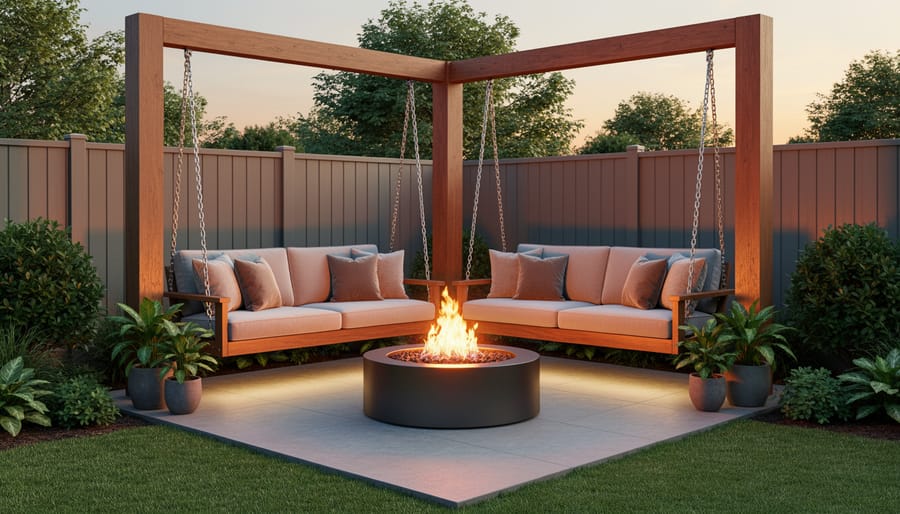
Plan #2: The Corner Swing Fire Pit
Materials and Tools You’ll Need
Building a corner swing fire pit requires thoughtful material selection to create a safe, beautiful gathering space. You’ll need a steel fire ring (36-inch diameter works well for most spaces), heavy-duty swing arm hardware rated for high temperatures, and heat-resistant chains capable of supporting your cooking grate weight plus food.
For the modified corner support structure, gather three 4×4 pressure-treated posts (8 feet tall), quick-setting concrete mix, decorative fire bricks or natural stone for the pit base, and a 30-inch cooking grate. Don’t forget galvanized lag bolts, washers, and appropriate anchoring hardware for securing your swing mechanism.
You’ll also need basic construction tools: post hole digger, level, drill with masonry bits, adjustable wrench set, and safety equipment including work gloves and safety glasses.
Consider eco-friendly options like reclaimed metal for your fire ring or locally-sourced stone to reduce your project’s environmental footprint. The corner design uses one fewer post than traditional circular layouts, making it both space-efficient and budget-friendly while creating that perfect cozy atmosphere for evening gatherings around dancing flames.
Step-by-Step Construction Process
Building a swing fire pit for a corner space requires thoughtful planning to create a cozy gathering spot without compromising safety or functionality. Let’s walk through the construction process that makes the most of your available area.
Start by selecting your corner location, ensuring it’s at least 15 feet from any structures, overhanging branches, or property lines. Mark out a compact 6-foot by 6-foot footprint that fits snugly into the corner while leaving adequate clearance. This configuration naturally directs heat outward and creates an intimate seating arrangement.
Begin excavation by digging down 6 inches within your marked area. Create a level base using 3 inches of compacted gravel, which provides drainage and prevents frost heaving. For corner installations, consider angling the fire pit slightly to maximize viewing angles from both adjacent sides.
Install your fire ring or build your pit structure using fire-rated bricks or concrete blocks. For smaller corner spaces, a 36-inch diameter ring works beautifully without overwhelming the area. Arrange seating in an L-shape that follows your corner’s natural lines, positioning swing benches or chairs 4 to 5 feet from the fire’s edge.
Mount your swing mechanism to sturdy vertical posts set in concrete footings at least 3 feet deep. The corner design allows you to anchor one side to an existing fence or wall structure if properly reinforced, reducing material costs and installation time. Position swings to create conversational groupings while maintaining safe distance from flames.
Add a gravel or flagstone surround extending 2 feet beyond the fire pit to catch sparks and define the space. This practical boundary also helps contain the cozy atmosphere your corner fire pit naturally creates, turning an underutilized area into your backyard’s warmest gathering spot.
Best For: Compact Spaces and Intimate Settings
The swing-arm fire pit truly shines in compact outdoor spaces where traditional fire pit designs might feel overwhelming or impractical. If you’re working with a small patio or balcony, this clever design maximizes your usable space by allowing you to swing the fire source away when not in use. Urban homeowners with narrow backyards will appreciate how the swing mechanism lets them position the fire pit close for warmth during chilly evenings, then tuck it aside for daytime activities.
These versatile fire features create wonderfully intimate atmospheres for couples seeking a romantic outdoor retreat without the footprint of conventional fire pits. The adjustable nature means you control exactly how close the warmth reaches, making it perfect for small gatherings of two to four people. Because the swing arm design naturally focuses the heat in a specific direction rather than radiating it in all directions, you’ll enjoy concentrated warmth without needing a large clearance area around the entire perimeter.
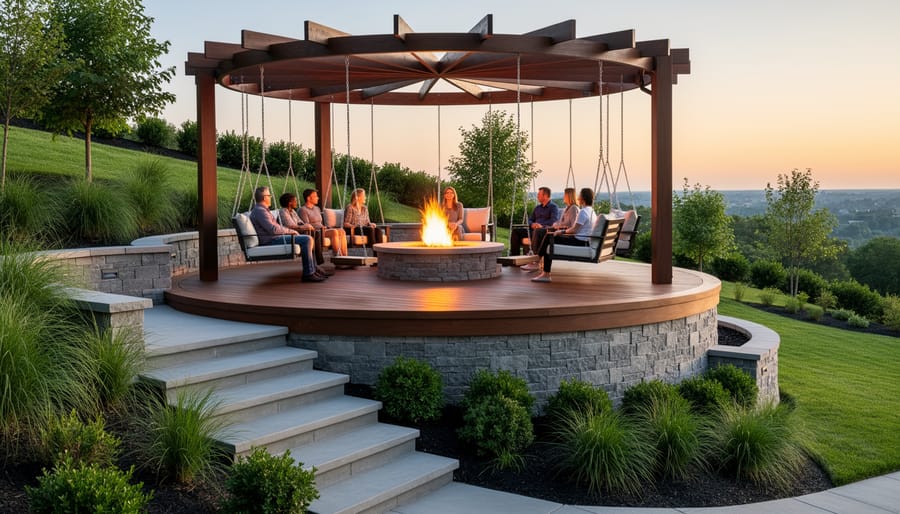
Plan #3: The Raised Platform Swing Fire Pit
Materials and Tools You’ll Need
Before you begin your swing fire pit project, gathering the right materials ensures a smooth build and lasting results. Your materials list will vary slightly depending on which plan you choose, but here are the essentials you’ll need for most swing fire pit constructions.
For the structural foundation and platform, you’ll need pressure-treated lumber for the base frame, typically 4×4 posts for corner supports and 2×6 or 2×8 boards for joists. Composite or cedar decking boards create a beautiful, weather-resistant surface that complements the warmth of your fire feature while offering eco-friendly durability.
The swing mechanism requires a sturdy metal frame or heavy-duty A-frame supports, galvanized steel chains or cables rated for outdoor use, and swivel hardware designed to handle heat exposure. For the fire pit itself, select a steel fire ring or bowl, fire-resistant bricks for the base, and heat-resistant metal sheeting to protect the platform beneath.
Don’t forget concrete mix for setting posts, galvanized screws and bolts, metal brackets for reinforcement, and exterior wood stain or sealant. Safety materials include a fire extinguisher, spark screen, and heat-resistant gloves for operation.
Tool-wise, you’ll need a circular saw, drill with bits, level, measuring tape, post hole digger, and wrench set. With these materials ready, you’re set to create an inviting outdoor gathering space that brings timeless ambiance to your backyard.
Step-by-Step Construction Process
Building your swing fire pit is an exciting project that combines warmth, ambiance, and outdoor fun. Let’s walk through each essential component to ensure your creation is both beautiful and safe.
Starting with the platform foundation, you’ll want to begin by selecting a level area at least 15 feet from any structures or overhanging branches. Excavate the area to 4 inches deep and install a compacted gravel base. This drainage layer prevents water accumulation and provides stability. Next, frame your platform using pressure-treated 4×4 posts set in concrete footings at least 30 inches deep, below your frost line. Create a deck surface using fire-resistant composite materials or hardwood, leaving a center opening for your fire pit that’s at least 48 inches in diameter.
For the elevated fire pit itself, safety is paramount. Install a steel fire ring or heavy-duty fire pit insert within your platform opening, ensuring it sits on a non-combustible base of concrete pavers or fire bricks. The rim should be elevated 12-18 inches above the deck surface to contain embers effectively. Add a spark screen that can remain in place while swings are in use, and consider surrounding the pit with decorative stone or heat-resistant materials for added protection and visual appeal.
Installing the overhead swing supports requires careful engineering. Use 6×6 treated posts or steel beams rated for dynamic loads, set in concrete footings 36 inches deep. Position swing mounting points 8-10 feet away from the fire pit center for comfortable warmth without excessive heat exposure. Install heavy-duty eye bolts or beam hangers rated for at least 1,000 pounds per swing. Remember to maintain proper clearances and always verify local building codes before beginning construction. This thoughtful approach creates an eco-friendly gathering space that enhances your outdoor lifestyle for years to come.
Best For: Sloped Yards and Statement Pieces
This design truly shines when you’re working with challenging terrain that might otherwise limit your outdoor living options. If your backyard slopes naturally, the swing fire pit becomes an architectural advantage rather than fighting against the grade. The suspended design eliminates the need for extensive leveling or retaining walls, saving you both time and money during installation.
Beyond the practical benefits, this is the perfect choice when you want your fire feature to spark conversations. The unexpected motion and elevated dancing flames create an eye-catching focal point visible from multiple angles around your yard. It transforms your outdoor space into something memorable, especially during evening gatherings when the swaying glow creates an almost hypnotic ambiance. If you’re the type of homeowner who enjoys unique, statement-making features that blend functionality with artistry, this plan delivers that wow factor while providing the cozy warmth you’re seeking.
Maintenance Tips to Keep Your Swing Fire Pit Safe and Beautiful
Your swing fire pit is a beautiful investment that deserves proper care to ensure years of safe enjoyment. Regular maintenance not only keeps it looking stunning but also prevents potential hazards that could arise from neglect.
Start with monthly chain inspections, examining each link for signs of rust, wear, or weakness. Apply a food-safe mineral oil to lubricate the chains and prevent corrosion. For overhead hardware, check that all bolts remain tight and secure. If you notice any fraying or damage, replace chains immediately rather than risking failure.
The swing seat itself requires seasonal attention depending on your material choice. Wooden seats benefit from eco-friendly wood oils or plant-based sealers applied twice yearly. These natural products protect against moisture and UV damage without releasing harmful chemicals into your outdoor space. Metal components should be treated with rust-resistant coatings, preferably those made from bio-based formulas.
Your fire pit basin needs regular cleaning to maintain efficiency and reduce smoke issues. After each use, once cool, remove ash buildup using a metal scoop. Deep clean monthly with a wire brush and biodegradable degreaser. This prevents creosote accumulation and ensures proper airflow.
Before winter, apply a weatherproof cover to protect your swing fire pit from harsh elements. If possible, store cushions and removable wooden components indoors. In spring, perform a thorough inspection before the first use, checking structural integrity and clearing any debris from the fire pit.
Consider using sustainable cleaning products like vinegar solutions for metal surfaces or castile soap for general cleaning. These environmentally responsible choices protect your family and local ecosystem while keeping your swing fire pit in prime condition.
Keep a maintenance log noting inspection dates and any repairs made. This simple practice helps you stay ahead of potential problems and ensures your swing fire pit remains a safe, beautiful gathering spot for countless memorable evenings around the fire.
Enhancing Your Swing Fire Pit Experience
Once you’ve built your swing fire pit, transforming it from a simple fire feature into a true outdoor living centerpiece takes just a few thoughtful additions. The key is balancing comfort and ambiance with safety and functionality.
Start with comfort by adding weather-resistant cushions to your swing seats. Choose fire-retardant fabrics and keep cushions at least 4-5 feet from the flame source. Deep-seated cushions with tie-backs stay secure while you gently sway, creating that perfect spot for extended evening gatherings. Consider storing cushions in a nearby deck box when not in use to protect them from the elements and maintain their longevity.
Layered lighting elevates the entire experience. String lights overhead create a magical canopy effect, while solar-powered path lights guide guests safely around the fire pit area. Keep electrical cords away from high-traffic areas and use outdoor-rated fixtures exclusively. The fire itself provides stunning focal lighting, but adding subtle perimeter lighting ensures everyone can move safely as darkness falls.
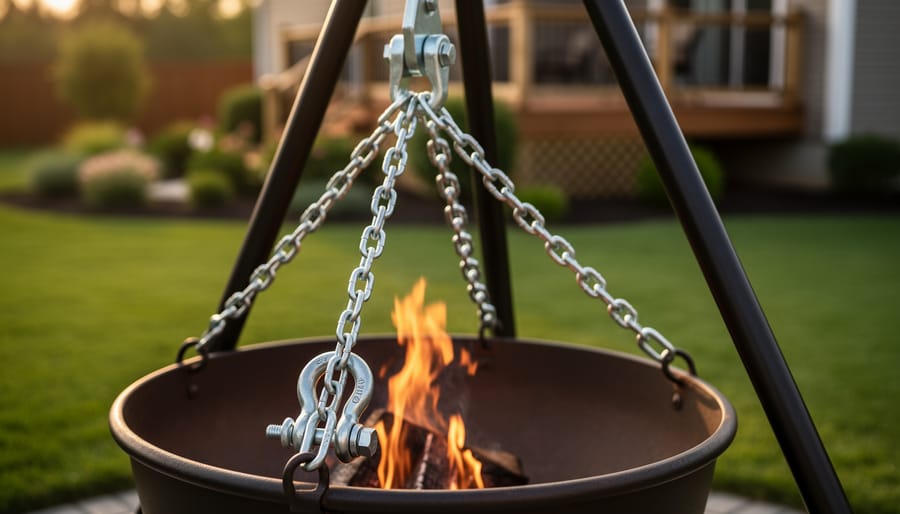
For cooking enthusiasts, your swing fire pit becomes an outdoor kitchen with the right fire pit accessories. Invest in adjustable grill grates, long-handled cooking tools, and a cast-iron tripod for hanging pots. Store these items in a weatherproof storage bench that doubles as additional seating. This keeps everything organized while protecting your investment.
Create storage solutions that complement your design. Built-in benches with hinged seats offer hidden compartments for firewood, kindling, and safety equipment like fire extinguishers and heat-resistant gloves. Keep a small bucket of sand nearby for emergency fire suppression.
Remember that eco-friendly practices enhance the experience too. Use sustainably sourced firewood, natural fire starters, and consider adding a spark screen to minimize airborne embers while maintaining visibility of those mesmerizing flames.
You’ve now explored three distinct swing fire pit plans, each offering its own unique blend of charm, functionality, and construction complexity. Whether you’re drawn to the rustic simplicity of the basic bench design, the versatile adaptability of the modular setup, or the luxurious comfort of the curved seating arrangement, there’s a perfect option waiting to transform your outdoor space into a gathering haven.
When choosing the right plan for your backyard, consider your available space, carpentry skill level, and how you envision using your fire pit. The basic plan works beautifully for intimate gatherings and those just starting their DIY journey. The modular design offers flexibility for growing families or changing entertainment needs. Meanwhile, the curved plan creates that resort-style ambiance perfect for larger gatherings and long summer evenings.
Remember that safety should always be your top priority as you build and enjoy your swing fire pit. Proper clearances, sturdy construction, and appropriate materials aren’t just recommendations—they’re essential components that protect your loved ones while ensuring years of worry-free enjoyment. Take the time to do it right, and you’ll create a backyard feature that becomes the heart of countless memories.
A swing fire pit represents more than just an outdoor amenity. It’s where comfort meets functionality, where crackling flames meet gentle motion, and where your backyard transforms into an inviting retreat. By combining the soothing warmth of fire with the relaxing movement of a swing, you’re creating an experience that draws people together and keeps them lingering long after the sun sets.