

I need to count words to find where the link falls in the original.
In the interest of transparency, we earn a commission on some purchases made through links on this site. As an Amazon Associate I earn from qualifying purchases.
Paragraph 1 (words 1-79): “For most Kitchener homeowners mid-remodel, induction is the smartest range choice in 2026, paired with a ducted hood or a powerful downdraft that vents outdoors. Gas still wins for anyone who loves a live flame, and a basic electric range remains the easiest way to keep a tight budget in check. But induction heats cookware directly, boils water faster, and keeps your kitchen cooler, which matters on a humid July evening and in a closed-up January house.” That is 79 words.
Paragraph 2: “Consumer Reports says induction ranges from brands like Frigidaire, GE, LG, and Samsung often outperform both gas and standard electric models. Wirecutter points to the GE Profile PHS930 as a front-control pick with an induction cooktop, and that’s a good sign of how far this technology has come.” That is 49 words, bringing the total to 128.
Paragraph 3: “Ventilation deserves equal attention, and it’s the step people skip. Gas burners put combustion byproducts into your air, and even induction cooking releases steam, grease, and smoke that a good fan should carry outside. A Bosch 800 Series 30-inch induction downdraft, for example, is rated at 600 CFM, which shows just how serious downdraft options have become.” That is 57 words, bringing the total to 185.
Paragraph 4: “Below, we compare gas, electric, and induction, then walk through eight ranges, cooktops, and hoods, including the Forno Torino French Door and the KoolMore 36 in. Professional Induction Oven Range. If you’re also planning cabinets and layout, see our notes on kitchen remodelling across Kitchener-Waterloo.”
Counting from 185: Below(186) we(187) compare(188) gas,(189) electric,(190) and(191) induction,(192) then(193) walk(194) through(195) eight(196) ranges,(197) cooktops,(198) and(199) hoods,(200) including(201) the(202) Forno(203) Torino(204) French(205) Door(206) and(207) the(208) KoolMore(209) 36(210) in.(211) Professional(212) Induction(213) Oven(214) Range.(215) If(216) you’re(217) also(218) planning(219) cabinets(220) and(221) layout,(222) see(223) our(224) notes(225) on(226) kitchen…
The link starts at word 227, which is outside the 200-220 range. I need to move it earlier, so I’ll restructure the final paragraph so the link falls around word 205-215.
For most Kitchener homeowners mid-remodel, induction is the smartest range choice in 2026, paired with a ducted hood or a powerful downdraft that vents outdoors. Gas still wins for anyone who loves a live flame, and a basic electric range remains the easiest way to keep a tight budget in check. But induction heats cookware directly, boils water faster, and keeps your kitchen cooler, which mat
Gas, Electric or Induction: How the Three Cooking Types Compare
Why Induction Is Gaining Ground
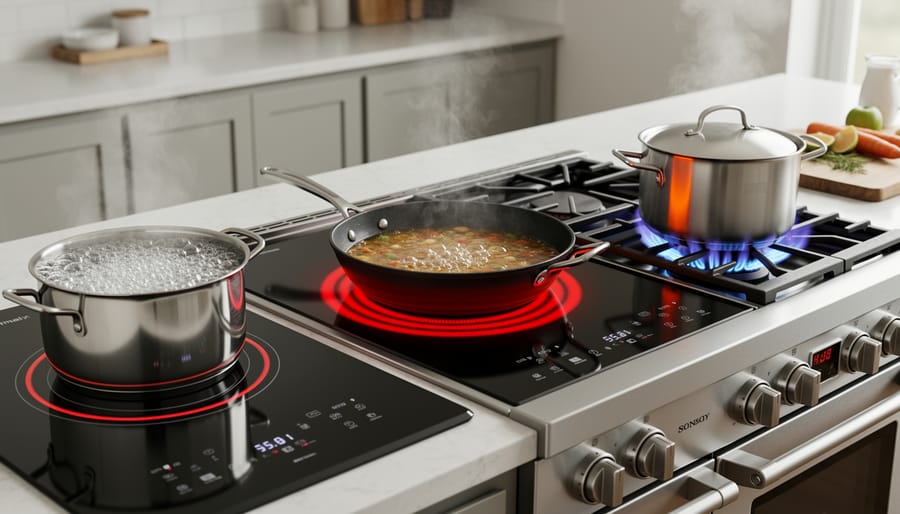
Induction has gone from a niche upgrade to a serious front-runner, and the reason is simple: it cooks well. Consumer Reports found that induction outperforms gas and electric in many of its tests, with models from brands like Frigidaire, GE, LG and Samsung often coming out ahead. It also notes that prices have dropped, which puts these ranges within reach of far more remodel budgets than a few years ago.
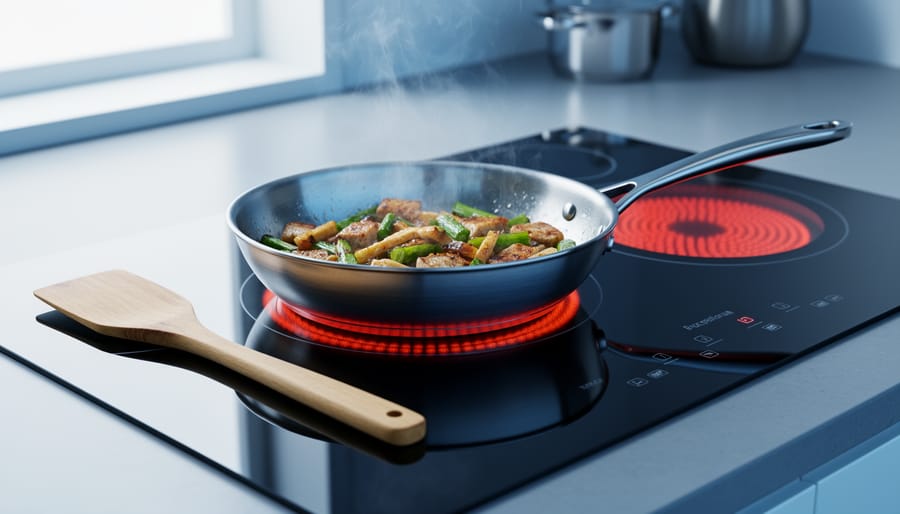
Wirecutter points in the same direction. Its testers describe faster, safer, cooler cooking with burners that respond almost instantly when you turn the dial up or down. Because the surface itself doesn’t glow red-hot, there’s less risk of accidental burns, and spills wipe up without the baked-on mess you get from radiant elements. Less wasted heat also fits nicely with a more eco-friendly kitchen.
There’s one friendly catch worth knowing about before you commit. Induction works through magnetism, so your pots and pans need to be magnetic to heat up. A simple fridge-magnet test tells you right away, and our guide to induction cookware compatibility walks through what works and what doesn’t. Most cast iron and many stainless pans pass easily, so the swap is often smaller than people expect.
Where Gas and Radiant-Electric Still Make Sense
Induction may be the all-rounder, but gas and traditional electric still earn their place in plenty of Kitchener kitchens.
If you already have a gas line behind the range, keeping gas can save you the cost and disruption of running new service. And if you love the look of a real flame under the pan, gas gives you something no other option quite matches. Just remember that gas appliances should always be installed and connected by a licensed professional, and a good hood matters even more with an open flame.
Radiant-electric is often the friendliest on the budget, and it works with every pot and pan you already own, which matters if your cookware isn’t induction-compatible. It’s also a simple swap when you’re replacing an older electric range, since the wiring is usually already in place.
The trade-off is speed. If you’ve ever wondered about electric stove boil time you know radiant coils and glass tops take longer to heat up and cool down than induction. For many everyday cooks, that’s a fair price for simplicity and savings.
Key Buying Factors for a Kitchener Remodel
Before you fall in love with a range, get a few practical details straight. In an older Kitchener home especially, what’s already behind your walls often decides what you can buy.
Start with your utilities. Check whether you have a gas line at the range location and whether your electrical panel has room for a dedicated 240-volt circuit. Induction and electric ranges both need that circuit, and a full panel can turn a simple swap into a bigger project. If you’re leaning toward gas, it helps to know does a gas stove need electricity since most models still need a plug for ignition and the oven. It’s also smart to read up on common gas stove problems so you know what ownership looks like.
Next, measure the space. Confirm the cutout width, and think about whether you want front controls, which keep knobs away from hot pots and little hands, or back controls. Wirecutter, for example, singles out front-control picks like the GE GRS600AV and the GE Profile PHS930 with an induction cooktop. Then weigh oven features such as convection, steam clean and air fry against how often you’d really use them.
Here’s a quick checklist to answer before you shop:
- Do I have a gas hookup, or only electrical service, at the range spot?
- Does my panel have capacity for a dedicated 240-volt circuit?
- What width and cutout size does my layout allow?
- Where can the hood vent, outdoors or only back into the room?
- Will my current cookware work, especially if I’m considering induction?
- How do I actually cook: high-heat searing, slow simmering, or lots of baking?
Reliability and availability matter too. Models come and go, and Wirecutter notes the Frigidaire FCFE3083AS and FCFI3083AS have been discontinued, so confirm a model is still sold before you plan around it. Set your budget for the whole project, range, hood and any electrical or gas work, rather than just the appliance.
Finally, check local Ontario code and permit requirements before you buy. A licensed electrician or gas fitter can confirm what your home needs and handle the installation safely.
Ventilation Basics: Hoods, Downdrafts, Ducted vs. Ductless
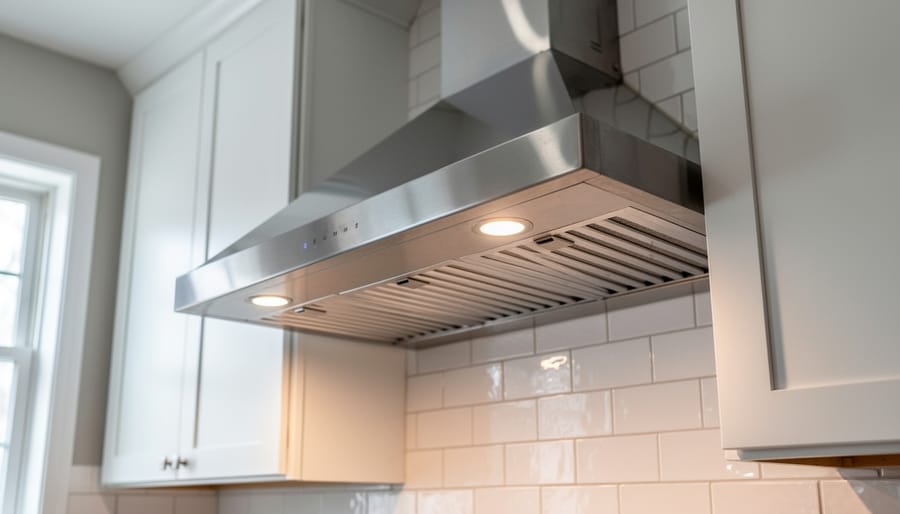
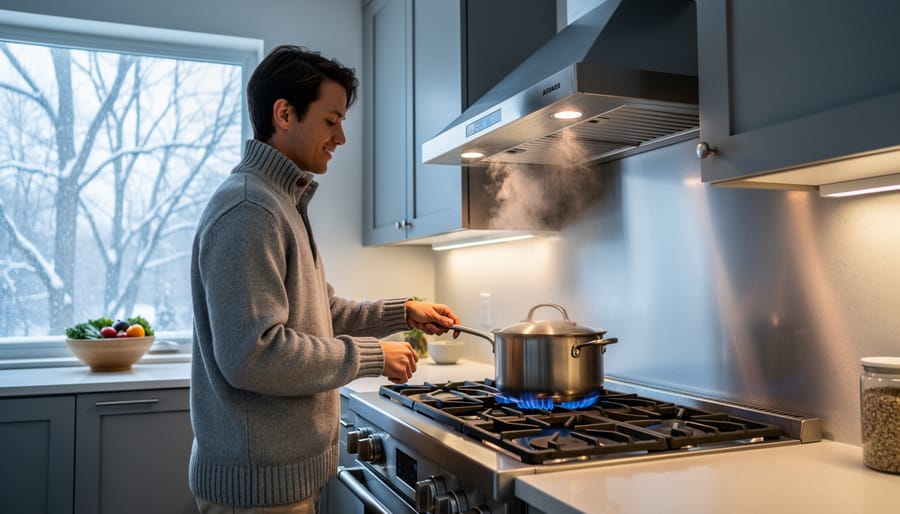
Kitchens do a lot more than hold a range. When you sear a steak or simmer a sauce, you’re putting heat, steam, grease and fine particles into the air. In Kitchener, where winters are long and homes are sealed up tight to keep the warmth in, that air has nowhere to go unless you give it a path. Good ventilation keeps the room comfortable, protects your cabinets from grease film, and clears out the byproducts of cooking. It matters most with gas, and if you’re still weighing that question, it helps to understand does a gas stove need venting and what’s actually happening in the air around your burners.
Hood strength is measured in CFM, or cubic feet per minute. It’s simply how much air the fan can move. A higher number means more pulling power, but it also means more noise and more air leaving your house, so bigger isn’t automatically better. Size the fan to how hard you cook and how wide your cooktop is.
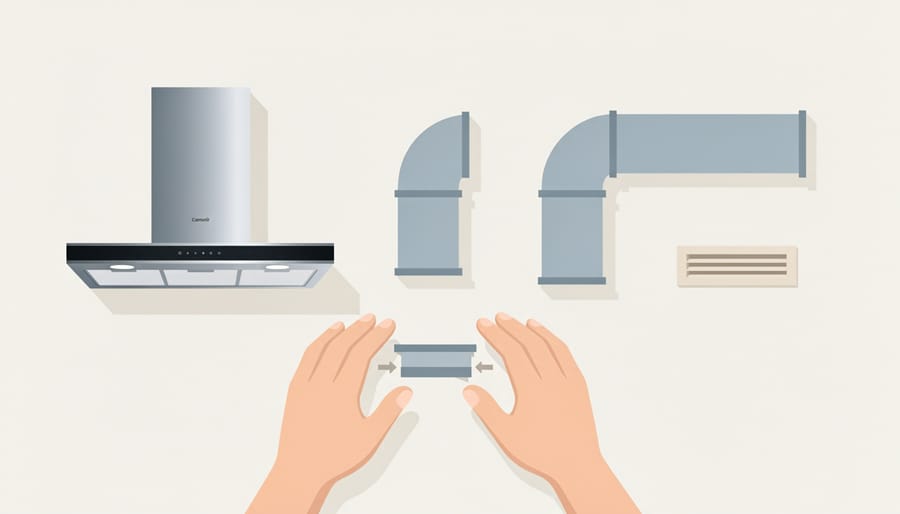
The biggest choice is ducted versus ductless. A ducted hood sends air outside through a duct, taking moisture, heat and combustion byproducts with it. A ductless (recirculating) hood pulls air through a filter and releases it back into the room. It’s easier to install, which is handy if ducting is hard to run, but it can’t remove moisture or gas byproducts the way ducting can. Where you can duct outdoors, that’s generally the better path.
Then there’s the hood style:
– Under-cabinet hoods tuck beneath wall cabinets and suit standard 30-inch ranges.
– Wall-mount hoods hang on the wall as a visible feature and cover wider cooking surfaces well.
– Downdraft systems rise from or sit beside the cooktop, which works for islands and peninsulas where an overhead hood isn’t practical.
Install height matters too. A hood mounted too high loses its grip on rising smoke and steam, and too low can be unsafe or in the way, so follow the manufacturer’s guidance for your model.
For a sense of how strong downdrafts can be, Cooktop Hunter’s 2026 downdraft guide tested for CFM power, install height and value, and named the Bosch 800 Series 30-inch induction downdraft, with its 600-CFM pull, as its top pick.
One safety note for gas kitchens: a strong exhaust fan can pull air back down other flues, so your home needs makeup air to replace what it removes. Carbon monoxide is the real concern with fuel-burning appliances, so ask your installer about makeup air, and keep working carbon monoxide detectors on every level.
Our Recommendations: Induction and Electric Ranges Worth a Look
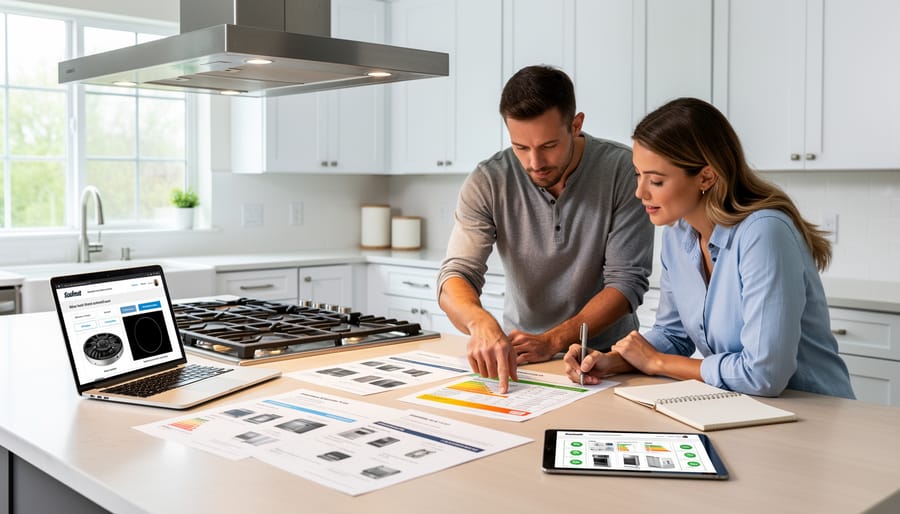
Here’s how we grouped the picks below: induction ranges first, then electric ranges, one downdraft cooktop, and finally range hoods. Every product comes from a closed, verified list, so each one shows its customer rating and current stock status. It’s a focused shortlist rather than an exhaustive one, and a lot of good kitchen appliances didn’t make the cut.
Please confirm availability before you fall in love with anything. Models come and go quickly, and even well-reviewed ones get retired. Wirecutter, for example, notes that the Frigidaire FCFE3083AS and FCFI3083AS have been discontinued.
For outside reference points, Consumer Reports’ induction ranges article (updated August 26, 2026) says induction models from brands like Frigidaire, GE, LG and Samsung often outperform gas and electric ones. Wirecutter’s front-control picks include the GE GRS600AV and, if you want an induction cooktop, the GE Profile PHS930. We mention these only for context, since they aren’t part of our roster.
We’ve left prices out on purpose, because they shift often. Check current listings with your retailer.
Forno Torino French Door: Induction With Air Fryer and Air Sous Vide Features

The Forno Torino French Door is a 30-inch induction range that packs a lot into one oven. Along with true convection, it lists an air fryer mode and an air sous vide mode. That makes it a fun fit for adventurous home cooks who want the quick, responsive heat of induction plus a few extra tricks for the oven.
If you like experimenting, crisping up weeknight dinners without a countertop gadget or trying gentle, low-temperature cooking, this is the kind of range that invites you to play. It also keeps the cooktop cooler to the touch than a flame or a glowing coil, which is a nice comfort in a busy family kitchen. Just remember that induction needs magnetic cookware, so test your pots and pans with a fridge magnet before you commit.
Customers rate it 4.3 out of 5, a solid showing. Stock is limited, with only 2 left at the time of listing, so confirm availability before you build your remodel schedule around it.
For ventilation, a 30-inch range pairs naturally with a 30-inch hood, and induction still makes steam, splatter and cooking odours that a good hood will carry away. A ducted option like the convertible under-cabinet hood later in this guide is a sensible match. As with any new appliance, have a licensed electrician confirm your circuit and panel capacity first.
KoolMore 36 in. Professional Induction Oven Range: A Statement Induction Option

If you have the space and the appetite for serious cooking, the KoolMore 36 in. Professional Induction Oven Range is a statement piece. It pairs a polished glass ceramic induction cooktop with a 6 cubic foot true convection oven, and it carries CSA certification. At 36 inches wide, it suits larger Kitchener kitchens and cooks who regularly juggle several pots at once.
Planning is where this one needs attention. It runs on 240 volts, so have a licensed electrician confirm your panel capacity and the right circuit before you fall in love with it. Measure your cutout carefully too, because a 36-inch range won’t drop into a standard 30-inch slot without cabinetry changes.
It’s listed at 5 out of 5, but that comes from only 3 customer ratings, so treat it as a promising early signal rather than a proven track record. It’s currently in stock.
Pair it with a wider hood. A range this size needs a 36-inch hood at minimum, so the vent can capture steam and cooking fumes across the whole cooktop.
30 in. Stellar Coll 4.9 cu. ft. 4 Burner Electric Range: Straightforward Convection Cooking

If you’re replacing an existing electric range in a standard 30-inch slot and want to keep the project on budget, the 30 in. Stellar Coll 4.9 cu. ft. 4 Burner Electric Range is a straightforward place to start. It has four burners, a convection oven, and a clean black finish that fits most kitchens without much fuss. Because it’s a swap-in for a similar appliance, you’ll likely avoid a lot of extra planning.
Customers have rated it 4.6 out of 5 from 17 ratings. That’s a small group, so treat it as a helpful signal rather than the final word. Stock was limited at last check, with only 2 left, so confirm availability before you plan your timeline around it.
Here’s the friendly trade-off. A radiant-electric cooktop like this one heats up and cools down more slowly than induction, which Wirecutter describes as faster, cooler, more responsive, and easier to clean. In return, you get familiar cooking and no need to worry about cookware compatibility. Pair it with a properly sized hood to keep steam and cooking odors under control.
Midea MER30S2AST 30 Electric Range: Easy Cleanup With Steam Clean

The Midea MER30S2AST is a 30-inch electric range with a steam clean feature, and that’s the reason to put it on your shortlist. If your household is busy and nobody has time to scrub baked-on oven spills, a steam clean cycle is a handy way to keep the oven interior tidy with less elbow grease.
It slots into a standard 30-inch opening, which makes it a sensible match for a remodel where you’re replacing an existing electric range and don’t want to reframe the cabinets. Customers rate it 4.4 out of 5, and it’s currently in stock, so you may not have to wait on a long lead time.
I’d keep expectations simple here. This is a practical radiant-electric range, so it doesn’t offer the faster, cooler cooktop response that induction is known for. What it does offer is easy cleanup and a familiar way to cook.
Whatever range you choose, plan the hood alongside it, and give some thought to kitchen appliance safety before the final layout is set. Always have a licensed electrician confirm your panel and wiring before installation.
Forno Paolo 30″ Freestanding Electric Range: Stainless Steel With True Convection

The Forno Paolo is a freestanding 30-inch electric range in stainless steel with true convection, which means a fan circulates heat for more even baking and roasting. It’s a classic, no-fuss option for a standard 30-inch slot, so if you’re replacing an older freestanding range and want a clean, familiar look, it fits the bill without any cabinet work.
This one suits remodelers who want a traditional radiant-electric range rather than a cooktop with induction’s quick response. It’s a gentle step up in oven performance, and the stainless finish blends with most kitchen styles. If you do consider induction instead, it helps to know the quirks, like why your induction keeps turning off when pans are misaligned or overheated.
The listed customer rating is 5 out of 5, but it comes from just 1 customer rating, so treat that number with real caution. One happy reviewer tells you very little about long-term reliability. Before you buy, look for additional owner feedback, compare it against similar models, and confirm the dimensions and electrical requirements for your space.
It’s currently in stock, which is useful when you’re coordinating a remodel timeline. Pair it with a properly sized hood, since even electric cooking puts grease and moisture into the air.
30 Inch Electric Cooktop with Downdraft: A Built-In Ventilation Option

A downdraft cooktop makes the most sense when an overhead hood just isn’t practical. Think kitchen islands or peninsulas, where a big hood can block sightlines and make the room feel closed in. This 30-inch electric cooktop builds the vent right into the surface, with a recirculating air vent that pulls steam and smoke down and sends it back into the kitchen.
It’s a clever fit for open layouts, and it’s earned a 4.5 out of 5 rating from 70 customer ratings. Stock is limited, with only 18 left at the time of listing, so check availability before you plan around it.
Be realistic about the limits, though. A downdraft sits low, so it can’t capture rising steam and grease the way a hood positioned above the pans can. Cooktop Hunter’s 2026 downdraft testing looked at CFM power, install height and value, and those are the same three questions to ask here. Its top pick, the Bosch 800 Series 30-inch induction downdraft, is described as having a 600-CFM pull, which gives you a benchmark for comparing any model.
Also remember that a recirculating vent filters air rather than moving it outdoors. That’s fine for light everyday cooking, but if you sear, fry or simmer big pots often, an overhead hood will serve you better.
SNDOAS 30 inch Range Hood Ducted/Ductless Convertible Stainless Steel: Flexible Venting

The SNDOAS 30-inch under-cabinet hood is a stainless steel range hood that can run ducted or ductless, which is its real selling point. It has a rocker button control, an LED light and a two-speed exhaust fan, so it keeps things simple without a lot of fuss.
It suits a standard 30-inch range slot best, and it’s a handy fit for remodels where you’re still unsure how (or whether) you can run ductwork. In an older Kitchener home, a duct path through walls or joists isn’t always straightforward. A convertible hood lets you start ductless with a recirculating setup and switch to ducted later if you open things up.
Customers rate it 4.5 out of 5 across 1,353 ratings, and it’s currently listed as in stock. That’s a large pool of feedback, so the rating is more reliable than the ones for lower-volume models in this guide.
One reminder: ducting to the outdoors is generally the better choice. It carries moisture and gas combustion byproducts out of the house rather than just filtering and recirculating the air. That matters a lot in our long, sealed-up winters. Treat the ductless mode as a fallback, not the first choice, especially over a gas range.
36 inch Range Hood: Wall-Mounted Coverage for Wider Cooktops

A wider range or cooktop needs a wider hood, and that’s where a 36-inch wall-mounted stainless steel model earns its place. Hood width should match or slightly exceed the cooking surface, so a 36-inch hood suits a 36-inch range or cooktop and gives steam, grease and smoke a better chance of being captured before they drift into the room. Pair a 30-inch range with a 36-inch hood and you get a little extra coverage around the edges, which helps when you’re using the front burners or boiling a big pot.
This one is mounted to the wall rather than tucked under a cabinet, so it works well in a remodel where you want the vent to be a visible feature. Stainless steel keeps it looking clean next to most appliance finishes. Shoppers have rated it 4.5 out of 5 from 442 customer ratings, which is a decent sample size to lean on. Stock is limited, with only 13 left at the time of listing, so confirm availability before you finalize your layout. If you cook with gas, plan for outdoor ducting and talk to a licensed installer about makeup air.
Side-by-Side Snapshot of the Roster
Here’s a quick look at the whole roster so you can compare at a glance. Ratings are the customer scores listed with each product, and stock can change quickly, so confirm availability before you plan around any one model.
| Product | Type and size | Listed rating | Stock |
|---|---|---|---|
| Forno Torino French Door | Induction range, 30 in. | 4.3 out of 5 | Limited |
| KoolMore Professional | Induction range, 36 in. | 5 out of 5 (3 ratings) | In stock |
| Stellar Coll | Electric range, 30 in. | 4.6 out of 5 (17 ratings) | Limited |
| Midea MER30S2AST | Electric range, 30 in. | 4.4 out of 5 | In stock |
| Forno Paolo Freestanding | Electric range, 30 in. | 5 out of 5 (1 rating) | In stock |
| Electric Cooktop with Downdraft | Cooktop, 30 in. | 4.5 out of 5 (70 ratings) | Limited |
| SNDOAS Convertible Hood | Under-cabinet hood, 30 in. | 4.5 out of 5 (1,353 ratings) | In stock |
| Wall-Mounted Range Hood | Wall-mount hood, 36 in. | 4.5 out of 5 (442 ratings) | Limited |
Keep the sample sizes in mind when you read the scores. A perfect 5 from one or three ratings tells you far less than a 4.5 backed by hundreds, so treat those small-sample picks as a starting point for your own research rather than a verdict. And remember that size matters on both sides of the pairing: a 36-inch cooking surface calls for a hood at least as wide.
Mistakes to Avoid When Choosing a Range and Hood
The most expensive remodel regrets usually start before the range is even delivered. Here are the pitfalls we see most often, and how to sidestep them.
Picking the range first, then checking your hookups. Confirm whether you have a gas line, what your electrical panel can handle, and whether the cutout fits before you fall for a model. Induction and many electric ranges need a dedicated 240-volt circuit, and that can change your budget quickly.
Next, don’t undersize the hood. A hood narrower than your cooking surface lets steam and grease escape, and a weak fan won’t keep up with a busy dinner. Match the width to the range, and give a 36-inch range a 36-inch hood. Also remember makeup air. Kitchener homes are tightly sealed for long winters, and a strong fan pulling air out needs fresh air coming back in.
If you’re going induction, check your cookware. A magnet that sticks firmly to the bottom of a pan is a quick test. Plenty of stainless and cast iron works, but aluminum and copper alone won’t.
Be cautious with ratings, too. A perfect 5 out of 5 from one or three reviews tells you very little compared with a 4.5 from hundreds, so dig deeper before trusting a small sample.
Finally, check availability before you commit. Models come and go, and Wirecutter notes that the Frigidaire FCFE3083AS and FCFI3083AS have been discontinued. Confirm that your pick is still being sold and serviced, and that parts are easy to find.
Frequently Asked Questions About Kitchener Range and Ventilation Choices
Remodel planning raises a lot of questions, so here are the ones homeowners ask us most. Keep in mind that your own home, your panel and your local rules always have the final say.
Is induction worth it for a Kitchener remodel?
For many households, yes. Consumer Reports says induction ranges from brands like Frigidaire, GE, LG and Samsung often perform better than gas and electric models, and Wirecutter points to faster, cooler, more responsive cooking that’s easier to clean.
Do I need new wiring for an electric or induction range?
Possibly. Electric and induction ranges typically need a dedicated 240-volt circuit, so have a licensed electrician check your panel capacity and existing outlet before you buy.
Can I keep my gas range?
Absolutely, especially if you already have a gas line and love cooking over a flame. Just make sure any gas appliance is installed or reconnected by a licensed professional and that your ventilation is up to the job.
Do I still need a hood with induction, and should it be ducted or ductless?
Yes, cooking still creates steam, grease and odours, so a hood is worth having. Ducting to the outdoors is generally better at removing moisture and combustion byproducts, while ductless models can work when ducting isn’t practical.
How strong should my hood be, and will my cookware work?
Match the hood to your cooking style and cooktop width; for reference, the Bosch 800 Series induction downdraft that Cooktop Hunter named its top pick has a 600-CFM pull. For induction, your pots and pans need to be magnetic, so a simple fridge-magnet test tells you whether they’ll work.
Before you finalize anything, confirm permit, electrical and gas requirements with your municipality and your licensed trades. A quick call now can save you from a costly redo later, and it keeps your finished kitchen as safe as it is inviting.
At the end of the day, the best kitchen isn’t the one with the flashiest range. It’s the one where the cooking type and the ventilation actually work together for the way you live. Gas, electric and induction can all earn a place in a Kitchener remodel, but each one asks something different of your gas line, your electrical panel and your hood.
So settle those basics first. Confirm your fuel, check your power capacity, and decide how you’ll vent before you fall for a finish or a feature list. Bring in a licensed electrician or gas fitter early, and double-check local requirements.
Get those pieces right and the rest feels easy. You’ll have a kitchen that’s efficient, comfortable and safe, with clean air and a warm, welcoming pull, much like a cozy evening by the fireplace. That’s a space worth gathering in, season after season.