

Consider coal stoves as a whole-home heating solution by understanding their impressive 70-80% efficiency ratings and 8-12 hour burn times that rival modern wood stoves while offering substantially lower fuel costs. A single ton of anthracite coal produces heat equivalent to approximately 1.5 cords of hardwood, making it an economically attractive option for homeowners seeking alternatives to rising propane and heating oil prices.
Evaluate whether your home’s layout supports central coal heating by examining existing ductwork, chimney infrastructure, and room configurations. Coal furnaces and boilers can integrate with forced-air systems or hydronic heating to distribute warmth throughout multiple rooms, while standalone coal stoves work best in open floor plans where natural convection and strategic fan placement move heat effectively between spaces.
Choose between anthracite and bituminous coal based on your specific needs. Anthracite burns cleaner with minimal smoke and creosote buildup, making it ideal for residential use and extended burns, though it costs more per ton. Bituminous coal generates intense heat quickly but requires more frequent cleaning and better ventilation due to higher sulfur content and particulate emissions.
Prepare for the hands-on nature of coal heating by establishing daily ash removal routines, securing proper storage for bulk coal deliveries, and understanding combustion air requirements that differ significantly from wood-burning systems. Modern coal stoves feature thermostatic controls and automatic air dampers that reduce manual intervention while maintaining consistent temperatures, bridging traditional heating methods with contemporary convenience and environmental responsibility through cleaner-burning technologies.
Why Coal Stoves Are Making a Comeback in Modern Homes
Coal stoves are experiencing an unexpected renaissance in modern homes, and it’s not just nostalgia driving this trend. Today’s homeowners are rediscovering what previous generations knew well: coal offers a dependable, economical heating solution that keeps your family comfortable even when the unexpected happens.
The appeal starts with energy independence. When winter storms knock out power lines or when utility costs spike unexpectedly, coal-burning homeowners maintain complete control over their heating. Unlike electric or gas systems that depend on external infrastructure, a coal stove operates independently, providing peace of mind during emergencies and severe weather events.
Cost-effectiveness remains a compelling factor. In many regions, coal delivers more BTUs per dollar than propane, heating oil, or electricity. For budget-conscious families facing rising energy bills, this translates into substantial annual savings. The fuel burns longer and hotter than wood, meaning fewer trips to reload and more consistent warmth throughout your living space.
Modern coal stove technology has evolved dramatically from the sooty, inefficient models of decades past. Today’s appliances feature advanced combustion systems that maximize heat output while minimizing emissions. Automatic feed mechanisms, precise air controls, and improved insulation make operation cleaner and more convenient than ever before. Some manufacturers now offer dual fuel options that can burn both coal and wood, providing ultimate flexibility for your home heating strategy.
Environmental considerations have improved as well. While coal certainly has an environmental footprint, modern stoves burn much cleaner than their predecessors. Choosing high-quality anthracite coal and maintaining your stove properly can significantly reduce emissions. For homeowners committed to sustainable living, coal represents a domestic fuel source that reduces dependence on imported energy and supports local mining communities.
The reliability factor cannot be overstated. A properly maintained coal stove can heat your home for 12-24 hours on a single load, giving you uninterrupted warmth without constant attention.
Understanding How Coal Stoves Generate and Release Heat
When you light a coal stove, you’re tapping into one of nature’s most concentrated energy sources, creating warmth through a fascinating process that’s been refined over generations. Understanding how your coal stove generates and distributes heat will help you maximize its effectiveness and transform it from a simple heating appliance into a whole-home comfort solution.
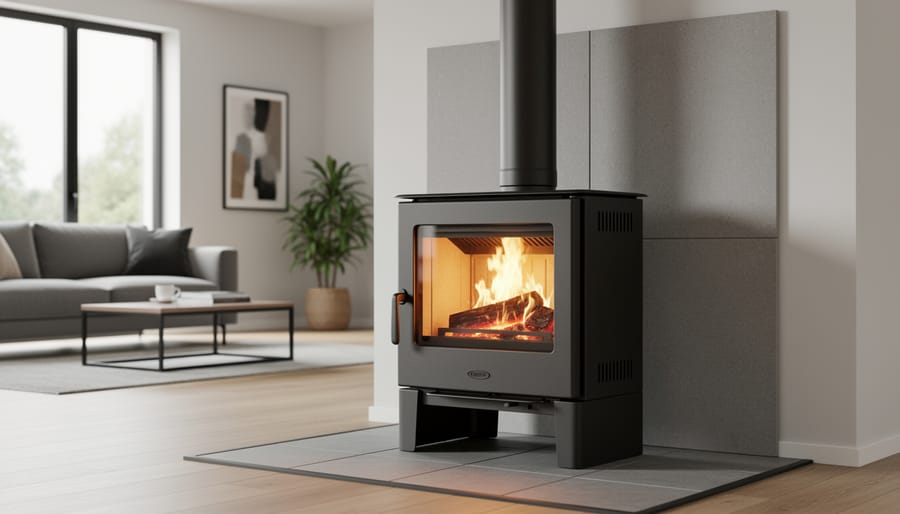
Coal stoves produce heat through two primary mechanisms: radiant heat and convection. Radiant heat works much like the warmth you feel from the sun, traveling directly from the hot stove surface to objects and people in the room without warming the air in between. This is why standing near a coal stove feels so wonderfully toasty. Meanwhile, convection creates natural air currents as the stove heats surrounding air, which rises and draws cooler air in from floor level, establishing a continuous circulation pattern throughout your space.
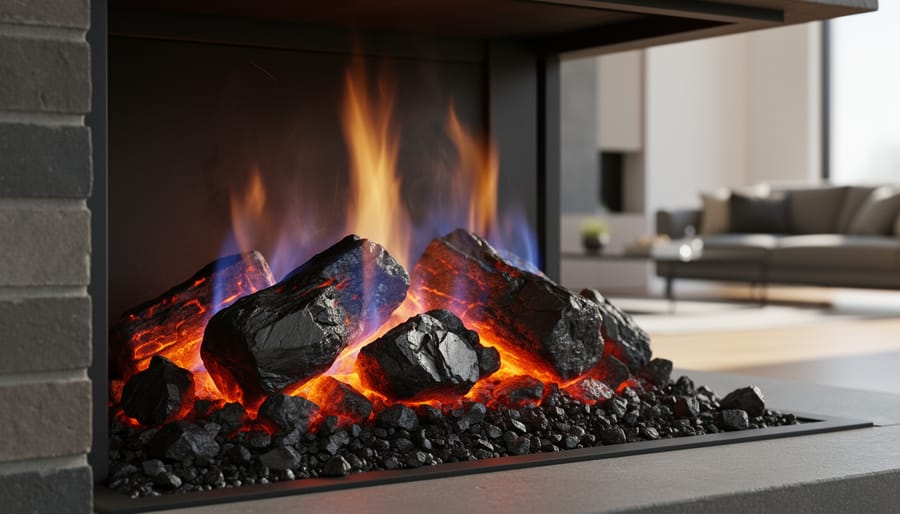
The combustion process itself is where the magic happens. Coal burns at significantly higher temperatures than wood, typically between 1,800 and 2,200 degrees Fahrenheit, releasing sustained, intense heat. The different coal types you might choose will affect your heating experience considerably. Anthracite coal, the hardest and cleanest-burning variety, produces the longest-lasting heat with minimal ash and emissions, making it a popular choice for home heating enthusiasts seeking both efficiency and eco-friendly performance.
As coal burns in your stove’s firebox, the thick cast iron or steel body absorbs this tremendous heat energy and becomes a massive thermal battery. This heat then radiates outward while simultaneously warming air that flows around the stove’s exterior surfaces, creating those beneficial convection currents that naturally want to spread throughout your home.
Strategic Placement: Where Your Coal Stove Lives Matters Most
Single-Story vs. Multi-Story Heat Distribution
Getting heat from your coal stove to flow throughout your home works differently depending on your layout. Single-story homes have a natural advantage since heat doesn’t need to fight gravity, spreading more evenly across rooms on the same level. Strategic door placement and ceiling fans running on low can gently guide warmth where you need it most.
Multi-story homes present a delightful challenge since heat naturally rises. If your coal stove sits on the main floor, the upstairs often becomes toasty while lower levels stay cooler. Installing a cold air return system or using stairwell fans can create a circulation loop that balances temperatures between floors. Some homeowners find success placing their stove in the basement, allowing heat to rise naturally through floor grates or registers throughout the home.
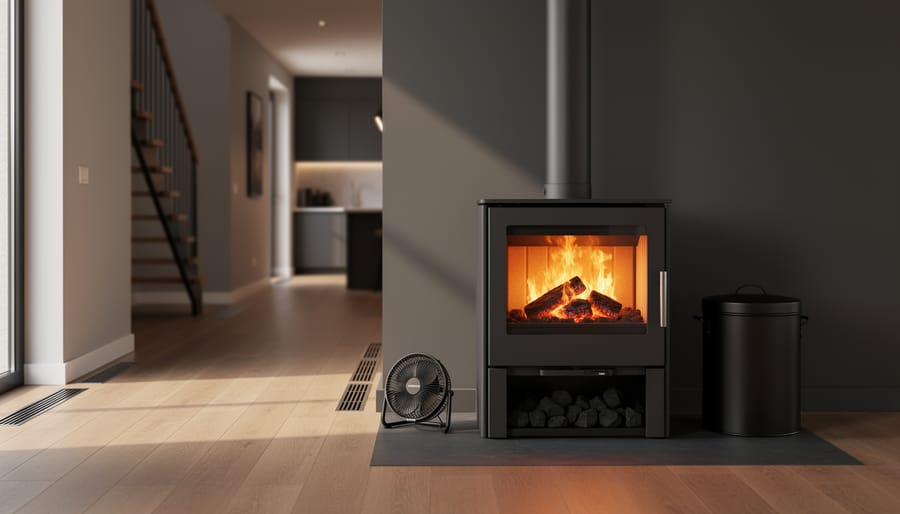
For homes with challenging layouts, consider installing heat-powered stove fans that require no electricity, making them perfect eco-friendly heating solutions. These sit atop your stove and distribute warm air more effectively. Alternatively, small ductwork additions or doorway fans can bridge the gap between distant rooms without major renovations. The key is working with your home’s natural airflow patterns rather than against them, creating a comfortable living environment throughout every corner of your space.
Working With Your Home’s Natural Airflow
Before installing your coal stove, take time to understand how air naturally moves through your home. This knowledge helps you position your stove strategically and maximize heat distribution without fighting against your home’s existing patterns.
Start by observing temperature variations throughout your house during different times of day. Notice which rooms stay warmer and where cold spots persist. These patterns reveal your home’s natural thermal currents. Heat naturally rises and spreads horizontally along ceilings before descending in cooler areas, creating circulation loops you can work with rather than against.
Check for drafts near windows, doors, and stairwells. While you’ll want to seal problematic air leaks for efficiency, understanding where air naturally flows helps you decide on stove placement. A centrally located stove on your home’s main floor typically works best, allowing heat to ride existing air currents throughout your living space.
Consider your home’s layout and door positions. Open floor plans naturally facilitate heat movement, while closed doorways create barriers. Stairwells act as natural chimneys, drawing warm air upward. Position your coal stove where it can feed into these existing pathways, turning your home’s architecture into an ally for comfortable, eco-friendly heating that works harmoniously with your space.
Heat Distribution Methods That Actually Work
Passive Distribution: Letting Physics Do the Work
Sometimes the best heating solutions are the ones that require the least effort. When it comes to distributing warmth from your coal stove throughout your home, physics can be your greatest ally. Understanding how heat naturally moves through your living space helps you make smarter placement decisions without investing in fans or ductwork.
Natural convection is the principle at work here. As your coal stove heats the air around it, that warm air becomes lighter and rises toward the ceiling. Cooler air near the floor gets drawn toward the stove to replace it, creating a continuous circulation pattern. This gentle, constant movement means heat doesn’t just sit in one spot—it’s always on the move.
Doorway positioning plays a surprisingly important role in this natural distribution. Placing your stove near central doorways or hallways creates pathways for warm air to flow into adjacent rooms. Think of doorways as channels that guide heat where you want it to go. The wider and more open these passages, the better the heat transfer.
Stairwells act like chimneys for warmth in multi-story homes. Heat naturally wants to climb, so a coal stove positioned near the base of stairs will send significant warmth to upper floors. This makes first-floor installations particularly efficient for heating the entire home, as physics does the heavy lifting of moving heat upward.
Open floor plans offer the biggest advantage for passive distribution. Without walls blocking airflow, heat circulates freely throughout the main living areas. If you’re fortunate enough to have an open concept design, your coal stove can effectively warm considerably more square footage than it could in a compartmentalized layout.
Ceiling Fans and Airflow Management
Here’s a simple yet effective trick to make your coal stove heat your entire home more evenly: harness the power of your ceiling fans. Since warm air naturally rises, the heat from your coal stove tends to collect near the ceiling while your floors stay chilly. This creates uncomfortable temperature differences and wastes the wonderful warmth you’ve worked to generate.
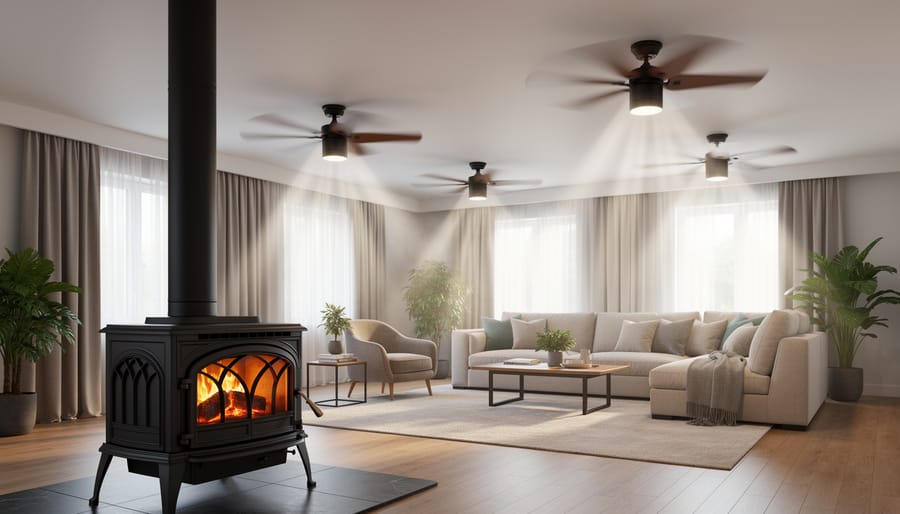
Most ceiling fans have a winter mode setting, usually controlled by a small switch on the fan’s motor housing. In winter, set your fan to rotate clockwise at a low speed when looking up at it. This creates an updraft that gently pushes the warm air trapped at the ceiling back down along the walls, redistributing it throughout the room without creating that uncomfortable breeze you’d feel in summer.
Run your fans on the lowest setting to avoid creating drafts that make you feel colder. This gentle circulation makes a noticeable difference in rooms with high ceilings or open floor plans. You’ll find that rooms farther from your coal stove benefit tremendously from this approach, helping that cozy heat reach every corner of your home. It’s an eco-friendly way to maximize your heating efficiency without burning extra fuel.
Ductwork and Forced Air Integration
If you’re fortunate enough to have an existing forced air system in your home, integrating your coal stove can transform it from a single-room heat source into a whole-home comfort solution. The good news? It’s more achievable than you might think, and it brings that wonderful coal warmth to every corner of your living space.
The most straightforward approach involves installing a heat exchanger plenum around your coal stove that connects directly to your existing ductwork. These specially designed jackets capture the radiant heat from your stove and channel it through your ducts using your current furnace blower. Many homeowners find this method particularly appealing because it leverages infrastructure already in place, making it a cost-effective way to distribute heat efficiently throughout multiple rooms.
For homes without compatible ductwork, dedicated heat distribution fans offer an excellent alternative. These powerful yet quiet fans mount near your coal stove and push warm air through flexible ducting to adjacent rooms or even upstairs spaces. Think of them as hardworking helpers that ensure your investment in coal heating benefits your entire home, not just the room where the stove sits.
Safety considerations remain paramount when integrating any heating system. Always maintain proper clearances between hot surfaces and combustible materials, and ensure your existing ductwork can handle the temperature increases. Professional installation is strongly recommended for ductwork integration, as improper connections can create efficiency problems or safety hazards.
This whole-home approach truly elevates coal heating from a supplemental option to a primary, eco-conscious heating solution that keeps your family cozy throughout the heating season.
Heat-Powered Stove Fans and Blowers
Getting the most from your coal stove means moving that wonderful warmth throughout your space effectively. Heat-powered stove fans and blowers offer two distinct approaches to boost your heating efficiency without adding much to your energy bills.
Thermoelectric fans sit right on top of your coal stove and work like magic—no batteries or electricity needed. These clever devices use the temperature difference between your hot stove and cooler room air to generate their own power through thermoelectric generators. As they spin, they gently push warm air forward and out into your living space, helping prevent heat from pooling uselessly at the ceiling. They’re whisper-quiet, eco-friendly, and typically start working once your stove surface reaches around 150-200 degrees Fahrenheit.
For more robust air circulation, powered blowers mount directly to your stove or nearby and use household electricity to push significantly more air volume. These are particularly valuable if you’re heating a larger area or have multiple rooms to warm. The trade-off is a bit of noise and modest electricity use, but the improved heat distribution often pays for itself in comfort and reduced fuel consumption. Both options transform your coal stove from a simple heat source into a more effective whole-home heating solution.
Thermal Mass Strategies
One of the smartest ways to maximize your coal stove’s efficiency is by harnessing thermal mass—materials that absorb heat when your stove is running hot and release it slowly over time. Think of it as creating a natural battery for warmth in your home.
Brick or stone walls positioned near your coal stove work beautifully for this purpose. As your stove radiates heat, these masonry materials soak it up during peak burn times, then continue warming your space for hours after the fire dies down. Many homeowners incorporate decorative stone hearths or brick accent walls that serve double duty as both design elements and heat storage.
Water-filled radiators offer another excellent option, especially if you’re running a coal boiler system. These cast iron or steel units retain heat remarkably well, creating a gentler, more sustained warmth compared to forced air systems. The water inside continues circulating warmth long after your stove reduces its output.
The beauty of thermal mass is how it smooths out temperature fluctuations, maintaining comfortable conditions without constantly feeding your stove. This eco-friendly approach reduces fuel consumption while keeping your home consistently cozy—a perfect example of working smarter, not harder, with your heating system.
Coal Boiler Systems: Whole-House Heating Solutions
If you’re looking to heat your entire home rather than just a cozy room or two, a coal boiler system might be the perfect solution for your household. While coal stoves are wonderful for providing radiant warmth in specific spaces, coal boilers take whole-house heating to the next level by integrating seamlessly with your home’s existing heating infrastructure.
Think of a coal boiler as the heart of your home’s circulatory system. Instead of heating the air directly around it like a stove does, a boiler heats water that’s then distributed throughout your home via pipes to radiators, baseboard heaters, or radiant floor systems. This hydronic approach delivers consistent, even warmth to every corner of your living space. Some systems use steam instead of hot water, particularly common in older homes, though hot water systems are generally more efficient and easier to control.
Modern coal boilers have come a long way from their industrial predecessors. Today’s units feature advanced combustion technology that extracts maximum heat from every piece of coal while minimizing emissions. Many incorporate automatic stoking mechanisms that feed coal from a hopper into the firebox, reducing the hands-on maintenance that gives some homeowners pause. You’ll also find sophisticated thermostatic controls that maintain your desired temperature with impressive precision, just like modern oil or gas systems.
One of the biggest advantages of coal boiler systems is their compatibility with existing heating setups. If your home already has radiators or baseboard heaters powered by an aging oil or gas boiler, switching to coal often requires minimal modifications. The same pipes, radiators, and distribution network remain in place. Proper coal boiler venting is essential for safe operation and optimal efficiency, ensuring combustion gases exit your home safely while maintaining the right draft for clean burning.
For eco-conscious homeowners, newer coal boiler designs burn cleaner than ever before. While coal remains a fossil fuel, modern combustion chambers and secondary burn technology significantly reduce particulate emissions compared to older models. When paired with quality anthracite coal and proper maintenance, these systems offer a reliable, cost-effective heating solution that can dramatically reduce your winter energy bills while keeping your entire home comfortably warm throughout the coldest months.
Common Heat Distribution Mistakes (And How to Fix Them)
Even the most efficient coal stove can disappoint if heat isn’t reaching where you need it most. Let’s explore the most common distribution mistakes homeowners make and how to turn things around.
The biggest culprit behind cold rooms is placing your stove in the wrong location. Many enthusiasts install their coal stove in a basement or corner room, expecting heat to magically travel throughout the house. Unfortunately, heat naturally rises and struggles to move around corners or through doorways without help. The fix is straightforward: position your stove in a central location on your main living level, ideally near a stairwell if you have multiple floors. This allows natural convection to work in your favor rather than against it.
Another frequent mistake involves blocking heat flow with furniture, curtains, or closed doors. Your beautiful coal stove might be pumping out wonderful warmth, but if your couch is three feet in front of it or bedroom doors stay shut, you’re creating heat traps. Keep at least three feet of clearance around your stove and consider leaving interior doors slightly ajar to encourage air circulation throughout your home.
- Central placement maximizes natural heat distribution to all rooms.
- Strategic fan placement moves warm air effectively without high energy costs.
- Keeping doors open creates natural circulation pathways throughout your home.
- Basement installations waste heat that rises away from living spaces.
- Closing all doors traps warmth in one area while other rooms freeze.
- Ignoring draft issues prevents efficient combustion and heat output.
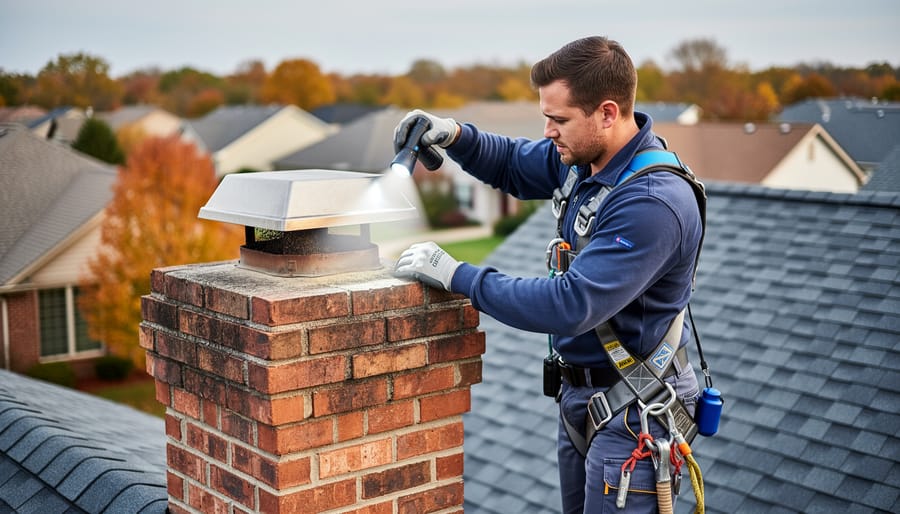
Many homeowners also neglect their chimney’s performance, which directly impacts heating efficiency. Without proper draft, your coal won’t burn hot enough to generate adequate heat, and you’ll waste fuel fighting a losing battle. Regular chimney maintenance and ensuring correct height and diameter make all the difference.
Finally, don’t forget about return air paths. Heat pushed upstairs needs somewhere to go. Consider adding floor vents or keeping stairwell areas open so cooler air can return to ground level, creating a natural circulation loop that keeps your entire home comfortable.
Safety Considerations for Coal Stove Heat Distribution
When you’re distributing warmth throughout your home from a coal stove, safety becomes even more important than with single-room heating. Let’s walk through the essential precautions that will keep your family safe while enjoying efficient, whole-home comfort.
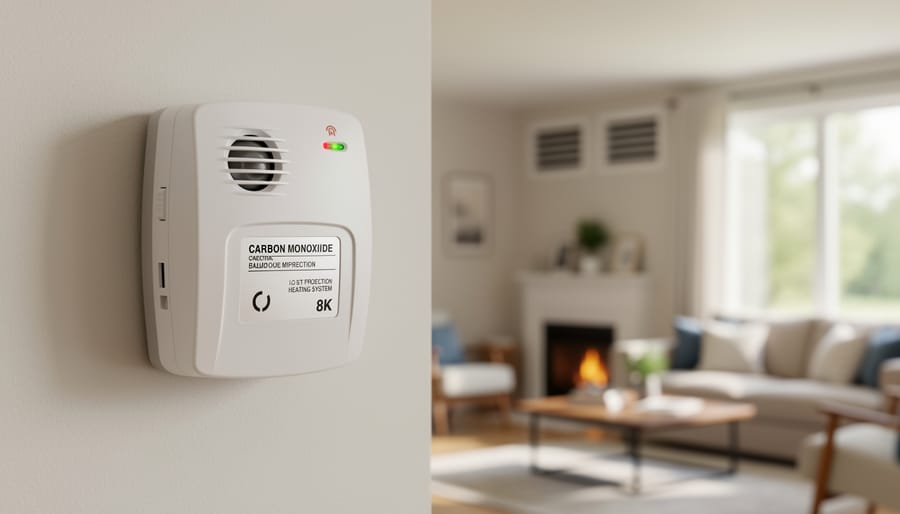
Carbon monoxide detection is absolutely critical. Install CO detectors on every level of your home, especially near bedrooms and in any room receiving distributed heat. When you’re moving air between rooms through ducts or fans, you’re creating pathways that could also transport dangerous gases if something goes wrong. Test these detectors monthly and replace batteries twice yearly. Consider upgrading to interconnected units that alert throughout the house simultaneously.
Proper ventilation remains essential even when heating multiple rooms. Your coal stove needs adequate fresh air intake to burn cleanly and efficiently. Never seal your home so tightly that combustion air becomes compromised. If you’re using fans or duct systems to distribute heat, ensure they’re positioned to move warm air away from the stove, not pull air toward combustion components, which could disrupt proper burning.
Clearance requirements don’t just apply to the stove itself. When installing heat distribution systems, maintain proper distances between hot air ducts and combustible materials. Use appropriate insulation on any ductwork, and ensure fans are rated for the temperatures they’ll encounter. Following comprehensive coal stove safety guidelines protects both your investment and your loved ones.
Finally, maintain clear pathways around your stove and throughout distribution routes. Keep flammable materials away from heat registers and never block air returns. Regular professional inspections of your entire heating system ensure everything operates safely season after season.
Making Your Coal Heating System More Eco-Friendly
Let’s be honest—coal heating isn’t winning any green awards, but if you’re committed to using coal, there are meaningful steps you can take to minimize your environmental impact. The good news is that cleaner burning techniques not only help the planet but also improve your system’s efficiency and reduce operating costs.
The quality of coal you choose makes a significant difference. Anthracite coal burns cleaner and hotter than bituminous coal, producing less smoke and fewer emissions. While it costs more upfront, you’ll use less of it and create less pollution in the process. Think of it as the premium fuel option that actually justifies its price tag.
Here are practical ways to make your coal heating more environmentally responsible:
- Burn only properly sized coal for your specific stove model to ensure complete combustion
- Maintain adequate air flow settings—too little oxygen creates excessive smoke and wasted fuel
- Clean your system regularly, including the chimney, to maintain peak efficiency
- Never burn treated wood, trash, or other materials alongside coal
- Consider installing a catalytic combustor to reduce particulate emissions
- Use a chimney thermometer to monitor optimal burning temperatures
Modern coal stove technology has come a long way. Newer EPA-certified models incorporate advanced combustion systems that extract more heat while producing fewer emissions. If you’re using a decades-old stove, upgrading might be your single most impactful eco-friendly move.
Emerging alternatives like coal-biomass blends are gaining traction, combining traditional coal with renewable materials. While not carbon-neutral, these hybrids represent a middle ground for homeowners transitioning toward greener heating solutions. The key is approaching coal heating with realistic expectations while committing to best practices that genuinely reduce your environmental footprint.
With the right approach to heat distribution, your coal stove can truly become a whole-house heating solution rather than just warming a single room. The beauty of coal heating lies not only in its impressive heat output and cost-effectiveness, but in how that warmth can embrace your entire living space when properly channeled. By understanding your home’s unique layout and airflow patterns, you’re already halfway to creating a comprehensive heating strategy that works for your family.
Start small and build on your success. Choose one or two distribution methods that best suit your home’s design—whether that’s strategically placed fans, opening up your floor plan, or adding a few well-positioned vents. You’ll be surprised how quickly you notice the difference as warmth flows into previously chilly corners and forgotten hallways. The cost savings and comfort you’ll experience make it worth the effort, and you’re contributing to a more sustainable heating approach by maximizing your coal stove’s efficiency. Remember, every home is different, so be patient as you discover what works best for yours. With thoughtful planning and a willingness to experiment, you’ll soon enjoy the cozy, enveloping warmth that makes coal heating such a rewarding lifestyle choice for your entire household.