
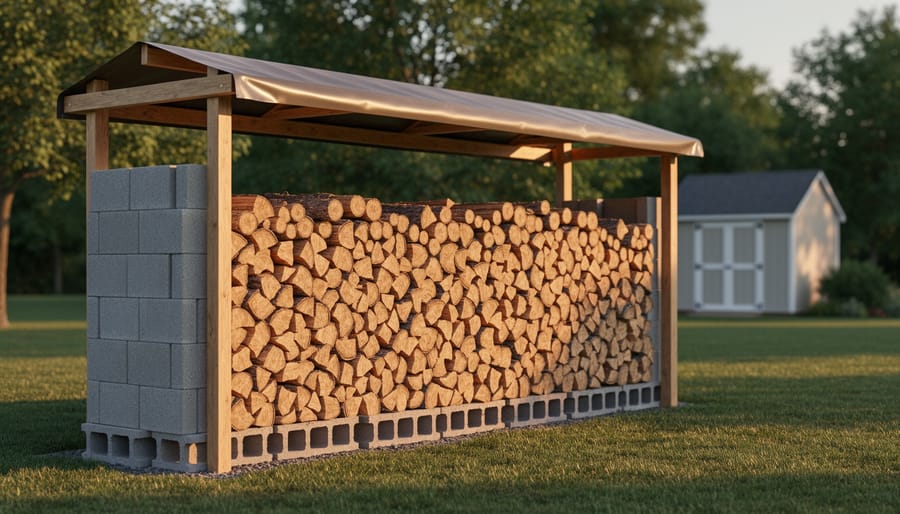


Elevate cinder blocks on edge to create airflow channels beneath your firewood stack, allowing moisture to escape from below while keeping wood off the damp ground. Space blocks 16-24 inches apart in parallel rows, creating a sturdy foundation that prevents rot and accelerates seasoning time by up to 30% compared to ground-level storage.
Build vertical supports at each end of your rows using stacked cinder blocks two or three high, then lay additional blocks horizontally across the top to create a simple roof frame that you can cover with tarps or corrugated metal. This method costs roughly $2-4 per running foot of storage, making it one of the most affordable solutions for serious wood burners who need to store multiple cords.
Stack your split wood bark-side up between the block foundations, creating stable rows no more than four feet high to prevent dangerous toppling. The hollow cores in cinder blocks provide natural ventilation points that work with proper firewood stacking best practices to keep air circulating through your entire woodpile.
This approach solves the twin challenges of moisture management and storage stability without requiring carpentry skills or expensive materials. You will create a durable, flexible system that adapts to your available space while protecting your investment in heating fuel. The blocks themselves last indefinitely and can be reconfigured as your storage needs change, making this a sustainable choice for eco-conscious homeowners who value both practicality and environmental responsibility.
Why Cinder Blocks Are a Game-Changer for Firewood Storage
If you’ve ever dealt with rotting firewood or logs that refuse to light properly, you know the frustration of moisture-damaged fuel. This is exactly where cinder blocks become your storage ally. These humble concrete blocks transform ordinary wood stacking into a smart, sustainable system that keeps your firewood in prime condition.
The secret lies in elevation. When you stack firewood directly on the ground, it acts like a sponge, absorbing moisture from soil, morning dew, and rain runoff. Cinder blocks lift your wood pile several inches off the ground, creating a protective barrier that prevents this moisture transfer. This simple elevation is the difference between wood that’s ready to burn and wood that smolders and smokes.
Beyond keeping your logs dry, cinder blocks naturally promote airflow through their hollow cores and the gaps they create beneath your stack. This circulation is essential for maintaining properly seasoned firewood and preventing the rot that destroys your winter fuel supply. Well-ventilated wood dries faster and stays drier, giving you reliable heat when you need it most.
From a practical standpoint, cinder blocks are remarkably affordable. A dozen blocks typically costs less than many pre-made firewood racks, yet provides the same protection. They’re also incredibly versatile, allowing you to customize your storage size and configuration as your needs change.
For environmentally conscious homeowners, proper wood storage is about more than convenience. Dry, well-maintained firewood produces cleaner burns with less smoke and fewer harmful emissions. By preserving your wood’s quality through smart storage, you’re maximizing heat output while minimizing environmental impact. That’s the kind of win-win solution that makes your fireplace both a practical heating choice and a responsible one.
What You’ll Need to Get Started
Building a cinder block firewood storage system is wonderfully affordable and straightforward. Before you begin, gather these essential materials to create a sturdy, functional wood rack that’ll keep your fuel dry and ready for those cozy evenings by the fire.
For the foundation of your project, you’ll need standard cinder blocks (also called concrete masonry units). Each block typically measures 8x8x16 inches and costs between $1.50 and $3.00 at most home improvement stores. For a basic 4-foot-wide rack that’s one row high, plan on 6-8 blocks. If you’re storing wood from splitting your own firewood or buying in bulk, consider building two or three tiers high, which would require 12-24 blocks total.
To enhance drainage and longevity, pick up landscape fabric and pea gravel. A small bag of gravel costs around $5 and helps prevent ground moisture from wicking up into your wood supply. Landscape fabric, about $10-15 for a roll, provides an eco-friendly barrier against weeds while allowing proper airflow underneath.
You’ll also want a few simple tools: a level to ensure your blocks sit evenly, work gloves for handling rough concrete, and a tape measure for planning your layout. A rake helps prep the ground area nicely.
Budget tip: check local classified ads or building supply surplus stores for discounted blocks. Many suppliers offer bulk pricing, and you might find weathered blocks at half price that work perfectly for this rustic, functional project.
Setting Up Your Cinder Block Foundation
Choosing the Perfect Spot
Finding the right location for your firewood stack sets the foundation for success. Think of it as choosing the best spot for a garden—you want conditions that work with nature, not against it.
Sun exposure is your first consideration. Select a spot that receives plenty of sunlight and benefits from good air circulation. Southern exposure works wonderfully in most climates, as the sun helps naturally season your wood and evaporate moisture after rain. A breezy location accelerates the drying process, turning your storage area into an eco-friendly wood-curing station.
Distance from your house matters for both convenience and safety. Position your stack close enough for easy access during cold winter evenings—nobody wants to trek through snow for firewood—but maintain at least 15-20 feet from your home’s foundation. This buffer discourages insects and rodents from viewing your woodpile as a highway to indoor warmth.
Drainage deserves serious attention. Never place your cinder block foundation directly on soil prone to pooling water. Look for naturally elevated ground or areas where water flows away rather than collecting. If your ideal spot has drainage issues, consider adding a layer of gravel beneath the blocks to channel water away. This simple step prevents your firewood from sitting in moisture, preserving its quality and ensuring those cozy fires burn efficiently.
Preparing the Ground
Before you start stacking, taking a few minutes to properly prepare your ground will save you headaches down the road. Think of this step as creating a solid foundation for your eco-friendly wood storage system that’ll keep your firewood in prime burning condition.
Start by selecting a spot that gets good sun exposure and air circulation. Clear away any grass, leaves, or debris from the area where your cinder blocks will sit. You’ll want a reasonably level surface, so grab a rake and smooth out any obvious bumps or dips. While it doesn’t need to be perfectly level like a tabletop, aim for consistent contact so your blocks sit stable and don’t wobble.
For enhanced drainage, consider adding a two to three inch layer of gravel as your base. This simple addition creates a barrier between ground moisture and your firewood while allowing water to drain away efficiently. It’s a small investment that pays dividends in keeping your wood dry and ready to burn.
To prevent weeds from creeping up through your firewood pile, lay down landscape fabric beneath your gravel or directly under the cinder blocks. This breathable material blocks unwanted growth while still permitting air movement, which is essential for proper wood seasoning and maintaining that cozy ambiance your fireplace deserves.
Laying Your Cinder Block Base
Creating a solid foundation is the key to successful firewood storage that keeps your fuel dry and ready for those cozy evenings by the fire. The beauty of using cinder blocks lies in their simplicity and effectiveness at elevating your wood off the ground.
Start by selecting a level spot in your yard or outdoor space. If your ground isn’t perfectly flat, don’t worry. You can use a small amount of gravel or sand to create a level surface where your blocks will sit. This step matters more than you might think because an uneven base can cause your entire stack to shift or topple over time.
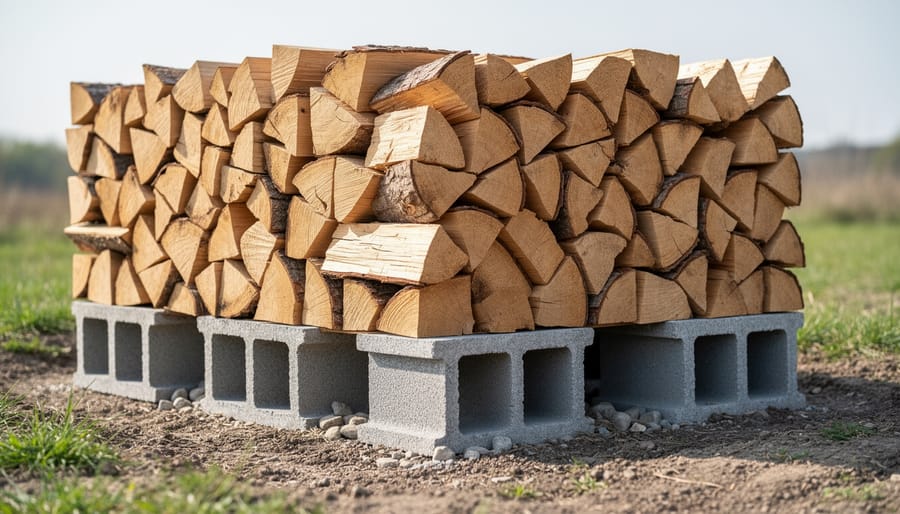
For a standard four-foot-wide woodpile, arrange two parallel rows of cinder blocks running the length of your planned stack. Space these rows about three feet apart to provide stable support for most log lengths. Each block should sit with its holes facing upward, creating natural ventilation channels that help air circulate beneath your firewood. This airflow is essential for the seasoning process and preventing moisture buildup that can lead to rot or mold.
Position individual blocks approximately 16 to 24 inches apart within each row. This spacing provides adequate support without requiring excessive materials. For larger stacks exceeding six feet in length, consider adding a third support row down the middle for extra stability.
If you’re building multiple stacks, this eco-friendly foundation system can be easily reconfigured or expanded as your firewood storage needs change throughout the seasons.
Adding Vertical Support (Optional but Smart)
For stacks extending beyond four feet in height or spanning more than six feet in length, vertical supports become your best friend for preventing that heart-stopping moment when your carefully stacked wood decides to avalanche. Create sturdy end posts by stacking cinder blocks vertically at each corner of your wood pile, building them slightly taller than your planned wood height. Position these posts about six inches beyond where your firewood will end, creating a natural barrier.
The beauty of this approach is its flexibility. If you’re building a longer run, add an additional vertical support every four to six feet along the back edge. Simply stack the blocks two or three high, ensuring they’re level and stable. These posts act like bookends, containing your wood while maintaining that crucial airflow we need for proper seasoning. This extra step takes just minutes but provides peace of mind throughout the season, especially in windy areas where unsupported stacks might shift. Think of it as insurance for your winter warmth supply.
Stacking Your Firewood the Right Way
The Bark-Up or Bark-Down Debate
Here’s a question that sparks surprisingly passionate debate among seasoned wood-burners: should you stack your firewood bark-side up or down? While it might seem like splitting hairs, this detail actually matters for keeping your fuel dry and ready to burn.
The bark-up camp argues that bark acts like nature’s shingle roof, shedding rainwater away from the wood’s core. This makes excellent sense for outdoor stacks exposed to the elements. However, when you’re storing firewood on cinder blocks with proper airflow underneath, the bark-down approach often wins out. Here’s why: bark tends to trap moisture against whatever it touches. By placing bark-side down, you allow moisture to escape more freely from the cut ends and sides where it evaporates fastest.
Think of your firewood as breathing through its exposed grain. Those cut surfaces are like open pores, releasing moisture into the air circulating around your stack. For your cinder block setup, position most pieces bark-down to maximize this natural drying process. This orientation helps create the perfectly seasoned firewood that lights easily and burns cleanly in your fireplace, reducing creosote buildup and delivering that cozy ambiance you’re after.
Creating Airflow Channels
The secret to keeping your firewood dry and ready for those cozy evenings by the fire lies in creating proper airflow throughout your stack. Think of it as giving your wood room to breathe—when air circulates freely, moisture evaporates naturally, and you’ll have perfectly seasoned wood when you need it most.
Start by placing your firewood with intentional gaps between pieces, aiming for about an inch of space. This might feel counterintuitive if you’re trying to maximize storage, but these small openings make all the difference in preventing mold and decay. The hollow chambers in your cinder blocks already provide excellent bottom ventilation, so you’re building on a solid foundation.
Cross-stacking, also called crisscross stacking, is one of the most effective proper stacking techniques for airflow. Alternate the direction of each layer—if one row runs north-south, the next should run east-west. This creates natural channels for wind to flow through your entire pile, reaching even the wood in the center.
Position your cinder block structure where prevailing winds can work in your favor. Avoid placing it directly against walls or fences that would block air movement. This eco-friendly approach to wood storage not only protects your investment but ensures cleaner, more efficient burns that reduce smoke and emissions.
Height and Stability Tips
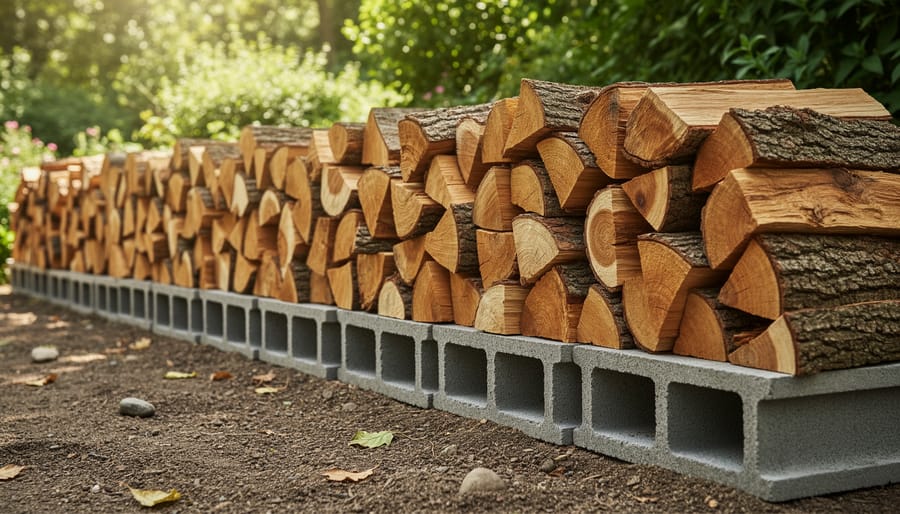
Safety should always be your top priority when stacking firewood, and the beauty of using cinder blocks is that they naturally encourage a stable, well-ventilated structure. As a general rule, keep your firewood stack no higher than four feet. This height provides ample storage without creating a top-heavy structure that could become unstable during harsh winter weather or when you’re pulling logs from the pile.
The foundation is everything. Make sure your cinder blocks rest on level, well-drained ground. Even a slight slope can compromise stability over time, especially when snow and ice accumulate. Place your bottom layer of blocks carefully, checking that they’re even before you start stacking wood.
Create stability by stacking your firewood in alternating directions on each layer, similar to building with Lincoln Logs. This crisscross pattern locks the wood together and prevents the entire stack from shifting. Avoid creating a stack that’s deeper than it is wide, as this increases the risk of toppling.
Consider the wind patterns in your yard and position your stack perpendicular to prevailing winds when possible. If you live in an area with particularly strong winter storms, you can add extra cinder blocks at intervals along the sides as lateral supports. This eco-friendly storage method keeps your firewood dry and your family safe throughout the heating season.
Covering Your Stack Without Trapping Moisture
Protecting your firewood stack from rain seems straightforward, but the real challenge is doing it without creating a moisture trap that defeats the purpose of proper storage. Think of it like wrapping a sandwich: you want protection from the elements, but if you seal it completely, condensation builds up and causes problems.
The golden rule is to cover only the top of your stack, leaving all sides open for airflow. This allows moisture to escape while keeping rain and snow from soaking in from above. A simple tarp works well, but here’s where most people go wrong: they drape it down the sides like a tent, which traps humidity and prevents that crucial cross-ventilation your firewood needs to season properly.
For the best results, use a waterproof tarp or sheet metal that extends 6-8 inches beyond your stack’s edges. Secure it firmly so wind can’t tear it loose, but resist the urge to wrap it around the sides. If you’re stacking against a wall or building, leave at least 3-4 inches of space to maintain airflow behind the stack.
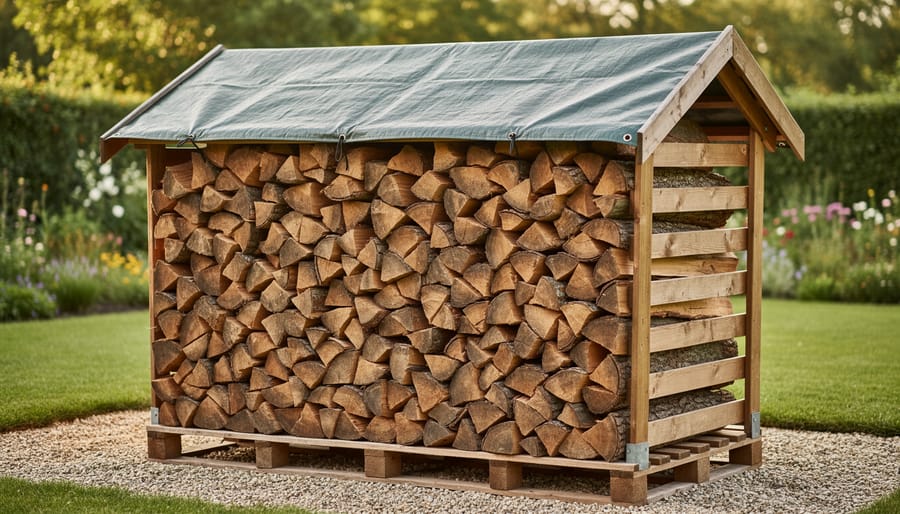
Metal roofing panels offer a more permanent solution and look tidier than tarps flapping in the wind. They’re eco-friendly if you source recycled materials and create a cleaner aesthetic for your outdoor space. Some homeowners even build simple A-frame covers that add a rustic charm while functioning perfectly.
Avoid plastic sheeting that touches the wood directly, as it promotes condensation and mold growth. The same goes for completely enclosed structures without ventilation. Your firewood needs to breathe throughout the seasoning process, typically 6-12 months depending on wood type. A well-ventilated cover protects your investment while supporting sustainable, efficient burning that maximizes your fireplace’s warmth and minimizes environmental impact.
Common Mistakes to Avoid
Even with the best intentions, a few common missteps can undermine your firewood storage efforts. Let’s walk through these together so you can avoid the frustration many folks encounter when stacking with cinder blocks.
The most frequent issue is blocks sinking into soft ground, especially after rain or snow. If your foundation isn’t solid, those blocks will gradually settle unevenly, causing your whole stack to lean or collapse. Take the time to prepare a proper base with gravel or pavers, particularly if you’re working with lawn or garden soil. It’s worth the extra hour upfront to save yourself from restacking everything mid-winter.
Another pitfall is stacking wood too tightly against itself. While it seems like you’re maximizing space, you’re actually preventing airflow, which is essential for proper seasoning and preventing mold growth. Leave at least an inch between rows so air can circulate freely. Think of it as giving your firewood room to breathe, much like you’d want for an eco-friendly heating solution that works efficiently.
Many people also make the mistake of covering their entire stack with tarps or plastic sheeting. While protecting the top makes sense, wrapping the sides traps moisture inside. Instead, cover only the uppermost layer, allowing wind to naturally dry the sides.
Finally, don’t ignore seasonal considerations. What works perfectly in summer might fail in winter when ground freezes and thaws repeatedly. Check your stack periodically and make adjustments as weather patterns change throughout the year.
There you have it—a straightforward, budget-friendly solution that transforms ordinary cinder blocks into an effective firewood storage system. This method isn’t just about stacking wood; it’s about embracing a practical approach that protects your investment in quality firewood while supporting the cozy, inviting atmosphere you’re creating in your home.
By elevating your firewood off the ground and allowing proper airflow, you’re ensuring each log burns cleaner and hotter when it’s time to light your fireplace. Well-seasoned wood means less smoke, fewer pollutants, and a more eco-friendly heating solution that you can feel good about. Plus, you’re avoiding the frustration of splitting damp wood or dealing with disappointing fires that fizzle rather than crackle.
The beauty of this cinder block system lies in its simplicity. You don’t need carpentry skills or expensive materials—just a few blocks, some basic planning, and an afternoon of your time. Whether you’re setting up a compact stack near your back door or building a larger woodshed-style structure, you’re taking control of your firewood quality and extending its lifespan.
As the temperature drops and evenings grow longer, you’ll appreciate having a well-organized supply of perfectly dried firewood ready to go. Imagine settling into your favorite chair, watching the flames dance across seasoned logs you stored with care, knowing you’ve created both warmth and ambiance the right way. Here’s to many cozy nights ahead by your fireplace.