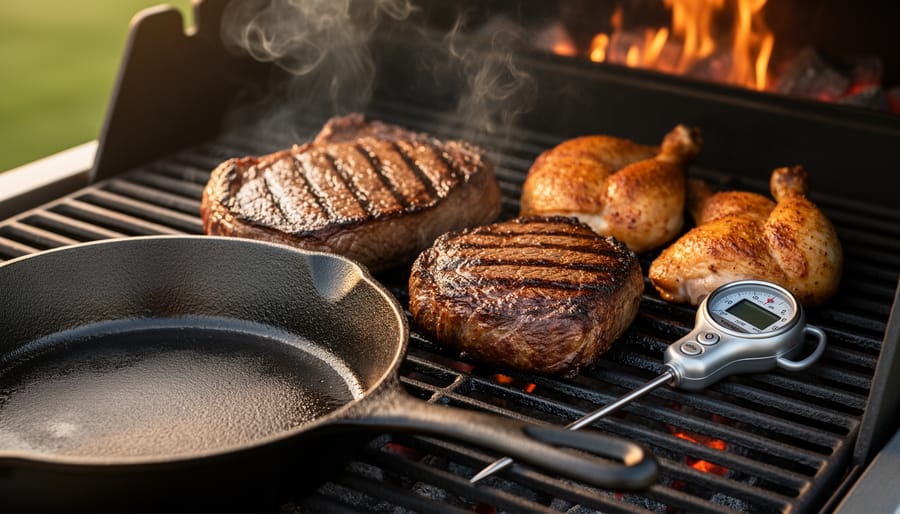
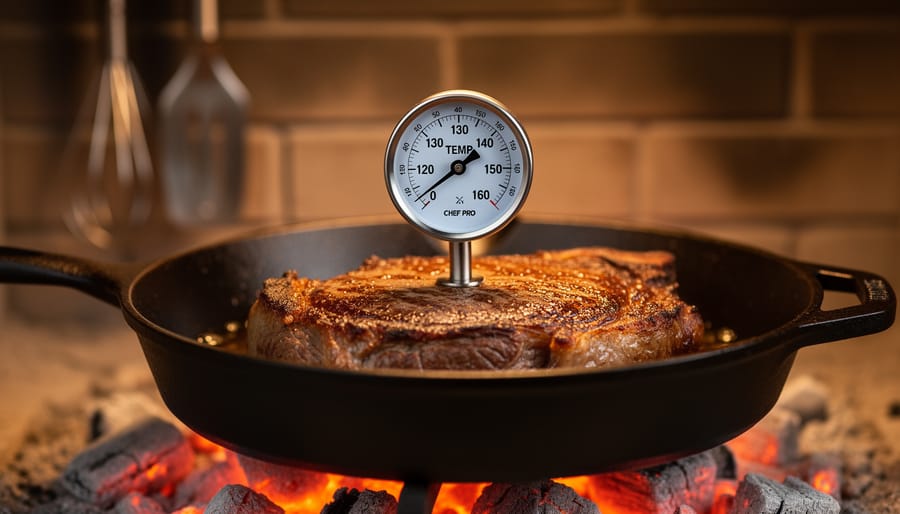


In the glow of your fireplace, while you’re roasting a perfect ribeye over open flames or slow-cooking a roast in your hearth oven, that shiny digital thermometer might leave you disappointed. When temperatures soar above 400 degrees and radiant heat surrounds your cooking space, traditional analog meat thermometers aren’t just nostalgic relics—they’re often the superior choice for fireplace cooking enthusiasts.
Digital thermometers bring convenience and precision to kitchen environments, offering instant readouts and programmable alarms. But honest assessment reveals their limitations in high-heat, rustic cooking scenarios. Analog dial thermometers withstand extreme temperatures without batteries dying mid-cook, survive the occasional tumble onto hot coals, and provide reliable readings without electronic components that fail in moisture and heat. They’re simpler to clean, last decades with minimal care, and cost a fraction of their digital counterparts.
For homeowners who view their fireplace as more than a heat source—as a genuine cooking tool and lifestyle element—understanding when traditional tools outperform modern alternatives matters. The right thermometer depends on your cooking context, not marketing trends.
What Makes Non-Digital Meat Thermometers Different
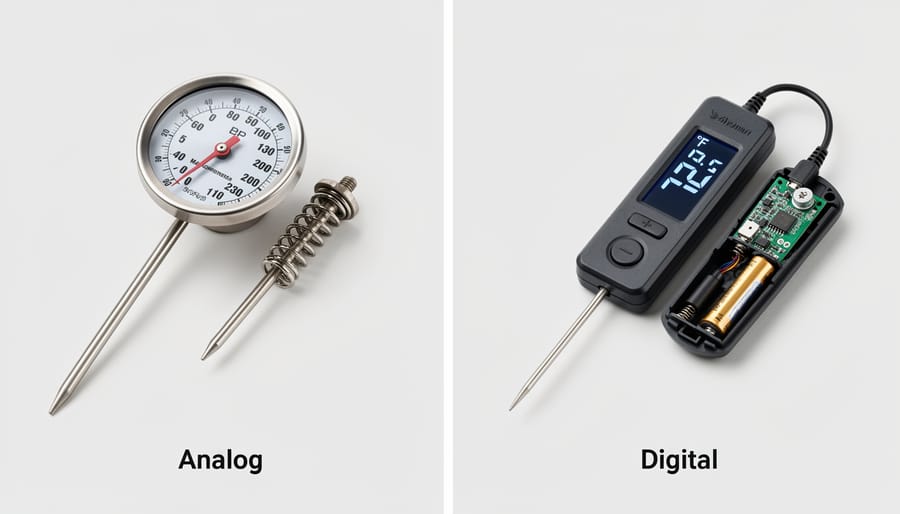
At their heart, non-digital meat thermometers operate on beautifully simple physics that’s been reliable for generations. Unlike their battery-powered cousins, these analog tools use bi-metallic coil technology—a clever design where two different metals are bonded together in a coil or strip. When exposed to heat, these metals expand at different rates, causing the coil to twist. That twisting motion moves the needle on your dial, showing you the temperature without requiring any electronic components whatsoever.
Think of it as the same principle that makes old-fashioned thermostats click on and off. It’s mechanical, straightforward, and nearly impossible to outsmart. The probe contains this coiled metal strip, sealed within a protective stainless steel shaft that can withstand the intense direct heat you’ll encounter when cooking over open flames or hot coals.
This basic construction gives analog thermometers some remarkable advantages in challenging cooking environments. There’s no circuit board to fry, no battery compartment that moisture can corrode, and no digital display that becomes unreadable in bright sunlight or near intense radiant heat. When you’re working around a fireplace or outdoor fire pit, these thermometers simply continue doing their job without complaint.
The dial itself is typically encased in glass or durable plastic, mounted at the top of the probe where it stays safely away from extreme temperatures. Most quality models feature large, easy-to-read numbers with clear zones marked for different types of meat—a practical design element that’s survived because it works. This simplicity means fewer parts that can fail, making these thermometers remarkably long-lasting tools that can serve your cooking needs for years, even decades, with minimal care.
Where Analog Thermometers Shine in Fireplace Cooking
Heat Resistance and Durability
When you’re cooking by the hearth or roasting meat over an open fire, your thermometer needs to handle conditions that would make digital models falter. Non-digital meat thermometers excel in these rustic cooking environments because they’re built with simplicity and resilience at their core.
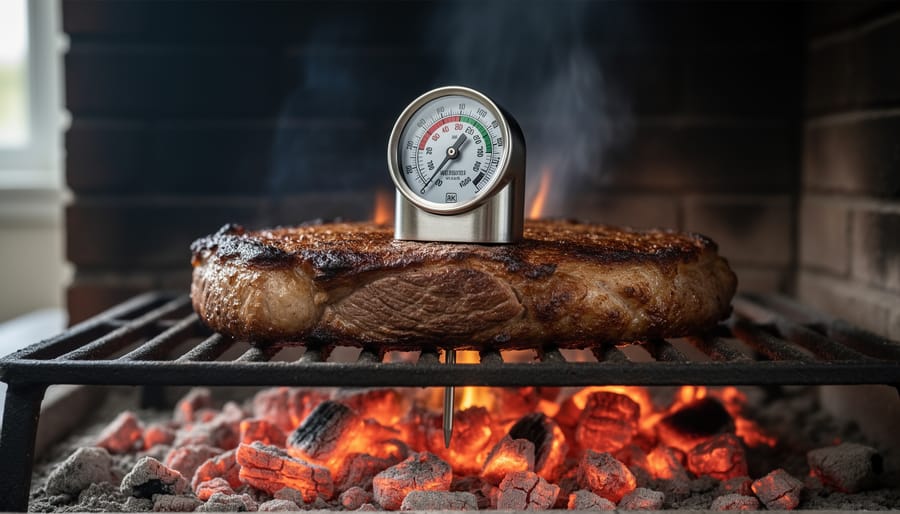
Unlike their digital cousins, analog thermometers have no electronic components to fail when exposed to extreme temperatures. The bi-metal coil or spring mechanism inside traditional dial thermometers can withstand direct flame contact and intense radiant heat without skipping a beat. This makes them perfect companions for fireplace cooking, where temperatures can fluctuate dramatically and occasional flame-ups are part of the experience.
The all-metal construction of most analog thermometers means you can leave them in your roast throughout the entire cooking process, even when rotating meat near glowing coals or open flames. There’s no plastic housing to melt, no batteries to drain in the heat, and no delicate sensors to recalibrate. This durability translates to longevity—a quality analog thermometer can serve your family for decades, aligning beautifully with sustainable, eco-friendly cooking practices. For homeowners embracing traditional hearth cooking as both a lifestyle choice and practical heating solution, this reliability is invaluable.
No Battery Failures Mid-Cook
There’s nothing quite as frustrating as settling in for a long, slow roast by the fire, only to have your digital thermometer die halfway through. We’ve all been there—the battery indicator was fine when you started, but six hours into your perfectly crusted prime rib, the screen goes blank. With a non-digital meat thermometer, this scenario simply doesn’t exist.
Traditional dial thermometers operate on simple physics—a bimetallic coil that expands with heat. No batteries, no circuits, no sudden failures when you need accuracy most. This mechanical reliability becomes especially valuable during those extended cooking sessions that make fireside cooking so special. Whether you’re slow-roasting a leg of lamb over glowing coals or smoking a brisket near the hearth for eight hours, your analog thermometer will be just as reliable in hour eight as it was in minute one.
For those who embrace the slower pace of traditional cooking methods, this dependability aligns perfectly with the cooking philosophy itself—simple, reliable, and built to last without modern complications.
Simplicity in Smoky, Dim Environments
When you’re cooking beside a crackling fire or managing a wood-fired grill, you’re working in an environment filled with dancing shadows, flickering light, and wisps of smoke. This is where non-digital thermometers truly shine. Their large, clearly marked dials remain perfectly readable regardless of lighting conditions, unlike digital screens that can wash out in bright firelight or become nearly invisible when coated with a fine layer of ash.
There’s something refreshingly straightforward about glancing at a dial thermometer in these rustic settings. No squinting at backlit displays or wiping smudges off sensitive screens—just a simple needle pointing to your temperature. The high contrast between the dial face and the indicator makes reading effortless, even when smoke swirls around your cooking area or when you’re checking temperatures at dusk during an outdoor gathering.
For those who embrace fireplaces as a lifestyle element, incorporating traditional cooking methods alongside modern comforts, analog thermometers fit naturally into this philosophy. They don’t require you to step away from the warmth of the fire to find better lighting, and they won’t fail you when ash settles on the gauge face. A quick wipe with your apron restores full visibility—no batteries to check, no screen calibration issues to troubleshoot. In the unpredictable environment of open-flame cooking, this simplicity becomes a genuine advantage.
The Digital Advantage: When Electronics Win
Speed and Precision
Let’s be honest here—when you need a quick temperature check on that steak you’re grilling over your outdoor fire pit, digital instant-read thermometers shine brightest. They deliver readings in seconds, often displaying temperatures to the exact degree with crisp digital clarity. There’s no squinting at dial markings or waiting for a needle to settle, which makes them incredibly convenient for those rapid-fire cooking decisions.
For homeowners who frequently cook over open flames or high-heat fireplace setups, this speed advantage is worth acknowledging. Digital models excel during quick spot-checks when you’re monitoring multiple cooking zones or managing a busy outdoor gathering. The precision is genuinely impressive—you’ll know immediately if your roast has reached exactly 135 degrees versus 138.
However, this speed comes with tradeoffs in specific cooking environments. While digital thermometers are champions for quick checks in conventional settings, their electronic components can struggle with the intense, sustained heat that fireplace cooking and ember roasting demand. Understanding when speed matters most versus when durability takes priority helps you choose the right tool for your particular cooking style.
Remote Monitoring Features
While non-digital thermometers offer reliable simplicity for fireplace cooking, it’s worth understanding what you’re trading off. Modern digital thermometers come equipped with wireless capabilities that let you monitor your food’s temperature from anywhere in your home. This means you can tend to your fire, entertain guests by the hearth, or handle other household tasks without constantly checking on your meal.
These digital models feature programmable alarms that alert you when your meat reaches the perfect temperature, eliminating guesswork and preventing overcooking. For homeowners juggling multiple responsibilities while cooking over an open flame or in a fireplace insert, these features offer undeniable convenience.
However, this convenience comes with considerations. Wireless thermometers require batteries, can experience signal interference near metal fireplace components, and may struggle with the extreme heat generated by wood-fired cooking. For those embracing the intentional, hands-on approach to fireplace cooking as a lifestyle element, the trade-off between constant connectivity and proven reliability deserves thoughtful consideration based on your cooking style and environment.
Multiple Temperature Zones
When cooking large cuts of meat over or near your fireplace, digital thermometers with multiple probes offer a clear advantage over traditional analog models. These devices let you monitor different sections of a roast simultaneously, which is particularly helpful since meat near the flames cooks faster than sections farther away. For example, when roasting a holiday prime rib on a hearth-side rotisserie, one probe can track the thickest part while another monitors the end cut. This precision helps ensure even cooking throughout. However, it’s worth noting that this convenience comes with added complexity and cost. If you’re cooking smaller cuts or enjoy the hands-on approach of checking temperatures manually at different spots, a reliable analog thermometer still does the job beautifully while maintaining that traditional, unplugged cooking experience many fireplace enthusiasts cherish.
Choosing the Right Non-Digital Thermometer for Your Fireplace
Oven-Safe Dial Thermometers
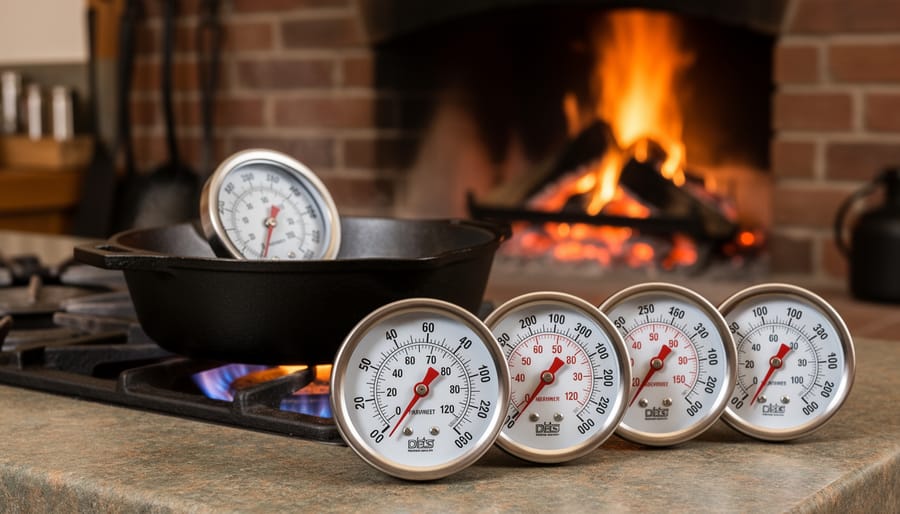
When you’re cooking hearty roasts over the glowing embers of your fireplace, a leave-in dial thermometer becomes your trusted companion. These sturdy tools can withstand the intense, radiant heat that would damage their digital counterparts, making them perfect for the authentic cooking experience that fireplace enthusiasts cherish.
The most critical feature to consider is stem length. For fireplace roasting, look for thermometers with stems at least 5 to 6 inches long. This extra length keeps the dial face farther from direct heat while ensuring the probe reaches the center of large roasts. Shorter stems risk both inaccurate readings and damaged gauge faces from excessive heat exposure.
Temperature range matters significantly in open-flame environments. Choose models rated from 0°F to at least 220°F, though higher ranges offer added versatility. This wide span accommodates everything from slow-roasting beef to searing lamb over hotter coals.
Construction quality separates exceptional thermometers from mediocre ones. Stainless steel construction throughout ensures longevity in demanding fireplace conditions. The dial face should be large enough to read comfortably from a safe distance, and many quality models feature color-coded zones indicating proper doneness for various meats.
Unlike battery-dependent digital options, these mechanical workhorses align perfectly with eco-friendly heating solutions, requiring no power source and lasting decades with proper care. They embody the timeless reliability that makes traditional fireplace cooking so satisfying.
Instant-Read Analog Options
Bi-metallic instant-read analog thermometers strike a perfect balance between traditional reliability and practical convenience. These thermometers use a coiled metal strip that expands at different rates when heated, moving a dial to indicate temperature—simple physics that works every time without batteries or electronics.
Choose instant-read analog models when you need quick temperature checks during active cooking sessions around your fireplace or grill. They’re particularly valuable for checking multiple items in succession, as they read temperatures in 5-10 seconds and don’t require the button-pressing ritual of digital counterparts. The mechanical simplicity means they handle temperature swings gracefully, making them ideal companions for unpredictable open-flame cooking.
Quality instant-read analog thermometers feature several hallmarks: a robust stainless steel probe that won’t bend during use, a clearly marked dial with large numerals readable in firelight, and a calibration nut on the back that lets you maintain accuracy over years of service. The best models have a dimpled dial face that reduces glare and a temperature range extending to at least 220°F.
These thermometers embody sustainable cooking practices—they’ll likely outlast several generations of battery-powered alternatives while delivering consistent performance. Look for models with NSF certification and avoid plastic components near the probe, which can warp from heat exposure over time.
Making Analog Thermometers Work Better
Getting the most from your analog thermometer in fireplace cooking starts with proper calibration. Test your thermometer monthly using the ice water method: submerge the stem in ice water for 30 seconds, and it should read 32°F. If it’s off, most analog models have a small nut beneath the dial that you can adjust with pliers. This simple check ensures you’re getting accurate readings every time you cook.
Placement matters enormously in the unpredictable heat of fireplace cooking. Insert your thermometer into the thickest part of the meat, avoiding bone or fat pockets that can throw off readings. The stem should go deep enough that the sensing coil sits in the meat’s center. Unlike digital probes, analog stems are typically shorter, so you’ll need to be more deliberate about positioning. Keep the dial face away from direct flames and radiant heat, which can damage the mechanism even while the stem stays protected.
The ash-filled environment around your fireplace presents unique challenges for maintaining your thermometer. After each use, wipe the stem immediately with a damp cloth before residue hardens. Avoid submerging the entire unit in water, as moisture can fog the dial and corrode internal components. Store your thermometer in a protective sleeve or case away from the firebox when not in use.
Regular maintenance extends your thermometer’s life considerably. Check the glass dial face for cracks that could allow ash infiltration. If the needle moves sluggishly, a gentle tap usually frees it up. These hardy tools can serve you reliably for years when treated with basic care, making them a sustainable choice for your fireplace cooking adventures. Their simplicity means fewer parts to fail in harsh conditions, giving you consistent performance season after season.
Choosing between analog and digital thermometers for your fireside cooking isn’t about picking the most high-tech option—it’s about finding what works best for your lifestyle and cooking environment. If you regularly cook over open flames, value simplicity, and appreciate tools that don’t require batteries or delicate handling, a quality non-digital thermometer might be your perfect match. These dependable instruments thrive in the radiant heat that surrounds hearth cooking, eliminating the anxiety of damaging expensive electronics.
However, your decision should reflect how you actually cook. Do you prefer the tactile, hands-on experience of traditional fireplace cooking, where you read flames and adjust by intuition? Or do you appreciate precise digital readouts and preset alerts? There’s no wrong answer—only what suits your approach to creating warmth and meals around your hearth.
Consider your cooking frequency, the types of dishes you prepare, and whether you value durability over convenience features. The best thermometer is the one you’ll confidently use every time, ensuring delicious, safely-cooked meals while embracing the timeless ritual of cooking by fire. Don’t let trends dictate your tools—let your fireside cooking style guide your choice.