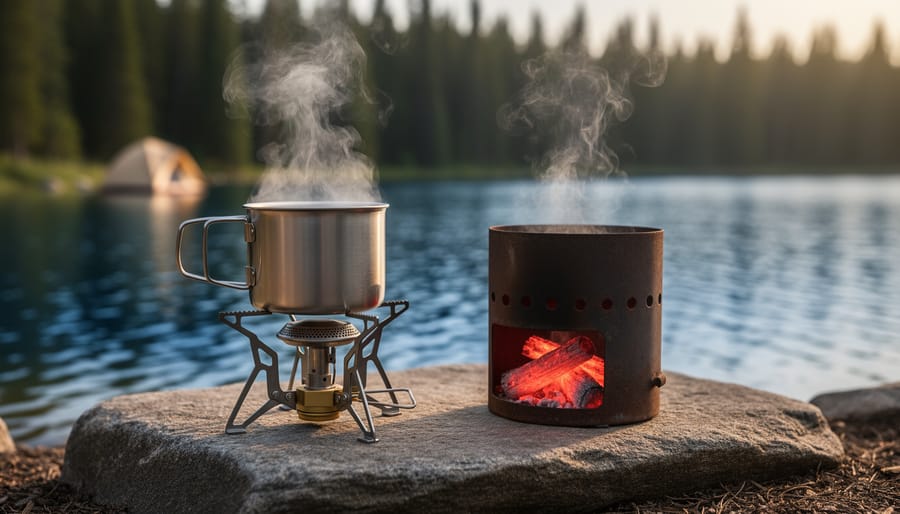


Choose portable cooking devices based on your specific outdoor adventure—compact canister stoves deliver reliability for backpacking trips under 15 minutes of cooking time, while portable wood-burning models create that authentic campfire experience without the permanent setup. Match your fuel source to availability and environmental regulations in your destination areas, since many wilderness zones restrict certain fuel types but welcome eco-friendly alternatives that minimize impact on natural surroundings.
Consider heat output measured in BTUs when comparing devices, as most outdoor cooking requires 7,000-10,000 BTUs for efficient meal preparation, though larger group gatherings benefit from 15,000+ BTU systems. Propane and butane options provide consistent temperature control similar to home cooking, while alcohol and solid fuel tablets offer lightweight portability at the cost of slower heating times. Wind resistance dramatically affects performance, so prioritize models with integrated windscreens or plan to create natural barriers using rocks and terrain.
Test your portable cooking setup at home before departure to identify missing accessories and practice fuel management—running out of propane mid-trip transforms adventure into frustration. Pack redundant ignition methods including waterproof matches and ferro rods, as electronic ignitors fail in moisture and cold conditions. Safety protocols mirror indoor fireplace practices: maintain clearance from flammable materials, never operate devices inside enclosed spaces without proper ventilation, and fully extinguish all fuel sources before leaving cooking areas unattended.
Portable cooking devices extend the warmth and gathering power of home hearths into wilderness settings, creating memorable outdoor experiences centered around shared meals and natural surroundings. The right equipment transforms raw ingredients into nourishing comfort while respecting environmental stewardship through responsible fuel choices and leave-no-trace principles.
What Makes a Cooking Device Truly Portable?
The Sweet Spot: Power vs. Portability
Finding the right balance between cooking power and portability is like choosing between a roaring campfire and a convenient pocket lighter. Both have their place, but understanding what you truly need makes all the difference in your outdoor cooking experience.
High-powered portable stoves deliver impressive heat output, often reaching 10,000 BTUs or more, which means you can boil water quickly and sear steaks beautifully. However, this power comes with trade-offs. These units tend to be heavier, bulkier, and consume fuel faster. If you’re car camping or setting up a base camp where weight isn’t your primary concern, the extra heft is worth the cooking performance you’ll enjoy around your outdoor gathering space.
On the flip side, ultralight backpacking stoves prioritize every ounce. They might only produce 7,000 BTUs, but they fold down to fit in your palm and weigh less than a coffee mug. For hikers counting grams, this compromise makes perfect sense. You’ll wait a bit longer for that morning coffee, but your shoulders will thank you after miles on the trail.
Consider your typical outdoor adventures when making this decision. Weekend warriors who drive to campsites can embrace more robust cooking setups that create that warm, communal cooking experience. Backcountry explorers need to be more strategic, selecting equipment that doesn’t slow them down. Think about fuel efficiency too, as eco-friendly cooking means making the most of every canister while minimizing your environmental footprint in nature’s spaces.
Fuel Types That Change Everything
The fuel you choose for your portable cooking device dramatically influences your outdoor experience, much like selecting the right wood transforms your fireplace’s ambiance at home. Each fuel type brings distinct advantages worth considering before your next adventure.
Propane stands as the workhorse of portable cooking, delivering consistent heat output regardless of weather conditions. These familiar green canisters connect easily to camp stoves and offer precise temperature control that makes cooking feel just like being in your kitchen. While slightly heavier than alternatives, propane’s reliability and widespread availability make it the go-to choice for most outdoor enthusiasts. You’ll find refills at virtually any camping supply store or gas station.
Butane offers a lighter, more compact option that’s perfect for backpackers watching every ounce. These sleek canisters nestle neatly into your pack, though they struggle in cold temperatures below freezing. Many modern devices now accept both fuels, giving you flexibility based on conditions.
For those drawn to eco-friendly solutions and traditional cooking methods, wood-burning stoves create that primal connection to fire we all crave. They require no fuel cartridges, rely on readily available twigs and branches, and produce that satisfying crackling ambiance reminiscent of gathering around your hearth at home. The trade-off involves less temperature control and more active fire management.
Alcohol and solid fuel tablets represent ultralight alternatives favored by minimalist hikers. Denatured alcohol burns cleanly and quietly, while solid fuel tablets like Esbit provide foolproof ignition in extreme conditions. Both produce less heat output than gas options, meaning longer cooking times and limited meal complexity.
Consider your priorities: convenience favors propane, weight-consciousness suggests butane or alcohol, and sustainability champions wood-burning designs. Your perfect fuel match depends on balancing portability needs with cooking performance expectations.
Portable Stoves: From Backyard to Backcountry
Single-Burner Workhorses
When you’re venturing out solo or simply appreciate a streamlined setup, nothing beats the simplicity of a compact single-burner stove. These portable powerhouses have evolved tremendously, offering impressive performance in surprisingly small packages that won’t weigh down your pack or crowd your campsite.
Think of these single-burner propane camp stoves as the minimalist’s answer to outdoor cooking. They deliver focused heat exactly where you need it, much like how a well-placed fireplace becomes the heart of a room without overwhelming the space. The key difference between models comes down to three essential factors: BTU output, wind resistance, and stability.
BTU output determines how quickly you’ll boil water or cook your meal. Most quality single-burners range from 7,000 to 10,000 BTUs, which is plenty for solo cooking needs. Higher isn’t always better though, as fuel efficiency matters when you’re carrying limited supplies.
Wind resistance separates fair-weather stoves from true adventure companions. Look for models with built-in windscreens or integrated designs that shield the flame. Some innovative options use recessed burners that naturally protect against gusts, ensuring your morning coffee doesn’t take an hour to brew.
Stability might seem obvious, but a wobbly stove is more than inconvenient, it’s genuinely unsafe. Wide bases, folding pot supports, and low centers of gravity keep your cookware secure on uneven ground. Remember, outdoor cooking safety parallels fireplace safety: respect the flame, maintain proper clearances, and always have a stable foundation.
Multi-Burner Camp Stoves for Family Gatherings
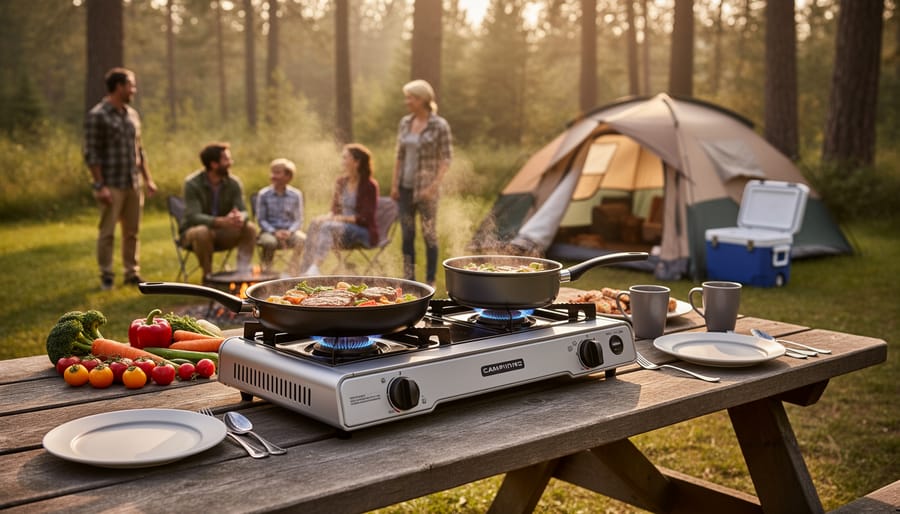
When you’re cooking for a crowd outdoors, whether at a family campsite or a tailgating party, a multi-burner camp stove transforms meal preparation from a logistical challenge into an enjoyable gathering experience. These larger portable cooking systems typically feature two to three burners, allowing you to simultaneously prepare main dishes, sides, and beverages without the wait times associated with single-burner setups.
Think of multi-burner stoves as the outdoor equivalent of your home range, bringing that same convenience to nature. Most models offer adjustable flame controls on each burner, giving you the flexibility to simmer a pot of chili on one side while boiling water for hot beverages on the other. This versatility means everyone gathers around the cooking area, creating that warm, communal atmosphere reminiscent of gathering around a home hearth.
Modern multi-burner stoves have evolved to be surprisingly efficient, with many featuring wind-blocking panels that conserve fuel and reduce environmental impact. Look for models with stable, wide cooking surfaces that can accommodate durable cookware of various sizes. Safety features like automatic ignition and secure fuel connections are essential, especially when children are present at your outdoor gathering.
Most quality units fold into compact carrying cases, proving that family-sized cooking power doesn’t have to mean sacrificing portability. With proper care, these stoves become reliable companions for years of outdoor adventures, creating lasting memories around shared meals under open skies.
Wood-Burning Stoves: The Eco-Friendly Alternative
For those who appreciate the elemental connection between fire and food, wood-burning stoves represent a return to the most fundamental cooking method while embracing modern sustainability. These innovative portable devices use twigs, pinecones, dry leaves, and other natural biomass you’ll find right at your campsite, eliminating the need to pack heavy fuel canisters or worry about running out of gas mid-trip.
The beauty of biomass stoves lies in their self-sufficiency. A simple walk around your camping area provides all the fuel you need, making them perfect for extended backcountry adventures where resupply isn’t an option. Modern designs incorporate clever airflow systems that create surprisingly efficient burns, often boiling water faster than you’d expect from a handful of gathered sticks. The secondary combustion technology in many models produces minimal smoke, addressing one of the traditional drawbacks of wood cooking.
Beyond practicality, there’s something deeply satisfying about cooking over a fire you’ve built from natural materials. It creates a mindful connection to your surroundings and transforms meal preparation into an engaging experience rather than just a task. This hands-on approach resonates with anyone who values the warmth and ritual of fire as a lifestyle element.
From an environmental perspective, these stoves shine brightly. They produce zero fuel waste, leave no canisters in landfills, and utilize carbon-neutral renewable resources. For eco-conscious outdoor enthusiasts, wood-burning stoves offer guilt-free cooking that actually enhances your wilderness experience while treading lightly on the planet.
Portable Grills That Don’t Compromise on Flavor
Charcoal Grills: Bringing Authentic Fire Flavor Anywhere
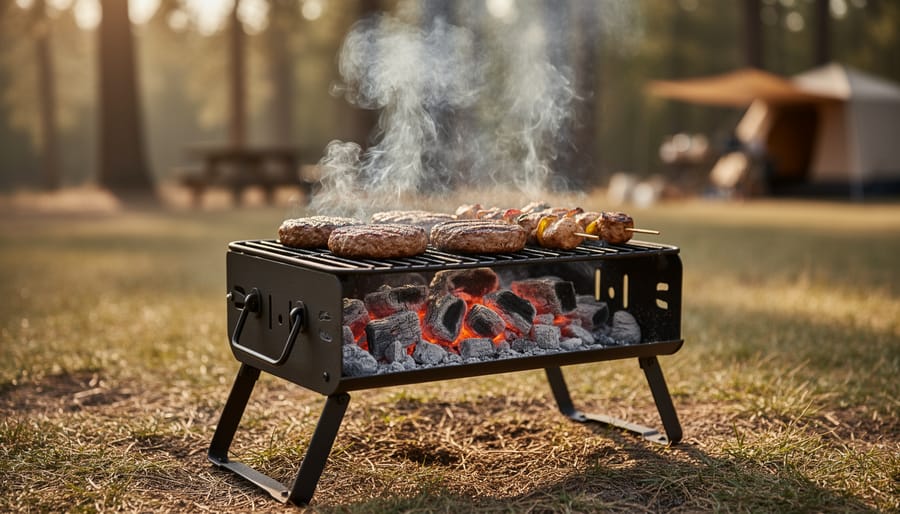
There’s something deeply satisfying about cooking over real charcoal flames, and modern compact charcoal grills let you bring that authentic fire experience wherever you roam. These portable powerhouses deliver the traditional smoky flavor that gas simply can’t replicate, making them perfect for camping trips, beach outings, or tailgate gatherings.
The beauty of portable charcoal grills lies in their simplicity. Most models fold flat or nest compactly, fitting easily into your vehicle alongside other camping gear. Despite their small footprint, these grills generate impressive heat, creating those coveted char marks and infusing your food with genuine wood-smoke flavor that connects us to centuries of cooking tradition.
Managing heat in a compact charcoal grill requires a slightly different approach than larger models. Start your charcoal early, allowing about 20-30 minutes for coals to reach optimal cooking temperature. The glowing ember stage provides the most consistent heat, and arranging coals on one side creates zones for both direct searing and gentler indirect cooking. This versatility lets you prepare everything from quick-seared steaks to slower-cooked vegetables.
Cleanup does require more attention than propane alternatives. Let ashes cool completely before disposing in designated receptacles, and never leave hot coals unattended. Many portable models include removable ash catchers that simplify the process considerably. With proper care and responsible ash disposal, these eco-conscious cooking devices minimize environmental impact while maximizing flavor. The ritual of tending real fire, even in miniature form, transforms outdoor meals into memorable gatherings around warmth and flame.
Gas Grills: Quick Heat Without the Hassle
When you’re craving that flame-cooked flavor but want to skip the charcoal prep time, portable propane grills deliver the perfect balance of convenience and control. These compact powerhouses bring restaurant-style temperature precision to your campsite, tailgate party, or backyard gathering, heating up in just minutes so you can focus on the fun rather than waiting around.
Modern portable gas grills have come a long way from their bulky predecessors. Today’s models weigh as little as 15 pounds while still offering impressive cooking surfaces that can handle everything from morning pancakes to evening steaks. The instant ignition means you’re ready to cook at the press of a button, and adjustable burners give you the kind of temperature control that’s simply impossible with traditional campfires.
What makes these devices especially appealing is their safety profile. With enclosed flames and stable cooking surfaces, they’re significantly safer than open fire cooking, making them ideal for families and beginners. Plus, propane burns remarkably clean compared to wood or charcoal, producing fewer emissions and leaving no ash to dispose of.
The initial investment in a quality portable gas grill typically ranges from 100 to 400 dollars, with small propane canisters costing just a few dollars each. Look for models with wind guards to maintain consistent heat in breezy conditions, and consider grills with interchangeable cookware options that transform from grill grates to griddles. This versatility means one device can handle your entire outdoor cooking repertoire, from burgers to breakfast and beyond.
Innovative Alternatives: Beyond Stoves and Grills
Solar Cookers: Harnessing Free Energy
Solar cookers represent one of the most eco-friendly approaches to outdoor cooking, harnessing the sun’s free energy without burning fuel or creating emissions. These innovative devices use reflective panels or chambers to concentrate sunlight, generating enough heat to cook meals, boil water, and even bake bread. Think of them as outdoor ovens that work without flames, offering a zero-carbon cooking solution that aligns beautifully with sustainable living principles.
Modern solar cookers come in several designs, from simple panel-style models that fold flat for easy transport to more advanced parabolic cookers that can reach temperatures comparable to traditional stovetops. While they do require sunny conditions and a bit more patience than conventional cooking methods, they’re perfect for leisurely camping trips, emergency preparedness kits, or backyard gatherings where you want to minimize your environmental impact.
The beauty of solar cooking lies in its simplicity and connection to natural energy, much like gathering around a fire has brought people together for centuries. These devices typically weigh just a few pounds, require no maintenance beyond occasional cleaning, and never run out of fuel as long as the sun is shining. They’re an excellent choice for environmentally conscious outdoor enthusiasts who appreciate the satisfaction of cooking with renewable energy.
Portable Fire Pits: Creating Ambiance and Meals
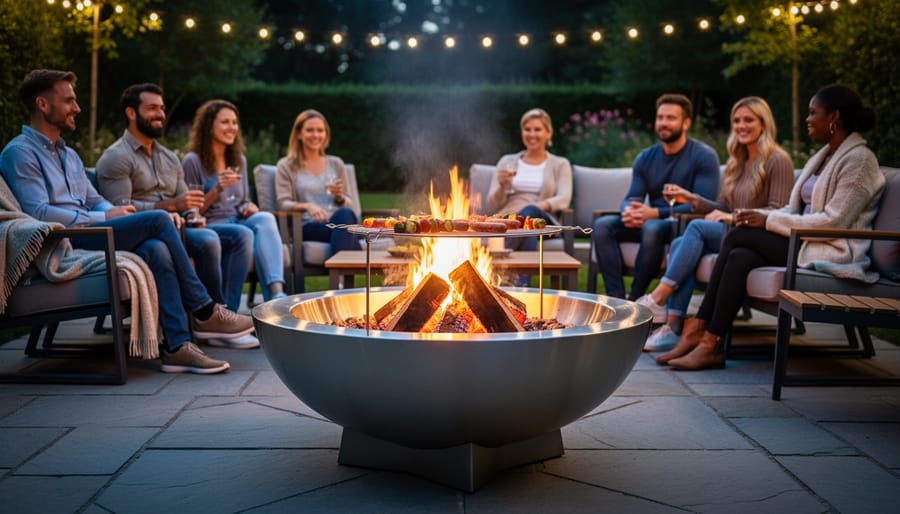
Portable fire pits beautifully bridge the gap between outdoor cooking functionality and the cozy ambiance we typically associate with indoor fireplaces. These versatile devices transform any outdoor space into a gathering spot where you can prepare meals while enjoying the mesmerizing dance of flames under the stars.
Modern portable fire pits come in various sizes and styles, from compact tabletop models perfect for intimate gatherings to larger wood-burning versions that can handle serious cooking tasks. Many feature removable cooking grates similar to quality grates found in traditional fireplaces, allowing you to grill steaks, roast vegetables, or even bake in cast-iron cookware. The dual-purpose design means you’re investing in both a cooking surface and an outdoor heating element that extends your patio season well into cooler months.
When selecting a portable fire pit for cooking, consider models with adjustable grate heights, which give you better temperature control over your food. Steel construction offers durability, while fire pits with ash collection systems make cleanup easier and support eco-friendly burning practices by ensuring complete combustion.
Safety remains paramount with any fire-based cooking device. Always place your portable fire pit on a stable, non-flammable surface, maintain proper clearance from structures and vegetation, and keep water or a fire extinguisher nearby. These precautions ensure your outdoor cooking experience remains both enjoyable and safe, creating memories around the fire that rival any indoor hearth gathering.
Safety First: Keeping Your Outdoor Cooking Adventures Secure
Just as you’d never skip safety checks with your indoor fireplace, treating your portable cooking device with the same respect is essential for enjoyable outdoor adventures. The principles that keep your home hearth secure translate beautifully to outdoor cooking, creating a foundation for worry-free meals under the open sky.
Ventilation stands as your first line of defense. Never use portable gas or propane stoves inside tents, enclosed vehicles, or shelters without proper airflow. Carbon monoxide buildup is invisible and deadly, much like the chimney concerns we discuss for indoor fireplaces. Always cook in well-ventilated spaces, maintaining at least several feet of clearance above your cooking surface and ensuring fresh air can circulate freely around your setup.
The surface beneath your cooking device matters tremendously. Select stable, level ground away from dry grass, leaves, or overhanging branches. Think of it like choosing the right hearth placement, where a solid foundation prevents accidents. Collapsible tables designed for outdoor cooking offer excellent stability, but ensure they’re rated for the heat your device produces. An infrared thermometer can help you monitor surface temperatures and ensure surrounding materials stay safely cool.
Fuel storage deserves careful attention. Keep propane canisters, butane cartridges, or liquid fuels in upright positions away from heat sources and direct sunlight. Store them separately from your cooking area, and never leave fuel containers in hot vehicles. This mirrors how we approach firewood storage, keeping combustibles at safe distances until needed.
Establish a safety perimeter around your cooking station, especially when children or pets are present. Keep a fire extinguisher or water source nearby, and never leave your device unattended while lit. Before packing up, allow everything to cool completely and check for residual heat. These simple practices transform outdoor cooking from potentially hazardous to safely enjoyable, letting you focus on creating warmth and memories around your portable flame.
Choosing the Right Device for Your Outdoor Lifestyle
Weekend Warriors vs. Extended Expeditions
Your adventure style directly shapes which portable cooking device will serve you best. Weekend warriors who drive to established campgrounds enjoy the luxury of choice. Since weight isn’t a primary concern when your gear rides in the trunk, you can opt for a robust two-burner propane stove that brings restaurant-quality heat control to your outdoor kitchen. These larger setups create that same gathering-around-warmth experience you love at home, turning meal preparation into a social event where everyone can share stories while dinner simmers.
Long-distance hikers and backcountry explorers face different priorities. Every ounce matters when you’re carrying your entire world on your back, making ultralight backpacking stoves the clear winner. Canister stoves weighing just a few ounces deliver impressive performance without the bulk. For extended expeditions lasting weeks, consider multi-fuel stoves that burn various fuel types, giving you flexibility when resupply options are limited. These compact powerhouses might lack the leisurely cooking experience of larger models, but they excel at efficiently boiling water and preparing simple meals that fuel your journey while minimizing environmental impact through their efficient fuel consumption.
Maintenance Tips That Extend Your Equipment’s Life
Just like maintaining a fireplace ensures years of reliable warmth and ambiance, caring for your portable cooking devices properly can significantly extend their lifespan and keep them performing at their best. The good news is that with a few simple habits, you can protect your investment and ensure safe, enjoyable cooking experiences for seasons to come.
After each use, allow your device to cool completely before cleaning. For propane and butane stoves, wipe down surfaces with a damp cloth to remove food residue and grease buildup. Pay special attention to burner ports, which can become clogged with debris much like fireplace vents need regular clearing. If you’re using charcoal or wood-burning devices, remove ash promptly using ash cleanup tools designed for safe handling of fine particles. This prevents corrosive buildup and maintains proper airflow for future fires.
Storage matters tremendously for portable equipment. Keep devices in a dry, protected location when not in use. Remove fuel canisters and store them separately in well-ventilated areas away from heat sources. Consider investing in protective cases or covers to shield your equipment from moisture and dust, which can degrade connections and surfaces over time.
Seasonal preparation is equally important. Before camping season begins, inspect all connections, hoses, and seals for wear or damage. Test ignition systems and replace batteries if needed. Check for rust or corrosion that might compromise safety. For wood-burning devices, examine grates and firebricks for cracks.
Finally, follow manufacturer guidelines for deep cleaning and part replacement. O-rings, fuel lines, and ignition systems have limited lifespans and should be refreshed periodically. This proactive approach mirrors the care you’d give your home fireplace, ensuring reliable performance when you need it most.
Whether you’re gathering around a crackling fireplace in your living room or circling a portable stove under the stars, the magic remains the same—warmth brings people together. Just as your home fireplace creates that inviting atmosphere where memories are made, portable cooking devices extend this same philosophy beyond your four walls. These tools allow you to carry the comfort and connection of home into nature’s great outdoors.
Embracing outdoor cooking isn’t just about preparing meals away from home; it’s about adopting a lifestyle that values experiences over possessions and sustainability over convenience. When you choose efficient, eco-friendly portable cooking equipment, you’re making the same thoughtful decisions you’d make when selecting a responsible heating solution for your home. You’re reducing your environmental footprint while creating warmth in every sense of the word.
The beauty of portable cooking devices lies in their ability to transform any outdoor space into a gathering place. They invite conversation, encourage slower living, and help us reconnect with the simple pleasure of cooking over flame. So as you plan your next adventure, remember that the same principles guiding your home comfort choices apply equally well outdoors—choose wisely, prioritize safety and sustainability, and never underestimate the power of shared warmth to create lasting memories.