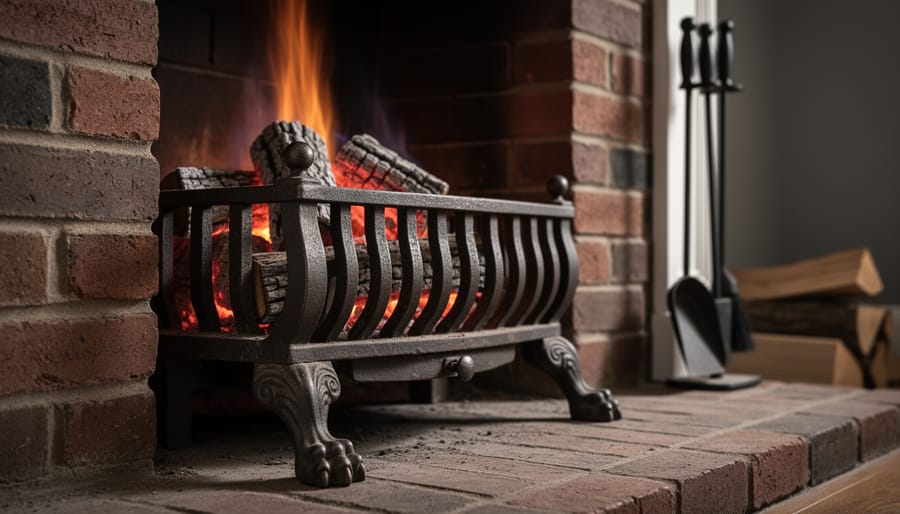


Examine the cast iron thickness and joint construction before purchasing any vintage fireplace grate—quality pieces from the early-to-mid 20th century typically feature metal at least half an inch thick with forge-welded or bolted connections that outlast modern thin-gauge alternatives. Run your hands along all bars checking for cracks, severe rust pitting, or warping that compromises structural integrity, though surface rust and minor discoloration actually indicate authentic age and clean off easily with a wire brush.
Measure your firebox depth, width, and height opening precisely before shopping, since vintage grates come in non-standard dimensions that won’t match today’s sizing conventions—a grate should sit 3-4 inches from the back wall and allow at least 2 inches clearance on each side for proper air circulation. Search architectural salvage yards, estate sales, and specialized online marketplaces where prices range from $75 to $300 depending on size and ornamental details, considerably less than premium new grates while offering superior heat retention and durability.
These time-tested pieces represent an era when fireplace components served homes for generations rather than seasons. The hefty construction means they hold and radiate warmth more effectively than lightweight modern versions, turning your fireplace into a more efficient heat source that reduces reliance on central heating. Beyond function, vintage grates bring authentic character and craftsmanship into your living space—decorative elements like claw feet, scrollwork, and maker’s marks transform a utilitarian object into a conversation piece that honors traditional home heating while supporting sustainable reuse of quality materials.
The Case for Going Vintage: What Makes Old Grates Better
Built to Last: The Durability Difference
When you hold a vintage fireplace grate in your hands, the first thing you’ll notice is the weight. These weren’t mass-produced with cost-cutting in mind. Crafted from thick cast iron or wrought iron, vintage grates were built during an era when fireplaces served as the primary heat source for homes, not just decorative focal points. The metal bars are often twice as thick as what you’ll find in modern fireplace grates, which means they can withstand decades of intense heat cycles without warping or cracking.
This substantial construction makes all the difference in longevity. While many contemporary grates begin sagging or breaking down after just a few seasons of regular use, vintage grates have already proven their mettle, often serving families for 50, 75, or even 100 years. The superior material thickness allows for better heat distribution and reduces the thermal stress that causes metal fatigue. From an eco-friendly perspective, choosing a vintage grate means keeping quality materials in use rather than supporting the cycle of disposable products. You’re not just investing in a fireplace accessory; you’re acquiring a piece that could easily serve multiple generations of your family.
Character and Charm You Can’t Manufacture
There’s something magical about a vintage fireplace grate that modern reproductions simply can’t replicate. The authentic patina that develops over decades of use tells a story—those subtle color variations, the warm darkening of the metal, and even the occasional mark from years of faithful service create visual interest that brings depth and character to your hearth.
Vintage grates often showcase design details that reflect the craftsmanship of their era. You might discover intricate scrollwork, elegant arched supports, or distinctive casting patterns that were considered standard in quality pieces from the late 1800s through the mid-1900s. These weren’t just functional items; they were designed to be focal points that complemented the architectural style of the home.
The beauty of a well-chosen vintage grate lies in its ability to anchor your fireplace with genuine authenticity. Unlike mass-produced modern alternatives, each vintage piece carries its own personality. The slight imperfections, the way the metal has aged gracefully, and the substantial presence of quality iron or steel create an ambiance that transforms your fireplace from a simple heat source into a conversation-worthy feature.
When you invest in a vintage grate, you’re not just buying a functional accessory—you’re bringing home a piece of history that enhances your living space with warmth and timeless appeal that perfectly complements today’s appreciation for sustainable, eco-friendly choices.
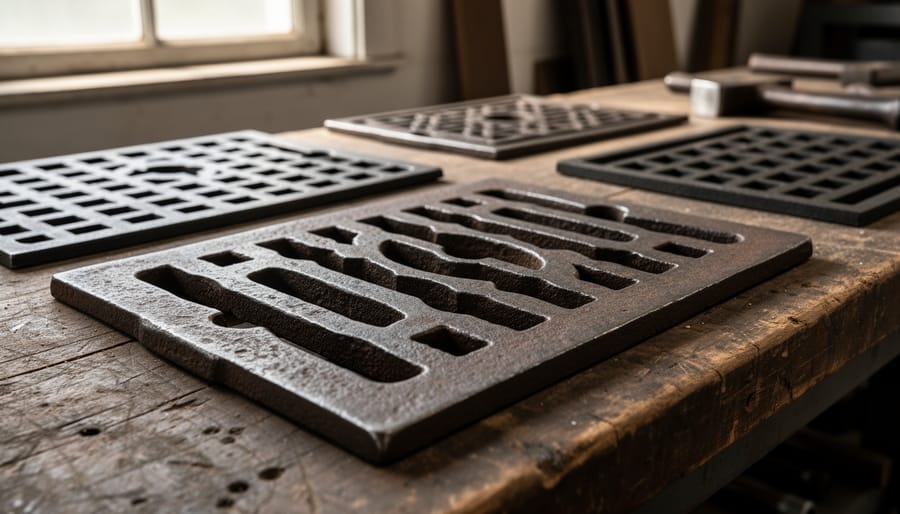
What to Look for When Shopping for a Vintage Grate
Sizing It Right: Measuring Your Fireplace
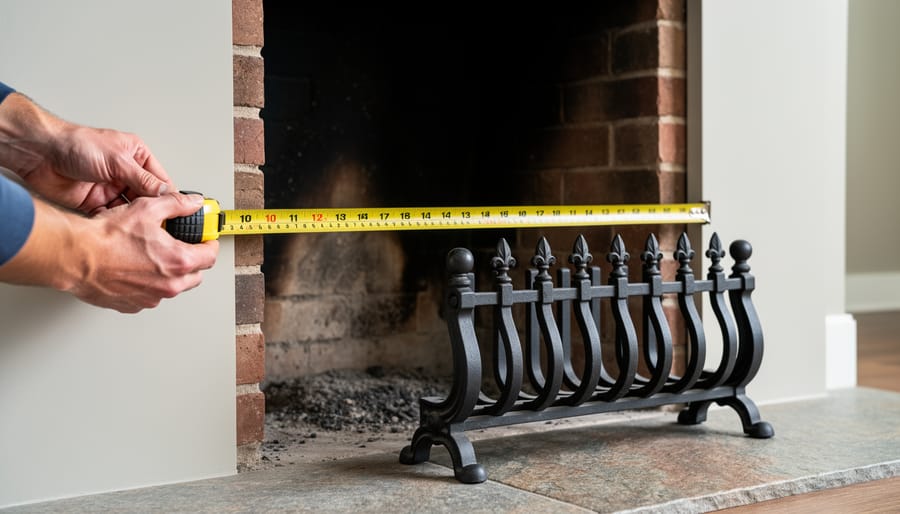
Getting the right fit for your vintage fireplace grate isn’t complicated, but it’s essential for both safety and performance. Start by measuring the width of your firebox at its narrowest point, typically where the sides begin to angle inward. Next, measure the depth from the front of the firebox to the back wall. Finally, note the height from the floor to where you’d like the fire to sit, keeping in mind that most grates elevate logs about 3-6 inches.
Here’s the golden rule: your grate should be 1-2 inches narrower than your firebox width and sit at least 3 inches away from the back wall. This spacing allows proper air circulation underneath and around the fire, creating that beautiful, efficient burn you’re after. A grate that’s too large restricts airflow and pushes heat dangerously close to fireplace walls, while one that’s too small won’t support your logs properly and wastes valuable burning space.
When evaluating vintage grates, remember that older designs were often crafted for deeper fireboxes. If your vintage treasure runs a bit deep, that’s actually a plus for airflow and heat distribution, making your fireplace both safer and more effective at warming your living space.
Inspecting for Damage and Wear
Before bringing a vintage fireplace grate into your home, a thorough inspection is essential for both safety and longevity. Start by examining the overall structure for cracks, which often appear at stress points like the legs or where bars meet the frame. Run your hands carefully along all surfaces to detect hairline fractures that might not be immediately visible.
Check for warping by placing the grate on a flat surface and observing whether it sits evenly. Warped grates won’t distribute heat properly and can create uneven burning conditions. While some surface rust adds character and is often just cosmetic, look deeper for rust that has eaten through the metal or compromised structural integrity. Gently flex the bars to ensure they maintain rigidity.
Pay special attention to the weight-bearing joints and welded connections, as these are common weak points. A quality vintage grate should still feel solid and substantial, not wobbly or brittle. Remember, a grate supports burning logs and endures intense heat cycles, so structural soundness isn’t negotiable. Minor imperfections can add charm to your fireplace, but serious damage compromises both safety and the cozy atmosphere you’re creating.
Understanding Different Vintage Grate Styles
Vintage fireplace grates come in wonderfully diverse styles, each reflecting the design sensibilities of their era. Victorian grates, popular from the 1830s through early 1900s, typically feature ornate cast iron work with decorative motifs like scrollwork, floral patterns, and even lion’s heads. These beauties aren’t just eye candy—they were engineered with deep fireboxes and efficient air circulation that still performs admirably today.
Colonial and Federal-style grates embrace simplicity and functionality, featuring clean lines and minimal ornamentation. These earlier designs, dating from the 18th and early 19th centuries, often showcase straight horizontal bars and sturdy construction that speaks to their makers’ practical craftsmanship.
Art Deco grates from the 1920s and 1930s bring geometric patterns and sleek, modernist aesthetics to your hearth. You’ll recognize them by their angular designs, stepped patterns, and sometimes chrome or brass accents that catch the firelight beautifully.
Each style offers unique benefits beyond appearance. Victorian grates excel at holding substantial log loads, while Colonial designs provide excellent draft control for efficient burning. Art Deco pieces often incorporate innovative heat-reflection features that warm your space more effectively. Understanding these distinctions helps you choose a vintage grate that complements both your home’s character and your heating needs, creating a truly personalized focal point.
Where to Find Quality Vintage Fireplace Grates
Finding an authentic vintage fireplace grate is like treasure hunting—it takes patience, but the reward is a piece with character that modern reproductions simply can’t match. Let’s explore the best places to uncover these gems for your home.
Antique shops and architectural salvage dealers are your first stop for quality vintage grates. These establishments often curate their collections carefully, and the dealers can provide valuable background information about a piece’s age and origin. Architectural salvage yards, in particular, specialize in reclaimed building elements and typically offer a wide selection of fireplace components. Don’t hesitate to build relationships with these dealers—they can alert you when new pieces arrive that match your specifications.
Estate sales and auctions present excellent opportunities to find vintage grates at competitive prices. These sales often feature items from older homes being downsized or cleared, meaning you might discover grates that have been cherished for generations. Arriving early gives you the best selection, and remember that patience often pays off—items remaining near the end of a sale may be heavily discounted.
Online marketplaces like eBay, Etsy, and Facebook Marketplace have expanded the vintage grate market significantly. While convenient, buying online requires extra diligence. Request detailed photos showing all angles, including the underside and any markings. Ask specific questions about dimensions, weight, and condition. Look for sellers with positive reviews and clear return policies.
When negotiating prices, do your homework first. Research comparable pieces to understand fair market value. Cash purchases often yield better deals, especially at salvage yards and estate sales. Don’t be afraid to point out needed repairs or restoration—these factors justify lower offers.
Authentication matters. Genuine vintage pieces show natural wear patterns, hand-crafted details, and period-appropriate construction methods. Examine welds and joints—older pieces often feature heavier gauge iron with hand-forged elements. Reputable dealers should answer questions about provenance honestly. Trust your instincts—if something feels off about a seller’s story, keep searching. The perfect vintage grate is out there waiting to bring warmth and history into your home.
Restoring and Maintaining Your Vintage Grate
Cleaning Without Damaging the Patina
Your vintage grate’s aged patina tells a story of countless cozy fires, and preserving that authentic character while keeping it functional is easier than you might think. The key is using gentle methods that respect the metal’s natural aging process.
Start by letting the grate cool completely, then use a soft-bristled brush to remove loose ash and debris. For stubborn buildup, create a mild cleaning solution using warm water and a few drops of dish soap. Apply it with a soft cloth, working in small sections to avoid saturating the metal. This approach removes harmful corrosion-causing residue without stripping away that beautiful aged finish.
Regular maintenance between deep cleans makes a big difference. Using an ash vacuum cleaner after fires helps prevent buildup from becoming problematic. Following proper ash removal practices also protects both your grate and your indoor air quality.
Avoid harsh chemical cleaners, wire brushes, or sandpaper, as these will damage the patina you’re trying to preserve. Think of cleaning your vintage grate like caring for a cherished cast-iron skillet—gentle attention maintains its character while keeping it ready for decades more use.
When to Restore vs. When to Preserve
Deciding whether to restore or preserve your vintage fireplace grate depends on several factors, including its current condition, rarity, and how you plan to use it. A well-preserved patina often adds authentic character that homeowners cherish, telling the story of decades spent warming family gatherings. However, heavily rusted or structurally compromised grates may need restoration to function safely and efficiently.
If your grate maintains its structural integrity with only surface rust and aged finish, consider preservation. A simple cleaning with a wire brush and protective coating of high-heat resistant oil can maintain its vintage charm while preventing further deterioration. This approach honors the grate’s history and requires minimal intervention, making it an eco-friendly choice that respects the craftsmanship of original makers.
Restoration makes sense when rust has weakened the metal, bars have warped, or the grate poses safety concerns. Basic restoration involves removing heavy rust with naval jelly or electrolysis, then applying high-heat paint in traditional black or leaving bare metal for a natural aged look. For valuable or rare pieces, consult a metalworking professional who understands historical preservation.
Consider your fireplace’s role in your home. Display-only fireplaces can showcase heavily patinated grates as sculptural elements, while active heating sources need structurally sound grates that efficiently support burning logs. Remember that authenticity doesn’t mean compromising safety. A thoughtfully restored grate can provide decades more service while maintaining the aesthetic warmth and character that drew you to vintage pieces initially.
Making Your Vintage Grate Work Better
Your vintage fireplace grate is already a beautiful piece with proven durability, but with a few smart adjustments, you can maximize its heating performance while keeping that classic charm intact.
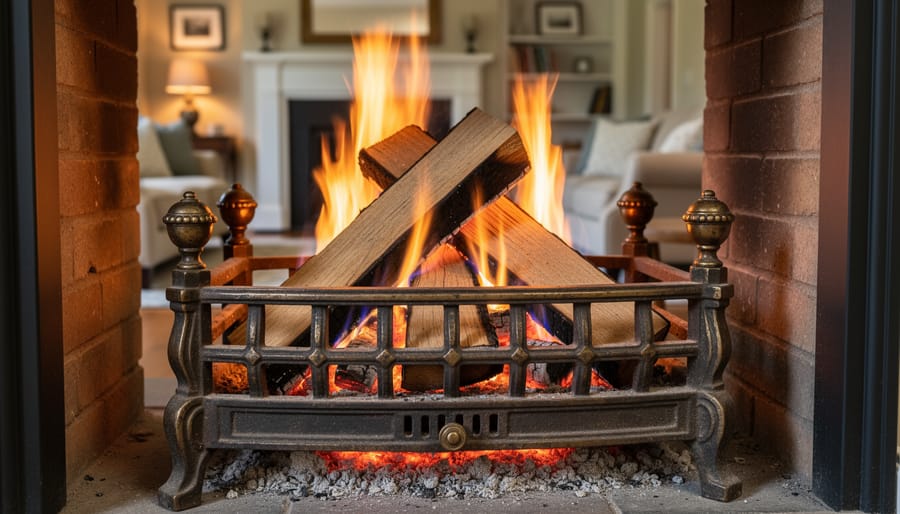
Start with how you stack your wood. The key is creating space for air to circulate freely beneath and between the logs. Place larger logs on the bottom of your vintage grate, leaving at least an inch between each piece. Stack smaller split wood on top in a crisscross pattern. This arrangement allows oxygen to feed the fire from below while heat rises more efficiently into your room. Avoid the temptation to overfill your grate, as cramming too much wood actually reduces airflow and creates a smoky, inefficient burn.
Speaking of airflow, your vintage grate’s design likely includes bars or supports that elevate logs off the firebox floor. This feature is brilliant for circulation, but you can enhance it further by ensuring your fireplace damper is properly adjusted. Open it fully when starting your fire, then gradually reduce it once flames are established to find that sweet spot between good draw and heat retention.
Here’s where old meets new in the best possible way. Pairing your vintage grate with modern fireplace accessories creates a winning combination. A glass fireplace screen helps radiate heat back into your room while protecting your space from sparks. Heat-resistant fireplace gloves make log placement safer and easier. A quality ash bucket keeps cleanup simple and efficient.
Consider adding a blower or heat exchanger if your fireplace supports one. These eco-friendly additions capture heat that would otherwise escape up the chimney, turning your vintage grate into a surprisingly effective heating solution. The beauty is that these modern helpers often hide behind your vintage grate’s timeless good looks.
Choosing a vintage fireplace grate is about more than finding a functional piece for your hearth. It’s an investment in timeless craftsmanship, enduring quality, and the kind of character that simply can’t be replicated by modern mass production. These beautifully forged pieces tell a story while efficiently supporting your fires for decades to come, making them both a practical and aesthetic choice for any home.
As you begin your search for the perfect vintage grate, remember that patience pays off. Whether you’re exploring architectural salvage yards, browsing online marketplaces, or visiting antique shops, the right piece is out there waiting to transform your fireplace into a genuine focal point. Take your time to inspect condition, verify measurements, and appreciate the unique details that make each vintage grate special.
The warmth these pieces bring extends beyond the flames they hold. A vintage grate adds soul to your living space, creating an atmosphere that welcomes family and friends while honoring sustainable living through the reuse of quality materials. In a world of disposable goods, choosing vintage means embracing durability and environmental responsibility without sacrificing style.
Don’t let the search intimidate you. Armed with the knowledge of what to look for and where to find it, you’re ready to discover a vintage grate that will serve your home beautifully for generations. Start your hunt today, and soon you’ll be enjoying fires built on a foundation of authentic craftsmanship and enduring elegance.