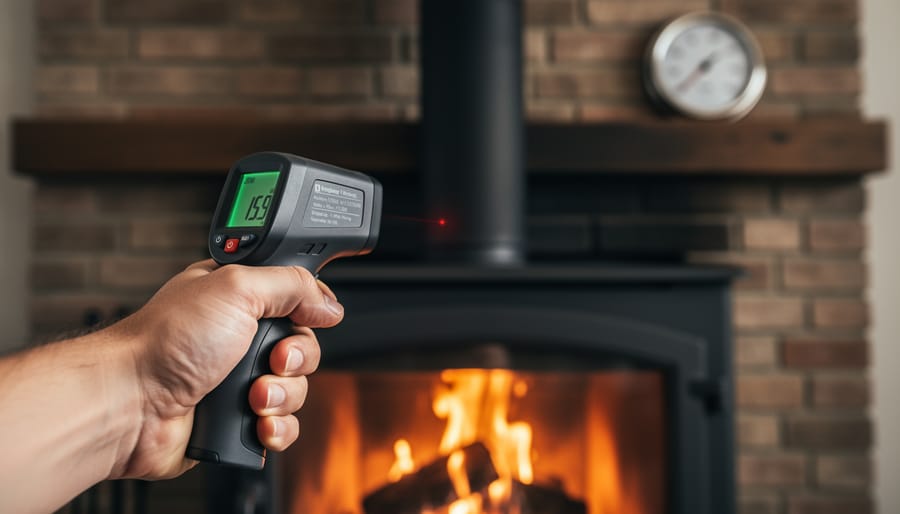


Measure your fireplace’s temperature using infrared thermometers pointed at the firebox walls or glass doors to get instant readings without direct contact—ideal for quickly checking if surfaces are safe to touch or if your fire is burning at optimal 400-600°F efficiency. Install magnetic stovepipe thermometers directly on your chimney connector pipe to monitor flue gas temperatures continuously, ensuring they stay within the safe 275-500°F range that prevents dangerous creosote buildup while maximizing heat transfer into your room. Use traditional dial thermometers mounted on wood stove surfaces or placed on hearth mantels to track ambient heating performance, helping you maintain comfortable temperatures while avoiding overheating that wastes fuel and damages your fireplace components.
Understanding which temperature measurement tool suits your specific heating situation makes the difference between a fireplace that’s merely functional and one that becomes an efficient, eco-friendly centerpiece of your home. Each tool serves distinct purposes—from ensuring your family’s safety to optimizing wood consumption and reducing your environmental footprint. Whether you’re burning traditional logs, using a modern pellet stove, or maintaining a gas fireplace, accurate temperature monitoring helps you achieve that perfect balance of warmth, ambiance, and responsible energy use.
The right temperature measurement approach transforms fireplace ownership from guesswork into precision, letting you enjoy consistent comfort while protecting your investment and keeping your household safe from overheating or incomplete combustion hazards.
Why Temperature Matters More Than You Think
You might think temperature monitoring is just about keeping your living room cozy, but the reality is far more significant. When it comes to your fireplace and chimney system, understanding and tracking temperature can be the difference between a safe, efficient heating experience and a potentially dangerous situation.
Let’s start with safety, which should always be your top priority. Chimney fires are more common than most homeowners realize, and they typically occur when creosote buildup inside your flue ignites. This happens most often when your chimney isn’t reaching proper operating temperatures, causing incomplete combustion and excessive creosote formation. By monitoring your flue temperature, you can ensure you’re maintaining the sweet spot between 250°F and 500°F where your system burns cleanly without overheating.
Beyond safety, proper temperature monitoring directly impacts how efficiently your fireplace performs. When you’re burning wood at optimal temperatures, you’re extracting maximum heat from every log while using less fuel overall. This means fewer trips to restock your wood supply and more money staying in your pocket. Conversely, a fire that’s too cool wastes fuel through incomplete combustion, while an overly hot fire sends precious heat straight up the chimney.
Here’s where your commitment to eco-friendly heating really comes into play. Maintaining proper burning temperatures dramatically reduces harmful emissions released into the atmosphere. A well-monitored fire produces significantly less smoke, particulate matter, and carbon monoxide. You’re not just creating a warm, inviting space for your family; you’re also being a responsible steward of the environment. Temperature monitoring transforms your fireplace from a simple heat source into an efficient, clean-burning system that aligns with sustainable living practices.
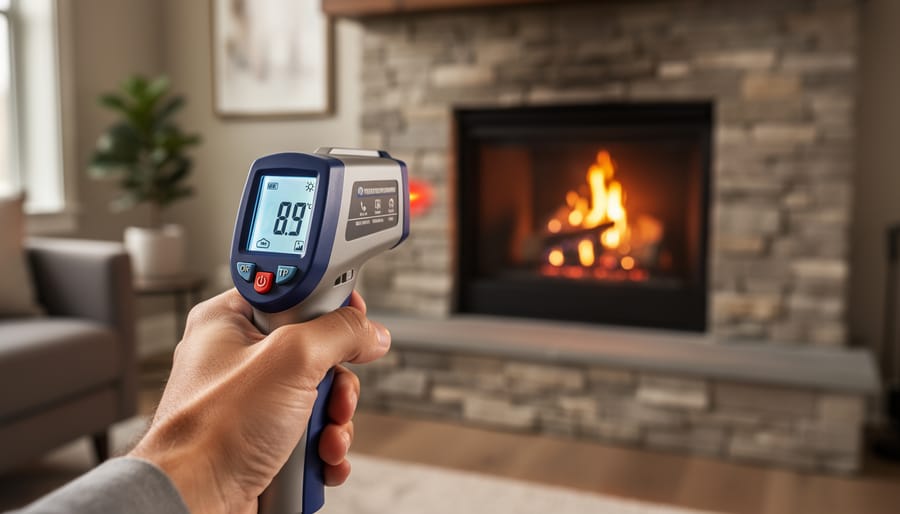
Digital Infrared Thermometers: Your First Line of Defense
When to Use an Infrared Thermometer
Infrared thermometers truly shine in specific fireplace scenarios where getting accurate temperature readings matters most for safety and performance. These handheld devices excel at checking glass door temperatures before you touch them, preventing burns and ensuring safe operation. They’re perfect for measuring hearth surface heat to verify it’s within safe limits, especially important when children or pets are nearby.
Use your infrared thermometer to scan walls and mantels surrounding your fireplace to detect unexpected hot spots that could indicate installation issues or inadequate clearances. This proactive approach helps protect your home while optimizing your heating system’s efficiency. They’re also invaluable for verifying manufacturer-recommended clearances between your fireplace and combustible materials like furniture or decorative elements.
Since infrared thermometers work from a distance, you can safely monitor operating temperatures without interrupting your cozy fire. This makes them ideal for routine maintenance checks and ensuring your eco-friendly heating solution performs optimally throughout the season. Keep one accessible in your fireplace toolkit for quick temperature verifications whenever needed.
Choosing the Right Model for Your Needs
When selecting a temperature measurement tool for your fireplace, consider how you’ll actually use it in your home. The temperature range matters more than you might think – while basic models handle everyday fireplace temperatures, some specialized heating systems reach higher extremes. Make sure your chosen tool can handle your specific setup.
For infrared thermometers, the distance-to-spot ratio determines how far away you can stand while still getting accurate readings. A 12:1 ratio means you can measure from twelve feet away with a one-foot measurement area – perfect for checking chimney temperatures safely from your living room. Our guide to best infrared thermometers explores these specifications in detail.
Emissivity settings might sound technical, but they’re simply adjustments for different surface types. Brick, metal, and glass all emit heat differently, so having adjustable settings ensures accuracy across various fireplace materials.
Durability should align with your lifestyle. If you’re checking temperatures daily during heating season, invest in a robust model that can withstand regular use. Look for heat-resistant housing and protective storage cases. Remember, the most eco-friendly choice is often the one that lasts longest, reducing waste while keeping your heating system running efficiently and safely.
Magnetic Stove Thermometers: The Wood Burner’s Best Friend
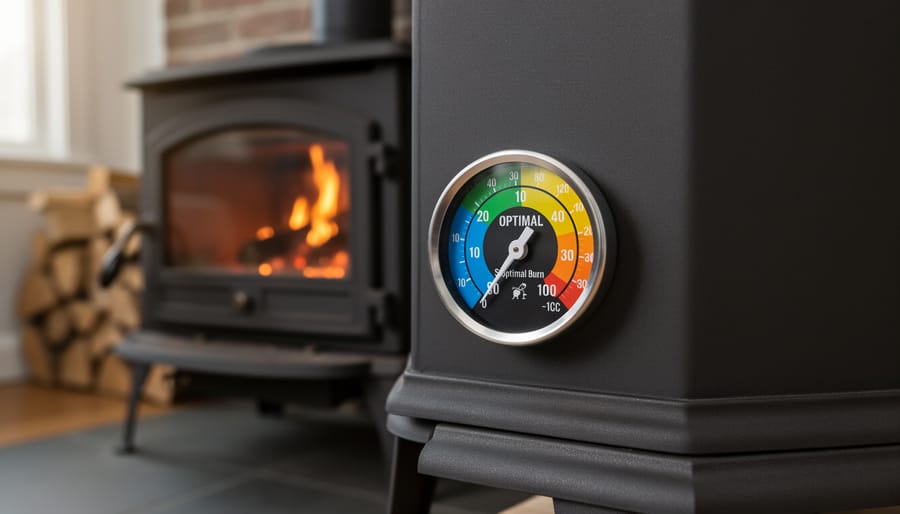
Reading and Responding to Temperature Zones
Understanding temperature zones transforms your fireplace experience from guesswork to precision. Most magnetic thermometers display three color-coded zones that serve as your roadmap to efficient, eco-friendly burning.
The green zone typically indicates optimal temperatures between 400-700°F, where your fireplace burns cleanest and most efficiently. When you’re in this sweet spot, you’re maximizing heat output while minimizing harmful emissions and creosote buildup. This is exactly where you want to maintain your fire for both performance and environmental responsibility.
The yellow zone warns you’re running too hot, which wastes fuel and can damage your fireplace components over time. If your thermometer creeps into this range, reduce air intake by partially closing the damper or air vents. For wood-burning fireplaces, avoid adding more logs until temperatures stabilize.
The red zone signals dangerous overheating that risks chimney fires and structural damage. Immediately reduce air flow and allow the fire to cool naturally.
Conversely, if temperatures fall below the green zone, your fire isn’t burning hot enough, creating excessive smoke and creosote. Open air vents wider and ensure you’re using properly seasoned wood with moisture content below 20 percent. Add smaller pieces of kindling to boost temperatures back into the optimal range, creating a healthier, more efficient burn that’s better for your home and the environment.
Probe Thermometers for Precision Monitoring
When you need consistent, reliable temperature readings from specific locations in your fireplace system, probe thermometers become invaluable allies in maintaining both safety and efficiency. These versatile tools feature a temperature sensor at the end of a metal probe, allowing you to monitor conditions in hard-to-reach places or areas requiring ongoing observation.
Analog probe thermometers offer a straightforward approach to temperature monitoring. These units typically feature a stainless-steel probe connected by a capillary tube to a dial display, which you can mount nearby for easy viewing. Many homeowners install these semi-permanently through the flue collar or into the firebox, creating a constant visual reference point. The beauty of analog probes lies in their simplicity—no batteries required, and they provide reliable readings year after year with minimal maintenance.
Digital probe thermometers bring modern convenience to temperature monitoring. These devices use electronic sensors to deliver precise readings on easy-to-read displays, often with additional features like high-temperature alerts or memory functions that track maximum temperatures reached. Some advanced models even offer wireless capabilities, letting you monitor your fireplace temperatures from across the room, perfect for keeping an eye on things while entertaining guests.
Installation flexibility makes probe thermometers particularly appealing. Use them temporarily during specific burn cycles to understand your system’s behavior, or install them permanently through pre-drilled ports. Many eco-conscious homeowners appreciate how these tools help optimize burn efficiency—maintaining that sweet spot where you’re extracting maximum heat while minimizing emissions. Whether you choose analog reliability or digital precision, probe thermometers give you the detailed insights needed to operate your fireplace safely and sustainably.
Smart Temperature Monitoring Systems
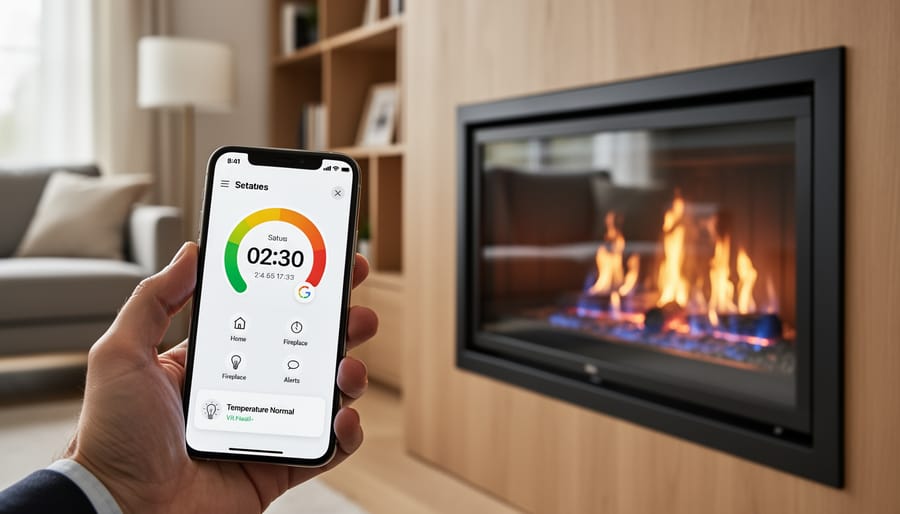
The beauty of today’s technology is how it transforms even traditional home comfort into something wonderfully connected and convenient. Modern smart temperature monitoring systems have revolutionized how homeowners keep tabs on their fireplace and heating environments, offering unprecedented control and peace of mind.
These wireless thermometers connect seamlessly to your smartphone through dedicated apps, allowing you to monitor temperature readings from anywhere in the world. Whether you’re at work, running errands, or away on vacation, you can check that your fireplace area maintains safe temperatures and that your home stays comfortably warm. Many systems send instant alerts when temperatures rise above or fall below your preset thresholds, giving you early warning of potential issues before they become serious problems.
What makes these systems particularly valuable for fireplace owners is their integration capability with smart home ecosystems like Amazon Alexa, Google Home, or Apple HomeKit. You can create automated routines where your smart thermostat adjusts based on fireplace room temperatures, or receive notifications if the area around your fireplace becomes unusually hot, potentially indicating a safety concern.
The data logging features provide valuable insights into your heating patterns, helping you optimize fuel efficiency and reduce your environmental footprint. By understanding exactly how your fireplace affects room temperatures over time, you can make informed decisions about burn times and fuel usage, contributing to more eco-friendly heating practices.
Installation is typically straightforward, with wireless sensors placing anywhere you need monitoring without complicated wiring. Multiple sensors throughout your home create a comprehensive temperature map, ensuring every corner stays comfortable while maintaining the cozy ambiance that makes fireplace living so special.
Thermal Imaging Cameras: Professional-Grade Insights
If you’re serious about understanding heat patterns in your home and optimizing your fireplace’s performance, thermal imaging cameras represent the professional-grade solution. Think of these devices as giving you X-ray vision for heat—they create detailed visual maps showing exactly where warmth is radiating, where it’s escaping, and how efficiently your heating system operates.
These cameras work by detecting infrared radiation and translating it into color-coded images. Hot spots appear in bright reds and oranges, while cooler areas show up in blues and purples. This comprehensive view is invaluable for identifying draft problems around your fireplace, detecting heat loss through your chimney when it should be sealed, or ensuring your fireplace insert is properly installed and transferring heat as intended.
While thermal cameras are admittedly a significant investment—ranging from several hundred to several thousand dollars—they’re increasingly accessible through rental programs at home improvement stores or through professional inspections. For serious fireplace enthusiasts committed to maximizing efficiency and minimizing energy waste, this tool provides insights impossible to gain otherwise.
Professional fireplace installers and chimney sweeps routinely use thermal imaging during inspections, and if you’re troubleshooting persistent heating issues or planning major renovations, hiring a professional with this technology can quickly pinpoint problems that might otherwise remain hidden. This approach aligns perfectly with eco-friendly heating practices, as identifying and addressing heat loss reduces fuel consumption and environmental impact while keeping your home comfortably warm.
Matching the Right Tool to Your Fireplace Type
Choosing the right temperature measurement tool depends largely on your specific fireplace type, as each heating system presents unique monitoring challenges and safety considerations.
For wood-burning stoves, infrared thermometers are your best friend. These handheld devices let you safely measure surface temperatures on your stove’s exterior, stovetop, and flue pipe without direct contact. Aim for stovetop temperatures between 400-600°F for optimal efficiency. Many wood stove enthusiasts also appreciate magnetic stove thermometers placed directly on the stovetop or stovepipe, offering continuous temperature monitoring at a glance. Don’t forget to check your fireplace grate temperature occasionally to ensure it’s not overheating.
Fireplace inserts benefit from similar tools as wood-burning stoves, though you’ll want to focus measurements on the insert’s front surface and surrounding areas. Since inserts are built into existing masonry, monitoring the temperature helps prevent damage to both the insert and your home’s structure.
Gas fireplaces present different challenges since their flames burn cleaner and more consistently. Here, thermocouple sensors and digital thermometers work beautifully for monitoring ambient heat output rather than direct flame temperature. Many modern gas units include built-in temperature controls, but an independent infrared thermometer helps verify efficiency and ensures your system operates within manufacturer specifications.
Bioethanol fireplaces, as eco-friendly heating solutions, typically operate at lower temperatures than traditional options. A simple infrared thermometer suffices for these units, helping you monitor surface temperatures and maintain safe clearances from furniture and walls. Since bioethanol burns clean without venting requirements, temperature monitoring focuses more on ambient heat distribution than combustion efficiency.
Remember, regardless of your fireplace type, consistent temperature monitoring enhances both safety and performance while reducing energy waste.
Safety Tips and Best Practices
Safety should always be your top priority when measuring temperatures around your fireplace or heating system. While these tools help you maintain an efficient, cozy home, using them incorrectly can lead to burns, damaged equipment, or inaccurate readings that compromise your safety.
Never place any temperature measuring device directly into flames or extremely hot surfaces beyond their rated capacity. Even high-temperature infrared thermometers have limits, so always check your tool’s maximum range before use. When using contact thermometers like thermocouple probes, wear heat-resistant gloves and keep a safe distance from the heat source. Remember, your personal safety matters more than getting a precise reading.
Understanding your tool’s limitations is crucial for accurate monitoring. Infrared thermometers can’t measure through glass, which means you’ll need a different approach for checking temperatures through your fireplace doors. Similarly, standard digital thermometers aren’t suitable for measuring flue gases or extremely hot surfaces. Using the wrong tool for the job can provide misleading information about your system’s performance.
Regular calibration keeps your measurements reliable and your heating system running efficiently. Most digital thermometers benefit from annual calibration checks, which you can often do at home using ice water for lower-temperature devices. For high-temperature tools used in fireplace monitoring, consider professional calibration services every few years.
Know when to call a professional. If you’re experiencing unusual temperature patterns, suspect chimney issues, or need measurements in hard-to-reach areas, a certified technician has specialized equipment and expertise. This applies to comprehensive system checks that go beyond routine maintenance tasks like using ash vacuum cleaners. Professional assessments ensure both safety and optimal performance of your heating system.
Investing in proper temperature monitoring tools isn’t just about numbers on a display—it’s about creating a warmer, safer home while maximizing your fireplace’s efficiency. Whether you choose a simple infrared thermometer or a comprehensive smart monitoring system, regularly checking temperatures transforms your fireplace from a simple heat source into an optimized, eco-friendly heating solution that truly enhances your lifestyle.
Think of temperature measurement as preventive care for your heating system. Just as you wouldn’t skip routine maintenance on your car, your fireplace deserves the same attention. A basic thermometer costs less than a tank of gas but can prevent costly repairs, reduce fuel consumption, and extend your system’s lifespan. These tools empower you to spot problems early, burn wood more cleanly, and ensure your family’s safety.
Start simple if you’re new to temperature monitoring—a reliable infrared thermometer provides immediate value and pays for itself through improved efficiency. Make checking temperatures part of your regular fireplace routine, noting patterns and adjustments that work best for your home. This small commitment to proper monitoring creates a more sustainable heating experience while protecting your investment and the environment for years to come.