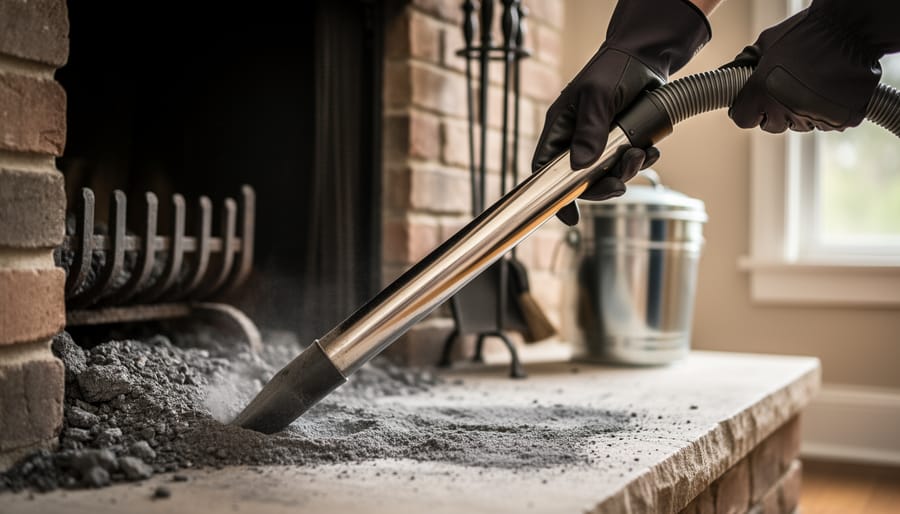


Wait at least 24 hours after your last fire before attempting to vacuum ash—this critical safety step prevents potentially live embers from damaging your vacuum or, worse, starting a house fire. Even ash that appears completely cold can harbor hidden heat for days, making patience your most important tool in fireplace maintenance.
Choose a vacuum specifically designed for ash removal rather than your household vacuum cleaner. Ash vacuums feature metal containers, heat-resistant hoses, and specialized filtration systems that prevent fine ash particles from recirculating into your home’s air. Standard vacuums lack these protections and can quickly clog, overheat, or spread harmful dust throughout your living space.
Remove larger debris like unburned wood chunks and charred logs by hand before vacuating. This prevents blockages and extends your vacuum’s lifespan while making the cleaning process more efficient. Use a metal scoop or fireplace shovel to collect these pieces, disposing of them in a metal ash container stored away from combustible materials.
Work methodically from back to front, using slow, deliberate movements that allow your vacuum to capture fine particles without creating dust clouds. Pay special attention to corners and crevices where ash accumulates, but avoid aggressive suction that might stir up settled ash before your vacuum can capture it.
Regular ash removal between fires isn’t just about cleanliness—it improves airflow for better combustion efficiency, reduces creosote buildup that can cause chimney fires, and maintains your fireplace as the warm, inviting centerpiece of your home’s eco-friendly heating solution.
Why Your Regular Vacuum Is Your Fireplace’s Worst Enemy
You might think grabbing your trusty household vacuum to clean up fireplace ash is a quick, convenient solution. After all, it works great on dust and debris everywhere else in your home, right? Unfortunately, this common assumption can lead to dangerous situations and costly damage to your equipment.
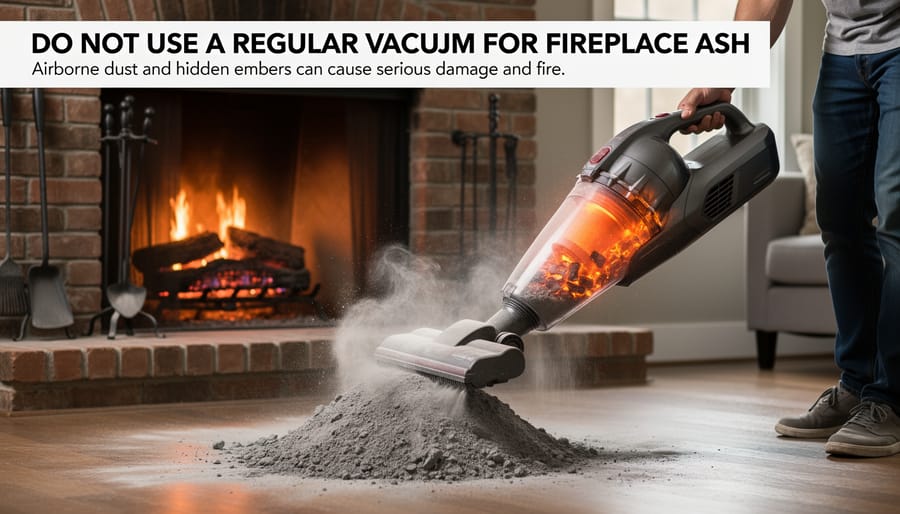
The most serious risk is fire hazard. Even when your fireplace appears completely cold, tiny embers can hide within ash for up to 24 hours or longer. These seemingly harmless gray particles might contain glowing coals that remain hot enough to ignite. When sucked into a regular vacuum’s collection bag or canister, these embers can start a fire inside the machine. This isn’t just theoretical – house fires have started this exact way, turning a simple cleaning task into a devastating emergency.
Beyond fire danger, fine ash particles wreak havoc on standard vacuum systems. Fireplace ash is incredibly fine, much finer than typical household dust. These microscopic particles quickly clog your vacuum’s filter, causing the motor to work harder and eventually burn out. Even if your vacuum survives the first use, repeated exposure significantly shortens its lifespan. You’ll find yourself shopping for a replacement far sooner than expected.
There’s also the air quality problem. Regular vacuums aren’t designed to contain such fine particulates. Instead of removing ash from your home, you’re essentially launching it back into the air through the exhaust. This creates a dusty cloud that settles on furniture, drapes, and surfaces throughout your living space. You might even notice respiratory irritation from breathing these particles.
The good news? Specialized ash vacuums are specifically engineered to handle these challenges safely. They feature heat-resistant materials, superior filtration systems, and sealed designs that protect both your home and your health. While your regular vacuum excels at everyday cleaning, fireplace ash requires purpose-built equipment to get the job done safely and effectively.
What Makes an Ash Vacuum Different (And Worth It)
The Metal vs. Plastic Difference
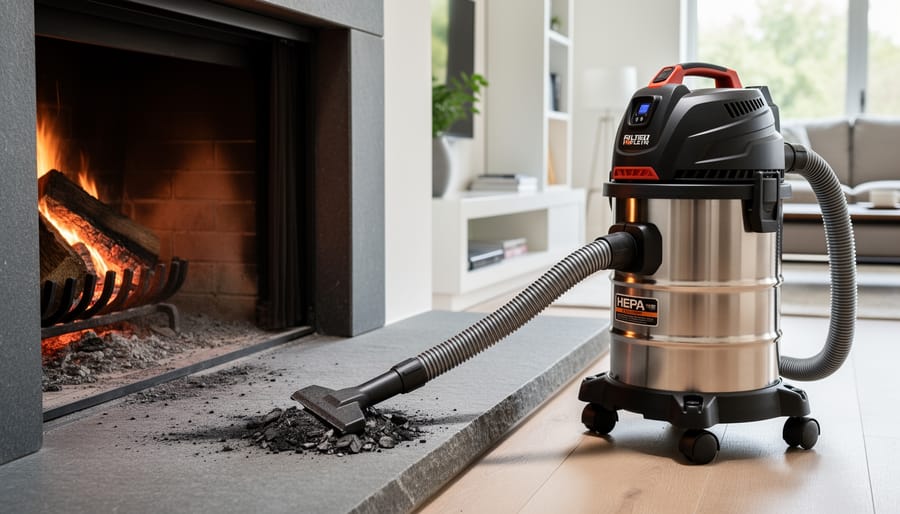
When you’re dealing with fireplace ash, the construction materials of your vacuum matter immensely. While regular household vacuums use plastic components throughout, ash vacuums built with metal construction offer critical safety advantages that shouldn’t be overlooked.
Here’s why metal makes the difference: even ash that appears completely cold can harbor hidden embers that remain hot for surprisingly long periods. When these meet plastic parts, you’re looking at potential melting, warping, or worse, a fire hazard right in your living space. Metal components, particularly steel hoses, metal canisters, and fire-resistant filters, can handle residual heat without compromising safety.
Beyond the immediate safety benefits, metal construction translates to longevity. Ash is abrasive by nature, and plastic components wear down quickly under regular use. Metal bodies and fittings resist this wear, meaning your investment lasts through many cozy fireside seasons rather than requiring replacement after a winter or two.
Think of it as choosing the right tool for the specific job. Just as you wouldn’t use a regular broom on hot coals, a plastic vacuum simply isn’t engineered for ash removal. Quality metal ash vacuums might cost more upfront, but they’re designed specifically for this purpose, protecting both your home and your wallet in the long run.
HEPA Filtration: Your Lungs Will Thank You
When you’re cleaning out your fireplace, you’re not just dealing with visible chunks of ash and debris. The real concern lies in the microscopic particles that become airborne during cleanup—particles so tiny they can bypass your respiratory system’s natural defenses and settle deep into your lungs. This is where HEPA filtration becomes your silent guardian.
HEPA (High-Efficiency Particulate Air) filters are designed to trap 99.97% of particles as small as 0.3 microns. To put that in perspective, fireplace ash particles can be even smaller than that, making proper filtration absolutely essential for protecting your family’s health and maintaining the air quality in your home. Without HEPA filtration, you’re essentially recycling those harmful particles right back into your living space—exactly what you’re trying to avoid.
The best ash vacuum cleaners come equipped with true HEPA filters specifically because of this health consideration. Think of it as an investment in your family’s wellbeing and your home’s environment. When ash particles remain airborne, they can aggravate allergies, trigger asthma symptoms, and create respiratory irritation for anyone in the vicinity.
From an eco-friendly perspective, HEPA filtration also means you’re not contributing to outdoor air pollution by stirring up and releasing particles throughout your home. You’re containing the problem efficiently and responsibly. Your lungs, your family, and even your houseplants will appreciate the cleaner air that results from using proper filtration during your fireplace maintenance routine.
The 24-Hour Rule That Prevents House Fires
Let’s talk about the most important rule in fireplace ash removal: waiting a full 24 hours after your last fire before vacuuming. This isn’t just a suggestion—it’s a critical safety measure that protects your home from fire hazards.
Here’s the reality many homeowners don’t realize: ash can remain dangerously hot for much longer than it appears. Those innocent-looking gray ashes can hide live embers beneath the surface for up to 72 hours, depending on the type of wood burned and how hot your fire was. Even a single ember can ignite when exposed to air flow from your vacuum, potentially causing a house fire or melting your vacuum’s internal components.
For wood-burning fireplaces, the 24-hour minimum applies after the fire has completely extinguished. Hardwoods like oak and maple retain heat longer than softer woods, so consider waiting even longer if you had a particularly robust fire. Pellet stoves require similar caution—shut down the stove completely and let it cool for at least 24 hours before attempting any ash removal.
Gas fireplaces generate less ash, but the rule still matters. Turn off the unit and allow a full cooling period before vacuuming any debris or dust.
How can you verify the ash is truly cool? The touch test is unreliable because surface ash can feel cool while harboring heat below. Instead, use an infrared thermometer to check temperatures throughout the ash bed. Anything above room temperature means you need to wait longer. You can also gently stir the ashes with a metal poker—if you see any red glow or feel radiating heat, it’s absolutely not ready.
Understanding warm ash vacuum safety is essential, but prevention remains your best protection. When it comes to your home and family’s safety, patience isn’t just a virtue—it’s non-negotiable.
Your Step-by-Step Ash Vacuuming Routine
Prep Work That Saves You Time
A little prep work makes all the difference between a quick cleanup and a frustrating mess. Think of this as setting the stage for success.
Start by protecting your surrounding area. Lay down old towels or a drop cloth around your fireplace – ash has a sneaky way of finding carpet fibers and upholstery. Even when you’re being careful, a little puff of ash can travel further than you’d expect.
Next, crack open a window or two. This might seem counterintuitive, but proper ventilation is your friend here. It helps any lingering fine particles disperse safely rather than settling on your furniture. Plus, it keeps the air fresh while you work.
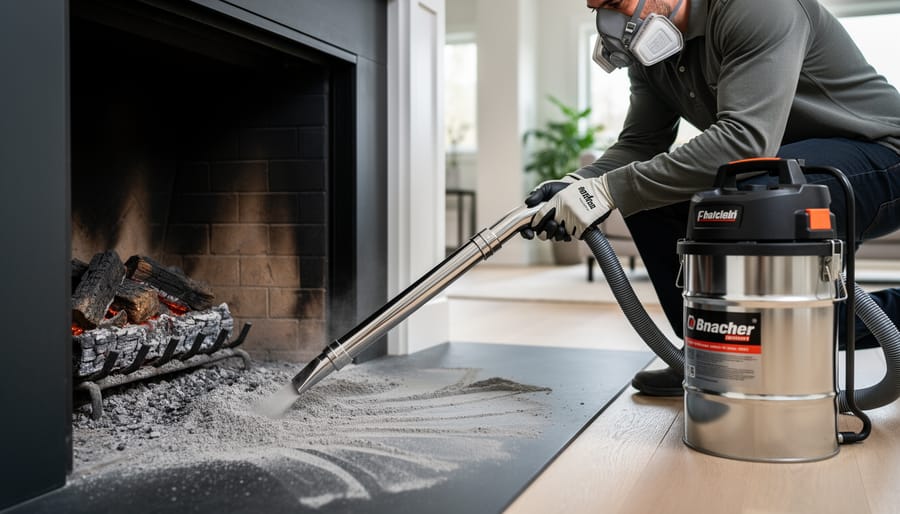
Gather everything you’ll need before you begin: your ash vacuum, a metal scoop or small shovel, a metal bucket for larger debris, and perhaps a dust mask if you’re sensitive to particles. Having your tools within arm’s reach means you won’t be tracking ash through your home mid-cleanup.
Finally, give your fireplace a visual once-over. Remove the grate if possible, and check for any larger pieces of unburned wood or debris. Clearing these by hand first makes vacuuming more efficient and protects your vacuum from unnecessary strain. This simple setup routine transforms a potentially dusty chore into a manageable task.
The Vacuuming Technique That Actually Works
The secret to effective ash removal lies in mastering a systematic approach that protects both your fireplace and your home. Start by attaching the wide, flat nozzle that came with your ash vacuum – this disperses suction pressure and prevents you from gouging or scratching your firebox surfaces.
Begin at the back of your fireplace and work your way forward in overlapping passes. This technique prevents you from tracking ash across areas you’ve already cleaned. Move slowly and deliberately, allowing the vacuum time to capture fine particles before they become airborne. Think of it as mowing your lawn – rushing through only creates more work.
Different ash types require slightly different handling. Hardwood ash, which tends to be lighter and fluffier, responds well to gentle suction. Softwood ash, often chunkier with more unburned bits, may need you to hover over stubborn pieces for a few extra seconds. If you encounter compacted ash stuck to your firebox or fireplace grate, use a small fireplace shovel to gently loosen it before vacuuming – never scrape aggressively, as this can damage protective surfaces.
For stubborn residue clinging to walls or the hearth, try using the crevice tool attachment to concentrate suction power. If ash has mixed with moisture creating a paste-like substance, let it dry completely before attempting removal. Patience here prevents smearing and makes cleanup infinitely easier.
Remember, keeping your nozzle about an inch above the surface creates optimal suction while minimizing the risk of scratching. This gentle approach ensures your fireplace stays beautiful while staying clean.
After-Vacuum Maintenance (Don’t Skip This)
Once you’ve finished vacuuming, the real maintenance begins. Empty your ash vacuum canister outdoors, away from your home, ideally into a metal container with a lid. Even cold-looking ashes can harbor hidden embers for days, so treat them with respect.
Clean or replace your vacuum’s filter after every few uses to maintain suction power and prevent dust from escaping back into your home. Most ash vacuums have washable filters that simply need a good rinse and thorough drying before reinstalling. Check your manufacturer’s guidelines for specific care instructions.
Here’s a green living tip: those fireplace ashes aren’t just waste. They’re packed with nutrients that benefit your garden. Wood ash contains potassium and calcium carbonate, making it excellent for neutralizing acidic soil and enriching compost piles. Just avoid using ashes from treated wood or coal, which can contain harmful chemicals.
Store your ash vacuum in a dry location where it won’t get knocked over. Coil the cord properly and keep all attachments together so you’re ready for the next cleaning session. Taking these simple steps ensures your equipment stays in top condition, protecting both your investment and your home’s cozy atmosphere for years to come.
Common Mistakes That Cost You Money and Time
Over the years, I’ve watched many well-intentioned homeowners make costly mistakes when cleaning their fireplaces. Let me share what I’ve learned so you can avoid these common pitfalls.
The biggest mistake? Getting too eager and vacuuming warm ashes. I know it’s tempting to clean up right after enjoying a cozy fire, but trust me on this: always wait a full 24 hours. Even ashes that look completely cold can harbor hidden embers that damage your vacuum or, worse, start a fire. This patience saves you from potentially replacing expensive equipment or dealing with a dangerous situation.
Another money-drainer I see constantly is overfilling the ash canister. When you pack it too full, ash gets forced into the filter and motor, shortening your vacuum’s lifespan considerably. Stop when the canister is about two-thirds full. Yes, you’ll empty it more often, but you’ll protect your investment and maintain strong suction power.
Filter maintenance is where many folks stumble. Those filters catch incredibly fine particles, and when they’re clogged, your motor works twice as hard. Clean or replace filters according to the manufacturer’s schedule. It’s a small task that prevents expensive repairs down the road.
Using regular vacuum attachments instead of proper ash vacuum tools is another time-waster. Standard attachments aren’t designed for fine ash particles and can clog quickly or disperse ash back into your living space.
Finally, improper ash disposal creates unnecessary hassle. Always transfer collected ashes into a metal container with a tight lid, and store it outside on a non-combustible surface. Even after vacuuming, those ashes need careful handling as part of maintaining a safe, eco-friendly heating routine.
Making Your Ash Vacuum Last for Decades
Your ash vacuum is an investment in keeping your fireplace routine smooth and sustainable for years to come. With proper care, these workhorses can serve you through countless cozy seasons.
Start by checking your filters regularly. Most ash vacuums have a two-stage filtration system that needs attention. Empty the canister after every use, and inspect the pre-filter for ash buildup. Depending on how frequently you clean your fireplace, plan to replace or thoroughly clean filters every 3-6 months. HEPA filters might last longer, but don’t push them beyond their effectiveness as clogged filters reduce suction and can strain the motor.
Storage matters more than you might think. Keep your ash vacuum in a dry location away from extreme temperatures. A garage corner or utility closet works perfectly. Before storing, ensure the canister is completely empty and dry to prevent corrosion and odors.
Give your vacuum a seasonal deep clean at the end of winter. Disassemble what you can safely reach, wipe down the canister interior, check hoses for blockages, and ensure all seals remain intact. This is also the perfect time to inspect the power cord for any wear.
Watch for warning signs like reduced suction, unusual noises, or visible cracks in the canister. These often mean it’s time for repairs or replacement. Quality ash vacuums can genuinely last 10-15 years with attentive care, making them both economical and environmentally responsible. By maintaining your equipment properly, you’re reducing waste while ensuring your fireplace remains a cherished, functional part of your home’s warmth and character.
Taking care of fireplace ash doesn’t have to feel like a burden. Once you’ve got the right equipment and understand the simple safety steps, it becomes just another quick ritual that keeps your home safe and your fireplace ready for those cozy evenings you love. Think of it as a small investment of time that pays you back with peace of mind and a beautifully maintained hearth that’s always ready to create that warm ambiance.
Remember, the 24-hour cooling rule isn’t just a suggestion—it’s your home’s safety net. And when you’re ready to dispose of that ash, consider giving back to your garden or lawn rather than sending it straight to the landfill. Ash is rich in nutrients that plants appreciate, making it one of nature’s perfect recycling programs.
Your fireplace is more than just a heating source; it’s the heart of your home’s comfort and gathering space. By maintaining it properly with regular ash removal, you’re protecting your investment and ensuring that every fire burns cleaner and more efficiently. Keep your ash vacuum clean, follow the safety guidelines, and you’ll enjoy countless worry-free fires for years to come.