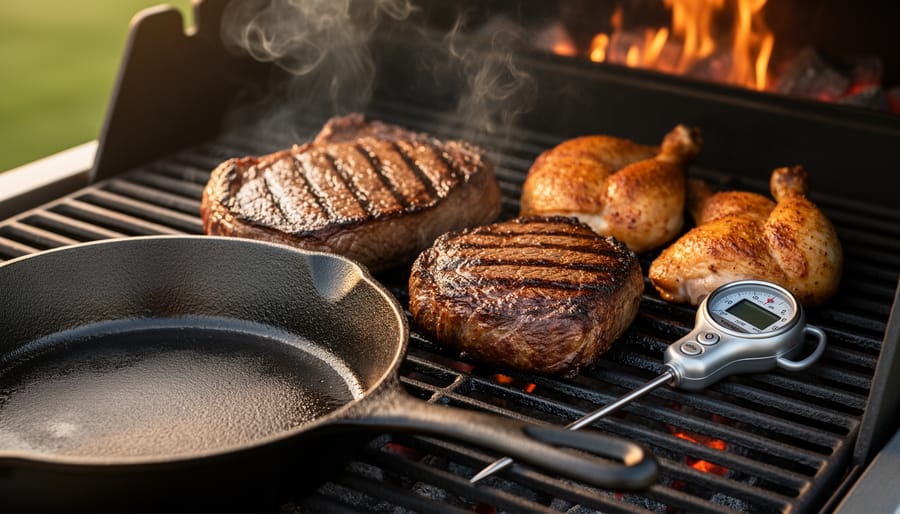


Getting meat to the right temperature isn’t just about food safety, it’s about transforming a good meal into an exceptional one, and after years of cooking over open fires and grilling in our own backyards, we’ve learned that understanding these temperature ranges changes everything about how you approach cooking. Whether you’re searing a steak over glowing coals in your fireplace or grilling chicken on your patio, knowing that medium-rare beef reaches perfection at 130-135°F while poultry requires a firm 165°F minimum keeps your family safe and your dinners memorable.
The confusion makes sense. Different meats carry different risks, and what’s safe for beef can be dangerous for pork or chicken. Ground meats need higher temperatures than whole cuts. A beautifully pink lamb chop follows different rules than a pork tenderloin, even though they might look similar on the plate.
We’ve tested hundreds of cuts over wood fires, gas grills, and traditional ovens, and the pattern is clear: home cooks who understand these temperature zones cook with more confidence and serve better food. This guide breaks down the exact temperatures for each doneness level across beef, pork, poultry, lamb, and fish, explains why those numbers matter for both safety and taste, and shows you how to choose the right target for your cooking style. For those of us who love the ritual of cooking over flame, whether in a backyard fire pit or an indoor hearth, precision matters even more when you’re working with variable heat sources.
At-a-Glance: Safe Meat Temperature Guide
When you’re grilling over an open fire or searing steaks on a stovetop, knowing your target temperatures makes the difference between perfectly cooked meat and guesswork. Through years of cooking over wood fires and traditional grills, we’ve learned that different proteins demand different approaches, and a reliable reference keeps you on track every time.
The table below shows the safe minimum internal temperatures for common meats alongside the preferred doneness ranges. While beef and lamb offer flexibility from rare to well-done, poultry and ground meats require stricter minimums to eliminate harmful bacteria.
| Meat Type | Safe Minimum | Rare | Medium-Rare | Medium | Medium-Well | Well-Done |
|---|---|---|---|---|---|---|
| Beef Steaks & Roasts | 145°F | 120-130°F | 130-140°F | 140-150°F | 150-160°F | 160°F+ |
| Ground Beef | 160°F | 160°F+ | ||||
| Pork | 145°F | 140-145°F | 145-150°F | 150-160°F | 160°F+ | |
| Poultry (whole & parts) | 165°F | 165°F+ | ||||
| Lamb | 145°F | 120-130°F | 130-140°F | 140-150°F | 150-160°F | 160°F+ |
| Fish | 145°F | 125-130°F | 130-140°F | 140-145°F | 145°F+ |
Notice how beef and lamb tolerate the widest doneness spectrum, while chicken demands a single, non-negotiable target. Fish sits somewhere between, with a narrow window where it transitions from translucent to flaky without drying out. We’ve found that cooking over live fire makes these ranges even more critical since heat distribution varies, and a quick temperature check prevents ruining an expensive cut or risking undercooking ground meat.
Understanding Each Doneness Level
Rare (120-130°F)
Rare meat sits at the coolest end of the cooking spectrum, typically 120-130°F at the center, and delivers maximum tenderness with a cool, bright red interior. When we slice into a rare steak, the middle remains soft and almost raw-looking, releasing plenty of moisture and blood-red juice. The outer edges show a seared crust, but just beneath the surface, the proteins have barely begun to transform, keeping the texture exceptionally supple and buttery.
Only whole-muscle beef and lamb cuts are safe at this temperature. The heat quickly kills surface bacteria during searing, while the interior remains sterile since intact muscle doesn’t harbor pathogens. Never cook ground meats, pork, or poultry to rare, bacteria gets mixed throughout during grinding, and these proteins require higher temperatures to eliminate harmful organisms.
Rare works beautifully for premium beef cuts like tenderloin or ribeye when you want maximum juiciness, but it’s not for everyone. The texture stays quite soft, almost slippery, and the flavor remains mild since lower heat doesn’t develop the deeper, caramelized notes you get from longer cooking.
Medium-Rare (130-140°F)
Medium-rare sits at the intersection of safety and succulence for most steaks and roasts. At 130-140°F, muscle fibers have begun to contract and push out some moisture, but they haven’t tightened enough to squeeze the meat dry. The center stays rosy-red, the texture remains tender with a slight give when you press it, and fat marbling has started to render without melting away completely.
We’ve found this range delivers the richest beefy flavor, warm enough to develop the Maillard reaction on the surface while keeping the interior juicy. Enzymes that break down connective tissue work efficiently here, making each bite more tender than rare without the firmness of medium. For premium cuts like ribeye, strip loin, or tenderloin, medium-rare showcases the marbling you paid for and preserves the moisture that makes those steaks worth the investment.
Medium (140-150°F)
Medium hits the sweet spot for many home cooks who want their meat cooked through while retaining moisture. At this temperature range, proteins have firmed considerably but haven’t begun to expel their juices in earnest, you’ll see a warm pink center in beef and lamb, with a narrow band of gray at the edges.
We’ve found medium particularly forgiving when cooking over live fire or fireplace grills where heat fluctuates. The slightly higher internal temperature gives you a buffer against undercooking while still delivering tender, flavorful results. Pork especially shines here, staying juicy without any trace of rawness that makes some diners uncomfortable.
The texture transforms from the buttery softness of medium-rare to something with gentle resistance, meat that holds together on the fork but yields easily when you bite. This doneness appeals to those who find rare too soft or bloody-looking but don’t want the dryness that creeps in beyond 150°F.
Medium-Well (150-160°F)
Medium-well meat registers between 150-160°F and shows only a hint of pink in the center, with mostly firm texture throughout. We’ve found this range works well for diners who want thorough cooking without complete dryness, though it requires careful attention since there’s a narrow window between properly cooked and overdone.
Pork chops and pork tenderloin shine at this temperature, the meat stays safe while retaining enough moisture to avoid the chalky texture that occurs beyond 160°F. Beef steaks lose considerable juiciness here, but leaner cuts like sirloin or flank can handle it better than marbled ribeyes. When cooking over live fire, we’ve noticed this doneness level is easier to achieve consistently than lower temperatures since you have a bit more margin for error with fluctuating heat.
Well-Done (160°F+)
Well-done meat reaches internal temperatures of 160°F and above, transforming proteins completely and eliminating virtually all food safety concerns. At this level, juices run clear, color turns uniformly brown or gray throughout, and texture becomes noticeably firmer and drier as moisture evaporates during extended cooking.
We’ve found well-done delivers peace of mind for ground meats, burgers, sausages, and meatloaf absolutely require 160°F minimum to destroy bacteria mixed throughout during grinding. For whole cuts like steak or chops, well-done trades the tenderness of lower temperatures for guaranteed safety, making it the right choice when cooking for vulnerable individuals or anyone uncomfortable with pink meat. The key challenge is preventing toughness: we recommend lower heat and longer cooking times rather than high flames that char the outside while pushing internal temps past 170°F, where even quality cuts turn leathery.
Ground Meats and Poultry: Special Considerations
Ground meat and poultry can’t be cooked to preference, they need to hit specific minimums every time. When we grind beef, pork, or turkey, bacteria from the surface get mixed throughout, so a medium-rare burger isn’t just risky, it’s genuinely unsafe. The same goes for whole chickens and turkey: pathogens like salmonella can lurk inside, which is why food safety guidelines mandate cooking poultry to 165°F and ground meats to 160°F minimum. There’s no wiggle room here, pink turkey burgers or undercooked chicken thighs aren’t worth the gamble, no matter how juicy they look.
Temperature Comparison by Meat Type
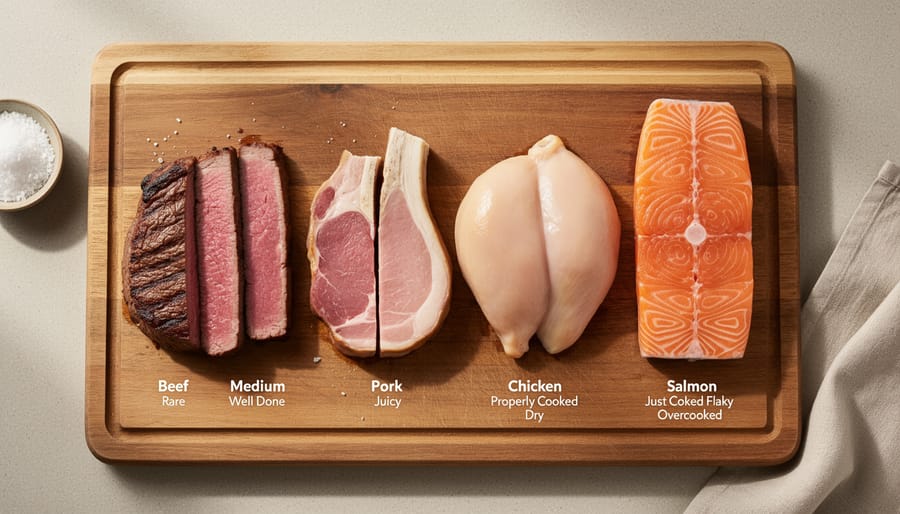
Beef: The Most Flexible Range
Beef stands out among proteins because its solid muscle structure stays safe across the widest temperature range. We’ve grilled countless steaks over wood fires and gas, and unlike ground meat or poultry, intact beef cuts don’t harbor pathogens deep inside, bacteria live on the surface, seared away in the first moments of cooking. That’s why a ribeye can safely stop at 125°F for rare doneness while chicken must hit 165°F throughout.
Different cuts respond differently to heat, though. Tender, well-marbled steaks like ribeye and strip shine at 130-135°F medium-rare, where fat renders just enough to baste the meat without losing moisture. Leaner cuts such as sirloin taste better pushed to 140°F medium, giving connective tissue time to soften. We’ve found that tougher, working-muscle cuts like flank or skirt actually improve with slightly higher temperatures, 145°F medium lets fibers relax without drying out, especially when you slice thin against the grain.
The flexibility means you can match temperature to your taste: rare for buttery tenderness, well-done for firmer texture. Just know that past 150°F, even marbled beef starts shedding juice rapidly.
Pork: Modern Temperature Guidelines
Pork temperature guidelines have changed dramatically over the past decade. The USDA lowered its recommended minimum from 160°F to 145°F in 2011, reflecting improved farming practices and modern trichinosis eradication. We’ve found this shift makes a real difference, pork cooked to 145°F with a three-minute rest comes out noticeably juicier and more tender than the dry, overcooked chops many of us grew up eating.
For chops, tenderloins, and roasts, aim for 145°F internal temperature, then let the meat rest. The carryover heat finishes the job while preserving moisture. At this temperature, you’ll see a hint of pink in the center, that’s completely safe and desirable for modern pork.
Ground pork follows different rules. Like all ground meats, it needs 160°F minimum because grinding spreads any surface bacteria throughout. Slow-cooked cuts like shoulder benefit from much higher temperatures, around 195-205°F, where collagen breaks down into gelatin and the meat becomes pull-apart tender.
When cooking pork over wood fire or on a fireplace grill, a reliable thermometer removes the guesswork that visual cues alone can’t provide.
Poultry: Non-Negotiable Minimums
Poultry demands strict temperature discipline, there’s no preference range here. Both chicken and turkey must reach an internal temperature of 165°F in the thickest part of the breast and thigh to eliminate harmful bacteria like salmonella and campylobacter. We’ve tested this threshold repeatedly when cooking birds over open flames, and undercooking poultry simply isn’t worth the risk, regardless of how you prefer your steak.
Dark meat and white meat behave differently as they approach this minimum. Thighs and drumsticks contain more connective tissue and fat, so they stay moister and more forgiving at 165°F and beyond. Breast meat, leaner and more delicate, can turn dry if pushed much past the safe minimum. When we’re managing fluctuating wood fire temperatures we monitor both zones separately, a two-probe setup helps tremendously.
The whole-bird challenge becomes trickier with traditional cooking methods. While modern ovens maintain steady heat, wood-fired rotisserie cooking requires vigilant checking. Whether you lean toward analog vs digital thermometers, verify the deepest breast meat hits 165°F before pulling the bird. No amount of crispy skin justifies serving undercooked poultry.
Lamb: Similar to Beef with Subtle Differences
Lamb follows a similar temperature progression to beef, but we’ve found it develops peak flavor in a slightly narrower sweet spot. Most lamb cuts shine at 130-140°F for medium-rare to medium, delivering tender, rosy meat with lamb’s characteristic rich taste fully expressed. Push beyond 150°F and lamb can turn noticeably drier and stronger-flavored than beef at the same temperature, the fine grain of lamb muscle tightens more aggressively with extended heat.
Leg of lamb and racks benefit from the same 130-135°F target you’d use for a ribeye, while ground lamb must hit 160°F minimum just like ground beef. Unlike beef, which many enjoy well-done, lamb cooked past medium-well often loses the delicate balance between its natural sweetness and gamey undertones, leaving a chalky texture. If you’re grilling lamb chops over fireplace coals, aim for medium-rare and pull them early, they’ll continue cooking as they rest.
Fish and Seafood: Delicate Temperature Windows
Fish and seafood require far gentler handling than land-based proteins, with most species reaching peak texture between 125°F and 145°F, well below the temperatures beef or pork need. We’ve found through repeated testing that salmon cooked to 125°F stays silky and moist, while pushing it past 145°F turns the flesh dry and chalky. The USDA recommends 145°F as a safe minimum for fish, which works well for firm varieties like swordfish, but delicate fish like halibut or cod can begin to degrade noticeably past 135°F.
The real challenge with seafood is the narrow margin between perfectly cooked and overdone. A five-degree swing makes the difference between flaky tenderness and rubbery disappointment, which is why wireless meat thermometers prove invaluable for monitoring without constantly opening your grill or oven. Whether you’re comparing Tappecue vs FireBoard or ThermoPro vs Inkbird prioritize models with fast response times and precise readings in the lower temperature ranges where seafood lives.
Choosing Your Target Temperature: What’s Right for You?
If You Prize Tenderness and Juiciness
If you want meat that practically melts in your mouth, target the 130-140°F range. We’ve found this sweet spot preserves moisture and delivers the most tender bite, especially for premium cuts. At these temperatures, muscle fibers stay relaxed and fat marbles throughout the meat instead of rendering out completely.
Beef steaks like ribeye, strip, and tenderloin shine brightest at medium-rare, you get that warm pink center with maximum juice retention. Lamb chops and lamb loin follow the same principle. Duck breast also benefits from the medium treatment, staying supple rather than dry.
Leaner cuts need this approach even more desperately. Once you push past 145°F, beef tenderloin and sirloin start shedding moisture fast. Through our fireplace grilling sessions, we’ve learned that overshooting by even ten degrees transforms a juicy steak into something you’d rather not chew through.
If Safety Is Your Top Priority
When safety matters most, whether you’re cooking for pregnant women, young children, elderly family members, or anyone with a compromised immune system, skip personal preference and cook to the absolute minimum safe temperatures every time.
For these groups, all beef, pork, and lamb must reach at least 145°F with a three-minute rest. We recommend pushing ground meats to 165°F rather than the standard 160°F minimum, since bacteria distribute throughout the grind. Poultry remains non-negotiable at 165°F, measured in the thickest part of the breast and thigh.
In our testing with various thermometers over wood-fired grills and fireplace cooking setups, we found that instant-read accuracy becomes critical for vulnerable populations, a few degrees can mean the difference between safe and risky. Don’t rely on visual cues or timing alone; verify with a calibrated thermometer every time. If you’re uncertain about a reading, cook longer. Medium-well to well-done might sacrifice some tenderness, but it eliminates pathogen risk entirely.
If You’re Cooking Over Live Fire
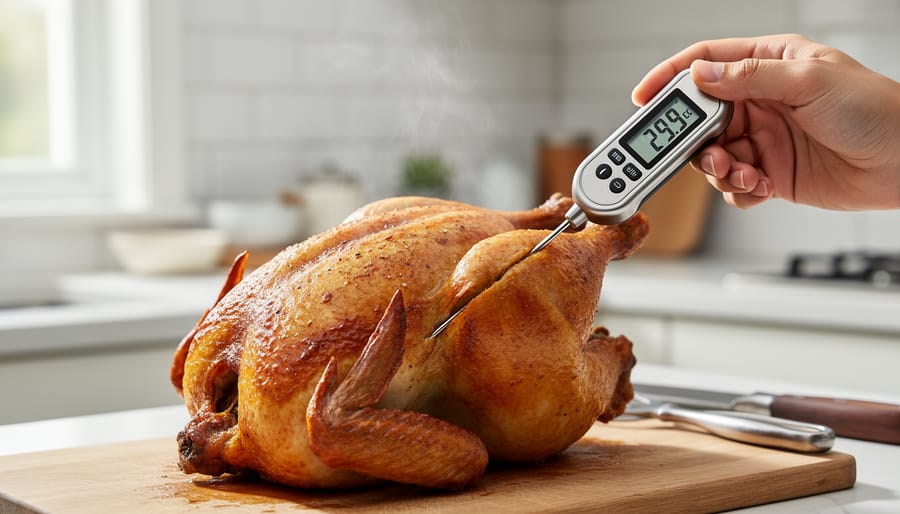
Cooking over live fire introduces variables that make accurate temperature measurement essential. We’ve found that wood fires, charcoal, and fireplace grills create hot spots and fluctuating heat zones that make visual cues unreliable. The surface might char beautifully while the interior remains dangerously undercooked, or a seeming medium-rare steak can be well-done from radiant heat penetration.
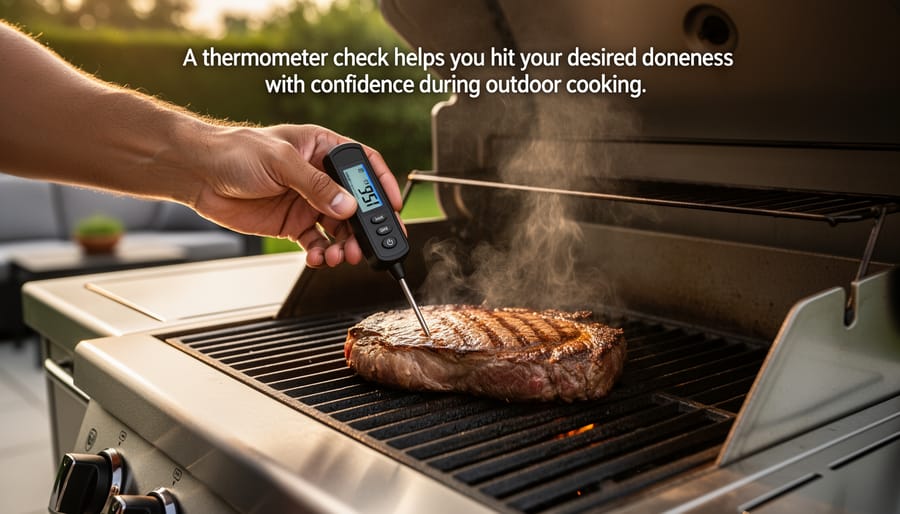
A reliable instant-read thermometer becomes your safety net when cooking over open flames. We test multiple spots on larger cuts since heat distribution varies dramatically across the grate. The dancing flames and glowing coals that make fire cooking so appealing also obscure the usual color indicators you’d rely on in a controlled oven.
For extended fireplace roasts or spit cooking, leave-in probe thermometers let you monitor progress without constantly opening the cooking area and losing precious heat. The longer cook times over wood fire amplify small temperature miscalculations, so checking early and often prevents disappointment. Fire cooking rewards patience, and your thermometer tells you exactly when that patience has paid off.
If Texture Matters More Than Tradition
Some people simply prefer a firmer bite to their meat, and there’s nothing wrong with that preference. If you genuinely enjoy well-done beef or pork cooked to 165°F or higher, cook it that way, your meal, your rules. The key is understanding that higher temperatures change the texture dramatically: you’ll get a denser, drier bite with less juice released when you cut into it.
Well-done makes particular sense for certain cuts and preparations. Tougher cuts like brisket or chuck benefit from extended cooking at higher temperatures because the prolonged heat breaks down connective tissue into gelatin. Ground meats must reach 160°F minimum anyway for safety, so texture preference becomes less of a factor. We’ve also found that thinner cuts like bacon or sausages develop better textural contrast when cooked to higher temperatures, crispy edges with a firm interior.
Matching Thermometer Type to Your Needs
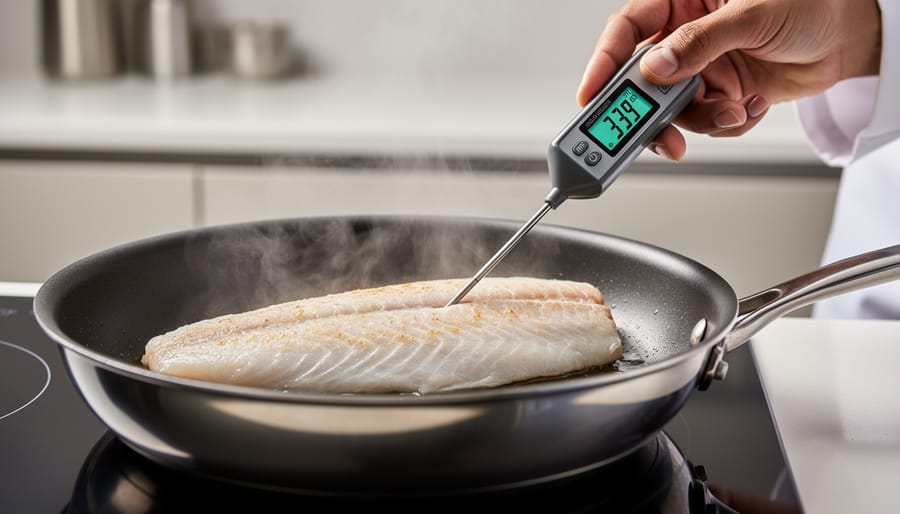
Choosing the right thermometer style matters as much as knowing your target temperature. We’ve found instant-read thermometers excel when you’re checking steaks or chops quickly, just probe, read, and pull it out before losing heat. For slow roasts or whole birds, leave-in probe thermometers let you monitor progress without opening the oven or grill repeatedly. When we cook over wood fires or outdoor fireplaces, wireless models prove invaluable; they transmit readings to a remote display, so you can tend the fire and check temperatures from a comfortable distance rather than hovering over hot coals.
What Each Option Is
When we talk about “different meat temperatures,” we’re really discussing distinct doneness levels that fundamentally change how your meat looks, feels, and tastes. Through our testing across various cuts and cooking methods, from fireplace grilling to traditional outdoor setups, we’ve found that understanding these options as separate destinations rather than arbitrary numbers makes all the difference.
Rare means meat cooked to 120-130°F, where the center remains cool and deep red. The texture is extremely soft, almost buttery, with maximum moisture retention. We’ve observed this works only for whole-muscle cuts like beef steaks, never ground meat.
Medium-rare (130-140°F) keeps a warm red center with a pink outer zone. The meat firms up slightly while maintaining excellent juiciness, what we consistently found most people prefer for quality beef.
Medium (140-150°F) produces a hot pink center throughout. The texture becomes noticeably firmer, and some moisture begins escaping, but flavor remains robust.
Medium-well (150-160°F) shows just a hint of pink in the very center. During our fireplace cooking sessions, this level proved more forgiving for beginners managing fluctuating heat.
Well-done (160°F and above) means no pink remains anywhere. The meat feels firm and drier, though proper technique prevents it from becoming tough. For poultry and ground meats, this isn’t optional, it’s the safety baseline we always target.
Who Should Choose Which
Choose rare to medium-rare (120-140°F) if you’re cooking premium beef steaks or lamb chops and want maximum tenderness and flavor. We’ve found this range delivers the juiciest results for quality cuts, though it requires absolute confidence in your meat source and thermometer accuracy.
Choose medium (140-150°F) if you want broad appeal when cooking for guests with varying preferences. This temperature satisfies most palates while maintaining enough moisture for an enjoyable meal. It’s our go-to when we’re uncertain about diners’ tastes or working with mid-grade cuts that need slightly longer cooking to break down connective tissue.
Choose medium-well to well-done (150-160°F+) if you’re cooking for young children, pregnant women, elderly family members, or anyone with compromised immunity. Safety trumps texture preferences in these situations. This range is also non-negotiable for all ground meats and poultry, we never serve these below 160°F and 165°F respectively, regardless of who’s eating.
Choose the minimum safe temperature for your meat type if you’re new to cooking over live fire. When we’re grilling in our fireplace or using wood heat, we rely heavily on accurate thermometers since visual cues become unreliable with variable heat sources.
Different Meat Temperatures Terms to Know
Understanding key temperature terminology helps you cook meat safely and consistently, especially when grilling over a fireplace or wood fire where heat control is less precise. These terms come up frequently in recipes and guides, and knowing what they mean makes temperature targets easier to follow.
- Carryover Cooking
- The continued rise in internal temperature after meat is removed from heat, typically adding 5-10°F as residual heat migrates to the center. Account for this by pulling meat off the fire slightly below your target temperature.
- Safe Minimum Internal Temperature
- The lowest temperature at which harmful bacteria are destroyed, as established by food safety guidelines. This is non-negotiable for poultry and ground meats but allows flexibility for whole-muscle cuts like steaks.
- Resting Time
- The period meat sits after cooking, allowing juices to redistribute throughout the cut rather than running out when sliced. Most cuts benefit from 5-15 minutes of resting, during which carryover cooking occurs.
- Temperature Gradient
- The variation in doneness from the outer surface to the center of the meat. Thicker cuts and high-heat methods like wood-fired grilling create steeper gradients, making thermometer placement critical.
- Cold Spot
- The coolest area in a piece of meat, usually the geometric center of the thickest part. Always measure temperature here to ensure the entire cut has reached your target doneness.
We’ve found that mastering these concepts transforms how you approach live-fire cooking. When you’re managing fluctuating wood-fire temperatures, understanding carryover and knowing exactly where to probe makes the difference between guesswork and consistently perfect results.
Pros and Cons
Pros
- Hitting precise temperatures ensures both food safety and your preferred texture every time.
- Lower temperature targets preserve moisture and tenderness in quality cuts of beef, lamb, and fish.
- Consistent temperature monitoring eliminates guesswork, especially when cooking over wood fire or coals.
- Understanding temperature ranges lets you customize doneness to match different diners’ preferences at one meal.
Cons
- Achieving exact temperatures requires a reliable thermometer, cheap models drift and mislead.
- Carryover cooking can push meat past your target if you don’t account for resting time.
- Wood-fired and fireplace cooking introduces heat variability that demands more frequent checks.
- Lower doneness levels aren’t safe for all meat types, limiting flexibility with poultry and ground meats.
We’ve found that the biggest challenge when cooking over live fire is maintaining accurate reads in fluctuating heat zones. An infrared thermometer helps gauge surface temperatures quickly, but won’t tell you what’s happening inside the meat. If you’re struggling with inconsistent results from fireplace grilling, learning to fix fireplace readings addresses common thermometer errors that lead to overcooked or undercooked results. The payoff for dialing in your technique is meat that hits your sweet spot for both safety and flavor, whether you’re aiming for a perfect medium-rare steak or fully cooked poultry.
Common Temperature Questions Answered
Do I need different thermometers for different temperatures?
No, most quality meat thermometers read the full range you’ll need, from around 32°F to 500°F or higher. What matters more is choosing between instant-read for quick checks at the grill, leave-in probes for monitoring roasts in the oven, or wireless models when you’re tending a wood fire and want to step away without losing track of your cook.
How much does temperature rise during resting?
Carryover cooking typically adds 5-10°F to larger cuts like roasts or whole chickens as residual heat migrates toward the center. Thinner steaks and chops see less carryover, often just 3-5°F, so we’ve learned to pull beef steaks at 130°F if we’re targeting medium-rare at 135°F after resting.
Is slightly pink pork actually safe to eat?
Yes, modern pork can be safely enjoyed at 145°F with a hint of pink in the center. Trichinosis concerns that once required well-done pork have largely disappeared from commercial supplies, and current guidelines prioritize both safety and the juiciness that comes from not overcooking.
Can I pull chicken off at 160°F instead of 165°F?
We don’t recommend it for home cooks. While chicken held at 160°F for a sustained period can pasteurize safely, achieving that precise hold time without overshooting is tricky on a backyard grill or over firewood. Aiming for 165°F gives you a safer margin without sacrificing much moisture if you rest the bird properly.
One question we hear often around the fire pit: why does restaurant steak taste different even at the same temperature? Commercial kitchens use extremely high heat, often 800°F broilers or wood-fired grills, that sear the exterior fast while leaving the interior at your target doneness. That intense crust development adds flavor complexity home cooks miss when using moderate gas grills or standard ovens. It’s not the thermometer reading that differs; it’s the cooking method and surface temperature.
Thermometer accuracy matters more than most people realize. We’ve tested budget models that drift 5-10°F off true readings, which is the difference between medium-rare and medium-well on a thin steak. Calibrate your thermometer periodically in ice water, it should read 32°F, and replace it if it’s consistently off, especially when working with poultry where a few degrees determine safety.
Mastering meat temperatures transforms your cooking from guesswork into precision, whether you’re grilling over a backyard fire pit or roasting in your kitchen. We’ve found that once you understand the temperature ranges and safety minimums for different meats, you gain the confidence to cook exactly to your preference every time.
The right doneness level is personal, there’s no single “correct” temperature for every situation. What matters is combining your taste preferences with food safety guidelines and choosing targets appropriate for each meat type. A quality meat thermometer becomes your most trusted tool in this process, giving you accurate readings that let you pull meat at the perfect moment.
Don’t be afraid to experiment within safe ranges. Try a ribeye at 130°F one evening and 140°F the next to discover where your preferences truly lie. The beauty of temperature-based cooking is its repeatability, once you find your ideal doneness, you can achieve it consistently, whether you’re cooking over glowing coals in your fireplace or using a modern grill.