

If you’re searching for information about a GE electric stove recall, you need to know whether your appliance poses a fire or safety risk and what steps to take right now. GE has issued several recalls over the years affecting specific electric range models, typically due to hazards like malfunctioning burners, electrical shorts, or control panel defects that can cause overheating or fires. The most critical action is to locate your model and serial number (usually found on a label inside the oven door or along the front frame) and cross-reference it with the Consumer Product Safety Commission’s recall database to confirm if your unit is affected.
If your range is part of a recall, stop using the affected burners or functions immediately and contact GE Appliances or the authorized service provider listed in the recall notice for a free repair, replacement part, or refund. Most recalls provide clear remedies at no cost to you, but acting quickly protects your household from potential harm.
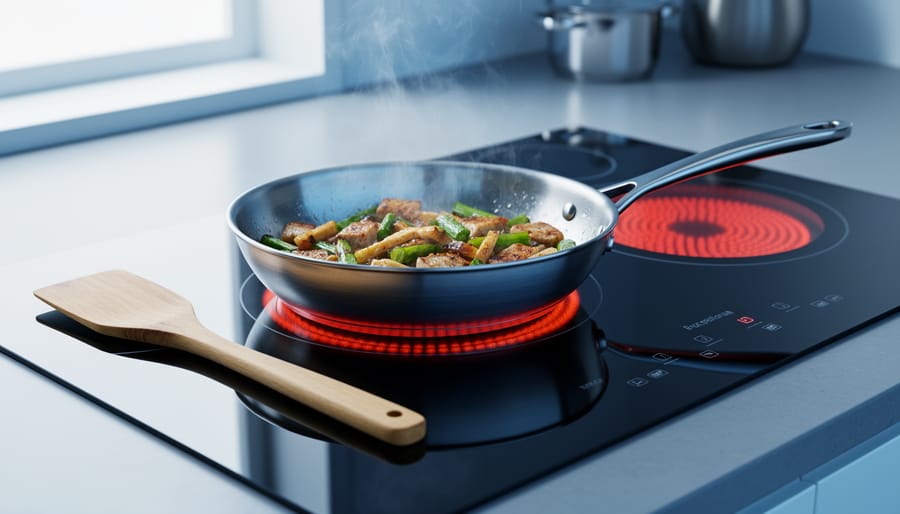
Understanding whether your cooking appliance runs on gas or electric power is the first step in identifying recall risks, since electric models face different safety concerns than their gas counterparts. While electric stoves are generally considered safer in terms of combustion hazards, faulty wiring or component failures can still create serious fire risks.
This guide will walk you through how to verify if your GE electric stove is recalled, what specific models and hazards have been identified, and the immediate steps to secure your home. We’ll also cover broader electric range safety practices to help you maintain a secure, efficient cooking environment for years to come.
Understanding the GE Range Recall: What Happened and Why
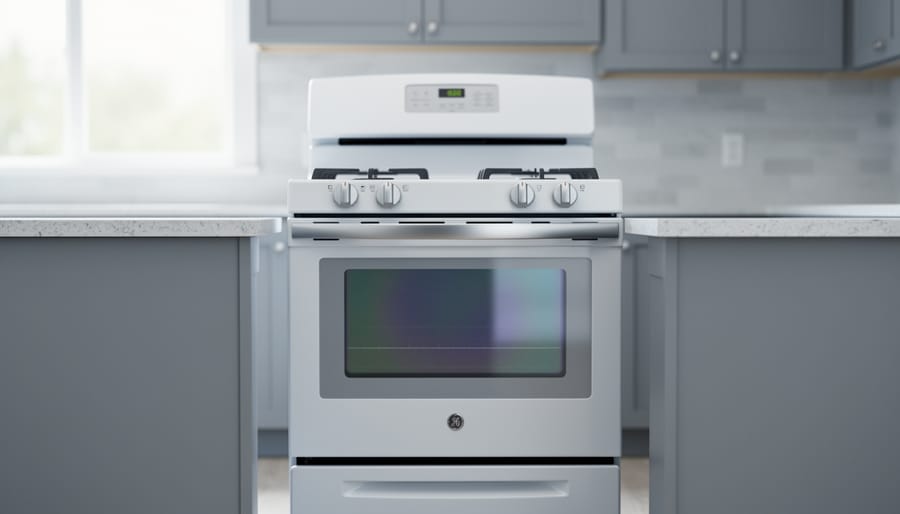
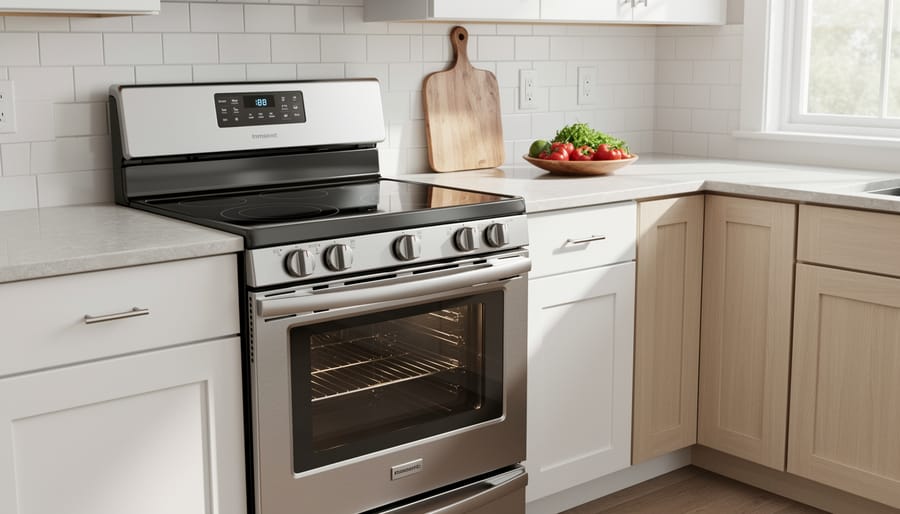
The recent GE Appliances tip-over hazard recall centers on a straightforward but serious safety concern: certain free-standing and slide-in electric ranges can tip forward if you place heavy objects on an open oven door. This isn’t about a manufacturing defect in the range itself. The problem lies with anti-tip brackets that weren’t installed properly during initial setup.
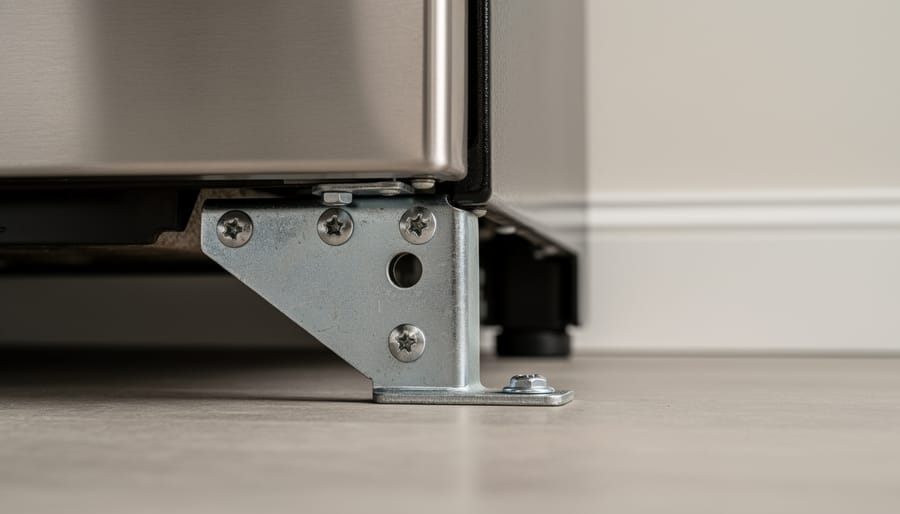
Think of anti-tip brackets as anchors. They’re meant to secure your range to the wall or floor, preventing it from tipping even when subjected to uneven weight distribution. When these brackets are missing or incorrectly positioned, the range loses this critical stability mechanism. An open oven door essentially creates a lever, and anything heavy placed on it, a large roasting pan, a casserole dish, even a child climbing up to see what’s cooking, can shift the appliance’s center of gravity enough to cause it to tip forward.
Why does this matter so much? A tipping range poses genuine risks. Hot food, cookware, and the range itself can cause burns. The appliance’s weight alone presents a crushing hazard, particularly concerning for households with curious children or pets. The open flame or heating elements on a tipped range could also ignite nearby materials.
What makes this recall particularly relevant is how common improper installation is. Anti-tip brackets are often overlooked during range installation, whether by professional installers rushing through the job or DIY homeowners unaware of their importance. The bracket might be in the box, but that doesn’t mean it made it onto your wall. This recall serves as a wake-up call for everyone with an electric range to verify their setup, not just GE owners.
Can You Still Use Your GE Range Safely?
If you’ve just learned about the GE range recall, your first thought is probably whether you need to stop cooking dinner tonight. The short answer: you can keep using your range, but you’ll need to change some habits immediately.
GE Appliances and safety officials have confirmed that owners can continue using with precautions while the recall situation gets sorted out. This isn’t a “unplug it now” emergency. Your range works fine for its intended purpose, cooking food. The hazard only emerges when heavy objects get placed on an open oven door, creating a tipping risk if the anti-tip bracket wasn’t installed correctly.
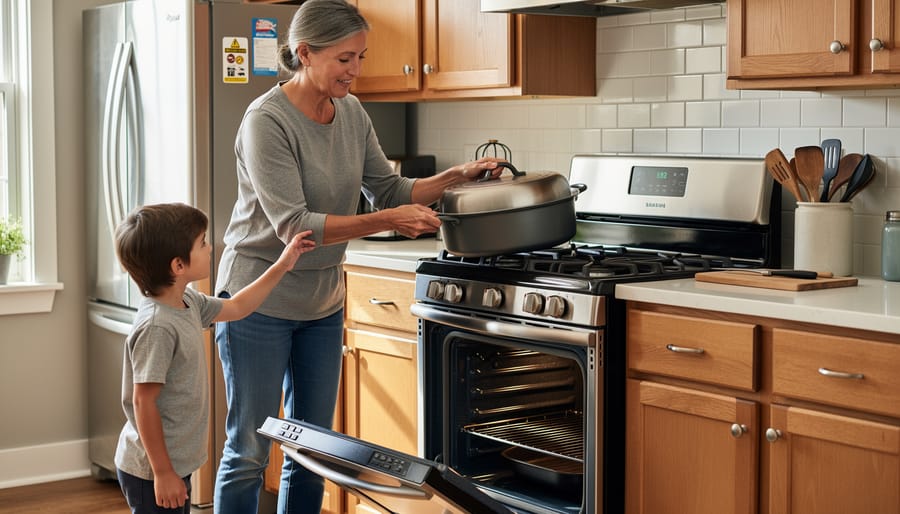
Here’s what needs to change in your kitchen routine right away. Never place anything on an open oven door. That casserole dish you just pulled out? Set it on the stovetop or counter, not on the door while you grab pot holders. Those heavy skillets that tempt you to rest them there for just a second? Find another spot. Even leaning on the door while you check on food can create risk if you’re tall or put significant weight forward.
Think of this as retraining muscle memory. Most of us have used oven doors as temporary resting spots without thinking twice. Now you need to think twice, every single time.
If you have young children who might climb on an open door, this becomes even more critical. Supervise kitchen time closely or use safety gates to keep little ones away from the range when you’re cooking. Kids don’t know about recalls, they just see a convenient step stool.
The good news? These precautions work. Follow them consistently, and your range remains a safe, functional appliance while you determine next steps.
The Critical Role of Anti-Tip Brackets in Electric Stove Safety
How to Check If Your Anti-Tip Bracket Is Properly Installed
Checking whether your range’s anti-tip bracket is properly installed takes just a few minutes and requires no special tools. This simple inspection could prevent a dangerous accident, so it’s worth doing even if you’re not certain your model is part of the recall.
Start by pulling out your range’s installation manual if you still have it, this will show you exactly where the bracket should be located. If you don’t have the manual, you can usually find it online by searching for your model number and “installation instructions.”
Here’s how to perform the check:
- Clear the area around your range and make sure it’s cool to the touch.
- Open the oven door fully and carefully attempt to tilt the entire range forward slightly by applying gentle downward pressure to the top of the open door (don’t climb on it or use your full weight).
- If the range tilts forward easily, the anti-tip bracket is either missing or not properly engaged with the range’s rear foot.
- Check behind the range using a flashlight, you should see a metal bracket secured to the floor or wall that hooks onto the range’s rear leveling leg.
- Verify that the bracket is firmly attached and that the range’s rear leg is actually inserted into the bracket’s slot.
If you discover your bracket isn’t properly installed, stop using the oven door as a step or shelf immediately. Contact a qualified appliance installer or technician to correct the installation. Many ranges have been in homes for years without proper anti-tip bracket installation, making this check valuable regardless of the current recall situation.
Electric Stove Safety Beyond the Recall
Safe Loading Practices for Your Oven Door
The most critical rule with your oven door is simple: never use it as a shelf. GE explicitly warns consumers to don’t place objects on door, and this applies whether your range is part of the recall or not. Heavy cookware, casserole dishes, roasting pans, and even large cutting boards can create dangerous leverage that pulls the entire appliance forward.
Resist the temptation to rest a hot pot on the door while you stir or transfer food. Instead, use a trivet on your counter or stovetop. Keep a heatproof surface within arm’s reach of your oven for this exact purpose.
Children pose a unique risk. Never allow kids to climb on, hang from, or lean against an open oven door. Their weight, combined with the door’s extended position, can tip even a properly anchored range. Talk to your household about this hazard the same way you’d discuss not touching hot burners or remembering to leave the stove on unattended.
If you routinely pull out the door to check on roasts or baked goods, develop the habit of closing it immediately after each peek. An open oven door is an invitation to absent-mindedly set something down.
Teaching Kitchen Safety to Your Household
Kitchen safety starts with open, age-appropriate conversations rather than scare tactics. Gather your household and explain that stoves, even when off, aren’t climbing surfaces or places to lean. Demonstrate the simple rule: never place weight on an open oven door, whether that’s a toddler trying to peek inside, a pet jumping up, or anyone using it as a temporary shelf.
For younger children, make it tangible. Show them how the door creates an unstable platform and explain that the stove could fall forward. Use simple language: “The door isn’t strong enough to hold you or heavy things.” Establish clear kitchen boundaries, like staying back when adults are cooking and asking before approaching the stove.
Older kids and teens benefit from understanding the “why” behind the rules. Explain that anti-tip brackets are safety devices designed to prevent tipping, but they only work if nothing overloads the door. Encourage them to become safety ambassadors, reminding younger siblings and modeling safe behavior themselves.
Create visual reminders without turning your kitchen into a warning label museum. A brief family meeting whenever you acquire a new appliance reinforces that safety awareness applies to all kitchen equipment, building habits that protect everyone long after specific recalls fade from memory.
What to Do If You Own an Affected GE Range
If you believe your GE range might be affected by this recall, taking prompt action protects your household while you wait for more details to emerge. The situation requires a measured response, neither panic nor complacency serves you well.
Start by gathering information about your specific appliance. Locate your range’s model and serial numbers, typically found on a label inside the oven door frame or along the top or side of the oven cavity. Write these down and keep them accessible. While specific model numbers haven’t been publicly detailed in available recall information, having this data ready positions you to act quickly once GE provides model verification tools or lists.
Here’s your action plan:
- Document your range’s model and serial number from the manufacturer’s label.
- Immediately stop placing any objects on the open oven door, regardless of weight.
- Check whether your anti-tip bracket is properly installed using the inspection method described earlier in this article.
- Contact GE Appliances directly at their customer service line to report your concern and ask about your specific model’s status.
- Register your appliance if you haven’t already, ensuring you’ll receive direct notification of any remedies or updates.
- Keep records of all communication with GE, including dates, representative names, and what you were told.
You can continue using your range for cooking with appropriate precautions. The hazard is specific to tip-over risk from loading the open door, not from normal cooking operations. This means baking, roasting, and stovetop cooking remain safe activities when you follow basic safety protocols.
Be patient but persistent. Large-scale recalls involve complex logistics, and remedy details, whether repair, replacement, or refund, often take time to finalize. However, you’re entitled to clear information about your appliance’s status and the resolution timeline. If you don’t receive satisfactory responses from GE, consider filing a report with the Consumer Product Safety Commission, which oversees recall compliance and can provide additional guidance.
Creating a Safer Kitchen: A Holistic Approach
The GE range recall highlights an important truth: kitchen safety isn’t about addressing isolated incidents, it’s about cultivating awareness across every appliance that generates heat in your home. When you think about creating a truly safe living space, your electric range sits alongside your fireplace, space heaters, and other heat sources as part of an interconnected system that deserves thoughtful attention.
Start by examining where heat meets your home’s surfaces. Just as you wouldn’t place combustible materials near your fireplace, consider similar precautions around your stove. A heat-protecting mat can prevent surface damage and reduce fire risk, creating a buffer zone that extends protection beyond the appliance itself.
Modern safety tools can work together to create layers of protection. Pairing traditional precautions like proper bracket installation with kitchen fire safety tech gives you early warning systems that complement careful usage habits. These technologies monitor temperature changes and can alert you to developing hazards before they escalate.
Think of your kitchen as you would any room with a heat source. Maintain clear zones around appliances, keep flammable items at safe distances, and establish household rules about what can and can’t happen near active heat. Regular maintenance checks, inspecting brackets, cleaning ventilation systems, testing smoke detectors, become part of your seasonal home care routine, just like chimney inspections or furnace servicing. This holistic mindset transforms safety from a checklist into a lifestyle that protects your entire home.
Frequently Asked Questions About the GE Electric Stove Recall
Living through a major appliance recall raises plenty of questions, and you deserve straightforward answers. Here’s what we know about the GE range recall based on verified information, along with acknowledgment of what remains unclear.
Can I still use my GE range while waiting for more information?
Yes, you can continue using your range with caution. The key safety measure is never placing heavy objects on an open oven door, which could cause the range to tip forward if the anti-tip bracket isn’t properly installed.
What exactly causes the tipping hazard?
The hazard occurs when ranges have improperly installed anti-tip brackets and someone places a heavy object on an open oven door. The bracket’s job is to anchor the range and prevent tipping, but only when correctly attached to both the floor or wall and the range itself.
How do I know if my specific model is affected?
Unfortunately, detailed lists of affected model numbers and serial numbers haven’t been fully clarified in available recall information. This is frustrating for homeowners trying to determine their status, and we’ll update our guidance as GE releases more specific identification details.
Are electric stoves generally dangerous appliances?
Electric ranges are safe kitchen appliances when properly installed and used according to manufacturer guidelines. While concerns like can electric stoves explode occasionally arise, following basic safety practices and ensuring proper installation dramatically reduces any risk.
The absence of complete model-specific information understandably creates uncertainty for GE range owners. What we do know is that the core safety concern centers on anti-tip bracket installation rather than the ranges themselves being fundamentally unsafe. Checking your bracket installation and avoiding placing weight on open oven doors addresses the immediate hazard while you wait for additional clarity from the manufacturer.
If you’re uncertain about your range’s status or uncomfortable using it, trust your instincts. Contact GE Appliances directly for information specific to your model, and consider having a qualified technician inspect your anti-tip bracket installation. Creating a safe kitchen environment means staying informed without panicking, taking reasonable precautions, and knowing when to seek professional guidance.
Kitchen safety isn’t about fear, it’s about creating the kind of home where warmth and security go hand in hand. Whether you’re preparing a holiday meal or simply heating water for tea, the appliances that serve your family deserve your attention and care.
The GE range recall reminds us that safety features work only when properly installed and respected. Taking a few minutes to verify your anti-tip bracket installation and adjusting how you use your oven door aren’t burdens. They’re simple acts of household stewardship that protect everyone who gathers in your kitchen.
If you own a GE range, check your installation today. Don’t place heavy objects on an open oven door, not cast iron skillets, not roasting pans, not even that Thanksgiving turkey you’re basting. Teach these practices to everyone in your home, and make them second nature.
Kitchen safety extends beyond a single recall or one appliance. It’s part of the larger commitment we make to our homes, the same mindfulness that guides us when we maintain fireplaces, service heating systems, or choose safer cooking methods. Each precaution contributes to a home that’s not just comfortable, but genuinely safe.
Stay informed, stay proactive, and trust your instincts. When something seems off with any appliance, investigate. Your kitchen should be a place of nourishment and connection, where the only thing tipping is perhaps a well-earned glass of wine after a day well spent.