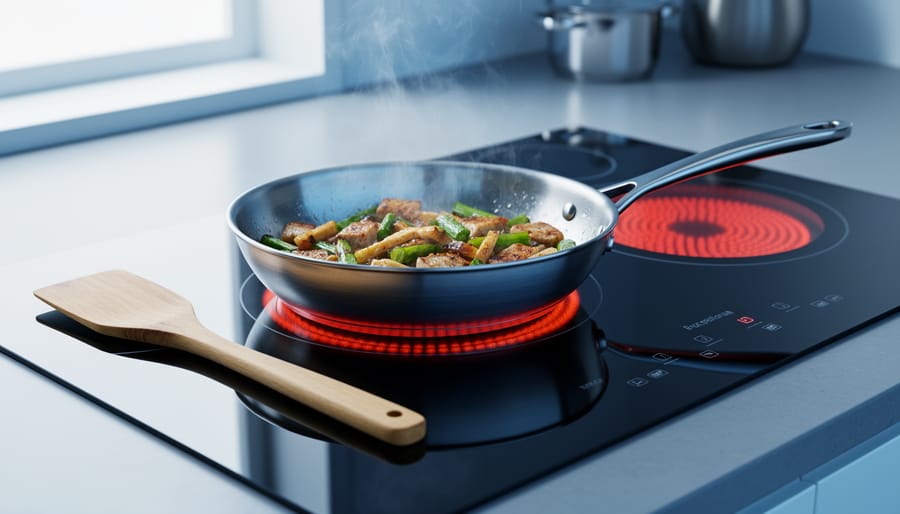
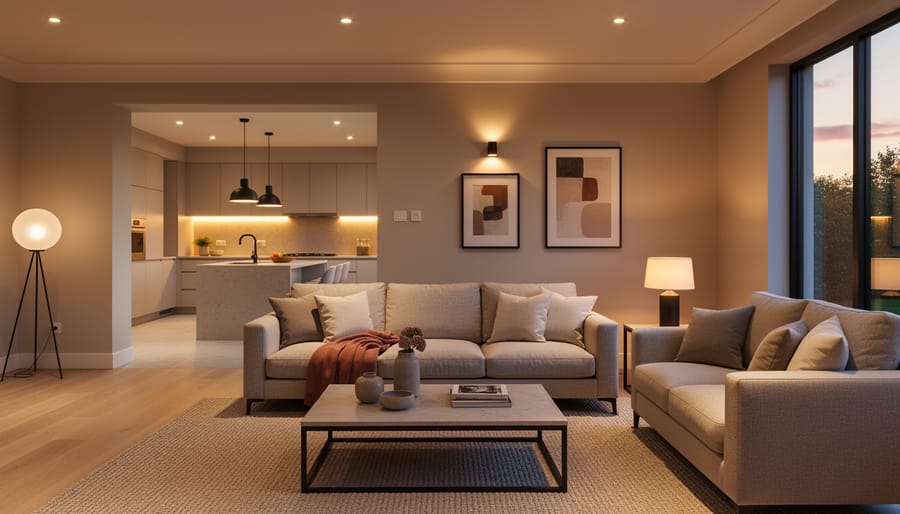


Layer your lighting with three distinct levels: ambient fixtures for overall illumination, task lighting for specific activities like reading or cooking, and accent lights to highlight architectural features or artwork. This foundational approach creates depth and functionality in every room while allowing you to adjust brightness based on mood and time of day.
Install dimmer switches on existing fixtures to gain instant control over light intensity without rewiring. This single upgrade costs minimal investment but delivers maximum impact, letting you transition seamlessly from bright morning energy to cozy evening relaxation. Pair dimmers with warm-toned bulbs (2700K-3000K) to enhance the natural glow that complements creating warm inviting spaces throughout your home.
Position floor lamps and table lamps strategically in room corners and beside seating areas to eliminate harsh shadows while creating intimate pools of light. This scattered approach mimics the welcoming flicker of firelight, drawing people into conversation areas and making large rooms feel more approachable and lived-in.
Replace overhead-only lighting schemes with multiple independent sources you can control separately. Kitchen pendants over islands, under-cabinet strips for countertop work, wall sconces flanking mirrors, and recessed spotlights for display shelves all contribute to a sophisticated lighting ecosystem. Each element serves a specific purpose while contributing to an overall ambiance that elevates your daily living experience and increases your home’s value.
Why Lighting Is the Foundation of Home Ambiance
When you walk into a room, the quality of light is one of the first things your brain registers, even if you don’t consciously notice it. Home enhancements lighting does far more than simply illuminate spaces—it shapes how we feel, function, and connect with our surroundings. Research shows that indoor lighting affects mood, influencing everything from our energy levels to our sense of comfort and security throughout the day.
The foundation of great home ambiance starts with understanding that lighting isn’t just practical—it’s deeply psychological. Bright, cool lighting can energize us during morning routines, while softer, warmer tones help us unwind in the evening. When you get the lighting right, every room feels more inviting, more functional, and more like home.
This is particularly important when considering room ambiance elements that work together to create atmosphere. Your fireplace, for example, becomes truly magical when complemented by thoughtful lighting choices. The dancing flames provide natural, warm illumination that no electric bulb can replicate, but strategic accent lighting can enhance that glow, highlighting architectural details and extending that cozy feeling throughout the space.
Think of lighting as the conductor of your home’s sensory orchestra. It sets the stage for how you experience color, texture, and even temperature. A well-lit room with warm tones makes wood floors glow, brings out the richness of furniture fabrics, and creates inviting pools of light that draw people together. Conversely, poor lighting can make even beautiful spaces feel cold, unwelcoming, or simply off.
By treating lighting as a foundational element of your home environment rather than an afterthought, you unlock the potential to transform ordinary rooms into spaces that truly support how you want to live.
Layering Your Home Enhancements Lighting: The Three Essential Types
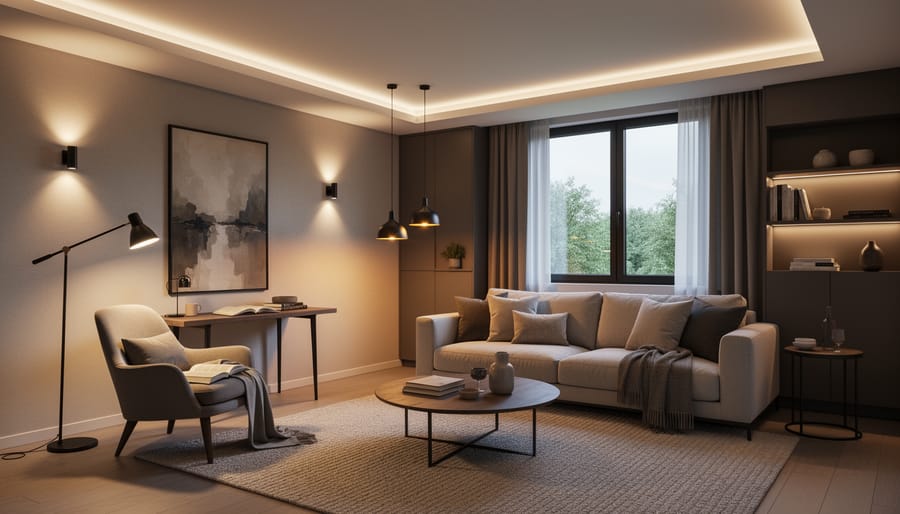
Ambient Lighting: Your Room’s Foundation
Ambient lighting serves as the foundation for any successful home enhancements lighting plan, providing the overall illumination that makes your spaces functional and welcoming. Think of it as the gentle glow that fills a room when you first flip the switch—it’s not meant to spotlight specific areas but rather to create comfortable visibility throughout your entire space.
Ceiling-mounted fixtures remain the most popular choice for ambient lighting, offering reliable, even distribution of light from a central point. Recessed lighting, often called can lights, provides a sleeker alternative that works beautifully in modern homes while maintaining that essential overall brightness. For rooms with fireplaces, consider how your ambient lighting complements the natural warmth of flickering flames during evening hours.
Choosing the right brightness level depends on your room’s size and purpose. A good rule of thumb is to aim for 20 lumens per square foot in living areas where you gather with family. Dining rooms and bedrooms can be slightly dimmer at 10-20 lumens per square foot, creating a more relaxed atmosphere. Installing dimmer switches gives you flexibility to adjust brightness throughout the day, allowing you to transition from bright, energizing mornings to softer, cozier evenings that enhance your home’s natural warmth and comfort.
Task Lighting: Function Meets Style
Task lighting transforms how you use your favorite spaces by delivering focused illumination exactly where you need it most. Whether you’re curling up with a good book beside your fireplace, preparing meals in the kitchen, or working on projects at your desk, the right task lighting makes these activities more comfortable and enjoyable.
For reading nooks near your hearth, position adjustable floor lamps or swing-arm wall sconces about 15 inches to the side of your chair to minimize glare and shadows. Look for fixtures with directional heads that let you aim light precisely where needed. In the kitchen, under-cabinet LED strips provide brilliant workspace illumination while using minimal energy, making them an eco-friendly home enhancement that brightens countertops without heating up your cooking area.
Home offices benefit from desk lamps with dimming capabilities, allowing you to adjust intensity based on the time of day and specific tasks. Position your task light to the side opposite your writing hand to prevent shadows across your work surface.
The beauty of modern task lighting lies in its dual purpose. Today’s fixtures blend seamlessly with your décor while delivering powerful, energy-efficient performance that enhances both function and your home’s welcoming atmosphere.
Accent Lighting: Creating Warmth and Drama
Accent lighting transforms ordinary rooms into extraordinary spaces by drawing the eye exactly where you want it. Think of it as the jewelry of your home enhancements lighting plan—those thoughtful touches that add personality and polish to every corner.
When highlighting architectural features like coffered ceilings, built-in shelving, or crown molding, consider placing LED strip lights or small spotlights at strategic angles. The interplay of light and shadow creates depth and visual interest that makes these details truly shine. Wall-mounted uplights can make a dramatic statement by washing textured walls or exposed brick with warm illumination.
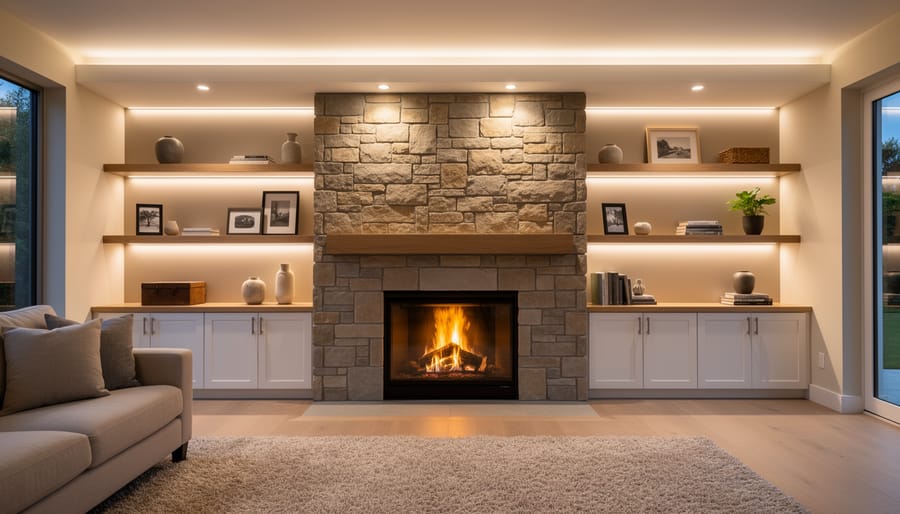
Your fireplace naturally serves as a gathering spot and deserves special attention in your lighting design. Instead of relying solely on overhead lighting, install adjustable picture lights above the mantel to showcase artwork or family photos. Recessed directional fixtures on either side of the fireplace create a welcoming glow that enhances the cozy atmosphere, whether you have a crackling fire going or not. This layered approach means your fireplace remains a stunning focal point year-round.
Don’t overlook the power of lighting artwork and collections. Track lighting or individual picture lights let you curate a gallery-like experience in your own home. Position these fixtures at a 30-degree angle to minimize glare while maximizing impact.
The beauty of accent lighting lies in its flexibility. Dimmers give you complete control, allowing you to adjust the drama based on your mood or occasion—bright for entertaining, subtle for relaxing evenings.
Smart Home Enhancements Lighting Solutions That Actually Work
Modern home enhancements lighting has evolved far beyond simple on-off switches, and smart technology now offers homeowners unprecedented control over their living spaces without the complexity you might expect. The good news is that you don’t need to be tech-savvy to create a lighting system that transforms your home’s ambiance while trimming your energy bills.
Smart bulbs represent the easiest entry point into intelligent lighting. These screw into your existing fixtures and connect to your home Wi-Fi or a central hub, letting you control brightness, color temperature, and scheduling from your smartphone. For spaces where you’ve invested in creating warmth—like around your fireplace area—adjustable color temperature becomes invaluable. You can shift from energizing cool light during daytime activities to warm, amber tones that complement flickering flames as evening settles in.
| Smart Lighting Option | Best For | Average Cost | Key Feature |
|---|---|---|---|
| Smart Bulbs (WiFi) | Renters, single rooms | $15-50 per bulb | No hub required, easy installation |
| Hub-Based Systems | Whole-home integration | $100-300 starter kit | Better connectivity, more devices |
| Smart Dimmers | Existing quality fixtures | $40-80 per switch | Works with standard bulbs |
| Motion-Sensor Lights | Entryways, hallways | $20-60 each | Hands-free convenience |
The beauty of these systems shines when you consider how they integrate with your lifestyle. Imagine coming home to a living room that automatically illuminates with soft lighting that highlights your fireplace as the centerpiece, creating instant coziness without fumbling for multiple switches. Smart dimmers deserve special mention for their practicality—they replace your traditional wall switches and work with the bulbs you already own, making them perfect for preserving those vintage-style Edison bulbs or specialty fixtures.
Automation systems take things further by learning your patterns and adjusting accordingly. Program your hearth area lighting to gradually dim throughout the evening, mimicking the natural transition to restful nighttime hours. This isn’t just about convenience—it’s about creating environments that support how you actually live in your home.
Energy efficiency comes standard with these home enhancements lighting technologies. LED-based smart bulbs use roughly 75 percent less energy than traditional incandescent bulbs and last significantly longer, meaning fewer replacements and lower utility costs. The environmental benefit aligns perfectly with eco-friendly heating solutions, creating a comprehensive approach to sustainable home comfort.
Start small with one or two smart bulbs in your most-used spaces, then expand as you discover what works for your household. The investment pays dividends in both ambiance and efficiency.
Lighting Around Your Fireplace: Enhancing Your Home’s Heart
Your fireplace naturally draws the eye and creates a focal point in your home, but the right lighting enhancements can transform it from simply functional to truly magical. Think of your fireplace lighting as a supporting actor—its job is to complement the dancing flames, not compete with them.
The most common mistake homeowners make is installing overhead lighting directly above the fireplace. This creates harsh shadows and actually diminishes the warm glow you’re trying to achieve. Instead, consider flanking your fireplace with wall sconces positioned 60-66 inches from the floor. These provide ambient illumination that enhances the fireplace’s natural radiance without overpowering it. Choose fixtures with warm light bulbs (2700K or lower) to echo the golden tones of the fire itself.
Recessed lighting can work beautifully around your fireplace area when placed strategically. Position can lights at least three feet away from the fireplace opening on either side, angled slightly outward. This creates a subtle wash of light that highlights the mantel and surrounding architecture while maintaining the fireplace as the star attraction. Install these on a dimmer switch—this is non-negotiable for proper fireplace lighting. You’ll want full flexibility to adjust brightness based on whether the fire is roaring or you’re simply enjoying the architectural beauty of your hearth.
When arranging your living room, consider how natural daylight interacts with your fireplace during different times of day. Heavy curtains or blackout shades give you control over competing light sources, allowing your fireplace to shine during evening hours.
For mantel lighting, small picture lights or LED strip lighting tucked behind decorative elements can add depth and visual interest. These eco-friendly LED options consume minimal energy while providing maximum impact, aligning perfectly with sustainable home enhancement practices.
Remember, the goal is creating layers of light that can be adjusted to suit your mood and the occasion. Your fireplace deserves lighting that respects its role as the heart of your home—warm, inviting, and always welcoming.
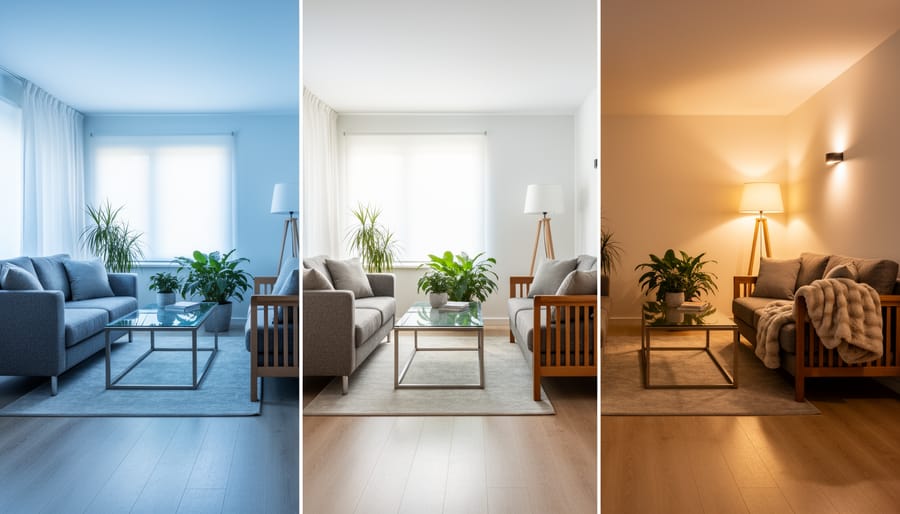
Color Temperature: The Secret to Warm, Inviting Spaces
Walking into a room should feel like wrapping yourself in a cozy blanket, and the secret to achieving that warmth isn’t just about your fireplace—it’s also about understanding color temperature. When you’re planning home enhancements lighting, knowing how to select the right bulb can transform your space from stark and clinical to inviting and comfortable.
Color temperature is measured in Kelvin (K), and despite the technical-sounding name, it’s remarkably simple once you understand the basics. Lower Kelvin numbers produce warm, amber-toned light that mimics candlelight and firelight, while higher numbers create cooler, bluer light similar to midday sunshine. Think of it this way: the glow of your fireplace sits around 1,800K, which is why it feels so naturally comforting.
- 2,000K-2,700K (Warm White)
- Creates an intimate, golden glow perfect for living rooms, bedrooms, and dining areas where you want to encourage relaxation and conversation. This range beautifully complements the natural warmth of wood and stone around fireplaces.
- 2,700K-3,000K (Soft White)
- Offers slightly crisper warm light ideal for kitchens, bathrooms, and reading nooks where you need adequate visibility without sacrificing coziness. Works well in transitional spaces between formal gathering areas and functional rooms.
- 3,500K-4,100K (Neutral White)
- Provides balanced, natural light suitable for home offices, craft rooms, and task-oriented spaces where color accuracy matters. Generally too cool for primary living spaces focused on warmth and ambiance.
- 5,000K-6,500K (Daylight/Cool White)
- Delivers bright, energizing light best reserved for garages, workshops, and utility areas. Avoid using in spaces designed for comfort and gathering, as this temperature can feel institutional.
For rooms centered around your fireplace, stick with the 2,000K-3,000K range to enhance that natural warmth. This creates cohesion between your artificial lighting and the dancing flames, making the entire space feel unified and welcoming. Consider using dimmers to adjust intensity throughout the evening, mimicking the eco-friendly approach of using only the light you need while maximizing comfort and ambiance in your home.
Eco-Friendly Lighting Choices That Lower Your Energy Bills
Making eco-friendly home enhancements through lighting choices isn’t just good for the planet—it’s excellent for your wallet too. Modern lighting technology has evolved to give you beautiful, warm ambiance while dramatically reducing your energy consumption, much like how contemporary bioethanol fireplaces offer clean-burning warmth without the environmental impact of traditional wood-burning options.
LED technology leads the charge in energy-efficient lighting. These bulbs use up to 75% less energy than traditional incandescent bulbs and last 25 times longer. That means fewer replacements and lower electricity bills month after month. When you’re creating that cozy atmosphere around your fireplace or throughout your home, LEDs provide the same warm glow you love without the energy waste. Look for LEDs with warm color temperatures (2700K-3000K) to complement the natural warmth of your fireplace and create inviting spaces.
Beyond just switching bulbs, consider the fixtures themselves. Energy-efficient fixtures with integrated LED systems maximize light output while minimizing power draw. Dimmable options give you control over both ambiance and energy use—lowering lights by just 25% can reduce energy consumption by 20%.
Smart lighting systems take efficiency even further. Motion sensors ensure lights aren’t left on in empty rooms, while programmable timers align your lighting with your daily routines. These automated solutions work beautifully alongside eco-conscious heating choices, creating a comprehensively sustainable home environment.
Natural light maximization is another sustainable practice worth embracing. Strategic use of mirrors, lighter wall colors, and keeping windows unobstructed reduces daytime artificial lighting needs. When artificial light is necessary, layered lighting approaches using multiple lower-wattage sources consume less energy than single high-output fixtures while creating more dynamic, visually interesting spaces that enhance your home’s overall warmth and character.
Room-by-Room Home Enhancements Lighting Strategies
Creating the perfect lighting plan for your home means understanding that each room serves a different purpose and deserves its own thoughtful approach. Let’s explore how to illuminate your spaces beautifully and functionally, with special attention to creating those warm, inviting atmospheres that make a house feel like home.
Your living room is the heart of your home, especially when anchored by a fireplace. Layer your lighting here with a combination of overhead fixtures, table lamps, and strategic accent lighting. Install dimmer switches to adjust the mood from bright and energetic during daytime gatherings to soft and intimate for evening relaxation. When decorating large living rooms, consider multiple lighting zones to avoid dark corners while highlighting your fireplace as the focal point. Wall sconces flanking your mantel create symmetry and draw the eye to this natural gathering spot, while floor lamps positioned near seating areas provide task lighting for reading.
In the kitchen, bright, functional lighting is essential, but that doesn’t mean sacrificing warmth. Combine recessed ceiling lights with under-cabinet LED strips to eliminate shadows on countertops where you prepare meals. Pendant lights over islands or dining areas add personality while providing focused illumination. Choose warm white bulbs (2700K-3000K) to keep the space feeling inviting rather than sterile.
Bedrooms call for softer, more flexible lighting solutions. Bedside lamps with three-way bulbs let you adjust brightness for reading or winding down. Consider wall-mounted reading lights to free up nightstand space, and add a statement ceiling fixture with a dimmer for general illumination. Avoid harsh overhead lighting that disrupts the room’s restful atmosphere.
Bathrooms benefit from layered lighting around mirrors to eliminate shadows during grooming tasks, complemented by ambient overhead lighting. Choose fixtures with appropriate moisture ratings for safety.
Don’t overlook outdoor areas where lighting extends your living space into the evening. Path lights ensure safe navigation while highlighting landscaping features. If you have an outdoor fireplace or fire pit, subtle landscape lighting around the perimeter creates an enchanting gathering space. Solar-powered options provide eco-friendly illumination without increasing your energy bills.
Remember, the best home enhancements lighting strategies balance functionality with ambiance, creating spaces that work beautifully throughout the day while supporting your lifestyle and comfort.
Common Home Lighting Mistakes (And How to Fix Them)
Even the most beautifully designed homes can fall short when lighting mistakes undermine the ambiance you’re working to create. The good news? Most lighting problems are surprisingly easy to fix without calling an electrician or breaking the bank.
One of the most common errors is relying on a single overhead light source. This creates harsh shadows and flat, uninviting spaces that work against the warm atmosphere you want in your home. The solution is layering—combine ambient lighting with task and accent lights to add depth and dimension. Consider adding table lamps, floor lamps, or wall sconces to create multiple light sources at different heights throughout your room.
Another frequent mistake is choosing the wrong color temperature for your space. Cool, bluish bulbs (above 4000K) can make living areas feel sterile and unwelcoming, especially in rooms where you’ve invested in creating warmth—like spaces with fireplaces or cozy reading nooks. Switch to warm white bulbs (2700K-3000K) in living rooms, bedrooms, and dining areas to enhance that inviting glow.
Many homeowners also overlook the power of dimmer switches, missing out on one of the simplest home enhancements lighting can offer. Dimmers let you adjust brightness throughout the day, creating the perfect mood for any occasion while reducing energy consumption—an eco-friendly heating solution for both your home and wallet.
To fix these common issues quickly:
- Assess each room and identify spaces relying solely on overhead lighting
- Add at least two supplementary light sources per room at varying heights
- Replace any bulbs above 3500K in living spaces with warm white alternatives
- Install dimmer switches on your main fixtures to gain control over ambiance
- Position accent lighting to highlight architectural features or artwork
The transformation these simple adjustments create is remarkable. You’ll notice rooms feel more spacious, inviting, and thoughtfully designed—all without major construction or professional installation. These straightforward fixes help you achieve the warm, comfortable environment that makes a house truly feel like home.
Thoughtful home enhancements through lighting remain one of the most accessible and impactful transformations you can make to your living space. Unlike major renovations, strategic lighting updates offer immediate results without breaking the budget or disrupting your daily life. When you combine well-planned illumination with the natural glow of your fireplace and other design elements around fireplaces, you create layers of warmth that truly define comfort. The beauty lies in how lighting works harmoniously with every aspect of your home—highlighting architectural features, setting the mood for gatherings, and making everyday moments feel special. Whether you start with dimmer switches, add ambient accent lights, or embrace energy-efficient LED solutions, each enhancement brings you closer to the inviting, cozy atmosphere you envision. Your home deserves lighting that reflects how you live and love your space.