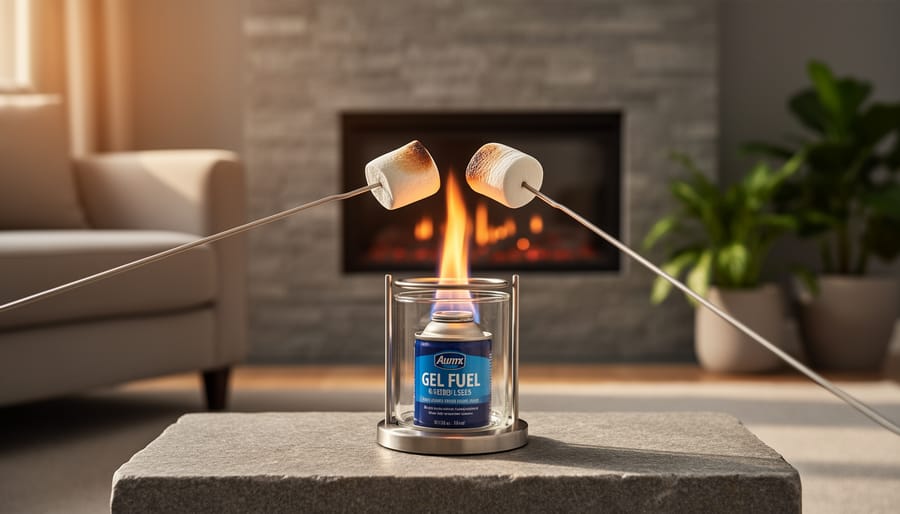


Choose gel fuel canisters specifically rated for indoor use, checking that they’re ethanol-based and produce minimal smoke or odor. These clean-burning fuels create real flames without requiring a chimney or ventilation system, making them perfect for ventless fireplaces and contained cooking applications. Position your gel fuel canister in a stable, heat-resistant holder designed for indoor cooking, ensuring it sits at least three feet away from flammable materials and never directly under food drippings.
Test your gel fuel’s heat output before attempting serious cooking tasks, as most canisters produce gentler heat than traditional wood or gas flames—ideal for warming dishes, toasting marshmallows, or slow-cooking smaller items rather than searing steaks. Understanding these limitations helps you select from the safest fuels for indoor grilling based on your specific cooking goals.
Store unopened gel fuel cans in a cool, dry location away from direct sunlight, and always seal partially used canisters tightly to prevent evaporation and maintain fuel quality. The beauty of gel fuel lies in its portability and clean combustion—you’re getting authentic flame ambiance without the ash, sparks, or heavy smoke that traditional fuels produce.
Extinguish gel fuel flames completely using the canister’s snuffer lid rather than blowing them out, which can scatter hot gel particles. This controllable, eco-conscious fuel option transforms your indoor fireplace into a versatile centerpiece that safely combines warmth, atmosphere, and light cooking functionality throughout the year.
What Is Gel Fuel and How Does It Work?
Gel fuel is a fascinating innovation that brings the warmth and ambiance of real flames to your home without the hassle of traditional wood or gas systems. At its heart, gel fuel is surprisingly simple: it’s primarily isopropyl alcohol (the same type used in rubbing alcohol) that’s been transformed into a thick, gel-like consistency using special thickening agents. This gel formula is what makes it particularly well-suited for indoor use.
When you light gel fuel, the alcohol component burns cleanly, producing real flames that dance and flicker just like a traditional fire. The magic happens at a molecular level—the isopropyl alcohol vaporizes and combusts with oxygen in the air, releasing heat, light, and primarily water vapor and carbon dioxide. Because the fuel is contained in a gel form rather than liquid, it won’t spill or run if the canister tips over, adding an important safety feature for indoor environments.
What truly sets gel fuel apart from other fuel types is its clean-burning nature. Unlike wood, which produces smoke, ash, and creosote buildup, gel fuel burns remarkably clean. There’s no soot coating your walls, no smoke filling your rooms, and no need for ventilation systems or chimneys. This is why it’s become such a popular choice for homeowners who want the ambiance of a real fire without the complexity of traditional fireplace systems.
The gel consistency also means you can control exactly how much fuel you’re using. Most gel fuel comes in pre-measured canisters that burn for approximately two to three hours, making it both convenient and predictable. This controlled burn time, combined with its portability and ease of use, makes gel fuel an excellent eco-friendly heating solution that fits perfectly into modern lifestyles where flexibility and cleanliness matter as much as warmth and atmosphere.
The Safety Advantage: Why Gel Fuel Wins for Indoor Use
Clean Burning Means Cleaner Air
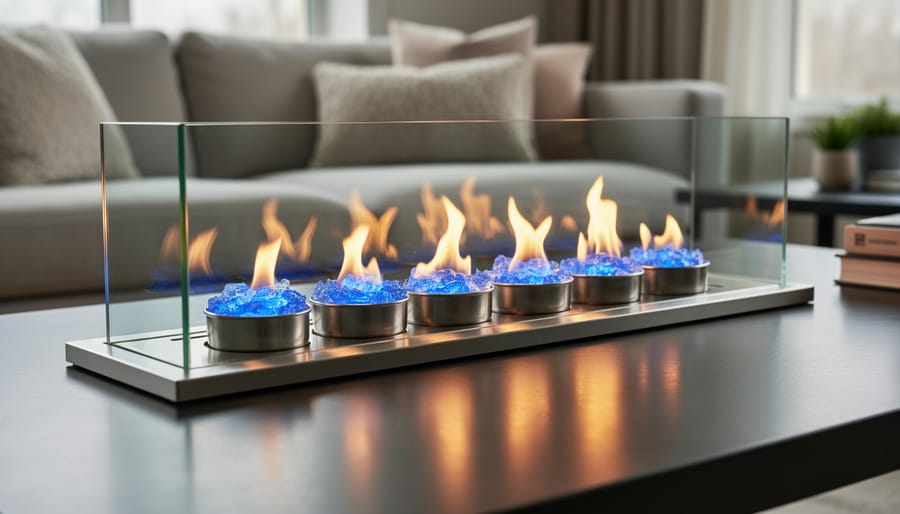
One of the most compelling reasons homeowners choose gel fuel for their indoor fireplaces is its remarkably clean burn. Unlike traditional wood or charcoal, gel fuel produces virtually no smoke, soot, or ash. This means you won’t deal with the lingering smell of smoke in your curtains or the tedious cleanup of ash residue on your hearth. More importantly, gel fuel releases minimal pollutants into your home’s air, creating a healthier environment for you and your family.
The clean-burning nature of gel fuel makes it an ideal choice for those conscious about indoor air quality. Without the need for extensive ventilation systems, you can enjoy the warmth and ambiance of a fire without compromising your home’s atmosphere. This is particularly valuable when considering indoor fireplace grilling safety, as reduced emissions mean fewer concerns about carbon monoxide or other harmful gases. The result is a worry-free experience that lets you focus on what matters most: enjoying the cozy comfort of your fireplace while knowing you’re making an eco-friendly choice for your home.
No Gas Lines, No Explosions
One of the most compelling safety advantages of gel fuel is what it doesn’t have: gas lines. Unlike propane or natural gas fireplaces, gel fuel operates completely independently of your home’s infrastructure. There are no pipes to install, no connections to maintain, and absolutely no risk of gas leaks that could endanger your family.
Think about the peace of mind that comes with this simplicity. Gas leaks, while rare, can lead to serious consequences including explosions, carbon monoxide poisoning, or fire hazards. With gel fuel, these concerns simply don’t exist. Each canister is self-contained, meaning when you’re not using it, there’s no invisible fuel potentially escaping into your living space.
Storage is another area where gel fuel shines from a safety perspective. You can keep gel fuel canisters in your garage, basement, or utility closet without the strict regulations and safety concerns that come with storing propane tanks. There’s no pressure buildup, no special ventilation requirements, and no worries about temperature fluctuations causing dangerous situations.
This makes gel fuel particularly appealing for homeowners who want the ambiance and functionality of an indoor fireplace without the complexity and potential risks of gas systems. You control exactly when fuel is present and active in your fireplace, rather than having a constant fuel source connected to your home. It’s a straightforward, transparent approach to indoor heating and cooking that puts safety firmly in your hands.
How Gel Fuel Affects Your Food’s Flavor
One of the most common questions homeowners ask about cooking with gel fuel is whether it affects the taste of their food. The short answer? Gel fuel burns remarkably clean and neutral, which is both an advantage and something to consider when planning your indoor grilling experience.
Unlike traditional charcoal or wood, gel fuel doesn’t impart that distinctive smoky flavor many of us associate with outdoor grilling. The fuel burns with minimal smoke and odor, producing primarily heat without adding flavor compounds to your food. This makes it an excellent choice for indoor use from a safety and air quality perspective, but it means you won’t get that campfire-kissed taste automatically.
Think of gel fuel cooking more like using a gas grill than a charcoal setup. Your food will cook beautifully and evenly, but the flavor profile depends entirely on your ingredients and seasonings rather than the fuel source itself. For many dishes, this neutral characteristic is actually perfect, allowing the natural flavors of quality ingredients to shine through.
If you’re craving that smoky depth, you have several options to enhance your gel fuel cooking. Consider using wood chips in a smoker box placed near your heat source, applying smoked seasonings or rubs to your food, or marinating proteins with liquid smoke. You can also experiment with aromatic herbs placed directly on your cooking surface, which will release flavorful oils as they heat.
The beauty of gel fuel’s neutral burn is the control it gives you. You decide exactly how much smoke flavor you want, creating a customizable cooking experience that’s both safe for indoor use and perfectly suited to your personal taste preferences.
Comparing Gel Fuel to Other Indoor Fireplace Fuel Options
Gel Fuel vs. Bioethanol
When choosing between gel fuel and bioethanol for your indoor fireplace, understanding their key differences helps you make the best decision for your home.
Gel fuel typically burns for 2-3 hours per canister, while bioethanol offers a slightly longer burn time of 3-4 hours. Heat-wise, bioethanol produces more BTUs, making it better for warming larger spaces, though gel fuel provides sufficient heat for most indoor grilling and ambiance needs.
Cost considerations favor gel fuel in most markets. Individual gel fuel canisters are generally more affordable upfront, and their controlled burning makes them economical for occasional use. Bioethanol requires purchasing in larger liquid quantities, which can mean higher initial investment but potentially lower long-term costs for frequent users.
For practical indoor grilling applications, gel fuel wins on convenience. The canisters are mess-free, easy to store, and simple to ignite without special equipment. Bioethanol requires careful pouring into burners and more attention to avoid spills. Both fuels burn cleanly without harmful emissions, making them eco-friendly heating solutions that align with modern sustainable living.
If you’re just starting with indoor fireplace cooking or want hassle-free operation, gel fuel’s user-friendly design makes it the ideal choice for creating that warm, inviting atmosphere while preparing delicious meals.
Gel Fuel vs. Gas Options
When choosing fuel for your indoor fireplace, understanding the differences between gel fuel and gas options helps you make the best decision for your home. Unlike propane or natural gas fireplaces, gel fuel doesn’t require professional installation, gas lines, or ventilation systems. You simply place the canisters in your fireplace and light them—no contractor needed. This makes gel fuel incredibly appealing if you’re renting or don’t want to commit to permanent installations.
Portability is where gel fuel truly shines. While gas fireplaces stay anchored to wherever your gas lines run, gel fuel fireplaces can move from room to room or even outdoors for entertaining. This flexibility transforms your heating solution into a lifestyle element that adapts to your needs.
From a safety perspective, both options offer advantages. Gas fireplaces provide consistent heat with thermostatic control, but they carry risks associated with gas leaks and require proper ventilation. Gel fuel eliminates these concerns since there’s no gas line to leak and produces minimal emissions. However, gel fuel does require careful handling of individual canisters and mindful flame management.
Cost-wise, gas typically runs cheaper for regular, long-term heating, while gel fuel offers better value for occasional use and ambiance without the upfront installation investment.
When Electric Makes More Sense
Let’s be honest—gel fuel isn’t always the best choice for everyone, and that’s perfectly okay. If you’re primarily looking to cook indoors rather than create ambiance, electric grilling elements often make more practical sense. They offer precise temperature control, which is crucial for achieving perfect results whether you’re searing vegetables or grilling delicate fish.
Electric options also eliminate concerns about ventilation and air quality altogether. If you live in a smaller apartment or have respiratory sensitivities, this peace of mind is invaluable. There’s no flame to monitor, no fuel to purchase repeatedly, and maintenance is typically simpler—just wipe down the surface after use.
Budget-conscious homeowners will appreciate that electric grills have lower ongoing costs. While gel fuel canisters need regular replacement, electricity costs for occasional indoor grilling remain minimal. Plus, electric elements heat up quickly and maintain consistent temperatures without the learning curve that comes with managing gel fuel flames.
If cooking efficiency trumps the romantic appeal of real flames in your priorities, electric grilling deserves serious consideration. It’s about choosing the right tool for your specific lifestyle and needs.
Practical Tips for Using Gel Fuel in Your Indoor Fireplace Grill
Getting started with gel fuel in your indoor fireplace grill is wonderfully straightforward, making it perfect for both seasoned grill enthusiasts and those just beginning to explore indoor cooking options. Let’s walk through the essentials to help you create delicious meals safely and efficiently.
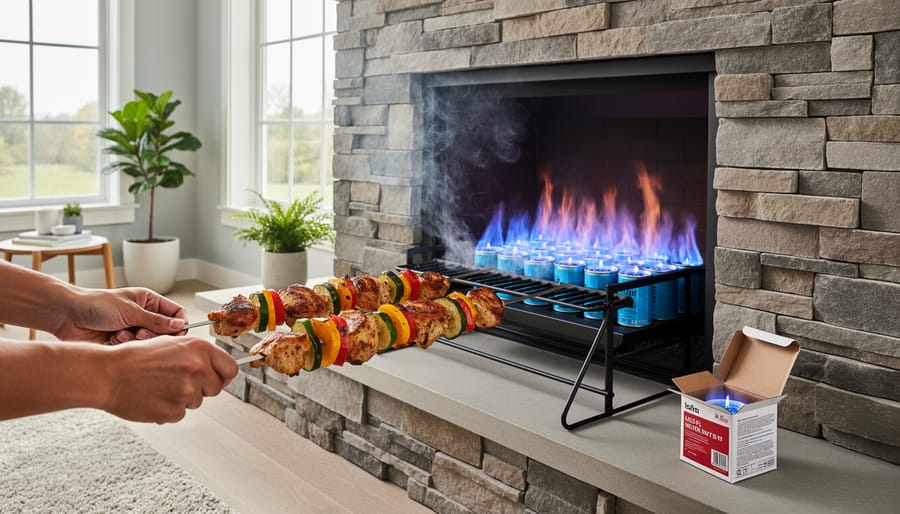
Begin by placing your gel fuel canisters in the designated fuel holders of your indoor fireplace grill. Most grills accommodate two to three cans, depending on the cooking surface size. Always ensure the canisters are stable and positioned away from any flammable materials. Before lighting, confirm your room has adequate ventilation by opening a window or ensuring your ventilation system is running properly.
When it’s time to light your gel fuel, use a long-handled lighter or fireplace matches to ignite each canister from a safe distance. The fuel should catch quickly, producing those beautiful, clean flames you’re looking for. Never attempt to add fuel to canisters while they’re burning or still hot. Allow at least 15 minutes of cooling time before handling used canisters.
Temperature control with gel fuel differs from traditional grilling methods. Since you can’t adjust a dial, you’ll manage heat by the number of canisters burning and the distance between the fuel and your cooking grate. Two canisters typically provide medium heat suitable for most grilling applications, while three canisters generate higher temperatures ideal for searing. Position your grill grate at varying heights to find your sweet spot for different foods.
Expect each gel fuel canister to burn for approximately two to three hours, giving you plenty of time for a complete meal preparation. Plan your cooking accordingly, keeping extra canisters on hand for extended gatherings. The consistent burn rate makes timing predictable once you’ve used gel fuel a few times.
Between cooking sessions, practice proper grill maintenance to ensure longevity and optimal performance. This includes cleaning grates after each use and wiping down surfaces to prevent residue buildup.
Remember that gel fuel’s eco-friendly formulation means you’re creating wonderful meals while minimizing your environmental impact. This combination of convenience, safety, and sustainability makes gel fuel an excellent choice for bringing the joy of grilling into your home’s cozy atmosphere.
The Environmental and Economic Case for Gel Fuel
When you’re considering gel fuel for your indoor fireplace, it’s reassuring to know you’re making a choice that benefits both your wallet and the planet. Let’s explore why gel fuel has become a favorite among environmentally conscious homeowners.
From an environmental perspective, gel fuel burns remarkably clean. Unlike traditional wood-burning fireplaces that release particulate matter and creosote into your home and the atmosphere, gel fuel produces minimal emissions. Most quality gel fuels are made from isopropyl alcohol, which combusts almost completely, releasing primarily water vapor and carbon dioxide. This means no harmful smoke, no ash to clean up, and no contribution to indoor air pollution that can affect your family’s health.
Many gel fuel manufacturers now offer plant-based formulations derived from renewable sources like corn or soybeans. These biofuel options reduce dependence on petroleum-based products and create a smaller carbon footprint. While gel fuel does release CO2 when burning, the renewable varieties contribute to a more circular carbon cycle compared to fossil fuels.
The economic advantages are equally compelling. While the per-ounce cost of gel fuel might seem higher than firewood initially, consider the complete picture. There’s no chimney to clean annually, no wood to haul and store, and no expensive chimney inspections required for safe operation. A typical three-hour burn uses approximately two to three canisters, costing between six and twelve dollars depending on the brand you choose.
For occasional users who want the ambiance of a fire without the commitment of maintaining a traditional fireplace, gel fuel proves remarkably cost-effective. You’re paying only for what you use, with no waste. Storage is simple and doesn’t require a woodshed or concern about moisture and pests.
Additionally, the flexibility of ventless gel fuel fireplaces means you can install a beautiful focal point in rooms where traditional fireplaces would be prohibitively expensive due to venting requirements. This installation savings can offset fuel costs for years of enjoyable use.
What to Look for When Buying Gel Fuel
Choosing the right gel fuel can make all the difference between a beautiful, clean-burning fire and a disappointing, sooty experience. When you’re shopping for gel fuel, start by examining the ingredient list. Quality gel fuel products use isopropyl alcohol as their primary fuel source, which burns cleaner and produces minimal odor. Steer clear of products containing methanol or ethanol blends, as these tend to create more soot and emit stronger fumes that can be unpleasant in enclosed spaces.
Pay close attention to the manufacturer’s certifications and safety ratings. Reputable brands will clearly display safety testing information and comply with indoor air quality standards. Look for products that specifically state they’re designed for indoor use and produce minimal smoke. This isn’t just marketing language; it’s a genuine quality indicator that shows the manufacturer has formulated their product with your home environment in mind.
The can design matters too. Quality gel fuel comes in sturdy, leak-proof containers with secure lids that prevent spills and preserve the fuel’s integrity. The gel itself should have a thick, consistent texture rather than being watery or separated. If you can see the product before purchasing, a uniform appearance without liquid pooling on top is a good sign.
Price can be an indicator of quality, though not always. Extremely cheap gel fuel often contains inferior ingredients that produce excessive soot, leaving black residue on your fireplace and surrounding surfaces. Reading customer reviews is invaluable here. Look for feedback specifically mentioning clean burning, pleasant or neutral scent, and long burn times. Users who mention minimal cleanup and no lingering odors have likely found a quality product worth considering.
Finally, check the burn time listed on the label. Quality gel fuel typically burns for two to three hours per can, giving you better value and a more sustainable heating solution for your home.
Safety Precautions You Can’t Ignore
While gel fuel creates a beautiful, inviting ambiance in your indoor fireplace, treating it with the respect it deserves is absolutely essential. Let’s walk through the safety practices that will keep your home and loved ones protected.
First and foremost, storage matters tremendously. Keep unopened gel fuel canisters in a cool, dry location away from direct sunlight and heat sources. Think of your garage or utility room rather than next to your water heater. Never store gel fuel near ignition sources, and always keep it out of reach of children and pets. The temperature in your storage area should remain below 120°F to prevent canister pressure buildup.
Ventilation is another critical consideration. Even though gel fuel burns cleaner than traditional wood, it still consumes oxygen and produces carbon dioxide. Crack a window slightly when using your gel fuel fireplace, especially during extended burning sessions. This simple step ensures adequate air circulation and prevents carbon dioxide buildup that could leave you feeling drowsy or worse.
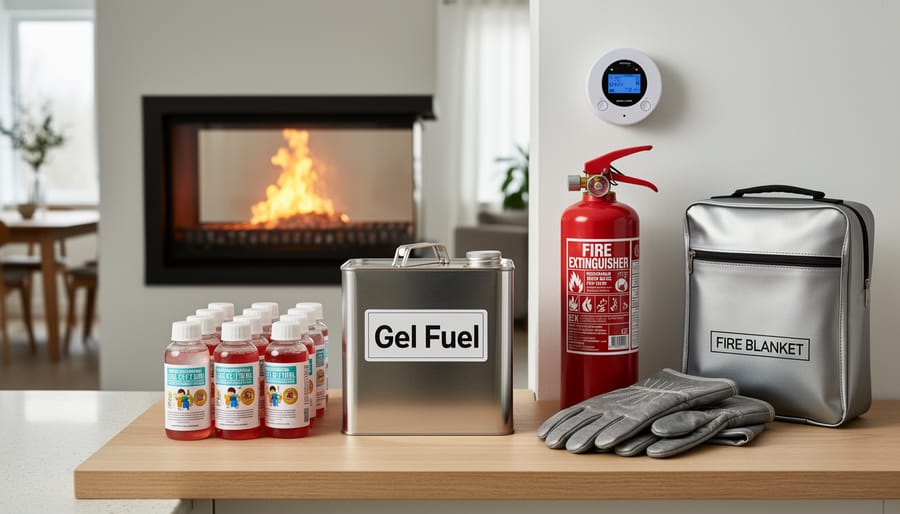
Keep a Class B fire extinguisher within easy reach of your fireplace area. This type specifically handles flammable liquid fires, making it your best defense in an emergency. Familiarize yourself with how to use it before you need it, because panic and instruction manuals don’t mix well.
If you spill gel fuel, don’t panic, but act quickly. Wipe it up immediately with paper towels, then dispose of them outside in a metal container. Never pour water on gel fuel spills, as this won’t help and could spread the fuel further. Ventilate the area thoroughly before lighting your fireplace.
Never attempt to refill canisters while they’re hot or still burning. Wait at least 15 minutes after extinguishing the flame before handling fuel. This patience prevents flash fires and serious burns. Following these guidelines while preventing indoor grilling hazards ensures your gel fuel fireplace remains the cozy, safe centerpiece of your home’s warmth and ambiance.
Choosing gel fuel for your indoor fireplace creates a wonderful bridge between safety, convenience, and the warm ambiance you’re seeking in your home. Whether you’re drawn to the idea of indoor grilling or simply want a reliable fuel source that won’t compromise your family’s well-being, gel fuel stands out as a practical solution that checks all the important boxes.
As you move forward with your decision, remember that the best fuel choice is one that aligns with your specific lifestyle needs and safety priorities. Consider your space, ventilation, and how you plan to use your fireplace. Gel fuel offers flexibility and peace of mind, but taking time to understand proper usage and maintenance will ensure you get the most from your investment.
Creating a cozy, functional living space is about more than just aesthetics—it’s about making thoughtful choices that enhance your daily life. Your indoor fireplace, fueled safely and used wisely, becomes more than a heat source or cooking tool. It transforms into a gathering point, a place where memories are made and comfort is found. Embrace the warmth, enjoy the process, and let your fireplace become the heart of your home.