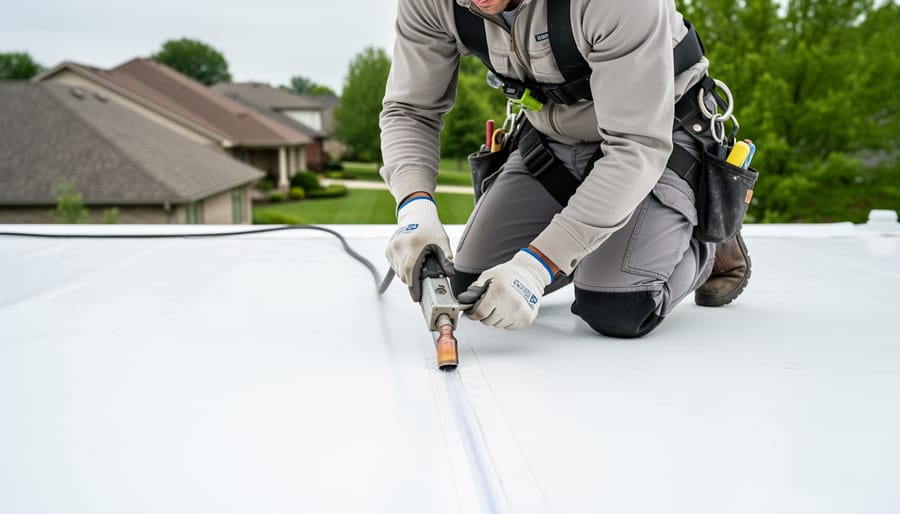


Your roof replacement decision deserves careful consideration, especially when exploring modern materials like TPO that promise both durability and energy savings. TPO (Thermoplastic Polyolefane) roofing has quietly become one of the fastest-growing residential roofing options, yet many homeowners remain unfamiliar with what it actually offers their homes.
TPO delivers a compelling combination of reflective white surfaces that deflect summer heat, welded seams that resist leaks better than traditional shingles, and a lifespan of 20-30 years when properly installed. Much like choosing the right heating solution creates year-round comfort in your living spaces, selecting the appropriate roofing material protects your entire home investment while reducing energy costs.
The residential replacement process for TPO roofing differs significantly from conventional shingle installations. Your contractor will remove existing materials, inspect and repair the roof deck, install insulation boards for enhanced energy efficiency, then heat-weld TPO membrane sheets together to create a completely seamless protective barrier. This installation method requires specialized equipment and trained technicians, making contractor selection particularly important.
Understanding whether TPO suits your specific situation depends on factors beyond simple cost comparisons. Your home’s architectural style, local climate conditions, existing roof structure, and long-term budget all influence this decision. TPO excels in certain scenarios while falling short in others, and recognizing these distinctions before signing contracts prevents costly disappointment. This guide walks you through the complete replacement process, honest cost expectations, and practical considerations that help you determine if TPO roofing creates the protective, energy-efficient home environment you’re seeking.
What TPO Residential Roofing Actually Is (Without the Sales Pitch)
The Technology Behind TPO
TPO stands for Thermoplastic Polyolefin, a single-ply roofing membrane that’s become increasingly popular for residential applications. Think of it as a high-performance blanket for your home, engineered with two layers of material heat-welded together with reinforcing fabric sandwiched in between.
What makes TPO special is its molecular structure. The material naturally reflects sunlight rather than absorbing it, much like how light-colored clothing keeps you cooler on sunny days. This reflective quality helps your home maintain comfortable temperatures while reducing the workload on your cooling system during warm months, creating a more energy-efficient living space.
The membrane’s flexibility is another standout feature. Unlike rigid roofing materials that can crack under stress, TPO expands and contracts with temperature changes without compromising its integrity. It resists tears, punctures, and impacts remarkably well, standing up to hail, wind-blown debris, and foot traffic during maintenance.
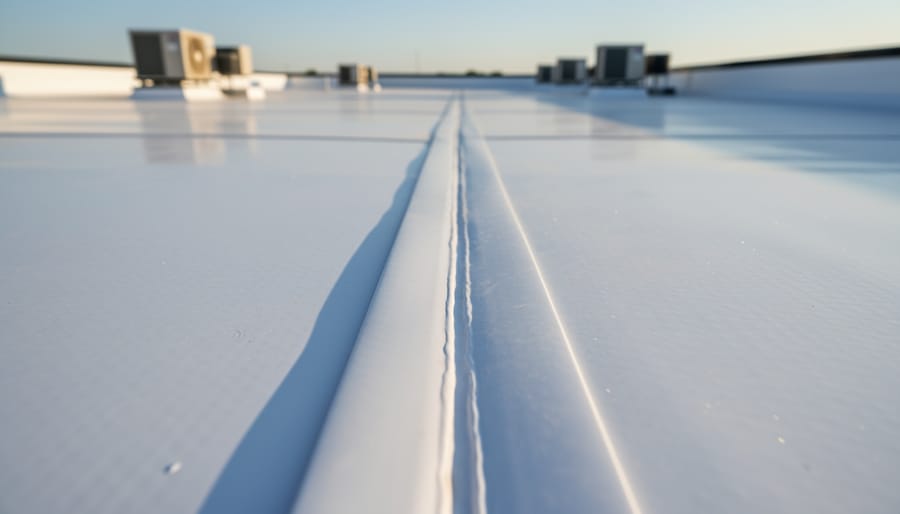
TPO also fights off common roofing enemies effectively. It’s naturally resistant to algae growth, chemical exposure, and UV radiation degradation. The seams are heat-welded rather than glued, creating watertight bonds that are actually stronger than the membrane itself, ensuring your home stays protected and cozy for decades.
TPO vs. Other Residential Roofing Materials
When comparing roofing materials for your home, it helps to see how TPO stacks up against familiar options. Asphalt shingles remain the most popular choice due to their lower upfront cost and traditional appearance, but they typically last 15-25 years compared to TPO’s 20-30 year lifespan. Metal roofing offers exceptional durability and energy efficiency, though it comes with a higher price tag than TPO while delivering similar reflective benefits.
TPO sits comfortably in the middle ground, offering better energy savings than traditional shingles without the premium cost of metal. Unlike tile or slate, TPO is lightweight and doesn’t require structural reinforcement. While it may not have the classic curb appeal of dimensional shingles, its white reflective surface can significantly reduce cooling costs, creating a more comfortable home environment year-round. For homeowners prioritizing energy efficiency and long-term value over aesthetics, TPO presents a practical, eco-conscious choice that keeps your home protected while maintaining comfortable indoor temperatures.
The Complete TPO Roof Replacement Journey
Pre-Installation: Assessment and Preparation
Before your TPO roofing project begins, your contractor will conduct a thorough assessment of your current roof and home. This initial inspection examines the existing roof’s condition, identifies any underlying structural issues, and helps determine the scope of work needed. Think of it like preparing your home for a major comfort upgrade—just as you’d carefully plan an energy-efficient heating solution, a proper roof assessment ensures your home stays protected and comfortable for years to come.
Your contractor will measure your roof’s dimensions, check for water damage or rot in the decking, and evaluate ventilation systems. This inspection phase is essential for creating an accurate project estimate and understanding the roof replacement timeline.
Next comes the permitting process. Most municipalities require building permits for roof replacements, and your contractor typically handles this paperwork. Permits ensure the work meets local building codes and safety standards, protecting your investment and your family’s wellbeing.
Site preparation includes ordering materials, scheduling delivery, and protecting your property. Your contractor will discuss protecting landscaping, covering outdoor furniture, and securing items around your home’s perimeter. They’ll also coordinate dumpster placement and establish safety zones.
This preparation phase might seem extensive, but it’s crucial for a smooth installation. Just as proper planning creates a warm, inviting home environment, thorough pre-installation work ensures your new TPO roof performs efficiently while keeping your household comfortable and secure throughout the process.
Removal of Your Existing Roof
The tear-off process is the most disruptive part of your TPO roof replacement, but knowing what to expect helps you prepare your household. Your roofing crew will systematically remove your existing roof layers down to the deck, which typically takes one to two days depending on your home’s size and the number of layers present.
Expect significant noise during this phase. The scraping, prying, and disposal of old roofing materials creates loud, repetitive sounds that can be jarring, especially if you work from home. Most contractors begin early in the morning to maximize daylight hours, so plan accordingly if you have young children or prefer sleeping in.
Professional contractors take specific steps to protect your home and property. They’ll lay tarps around your home’s perimeter to catch debris, use magnetic tools to collect nails, and cover vulnerable areas like air conditioning units and landscaping. Inside your home, you might notice dust settling through tiny gaps in your attic space, so consider covering furniture and valuables in upper-floor rooms.
Creating a comfortable living environment during construction means preparing a quiet space away from the work zone where you can retreat when noise levels peak. Much like planning around fireplace installation, a little preparation ensures the temporary disruption leads to lasting comfort and protection for your home.
Installing Your New TPO Roof
Understanding how your TPO roof goes up can help you feel more confident during the project. The installation process is straightforward but requires skilled professionals to ensure everything works together to protect your home.
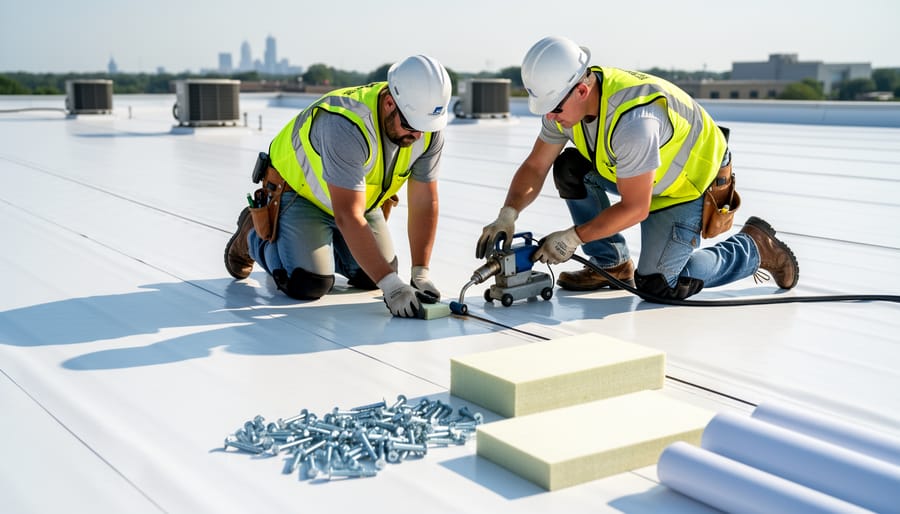
Your roofing team starts by preparing the roof deck, ensuring it’s clean and ready for the new membrane. They’ll install insulation boards if your project includes an energy efficiency upgrade, which can significantly reduce heating and cooling costs—keeping your home as cozy as a well-tended fireplace on a winter evening.
Next comes the TPO membrane itself, which arrives in large rolls. Installers carefully position these white or light-colored sheets across your roof, planning seam locations strategically. The membrane can be attached using three main methods: mechanically fastened with screws and plates, fully adhered with special adhesive, or ballasted with gravel or pavers. Your contractor will recommend the best approach based on your roof’s design and local weather conditions.
The seaming process is where craftsmanship really matters. Professionals use hot-air welding equipment to fuse the membrane edges together, creating waterproof seams that are actually stronger than the material itself. This heat-welding creates a monolithic barrier—think of it as creating one continuous protective layer rather than separate pieces.
Finally, installers add flashing around roof penetrations, edges, and corners. They’ll ensure proper drainage and conduct thorough quality checks. A well-installed TPO roof means peace of mind, letting you focus on enjoying your comfortable, energy-efficient home.
Quality Checks and Final Inspection
Once your TPO roofing installation is complete, a thorough inspection ensures everything meets industry standards and protects your home properly. Professional inspectors examine several critical areas to verify quality workmanship.
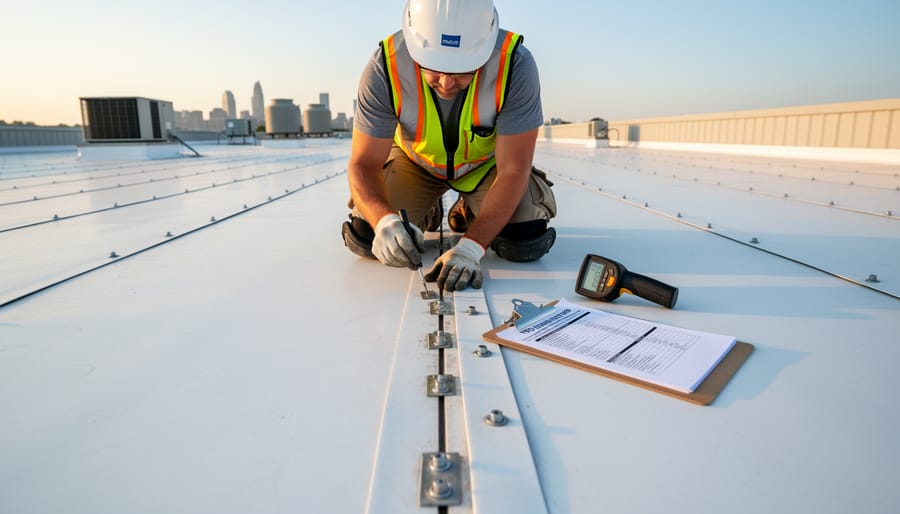
First, they’ll check seam integrity, as TPO’s heat-welded seams are essential for watertight performance. Inspectors use specialized tools to test seam strength, ensuring bonds are consistent and secure across the entire roof surface. They’ll also verify that flashing around chimneys, vents, and other penetrations is properly installed and sealed, preventing potential leak points that could compromise your home’s comfort.
Membrane attachment is another key focus area. Inspectors confirm that your TPO membrane is securely fastened according to manufacturer specifications and local building codes. They’ll look for proper drainage, ensuring water flows away from your home rather than pooling on the surface.
Quality contractors typically conduct their own pre-inspection before calling in an official inspector, catching any issues early. Don’t hesitate to ask your contractor for a walkthrough explanation of their work. Understanding what makes a quality installation helps you feel confident in your investment and ensures your home remains the cozy, protected haven you deserve for years to come.
How TPO Roofing Affects Your Home’s Comfort and Energy Bills
The Reflective Advantage
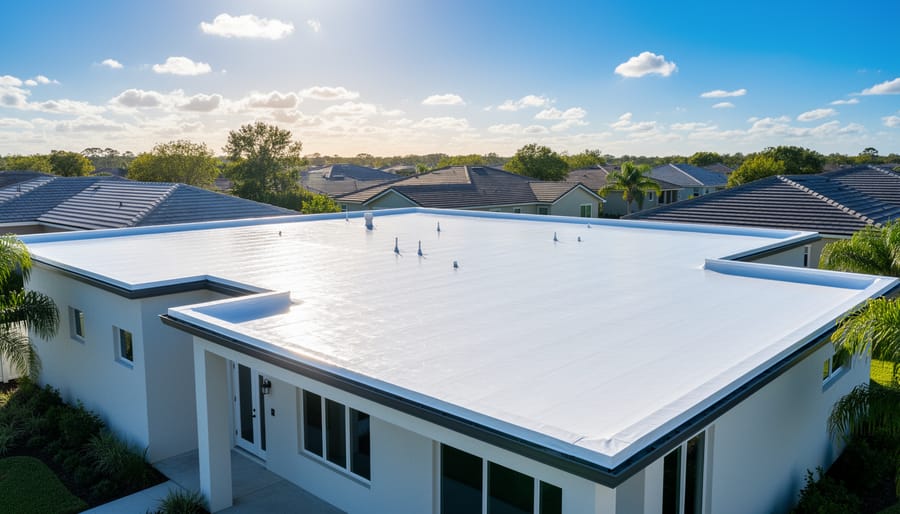
One of TPO’s most appealing benefits for homeowners is its natural ability to keep your home comfortable while lowering energy bills. The bright white or light-colored surface of TPO roofing acts like a mirror for the sun’s rays, reflecting heat away from your home rather than absorbing it. This reflective quality can make a remarkable difference during those sweltering summer months when your air conditioning works overtime.
Think of it this way: just as wearing a white shirt on a sunny day keeps you cooler than a dark one, your TPO roof works on the same principle. By bouncing solar heat back into the atmosphere, your attic stays cooler, which means less heat radiates down into your living spaces. Many homeowners report cooling cost reductions of 10-30% after installing TPO roofing, allowing you to redirect those savings toward other home comfort priorities.
This energy-efficient approach aligns perfectly with creating a comfortable, eco-friendly home environment. You’ll enjoy consistent indoor temperatures, reduce your carbon footprint, and feel good knowing your roofing choice contributes to both your family’s comfort and environmental responsibility.
Working in Harmony With Your Heating System
Your home is a complete comfort system where every element works together to create that cozy haven you love. When planning your TPO roofing installation, it’s worth considering how this choice impacts your heating efficiency and overall energy costs.
TPO roofing’s reflective white surface doesn’t just keep your home cooler in summer—it actually supports your heating system’s performance during colder months too. When properly installed with adequate insulation underneath, TPO creates a thermal barrier that prevents precious warmth from escaping through your roof. This means your fireplace, furnace, and other heating sources work more efficiently, keeping you comfortable while using less energy.
Think of it this way: if you’re enjoying a crackling fire on a winter evening, you want that warmth to stay inside where you can appreciate it. Poor roofing and insulation force your heating system to work overtime, wasting energy and money. Quality TPO installation with proper insulation layers creates an envelope that holds warmth in, making those cozy fireside moments even better.
This synergy extends to your overall home systems. Just as you prioritize HVAC system maintenance for optimal performance, your roof deserves the same attention. When your contractor installs TPO roofing, discuss insulation options that complement your heating setup. Many homeowners find that upgraded roof insulation during TPO installation noticeably improves their home’s warmth retention, creating a more comfortable living space while supporting eco-friendly energy usage throughout the year.
The Real Costs: What You’ll Actually Pay for TPO Roof Replacement
Breaking Down the Price Tag
Understanding what you’ll actually pay for a TPO roof replacement helps you budget wisely and avoid surprises. The material itself typically represents about 40% of your total cost, with TPO membranes ranging from budget-friendly to premium grades depending on thickness and warranty coverage. Labor costs make up another significant chunk, usually 50-60% of the project, as professional installation requires specialized skills to ensure those seams are properly heat-welded and your home stays protected for decades.
Don’t forget about disposal fees for your old roofing materials, which can add several hundred dollars depending on your roof’s size and local landfill charges. Hidden expenses often catch homeowners off guard, so ask upfront about things like permits, roof deck repairs if installers discover rotted wood, and upgrades to ventilation systems. Some contractors bundle these into their quotes while others itemize them separately. Think of it like preparing your home for winter comfort – you want everything accounted for so there’s no chill in your budget later. Getting detailed, written estimates from multiple contractors helps you compare apples to apples and make a confident decision that keeps your home cozy and dry.
Long-Term Value and Lifespan
Investing in TPO roofing is like choosing quality insulation for your home – it’s a decision that pays dividends for years to come. You can expect your TPO roof to last between 20 to 30 years with proper care, making it a solid long-term investment for your family’s comfort and protection.
The beauty of TPO lies in its low-maintenance nature. Unlike traditional roofing materials that demand frequent repairs, TPO requires minimal attention beyond routine inspections and occasional cleaning. This translates to lower maintenance costs over its lifetime, freeing up your budget for other home improvements that enhance your living space.
When it comes to return on investment, TPO shines brightly. Its reflective white surface acts much like energy-efficient windows, bouncing away summer heat and reducing your cooling costs by up to 30 percent. These energy savings add up year after year, making your home more comfortable while lightening the load on your wallet and the environment.
The durability of TPO also means fewer disruptions to your daily life. While you’re enjoying cozy evenings at home, your roof quietly does its job, protecting everything you’ve worked to create without demanding constant attention or costly interventions.
When TPO Makes Perfect Sense (And When It Doesn’t)
Perfect Candidates for TPO
TPO roofing truly shines in specific situations, making it an excellent match for certain homes and homeowner priorities. If you live in warmer climates where intense sun exposure and heat are daily realities, TPO’s reflective white surface works like a charm, bouncing back UV rays and helping keep your home naturally cooler. This energy-efficient quality aligns beautifully with creating a comfortable living environment while reducing your cooling costs during those sweltering summer months.
Homes with low-slope or flat roofs are particularly well-suited for TPO installation. The material’s seamless, heat-welded application creates a waterproof barrier that handles water pooling better than many traditional roofing materials. If you’re environmentally conscious and value eco-friendly solutions for your home, TPO deserves serious consideration since it’s fully recyclable and contributes to lower energy consumption throughout its lifespan.
Budget-minded homeowners who still want quality and longevity will appreciate TPO’s sweet spot between affordability and performance. It’s also ideal if you’re planning to stay in your home long-term and want a roofing solution that requires minimal maintenance while delivering reliable protection. The combination of energy savings, durability, and reasonable upfront costs makes TPO a smart choice for families focused on both comfort and practical home investment decisions.
When to Consider Other Options
While TPO roofing offers excellent benefits for many homes, it’s worth considering other options in certain situations. If you live in an area with extreme temperature fluctuations or intense UV exposure year-round, you might explore more heavy-duty alternatives that offer enhanced longevity. Homes with complex architectural features, multiple valleys, or intricate designs may benefit from materials that are easier to customize and install around unique angles.
If your priority is creating a distinctive aesthetic that complements a particular home style, such as traditional or historic architecture, TPO’s commercial appearance might not align with your vision. In these cases, metal roofing alternatives or traditional materials could better enhance your home’s character while still providing energy efficiency.
Additionally, if you’re planning to stay in your home for decades and want a truly long-term solution with minimal maintenance concerns, investing in premium materials with longer track records might provide greater peace of mind. The key is matching your roofing choice to your specific home needs, climate conditions, and long-term comfort goals.
Choosing the Right Contractor for Your TPO Installation
Finding the right contractor for your TPO roofing installation is just as important as choosing the material itself. After all, even the best roofing system won’t perform well if it’s not installed correctly. Think of it like building a fireplace—you wouldn’t trust just anyone with that job, and your roof deserves the same careful consideration.
Start by verifying credentials. Your contractor should be licensed, bonded, and insured in your state. Don’t just take their word for it—ask to see documentation and verify it independently. Look for contractors with specific TPO installation experience and manufacturer certifications. These certifications mean the installer has received specialized training in proper techniques, which protects your investment and often extends your warranty coverage.
Ask potential contractors about their safety standards. A professional crew will follow OSHA guidelines and use proper fall protection equipment. If you notice workers cutting corners on safety during your initial consultation, that’s a red flag about their overall quality standards.
Request detailed written estimates from at least three contractors. The estimate should break down materials, labor, timeline, and warranty information. Be wary of unusually low bids—they often indicate substandard materials or shortcuts in installation that will cost you more down the road.
Check references and online reviews, focusing on recent projects similar to yours. Visit completed jobs if possible. Ask previous customers about communication, cleanup, and whether the project stayed on schedule and budget.
Finally, trust your instincts. A reputable contractor will answer your questions patiently, explain the process clearly, and never pressure you into quick decisions. Creating a comfortable, secure home environment starts with choosing partners who respect your investment and prioritize quality workmanship.
Making an informed decision about TPO roofing is ultimately about understanding how your roof contributes to your home’s overall comfort and sustainability. Just as you carefully consider how heating solutions create warmth and ambiance in your living spaces, your roofing choice plays a crucial role in maintaining year-round comfort while managing energy costs responsibly.
TPO roofing offers homeowners a balanced approach to roof replacement, combining energy-efficient reflective properties with practical affordability. When you choose TPO, you’re investing in a roofing system that actively works to keep your home cooler in summer, reducing the burden on your cooling systems and creating a more comfortable home environment for your family. This energy-conscious approach aligns perfectly with modern homeowners’ desire for sustainable living without sacrificing performance.
As you move forward with your roof replacement project, remember that the right choice depends on your specific situation. Consider your climate, budget, and long-term goals. Consult with qualified contractors who can assess your home’s unique needs, and don’t hesitate to ask questions about installation quality, warranty coverage, and maintenance requirements.
Your roof is more than just protection from the elements. It’s an integral part of creating the cozy, efficient home you envision. Whether you ultimately choose TPO or another roofing material, making an educated decision ensures your investment supports your vision of comfort, sustainability, and peace of mind for years to come.