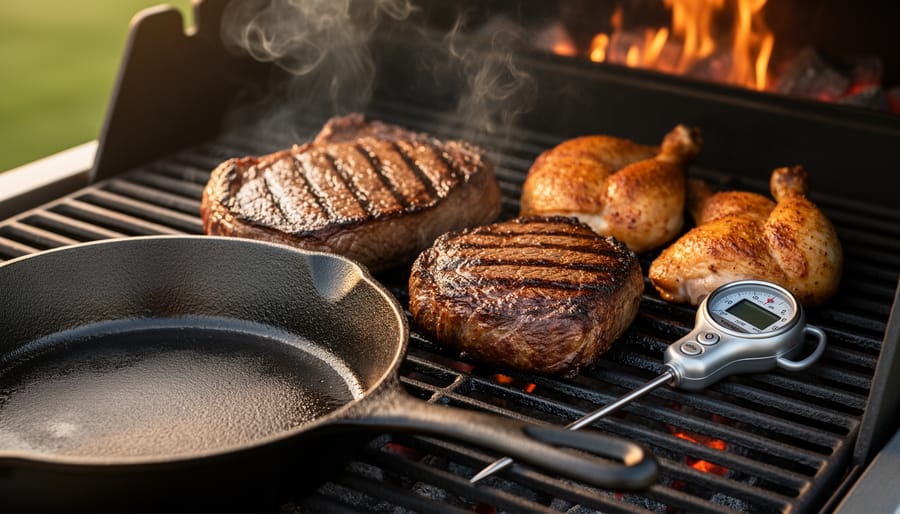
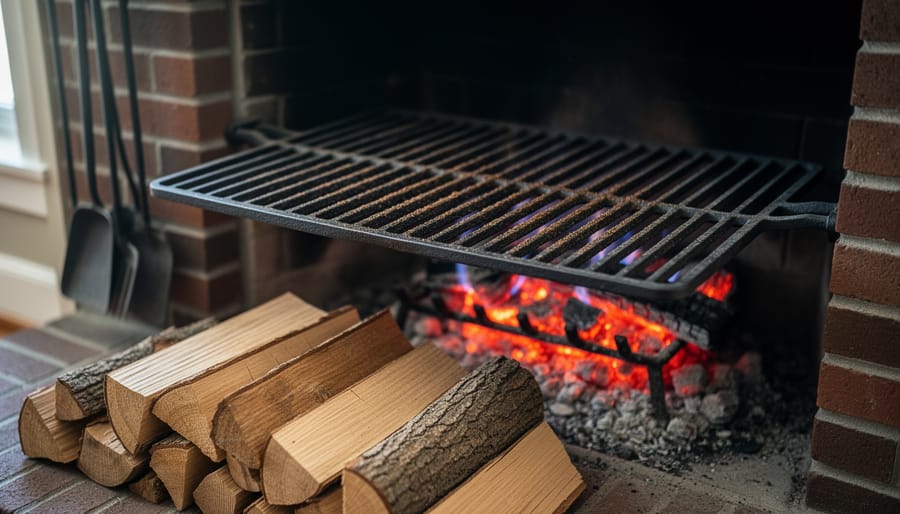


Choose seasoned hardwoods like oak, maple, or hickory for fireplace grilling—they burn cleanest, produce minimal smoke indoors, and impart rich flavor to your food while maintaining safe carbon monoxide levels. Split logs into 3-4 inch pieces and ensure they’ve dried for at least six months, as moisture content below 20% prevents dangerous creosote buildup and creates the consistent heat essential for even cooking.
Avoid softwoods like pine or cedar entirely, as their high resin content releases toxic fumes when burned indoors and coats your chimney with flammable deposits that compromise both safety and food quality. Similarly, never use charcoal briquettes or lighter fluid in indoor fireplaces—these produce lethal carbon monoxide concentrations in enclosed spaces and lack proper ventilation systems found in outdoor grills.
Test your fuel selection by burning a small amount first while monitoring smoke output and aroma. Quality grilling fuel should produce a thin, barely visible smoke with a pleasant wood scent rather than acrid or chemical odors. This approach transforms your fireplace into a versatile cooking space that combines rustic charm with modern convenience, letting you enjoy flame-kissed meals while keeping your home warm during cooler months.
Why Fuel Selection Matters More Than You Think
When you fire up your outdoor grill, a little extra smoke or ash isn’t usually cause for concern. But move that grilling experience indoors to your fireplace, and suddenly the stakes change dramatically. The fuel you choose becomes a critical decision that affects not just your cooking results, but your home’s air quality, your family’s health, and the long-term condition of your fireplace and chimney.
Indoor grilling creates a confined environment where everything you burn stays much closer to your living space. Unlike outdoor grilling where smoke dissipates into open air, your fireplace relies entirely on your chimney’s ventilation system to remove combustion byproducts. Choose the wrong fuel, and you’re introducing excessive smoke, toxic fumes, and dangerous creosote buildup into an ecosystem that wasn’t designed to handle it.
Different fuels produce vastly different levels of smoke and chemical emissions. Some release carbon monoxide at concerning levels, while others create heavy particulates that coat your chimney interior with flammable residue. This buildup doesn’t just reduce your fireplace’s efficiency; it creates genuine fire hazards that can prevent chimney fires from being your worst nightmare.
Your food quality suffers too. Certain fuels impart acrid, chemical flavors that no amount of seasoning can mask. Others produce inconsistent heat that leaves you with charred exteriors and raw centers. And let’s not forget the practical side: some fuels create so much residue that you’ll spend more time cleaning than enjoying your culinary creation.
The good news? Understanding these unique indoor challenges makes selecting the right fuel straightforward. When you know what to look for, you can create delicious grilled meals while maintaining a safe, clean, and eco-friendly home environment.

Hardwood: Your Best Friend for Indoor Fireplace Grilling
Top Hardwood Choices and What They Bring to Your Food
Choosing the right hardwood transforms your fireplace grilling from a simple cooking method into a flavorful culinary experience. Each wood variety brings distinct characteristics that can elevate your meals while creating that wonderful ambiance we all love from a crackling fire.
Oak stands as the workhorse of fireplace grilling, offering a medium smoky flavor that complements virtually any food without overpowering it. It burns long and steady—typically 2-3 hours for seasoned logs—making it ideal for extended grilling sessions. Red oak provides slightly more flavor than white oak, though both work beautifully.
Maple delivers a subtle, slightly sweet flavor profile that pairs wonderfully with poultry and pork. It burns clean and hot, though slightly faster than oak at around 1.5-2 hours per log. This makes it perfect for foods that cook relatively quickly.
Hickory brings bold, bacon-like smokiness to your food—a little goes a long way. It’s the traditional choice for ribs and brisket but can overwhelm delicate proteins. Burn time matches oak at 2-3 hours, providing excellent heat consistency.
Fruitwoods like apple and cherry offer something special for those seeking refined flavors. Apple wood produces mild, fruity sweetness ideal for chicken and fish, while cherry adds a subtle tartness with beautiful mahogany color to grilled meats. Both burn faster than oak—roughly 1-2 hours—but their gentle flavors make them worth the extra attention.
For sourcing, seek out local tree services or firewood suppliers offering kiln-dried or seasoned hardwoods. Store your wood in a dry, covered area with good airflow, keeping at least a three-day supply near your fireplace. Remember that proper wood selection works hand-in-hand with maintaining your grill grates for consistently delicious results and safe cooking experiences.
How to Tell If Your Wood Is Ready to Burn
Before you fire up your fireplace grill, ensuring your wood is properly seasoned is absolutely essential for both safety and cooking success. Seasoned wood has been dried to reduce its moisture content, ideally below 20 percent. This isn’t just about performance—it’s a critical safety measure when burning wood indoors.
Green or wet wood poses serious risks in your home. When burned, it produces excessive smoke, creates dangerous creosote buildup in your chimney, and releases more harmful particulates into your living space. Plus, wet wood doesn’t generate the consistent, clean-burning heat you need for effective grilling.
So how can you tell if your wood is ready? Try these simple tests at home. First, check the ends of the logs—seasoned wood typically shows cracks radiating from the center. The bark should be loose or falling off easily. Pick up a piece and feel its weight; dry wood is noticeably lighter than green wood.
Here’s a quick sound test: knock two pieces together. Seasoned wood produces a sharp, hollow crack, while wet wood makes a dull thud. You can also use an inexpensive moisture meter, available at most hardware stores, to get precise readings.
Remember, proper seasoning takes time—usually six months to a year depending on wood type and storage conditions. Store your wood off the ground in a covered but ventilated area, allowing air circulation to work its natural drying magic. Your patience will be rewarded with safer, more efficient fires that make your grilling experience truly enjoyable.
Charcoal: When It Works (and When It Doesn’t)
Lump Charcoal vs. Briquettes: The Indoor Safety Divide
When it comes to grilling in your fireplace, the type of charcoal you choose makes a significant difference in both safety and air quality. Natural lump charcoal stands out as the safer choice for indoor cooking, and understanding why can help protect your home and family.
Natural lump charcoal is essentially pure carbonized wood with minimal processing. Because it contains no chemical additives or binding agents, it produces cleaner smoke and significantly fewer harmful fumes when burned indoors. This makes it the preferred option for fireplace grilling, where proper ventilation is essential but confined spaces still demand extra caution.
Briquettes, on the other hand, often contain a cocktail of additives including coal dust, limestone, borax, and petroleum-based binders. When burned, these chemicals release toxic fumes such as carbon monoxide and volatile organic compounds. While briquettes work fine for outdoor grilling where smoke disperses freely, they pose serious risks in indoor environments where air circulation is limited, even with a functioning chimney.
If you’re committed to using your fireplace as both a source of warmth and a cooking surface, follow these critical safety protocols. Always verify your chimney is completely clear and drafting properly before lighting any fire. Use only natural lump charcoal labeled as additive-free, and never use lighter fluid or self-lighting charcoal varieties indoors. Install a carbon monoxide detector near your fireplace area, and keep it maintained with fresh batteries.
Start with smaller amounts of charcoal than you might use outdoors, allowing you to monitor smoke levels and adjust accordingly. Keep your fireplace screen in place while grilling to contain any sparks, and maintain a fire extinguisher within easy reach. Remember, safety should never be compromised for convenience when bringing the grilling experience into your home’s heart.

Ventilation Requirements You Can’t Ignore
When you’re grilling in your fireplace, proper ventilation becomes absolutely essential for your family’s safety. Charcoal produces significant amounts of carbon monoxide, an odorless, colorless gas that can be deadly in enclosed spaces. Even with a functioning chimney, the risks increase dramatically when you introduce grilling activities indoors.
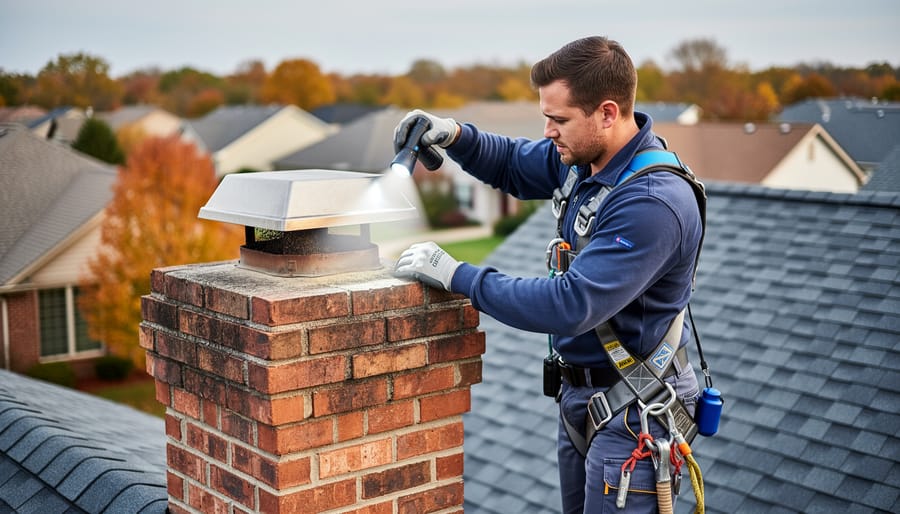
Before you start grilling, ensure your chimney damper is fully open and your flue is clear of obstructions. A professional chimney inspection can identify blockages like bird nests or creosote buildup that restrict airflow. Consider installing a carbon monoxide detector near your fireplace as an added safety measure—it’s a small investment that could save lives.
Beyond the chimney itself, create cross-ventilation by opening windows in the room, even slightly. This simple step helps fresh air circulate and prevents carbon monoxide from accumulating. If your fireplace lacks adequate draft or you notice smoke backing up into your room, stop immediately. These warning signs indicate insufficient ventilation that makes grilling unsafe.
Remember, indoor fireplace grilling safety depends heavily on proper airflow. Never compromise on ventilation—it’s the invisible lifeline that makes indoor grilling possible while keeping your home’s atmosphere healthy and enjoyable.
Fuels to Absolutely Avoid in Your Indoor Fireplace
When it comes to grilling in your fireplace, knowing what not to burn is just as crucial as selecting the right fuel. Certain materials pose serious health risks and can damage your chimney or create dangerous situations in your home.
Treated or painted wood should never make it into your fireplace. These materials release toxic chemicals when burned, including arsenic and other heavy metals that can contaminate your food and fill your living space with harmful fumes. Pressure-treated lumber, painted wood scraps, and stained furniture remnants all fall into this dangerous category. Even small amounts can create significant health hazards for you and your family.
Softwoods like pine, cedar, and fir might seem convenient, but they’re problematic for indoor use. These woods contain high levels of resin and sap that produce excessive creosote buildup in your chimney, dramatically increasing fire risk. They also pop and spark unpredictably, potentially sending embers into your room or onto your food. The smoke from softwoods carries an unpleasant, acrid flavor that will ruin whatever you’re cooking.
Coal has no place in a residential fireplace designed for wood burning. It burns at extremely high temperatures that can crack your firebox and damage the chimney liner. Coal also produces dangerous levels of carbon monoxide and sulfur dioxide, making it particularly hazardous for indoor environments without proper industrial ventilation systems.
Lighter fluid-soaked materials or charcoal briquettes pre-treated with accelerants create toxic fumes when burned indoors. These chemical additives release volatile organic compounds that compromise indoor air quality and taint your food with chemical flavors.
Manufactured fire logs, while convenient for ambiance, aren’t suitable for cooking. They contain binders, waxes, and compressed sawdust that produce inconsistent heat and chemical residues you definitely don’t want anywhere near your meal. Stick with natural, seasoned hardwoods for a safe and enjoyable indoor grilling experience.
Gas Fireplace Grilling: A Different Ball Game
If you’ve got a modern gas fireplace and you’re dreaming of grilling, we need to have a heart-to-heart. While the romantic notion of cooking over your cozy gas flames sounds appealing, the reality is considerably more complex than simply tossing a grill grate over your fireplace opening.
Gas fireplaces are engineered specifically for ambiance and supplemental heating, not food preparation. The glass fronts, ventless systems, and electronic controls that make them so convenient for heating create significant barriers for grilling. Most gas fireplaces operate as sealed units with precise air-to-gas ratios designed for clean burning, and introducing food, grease, and additional airflow needs disrupts this delicate balance.
The fundamental compatibility issues are substantial. Gas fireplaces typically produce around 30,000 BTUs, but that heat is designed to radiate forward through glass rather than concentrate upward for cooking. The burners sit low and spread wide, creating inconsistent heat distribution for grilling. Additionally, grease dripping onto ceramic logs or decorative media will create smoke, unpleasant odors, and potentially damage the components.
If you’re determined to pursue this path, you’re essentially looking at a complete retrofit rather than a simple modification. You’d need to remove the existing gas fireplace insert, ensure proper ventilation for cooking emissions, install appropriate grill-rated burners, and obtain necessary permits. Whether you have a propane or natural gas line matters for BTU output and conversion costs, but honestly, neither changes the core challenge.
The verdict? Installing a purpose-built outdoor kitchen or even a quality portable grill offers better performance and safety at likely comparable or lower cost than attempting to convert your gas fireplace into a cooking appliance. Sometimes the best modification is choosing the right tool for the job from the start.
Sustainable and Eco-Friendly Fuel Options
As we become more conscious of our environmental footprint, choosing sustainable fuel options for fireplace grilling has never been more important. The good news is that you can enjoy delicious grilled meals while making choices that benefit the planet.
Compressed wood pellets for grilling have emerged as one of the most eco-friendly options available. Made from recycled sawdust and wood waste that would otherwise end up in landfills, these pellets burn cleaner and more efficiently than traditional firewood. They produce minimal ash and smoke, making them ideal for indoor fireplace grilling while reducing air pollution.
When selecting traditional hardwood, look for locally sourced options from sustainably managed forests. Woods certified by organizations like the Forest Stewardship Council ensure that your fuel comes from responsibly harvested sources. Choosing local suppliers also reduces transportation emissions and supports your community’s economy.
To minimize your environmental impact, always use well-seasoned or kiln-dried wood with moisture content below 20 percent. Wet or green wood creates excessive smoke and releases more pollutants into your home and the atmosphere. Store your fuel properly in a dry location to maintain its quality and burning efficiency.
Consider the broader picture of eco-friendly heating by integrating your fireplace grilling into your home’s overall warmth strategy. When you use your fireplace for both cooking and heating, you maximize its efficiency and reduce reliance on other energy sources. This dual-purpose approach embodies the sustainable lifestyle many homeowners are seeking today.
Making Your Fuel Last: Storage and Preparation Tips
Your choice of fuel deserves just as much attention as how you store and prepare it. Even premium hardwood loses its grilling magic when improperly stored, while well-maintained fuel transforms your fireplace cooking into a seamless experience.
Start by keeping your wood dry and ready. Store firewood off the ground using pallets or a raised rack, allowing air to circulate underneath and prevent ground moisture from seeping in. If you’re storing wood outdoors, position your stack in a sunny, well-ventilated spot away from exterior walls. Cover only the top of your woodpile with a tarp or roof, leaving the sides open for airflow. Completely wrapping your stack creates a moisture trap that encourages mold and makes wood unusable for grilling.
Indoor storage offers superior protection, especially for wood you’ll use within the next few days. A fireside wood holder keeps fuel conveniently accessible while it acclimates to room temperature. This warming period matters more than you might think, as room-temperature wood ignites faster and produces steadier heat than cold logs brought in moments before cooking.
Before grilling, check each piece for dampness by knocking two logs together. A sharp, hollow sound indicates dry wood, while a dull thud suggests excess moisture. Split larger pieces to expose fresh surfaces that ignite more readily, and arrange smaller kindling nearby for quick flame building.
Consider seasoning your wood for at least six months before use. This natural drying process reduces moisture content to ideal levels, creating cleaner burns with less smoke and better flavor. Just as proper grill care maintains your cooking equipment, mindful fuel management ensures consistently excellent results while supporting eco-friendly heating practices.

Choosing the right fuel is what transforms fireplace grilling from a risky experiment into a rewarding culinary experience. By prioritizing seasoned hardwoods, avoiding dangerous materials like treated lumber or coal, and understanding proper ventilation requirements, you can safely enjoy the exceptional flavors that only live-fire cooking can deliver. The crackling warmth, the dancing flames, and that unmistakable smoky aroma create an ambiance that turns an ordinary meal into something memorable.
Remember that quality fuel isn’t just about taste—it’s about protecting your home, your health, and your loved ones. When you invest in properly dried wood and follow established safety guidelines, you’re setting yourself up for countless cozy evenings gathered around the hearth, enjoying food that tastes as good as it makes you feel.
Ready to embrace the fireplace lifestyle beyond grilling? Explore our collection of tips on maintaining your firebox, selecting eco-friendly heating solutions, and creating that perfect atmosphere all year round.