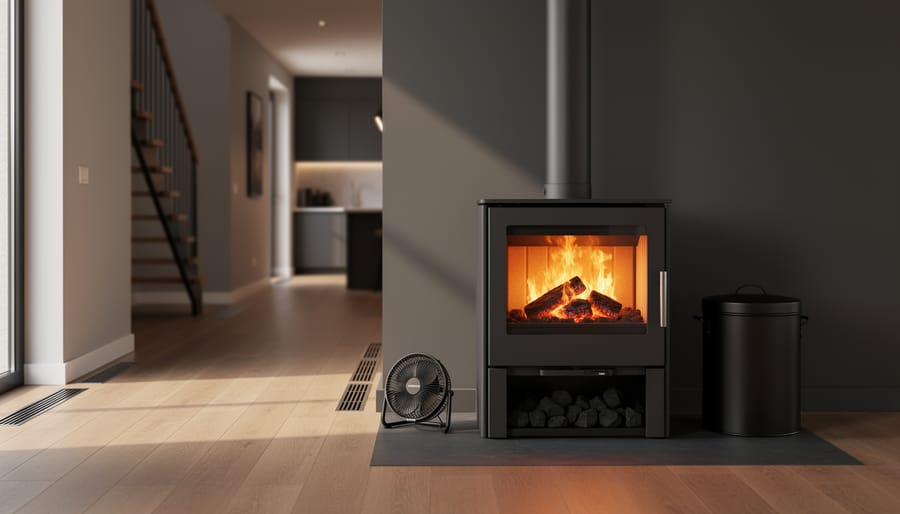
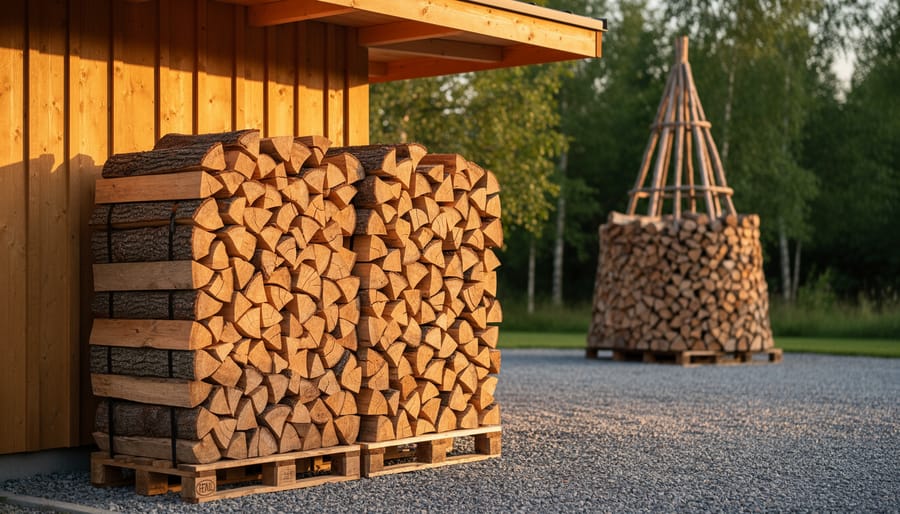


Stack firewood in alternating perpendicular rows, known as crisscross stacking, to maximize airflow and prevent moisture buildup that leads to mold and rot. This traditional method creates natural ventilation channels while providing excellent stability for stacks up to six feet tall.
Position your woodpile at least five feet from your home’s exterior walls to deter pest infestations and reduce fire hazards, while choosing a location with southern exposure and overhead protection from a roof overhang or strategically placed tarp. Elevation matters—place logs on pallets, treated lumber, or gravel beds to keep bottom rows off moisture-wicking ground.
Create functional outdoor room dividers or privacy screens using the German holzhaufen method, which arranges wood in circular towers that naturally shed water while adding architectural interest to your yard. These rounded stacks cure wood faster than linear rows and transform utilitarian storage into landscape features that enhance rather than detract from outdoor living spaces.
Match your stacking approach to your consumption patterns by keeping a decorative indoor rack near your fireplace filled with tonight’s fuel, while maintaining larger outdoor reserves organized by wood age and type. This two-tier system ensures you’re always burning properly seasoned logs at optimal moisture content below 20 percent, maximizing heat output while minimizing creosote buildup and smoke production. Well-organized firewood storage transforms a heating necessity into an opportunity for creative problem-solving that combines practicality with visual appeal, supporting your commitment to sustainable, eco-friendly home heating solutions.
Why Your Stacking Method Matters More Than You Think
You might think stacking firewood is simply about keeping it off the ground in a neat pile, but the method you choose dramatically impacts whether you’ll enjoy crackling, efficient fires or struggle with smoky, disappointing results all season long.
The way you stack your firewood determines how well it seasons and maintains its quality over time. Proper stacking creates essential airflow channels that allow moisture to escape from freshly cut wood. Without adequate air circulation, your wood can take twice as long to reach the ideal moisture content, or worse, never fully dry at all. This directly affects your proper seasoning timeline and ultimately the warmth you’ll experience in your home.
Beyond drying efficiency, your stacking method serves as your first line of defense against common problems that compromise wood quality. A well-designed stack sheds rain and snow while preventing ground moisture from wicking upward into your wood supply. It also discourages pests like termites and carpenter ants from making your firewood pile their new home, keeping unwanted visitors away from your house.
Think of proper stacking as an investment in your comfort and heating efficiency. Well-stacked, properly seasoned wood burns hotter, produces less creosote buildup in your chimney, and creates that cozy ambiance we all love without the frustration of smoke-filled rooms. Plus, when you incorporate thoughtful stacking techniques, you’re embracing an eco-friendly heating approach that maximizes every log’s potential while minimizing waste and environmental impact.
The Essentials: What You Need Before You Stack
Before you start building that beautiful firewood stack, let’s talk about setting yourself up for success. Think of this as laying the groundwork for keeping your wood dry, accessible, and ready to create those cozy fires you’re dreaming about.
First things first: location matters more than you might think. You’ll want to choose a spot that’s convenient to your home but not so close that you’re inviting pests to explore your living space. A distance of at least 20 feet from your house is ideal, though closer is acceptable if you’re using a covered structure. Look for an area that gets plenty of sunlight and good air circulation, as these natural elements are your best allies in seasoning and maintaining dry firewood.
Ground preparation is absolutely essential, and this is where many people stumble. Never stack firewood directly on soil or grass. The ground holds moisture like a sponge, and that moisture will wick right up into your bottom logs, creating the perfect environment for rot and mold. Instead, create a proper foundation using pallets, treated lumber, or landscape timbers. For an eco-friendly approach, consider using reclaimed pallets or recycled plastic lumber alternatives that resist moisture and won’t decompose over time.
If you’re serious about keeping your wood in prime condition, especially after splitting your firewood, add a moisture barrier beneath your foundation. A simple layer of gravel provides excellent drainage and prevents ground moisture from reaching your wood. Alternatively, landscape fabric topped with gravel offers both weed control and moisture protection.
Consider the prevailing wind direction in your yard too. Positioning your stack to catch the breeze helps air circulate through the wood, speeding up the drying process and preventing musty odors. These foundational steps might seem like extra work upfront, but they’ll save you from soggy, unusable firewood when winter arrives.
Traditional Stacking Methods That Actually Work
The Classic Row Stack
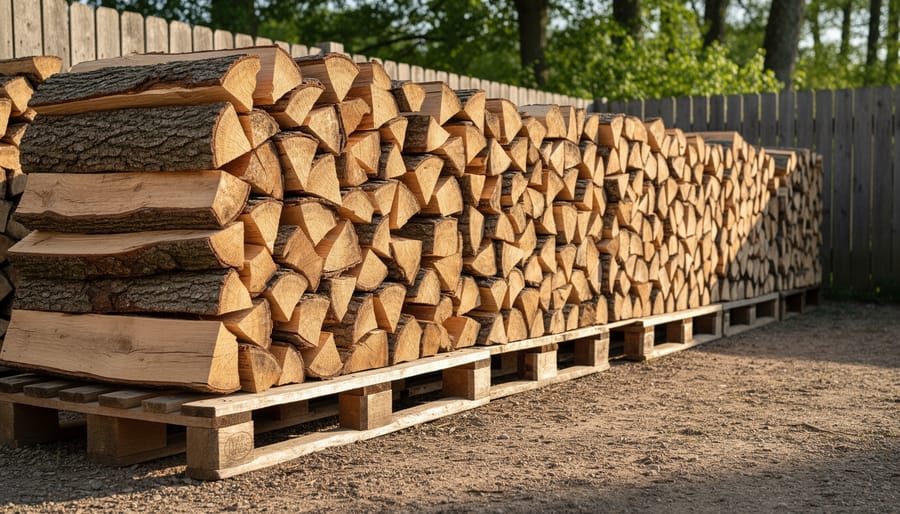
The classic row stack remains the gold standard for firewood storage, and for good reason. It’s straightforward, reliable, and gets your wood properly seasoned while staying accessible throughout the burning season.
Start by choosing level ground in a location that receives good sunlight and air circulation. Your foundation matters more than you might think. Lay down pallets, treated lumber, or even landscape timbers to keep your wood at least four inches off the ground. This prevents moisture absorption and keeps your firewood ready to provide cozy warmth when you need it most.
For end supports, you have several options. The simplest approach uses sturdy fence posts or metal stakes driven into the ground at each end. Alternatively, create stable bookends by stacking pieces in a crisscross pattern, though this requires practice to master. Commercial firewood racks with built-in end brackets offer another hassle-free solution.
When stacking, place pieces bark-side up to shed water naturally. Leave small gaps between pieces rather than packing them tightly together. This spacing is essential for airflow, which helps your wood dry properly and prevents mold growth. Aim for about an inch of breathing room between logs.
The ideal row dimensions balance stability with accessibility. Keep your stack four feet high or less to prevent toppling and make reaching the top manageable. Width can extend as long as your space allows, though 16 feet makes a practical limit for maintaining structural integrity. Depth should match your firewood length, typically 16 to 18 inches if you split wood properly for standard fireplaces.
The German Round Stack (Holz Hausen)
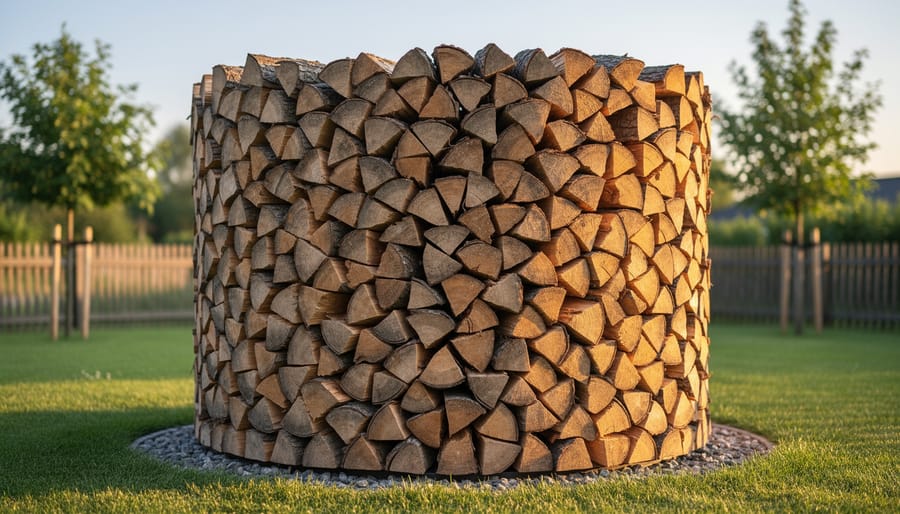
If you’re ready to create something truly special in your backyard, the Holz Hausen (pronounced “holts how-zen”) might just become your new favorite firewood stacking method. This traditional German technique transforms humble firewood into an architectural statement piece while delivering exceptional drying performance. Think of it as the perfect marriage of form and function for the homeowner who appreciates both beauty and practicality.
The Holz Hausen creates a circular, tower-like structure that stands about five to six feet tall and typically spans six to eight feet in diameter. What makes this method brilliant is how it naturally channels air through the center and between the logs, creating a chimney effect that speeds up the drying process significantly. You’ll often find your wood seasoning faster than with traditional row stacking.
To build your own Holz Hausen, start by selecting a level spot with good drainage. Mark out a circle and begin laying logs around the perimeter like wheel spokes, with each piece angling slightly inward and tilting upward toward the center. As you build upward in layers, maintain that gentle inward angle. The key is placing each log so it leans against its neighbors, creating that self-supporting structure that’s surprisingly stable once complete.
For the center, loosely stack smaller pieces or bark vertically to maintain that crucial airflow column. Cap your masterpiece with logs arranged in a overlapping circular pattern, similar to roof shingles, which sheds rain beautifully while allowing continued air circulation.
This eco-friendly stacking solution doesn’t require any support structure or cover, making it both sustainable and cost-effective. Plus, watching the snow melt faster off your Holz Hausen than the surrounding ground proves just how efficiently heat circulates through this ingenious design. It’s firewood storage that sparks conversation and keeps your home cozy all winter long.
The American Stack (Crisscross Method)
The American Stack, sometimes called the crisscross or log cabin method, is one of the most reliable techniques for storing firewood while keeping your heating solution both functional and eco-friendly. This time-tested approach involves alternating the direction of your logs with each layer—first running east-west, then north-south, creating a checkerboard pattern when viewed from above.
The beauty of this method lies in its natural engineering. By stacking perpendicular layers, you create countless air channels throughout the pile, allowing wind to flow freely and moisture to escape from all sides. This enhanced ventilation means your wood seasons faster and stays drier, giving you cleaner, more efficient burns that produce less smoke and creosote buildup.
Start by laying your foundation logs parallel to each other, leaving a few inches of space between them. Then place your next layer perpendicular across the first, and continue alternating. The interlocking structure becomes remarkably stable and self-supporting, eliminating the need for additional support structures in most cases. This makes it perfect for freestanding wood storage anywhere on your property. While it does require more ground space than vertical stacking methods, the superior airflow and stability make it worth considering, especially if you’re committed to maintaining a well-seasoned wood supply for your cozy fireside evenings.
The Shaker Stack
If you’re new to stacking firewood, the Shaker Stack is your ideal starting point. This traditional method, used by Shaker communities for generations, combines simplicity with remarkable stability—no fancy construction required, just smart design principles that anyone can master.
The beauty of the Shaker Stack lies in its crisscross end supports. Start by laying two pieces of wood parallel to each other, then place two more perpendicular on top, creating a square frame. Continue this alternating pattern until your end towers reach about four feet high. These sturdy bookends will hold your main stack securely without requiring posts or additional structures.
Once your end supports are built, simply stack your firewood between them in neat rows, bark side up to shed water. The result is a freestanding wood pile that maximizes airflow while keeping your fuel organized and accessible. This method works beautifully along fence lines or building walls, creating an attractive, functional addition to your outdoor space that’ll keep your home cozy all season long.
Creative Stacking Ideas for Small Spaces and Tight Budgets
Lean-To Stacks Against Existing Structures
Using an existing wall, fence, or shed as the back support for your firewood stack is a space-saving solution many homeowners love. This lean-to approach creates a naturally angled stack that sheds water beautifully while maximizing limited yard space. However, there are some important considerations to keep your home safe and your firewood in perfect condition.
First, leave at least 3-4 inches of breathing room between your wood stack and the structure. This gap allows crucial airflow to prevent moisture buildup and mold growth on both your firewood and the building itself. It also discourages insects, rodents, and other unwelcome visitors from creating cozy nests in your wood supply. Think of this space as your eco-friendly insurance policy against pest problems.
When stacking against painted or wooden structures, consider placing a moisture barrier like heavy plastic sheeting or metal flashing against the wall first. This extra layer protects your home’s exterior from trapped moisture and potential rot damage.
Avoid stacking directly against vinyl siding, as the weight and moisture can cause warping or discoloration. Brick, stone, and concrete walls make the most forgiving backdrops for lean-to stacks. Always angle your wood slightly outward to encourage water runoff, and never stack higher than feels stable. Your perfectly organized firewood should enhance your outdoor space, not create hazards.
Vertical Stacking Solutions
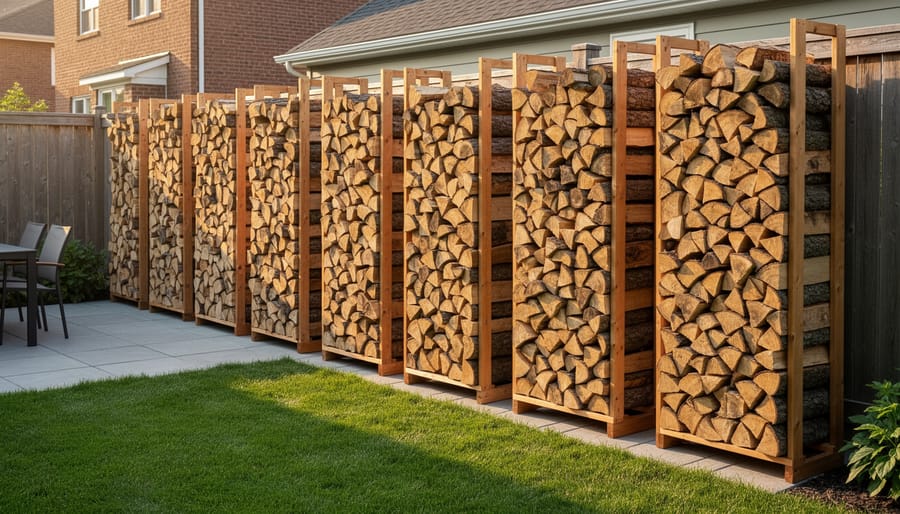
When you’re working with limited space, going vertical is a game-changer for firewood storage. Vertical stacking solutions maximize your square footage by building upward rather than outward, making them ideal for narrow side yards, small patios, or tight spaces between buildings.
Tower stacks are perhaps the simplest vertical approach. By creating a sturdy foundation with your first layer and gradually building upward in a circular or square pattern, you can store a surprising amount of wood in a compact footprint. The key is maintaining stability as you go higher—alternate the direction of each layer and keep the stack slightly narrower as you climb. Most homeowners find that tower stacks work beautifully up to about four feet high before requiring additional support.
Tiered arrangements offer another space-efficient option that adds visual interest to your yard. Think of cascading steps or pyramid shapes that not only store wood efficiently but create an almost sculptural element in your outdoor space. These configurations naturally shed water and promote excellent airflow since each tier allows air to circulate around the wood.
For ultimate space savings, consider leaning your firewood against a wall or fence at a slight angle, creating a vertical wedge. This method works wonderfully in those awkward narrow spaces where traditional horizontal rows just won’t fit. Just ensure you’re maintaining enough airflow between pieces to allow proper seasoning and drying throughout the stack.
Multi-Purpose Firewood Features
Why limit your firewood to simple storage when it can become a beautiful, functional part of your outdoor living space? Think beyond traditional stacks and consider how your firewood can serve double duty around your home.
A firewood bench combines seating with storage, creating a cozy spot on your patio or deck while keeping wood readily accessible. Stack firewood beneath a solid wooden or stone bench seat, ensuring proper airflow between logs. This arrangement works wonderfully near fire pits or outdoor fireplaces, making it both practical and inviting for guests.
For privacy without the expense of fencing, create a firewood screen by stacking logs between sturdy posts. This approach naturally divides outdoor spaces while maintaining an organic, rustic aesthetic that complements your landscape. The wood stack acts as a windbreak and sound buffer, enhancing your outdoor comfort.
Transform exterior walls with decorative firewood features that add texture and visual interest. Stack wood in geometric patterns or create artistic installations that showcase the natural beauty of cut logs. These installations become conversation pieces while serving your heating needs throughout the season, proving that practical storage can be genuinely beautiful.
Pro Tips for Maximum Airflow and Faster Seasoning
Ready to take your firewood stacking game to the next level? These expert techniques will help you achieve perfectly seasoned wood faster while maintaining that cozy aesthetic you’re after.
Start by paying attention to bark orientation when stacking. While it might seem like a small detail, positioning wood with the bark side up creates natural shingles that shed rain and snow. This simple adjustment prevents moisture from seeping into the wood grain, accelerating the seasoning process significantly. Think of it as giving each piece its own little roof.
Spacing is where many wood stackers miss an opportunity. Aim for at least one inch between pieces within your stack. Yes, this means your pile will take up slightly more space, but the trade-off is worthwhile. That breathing room allows air to circulate around each log, pulling moisture out from all sides rather than just the ends. Consider placing small branches or scrap wood as spacers between rows to create horizontal air channels throughout your stack.
When it comes to covering your woodpile, less is often more. A common mistake is wrapping stacks in tarps that extend all the way to the ground, essentially creating a moisture trap. Instead, cover only the top third of your stack, leaving the sides completely open. This protects against direct rainfall while allowing constant airflow. Metal roofing panels or even a simple slanted board works beautifully and looks more intentional than a tarp.
Seasonal timing matters too. Stack freshly cut wood in early spring when warm breezes and longer days create ideal drying conditions. Position your stack to catch prevailing summer winds and maximize sun exposure during peak drying months. By fall, you’ll have beautifully seasoned firewood ready to provide that eco-friendly warmth your home deserves. Remember, well-seasoned wood burns cleaner and more efficiently, reducing creosote buildup while creating that perfect crackling ambiance.
Common Stacking Mistakes That Ruin Your Firewood
Even seasoned wood burners can unknowingly sabotage their firewood supply with a few common mistakes. Let’s walk through these pitfalls so you can keep your wood in prime burning condition.
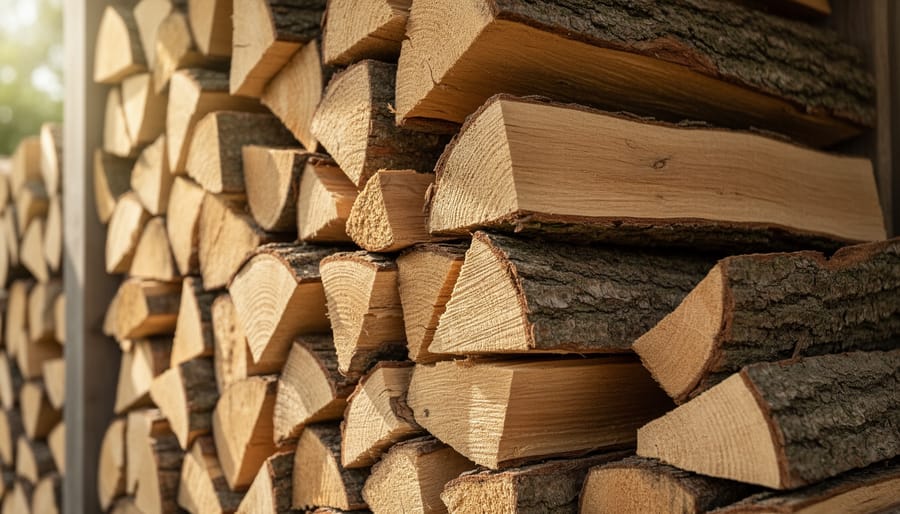
The most frequent error is stacking wood too tightly. While it might seem efficient, this prevents proper airflow between pieces, trapping moisture and creating the perfect environment for mold and rot. Your wood needs breathing room—aim for at least an inch between logs. Think of it like creating little air highways throughout your stack where breezes can flow freely, carrying away dampness and ensuring thorough seasoning.
Another culprit is improper ground contact. Placing wood directly on soil or grass invites moisture absorption, insect infestations, and accelerated decay. Always elevate your stack at least four to six inches using pallets, lumber, or concrete blocks. This simple barrier protects your investment and extends the life of your firewood considerably.
The covering conundrum trips up many homeowners. While you absolutely need to protect your wood from rain and snow, covering the entire stack with a tarp creates a humidity trap. Instead, cover only the top third of your pile, leaving the sides exposed for ventilation. This shields your wood from precipitation while allowing moisture to escape naturally.
Location choices matter more than you might think. Stacking against your home’s exterior seems convenient, but it provides a convenient bridge for termites and other pests while potentially trapping moisture against your foundation. Position stacks at least fifteen feet from structures, preferably in a sunny, wind-exposed area. Southern exposure works wonderfully, harnessing natural solar energy to speed up the drying process while maintaining that eco-friendly approach to heating your home.
The right firewood stacking method does more than keep your logs organized. It transforms what could feel like a tedious chore into a reliable system that delivers perfectly seasoned, ready-to-burn wood whenever you need it. Whether you choose the tried-and-true row stack, the visually striking round stack, or a creative hybrid approach that fits your unique space, the key is finding what works for your property and lifestyle.
Start with one method that resonates with your available space and skill level. Don’t hesitate to adapt and adjust as you learn what works best. Maybe you’ll discover that a combination approach serves you better, or perhaps you’ll develop your own variation that becomes your signature style. The beauty of firewood stacking lies in its flexibility and the satisfaction that comes from building something both functional and beautiful with your own hands.
As you stack each row or layer, remember that you’re investing in cozy evenings ahead. Those cold winter nights when you reach for perfectly dry wood that lights easily and burns cleanly will validate every moment spent creating your system. A well-stacked woodpile becomes a point of pride, a visual testament to self-sufficiency and thoughtful preparation.
This season, commit to elevating your firewood storage beyond simple piles. Your future self, enjoying a crackling fire on a frosty evening, will thank you for the effort. The warmth, ambiance, and peace of mind that comes from a well-organized wood supply makes every log you carefully stack worthwhile.