

Choose flooring materials that expand and contract minimally with seasonal temperature swings, particularly around your fireplace where heat exposure intensifies daily. Hardwood, engineered wood, luxury vinyl plank, and ceramic tile each respond differently to the dramatic temperature variations between summer humidity and winter heating cycles—understanding these behaviors prevents costly warping, cracking, or gaps that compromise both aesthetics and safety.
Prioritize materials rated for high-heat tolerance within the fireplace zone, maintaining at least 18 inches of non-combustible flooring like tile or stone directly in front of your firebox. This protection zone must withstand radiant heat reaching 200°F or higher during winter use while remaining stable during humid summer months when your fireplace sits dormant.
Consider how seasonal moisture affects your choice when selecting flooring options for rooms with active fireplaces. Winter heating dramatically reduces indoor humidity, causing certain woods to shrink and create unsightly gaps, while summer moisture causes expansion that can buckle improperly installed floors. Engineered products with dimensional stability ratings above 95% perform most reliably through these extremes.
Test your subfloor’s moisture levels quarterly, as seasonal ground moisture migration affects flooring performance regardless of surface material quality. Homes with fireplaces experience unique humidity patterns—dry winter air from heating combined with localized moisture from wood storage creates challenging conditions that demand proper vapor barriers and acclimation periods during installation. This proactive approach ensures your flooring investment maintains its beauty and structural integrity year-round while complementing the cozy ambiance your fireplace creates.
The Connection Between Fireplaces and Flooring You Can’t Ignore

Heat, Moisture, and Your Floor’s Worst Enemy
Your fireplace creates a beautiful ambiance, but it also generates significant environmental changes that put serious stress on flooring materials. Each time you light a fire, the temperature near your hearth can rise dramatically, causing flooring to expand. When the fire dies down, those same materials contract. This constant expansion and contraction cycle is like a workout your floor never signed up for—and inferior materials simply can’t keep pace.
Beyond temperature swings, your fireplace affects moisture levels in ways you might not realize. The heat draws moisture from nearby materials, creating dry zones that can cause some flooring to crack or warp. Conversely, when your fireplace isn’t in use during humid summer months, moisture can seep back in, creating the opposite problem. Traditional hardwood, for example, is particularly vulnerable to these moisture fluctuations, leading to gaps, cupping, or buckling over time.
The combination of heat exposure and moisture changes creates a challenging environment that demands flooring specifically engineered to handle these stresses. This is where understanding which materials can truly perform through all four seasons becomes essential for maintaining both the safety and beauty of your fireplace area year-round.
Safety Considerations for Hearth-Side Flooring
When selecting flooring near your fireplace, safety isn’t just important—it’s essential for protecting your home and family. Let’s explore the key considerations that will help you make smart, safe choices for your hearth area.
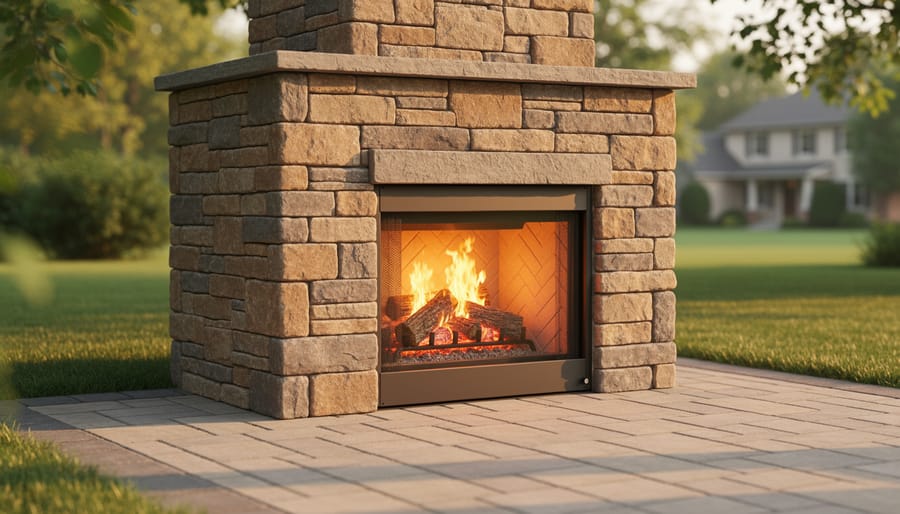
Fire safety codes typically require non-combustible or specially treated materials within 18 inches of the firebox opening. Natural stone, tile, and brick are excellent choices that naturally resist flames and heat. These materials won’t ignite from stray embers and can handle the intense warmth radiating from your fireplace during those cozy winter evenings.
Ember protection is another crucial factor. Even the most careful fireplace users occasionally experience sparks or small embers escaping onto the floor. Your hearth-side flooring should create a protective barrier that prevents these hot particles from causing damage or starting fires. This is especially important in high-heat fireplace areas where temperatures can fluctuate significantly.
Heat-resistant properties matter for both safety and longevity. Materials that can withstand sustained exposure to elevated temperatures without cracking, warping, or discoloring will serve you well for years to come. Always verify that your chosen flooring meets local building codes and manufacturer specifications for clearance distances. Your local building inspector can provide specific requirements for your area, ensuring your beautiful fireplace remains a safe, inviting focal point throughout all seasons.
What Makes Flooring ‘Four-Season’ Ready
Thermal Stability: The Make-or-Break Factor
When you’re curling up by a crackling fire on a winter evening, your flooring endures more than you might realize. The area surrounding your fireplace can experience temperature swings of 30 degrees or more compared to the rest of your home, creating what experts call thermal stress zones. This dramatic fluctuation is where dimensional stability becomes crucial.
Imagine your flooring as a living material that expands in heat and contracts in cold. Certain hardwoods, for instance, can gap noticeably during heating season, creating unsightly spaces between planks. Conversely, materials with poor thermal stability may buckle or warp when exposed to consistent heat from wood-burning or gas fireplaces.
The best 4 season flooring options maintain their integrity regardless of these temperature variations. Engineered hardwood, luxury vinyl, and tile excel here because they’re specifically designed to handle thermal expansion and contraction. These materials won’t surprise you with warping floors come February or gaps appearing in October.
For fireplace homes, this stability isn’t just about aesthetics. It’s about creating that cozy, reliable space where your family gathers without worrying about floor damage. When selecting flooring near your fireplace, consider materials with proven performance records in high-temperature environments. Your future self, enjoying countless fireside moments, will thank you for choosing wisely.
Year-Round Comfort Underfoot
There’s nothing quite like gathering around a crackling fire on a cold winter evening, but have you ever noticed how some floors feel ice-cold beneath your feet while others maintain a welcoming warmth? This seasonal temperature shift matters tremendously in fireplace gathering areas, where family and guests naturally gravitate toward sitting directly on or near the floor during cozy evenings.
Natural materials like hardwood and cork naturally feel warmer to the touch because they don’t conduct heat away from your body as quickly as tile or stone. This means bare feet remain comfortable even during winter months. However, ceramic tile and stone, while initially feeling cool, excel at absorbing and gradually releasing heat from your fireplace, creating a radiant warmth that spreads throughout the room. This thermal mass effect makes them surprisingly comfortable for extended lounging sessions.
Consider how your family actually uses the space around your fireplace. If children build block towers or adults stretch out for floor picnics near the hearth, prioritize materials that feel comfortable year-round without requiring constant supplementation from area rugs or slippers.
The Best 4-Season Flooring Options for Fireplace Homes
Engineered Hardwood: The Balanced Performer
If you’re drawn to the timeless beauty of hardwood but need flooring that won’t buckle when the seasons change, engineered hardwood might be your perfect match. This clever innovation consists of a real hardwood veneer layered over high-quality plywood, creating a floor that looks authentically traditional while handling temperature and humidity fluctuations far better than solid hardwood.
The secret lies in its construction. That multi-layer design allows engineered hardwood to expand and contract minimally as your home’s environment shifts throughout the year. When you’re firing up your fireplace on chilly winter evenings or opening windows during humid summer months, this flooring stays stable and beautiful.
From a lifestyle perspective, engineered hardwood complements traditional fireplace settings beautifully. The warm wood tones create that cozy, inviting atmosphere you’re seeking while reflecting the natural glow of firelight. Many homeowners appreciate how it bridges the gap between authenticity and practicality.
Installation is straightforward, with options for floating, gluing, or nailing down depending on your subfloor. Just remember to maintain proper clearances around your fireplace and use protective rugs in high-heat zones.
Maintenance is simple: regular sweeping and occasional damp mopping keep it looking pristine. The real wood surface can even be refinished once or twice over its lifetime, making it a sustainable choice that reduces waste compared to replacing synthetic flooring every decade.
Luxury Vinyl Plank: Modern Resilience
If you’re looking for flooring that combines beauty with serious performance, luxury vinyl plank deserves your attention. This modern marvel has transformed how we think about resilient flooring, especially in homes where fireplaces create focal points for family gatherings.
What makes LVP exceptional for four-season performance is its remarkable stability. Unlike natural materials that expand and contract with temperature changes, luxury vinyl plank maintains its dimensional integrity whether your fireplace is blazing in winter or your home is humid in summer. This means no gaps, no buckling, and no worries about seasonal transitions.
The waterproof properties of LVP are game-changing for hearth areas. Snowy boots, spilled drinks during cozy fireside gatherings, and even pet accidents won’t damage your floors. Simply wipe them clean and carry on with your evening.
Today’s luxury vinyl planks offer incredibly realistic wood visuals that beautifully complement your fireplace’s aesthetic. Whether you prefer the rustic charm of reclaimed oak or the sleek sophistication of gray-washed hardwood, you’ll find options that enhance your home’s warmth without sacrificing practicality.
For high-traffic hearth areas where family and friends naturally congregate, LVP’s scratch-resistant wear layer protects against furniture movement and foot traffic. Regular sweeping and occasional damp mopping keep these floors looking fresh year-round, making them ideal for busy households seeking both style and convenience in their fireplace spaces.


Tile and Stone: The Classic Fireplace Companion
When it comes to flooring around your fireplace, tile and stone have earned their reputation as the ultimate companions. These materials bring together three essential qualities: stunning looks, practical safety, and reliable year-round performance.
Ceramic, porcelain, and natural stone tiles naturally resist heat, making them perfect for hearth areas where temperatures fluctuate. Unlike wood or carpet, they won’t scorch, warp, or emit harmful fumes when exposed to fireplace heat. This thermal stability means your floor maintains its beauty through countless cozy evenings by the fire.
Safety is where these materials truly shine. Non-combustible and easy to clean, they create a protective barrier that catches stray sparks and embers before any damage occurs. Many homeowners enhance this protection with protective floor coatings for additional durability in high-traffic areas.
The design possibilities are virtually endless. Natural stone brings earthy elegance and connects your fireplace to nature-inspired living. Porcelain offers modern sophistication with low maintenance requirements. Ceramic provides budget-friendly versatility in countless colors and patterns. All three options handle seasonal humidity changes beautifully, expanding and contracting minimally compared to other flooring types.
Best of all, tile and stone’s thermal mass actually helps your eco-friendly heating efforts by absorbing warmth during fires and slowly releasing it afterward, extending your fireplace’s comfort long after the flames fade.
Cork and Bamboo: Eco-Friendly Options That Actually Work
If you’re pairing an eco-friendly fireplace like a modern bioethanol model with your home’s design, why not extend that sustainability to your flooring? Cork and bamboo offer genuinely green credentials while standing up beautifully to seasonal challenges.
Cork flooring brings natural warmth underfoot, making it a cozy complement to your fireplace lifestyle. Its cellular structure acts like millions of tiny air pockets, providing natural insulation that helps keep rooms comfortable during winter while remaining dimensionally stable through humidity swings. Cork naturally resists moisture absorption, so it won’t buckle when autumn dampness arrives or crack during dry winter heating months. As a bonus, it’s naturally antimicrobial and hypoallergenic, perfect for creating healthy living spaces.
Bamboo offers impressive hardness ratings that rival traditional hardwoods, sometimes even exceeding oak’s durability. Strand-woven bamboo varieties perform exceptionally well near fireplace areas, resisting denting and scratching while handling temperature fluctuations with grace. Because bamboo reaches maturity in just three to five years compared to hardwood’s decades-long growth cycle, it’s genuinely renewable.
Both materials expand and contract minimally with seasonal changes, maintaining their appearance and structural integrity throughout the year. They complement the clean, contemporary aesthetic of modern heating solutions while delivering the warm, inviting atmosphere fireplace enthusiasts seek. When properly installed with appropriate expansion gaps, these eco-friendly options perform reliably season after season, proving that sustainability and functionality absolutely go hand in hand.
Flooring to Avoid in Fireplace-Centered Homes
Why Solid Hardwood Can Be Problematic
If you’ve fallen in love with the timeless beauty of solid hardwood floors, you might be disappointed to learn they don’t always play nicely with seasonal heating patterns, especially in homes with fireplaces. Here’s the challenge: solid hardwood is like a living, breathing material that responds dramatically to humidity changes.
During winter months when you’re enjoying those cozy fires, your home’s humidity drops significantly. This causes solid hardwood planks to contract and shrink, creating unsightly gaps between boards. Come summer, when humidity rises, those same planks absorb moisture and expand, sometimes even cupping or warping. This constant movement becomes even more pronounced in the areas surrounding your fireplace, where temperature fluctuations are most extreme.
The result? Floors that look different from season to season, require constant attention, and may develop permanent damage over time. For homes where fireplaces are central to your lifestyle and comfort, this seasonal instability simply isn’t practical or sustainable.
Carpet Concerns Around Heat Sources
While carpet creates an undeniably cozy atmosphere, it poses significant challenges around fireplaces and wood stoves. The primary concern is safety—carpet fibers are highly flammable, and even with proper hearth extensions, flying sparks can quickly ignite synthetic materials. Beyond fire risk, carpet becomes a maintenance nightmare in these zones. Ash particles settle deep into fibers, making thorough cleaning nearly impossible. Soot stains become permanent fixtures, and the constant foot traffic between your fireplace and seating areas creates visible wear paths that detract from your home’s warmth and appeal.
If you’re committed to carpet elsewhere in your home, consider creating a fireproof barrier around your heat source using tile, stone, or hardwood. This practical approach lets you enjoy the comfort of carpet throughout most rooms while maintaining safety and cleanliness where it matters most. Remember, creating a warm, inviting space means balancing comfort with smart design choices that protect your investment and your family.
Installation Strategies for Maximum Year-Round Performance
Creating Proper Heat Transition Zones
When your flooring meets your fireplace, proper planning ensures both safety and longevity. Think of this area as a transition zone where your beautiful floors need room to breathe and adjust to temperature changes throughout the seasons.
Start by leaving appropriate expansion gaps around your fireplace hearth. Most flooring materials expand and contract with temperature fluctuations, and this natural movement becomes more pronounced near heat sources. Standard practice calls for a quarter-inch to half-inch gap between your flooring and the fireplace surround, which you can conceal with trim or quarter-round molding that complements your home’s aesthetic.
Underlayment selection matters tremendously in these zones. Choose heat-resistant underlayment materials specifically rated for use near fireplaces, avoiding standard foam products that may degrade under thermal stress. Cork and rubber underlayments with high-temperature ratings work beautifully while providing sound dampening benefits throughout your home.
Building codes typically require non-combustible materials within 18 inches of the firebox opening. This is where your hearth extension comes into play, serving both as a safety feature and a design opportunity. Beyond this protected zone, your four-season flooring can extend freely, provided you’ve incorporated those essential expansion gaps.
Remember, creating these proper transitions isn’t just about meeting code requirements. It’s about protecting your investment while maintaining the cozy, inviting atmosphere that makes your fireplace the heart of your home through every season.
Acclimation: The Step Most Homeowners Skip
Here’s a scenario that happens far too often: eager homeowners bring home beautiful new flooring, install it immediately, and within weeks notice gaps, warping, or buckling. The culprit? Skipping acclimation.
Acclimation is the process of letting your flooring materials adjust to your home’s specific temperature and humidity levels before installation. Think of it as giving your flooring time to “breathe” in its new environment. Most manufacturers recommend 48-72 hours minimum, but in rooms with fireplaces, this step becomes even more critical.
Your fireplace creates unique climate variations that standard rooms don’t experience. When you light a fire, humidity drops and temperatures rise. When the fire dies down, conditions shift again. These fluctuations can cause flooring to expand and contract dramatically if it hasn’t properly adjusted beforehand.
Store your flooring materials in the actual room where they’ll be installed, maintaining temperatures between 60-80 degrees Fahrenheit. If possible, run your fireplace occasionally during acclimation to expose the materials to realistic conditions. This simple patience can mean the difference between flooring that lasts decades and an expensive do-over within months. Your cozy fireside moments deserve a foundation that’s truly prepared for every season.
Maintenance Tips to Protect Your Investment
Your beautiful four-season flooring is a significant investment that deserves proper care throughout the year, especially when you’re enjoying cozy fires. With the right maintenance routine, you’ll keep your floors looking stunning and performing reliably for decades to come.
Let’s start with humidity management, which is crucial for homeowners with fireplaces. Running your fireplace can dry out indoor air, causing hardwood and engineered floors to contract and gap. Consider using a humidifier during heating season to maintain humidity levels between 35-55%. In summer, when humidity soars, a dehumidifier prevents expansion and cupping. This balance protects your flooring investment while keeping your living space comfortable.
Ash and soot management requires special attention near your fireplace. Always use quality fireplace mats or hearth rugs to catch stray embers and ash particles. When cleaning, avoid spreading ash across your floors by using a specialized ash vacuum or damp cloth for initial cleanup. For tile and stone hearth areas, use pH-neutral cleaners that won’t damage sealants. With hardwood or laminate in surrounding areas, sweep or vacuum before damp mopping to prevent ash from scratching the finish.
Protective measures make all the difference during different seasons. In winter, place absorbent mats near entrances to catch snow, salt, and moisture that can damage floors. Trim pet nails regularly, as they spend more time indoors during colder months. Apply felt pads under furniture legs, especially if you rearrange seating around the fireplace seasonally. For floors in direct sunlight during summer, use window treatments to prevent UV fading and temperature-related expansion.
Regular seasonal deep cleaning maintains your floor’s protective finish, ensuring it continues handling the unique demands of fireplace living beautifully.
Choosing the right four-season flooring for your fireplace space is about more than just picking something that looks good. It’s an investment in creating a warm home environment that welcomes you through every season while supporting the safe, efficient operation of your fireplace. The perfect flooring strikes a balance between beauty and performance, withstanding temperature swings, humidity changes, and the unique demands of heat exposure.
As you make your flooring decision, remember that the materials surrounding your fireplace play a vital role in your home’s overall comfort and energy efficiency. Whether you choose the timeless durability of tile, the natural warmth of engineered hardwood, or the versatile resilience of luxury vinyl, prioritize options that enhance both safety and sustainability. Your flooring should complement your fireplace as a lifestyle element, working together to create that inviting atmosphere you envision.
Take time to weigh aesthetics alongside practical considerations like maintenance requirements, thermal properties, and long-term performance. The right choice will reward you with years of comfort, peace of mind, and the cozy ambiance that makes a house truly feel like home.