

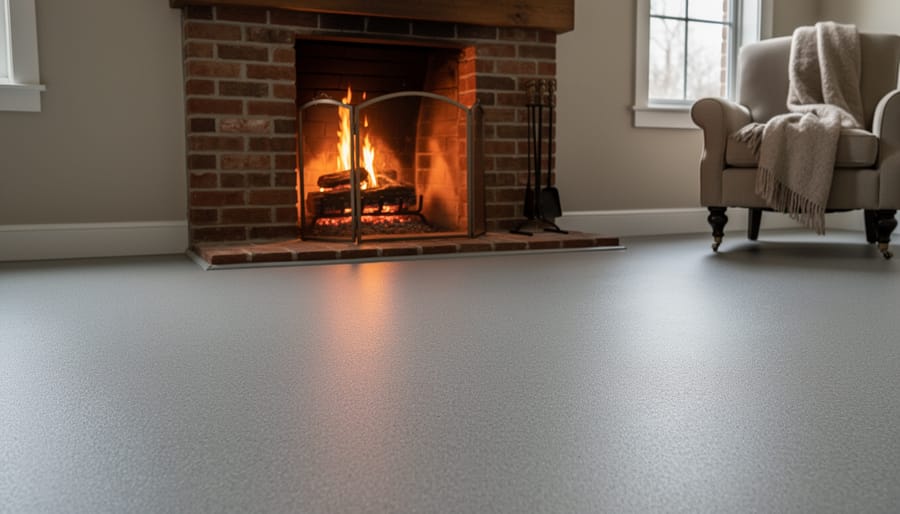
Rubber floor coatings transform cold, hard surfaces into warm, resilient foundations that complement your home’s comfort zones—especially around fireplaces where standing for extended periods becomes part of the daily ritual of tending flames and enjoying radiant heat.
Consider rubber’s unique thermal properties before making your decision. Unlike cold concrete or tile, rubber maintains a comfortable surface temperature, cushioning your feet while you stack logs or adjust dampers. This natural insulation creates a barrier between your foundation and living space, contributing to your home’s overall energy efficiency alongside your heating system.
Evaluate three coating application methods: poured rubber for seamless installation, interlocking tiles for DIY-friendly projects, or rolled rubber sheets for quick coverage. Each offers distinct advantages depending on your space’s size, existing floor condition, and moisture levels—critical factors in basement fireplace installations or hearth extensions.
Measure rubber’s heat resistance against your specific needs. Most rubber coatings withstand temperatures up to 180-200 degrees Fahrenheit, making them suitable for areas adjacent to fireplace zones but not directly in front of fireboxes where sparks might land. Pair rubber flooring with proper hearth extensions to create a safe, comfortable gathering space that balances protection with the welcoming atmosphere every fireplace room deserves.
What Makes Rubber Floor Coatings Different from Other Options
Rubber floor coatings bring something special to your home that other flooring solutions simply can’t match. Unlike traditional epoxy and polyurethane alternatives, rubber coatings are primarily made from recycled rubber materials or synthetic rubber polymers, creating a surface that’s naturally flexible and resilient.
The composition itself sets rubber coatings apart. These coatings contain rubber granules or particles suspended in a binding agent, which creates a textured, cushioned surface when applied. This gives your floor a comfortable, slightly soft feel underfoot that’s particularly welcoming in spaces where you spend time standing or relaxing near your fireplace.
Application methods for rubber coatings are refreshingly straightforward for homeowners who enjoy DIY projects. Most rubber floor coatings come as either roll-out tiles, interlocking pieces, or liquid applications that you can pour and spread. The liquid versions cure at room temperature, eliminating the need for special equipment or professional installation in many cases. This makes them more accessible than rigid coating systems that require precise mixing ratios and careful temperature control.
What truly distinguishes rubber coatings is their remarkable combination of warmth retention, sound absorption, and slip resistance. While hard coatings can feel cold and echo-prone, rubber naturally dampens sound and provides insulation, making your hearth area feel cozier. The material’s inherent flexibility means it expands and contracts with temperature changes without cracking, an essential quality for floors near heat sources.
Rubber coatings also excel in moisture resistance and impact absorption, protecting your subfloor while creating a forgiving surface that’s gentle on dropped items and easier on joints during those long evenings spent tending your fire.
The Heat Resistance Advantage for Fireplace Rooms
When you’re creating a cozy space around your fireplace or wood stove, you need flooring that can handle the heat without compromising safety or comfort. Rubber floor coatings offer impressive thermal properties that make them particularly well-suited for these high-temperature environments.
Unlike vinyl or certain plastics that can warp, melt, or release harmful fumes when exposed to heat, quality rubber coatings maintain their integrity in warm conditions. The material’s natural composition allows it to resist heat damage while providing a stable, non-slip surface that’s especially valuable in areas where you’re regularly tending to fires or carrying wood.
The thermal resistance of rubber also creates a practical advantage for your heating efficiency. Rather than conducting heat away from your living space, rubber acts as an insulator, helping to keep warmth where you want it. This means your fireplace works more effectively at heating the room, potentially reducing your overall energy consumption and supporting an eco-friendly approach to home heating.
Beyond pure heat resistance, rubber coatings offer excellent protection against the inevitable sparks and ember drops that occur even with the most careful fire tending. The material won’t ignite easily and provides a cushioning barrier between hot materials and your subfloor. This combination of heat tolerance and protective qualities makes rubber an intelligent choice for anyone serious about creating a safe, comfortable fireplace environment that will stand the test of time and countless cozy evenings by the fire.
Comfort and Safety Benefits You’ll Actually Notice
Slip-Resistance Near Hearths
One of rubber’s standout qualities around fireplace areas is its exceptional slip-resistance, especially when dealing with the realities of hearth maintenance. If you’ve ever swept up ash or noticed how soot can create surprisingly slippery conditions, you’ll appreciate this feature. Rubber coatings naturally grip your feet, even when fine particles settle on the surface or when you’re carrying armloads of firewood that might drop small debris.
The textured surface of rubber flooring maintains traction better than many alternatives when ash drifts beyond the hearth or when you’re managing fireplace tools with slightly dusty hands. This becomes particularly valuable during wood-loading sessions or cleanup after cozy evenings by the fire. Unlike smooth surfaces that become skating rinks with the slightest film of ash, rubber’s inherent grip keeps your footing secure. For households with children or elderly family members who enjoy gathering near the warmth, this safety feature provides welcome peace of mind without sacrificing the inviting atmosphere you’ve worked to create.
Standing Comfort for Extended Fireside Time
If you’ve ever spent a long winter evening by the fire, you know that standing comfort matters more than you might think. Whether you’re tending the flames, arranging logs, or simply soaking in the warmth while chatting with family, those hours add up. This is where rubber floor coatings truly shine in your fireplace area.
The natural cushioning effect of rubber creates a gentler surface for your feet and legs, reducing fatigue during extended standing periods. Unlike hard tile or concrete that can leave you shifting your weight uncomfortably, rubber absorbs impact and provides subtle support. Think of it as the difference between standing on solid pavement versus a yoga mat—that extra give makes a meaningful difference over time.
For homeowners who view their fireplace as a gathering spot rather than just a heat source, this comfort factor transforms the experience. You can relax into those cozy evenings without the nagging discomfort that sends you searching for a chair. The warmth of the fire combined with the forgiving surface beneath your feet creates an inviting space where you’ll naturally want to linger longer, making your fireplace the true heart of your home.
Durability That Handles Real-Life Fireplace Wear
Let’s be honest about what your fireplace area goes through. Between hauling armfuls of logs that scrape across the floor, dropping metal pokers and tools, scooting that heavy fireside chair a little closer on chilly evenings, and the inevitable ash dust that settles everywhere, this isn’t exactly a low-traffic zone. The good news? Rubber floor coatings are built to handle this kind of real-world wear remarkably well.
The inherent flexibility of rubber works in your favor here. When you accidentally drop a log or knock over the fireplace tool set, rubber coatings absorb the impact rather than chipping or cracking like rigid epoxy might. This resilience extends to furniture movement too. Those cast iron log holders or heavy seating arrangements you’re constantly adjusting won’t leave the gouges and scratches that plague harder surfaces.
Where rubber truly shines is with the repetitive wear patterns unique to fireplace zones. That spot where you always stand to tend the fire, the path you walk carrying wood from your storage area, the area where you set down heavy buckets of ash—rubber maintains its integrity season after season. The material’s natural grip also means tools are less likely to slide and cause accidental damage in the first place.
That said, be mindful of sharp dragging motions with particularly rough-edged logs or metal implements. While rubber handles everyday impacts beautifully, deliberately dragging sharp objects can eventually wear grooves into any coating. A simple area rug or protective mat in your highest-activity zones extends the coating’s life even further.
Where Rubber Coatings Work Best (And Where They Don’t)
Rubber coatings truly shine in spaces where you’ve invested in creating warmth and ambiance around a fireplace. They’re particularly brilliant for basements with wood stoves, where you need protection from stray sparks and the occasional dropped log. The cushioned surface offers comfort during those long winter evenings spent stoking the fire, and if you accidentally drop your poker or firewood, you won’t damage the floor beneath.
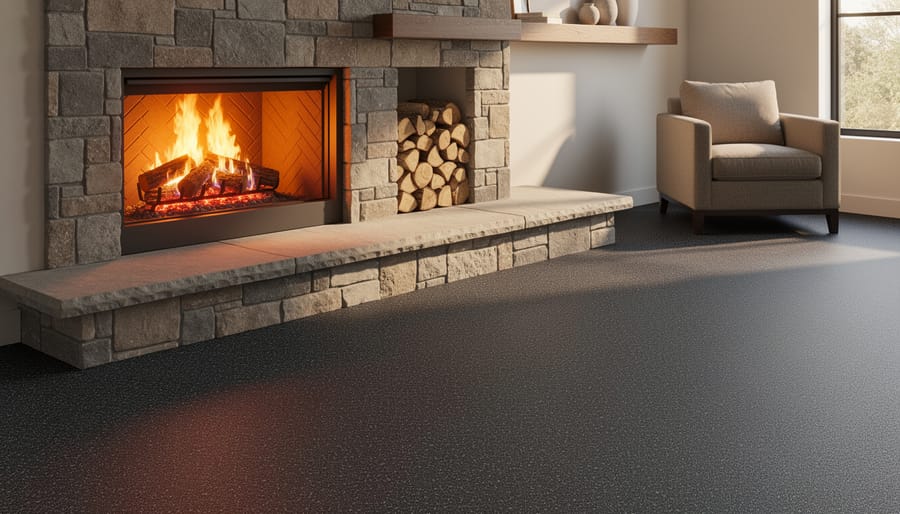
Hearth rooms are another ideal application. The heat-resistant properties of quality rubber coatings mean they can handle the radiant warmth from your fireplace without degrading or releasing unpleasant odors. Plus, that slight give underfoot makes these cozy gathering spaces even more comfortable for family game nights by the fire.
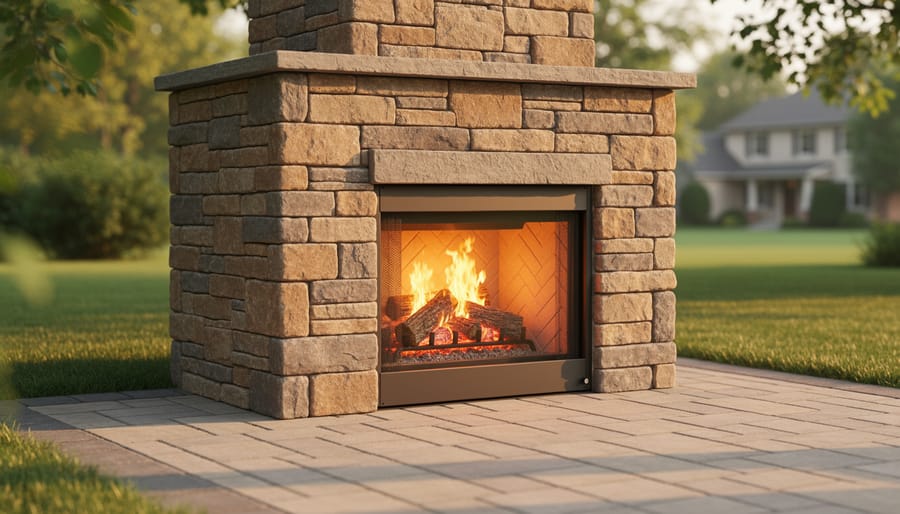
Outdoor fireplace patios benefit enormously from rubber coatings too. They handle temperature swings beautifully, resist moisture from rain or snow, and provide excellent traction when wet, which matters when you’re carrying hot cocoa or firewood outside.
However, rubber coatings aren’t always the perfect solution. In formal living rooms with decorative gas fireplaces, you might prefer the elegance of epoxy or polyurethane finishes that offer a glossier, more refined appearance. High-traffic commercial spaces often need harder-wearing industrial coatings. And if you’re dealing with significant oil or chemical exposure, specialized epoxy systems typically perform better.
When selecting flooring for your home, consider your space’s primary function. Rubber excels where comfort, safety, and moderate heat resistance matter most. For purely decorative areas or spaces requiring chemical resistance, exploring other coating options makes sense. The key is matching the coating to how you actually live and use your fireplace spaces.
Application Basics for Homeowners
Applying rubber floor coatings is a manageable project for many homeowners, though success depends heavily on proper preparation and patience. Let’s walk through what you need to know before diving in.
The preparation phase is crucial and shouldn’t be rushed. Start by thoroughly cleaning your concrete floor, removing all dirt, grease, and existing sealers. Any contamination will prevent proper adhesion. For areas around fireplaces or wood stoves, pay extra attention to ash residue and soot that may have settled over time. You’ll need to repair any cracks or significant imperfections, as rubber coatings highlight rather than hide floor defects.
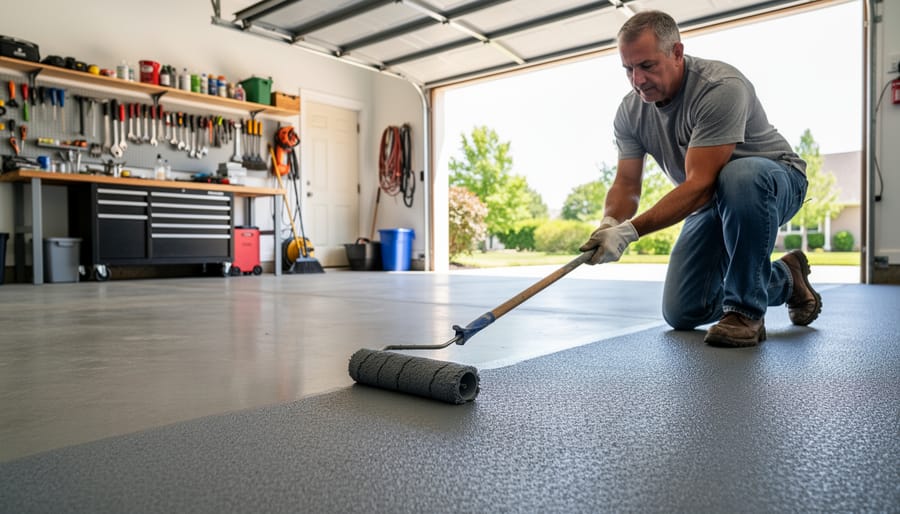
Once your surface is clean and dry, most rubber coating systems require a primer coat. This creates the bond between concrete and the rubber layer. Mix your coating material according to manufacturer instructions, and apply it using a roller with a long handle for efficiency. Work in sections, maintaining a wet edge to avoid visible seams. Most products go on in two coats, with the first coat taking 4-6 hours to become tack-free.
Curing time is where patience truly matters. While you might be able to walk on the surface within 24 hours, full cure often takes 3-7 days depending on temperature and humidity. For high-traffic areas or spaces near heating sources, waiting the full recommended time ensures maximum durability and heat resistance.
Is this a DIY project? For small to medium spaces like workshop floors or mudrooms near your fireplace area, absolutely. The materials are forgiving, and application techniques are straightforward. However, larger areas or spaces requiring intricate patterns benefit from professional installation. Professionals have specialized equipment for even application and can complete the job faster, minimizing disruption to your home’s comfort and daily rhythm. Consider your timeline, physical capability, and comfort level with home improvement projects when making this decision.
Maintaining Your Rubber Floor Coating
Keeping your rubber floor coating looking beautiful around your fireplace is refreshingly simple. Start with regular sweeping or vacuuming to remove ash and debris before they get ground into the surface. For routine cleaning, use a damp mop with warm water and a pH-neutral cleaner—harsh chemicals aren’t necessary and can actually dull the finish over time.
When ash does settle on your rubber coating, let it cool completely before sweeping it up gently. The beauty of rubber is its natural resistance to staining, but addressing spills promptly keeps things looking their best. For stubborn marks near the hearth, a soft-bristled brush with mild soap works wonders without damaging the protective layer.
To maintain that inviting appearance season after season, place a protective mat directly in front of your fireplace opening to catch any stray embers or ash. Deep clean your rubber floor coating every few months using a slightly more thorough mopping routine, and consider applying a manufacturer-recommended sealer annually to preserve its resilience. These eco-friendly maintenance practices ensure your cozy fireplace space remains both safe and welcoming, letting you focus on what matters most—enjoying the warmth and ambiance of your home’s heart.
Rubber floor coatings shine brightest in fireplace areas where you need the perfect blend of durability, comfort, and safety. If your hearth sees regular foot traffic, features modern or contemporary design elements, or serves as a true gathering spot for your family, this flooring solution deserves serious consideration. The heat-resistant properties make it ideal for spaces where occasional sparks might land, while the cushioned surface adds an unexpected comfort factor that hard tile or stone simply can’t match.
Remember, creating a cozy hearth area isn’t just about aesthetics—it’s about building a space that works for your lifestyle. While rubber coatings might not suit every traditional fireplace design, their practical benefits often outweigh any style compromises, especially in active households or eco-conscious homes seeking sustainable materials.
As you weigh your options, think about how you actually use your fireplace space. Do you need something that can handle spills, pet traffic, and daily wear? Rubber coatings might be your answer. The key is finding that sweet spot where functionality enhances rather than detracts from the warmth and ambiance you’re working to create.