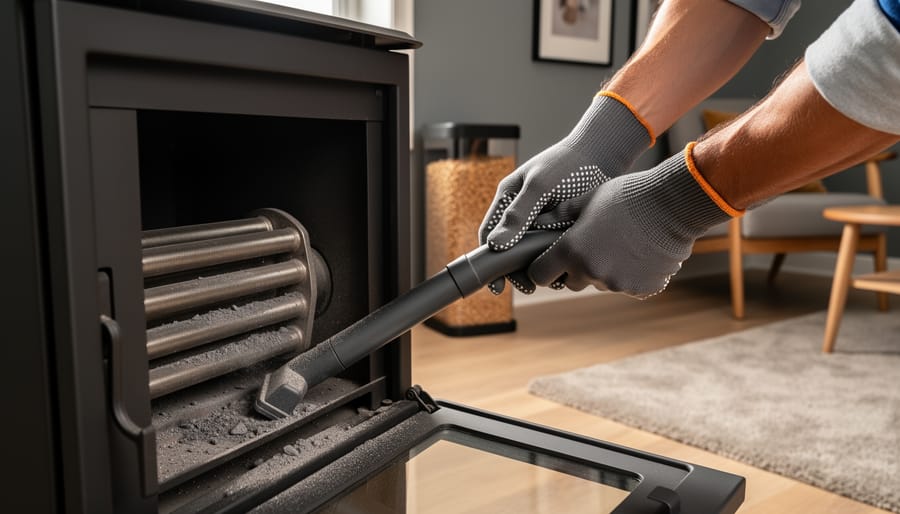


Clean your burn pot and ash pan daily to prevent clinker buildup that chokes airflow and reduces heating efficiency by up to 30%. A simple five-minute routine each morning keeps combustion optimal and ensures your pellet stove delivers consistent warmth throughout your home.
Inspect and vacuum your heat exchanger tubes weekly, removing the flyash that acts as insulation between the flames and your living space. This single step can restore up to 15% of lost heat output and dramatically lower your pellet consumption, making your eco-friendly heating investment work harder for you.
Replace your door gasket at the first sign of wear—typically once per season—to maintain the airtight seal that’s essential for proper combustion. A compromised gasket allows uncontrolled air into the firebox, creating inefficient burns that waste pellets and can damage internal components.
Schedule a complete professional cleaning annually, ideally before heating season begins. A qualified technician will access areas you can’t reach safely, inspect electrical components and sensors, and catch small issues before they become expensive repairs. This investment protects the heart of your home’s heating system and extends your stove’s lifespan by years.
Regular maintenance transforms your pellet stove from a temperamental appliance into a reliable heat source that enhances your home’s ambiance while keeping energy costs manageable. The tasks might seem numerous, but most take just minutes and quickly become second nature—small efforts that pay dividends in comfort, efficiency, and peace of mind throughout the coldest months.
Why Pellet Stove Maintenance Actually Matters
The Cost of Neglect
Skipping regular maintenance on your pellet stove might seem like a time-saver, but it’s a decision that can cost you dearly in comfort, efficiency, and safety. When maintenance falls by the wayside, the consequences add up quickly.
The most immediate impact you’ll notice is reduced heat output. As ash and soot accumulate in the burn pot and heat exchanger, they create barriers that prevent warmth from radiating into your living space. Your stove works harder while delivering less comfort, leading to dramatically higher pellet consumption. You’ll find yourself refilling the hopper more frequently while wondering why your heating bills keep climbing.
Beyond inefficiency, neglected stoves pose genuine safety risks. Built-up creosote in the venting system can lead to dangerous chimney fires, while blocked airways may cause harmful exhaust gases to enter your home. Ignoring warning signs can result in complete system breakdowns, often requiring expensive emergency repairs or even full component replacements.
The good news? Regular maintenance helps you maximize your investment while keeping your home safe and cozy. A few minutes of care each week prevents these problems entirely, ensuring your eco-friendly heating solution performs reliably season after season.
The Environmental Angle
A well-maintained pellet stove is one of the cleanest ways to heat your home. When your stove runs at peak efficiency, it burns pellets more completely, producing significantly fewer emissions and less ash. This means you’re not just keeping your home cozy—you’re making a genuinely positive environmental choice. Regular maintenance ensures optimal combustion, which translates to cleaner air both inside and outside your home.
Think of it this way: a dirty stove with clogged airways and worn gaskets works harder and burns less efficiently, wasting fuel and releasing more pollutants. By staying on top of simple cleaning tasks and inspections, you’re maximizing your investment in eco-friendly heating. Your pellet stove can deliver warmth with a remarkably small carbon footprint—but only when it’s properly cared for. It’s a win for your wallet, your comfort, and the planet.
Daily and Weekly Maintenance Tasks (The Easy Stuff)
Daily: The Five-Minute Burn Pot Check
Good news: keeping your pellet stove running beautifully doesn’t require a huge time investment. Just five minutes each morning can make all the difference in maintaining efficient, eco-friendly heating throughout your home.
Before you begin, always ensure your stove has completely cooled if it was running overnight. Safety first means waiting until the burn pot is cool to the touch.
Start by opening your stove door and examining the burn pot, that small crucible where the magic happens. You’ll likely notice a fine layer of ash and clinkers (those crusty, fused ash chunks). Using your ash vacuum or metal scraper, gently remove this buildup. Pay special attention to the air holes around the burn pot’s edges, as blocked holes mean restricted airflow and poor combustion.
Next, check that the burn pot sits level and hasn’t shifted. An uneven pot can cause pellets to pile incorrectly, leading to incomplete burning and wasted fuel.
Finally, give the glass door a quick wipe if needed. Clear glass isn’t just about aesthetics; it lets you monitor the flame pattern, ensuring everything’s working as it should.
This daily ritual keeps your heating costs down, prevents bigger maintenance headaches, and ensures your home stays cozy and warm all season long.
Daily: Ash Pan Emptying
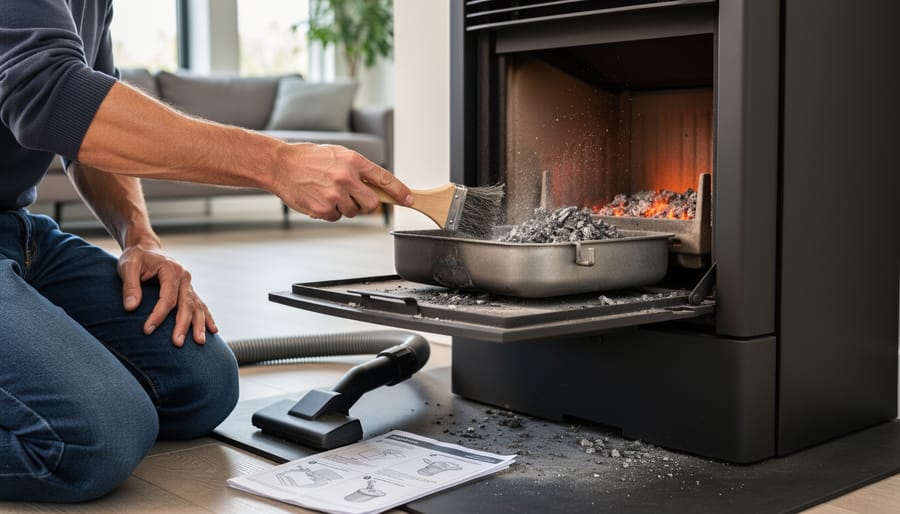
Making ash pan emptying part of your daily routine keeps your pellet stove burning efficiently and your home safe. Most pellet stoves need their ash pan emptied every two to three days during regular use, though you might need to check daily during the coldest months when you’re burning more pellets.
Before emptying, let your stove cool for at least an hour after shutdown. Even when ash appears gray and harmless, it can harbor hot embers for up to 24 hours. Always empty the ash pan into a metal container with a tight-fitting lid, never plastic or paper bags. This simple habit prevents house fires and protects your family.
Place the metal ash container on a non-combustible surface away from your home, deck, or any flammable materials until the ash is completely cold. Once cooled, wood ash makes an excellent addition to your compost pile or garden, adding valuable nutrients to your soil. It’s a small eco-friendly bonus that turns waste into something useful for your outdoor spaces.
Weekly: Glass Door Cleaning
A clear glass door transforms your pellet stove from a simple heat source into a mesmerizing focal point that brings warmth and ambiance to your living space. Unfortunately, soot and ash residue can quickly cloud that view, diminishing both the aesthetic appeal and your ability to monitor the flame properly.
For weekly glass cleaning, wait until your stove is completely cool. Use a damp cloth or paper towel dipped in the fine ash from your burn pot—nature’s own gentle abrasive works surprisingly well without scratching. For stubborn buildup, specialized pellet stove glass cleaners are worth the investment. Look for non-toxic, ammonia-free formulas that won’t leave harmful residues or unpleasant odors in your home.
Apply the cleaner in circular motions, let it sit briefly, then wipe clean with a microfiber cloth for a streak-free finish. If you notice excessive buildup between cleanings, your stove might be running inefficiently, which not only affects your view but also your heating performance and fuel consumption. Regular glass maintenance helps you spot potential issues early while keeping your eco-friendly heating solution looking beautiful all season long.
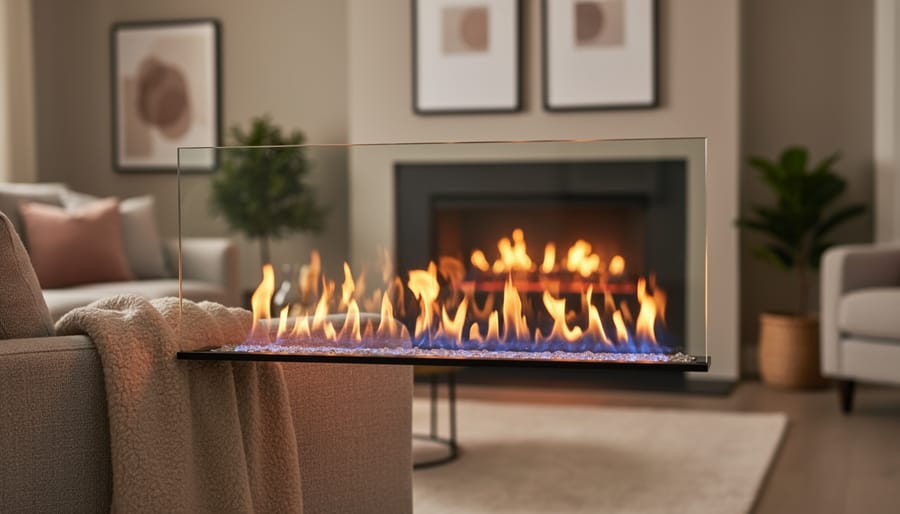
Weekly: Heat Exchanger Brushing
Your heat exchanger is the hardworking hero that transfers warmth from your pellet stove’s flames into your living space. When ash builds up on these tubes, it creates an insulating barrier that forces your stove to work harder while delivering less heat to your home. Brushing them weekly keeps your eco-friendly heating system running at peak efficiency.
Start by letting your stove cool completely. Most heat exchangers are located behind removable panels on the side or top of your firebox. Check your owner’s manual for the exact location. You’ll need a specialized heat exchanger brush, which has stiff bristles designed to fit inside the tubes.
Once you’ve accessed the tubes, insert your brush and work it back and forth with firm, deliberate strokes. You’ll see ash and soot falling into the burn pot area below. Make multiple passes through each tube until the brush moves freely and minimal debris falls. This simple five-minute task can improve your heat output by up to 20 percent while reducing your pellet consumption. After brushing, vacuum the loosened debris before reassembling the panels and returning to your cozy, efficiently heated home.
Monthly Deep Cleaning Essentials

Complete Firebox and Vent System Cleaning
A deep clean of your pellet stove’s firebox and vent system is essential for maintaining peak efficiency and extends the life of your investment. Think of it as giving your stove a spa day—it keeps everything running smoothly and your home toasty warm.
Start by gathering your supplies: a shop vacuum with a fine filter, a wire brush, a metal scraper, a flashlight, and protective gloves. Make absolutely certain your stove is completely cool and unplugged before beginning.
Remove the burn pot and baffle plates according to your manufacturer’s instructions. These components are the workhorses of your combustion system, and they accumulate the most buildup. Use your wire brush to scrub away any hardened ash or clinkers, paying special attention to air intake holes where blockages can seriously impact performance.
Next, vacuum the entire firebox chamber, including those tricky corners and crevices where ash loves to hide. Your flashlight is invaluable here for spotting hidden buildup. Use your scraper gently on any stubborn deposits, being careful not to damage protective linings.
The vent system deserves equal attention. Disconnect vent pipes and inspect them thoroughly. Creosote and fly ash can accumulate throughout the exhaust path, creating dangerous blockages. Clean each section with your brush and vacuum, checking for any damage or loose connections.
Before reassembling, inspect gaskets around doors and the glass for wear. Damaged gaskets compromise efficiency and should be replaced promptly. This thorough cleaning, performed at least twice during heating season, ensures your eco-friendly heating solution operates safely and efficiently, keeping your home comfortable all winter long.
Inspecting and Cleaning the Venting System
Your pellet stove’s venting system is the unsung hero of efficient, clean-burning heat. Over time, even with clean-burning pellets, a fine layer of ash and minimal creosote can accumulate in your exhaust vent, reducing airflow and efficiency.
For basic inspection, check your vent pipe monthly during heating season. Look through the cleanout tee for any visible buildup or blockages. You’ll want to brush out the accessible portions of the vent pipe at least twice per heating season using a specialized pellet vent brush. This is a manageable DIY task that takes about 30 minutes and keeps your system breathing properly.
However, certain situations call for professional help. If your vent pipe extends more than 15 feet, has multiple bends, or runs through walls and ceilings, hire a certified chimney sweep. Also call a professional if you notice persistent sooting on the glass despite regular cleaning, as this often indicates venting problems that need expert diagnosis.
The good news? Modern pellet stoves produce significantly less creosote than traditional wood stoves, making them a cleaner, more eco-friendly heating solution. Still, never skip vent inspections. A clear venting system means safer operation, better efficiency, and more of that cozy warmth you love without unnecessary worry.
Checking Gaskets and Seals
Healthy gaskets and seals are your pellet stove’s first line of defense against heat loss and inefficient burning. Think of them as the weatherstripping around your front door, keeping the good air in and drafts out.
Start by inspecting the door gasket, which typically runs along the perimeter of the stove door. With the stove cool, close the door on a dollar bill at various points around the seal. If you can pull the bill out easily without resistance, the gasket needs replacing. You should also look for visible signs of wear like compression, cracking, or fraying.
Check the hopper lid seal and ash pan gasket too, as these often get overlooked. A failing hopper seal can let moisture into your pellets, while a compromised ash pan gasket allows ash to escape into your living space.
Most gaskets need replacement every one to three years, depending on usage. This simple upgrade dramatically improves combustion efficiency, meaning you’ll burn less fuel to achieve the same cozy warmth. Plus, it’s an eco-friendly win, reducing waste and emissions while keeping your heating costs down.
Seasonal and Annual Maintenance
Pre-Season Startup Checklist
Before firing up the stove for another cozy season, a thorough inspection ensures safe, efficient operation throughout the colder months ahead. Think of this checklist as your stove’s annual wellness exam—it only takes an hour or two but prevents headaches down the road.
Start with a complete deep clean. Remove all ash from the burn pot, ash pan, and interior chambers. Use a shop vacuum designed for ash removal to tackle hidden corners. Inspect the door gasket for cracks or compression damage—a tight seal is essential for proper combustion and efficiency. Check the glass for stubborn buildup that regular cleaning missed.
Next, examine critical components. Look at the auger for any pellet jams or debris. Inspect the blower fans and remove accumulated dust that reduces airflow. Test the igniter to ensure it glows properly within a few minutes.
Finally, schedule a professional inspection if your stove hasn’t been serviced in over a year. Technicians can check exhaust venting, electrical connections, and internal sensors that homeowners shouldn’t tackle alone. Load quality pellets, run a test cycle, and listen for unusual sounds. This proactive approach means you’ll enjoy reliable warmth all season while maximizing your eco-friendly heating investment.
End-of-Season Storage and Protection
When the warm weather arrives and it’s time to put your pellet stove to rest, a proper shutdown routine will ensure it fires up beautifully next fall. Start with one final deep cleaning session, removing all ash and unburned pellets from the hopper, burn pot, and ash pan. Any leftover pellets can absorb moisture during humid summer months, creating clumps and potential feeding problems later.
Next, inspect your door gasket for any wear or compression. Replace it if needed so you’re not scrambling come heating season. Wipe down all exterior surfaces and glass with appropriate cleaners to prevent buildup from setting in during storage.
Here’s a pro tip for eco-conscious homeowners: cover your stove’s exhaust vent from the outside to prevent birds, insects, and debris from making it their summer home. Just remember to remove it before firing up again! Store any remaining quality pellets in airtight containers in a dry location.
Consider placing moisture-absorbing packets inside the hopper to combat humidity. This simple step protects your investment and keeps your efficient, eco-friendly heating solution ready to deliver cozy warmth the moment you need it next season.
What Your Annual Professional Inspection Should Include
A yearly professional inspection is your pellet stove’s wellness checkup, ensuring every component works harmoniously for safe, efficient heating. A qualified technician will thoroughly examine the venting system for blockages, leaks, or deterioration that could compromise safety. They’ll inspect and test the hopper system, auger motor, and combustion blower to catch any wear before it leads to breakdowns. The inspection should include a detailed cleaning of areas you can’t easily reach, like the exhaust passages and heat exchanger tubes where ash buildup reduces efficiency.
Your technician will also check electrical connections, test safety sensors, and verify that the control board functions properly. Think of this as protecting your investment from day one, whether you handled the pellet stove installation yourself or hired professionals. They’ll assess door gaskets for airtight seals and examine the burn pot for stress cracks. A quality service call concludes with performance testing and efficiency measurements, plus personalized recommendations for optimizing your stove’s operation. This annual attention keeps your eco-friendly heating solution running reliably while preventing costly emergency repairs during the coldest months.
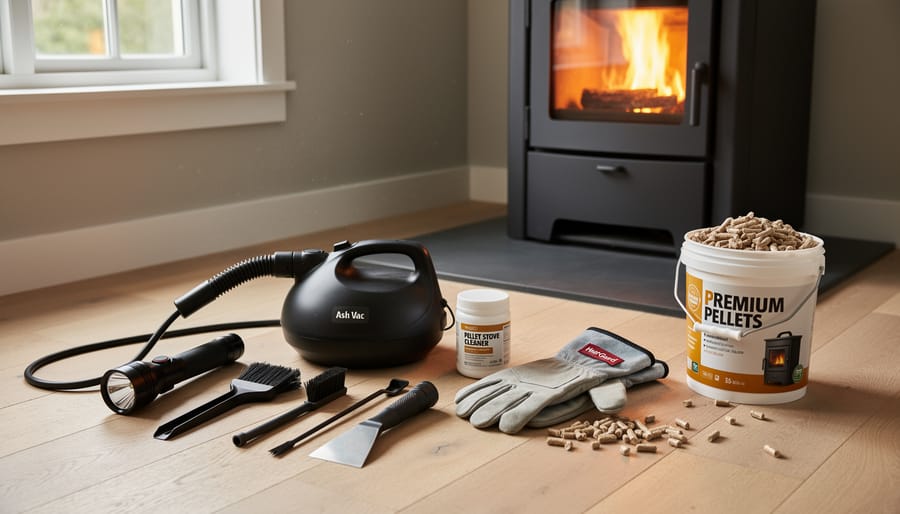
Essential Tools and Supplies for Pellet Stove Care
Keeping your pellet stove in top condition doesn’t require a garage full of expensive equipment. With a few essential tools and supplies on hand, you’ll be ready to tackle routine maintenance tasks efficiently and protect your investment in cozy, eco-friendly home heating.
Start with a quality ash vacuum specifically designed for fine particulates and high temperatures. Unlike regular household vacuums, these specialized units can safely handle warm ash without damaging the motor or creating a dusty mess. You’ll also want a stiff-bristled brush for scrubbing burn pots and heat exchangers, along with a flexible wire brush for reaching tight spots where creosote and ash accumulate.
A sturdy metal ash bucket with a tight-fitting lid is essential for safely disposing of ash between vacuum sessions. Even seemingly cold ash can harbor hidden embers for days, so this isn’t an area to cut corners on safety. Keep a clean, lint-free cloth or microfiber towels handy for wiping down glass doors and exterior surfaces.
For glass cleaning, you’ll need a specialized pellet stove glass cleaner or a paste made from ash and water, which works surprisingly well as a natural, budget-friendly alternative. A paint scraper with a razor blade attachment helps remove stubborn deposits without scratching the glass when used carefully.
Don’t forget basic hand tools like screwdrivers and a socket set for accessing various panels and components during deeper cleaning sessions. A headlamp or flashlight makes inspecting dark interior spaces much easier.
Finally, keep a supply of replacement gaskets on hand. These inexpensive seals wear out over time and directly impact your stove’s efficiency. Having them ready means you won’t delay important repairs that keep your heating system running at peak performance.
Creating a Maintenance Schedule That Works for You
The secret to stress-free pellet stove maintenance isn’t doing more—it’s creating a rhythm that fits naturally into your life. Think of it like brushing your teeth: once it becomes routine, it hardly feels like a chore at all.
Start by honestly assessing how much you use your stove. Someone burning pellets all winter long will need more frequent cleaning than someone who fires up their stove only on chilly evenings. A good rule of thumb is daily ash removal if you run your stove continuously, weekly if you’re a moderate user, and monthly deep cleans for everyone.
Here’s where it gets practical: anchor your maintenance tasks to existing habits. Clean the burn pot every Saturday morning while your coffee brews. Check the door gasket on the first day of each month when you flip your calendar. These mental anchors transform maintenance from a forgotten obligation into an automatic routine.
Consider creating a simple checklist and posting it near your stove. Include quick daily tasks at the top, weekly items in the middle, and monthly or seasonal jobs at the bottom. Cross them off as you go—there’s something deeply satisfying about checking boxes, and it gives you a visual record of your diligence.
Set phone reminders for less frequent tasks like professional inspections or exhaust vent cleaning. Technology can be your memory so you don’t have to worry about forgetting important seasonal maintenance. The goal is making pellet stove care feel effortless, keeping your home warm and cozy without adding stress to your busy life.
Regular pellet stove maintenance might seem like just another item on your home care checklist, but here’s the beautiful truth: with a simple routine, it becomes second nature, much like brewing your morning coffee. The peace of mind that comes from knowing your stove will fire up reliably on those cold winter evenings is absolutely worth the modest time investment.
You don’t need to tackle everything at once. Start small with daily ash removal, then gradually build your routine as tasks become familiar. Before you know it, these maintenance moments become a satisfying ritual, a way of caring for the warmth that makes your house a home.
The payoff extends beyond just reliability. A well-maintained pellet stove burns cleaner, operates more efficiently, and supports your commitment to eco-friendly heating solutions. You’ll spend less on fuel, enjoy more consistent heat, and reduce your environmental footprint simultaneously.
Think of pellet stove maintenance as an investment in comfort and coziness. By keeping your stove in prime condition, you’re ensuring that crisp autumn evenings and snowy winter nights are always met with dependable, efficient warmth. Your future self, wrapped in a blanket beside a perfectly humming stove, will thank you.