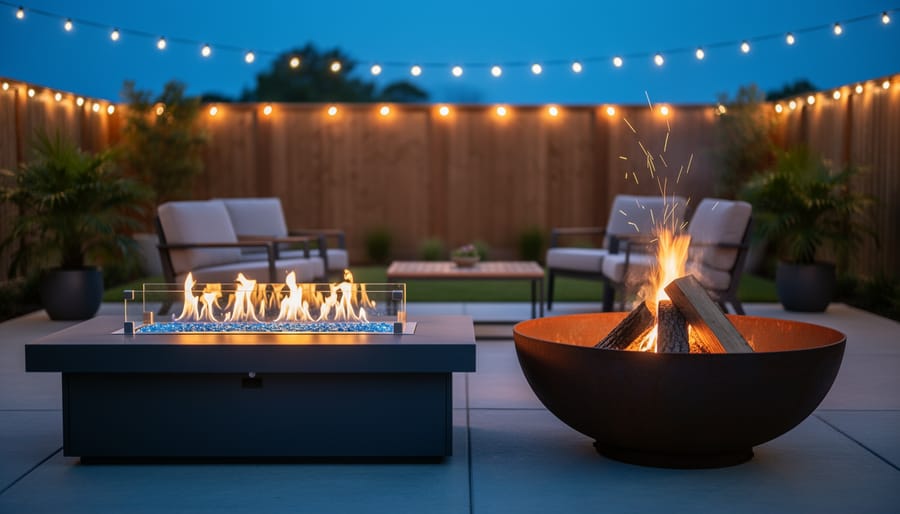


Picture yourself on a cool evening, gathering family and friends around dancing flames in your backyard. That moment of warmth and connection can happen with either a gas or wood fire pit, but the experience—and the effort behind it—differs dramatically. Your choice between these two options will shape not just your outdoor ambiance, but your daily routine, maintenance schedule, and even your environmental footprint for years to come.
Gas fire pits offer instant ignition at the flip of a switch, delivering consistent flames without smoke or flying embers. You’ll spend your evenings relaxing rather than tending flames, making them ideal for spontaneous gatherings and urban settings with strict fire regulations. Wood fire pits provide that authentic crackling soundtrack and nostalgic campfire aroma that many consider irreplaceable, creating a primal connection to fire that gas simply cannot replicate.
The decision extends beyond romance and convenience. Gas systems require professional installation and periodic inspections but eliminate ash cleanup and wood storage. Wood-burning options cost less upfront and need no utility connections, yet demand ongoing fuel purchases and dedicated space for seasoning firewood. Safety considerations vary significantly—gas eliminates sparks but introduces combustion risks, while wood creates airborne embers but burns fuel you can see and control.
Understanding how each option aligns with your lifestyle priorities, local regulations, and long-term commitment to maintenance will guide you toward the fire pit that transforms your outdoor space into your favorite gathering spot.
The Real-World Experience: What Using Each Type Actually Feels Like
Wood Fire Pits: The Hands-On Experience
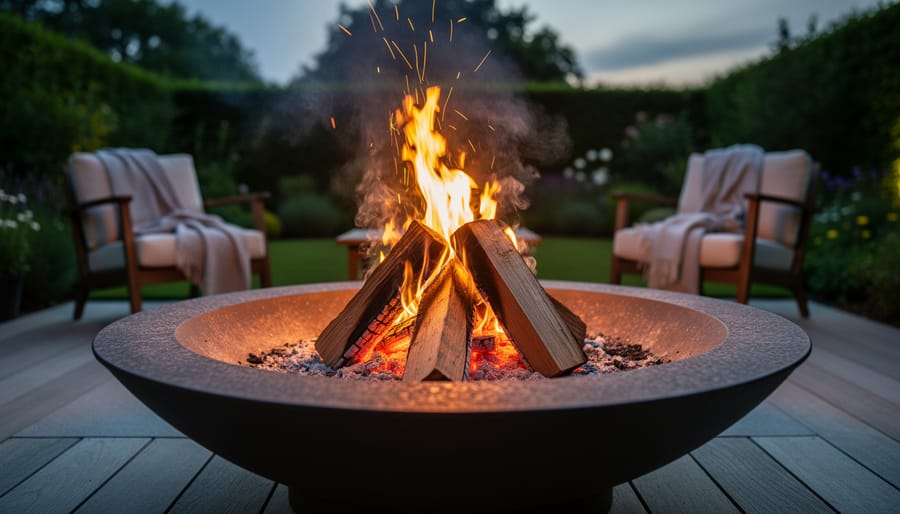
There’s something wonderfully primal about building and tending a wood fire. The experience begins long before the first spark—selecting and stacking firewood, perhaps splitting logs yourself, creates a tangible connection to the heating process that many find deeply satisfying. As you arrange kindling and coax those initial flames to life, you’re engaging in a ritual humans have practiced for millennia.
The sensory rewards are rich: the distinctive crack and pop of burning wood, the mesmerizing dance of irregular flames, and that incomparable smoky fragrance that clings to your clothes and hair. It’s the complete campfire experience right in your backyard, perfect for roasting marshmallows and storytelling under the stars.
However, this romantic appeal comes with real-time commitments. You’ll need space to store seasoned firewood, keeping it dry and accessible. Each fire requires hands-on attention—adding logs every 30-45 minutes, managing ember buildup, and ensuring complete extinguishment afterward. The cleanup involves hauling away ashes regularly and sweeping up bark debris.
For those who view this maintenance as meditative rather than burdensome, wood fire pits offer an authentic, engaging lifestyle element. The key question: does the immersive experience align with your available time and desired involvement level?
Gas Fire Pits: The Convenience Factor
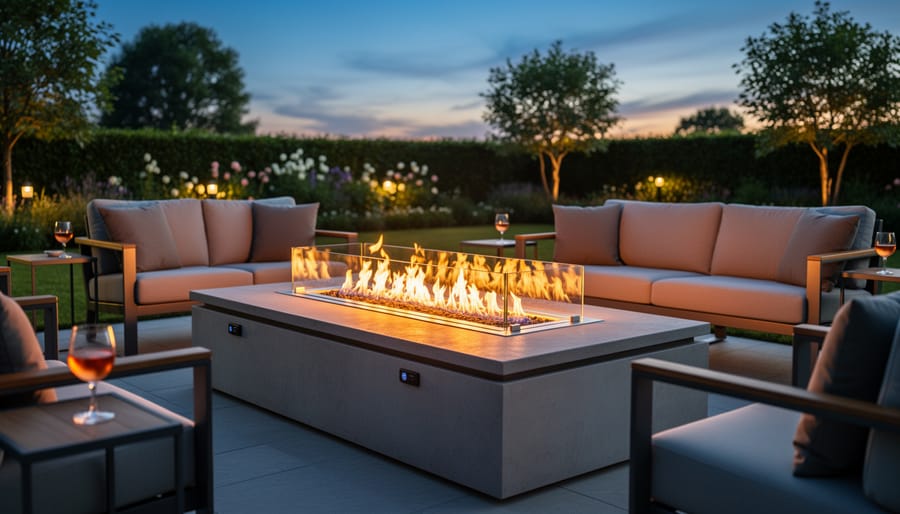
There’s something undeniably appealing about pressing a button and watching flames dance to life within seconds. Gas fire pits deliver this modern convenience effortlessly, transforming your outdoor space into an inviting gathering spot without the preparation ritual that wood demands. No kindling to arrange, no waiting for logs to catch, and no constant monitoring required—just instant warmth and ambiance whenever the mood strikes.
The consistency factor is where gas truly shines. Your flames maintain a steady, predictable height and heat output throughout the evening, adjustable with a simple control knob. There’s no smoke redirecting itself into guests’ faces with every wind shift, and cleanup involves nothing more than switching off the gas. For busy homeowners who value their time, these propane fire pit advantages translate to more moments actually enjoying the fire rather than tending it.
The trade-off? Gas flames lack the organic unpredictability and crackling soundtrack that many fire enthusiasts crave. You’re exchanging authenticity for reliability—a worthwhile compromise if convenience fits your lifestyle. Gas fire pits become an extension of your home’s comfort systems, delivering consistent performance that makes outdoor entertaining feel effortless. For those who prioritize functionality and ease of use over traditional campfire nostalgia, gas offers a practical pathway to creating memorable outdoor experiences.
Installation and Setup: What You’re Really Getting Into
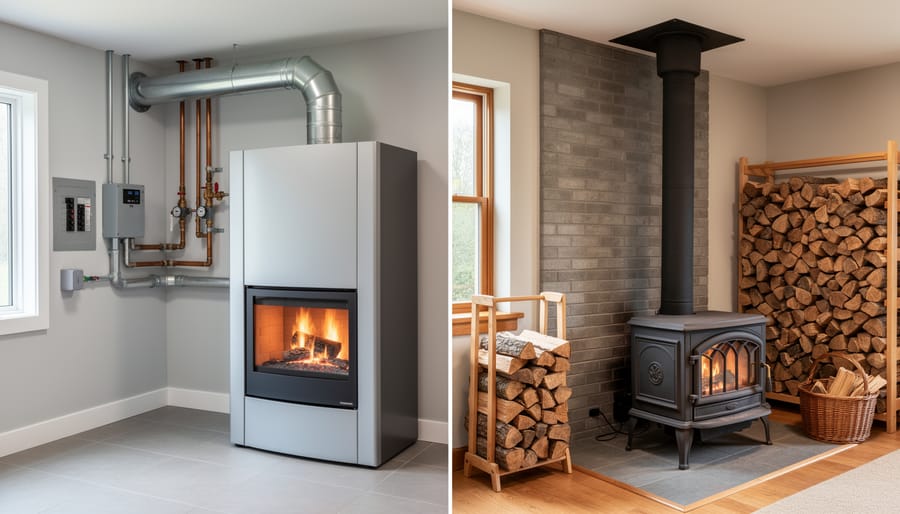
Wood Fire Pit Setup: Simple but Strategic
Setting up a wood fire pit requires thoughtful planning, but it doesn’t have to be complicated. The key is balancing safety with the perfect placement for your outdoor living space.
Start with placement considerations that prioritize clearance requirements. Your wood fire pit needs at least 10-15 feet of open space above and several feet of clearance from structures, trees, and overhanging branches. Local fire codes often dictate specific distances, so check with your municipality before finalizing your spot.
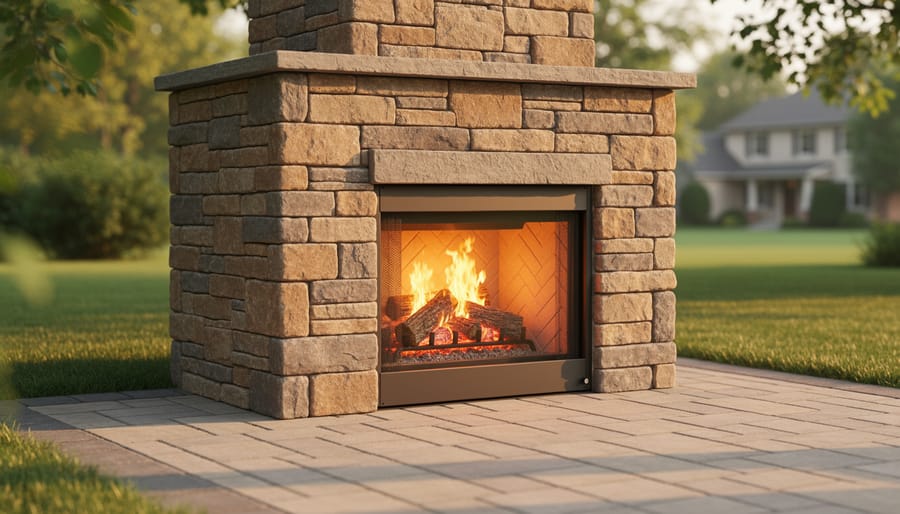
Surface preparation depends on your chosen setup. For portable fire pits, a simple fire-resistant pad or paver base works beautifully and gives you flexibility to relocate as needed. Permanent installations require more substantial groundwork—excavating the area, adding gravel for drainage, and creating a stable fire-resistant base with pavers or stone. This added effort creates a dedicated gathering spot that becomes a true lifestyle element in your backyard.
The initial investment for wood fire pits ranges widely. Basic portable bowls start around 50-150 dollars, perfect for testing the fire pit lifestyle before committing. Built-in stone or brick fire pits typically run 300-3,000 dollars depending on size and materials, but they add lasting value to your property.
Portable options offer budget-friendly entry points and seasonal flexibility, while permanent setups create that timeless gathering space many homeowners dream about. Either way, proper setup ensures years of safe, enjoyable wood-burning experiences.
Gas Fire Pit Installation: More Upfront, Less Later
Gas fire pits definitely ask more from your wallet initially, but they’re playing the long game with your budget. The upfront investment ranges from $1,500 to $5,000 or more, depending on your setup.
Here’s where costs stack up: If you’re connecting to your home’s natural gas line, you’ll need a licensed plumber or gas fitter to extend the line to your outdoor space. This typically runs $500 to $2,000 depending on distance and complexity. Going the propane route? You’ll need to factor in propane tank considerations, including the tank itself (purchased or leased) and aesthetic solutions for concealing it in your outdoor living space.
Professional installation isn’t just recommended—it’s often legally required. Most municipalities require permits for gas line work, ranging from $50 to $500, plus inspections to ensure everything meets code. Skip this step, and you’re risking safety violations and potential insurance nightmares.
The silver lining? After that initial investment, your ongoing costs drop dramatically. Natural gas runs about $1 per hour of burn time, while propane costs roughly $2 to $3 per hour. Compare that to constantly purchasing firewood, and your gas fire pit pays for itself within a few years of regular use.
Think of it as front-loading your fire pit budget. You’re essentially prepaying for years of hassle-free enjoyment, trading immediate savings for long-term convenience and predictable operating costs that won’t leave you scrambling for fuel before guests arrive.
Operating Costs: The Numbers That Actually Matter
Fuel Costs Breakdown
Understanding the real cost of enjoying your fire pit involves more than just the initial price tag. Let’s break down what you’ll actually spend per cozy evening outdoors.
Wood-burning fire pits typically consume 15-25 pounds of firewood per 3-4 hour session. If you’re purchasing seasoned firewood, expect to pay $5-8 per use. However, many homeowners reduce costs by sourcing free wood from tree trimming services, fallen branches, or splitting their own logs. Don’t forget storage considerations—keeping wood dry and properly seasoned requires covered space, and you’ll need adequate time for proper drying if sourcing green wood.
Gas fire pits offer more predictable expenses. Natural gas users typically spend $1-3 per evening, making it the most economical long-term option. Propane costs run higher at $3-6 per use, depending on BTU output and local pricing. While propane requires tank refills or exchanges (averaging $20-25 per tank), it provides excellent portability.
For seasonal perspective, a homeowner using their fire pit twice weekly from spring through fall (roughly 40 uses annually) would spend approximately $200-320 on wood versus $40-120 for natural gas or $120-240 for propane. These eco-friendly heating solutions become even more cost-effective when you factor in the zero preparation time and instant availability that gas provides compared to wood’s storage and seasoning requirements.
Hidden Costs and Long-Term Value
Beyond the initial purchase price, both fire pit types carry ongoing expenses that deserve your attention. Gas fire pits require periodic professional inspections to ensure safe operation, typically costing between $75-150 annually. You’ll also need to replace burners, valves, or ignition systems over time, with parts ranging from $50-300 depending on your model. Natural gas lines offer predictable utility costs, while propane tanks require refilling every 15-25 hours of use at roughly $20-30 per tank.
Wood fire pits demand regular cleaning supplies and ash removal tools, though these costs remain minimal. However, you’ll continuously purchase firewood, and quality seasoned wood isn’t cheap—expect $200-400 annually for moderate use. Factor in chimney brushes, protective covers, and occasional grate replacements too.
From a property value perspective, both options enhance outdoor living spaces, but gas fire pits often appeal more to buyers seeking low-maintenance lifestyle features. They’re viewed as permanent, built-in amenities that complement modern outdoor entertaining spaces. Wood fire pits offer rustic charm but may concern buyers worried about upkeep or local burn restrictions.
Consider your long-term plans: if you’re creating an eco-friendly heating solution for years of enjoyment, calculate total five-year costs including fuel, maintenance, and potential repairs before deciding which investment aligns with your lifestyle and budget.
Safety Considerations: What Keeps You and Your Home Protected
Wood Fire Safety: Managing Embers and Smoke
Wood fire pits bring wonderful ambiance to your outdoor space, but they require thoughtful safety practices to keep your gatherings worry-free. Unlike their gas counterparts, wood fires produce floating embers that can travel surprising distances on windy evenings, potentially igniting dry vegetation or landing on combustible surfaces.
Start by positioning your wood fire pit at least 10-15 feet from structures, overhanging branches, and outdoor furniture. Check your local regulations before lighting up—many municipalities restrict wood burning during dry seasons or require permits. On breezy nights, consider postponing your fire session, as wind can quickly spread sparks beyond safe zones.
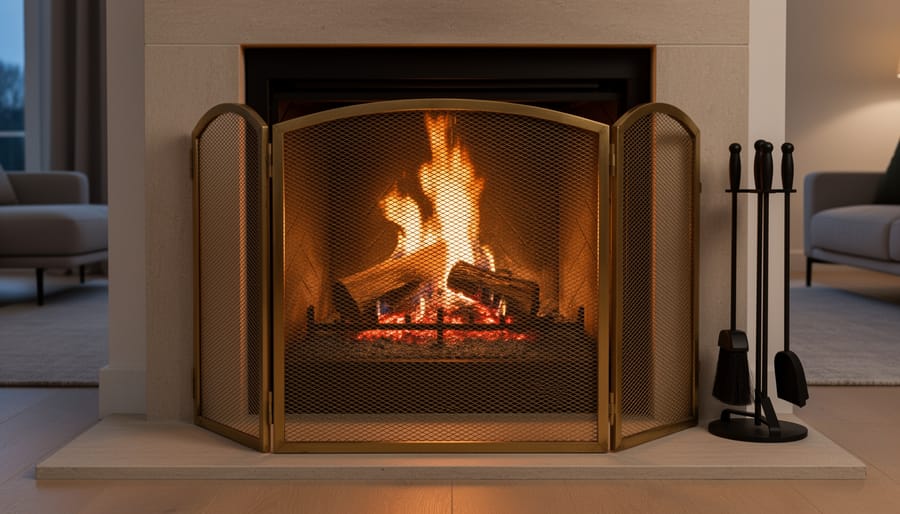
Investing in a mesh spark screen or lid is essential for containing flying embers while still allowing you to enjoy the dancing flames. When it comes to managing smoke, burning only seasoned hardwood and maintaining proper airflow makes a significant difference in both smoke production and air quality.
Never leave your fire unattended, and keep a garden hose or fire extinguisher nearby. When the evening winds down, extinguish flames completely by spreading out embers and dousing them thoroughly with water until all hissing stops. Stir the ashes and add more water—a seemingly dead fire can reignite hours later.
Gas Fire Safety: Leak Prevention and Proper Ventilation
Gas fire pits bring wonderful ambiance to your outdoor space, but safety should always be your top priority. The good news? With proper care and attention, these systems are incredibly safe for your family.
Start by checking your gas line connections regularly—at least twice per season. Look for any signs of wear, corrosion, or loose fittings. A simple soapy water test can reveal tiny leaks: brush the solution on connection points and watch for bubbles. If you detect that telltale rotten egg smell or hear hissing, shut off the gas supply immediately and call a professional.
Carbon monoxide awareness is essential, even outdoors. While fire pits used in open-air settings typically pose minimal risk, never use your gas fire pit in enclosed or poorly ventilated areas like covered patios with limited airflow. Fresh air circulation is your friend here.
Familiarize yourself with your fire pit’s shut-off valve location and procedure before you need it. Keep the area clear of obstructions so you can access it quickly in an emergency.
Schedule a professional inspection annually, especially before heavy-use seasons. A qualified technician can spot potential issues you might miss and ensure all components meet current safety standards. Think of it as an investment in peace of mind—your family’s safety is worth that expert eye.
Environmental Impact: Making the Eco-Conscious Choice
Wood’s Environmental Profile
Wood presents an interesting environmental paradox that deserves thoughtful consideration. As a renewable resource, wood scores points for being naturally replenished, especially when sourced from sustainable forestry programs that plant more trees than they harvest. This creates a carbon-neutral cycle that gas simply can’t match.
However, the smoke story gets more complicated. Wood fires release particulate matter and carbon monoxide, contributing to local air quality issues that particularly affect neighborhoods on calm evenings. If you live in an area with air quality restrictions, wood burning might be limited or prohibited during certain seasons.
The efficiency factor also plays a role in wood’s environmental profile. Traditional wood fire pits lose most of their heat to the atmosphere, meaning you’re burning more fuel for the same warmth compared to contained systems. Choosing well-seasoned hardwoods over softwoods improves combustion efficiency and reduces smoke output significantly.
For environmentally conscious homeowners, the key lies in responsible wood sourcing and mindful burning practices. Look for locally harvested, kiln-dried wood from certified sustainable sources. This approach minimizes transportation emissions while supporting responsible forest management. When burned properly with adequate airflow, wood can be a reasonably eco-friendly choice that connects you to traditional, time-honored heating methods.
Gas’s Environmental Considerations
Gas fire pits present a nuanced environmental profile that deserves honest consideration. While they burn cleaner than wood—producing virtually no smoke, ash, or particulate matter that affects local air quality—they still rely on fossil fuels, which contributes to carbon emissions. For homeowners concerned about their ecological footprint, this creates a genuine trade-off to weigh.
The efficiency advantage is notable. Gas fire pits convert nearly all their fuel into heat with minimal waste, whereas wood fires lose significant energy through smoke and incomplete combustion. This means you’re getting more warmth from less fuel, which matters both environmentally and economically.
The choice between propane and natural gas adds another layer. Natural gas, delivered through existing utility lines, eliminates the carbon footprint of propane tank delivery trucks. However, propane offers portability and independence from infrastructure. Both burn significantly cleaner than wood, releasing fewer pollutants into your immediate outdoor living space.
For environmentally conscious homeowners, gas represents a cleaner-burning compromise—reducing local air quality impacts while still using finite resources. It’s about finding your balance between immediate environmental benefits and broader sustainability concerns as part of creating a responsible outdoor lifestyle space.
Ambiance and Atmosphere: The Intangible Appeal
The ambiance created by your fire pit extends far beyond simple heating—it shapes the entire mood of your outdoor gatherings and quiet evenings alike. Understanding these sensory differences helps you choose the experience that best fits your lifestyle.
Wood fire pits deliver what many consider the quintessential fireside experience. The crackling and popping sounds create a natural soundtrack that’s both relaxing and nostalgic. The unmistakable aroma of burning wood—whether you prefer oak, hickory, or fruitwoods—adds a layer of sensory richness that many homeowners find irreplaceable. Those dancing flames with their unpredictable movements and ember displays create mesmerizing visual entertainment that guests naturally gravitate toward. There’s something primal and comforting about tending a wood fire, adjusting logs, and watching the transformation from timber to glowing coals.
Gas fire pits offer a different kind of appeal that resonates with modern entertaining styles. The clean, consistent flames provide elegant visual interest without demanding constant attention, allowing you to focus entirely on conversation and companionship. Without wood smoke, your clothes, hair, and outdoor fabrics remain fresh—a significant consideration for those who entertain frequently. The instant ambiance means spontaneous gatherings become effortless, and you can adjust the mood with a simple dial turn.
The smell factor deserves honest consideration. While wood smoke evokes campfire memories for many, it can be overwhelming in smaller yards or problematic for guests with sensitivities. Gas fire pits eliminate this concern entirely, creating a more universally comfortable environment.
Ultimately, wood fires appeal to those seeking authentic, hands-on experiences and traditional warmth, while gas fires suit hosts prioritizing convenience, cleanliness, and consistent ambiance. Both create inviting outdoor spaces—your choice reflects how you want to experience and share that warmth.
Practical Versatility: Beyond Just Warmth
When you’re planning your outdoor living space, versatility matters just as much as aesthetics. Both gas and wood fire pits offer unique advantages that extend well beyond simply keeping you warm on cool evenings.
For cooking enthusiasts, wood fire pits deliver an authentic culinary experience that’s hard to replicate. The natural wood smoke infuses food with those distinctive flavors we associate with campfire cooking and traditional outdoor grilling. You can roast marshmallows, grill steaks, or even experiment with cast-iron cooking right over the flames. Gas fire pits, while not offering that smoky flavor profile, provide consistent heat control that makes them surprisingly practical for certain cooking applications. Think of them as your outdoor kitchen’s precision tool, offering steady, adjustable flames without the need for constant fire management.
Portability presents an interesting contrast. Portable gas fire pits run on small propane tanks, making them easy to move around your deck or patio depending on where guests gather. Wood fire pits, especially smaller models, can also relocate fairly easily, though you’ll need to consider ash cleanup and having firewood nearby. Many homeowners find that investing in quality wood fire pit accessories like ash removal tools and weatherproof covers makes maintenance much simpler.
Weather performance differs significantly between the two. Gas fire pits light reliably in damp conditions and won’t struggle with wet fuel issues. Wood fires require dry fuel and can be challenging to start after rain, though there’s something deeply satisfying about successfully building a fire despite the elements.
For entertaining styles, consider your typical gatherings. Gas suits structured events where you want instant ambiance without tending the fire. Wood fires naturally encourage longer, more relaxed gatherings where fire-tending becomes part of the social experience. Seasonally, gas extends your outdoor season with predictable warmth, while wood fires create those magical autumn and winter moments that become cherished memories. Your lifestyle and entertaining preferences should ultimately guide this practical decision.
Making Your Decision: Which Fire Pit Matches Your Life?
Choosing between a gas fire pit and wood-burning option ultimately comes down to how each aligns with your daily life and priorities. Let’s walk through some real-world scenarios to help you find your perfect match.
If you’re someone with limited free time who values spontaneous outdoor moments, a gas fire pit is probably calling your name. Picture this: it’s a Tuesday evening after work, and you want to unwind outside for thirty minutes before dinner. With gas, you’re enjoying flames within seconds—no preparation, no cleanup afterward. This same convenience makes gas ideal for frequent entertainers who want to focus on guests rather than fire management.
On the flip side, if you treasure ritual and don’t mind investing time in the experience, wood fire pits offer something special. Weekend warriors who enjoy the process of selecting wood, building fires, and tending flames throughout the evening will find wood-burning deeply satisfying. The crackling sounds and aromatic smoke become part of the entertainment itself, creating memories that gas simply can’t replicate.
Your environmental values matter here too. Wood fire pits can be eco-friendly heating solutions when you source local, sustainably harvested wood, though they do produce more particulate matter. Gas burns cleaner in terms of smoke but relies on fossil fuels. Consider which environmental trade-off feels right for your household.
Budget-conscious homeowners should factor in both upfront and ongoing costs. Wood pits typically cost less initially, ranging from one hundred to several hundred dollars for quality models. Gas units start higher, often exceeding a thousand dollars with installation, but wood fuel costs accumulate quickly if you burn regularly. Calculate your expected usage to determine the real winner.
Property constraints can make your decision for you. Urban and suburban homeowners facing strict burning regulations often find gas is their only viable option. Those with ample outdoor space, good ventilation, and relaxed local ordinances have more freedom to choose based on preference.
The bottom line? Choose gas if convenience, cleanliness, and control top your priority list. Choose wood if you value authentic ambiance, don’t mind the work, and have the space and permissions to burn freely. Both options transform outdoor spaces into lifestyle destinations—just in different ways.
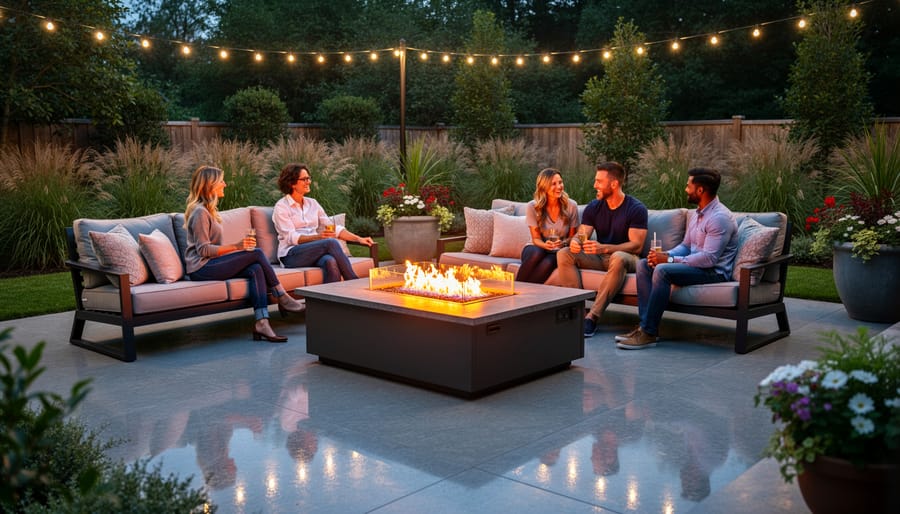
Here’s the truth that might surprise you: there’s no wrong choice between gas and wood fire pits. Both have devoted fans who wouldn’t trade their experience for anything, and both can transform your outdoor space into a gathering place your family and friends will love for years to come.
The right fire pit for you isn’t about following trends or choosing the most expensive option. It’s about understanding what matters most in your daily life. If you crave the ritual of building a fire and don’t mind the extra effort, wood delivers an authenticity that’s hard to match. If convenience and clean operation align better with your lifestyle, gas offers modern comfort without compromise.
Take a moment to envision your ideal evening outdoors. Are you tending flames, adding logs, and watching sparks dance into the night sky? Or are you pressing a button and settling into conversation without a second thought? Both visions are equally valid expressions of how you want to live and connect with your space.
Your priorities matter. Your lifestyle matters. The atmosphere you want to create matters. Trust yourself to know which experience calls to you, and remember that choosing a fire pit is really about choosing how you want to gather, relax, and make memories. Whether you go with gas or wood, you’re investing in something far more valuable than a backyard feature. You’re creating a warm, welcoming space where life’s best moments unfold naturally under the open sky.