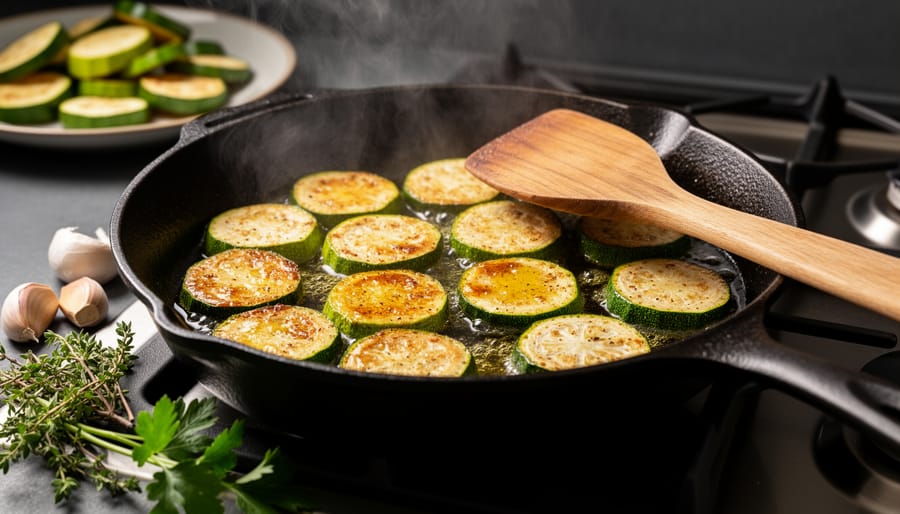


Stovetop zucchini takes just 8 to 10 minutes from heat to plate, making it one of the fastest side dishes you can prepare when you need fresh vegetables in a hurry. The method is straightforward: slice your zucchini, heat a skillet with a bit of oil or butter, and cook over medium-high heat until tender with golden-brown edges. This technique works because direct heat caramelizes the natural sugars in the zucchini while evaporating excess moisture, giving you vegetables that taste rich and slightly sweet instead of watery and bland.
The beauty of skillet cooking lies in the control it offers. You can watch the zucchini as it cooks, adjusting the heat when browning happens too quickly or flipping pieces to ensure even color. Unlike roasting, which ties up your oven for 20 minutes or more, stovetop preparation keeps you close to the action and frees up space for other dishes. You’ll know you’ve nailed the timing when the zucchini yields easily to a fork but still holds its shape, with visible caramelization on at least one side.
This approach works year-round but shines during peak growing season, when garden zucchini floods kitchens faster than most households can use it.
Why Stovetop Cooking Works Best for Zucchini
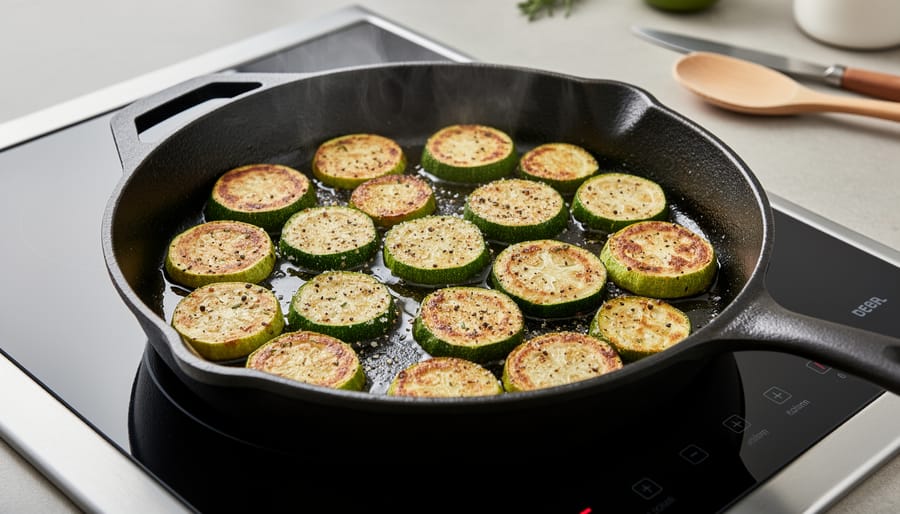
Stovetop cooking transforms zucchini in 15 minutes or less, making it the fastest method for weeknight meals. Unlike oven-roasting, which requires preheating and 25 to 30 minutes of cook time, a hot skillet delivers tender zucchini with golden-brown edges in a fraction of the time. You can watch the browning process happen in real time, adjusting heat or flipping pieces the moment they need it.
The direct heat of a stovetop burner gives you precise control that other methods can’t match. When zucchini hits a properly heated skillet, the exterior caramelizes quickly while the interior stays tender and moist. This balance is harder to achieve with oven methods, where zucchini often dries out or steams in its own moisture. You can taste and adjust seasoning on the fly, something impossible when food is behind an oven door.
From an eco-friendly perspective, stovetop cooking uses considerably less energy than running an oven for half an hour. A single burner heats only what you need, keeping your kitchen cooler in warm months and reducing your home’s energy footprint. For anyone who values roasting zucchini tips but wants a quicker option, the skillet method delivers comparable caramelization without the wait or energy expense.
There’s something deeply satisfying about cooking over direct heat. The sizzle when zucchini touches hot oil, the aroma of browning edges, the immediate visual feedback create a hands-on cooking experience that connects you to your food in a way passive oven-roasting doesn’t quite capture.
What You’ll Need to Cook Stovetop Zucchini
Before you turn on the stove, gathering the right tools and ingredients makes the cooking process smoother and sets you up for perfectly cooked zucchini every time. You don’t need specialty equipment, just a few kitchen essentials and fresh ingredients.
Essential Tools and Ingredients:
- A 10- or 12-inch skillet, cast iron for excellent heat retention and browning, stainless steel for easy deglazing, or nonstick for low-fat cooking and simple cleanup
- A wide spatula or fish spatula for flipping without breaking delicate pieces
- Kitchen tongs for turning individual slices
- 1 to 2 pounds of fresh zucchini (choose firm, medium-sized ones with smooth, unblemished skin and no soft spots)
- 2 to 3 tablespoons of cooking fat, olive oil for fruity flavor, avocado oil for high-heat tolerance, butter for richness, or a combination
- Salt and freshly ground black pepper
- Optional additions: minced garlic, fresh herbs like basil or thyme, red pepper flakes, grated Parmesan, lemon zest, or a squeeze of fresh lemon juice
When selecting zucchini, smaller specimens (6 to 8 inches long) tend to have sweeter flavor and fewer seeds than overgrown ones. The skin should feel taut when you press it gently. Avoid zucchini that feel spongy or show wrinkled skin, which indicates age and excess moisture inside.
Your choice of cooking fat affects both flavor and browning. Olive oil brings a pleasant fruitiness that complements zucchini’s mild taste, while butter creates richer, nuttier notes as it browns. For the cleanest browning and highest smoke point, avocado oil works beautifully. Many cooks use half butter and half oil to balance flavor with heat tolerance, a technique that adds warmth and depth to this simple preparation.
Safety and Preparation Guidelines
Before you start cooking, take a moment to set up a safe workspace. Cooking zucchini on the stovetop involves hot oil and sharp knives, so a few simple precautions will keep your kitchen experience pleasant and injury-free.
First, ensure proper ventilation. Turn on your range hood or open a nearby window, especially if you’re using a gas stovetop. This helps clear cooking vapors and maintains good indoor air quality while you work.
When slicing zucchini, use a sharp knife and a stable cutting board. A sharp blade requires less pressure and gives you better control, reducing the risk of slips. Keep your fingertips curled under and away from the blade as you cut.
Understanding stovetop heat control is essential for safe cooking. Position your pan handle toward the side or back of the stove, not sticking out where it could be bumped. When adding zucchini to the pan, place each piece away from you to avoid burning and splatter toward your hands and face.
Always wash your zucchini thoroughly under cool running water before slicing, even if you plan to peel it. This removes surface dirt and potential contaminants.
Finally, avoid overcrowding your pan. Cramming too many zucchini pieces into the skillet traps steam, prevents browning, and makes it harder to flip pieces safely. Cook in batches if needed, keeping finished pieces warm on a plate.
Preparing Your Zucchini for the Stovetop
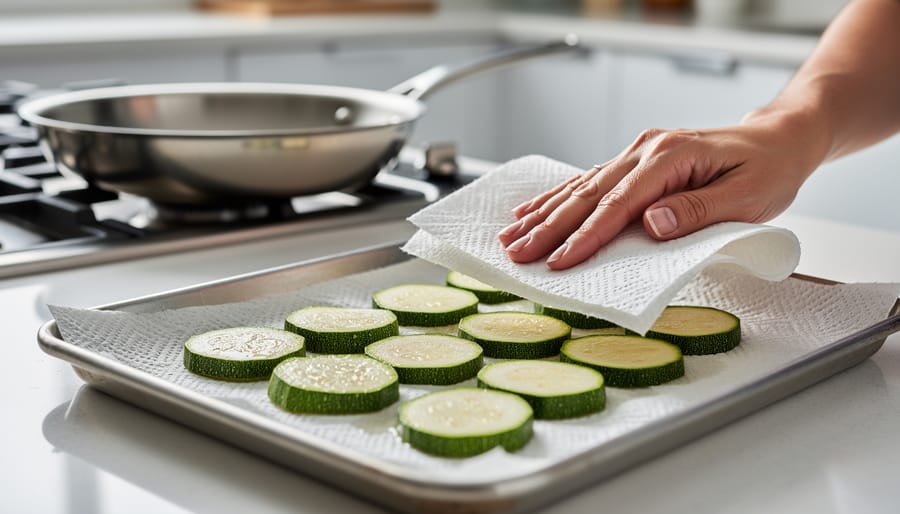
Start by rinsing your zucchini under cool water to remove any dirt or debris, then pat them dry with a clean kitchen towel. Trim off both ends, about a quarter-inch from each side, and discard them.
Now comes the fun part: deciding how to cut your zucchini. For quick, even cooking, slice them into rounds about one-quarter to one-third inch thick. This thickness gives you the best of both worlds, enough surface area for beautiful browning and a tender interior that won’t turn mushy. If you’re working with larger zucchini, cut them in half lengthwise first, then slice into half-moons so the pieces cook at the same rate as smaller rounds. For stir-fries or mixed veggie dishes, you can also cut zucchini into strips or small cubes, just keep the pieces roughly the same size.
Here’s the step most home cooks skip, but it makes all the difference: removing excess moisture. Zucchini is about 95% water, and all that liquid will steam your vegetables instead of letting them caramelize. Lay your cut zucchini on paper towels or a clean dish towel, sprinkle lightly with salt, and let them sit for ten to fifteen minutes. The salt draws out moisture, similar to how salt and cooking speed work together with other vegetables, then you simply blot the pieces dry before they hit the pan. This one step transforms soggy zucchini into golden, flavorful bites.
Step-by-Step Stovetop Cooking Process
Heat Control and Timing
Set your burner to medium-high, which typically falls between settings 6 and 7 on most electric stoves or a moderate flame on gas ranges. This temperature creates the ideal environment for caramelization without scorching. Understanding medium heat settings helps you find that sweet spot where moisture evaporates quickly while natural sugars brown.
Resist the urge to constantly stir or flip your zucchini. Let each side sit undisturbed for 2-3 minutes to develop those golden-brown spots and slightly crispy edges. Moving the pieces too frequently prevents proper contact with the hot pan surface, resulting in steamed rather than sautéed zucchini.
Watch for visual cues: properly cooked zucchini shows distinct caramelized patches with deep golden color, not uniform pale beige. The edges should look slightly darker without turning black or charred. If you see smoke or smell bitterness, reduce heat immediately. The zucchini should release easily from the pan when ready to flip, if it sticks, it needs more time to develop that seared crust.
Flavor Variations and Add-Ins
Once your zucchini develops those golden-brown spots, you can transform it from simple to spectacular with well-timed additions.
Garlic is your first ally. Add minced garlic during the last 60-90 seconds of cooking. Earlier timing burns it; later timing leaves it raw. Two cloves per medium zucchini works beautifully, releasing fragrance without bitterness.
Fresh herbs outperform dried for stovetop cooking. Basil, oregano, or thyme added in the final 30 seconds stay vibrant and aromatic. Dried herbs need a minute longer to bloom, stirred in just before you pull the pan. Italian seasoning (½ teaspoon per zucchini) creates instant Mediterranean warmth.
Finishing touches elevate texture and brightness. A squeeze of lemon juice cuts through any oiliness and wakes up the mild zucchini flavor. Grated Parmesan melts slightly when sprinkled over hot zucchini straight from the pan, creating savory depth.
Simple combinations worth remembering: garlic with red pepper flakes for heat, lemon zest with fresh parsley for brightness, or butter with sage for richness. Each addition respects zucchini’s delicate nature while building layers of flavor that make this humble vegetable shine.
How to Tell When Your Zucchini Is Done
Perfectly cooked stovetop zucchini shows golden-brown spots on the surface with occasional light char marks around the edges. The slices should have caramelized patches where they contacted the hot pan, not uniform paleness or deep black burns.
Press a piece gently with your spatula. It should yield slightly but still hold its shape, not collapse into mush. A fork should pierce the zucchini with gentle resistance, similar to al dente pasta. The center stays tender-crisp rather than raw-crunchy or waterlogged-soft.
Taste a piece to confirm. The flavor should be sweet and slightly nutty from caramelization, with pleasant seasoning throughout. If it tastes bland, you likely removed it too early. If it’s bitter, the heat was too high and the sugars burned.
The most common mistake is cooking too long at low heat, which steams the zucchini into a soggy mess instead of browning it. Conversely, blasting it on high heat chars the outside while leaving the inside raw. Medium-high heat for three to four minutes per side typically hits the sweet spot. Undercooked zucchini squeaks when you bite it and tastes grassy. Overcooked pieces fall apart and release puddles of liquid into your pan.
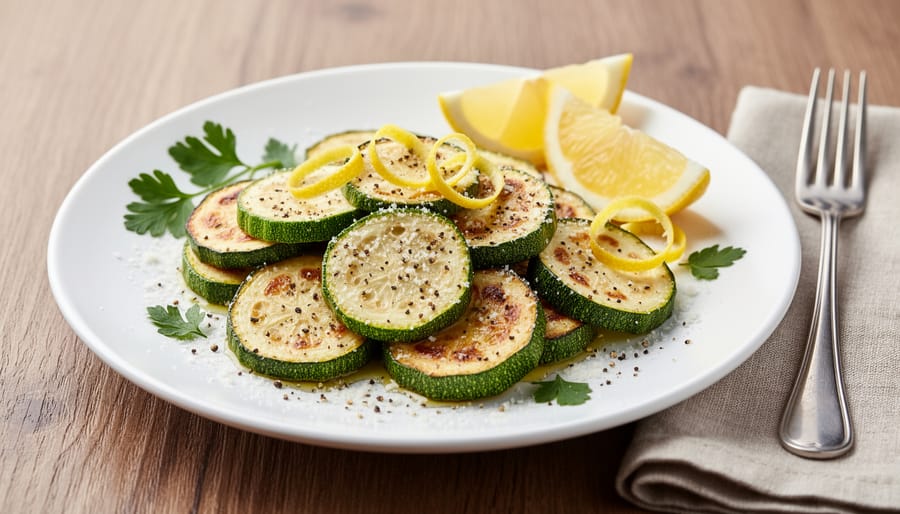
Serving Suggestions and Next Steps
Your perfectly cooked stovetop zucchini shines as a simple side alongside grilled chicken, fish, or steak. Toss it warm into pasta with olive oil and Parmesan for an effortless weeknight dinner, or layer it over quinoa or farro bowls with a drizzle of tahini. It also works beautifully tucked into grain bowls, frittatas, or wraps.
Store leftovers in an airtight container in the refrigerator for up to three days. Reheat gently in a skillet over medium heat to restore some crispness, or enjoy cold in salads and sandwiches. Avoid microwaving if you want to preserve texture.
Once you’ve mastered this technique, apply it to other seasonal vegetables. Summer squash, bell peppers, and snap peas all respond wonderfully to the same stovetop method. Cooking seasonally reduces your environmental footprint and brings variety to your table. The warmth of a well-seasoned skillet becomes a gateway to preparing whatever your garden or farmers market offers, turning simple ingredients into nourishing meals that make your kitchen feel like the heart of your home.
Common Questions About Cooking Zucchini on the Stovetop
Most home cooks have similar questions when they start cooking zucchini on the stovetop, and clearing up these uncertainties helps you get better results every time.
Do I need to peel zucchini before cooking it?
No, you don’t need to peel zucchini. The skin is tender, edible, and contains nutrients and color that enhance the dish. Just wash the zucchini well before slicing.
Can I use frozen zucchini for stovetop cooking?
Frozen zucchini releases too much water when thawed and won’t brown properly in a skillet. Fresh zucchini is essential for achieving the caramelized, tender-crisp texture that makes stovetop cooking worthwhile.
What if my zucchini releases too much water while cooking?
If your pan fills with liquid, you skipped the salting step or overcrowded the skillet. Remove excess water with a spoon, increase the heat slightly, and give the zucchini more space to evaporate moisture and brown.
How do I prevent zucchini from sticking to the pan?
Use enough oil to coat the pan lightly, preheat properly before adding zucchini, and resist the urge to move pieces around constantly. Let them sit undisturbed for 2-3 minutes to develop a golden crust that naturally releases from the surface.
Can I cook other vegetables together with zucchini?
Yes, but choose vegetables with similar cooking times, like yellow squash or bell peppers. Add denser vegetables like onions a few minutes earlier, and delicate ones like cherry tomatoes near the end.
What’s the best oil for cooking zucchini on the stovetop?
Olive oil offers great flavor for Mediterranean-style dishes, while neutral oils like avocado or grapeseed handle higher heat without smoking. Butter works beautifully but watch it closely to prevent burning.
These answers address the most common stumbling blocks, but don’t hesitate to experiment once you understand the basics. The beauty of stovetop cooking is how quickly you can adjust and learn from each batch, building confidence with a technique that brings fresh, seasonal vegetables to your table with minimal fuss.
Mastering stovetop zucchini transforms a humble vegetable into something special, and it’s one of those core techniques that makes everyday cooking feel effortless. Once you’ve nailed the basics, proper heat, minimal moisture, and patience for that golden-brown finish, you’ll find yourself reaching for zucchini again and again throughout the growing season.
This simple skill connects you to seasonal, sustainable cooking without any fuss. You’re using direct heat efficiently, working with fresh produce at its peak, and creating nourishing meals that bring genuine warmth to your table. The beauty lies in its simplicity: a hot pan, good ingredients, and just a few minutes standing at the stove.
Now that you know the method, experiment with different vegetables as seasons change. The same principles work beautifully with summer squash, bell peppers, or green beans. Each time you cook this way, you’re building confidence and creating the kind of cozy, home-cooked meals that make a house feel truly lived in.