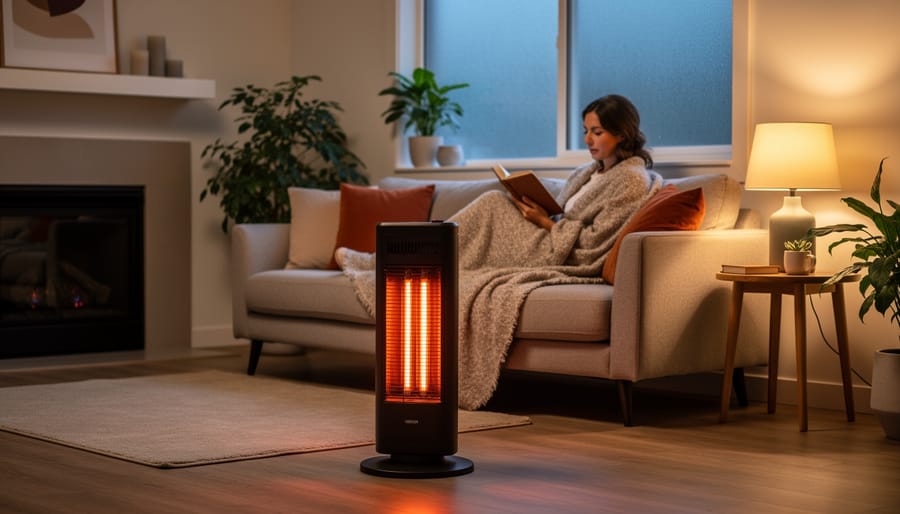


Choose infrared heaters rated at 1500 watts or less for typical room heating, as they convert nearly 100% of electricity into direct warmth without wasting energy on heating air that escapes through drafts. Position units 3-6 feet from your primary seating areas to maximize the penetrating warmth that heats people and objects rather than empty space, cutting your heating bills by 30-50% compared to traditional forced-air systems.
Look for models with programmable thermostats and automatic shutoff features that prevent energy waste when rooms reach your target temperature. Carbon or quartz heating elements offer the longest lifespan and most consistent performance, typically lasting 5,000-10,000 hours before needing replacement. Wall-mounted or ceiling-mounted units work best in rooms with limited floor space, while portable towers provide flexibility for moving warmth wherever your family gathers.
Calculate one watt of infrared heating per 10 square feet of space for well-insulated rooms, increasing to 1.25 watts per 10 square feet in poorly insulated areas. Pairing infrared heaters with Efficient Indoor Heating Strategies like zone heating allows you to lower your central thermostat while maintaining comfort in frequently used spaces, delivering monthly savings of $50-150 during peak winter months.
These supplemental heaters complement your existing fireplace setup beautifully, providing instant warmth without combustion byproducts or ventilation requirements. Their silent operation and compact footprint make them ideal for bedrooms, home offices, and basement spaces where traditional heating falls short.
Why Infrared Heaters Work Differently (And Why That Matters)
Think back to the last time you sat beside a crackling fireplace on a cold evening. You felt that immediate, comforting warmth on your skin, even though the air around you might still have been cool. That’s exactly how infrared heaters work, and it’s fundamentally different from how your central heating operates.
Traditional heating systems warm the air in your room, which then circulates to eventually make you feel comfortable. It’s an indirect process that takes time and wastes energy heating empty space. Infrared heaters skip that middleman entirely. They emit invisible infrared light waves that travel through the air without warming it, then transfer heat directly to objects and people in their path. When those waves reach you, your furniture, or your walls, they’re absorbed and converted to warmth right there.
This direct heating approach mirrors what the sun does on a spring day when you feel warm despite cool air temperatures. It’s also why infrared heating feels more immediate and comfortable than waiting for a furnace to cycle warm air throughout your house. You’re being heated directly, not relying on warmed air to drift your way.
The efficiency advantage becomes clear when you consider what you’re actually trying to accomplish. You want to feel warm, not heat thousands of cubic feet of air that escapes every time someone opens a door. When comparing infrared versus oil-filled heaters or conventional systems, infrared technology delivers comfort where you need it without the energy waste of heating your entire environment first.
This targeted approach means infrared heaters can make you comfortable while using less electricity overall. They’re particularly effective as supplemental heating in spaces where you spend time, allowing you to lower your whole-house thermostat while maintaining comfort in the rooms that matter most. That’s the kind of practical efficiency that translates directly to lower energy bills.

The Real Money-Saving Benefits of Efficient Infrared Heaters
Energy Consumption: What the Numbers Actually Mean
Understanding what your infrared heater actually costs to run makes all the difference in your heating decisions. Let’s break down the numbers in a way that connects directly to your monthly budget.
Most infrared heaters range from 300 to 1,500 watts. A 1,500-watt unit running for one hour uses 1.5 kilowatt-hours of electricity. With the average electricity rate around 16 cents per kWh, that’s about 24 cents per hour. If you use it for four hours daily, you’re looking at roughly $28 per month—similar to leaving a few light bulbs on throughout the day.
The real efficiency advantage appears when you compare infrared heaters to traditional forced-air systems. Because infrared heat warms people and objects directly rather than heating entire rooms of air, you can often heat your immediate space for 30-40% less. Think of it like the difference between warming yourself by a fireplace versus heating your whole house to feel comfortable in one room.
For eco-conscious homeowners, this targeted heating approach means you’re not wasting energy warming unused spaces. Many modern infrared heaters also include programmable thermostats, letting you automatically reduce consumption during the day or night. Over a typical heating season, these smart features can translate into hundreds of dollars in savings while reducing your environmental footprint.
Zone Heating: Heat Only Where You Live
One of the greatest advantages of infrared heaters is their ability to provide targeted heating solutions exactly where you need them most. Rather than cranking up your central heating to warm every room in your home, infrared heaters let you focus on the spaces you actually use throughout the day.
Think of zone heating as a smarter approach to comfort. If your family gathers in the living room during evenings, why waste energy heating unused bedrooms? An infrared heater can supplement your fireplace or work independently to create cozy zones throughout your home. This strategy is particularly effective in larger homes where heating every square foot becomes unnecessarily expensive.
The beauty of this approach is its flexibility. You can warm your home office during work hours, shift heat to the dining area for dinner, and create a comfortable bedroom environment at night—all without overwhelming your main heating system. Many homeowners find that combining their fireplace ambiance with strategically placed infrared heaters creates the perfect balance of warmth and efficiency, potentially reducing overall heating costs by twenty to forty percent while maintaining the comfort levels they love.
Instant Heat Means Less Wasted Energy
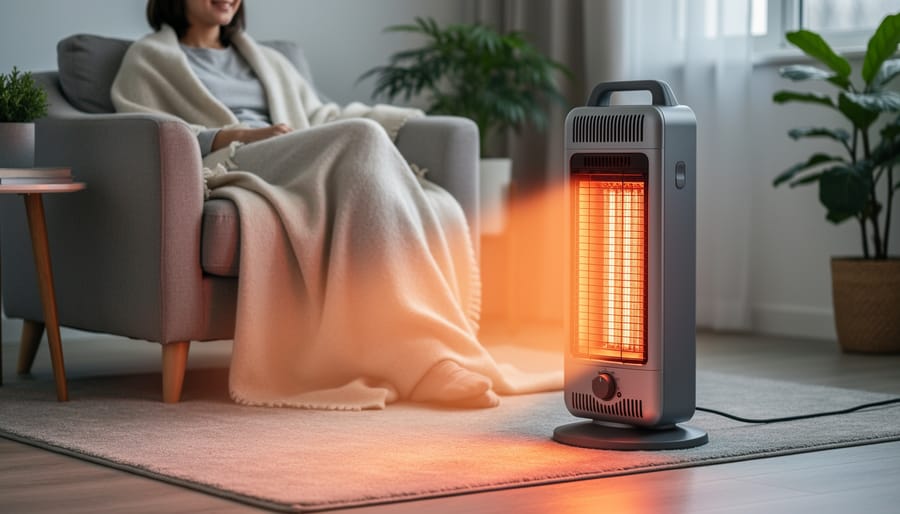
One of the most compelling benefits of infrared heaters is their ability to deliver warmth the moment you switch them on. Unlike traditional heating systems that need time to warm up the air in your room, infrared technology works instantly, much like stepping into the glow of your favorite fireplace. There’s no waiting around in the cold for your space to reach a comfortable temperature.
This immediate heat delivery translates directly into energy savings. Think about it: when you walk into a chilly room and flip on a conventional heater, you’re burning energy during those initial minutes or even hours while it builds up to your desired warmth. With infrared heaters, you get that cozy feeling right away, which means you can turn them on only when you need them and off when you don’t, without any wasted warm-up time.
This on-demand heating approach fits beautifully into modern, eco-conscious living. You’re not paying to heat empty rooms or waiting through energy-draining preheat cycles. Instead, you enjoy the same instant comfort you’d get from lighting a fire, but with the convenience of a simple switch and the efficiency that helps reduce your overall energy consumption and heating bills.
Choosing the Right Infrared Heater for Your Space
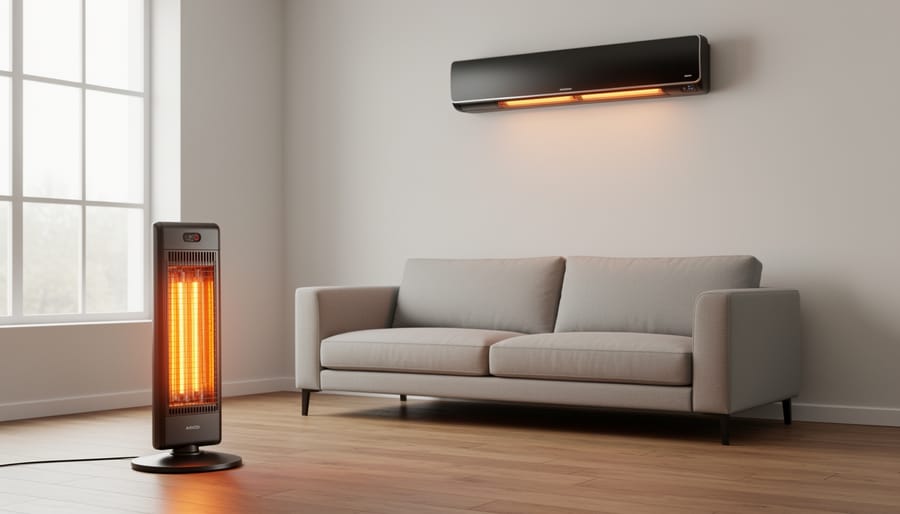
Portable vs. Mounted: Which Style Fits Your Life
Choosing between a portable and mounted infrared heater really comes down to how you live in your space. Let’s break down what works best for different situations.
Portable infrared heaters offer incredible flexibility for homeowners who want warmth exactly where they need it. Think of them as your heating companion that follows you through your daily routine. Working from home in your study during the day? Roll your heater over. Settling into the living room for evening relaxation? Bring it along. These freestanding units are perfect for renters, anyone who frequently rearranges furniture, or households where different family members use different rooms throughout the day. They’re also wonderful as supplemental heat sources, letting you lower your central thermostat while staying cozy in occupied spaces, which translates to real energy savings.
Wall or ceiling-mounted infrared heaters, on the other hand, become part of your home’s permanent heating infrastructure. They’re ideal for rooms with consistent heating needs like bathrooms, workshops, or sunrooms where floor space is precious. Mounted units shine in garages and basements where a portable heater might get knocked over or create a tripping hazard. Many homeowners love them for patios and outdoor entertaining areas, creating comfortable zones without sacrificing square footage. They also provide a cleaner, more streamlined aesthetic that blends seamlessly with your décor.
Consider your lifestyle patterns, room layouts, and whether you value mobility or permanent placement when making your choice. Both styles deliver efficient infrared warmth, just in different ways.
Sizing Your Heater: The Room-by-Room Approach
Getting the right size infrared heater makes all the difference between cozy comfort and wasted energy. Think of it like choosing the right fireplace for your space—too small and you’re left chilly, too large and you’re burning through electricity unnecessarily.
Here’s a simple formula to get you started: most infrared heaters effectively warm about 10 watts per square foot. For a 150-square-foot bedroom, you’d need roughly 1,500 watts. A spacious 300-square-foot living room would call for around 3,000 watts, which you could achieve with two smaller units or one larger model.
Your living room deserves special consideration since it’s where you gather with family. Look for heaters with wider heating angles or consider placing two units in opposite corners for even warmth distribution. This creates that inviting atmosphere you’d expect from a traditional fireplace without the installation costs.
Bedrooms work beautifully with compact infrared heaters in the 750 to 1,500-watt range. Position them where the radiant heat can reach your sleeping area directly, and you’ll enjoy restful warmth without overheating the entire space.
Home offices benefit from targeted heating solutions around 1,000 to 1,500 watts. Since you’re stationary at your desk, infrared technology shines here by warming you directly rather than wasting energy heating empty corners.
Don’t forget to factor in ceiling height, insulation quality, and window coverage. Rooms with cathedral ceilings or poor insulation may need 15-20 percent more heating capacity. This eco-friendly approach to zone heating lets you customize comfort exactly where you need it.
Features That Actually Make a Difference
When shopping for an infrared heater, focus on features that truly enhance performance and safety rather than flashy add-ons. A quality programmable thermostat is essential—it maintains your desired temperature automatically and prevents energy waste by cycling the unit on and off as needed. Look for timers that let you schedule heating around your daily routine, warming rooms before you wake up or arrive home without running constantly.
Safety sensors are non-negotiable. Tip-over protection instantly shuts off the heater if it’s knocked over, while overheat protection prevents fire hazards. These aren’t extras—they’re must-haves, especially if you have children or pets.
Remote controls add genuine convenience for adjusting settings from your couch, but don’t be swayed by gimmicky claims about “NASA technology” or “special coatings” that dramatically boost efficiency. What really matters is wattage appropriate for your room size and build quality that ensures consistent, reliable heat season after season. An eco-friendly infrared heater with these core features will serve you better than one loaded with bells and whistles that sound impressive but don’t impact your comfort or energy bills.
Eco-Friendly Heating: How Infrared Fits Your Sustainable Home
When you’re thinking about sustainable home heating, infrared heaters deserve a spot in your conversation alongside your fireplace and other eco-conscious heating strategies. These efficient heaters align beautifully with the values of environmentally-minded homeowners who want comfort without compromise.
The environmental advantages start with how infrared heaters use electricity. Unlike gas or oil-based heating systems, infrared heaters produce zero on-site emissions. There’s no combustion happening, which means no carbon monoxide, no particulates, and no harmful byproducts entering your living space or the atmosphere. When you pair an infrared heater with renewable energy sources like solar panels or wind power, you’re creating an exceptionally clean heating solution that dramatically reduces your carbon footprint.
This compatibility with green energy makes infrared heaters particularly appealing for homeowners already invested in sustainability. Imagine using your rooftop solar panels to power targeted heating in the rooms you use most, while your traditional fireplace creates ambiance in your main living area. It’s a complementary approach that maximizes both efficiency and eco-friendliness.
The energy efficiency we discussed earlier translates directly into environmental benefits. Because infrared heaters convert nearly all their electricity into usable heat and deliver it precisely where needed, you’re not wasting energy heating empty spaces or losing warmth through ductwork. This targeted approach means less overall energy consumption, which reduces demand on power grids and lowers emissions from electricity generation.
Consider the lifecycle perspective too. Quality infrared heaters typically last for years with minimal maintenance, avoiding the waste associated with frequently replacing less durable heating solutions. Many units contain recyclable components, and their simple construction means fewer materials used in manufacturing compared to complex HVAC systems.
For homeowners balancing their love of traditional fireplaces with environmental responsibility, infrared heaters offer flexibility. Use your wood-burning fireplace on special occasions for that unmatched ambiance, then rely on efficient infrared heat for everyday comfort. Or supplement your eco-friendly electric or gas fireplace with portable infrared units in bedrooms and home offices. This multi-layered heating strategy lets you reduce your environmental impact while maintaining the warmth and coziness that makes a house feel like home.
Making Infrared Heaters Work With Your Fireplace
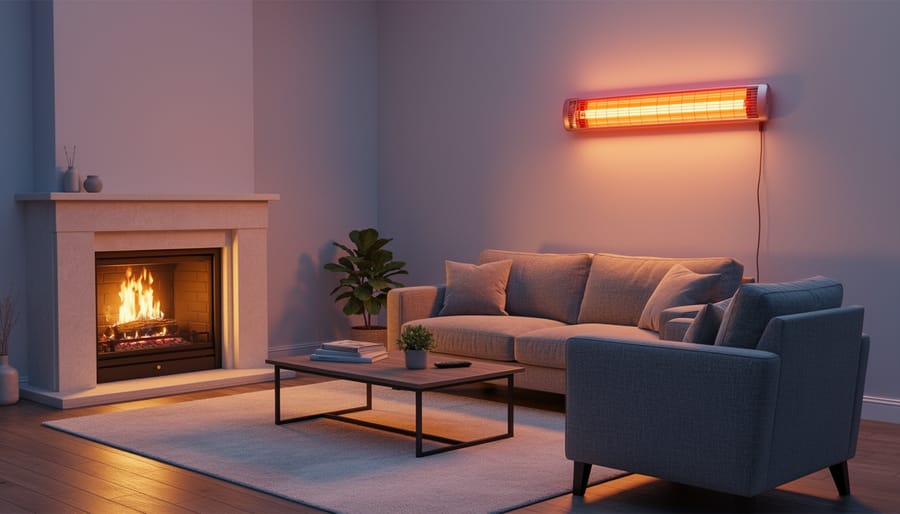
Your fireplace creates an inviting focal point and delivers wonderful ambiance, but let’s be honest—it doesn’t always heat your entire home efficiently. This is where infrared heaters shine as complementary heating partners rather than replacements for your beloved hearth.
Think of infrared heaters as your fireplace’s supporting cast. While you enjoy the crackling flames and visual warmth in your living room, an infrared heater can take care of those rooms where installing a fireplace simply isn’t practical. Your home office, guest bedroom, or finished basement can benefit from the same kind of direct, comfortable heat without the construction costs or structural requirements of adding another fireplace.
One particularly smart strategy involves using infrared heaters to extend your fireplace’s effectiveness. Position a portable infrared unit in adjacent rooms or hallways to capture some of the warmth your fireplace generates while supplementing it with targeted heat. This creates comfortable temperature zones throughout your home without cranking up the central heating system and wasting energy on empty rooms.
During those transitional seasons when a full fireplace fire feels like overkill but you still want cozy warmth, infrared heaters offer the perfect middle ground. They deliver that instant, radiant comfort you love about your fireplace with the convenience of simple temperature control. You can save your firewood for special evenings and gatherings while still maintaining that warm, inviting atmosphere daily.
The beauty of combining these heating solutions lies in flexibility. Your fireplace remains the heart of your home’s warmth and character, while infrared heaters work quietly in the background, filling in the gaps and ensuring every corner of your home feels welcoming. Together, they create an eco-friendly heating strategy that reduces your reliance on fossil fuel-based central heating while maintaining the comfort and lifestyle you value. You’re not choosing between old-world charm and modern efficiency—you’re embracing both.
Safety and Maintenance: Keeping Your Heater Running Efficiently
Keeping your infrared heater in top condition doesn’t require much effort, but a few smart habits will help it run efficiently for years to come. Think of it like caring for your fireplace—regular attention makes all the difference.
First, let’s talk about placement. Give your heater room to breathe by keeping it at least three feet away from curtains, furniture, and anything flammable. Place it on a stable, level surface where it won’t get knocked over, and avoid high-traffic areas where someone might trip over the cord. If you’re using a wall-mounted unit, make sure it’s securely fastened according to manufacturer instructions.
Dust is an infrared heater’s biggest enemy. Even a thin layer can reduce efficiency and force your unit to work harder. Once a month, unplug your heater and gently wipe down the heating elements and reflective surfaces with a soft, dry cloth. For portable models, check the air vents and vacuum away any accumulated dust or pet hair.
While infrared heaters are remarkably safe, following basic safety practices for infrared heaters protects your home and family. Never run extension cords—plug directly into wall outlets to prevent overheating. Most quality units include automatic shut-off features and tip-over protection, but it’s still wise to turn them off when leaving the room for extended periods.
Check your power cord regularly for fraying or damage, and inspect the plug for any signs of overheating. These simple steps take just minutes but significantly extend your heater’s lifespan while maintaining peak efficiency. When you combine proper maintenance with the eco-friendly nature of infrared heating, you’re investing in sustainable comfort that pays dividends season after season.
Creating a truly warm and inviting home goes beyond just cranking up the thermostat. Efficient infrared heaters offer a smart, sustainable way to complement your existing heating strategy, whether you’re cozying up by a traditional fireplace or exploring modern heating solutions. These innovative devices deliver targeted warmth where you need it most, reducing energy waste while keeping your family comfortable during those chilly months.
Now’s the perfect time to evaluate how you’re heating your home. Are you spending too much on energy bills while certain rooms remain uncomfortably cold? Infrared heaters can fill those gaps, providing instant, focused warmth that works beautifully alongside your primary heating system. They’re particularly valuable in spaces where traditional heating struggles, like drafty sunrooms, workshops, or bedrooms that need a quick temperature boost.
By incorporating infrared heating into your home comfort strategy, you’re making a choice that benefits both your wallet and the environment. These efficient heaters represent a practical step toward creating the warm, cozy atmosphere every homeowner deserves while embracing eco-friendly technology that reduces your carbon footprint. Your home should be your sanctuary, and the right combination of heating solutions ensures it stays that way all winter long.