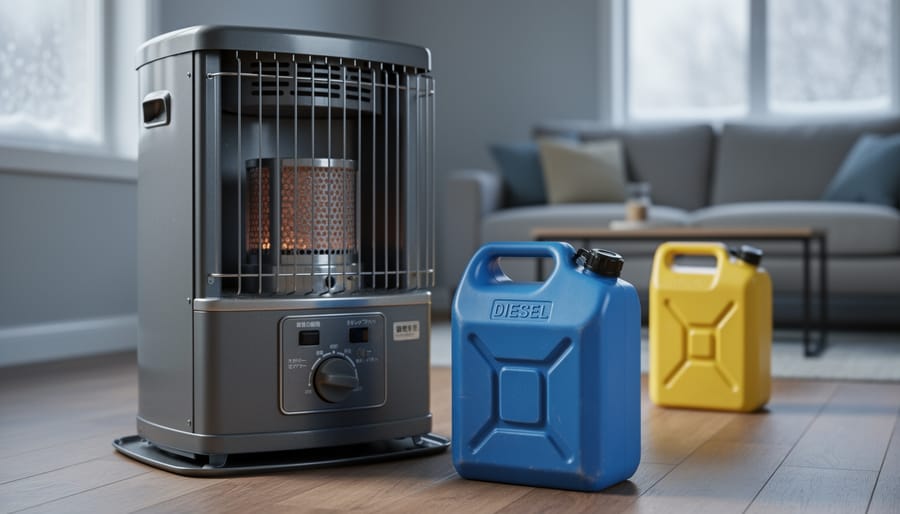


Stop before pouring diesel fuel into your kerosene heater. While diesel and kerosene may look similar and both come from petroleum, using diesel in a kerosene heater creates serious safety hazards and will damage your heating system. Diesel fuel has a higher flash point and burns with a thicker, oilier consistency that kerosene heaters simply aren’t designed to handle.
The appeal is understandable. Diesel costs less per gallon and might be easier to find during winter shortages. But the risks far outweigh any potential savings. Diesel produces excessive soot that clogs your heater’s wick within hours, releases dangerous levels of carbon monoxide into your living space, and generates noxious fumes that make your home unlivable. The incomplete combustion also leaves behind harmful particulates that affect indoor air quality and can trigger respiratory issues for your family.
Your kerosene heater’s manufacturer designed it specifically for 1-K grade kerosene, which burns clean and produces steady, reliable warmth without the toxic byproducts diesel creates. Even a small amount of diesel contamination can ruin a perfectly good wick and leave lasting odors throughout your home.
Rather than compromise your family’s safety and your heater’s performance, the solution lies in proper fuel planning and storage. Understanding which kerosene grades work best, how to store fuel correctly for emergency situations, and recognizing quality fuel ensures your heater provides the cozy, efficient warmth you’re counting on throughout the cold months ahead.
Why People Consider Using Diesel in Kerosene Heaters
If you’re contemplating whether diesel fuel could work in your kerosene heater, you’re not alone in this thought process. Many homeowners arrive at this question for reasons that initially seem quite practical and reasonable.
The most common motivation is cost savings. Diesel fuel is often less expensive per gallon than kerosene, especially high-grade K-1 kerosene. When you’re heating your home throughout a long winter, those price differences can appear significant on paper. For families watching their heating budget carefully, the temptation to save a few dollars per gallon becomes understandable.
Availability during emergencies presents another compelling scenario. Imagine a winter storm has knocked out your power, and you need supplemental heat immediately. You might have diesel fuel stored for a generator or farm equipment, while finding kerosene requires a trip to a specialty retailer that may be closed or inaccessible. In these moments of urgency, using what’s on hand seems like a practical solution.
There’s also genuine confusion about fuel types. Both diesel and kerosene are petroleum distillates with similar appearances, and you might have heard someone mention using diesel in a pinch without obvious disaster. Some folks assume that because both fuels come from crude oil and serve combustion purposes, they’re interchangeable enough for emergency use.
These reasons make logical sense from a homeowner’s perspective, particularly when you’re focused on keeping your family warm and comfortable. However, understanding why something seems reasonable doesn’t make it safe or effective. The reality of how kerosene heaters function reveals why diesel fuel creates problems that outweigh any perceived benefits.
The Critical Differences Between Diesel and Kerosene
Flash Point and Ignition Safety
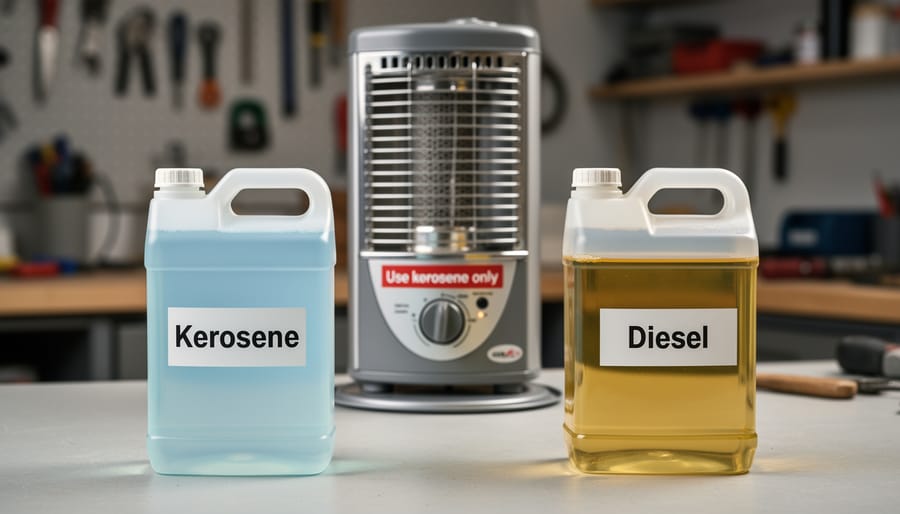
Understanding flash points is essential when considering fuel alternatives for your home heating. Kerosene has a flash point around 100-162°F, while diesel sits considerably higher at 126-205°F. This difference might seem minor, but it creates real challenges for your heater’s safety systems.
Your kerosene heater’s ignition mechanism was specifically engineered to work with kerosene’s characteristics. When you introduce diesel fuel, the higher flash point means it requires more heat to vaporize and ignite properly. This mismatch can lead to several concerning issues. You might experience delayed ignition, where fuel builds up before finally catching—creating a potentially dangerous flare-up that could startle you or damage the heater.
The safety sensors in your heater are calibrated for kerosene’s behavior. Diesel’s sluggish vaporization can confuse these systems, potentially causing them to shut down unexpectedly or, worse, fail to detect actual problems. This isn’t just about inconvenience; it’s about the protective features that keep your home safe from carbon monoxide buildup and fire hazards.
While diesel might seem like an eco-friendly cost-saving alternative, compromising your heater’s designed safety parameters puts your household at unnecessary risk. Stick with proper kerosene to ensure your heating solution remains both effective and safe.
Burn Quality and Indoor Air Impact
When diesel fuel burns in a kerosene heater, the difference in combustion quality becomes immediately apparent. Unlike the clean flame you’d expect from proper kerosene, diesel produces noticeably more soot and black smoke. This happens because diesel’s heavier molecular structure requires higher temperatures to burn completely, and kerosene heaters simply aren’t designed to reach those levels.
The impact on your indoor air quality can be significant and concerning. Diesel combustion in these heaters releases increased levels of carbon monoxide, particulate matter, and other harmful emissions directly into your living space. You’ll likely notice a stronger, more pungent odor that lingers in fabrics and surfaces. The excess soot doesn’t just disappear—it settles on walls, furniture, and gets into your ventilation system.
For homeowners who value both comfort and healthy indoor environments, this trade-off isn’t worth the minimal cost savings. The smoke and emissions can trigger respiratory irritation, headaches, and worsen conditions like asthma. Plus, that black residue coating your heater’s components will require frequent cleaning and may shorten your unit’s lifespan considerably. Creating a warm, inviting atmosphere shouldn’t come at the expense of your family’s health and home’s cleanliness.
What Actually Happens When You Burn Diesel in a Kerosene Heater
Let’s talk about what really goes down when you pour diesel into a kerosene heater—spoiler alert: nothing good for your home’s comfort or your family’s safety.
The moment you light that wick with diesel fuel, you’re dealing with incomplete combustion. Diesel is thicker and burns differently than kerosene, which means it doesn’t vaporize properly in heaters designed for lighter fuel. Instead of that clean, efficient flame you expect, you’ll get a smoky, sputtering burn that leaves black soot everywhere—on your walls, ceiling, and especially inside the heater itself.
Here’s where things get serious: those carbon monoxide risks you’ve heard about with any combustion heater? They skyrocket with diesel. The incomplete burning produces significantly more carbon monoxide, turning what should be a cozy heating solution into a genuine health hazard. This invisible danger is exactly why using the wrong fuel isn’t just about performance—it’s about your family’s wellbeing.
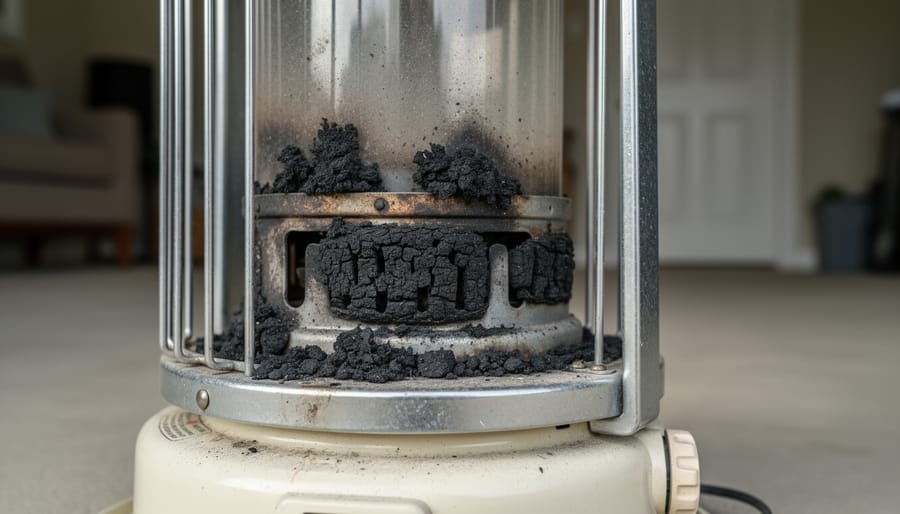
Your heater’s components will suffer almost immediately. Diesel’s heavier composition causes rapid wick damage, clogging the fibers and preventing proper fuel absorption. What should last you an entire season might fail within days. The chimney and burner assembly will accumulate carbon deposits at an alarming rate, choking off airflow and making the situation progressively worse with each use.
Then there’s the smell. If you’ve ever been near diesel fumes, imagine that concentrated inside your living space. The odor isn’t just unpleasant—it permeates fabrics, carpets, and everything else in the room. That welcoming home ambiance you’re trying to create? Gone, replaced by an industrial stench that lingers long after you’ve shut the heater down.
Beyond the immediate problems, you’re looking at voided warranties. Manufacturers specifically prohibit diesel use, and any damage caused by improper fuel means you’re paying out of pocket for repairs or replacement. What might have seemed like a money-saving shortcut becomes an expensive mistake that compromises both your comfort and your investment in quality home heating solutions.
Proper Kerosene Selection and Quality Standards
Now that we’ve established why diesel isn’t the right choice, let’s talk about what fuel will keep your home warm and cozy all winter long. Understanding kerosene quality makes all the difference between a heater that performs beautifully and one that causes headaches.
When shopping for kerosene, you’ll encounter two main grades: 1-K and 2-K. Think of 1-K as the premium option for indoor heating. It’s been refined to contain less than 0.04% sulfur, which means minimal odor and virtually no soot production. This is the gold standard for kerosene heaters in your home. The 2-K grade, while less expensive, contains higher sulfur levels (up to 0.3%) and is really only suitable for outdoor applications or well-ventilated spaces. Using 2-K indoors creates unpleasant fumes and can leave black residue on your walls and ceiling—not exactly the warm ambiance you’re going for.
Fresh kerosene should be crystal clear or have just a slight yellow tint, like a pale straw color. If it looks cloudy, has visible particles floating in it, or appears darker amber, that’s your sign to avoid it. Quality kerosene also has a distinctive but not overpowering smell. An extremely strong or rancid odor suggests contamination or degradation.
When purchasing kerosene, always buy from reputable fuel suppliers who store their product properly and have good turnover. Ask when the fuel was delivered and how it’s been stored. Kerosene that’s been sitting in tanks for months or exposed to extreme temperature fluctuations can deteriorate.
Here’s a practical tip: if you’re filling your own containers, choose blue containers specifically designed for kerosene. This helps you avoid dangerous mix-ups with other fuels and ensures you’re following best practices for safe fuel storage. Quality fuel from the start means fewer maintenance issues, better heat output, and a healthier indoor environment for your family.
Smart Fuel Storage Practices for Kerosene Heaters
Container Selection and Labeling
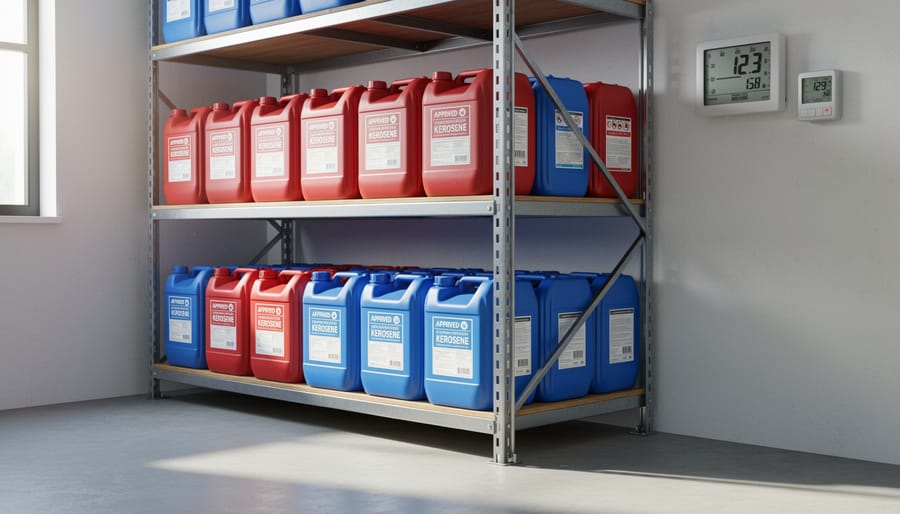
Choosing the right container for your kerosene isn’t just about convenience—it’s essential for maintaining fuel quality and keeping your home safe. Always store kerosene in approved containers specifically designed for this purpose. These containers are typically blue, which is the universal color code for kerosene, helping you avoid dangerous mix-ups with other fuels like gasoline (red containers) or diesel (yellow containers).
Proper containers protect your fuel from contamination and degradation. Quality kerosene containers are made from materials that prevent rust, sediment buildup, and moisture intrusion—all factors that can compromise your heater’s performance and your indoor air quality. Think of it as protecting an investment in your home’s comfort and safety.
Label every container clearly with the fuel type and purchase date. This simple habit prevents confusion, especially during emergencies when you might be accessing stored supplies quickly. A clearly marked container also helps other household members understand what they’re handling.
Avoid using old milk jugs, unmarked containers, or anything not specifically rated for fuel storage. These inappropriate containers can leach chemicals into your fuel, degrade over time, and create serious safety hazards. When it comes to heating your home and protecting your family, cutting corners on proper fuel storage simply isn’t worth the risk.
Storage Location and Environmental Conditions
Proper storage is essential for maintaining kerosene quality and ensuring your heater operates safely and efficiently throughout the heating season. Think of fuel storage as protecting an investment in your home’s comfort and safety.
Store kerosene in a cool, dry location where temperatures remain relatively stable, ideally between 50-70°F. Extreme temperature fluctuations can cause condensation inside containers, introducing moisture that degrades fuel quality and promotes bacterial growth. A basement corner or climate-controlled garage often works perfectly.
Sunlight is kerosene’s enemy. UV rays break down fuel compounds over time, reducing performance and creating harmful byproducts. Always choose opaque containers, preferably blue-tinted ones specifically designed for kerosene, and keep them away from windows or direct light exposure.
Moisture prevention cannot be overstated. Even small amounts of water contamination lead to wick deterioration and incomplete combustion. Ensure container caps seal tightly and consider adding a fuel stabilizer for long-term storage beyond a single season.
Adequate ventilation around storage areas prevents vapor accumulation, though kerosene has a relatively low evaporation rate compared to gasoline. Never store fuel inside living spaces or near heat sources, open flames, or electrical equipment. Keep containers on stable surfaces where they won’t tip, and maintain clear access for safe handling during refueling tasks.
Fuel Rotation and Shelf Life Management
Keeping fresh kerosene on hand is essential for efficient, clean-burning heat in your home. Proper kerosene typically maintains its quality for 12 to 18 months when stored correctly in approved containers away from sunlight and temperature extremes. After this period, fuel can degrade and form gums or sediments that clog burners and produce unwanted odors.
To maintain a reliable supply, implement a simple rotation system. Date each container when purchased using a permanent marker, and always use the oldest fuel first. This “first in, first out” approach ensures you never burn stale fuel. Consider purchasing smaller quantities more frequently rather than bulk-buying once yearly, which naturally keeps your supply fresh.
Understanding kerosene storage and evaporation helps you recognize when fuel quality has declined. If your kerosene appears cloudy, smells different, or your heater produces more smoke than usual, it’s time to refresh your supply. This proactive approach prevents the temptation to substitute inappropriate fuels like diesel, keeping your heating experience safe, efficient, and eco-friendly throughout the season.
Emergency Fuel Alternatives That Are Actually Safe
When kerosene truly isn’t available and temperatures are dropping, you do have a few legitimate alternatives that won’t jeopardize your safety or equipment. The key word here is “legitimate” – because not all substitutes are created equal.
Pure lamp oil is your safest bet as an emergency backup. It’s essentially refined kerosene with additional purification, making it cleaner-burning and often less odorous. Many heater manufacturers actually approve lamp oil for their units, though you’ll want to verify this in your specific owner’s manual. Yes, it typically costs more than standard kerosene, but during an emergency, that premium buys you peace of mind and proper performance.
Some manufacturers have also developed proprietary fuel blends specifically designed for their heaters. These formulations often incorporate additives that improve combustion efficiency and reduce emissions – a win for both your home’s air quality and the environment. Again, check your manufacturer’s guidelines to see what they recommend.
Here’s the most important alternative to consider: sometimes the best choice is simply not operating your heater at all. If you can’t source appropriate fuel and temperatures are manageable, relying on your home’s central heating, layering clothing, or using electric space heaters in small areas makes more sense than experimenting with questionable fuels.
Remember, your kerosene heater is meant to enhance your home’s warmth and comfort, not create hazardous situations. When proper fuel isn’t available, patience and alternative heating methods will always trump risky substitutions that could damage your investment or endanger your household.
Maintaining Your Heater for Optimal Fuel Performance
Your kerosene heater’s performance is deeply connected to the quality of fuel you use and how well you maintain the unit. Think of it as a partnership between proper fuel choice and regular upkeep—both working together to create an efficient, eco-friendly heating solution for your home.
Regular wick care stands at the heart of maintaining optimal fuel performance. A clean wick burns fuel more completely, producing better heat output while minimizing odors and emissions. Inspect your wick weekly during heating season, looking for carbon buildup or uneven burning patterns. When you notice black crusty deposits or the flame burns irregularly, it’s time for a dry burn cleaning or wick replacement. This simple maintenance step can dramatically improve fuel efficiency and extend your heater’s lifespan.
Your fuel filter deserves equal attention. This often-overlooked component catches sediment and impurities before they reach your wick, protecting your heater from contamination. Clean or replace your fuel filter at the start of each heating season, and inspect it monthly if you’re using your heater frequently. A clogged filter forces your heater to work harder, wasting fuel and reducing the environmental benefits of efficient heating.
Watch for warning signs that fuel contamination has occurred. Excessive smoke, strong odors, difficulty lighting, or a flame that sputters and changes color indicate problems. Yellow or red flames instead of the proper blue flame signal incomplete combustion, often caused by poor fuel quality or dirty components. If you notice these symptoms, stop using the heater immediately, drain the contaminated fuel safely, and clean all components thoroughly before refilling with fresh, premium 1-K kerosene. This preventive approach protects your investment while maintaining the clean, efficient performance that makes kerosene heaters an environmentally conscious heating choice.
Your home’s comfort and safety are worth getting right the first time. While diesel fuel might seem like a convenient or cost-effective alternative, the reality is clear: it creates serious hazards that simply aren’t worth the risk. From dangerous fumes and incomplete combustion to damaged equipment and carbon monoxide concerns, diesel fuel in kerosene heaters compromises everything these wonderful heating solutions should provide—clean warmth, reliable performance, and peace of mind.
The good news? When you use the right fuel and manage it properly, kerosene heaters deliver exceptional, eco-friendly heating that enhances your home’s ambiance without breaking the bank. Investing in quality 1-K kerosene, storing it correctly in approved containers, and following straightforward maintenance practices ensures your heater operates safely and efficiently for years to come. Think of it as part of your home’s lifestyle—creating that cozy, inviting atmosphere you deserve while being mindful of both your family’s wellbeing and environmental responsibility. Take the time to do it right, and you’ll enjoy worry-free warmth that makes your house feel like home, season after season.