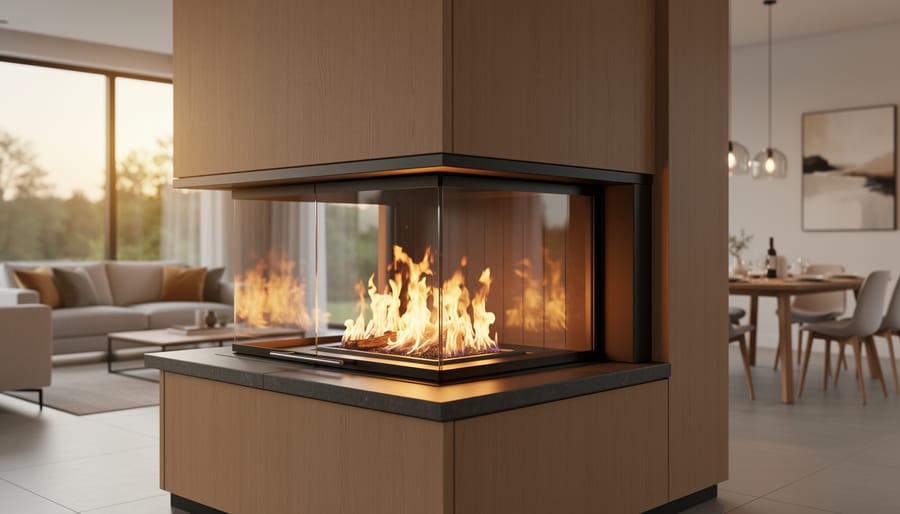


A three-sided gas fireplace transforms your living space into a panoramic showcase of dancing flames, visible from multiple rooms simultaneously. These architectural statement pieces operate through a sophisticated yet reliable system that delivers controlled combustion across an expanded glass viewing area. Unlike traditional single-faced units, three-sided models require specialized burner configurations that distribute flames evenly across the wider firebox, creating an immersive visual experience while maintaining consistent heat output.
Understanding how these units function mechanically helps you make informed decisions about installation placement, venting requirements, and ongoing maintenance. The gas delivery system feeds a uniquely designed burner that supports multi-directional flame patterns, while tempered glass panels on three sides withstand extreme temperatures without compromising safety. Direct vent or vent-free systems manage exhaust differently, affecting both installation complexity and heating efficiency.
Modern three-sided gas fireplaces balance aesthetic impact with practical heating solutions, offering zone heating capabilities that can reduce your overall energy consumption. Safety mechanisms including oxygen depletion sensors, automatic shut-off valves, and cool-touch glass options ensure worry-free operation. Whether you’re considering a peninsula installation between rooms or a stunning corner feature, knowing the mechanical fundamentals empowers you to select a model that combines breathtaking ambiance with dependable, eco-conscious performance for years to come.
What Makes a 3-Sided Gas Fireplace Different
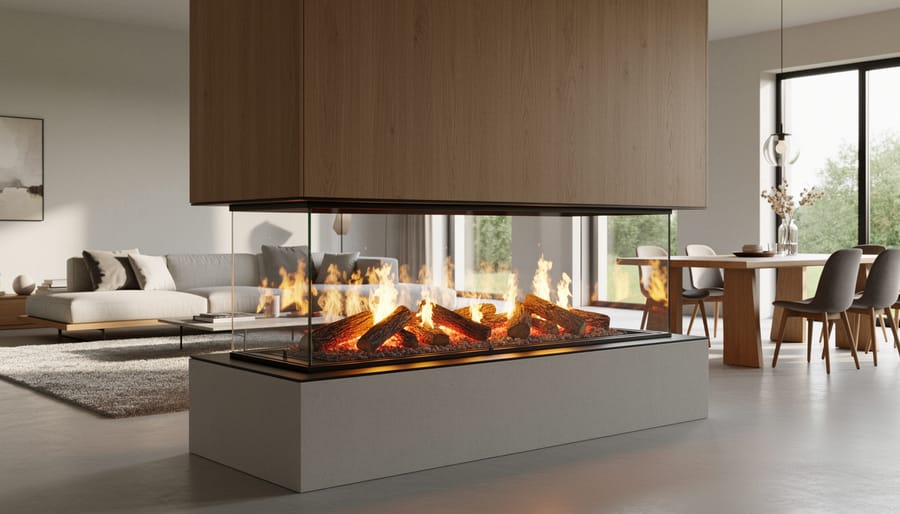
The Peninsula Design Advantage
The three-sided glass design isn’t just about aesthetics—it’s a clever architectural solution that transforms how you experience your living space. Think of it as a transparent room divider that creates distinct zones without blocking the visual flow of your home. This peninsula configuration allows you to enjoy the dancing flames from three different angles simultaneously, making it perfect for open-concept layouts where the kitchen flows into the living area, or where you want to separate a dining space from a family room.
What makes this design particularly brilliant is how it maintains connection between spaces. Someone cooking in the kitchen can enjoy the fireplace’s warmth and ambiance while chatting with family members relaxing on the other side. The unobstructed sightlines mean everyone gets a front-row seat to the fire, regardless of which room they’re in. This multi-directional viewing capability also maximizes your investment—you’re essentially getting three fireplaces’ worth of enjoyment in one unit.
The peninsula placement naturally becomes a focal point that anchors your floor plan, creating inviting gathering spaces on multiple sides while maintaining the open, airy feel that modern homeowners love.
Common Installation Scenarios
Three-sided gas fireplaces truly shine in spaces where they can be appreciated from multiple angles while enhancing your home’s flow and functionality. One of the most popular placements is between adjoining rooms, such as your living and dining areas. This creates a natural divider that maintains visual connection while defining separate spaces, perfect for entertaining or family gatherings where everyone can enjoy the ambiance.
Open-concept homes are ideal candidates for these architectural statements. When positioned as a peninsula feature extending from a wall, a three-sided fireplace becomes an instant focal point that draws the eye and anchors your design scheme. The transparent nature of these units preserves sightlines across your space while adding warmth and character.
Master bedroom suites also benefit from this design, especially when the fireplace separates your sleeping area from a reading nook or bathroom retreat. The gentle glow creates a relaxing atmosphere without sacrificing square footage to traditional wall installations.
Corner installations offer another compelling option, particularly in great rooms or converted loft spaces where you want maximum visual impact. This placement maximizes viewing angles while making efficient use of often-underutilized corner areas, transforming them into sophisticated gathering spots that celebrate both form and function.
The Inner Workings: How 3-Sided Gas Fireplaces Operate
Gas Supply and Burner Configuration
Understanding how gas fireplaces work helps you appreciate the engineering behind 3-sided models, especially when it comes to fuel delivery and flame presentation. These stunning units require a thoughtfully designed gas supply system that creates beautiful, consistent flames visible from multiple angles.
Your 3-sided gas fireplace connects to either your home’s natural gas line or a propane tank. The fuel travels through a dedicated gas line that includes a shut-off valve for safety and maintenance purposes. Before reaching the burner, the gas passes through a pressure regulator that ensures consistent flame performance regardless of fluctuations in your main supply line. This regulation is essential for maintaining the even, attractive flames that make these fireplaces such captivating focal points.
The burner configuration sets 3-sided models apart from traditional fireplaces. Rather than a simple linear burner, these units feature specially designed burner pans that distribute flames across a wider viewing area. Some manufacturers use multiple burner ports arranged strategically to create depth and dimension, while others employ ribbon-style burners that produce dancing flames visible from all three open sides. The burner pattern works with decorative media like fire glass, logs, or stones to enhance the visual appeal from every angle.
Monitoring propane consumption becomes particularly important with 3-sided models, as their larger viewing areas sometimes correlate with higher BTU ratings. Your installer will calibrate the gas pressure to manufacturer specifications, ensuring efficient combustion that maximizes both warmth and ambiance while supporting your eco-friendly heating goals.
Ignition Systems Explained
Modern gas fireplaces offer three main ignition options, each with distinct advantages for your 3-sided model. Understanding these systems helps you choose the perfect balance of convenience and efficiency for your lifestyle.
Standing pilot systems keep a small flame burning continuously, ready to ignite the main burners instantly. While they offer unmatched reliability and work during power outages, they consume gas year-round and aren’t the most eco-friendly choice for energy-conscious homeowners.
Electronic ignition systems provide smarter alternatives. Intermittent pilot ignition (IPI) lights a pilot flame only when you activate your fireplace, then ignites the main burners. Once you turn the unit off, the pilot extinguishes, conserving significant gas and reducing your environmental footprint. Direct spark ignition (DSI) skips the pilot entirely, using an electric spark to light burners directly—the most efficient option available.
For 3-sided fireplaces, electronic ignition systems work exceptionally well since these models typically serve as focal points in frequently used spaces. You’ll appreciate the convenience of instant operation without the ongoing gas consumption. Most manufacturers design electronic systems specifically to handle the larger viewing areas and increased glass surface of peninsula models, ensuring reliable performance while supporting your commitment to sustainable home heating solutions.
Flame Control and Modulation
Modern 3-sided gas fireplaces offer impressive control over your comfort and ambiance, putting the power to customize your experience right at your fingertips. Most models come equipped with thermostatic controls that automatically adjust flame height and heat output to maintain your desired room temperature, creating a set-it-and-forget-it convenience that saves energy while keeping you comfortable.
Remote controls have become standard features, allowing you to adjust flame intensity from across the room without interrupting your relaxation. Many homeowners appreciate the ability to dim the flames for gentle ambiance during warmer evenings or boost them when you need extra warmth. Variable flame settings typically range from a subtle glow to full, dramatic flames that showcase the fire from all three viewing sides.
Smart technology integration takes flame control even further, transforming your fireplace into a connected lifestyle element. WiFi-enabled systems let you adjust settings through smartphone apps, set heating schedules, and even control your fireplace with voice commands through popular home assistants. Some advanced models include occupancy sensors that adjust heat output when you’re away, making them genuinely eco-friendly heating solutions that reduce unnecessary gas consumption. These intelligent features combine the timeless appeal of a real flame with modern energy efficiency, giving you complete control over both ambiance and operating costs.
Venting Requirements: The Critical Difference
Direct Vent vs. Vent-Free Systems
When choosing a 3-sided gas fireplace, understanding your venting options is essential for both safety and performance. The two main systems available are direct vent and vent-free, each offering distinct advantages depending on your home’s layout and your priorities.
Direct vent systems operate using sealed combustion technology, which means they draw fresh air from outside your home for burning and expel all exhaust gases back outdoors through a dedicated venting pipe. This dual-pipe system typically runs horizontally through an exterior wall or vertically through your roof. Because direct vent fireplaces don’t use indoor air for combustion, they maintain your home’s air quality and don’t compete with your HVAC system for oxygen. They’re also highly efficient, with most models converting 70-85% of fuel into usable heat. The sealed design makes them inherently safer, and they’re approved for installation in bedrooms and other enclosed spaces. However, they do require professional installation to handle the venting requirements, which can increase upfront costs.
Vent-free systems, on the other hand, burn gas so completely that they don’t require external venting at all. This makes installation more flexible and affordable, as you can place them almost anywhere with a gas line. They’re also incredibly efficient, converting nearly 100% of fuel into heat for your space. The tradeoff is that they release all combustion byproducts, including water vapor and trace amounts of carbon monoxide, into your room. While modern vent-free units include oxygen depletion sensors for safety, they’re not permitted in all states and may not be ideal for smaller spaces or homes with air quality concerns.
For 3-sided fireplaces showcasing flames from multiple angles, direct vent systems generally provide better long-term value and peace of mind for most homeowners.
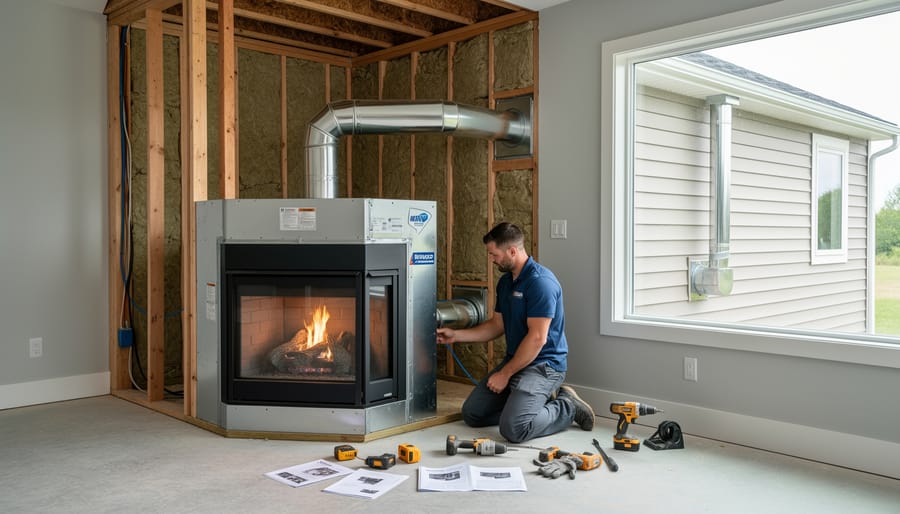
Why 3-Sided Models Need Special Venting Consideration
When you compare a 3-sided gas fireplace to a traditional single-view model, you’re looking at significantly more glass surface area – sometimes two to three times as much. While this creates those spectacular, room-defining views we love, it also means there’s a lot more heat radiating into your living space. This is where venting becomes absolutely critical, both for your comfort and your safety.
Think of it this way: all that glass acts like a massive heat conductor. Unlike a traditional fireplace where most of the heat radiates from one direction, a 3-sided model is projecting warmth across multiple walls and spaces simultaneously. Without proper venting, this heat can build up quickly, potentially reaching unsafe temperatures around the unit and adjacent surfaces.
The venting system serves double duty in these installations. First, it safely removes combustion byproducts – carbon monoxide and other gases you definitely don’t want circulating in your home. Second, it helps regulate the overall heat output by channeling excess warmth away from the immediate area. This prevents overheating and creates a more comfortable, even warmth throughout the room.
Because of the unique configuration, venting placement requires extra planning. Many 3-sided models use direct vent systems that draw fresh air from outside while simultaneously exhausting combustion gases. The vent location needs to accommodate the fireplace’s specific orientation and ensure nothing blocks the air intake or exhaust. This isn’t a one-size-fits-all situation – your installer will need to carefully assess your home’s layout to determine the safest, most efficient venting route that maintains both performance and the clean aesthetic these fireplaces provide.
Heat Distribution and Efficiency Mechanics
The Convection Loop System
Three-sided gas fireplaces operate on a remarkably efficient natural heating system that turns your fireplace into a room-warming powerhouse. Understanding this process helps you appreciate why these units are both beautiful and practical for your home.
The magic begins when cool air from your room enters through intake vents located at the bottom of the fireplace unit. This cooler air is naturally denser and sits lower in the room, making the bottom placement perfect for capturing it. As this air enters the unit, it flows into a chamber surrounding the firebox, staying completely separate from the combustion chamber where the flames burn.
Here’s where physics becomes your friend. As the air circulates around the hot firebox, it absorbs heat from the metal surfaces. This warming process causes the air molecules to expand and become less dense. Following the natural laws of convection and heat distribution, this lighter, heated air naturally rises upward through the unit.
The warmed air then exits through vents positioned at the top of the fireplace, flowing back into your living space at a comfortable temperature. This creates a continuous circulation loop: cool air in at the bottom, warm air out at the top. No electricity needed, just simple, efficient thermodynamics working to keep your home cozy while you enjoy those mesmerizing three-sided flames.
Heating Capacity Reality Check
Let’s talk honestly about heating performance. Three-sided gas fireplaces typically range from 20,000 to 40,000 BTUs, which sounds impressive until you understand what that means for your actual space. As a general rule, you’ll need about 30-40 BTUs per square foot in moderate climates, so a 30,000 BTU unit realistically heats around 750-1,000 square feet effectively.
Here’s the reality check: these units work best as supplemental heat sources rather than your home’s primary heating system. The three-sided design, while stunning, disperses heat in multiple directions, which can reduce concentrated warmth compared to traditional single-faced models. You’ll feel cozy in the immediate area surrounding the fireplace, but don’t expect it to replace your furnace.
The good news? For open-concept living spaces, this multi-directional heat distribution can actually be an advantage, creating comfortable zones in connected areas. Many homeowners find their 3-sided fireplace reduces furnace usage during shoulder seasons, offering a more eco-friendly heating solution that doesn’t require firing up the whole system.
Consider your expectations carefully. If you’re looking to create ambiance while taking the chill off your main living area on cool evenings, a 3-sided gas fireplace delivers beautifully. If you need serious heating power for cold climates, you’ll want to view it as a luxurious supplement to your existing HVAC system.
Safety Mechanisms Built Into 3-Sided Models
Glass Surface Temperature Management
Three-sided gas fireplaces showcase multiple panels of specialized ceramic glass engineered to withstand temperatures exceeding 1,000 degrees Fahrenheit without cracking or clouding. This tempered ceramic material creates a crystal-clear barrier between the flames and your living space, maintaining its transparency even after years of exposure to intense heat.
Because you’re dealing with three viewing sides instead of one, the total glass surface area exposed to heat increases significantly. This makes barrier screens particularly important for homes with young children or pets. These protective mesh screens mount several inches away from the glass, creating a buffer zone that prevents accidental contact with hot surfaces while still allowing you to enjoy the full visual impact.
The temperature on the glass exterior can reach 400-500 degrees Fahrenheit during operation, which is hot enough to cause serious burns. Many manufacturers now offer optional safety screens or gates designed specifically for peninsula and three-sided models, addressing the reality that these units have more accessible hot surfaces than traditional single-sided fireplaces.
When planning your installation, consider the traffic patterns around all three sides. You’ll want adequate clearance from walkways and furniture to prevent accidental contact, making your beautiful fireplace both a stunning focal point and a safe heating solution for your home.
Oxygen Depletion Sensors and Automatic Shutoffs
One of the most important safety features in your 3-sided gas fireplace is the Oxygen Depletion Sensor, or ODS. This small but mighty device acts as a vigilant guardian in your home, constantly monitoring the air quality around your fireplace to keep your family safe.
Here’s how it works: as your fireplace burns, it consumes oxygen from the surrounding air. The ODS continuously measures oxygen levels in the room, and if those levels drop below a safe threshold—typically around 18 percent—the sensor triggers an automatic shutdown of the gas supply. This immediate response prevents dangerous carbon monoxide from building up in your living space.
Think of it as having a dedicated safety monitor that never takes a break. The sensor uses a thermocouple technology that responds to changes in oxygen concentration, making it both reliable and maintenance-free for most homeowners. This is particularly important with 3-sided fireplaces since they’re often centerpieces in open-concept spaces where proper ventilation matters even more.
While ODS technology provides excellent protection, it’s still essential to understand broader safety considerations and maintain proper ventilation. This eco-friendly safety feature gives you peace of mind while you enjoy the ambiance of your stunning fireplace.
Maintenance Mechanics Every Owner Should Understand
Annual Professional Inspection Essentials
Scheduling an annual professional inspection is one of the best investments you can make in your three-sided gas fireplace. Think of it as a wellness checkup for the heart of your home’s warmth and ambiance. During these essential visits, certified technicians perform a comprehensive evaluation that keeps your fireplace running safely and efficiently.
The inspection begins with a thorough examination of all gas connections, checking for any potential leaks or loose fittings that could compromise safety. Your technician will use specialized detection equipment to ensure every connection point is secure and functioning properly.
Next comes burner cleanliness assessment. Over time, dust and debris can accumulate on burner components, affecting flame patterns and reducing efficiency. Professionals clean these elements and verify that flames burn with the proper blue color, indicating complete combustion and optimal performance.
The pilot assembly receives careful attention as well. This critical component must ignite reliably and maintain consistent flame strength. Technicians clean the pilot orifice, test the thermocouple or thermopile, and confirm proper gas flow.
Finally, venting integrity gets scrutinized. Your inspector will examine the entire venting system for blockages, corrosion, or separation points. Proper venting is especially crucial for three-sided units since their larger viewing areas require precise airflow management. This thorough inspection ensures your fireplace continues providing eco-friendly heating while maintaining the safe, cozy atmosphere you cherish.
Owner-Level Maintenance Tasks
While three-sided gas fireplaces are designed for relatively low maintenance, there are important tasks homeowners should handle regularly to keep their investment running beautifully and safely.
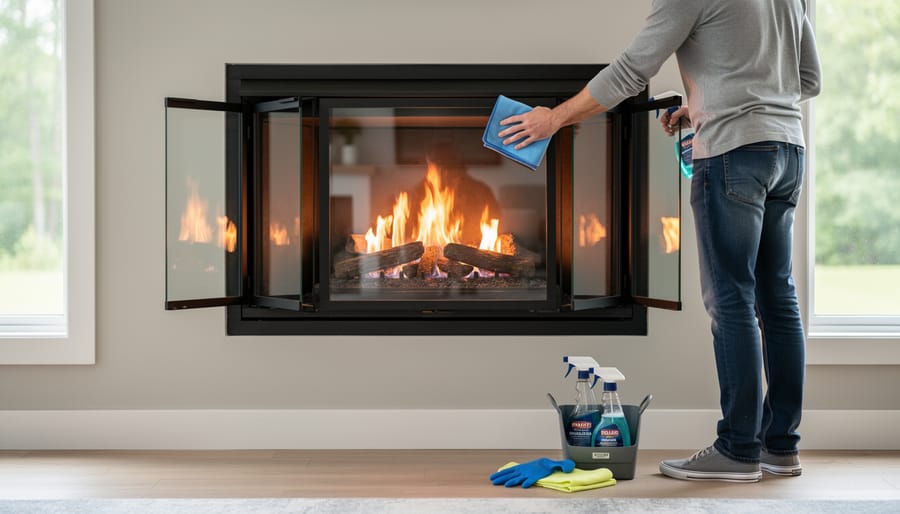
Glass cleaning deserves your attention every few weeks, especially on units that see frequent use. Always ensure the fireplace is completely cool before cleaning, ideally waiting at least an hour after it’s been running. Use only cleaners specifically designed for gas fireplace glass, as regular household products can leave residues that cloud or even damage the specialized glass when heated. Apply the cleaner with a soft, lint-free cloth using gentle circular motions.
Get familiar with what a proper flame pattern looks like in your unit. Healthy flames should be predominantly blue with yellow tips, dancing steadily without excessive flickering or reaching toward the glass. If you notice lazy yellow flames, unusual sooting on the glass, or flames that seem to struggle, it’s time to call a professional.
Watch for warning signs that require immediate expert attention: persistent gas odors, difficulty igniting, unusual popping or hissing sounds, or visible cracks in the glass panels. Your three-sided design makes visual inspections easier, so take advantage of those multiple viewing angles during your routine checks. These simple maintenance habits protect both your family’s safety and your fireplace’s longevity.
Understanding how a 3-sided gas fireplace works empowers you to make choices that truly fit your home and lifestyle. These stunning installations aren’t just about creating a beautiful focal point, though they certainly excel at that. By grasping the mechanics behind the flames, ventilation systems, and safety features, you’re better equipped to select a model that balances efficiency with the ambiance you’re seeking.
The key considerations we’ve explored, from proper venting requirements to heat distribution patterns, aren’t meant to overwhelm you. Rather, they’re the foundation for maintaining your investment safely and enjoying it for years to come. When you understand why direct venting matters or how the glass panels work together to radiate warmth efficiently, you can have more productive conversations with installers and make maintenance decisions with confidence.
Perhaps most importantly, knowing the mechanics helps you appreciate the eco-friendly aspects of modern gas fireplaces. Today’s models combine advanced technology with responsible fuel consumption, offering you guilt-free warmth that’s both convenient and cleaner-burning than traditional wood alternatives.
When the technical elements align perfectly with your aesthetic vision, a 3-sided gas fireplace becomes more than a heating solution. It transforms into a lifestyle centerpiece that brings people together, creates cozy moments, and adds genuine value to your living space. That’s the magic of informed decision-making meeting beautiful design.