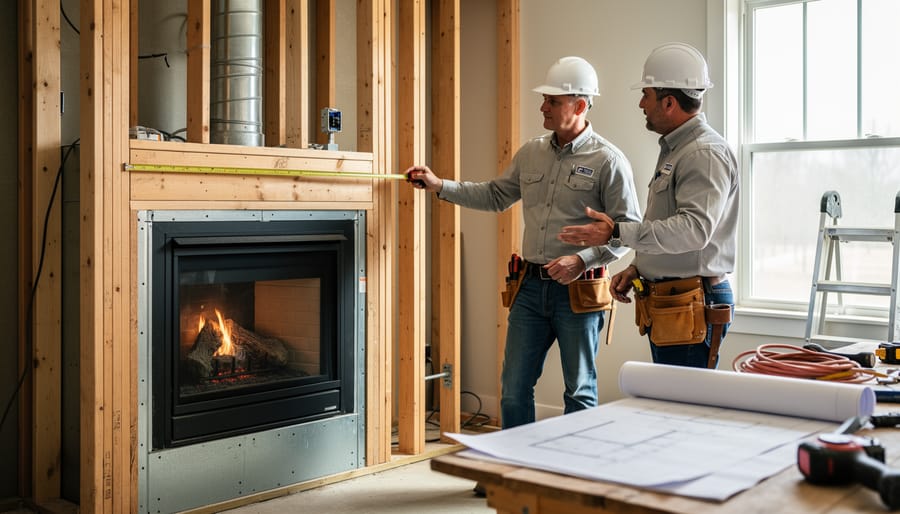


Verify your local permit requirements before purchasing any fireplace or beginning installation work—most jurisdictions require permits for new fireplace installations, fuel conversions, and major renovations, with fines ranging from hundreds to thousands of dollars for non-compliance. Contact your municipal building department or visit their website to download permit applications, as requirements vary significantly between counties and even neighboring cities.
Schedule your inspection at the rough-in stage rather than waiting until completion, allowing you to address code violations before drywall installation seals everything behind walls. This proactive approach saves money and prevents the frustration of demolishing finished work to fix hidden issues inspectors can’t approve.
Document everything with photographs throughout your installation process, creating a visual record that demonstrates proper clearances, approved materials, and code-compliant construction methods. These photos become invaluable if questions arise during inspection or if you sell your home, proving professional-grade work that protects your investment and provides peace of mind to future buyers.
Hire only licensed, insured contractors who pull their own permits and guarantee their work will pass inspection on the first attempt. These professionals understand local codes intimately and maintain relationships with inspectors, streamlining the approval process while ensuring your fireplace operates safely and efficiently for decades.
Understanding permits and inspections transforms what seems like bureaucratic red tape into a safety net protecting your family and home value. The process ensures your dream fireplace becomes a lasting source of warmth and ambiance rather than a costly liability.
When You Actually Need a Permit for Your Fireplace
New Fireplace Installations and Major Changes
Installing a new fireplace or making significant changes to an existing one is an exciting step toward creating a cozier, more inviting home. However, these projects almost always require permits to ensure safety code compliance and proper installation.
For wood-burning fireplaces, you’ll need permits that cover the firebox, chimney system, and any structural modifications to your home. Gas fireplace installations require both building and gas line permits, as they involve connecting to your home’s fuel supply. Bioethanol fireplaces, while simpler in design, may still require permits depending on their size and whether they’re built-in or freestanding.
Converting between fuel types is considered a major change and typically demands comprehensive permitting. Switching from wood to gas, for instance, involves chimney liner modifications, gas line installation, and venting system updates. Converting to eco-friendly bioethanol options might seem straightforward, but your local building department will want to verify proper ventilation and installation methods.
The permit process protects your investment by ensuring your new fireplace operates safely and efficiently while meeting local codes. Working with licensed professionals familiar with your area’s requirements can streamline the approval process considerably.
The Projects That Don’t Need Permits
Good news—not every fireplace project requires a trip to the permit office! You can breathe easy when tackling routine maintenance and cosmetic updates that keep your hearth looking beautiful without changing its structure or function.
Regular cleaning tasks like sweeping out ash, vacuuming the firebox, or wiping down the mantel never need permits. The same goes for replacing fireplace screens, updating decorative accessories, or swapping out tool sets. These simple touches let you refresh your fireplace’s personality seasonally without any red tape.
Minor cosmetic repairs also typically fly under the permit radar. Touching up paint on your mantel, replacing cracked decorative tiles that aren’t part of the firebox itself, or refinishing wooden surrounds generally don’t require approval. You can also clean or replace glass doors on factory-built fireplaces with identical models.
However, always check your local regulations, as requirements vary by jurisdiction. The moment you’re making structural changes, modifying gas or electrical connections, or altering ventilation systems, you’ve crossed into permit territory. When in doubt, a quick call to your local building department can save you from costly mistakes down the road.
The Permit Application Process (Without the Headaches)
What Your Building Department Wants to See
Think of your building department as a partner in creating a safe, beautiful fireplace for your home. They’re not there to complicate your plans, but to ensure everything’s done right from the start. To keep your permit application moving smoothly, you’ll need to gather several key documents before your first visit.
Start with detailed installation plans showing exactly where your fireplace will go, including precise measurements and clearances from walls, ceilings, and combustible materials. Your building department will also want complete product specifications from the manufacturer, including model numbers, BTU ratings, and safety certifications. If you’re working with a professional installer, bring their licensing credentials and proof of insurance. This demonstrates you’re working with qualified experts who understand both safety standards and eco-friendly heating solutions.
Don’t forget site-specific details like your home’s age, construction type, and existing ventilation systems. For gas fireplaces, include your gas line routing plans. Wood-burning units require chimney specifications and details about your venting system. The more thorough your documentation, the faster your approval process will be. Building inspectors appreciate homeowners who come prepared, and it shows you’re serious about making your fireplace not just a heating element, but a safe, lasting addition to your home’s lifestyle.
Timeline and Costs You Can Expect
Understanding the timeline and costs involved in fireplace permits helps you plan your project more effectively. Permit processing times typically range from 3-10 business days for standard installations, though more complex projects or busy seasons may extend this to 2-3 weeks. In some jurisdictions, you might even secure same-day permits for straightforward replacements.
Permit fees vary significantly by location and project scope. Expect to pay between $50-$200 for basic fireplace installations in most areas, while gas line work or structural modifications can push costs to $300-$500 or more. Some municipalities charge flat fees, while others calculate based on project value or square footage.
Inspection fees are sometimes included in your initial permit cost, but budget an additional $75-$150 per inspection visit if they’re separate. Most fireplace installations require at least two inspections: rough-in before closing walls, and final after completion.
Keep in mind that failed inspections mean rescheduling and potentially additional fees, so working with qualified professionals who understand local codes can save both time and money in the long run.
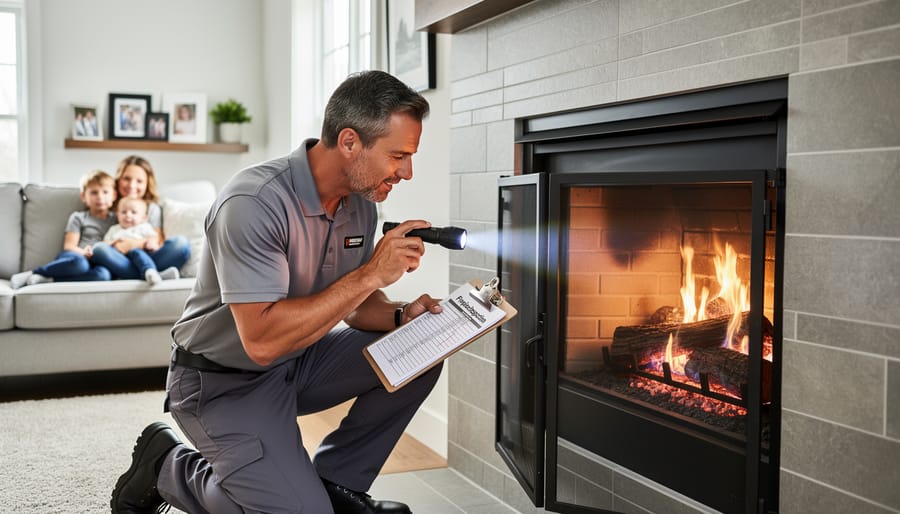
The Five Things Inspectors Always Check First
Clearances and Combustible Materials
Here’s the reality: more fireplace installations fail inspection due to clearance violations than any other issue. Your beautiful new fireplace needs breathing room, and inspectors take this seriously for good reason. Think of clearances as your home’s safety buffer zone.
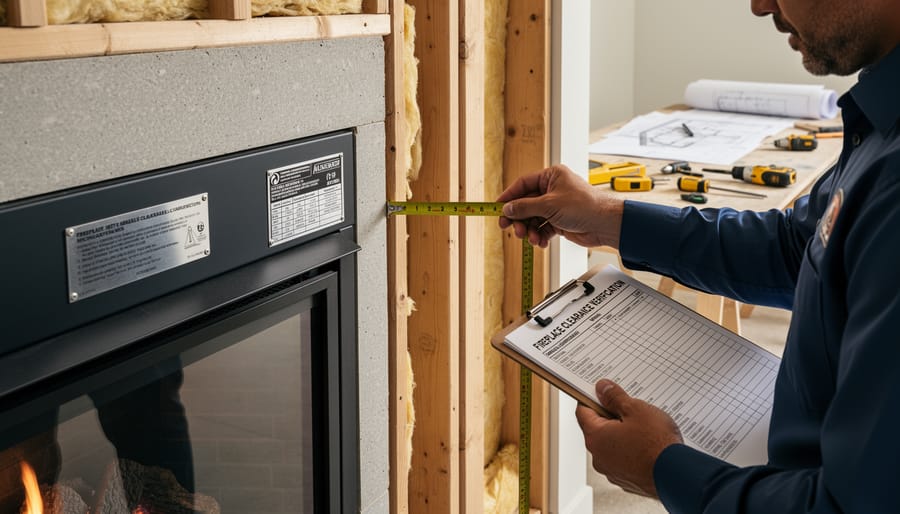
Understanding proper clearance requirements means knowing exact distances between your fireplace and combustible materials like wood framing, drywall, furniture, and decorative mantels. These measurements aren’t suggestions—they’re based on heat transfer science and fire prevention data. Factory-built fireplaces typically require different clearances than masonry units, and your manufacturer’s specifications always take precedence over generic guidelines.
Common violations include mantels placed too close to the firebox opening, inadequate spacing from side walls, and hearth extensions that don’t project far enough into the room. Even seemingly minor shortcuts can generate enough heat over time to ignite surrounding materials. Your inspector will measure these distances carefully, so double-check everything before scheduling your inspection. When in doubt, more clearance is always better than less.
Proper Venting and Chimney Installation
Ensuring proper ventilation isn’t just about meeting code—it’s about creating a safe, efficient fireplace that enhances your home’s comfort for years to come. Different fireplace types have distinct ventilation requirements that inspectors will carefully evaluate. Traditional wood-burning fireplaces need adequate combustion air and a fully lined chimney, typically with stainless steel or clay tile liners rated for high temperatures. Gas fireplaces require proper venting systems—whether direct vent, B-vent, or ventless models where permitted—each with specific clearance and termination specifications.
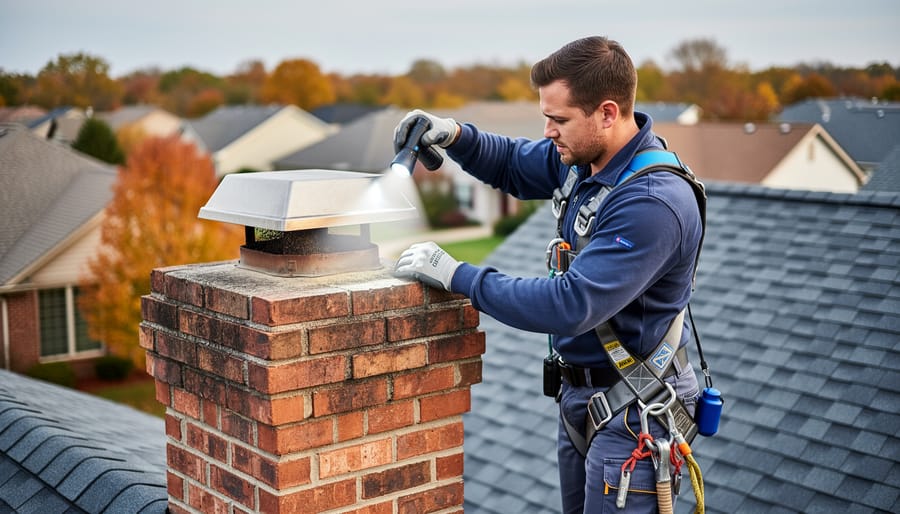
Your chimney liner must match your fuel type and appliance output, and inspectors will verify it’s correctly sized and installed without gaps or damage. They’ll also check that your fireplace has sufficient makeup air to prevent dangerous backdrafting, especially in today’s tightly sealed, energy-efficient homes. This is where modern building science meets traditional comfort—proper airflow protects your indoor air quality while maximizing your fireplace’s warming efficiency. Before your inspection, ensure all joints are sealed, rain caps are installed, and clearances from combustible materials meet manufacturer specifications and local codes.
Carbon Monoxide Detection and Safety Devices
Your fireplace inspector will carefully check carbon monoxide detectors to ensure your family’s safety. These silent guardians must be properly positioned near sleeping areas and within specified distances from your fireplace, following local building codes. The inspector verifies they’re working correctly and haven’t expired, since most CO detectors have a lifespan of five to seven years.
Damper functionality is another critical checkpoint. Your inspector will test that the damper opens fully to allow proper ventilation and closes securely when not in use. A stuck or partially closed damper can trap dangerous gases inside your home, while one that won’t seal properly wastes energy and compromises your eco-friendly heating goals.
Beyond CO detectors and dampers, inspectors examine safety screens, hearth extensions, and clearances to combustible materials. They’ll also review electrical safety requirements for gas fireplaces and blowers. These comprehensive checks ensure your fireplace enhances your home’s warmth and ambiance safely, giving you peace of mind as you enjoy cozy evenings by the fire.
Fuel Supply Lines and Gas Connections
If you’re installing a gas fireplace, your inspector will pay close attention to your fuel supply lines and connections. This isn’t just bureaucratic red tape—it’s about keeping your home safe and your fireplace running efficiently for years to come.
Your gas lines need to be properly sized to deliver adequate fuel without strain. Too small, and your flames won’t burn correctly; too large can create pressure issues. Inspectors will verify that certified professionals installed approved piping materials and that all connections meet current code standards.
A critical part of the inspection involves gas leak testing at every connection point. Inspectors use specialized equipment to detect even tiny leaks that could pose serious risks. They’ll also check that you have accessible shut-off valves—typically one near the appliance and another at your main gas supply.
Pressure testing ensures your system can handle the demands of your fireplace safely. Think of this as a health checkup for your gas lines, confirming everything works harmoniously before you light that first cozy fire.
Common Violations That Delay Your Approval
Installation Shortcuts That Always Get Caught
We’ve all been tempted to take shortcuts, especially when a project feels overwhelming. But here’s the thing: inspectors have seen it all, and they know exactly where homeowners try to save a few dollars or skip a step.
The most common shortcut? Using the wrong type of venting material. Some folks think any metal pipe will do, but inspectors can spot non-rated materials from across the room. They’re checking clearance distances with a tape measure, and that “close enough” mentality doesn’t fly when safety is on the line.
Another favorite hiding spot? Inadequate hearth extensions or missing ember protection. Your beautiful new fireplace might be perfect, but if the non-combustible flooring doesn’t extend far enough in front or to the sides, you’ll fail inspection every time.
Then there’s the DIY gas line work. Even experienced homeowners underestimate gas connections. Inspectors test for leaks thoroughly, and improper fittings or undersized lines show up immediately during pressure tests.
The reality is that these shortcuts don’t just risk failing inspection; they compromise your family’s safety and your home’s value. Inspectors aren’t trying to be difficult. They’re protecting what matters most: creating a cozy, safe gathering space you can enjoy for years to come.
Manufacturer Requirements You Can’t Ignore
Your fireplace manufacturer’s installation manual isn’t just a suggestion—it’s your blueprint for passing inspection and keeping your home safe. Inspectors will check whether you’ve followed every specification, from clearance distances to venting materials, and even small deviations can result in a failed inspection.
Think of it this way: manufacturers have tested their products extensively to ensure they operate safely under specific conditions. When you install a fireplace 2 inches closer to combustible materials than specified, or use a different venting component because it seemed similar enough, you’re essentially conducting an unauthorized safety experiment in your home. These “minor” changes can affect heat distribution, airflow, and fire safety in ways that aren’t immediately obvious.
Inspectors have seen it all—the DIY shortcuts that seemed harmless but created dangerous carbon monoxide situations, the “equivalent” materials that didn’t perform as expected. They’re not being nitpicky when they reference the manual; they’re ensuring your fireplace becomes the cozy, eco-friendly heating solution you envisioned rather than a liability. Before your inspection, photograph each installation step showing compliance with manufacturer specifications. This documentation demonstrates your commitment to safety and can streamline the approval process considerably.
Working with Professional Installers vs. DIY Permits
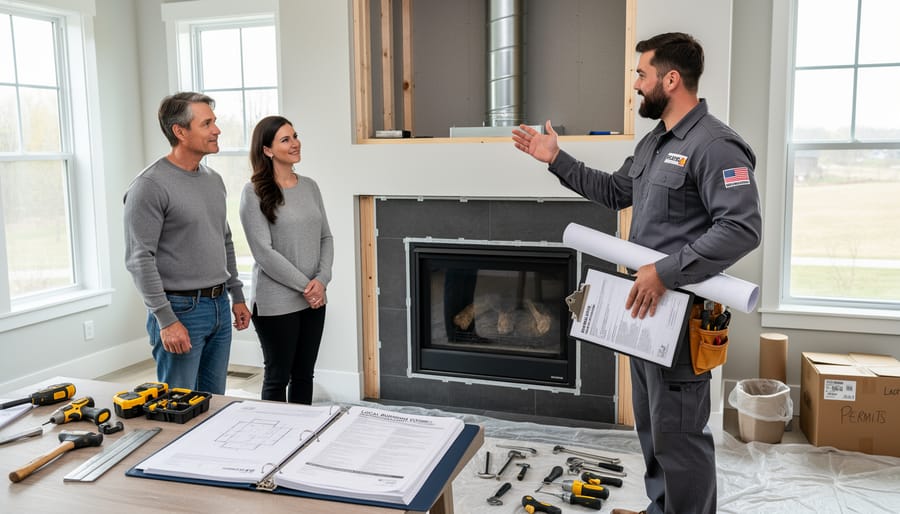
What Licensed Contractors Bring to the Table
When it comes to fireplace installations and the permits they require, licensed contractors bring invaluable expertise that goes far beyond technical know-how. These professionals navigate the permitting process daily, understanding exactly what inspectors look for and how to get your project approved the first time. Their experience means fewer delays and headaches for you.
Perhaps most importantly, licensed contractors carry proper insurance coverage. If something goes wrong during installation or inspection, you’re protected from potential liability. This peace of mind is priceless when you’re investing in your home’s warmth and ambiance.
Licensed professionals also provide warranty protection for their work. Should any issues arise after installation, you have recourse and guarantees that DIY projects simply can’t offer. When inspectors review the work, they’re examining craftsmanship backed by professional credentials and accountability. This combination of experience, protection, and guaranteed quality makes hiring licensed contractors essential for creating the safe, beautiful fireplace environment you envision for your home.
When DIY Makes Sense (and When It Doesn’t)
Some fireplace projects lend themselves beautifully to the DIY approach, while others absolutely demand professional expertise. Understanding the difference protects both your safety and your investment.
Feel confident tackling cosmetic updates like painting brick surrounds, replacing fireplace screens, or swapping out mantels. These projects typically don’t require permits and won’t impact your fireplace’s functionality or safety. You can also safely handle basic maintenance tasks like cleaning glass doors or arranging decorative elements to enhance your home’s ambiance.
However, anything involving gas lines, electrical connections, or structural modifications needs professional hands. Installing new gas fireplaces, converting fuel types, or relocating chimneys requires licensed contractors who understand code requirements and safety protocols. These professionals carry insurance and warranties that protect you if something goes wrong.
Venting work falls firmly in the professional category too. Improper venting creates dangerous carbon monoxide risks, and inspectors will fail installations that don’t meet specifications. Similarly, anything requiring structural changes to walls, roofs, or floors needs engineering knowledge beyond typical DIY skills.
When planning your fireplace project, consider it an investment in your home’s warmth and character. Getting professionals involved for complex work ensures you’ll pass inspections the first time and enjoy your eco-friendly heating solution safely for years to come.
What Happens If You Fail Inspection
First, take a deep breath—failing an inspection isn’t a disaster, and it happens more often than you might think. Inspectors aren’t looking to make your life difficult; they’re ensuring your fireplace operates safely and meets code requirements. Consider a failed inspection as helpful feedback rather than a setback.
When an inspection doesn’t pass, the inspector will provide a detailed report outlining exactly what needs correction. These issues typically fall into categories like improper clearances, incorrect venting, missing fireproofing, or incomplete documentation. The good news? Most problems are straightforward to fix.
You’ll generally have a reasonable timeframe to address the concerns—usually between 30 to 90 days, depending on your local jurisdiction and the severity of the issues. Your contractor should coordinate the necessary corrections, which might involve adjusting installation components, adding required materials, or simply completing unfinished work.
Re-inspection fees vary by location but typically range from $50 to $150. While nobody enjoys additional costs, this modest fee is worthwhile for ensuring your family’s safety and protecting your home investment. Some jurisdictions offer one free re-inspection if corrections are made promptly, so ask about this possibility.
During the correction period, you shouldn’t use your fireplace. This waiting period might feel frustrating, especially during cooler months, but operating an unapproved system poses serious safety risks and could void your insurance coverage.
Think of the inspection process as your fireplace’s final quality check—a way to guarantee that your new focal point will provide warmth and ambiance safely for years to come. Most homeowners pass on the second attempt once corrections are made properly.
Long-Term Benefits: Why Compliance Protects More Than Just Safety
Think of proper permits and inspections as a protective shield for your most valuable asset—your home. While safety is paramount, the long-term financial and practical benefits extend far beyond preventing accidents.
Your home insurance policy likely contains language that many homeowners overlook. Insurance companies can reduce or deny claims related to unpermitted work. If a fire originates from your beautiful new fireplace and you lack proper permits, you could face devastating out-of-pocket costs. Conversely, documented permits and passed inspections demonstrate due diligence, strengthening your position should you ever need to file a claim.
When it’s time to sell, buyers and their home inspectors will scrutinize your fireplace installation. Unpermitted work raises red flags that can derail negotiations or significantly reduce your selling price. Many buyers simply walk away rather than inherit potential liability. Proper documentation, however, becomes a selling point—proof that your cozy gathering space meets all safety standards and adds genuine value to the property.
Liability protection matters too. If someone is injured due to faulty installation, documented compliance demonstrates you took reasonable precautions. This matters in our increasingly litigious society and provides peace of mind for years to come.
Modern building codes also incorporate energy efficiency requirements that benefit both your wallet and the environment. These regulations ensure your fireplace operates at optimal efficiency, reducing fuel costs while minimizing environmental impact. Many eco-friendly heating solutions, from high-efficiency inserts to clean-burning gas models, meet stringent standards that translate to lower utility bills.
The investment in permits and inspections—typically a few hundred dollars—pales compared to potential losses from insurance denials, reduced home value, or legal liability. You’re not just checking boxes; you’re protecting your investment and ensuring your fireplace remains a source of comfort and joy for decades.
Approaching permits and inspections doesn’t have to feel overwhelming. Think of this process as your partner in creating a fireplace that will bring warmth, beauty, and comfort to your home for years to come. When you take the right steps from the beginning, you’re not just checking boxes on a compliance form—you’re investing in your family’s safety, protecting your home’s value, and ensuring that cozy evening by the fire comes without a single worry.
Yes, the paperwork might seem tedious, and waiting for inspections can test your patience. But consider this: every permit requirement exists because someone, somewhere, learned a hard lesson. By following proper procedures, you’re building on that collective wisdom. You’re creating a fireplace installation that meets professional standards, one that future home inspectors will admire rather than flag as a concern.
Remember, the inspector isn’t your adversary—they’re actually there to help ensure your dream fireplace becomes a reality you can truly enjoy. When you pass that final inspection and receive your approval, you’ll have something more valuable than just a beautiful focal point for your living room. You’ll have complete peace of mind, knowing your fireplace was installed correctly, operates safely, and adds genuine value to your home. That’s the foundation for countless memorable moments gathered around the hearth.