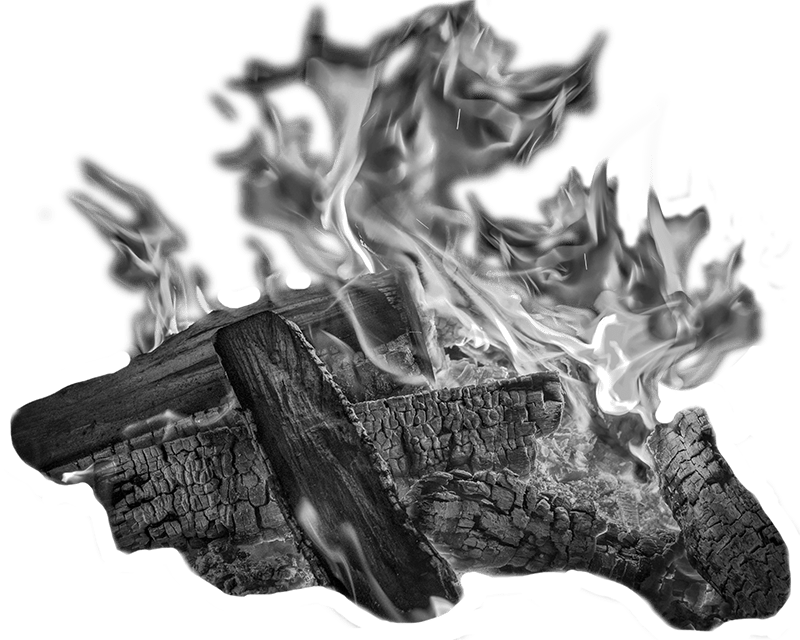
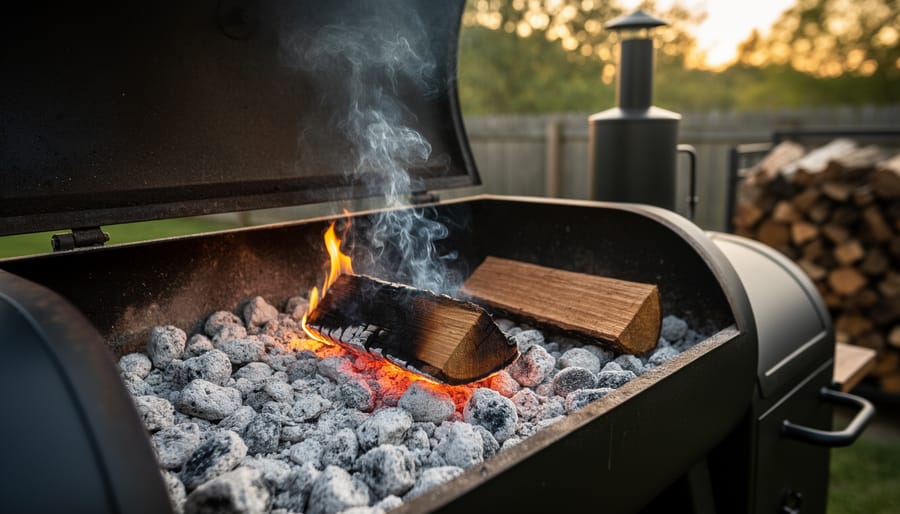


Master your offset smoker’s fire by building a proper coal bed foundation—start with seasoned hardwood splits arranged in a log cabin pattern over fully lit charcoal, allowing 30-45 minutes for the coals to develop their characteristic white-gray ash before adding your meat. This base creates the steady heat source that separates memorable barbecue from frustrating temperature swings.
Control airflow through your firebox intake and chimney damper like a dimmer switch rather than an on-off switch, making quarter-turn adjustments and waiting 10 minutes between changes to see their full effect. Your smoker needs oxygen to burn clean, but too much turns your fire into a raging inferno while too little produces the bitter, acrid smoke that ruins good cuts.
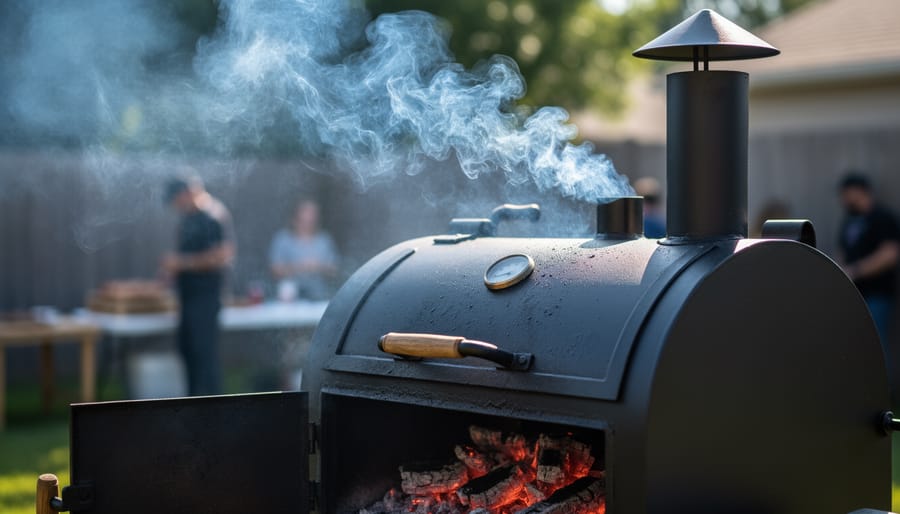
Feed your fire with fist-sized wood splits every 45-60 minutes rather than loading large logs that smother your coal bed or tiny sticks that create temperature spikes. Each piece should catch fire within 5 minutes of addition, burning with thin, barely visible smoke—the blue-tinted wisps that tell you everything’s working correctly.
Position your wood on the coal bed’s outer edges where it can ignite gradually without blocking airflow underneath, and always preheat new splits on the firebox’s cool side before moving them into the fire. This technique prevents the thick white smoke billows that occur when cold, wet wood hits hot coals, especially important during your first smoking session when building confidence matters most.
Think of fire management as a rhythm rather than constant intervention—your offset smoker rewards patience and small adjustments over anxious tinkering.
Understanding How Fire Works in Your Offset Smoker
The Firebox-to-Chamber Connection
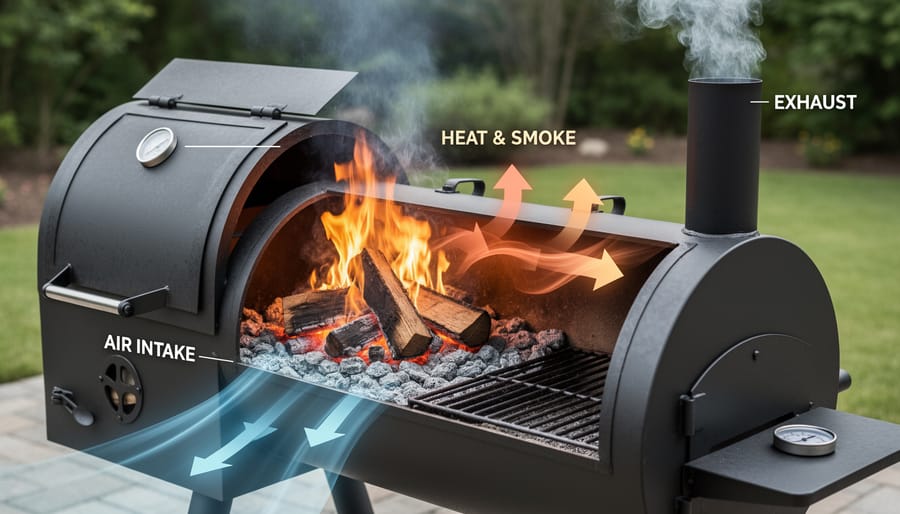
Understanding how heat and smoke move through your offset smoker is essential for mastering fire management and achieving those mouthwatering results you’re after. In an offset design, the firebox sits adjacent to the main cooking chamber, creating a horizontal path for heat and smoke to travel.
When you build your fire in the firebox, hot air and smoke naturally rise, then flow horizontally through the opening that connects to the cooking chamber. This sideways movement is what gives offset smokers their signature character, but it also creates unique challenges. The heat must maintain enough momentum to sweep across your food before exiting through the chimney on the opposite end.
Here’s why this matters: if your fire isn’t producing sufficient heat volume, the smoke may stall or move sluggishly, creating dirty, bitter flavors on your food. Conversely, too aggressive a fire sends heat rushing through too quickly, making temperature control difficult. The key is maintaining a steady, clean-burning fire that produces consistent heat flow—think of it like creating a gentle river of warmth rather than sporadic bursts. This connection point is where good fire management truly begins, making it crucial to understand before tackling temperature control techniques.
Oxygen Is Everything
Think of your offset smoker like the fireplace in your home – both need proper airflow to burn cleanly and efficiently. The difference between a perfectly maintained fire and a smoky, temperature-swinging mess often comes down to understanding how oxygen moves through your system.
Your offset smoker has two critical airflow controls: the intake damper near the firebox and the exhaust damper on the chimney. Together, they create a natural draft that pulls fresh oxygen across your fire and pushes smoke through the cooking chamber. When managed properly, this creates that beautiful thin blue smoke that gives your food incredible flavor without bitterness.
Start with your exhaust damper fully open – this is your constant. Think of it as your chimney flue at home; you wouldn’t partially close it while burning a fire. The intake damper becomes your primary temperature control. Opening it wider feeds more oxygen to the fire, increasing heat. Closing it slightly reduces airflow and lowers temperatures.
Here’s the key insight many backyard pitmasters miss: clean combustion requires adequate oxygen. When you restrict airflow too much trying to lower temperatures, you create incomplete combustion. This produces thick white or gray smoke that deposits bitter creosote on your food – similar to what happens in a poorly maintained fireplace.
For consistent results, make small adjustments and wait fifteen minutes before tweaking again. This patience allows the fire to stabilize and prevents the frustrating temperature swings that plague rushed cooks. Remember, steady airflow equals steady temperatures and clean, eco-friendly burning.
Building Your Foundation Fire
Choosing the Right Charcoal
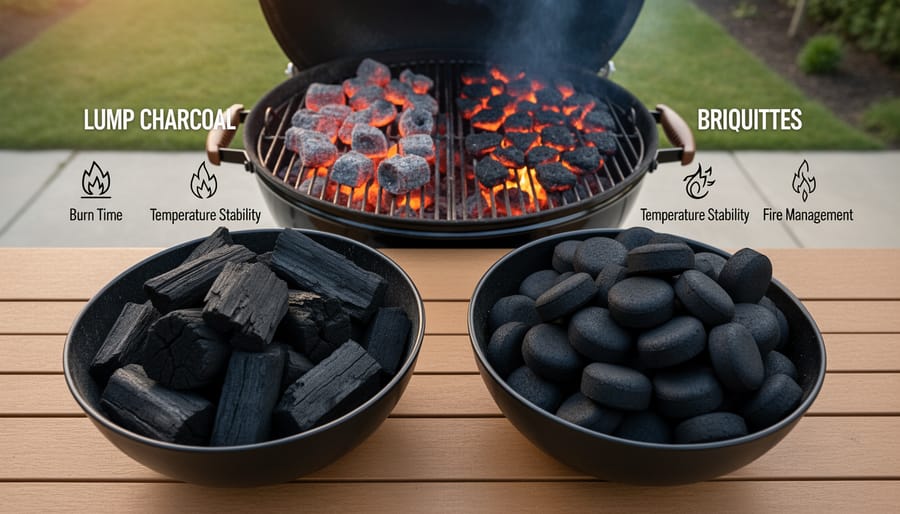
Selecting the right fuel for your offset smoker creates the foundation for outstanding results, much like choosing quality firewood transforms your home hearth experience. The charcoal debate centers on two main contenders: lump charcoal and briquettes, each bringing distinct advantages to your backyard cooking.
Lump charcoal, made from pure hardwood with no additives, burns hotter and cleaner than its compressed cousin. It ignites quickly, reaching cooking temperatures in about 15 minutes, and produces minimal ash—an eco-friendly choice that aligns with sustainable outdoor cooking practices. The irregular chunks create natural airflow, making temperature adjustments more responsive. However, lump charcoal burns faster, typically lasting 2-3 hours, which means you’ll need to refuel during longer smoking sessions. It also varies in size and density between bags, creating slight consistency challenges.
Briquettes offer predictable, steady heat that many pitmasters appreciate for marathon smoking sessions. These uniform blocks burn for 4-5 hours, maintaining stable temperatures with less frequent attention. They’re budget-friendly and widely available, making them practical for regular smoking enthusiasts. The trade-off comes from additives and binders used in manufacturing, which can introduce subtle flavors and produce more ash. For environmentally conscious cooks, look for natural briquettes without chemical accelerants.
Your choice ultimately depends on your priorities. Choose lump for cleaner burns and authentic wood-fire flavor, or select briquettes when extended burn time and temperature stability matter most. Many experienced smokers keep both on hand, adapting their fuel choice to match the specific demands of each cooking adventure.
The Minion Method and Other Starting Techniques
Getting your offset smoker’s fire started properly sets the foundation for hours of worry-free cooking. The beauty of these techniques is that once you’ve got them dialed in, you’ll spend more time enjoying the process and less time babysitting your firebox.
The Minion Method has become a favorite among pitmasters for good reason. Named after its inventor Jim Minion, this approach involves filling your firebox with unlit charcoal, then placing a small amount of lit coals on top. As the fire burns down, it gradually ignites the fuel below, creating a slow, steady burn that can last for hours. Think of it like a controlled domino effect—the fire spreads at just the right pace to maintain consistent temperatures without requiring constant attention. This method is particularly eco-friendly since it maximizes fuel efficiency and reduces waste.
The Snake Method offers another hands-off approach. Arrange your charcoal in a C-shape or semicircle around the firebox, then light one end. The fire crawls along the “snake” at a predictable rate, giving you remarkable temperature stability. It’s perfect for those long smoking sessions where you want to set it and mostly forget it.
For wood-only fires, the Top-Down Method works wonders. Place your largest splits on the bottom, layering progressively smaller pieces on top, with kindling and fire starter at the very top. Light from above, and the fire burns downward through increasingly larger fuel. This creates exceptionally clean smoke from the start and establishes a solid coal bed that’s easy to maintain.
Each technique requires minimal intervention once established, letting you focus on what really matters—creating delicious food and enjoying the meditative rhythm of tending your fire.
Maintaining Steady Heat Throughout Your Cook
The Art of Adding Charcoal
Adding charcoal to your offset smoker is like tending a home fire—it’s all about reading the flames and acting with intention. The secret lies in timing and technique, ensuring your cooking temperature stays steady without those frustrating spikes or drops that can turn a perfect brisket into a learning experience.
The best approach is to add fresh charcoal before you actually need it. When your fire bed reduces to about one-third of its original volume, that’s your cue. Don’t wait until temperatures start dropping, because recovering lost heat takes longer than maintaining it. Think of it like keeping your living room comfortable on a chilly evening—you wouldn’t wait until everyone’s shivering to add another log.
Here’s the key technique: preheat your charcoal. Keep a chimney starter going on the side with fresh coals. When it’s time to refuel, you’ll add glowing, ash-covered briquettes rather than cold ones. This prevents temperature drops and eliminates that acrid white smoke that comes from igniting fresh fuel directly in your firebox.
Position new charcoal alongside your existing fire bed, not on top of it. This gentle integration allows the heat to spread naturally without smothering your established coals. Add smaller amounts more frequently rather than dumping in a large quantity all at once—typically one-half to three-quarters of a chimney every 45-60 minutes works beautifully.
This mindful approach to fuel management creates an eco-friendly rhythm that conserves charcoal while maintaining that perfect cooking environment you’re after.
Adjusting Your Vents Like a Pro
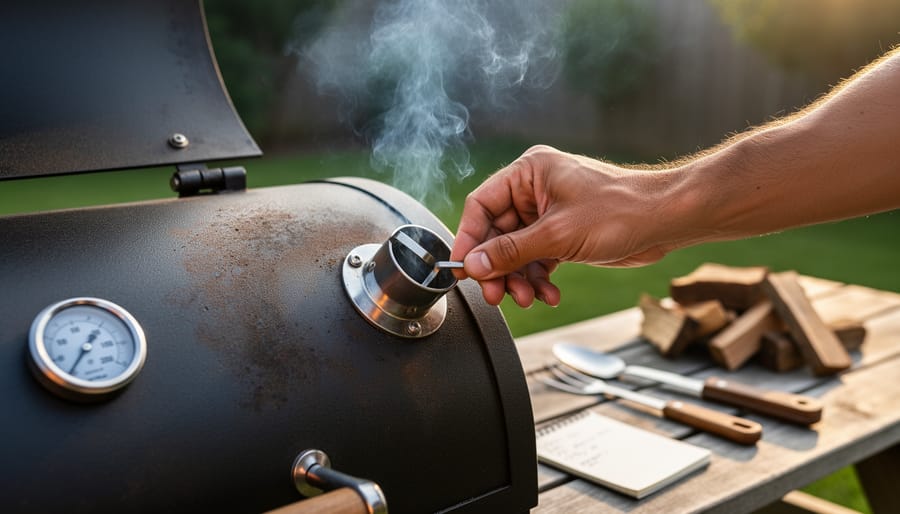
Think of your offset smoker’s vents as the throttle and steering wheel for your fire. Mastering them transforms frustrating temperature swings into steady, predictable heat that makes your barbecue shine.
Your intake damper, located near the firebox, controls oxygen flow to your fuel. It’s your primary temperature control tool. Opening it wider feeds more oxygen to the fire, raising temperatures. Closing it restricts airflow, cooling things down. The exhaust damper, typically a chimney cap, should generally stay fully open during cooking to maintain proper draft and prevent creosote buildup—a cleaner, more eco-friendly approach that also prevents bitter flavors.
Here’s how to handle common scenarios like a pro. If your temperature is climbing too high, gradually close your intake damper by quarter-turns, waiting five minutes between adjustments to see the effect. Patience is key—overreacting creates temperature roller coasters. When temperatures drop too low, open the intake slightly and consider adding a small piece of quality hardwood. This sustainable fuel choice burns cleaner and hotter than softer woods.
For maintaining that sweet spot around 225-250 degrees, you’ll typically run your intake damper one-quarter to half-open, depending on weather conditions. Windy days require smaller intake openings since wind naturally increases airflow. Cold weather means you’ll need more fuel and slightly wider vents to compensate for heat loss.
Remember, every adjustment takes time to show results. Make small changes, observe for several minutes, then adjust again if needed. This methodical approach prevents the temperature swings that frustrate beginning pitmasters.
Wood Placement and Selection
Selecting the right wood transforms your offset smoker from a basic cooker into a flavor powerhouse. Start with quality hardwood chunks or splits—about fist-sized pieces work beautifully alongside your charcoal base. Think of wood as your seasoning, not your primary fuel source. A handful of chunks every hour maintains that clean, flavorful smoke without overwhelming your fire management.
Different woods burn at varying rates, which directly impacts your temperature control. Dense hardwoods like oak and hickory burn longer and hotter, making them excellent for extended cooks. Fruitwoods like apple and cherry burn faster but deliver sweeter, milder smoke. When using wood chips, remember they ignite quickly and work better for shorter sessions.
Place wood chunks directly on hot coals rather than burying them—this creates immediate, clean smoke. Position them strategically near your air intake for better combustion control. Avoid green or wet wood, which produces bitter, acrid smoke and cooling effects that disrupt your carefully maintained fire. Well-seasoned wood with less than 20% moisture content ensures efficient burning and that signature bark everyone loves on perfectly smoked meat.
Troubleshooting Common Fire Problems
When Your Fire Won’t Stay Lit
A fire that keeps fading out can turn an exciting barbecue session into a frustrating experience, but the good news is that this common challenge usually has straightforward solutions. Think of your offset smoker like a fireplace—it needs the right balance of fuel, oxygen, and proper setup to maintain that steady, welcoming glow.
Start by checking your airflow. Your fire needs to breathe just like any hearth fire does. If your intake damper is too restricted, you’re essentially suffocating the flames. Open it gradually until you see the fire strengthen, then adjust to maintain your target temperature. Similarly, ensure your chimney isn’t blocked by creosote buildup or debris—a clear path for smoke to exit is essential for drawing fresh air through the firebox.
Fuel quality matters tremendously. Wet or green wood is the most common culprit behind dying fires. Always use properly seasoned hardwood that’s been dried for at least six months. Split your wood into manageable pieces—chunks about the size of your fist work beautifully for maintaining consistent heat without smothering the coals beneath.
Finally, build your fire on a solid coal bed before adding your smoking wood. Those glowing embers provide the foundation that keeps everything burning steadily, creating that perfect environment for low-and-slow cooking while being mindful of fuel efficiency and sustainability.
Taming Temperature Swings
Temperature swings are the nemesis of excellent barbecue, but they’re completely manageable once you understand the fundamentals. Think of your offset smoker like a living fire in your hearth—it requires attention and small adjustments rather than drastic interventions.
The key to stability starts with using hardwood chunks or splits of consistent size, typically around two to three inches thick. This creates predictable burn rates, much like choosing the right logs for an evening fire. Add fuel in smaller amounts every 30 to 45 minutes rather than loading large quantities that cause dramatic spikes. When you notice temperatures climbing, partially close your intake damper rather than eliminating airflow completely. If temperatures drop, resist the urge to throw open all vents simultaneously—this invites wild swings. Instead, open the intake slightly and give your fire five to ten minutes to respond.
Position your wood strategically over the hottest coals rather than simply tossing it into the firebox. This ensures cleaner combustion and steadier heat output. Monitor the exhaust smoke color; thin, bluish smoke indicates efficient burning and stable temperatures, while thick white smoke suggests incomplete combustion and impending temperature issues. With practice, you’ll develop an intuitive feel for your smoker’s rhythm, creating that consistent heat zone where barbecue magic happens naturally.
Dealing with Dirty Smoke
Thick, billowing white smoke is your first sign that something’s not quite right with your fire. This heavy smoke comes from incomplete combustion and carries bitter, acrid flavors that will ruin even the best cut of meat. What you’re aiming for instead is that gorgeous thin blue smoke—sometimes nearly invisible—that adds the perfect kiss of smokiness without overpowering your food.
The culprit behind dirty smoke is usually one of three things: wet or green wood, insufficient airflow, or smothering your fire with too much fuel at once. Start by ensuring your wood is properly seasoned and dry. Even slightly damp wood produces that unpleasant white smoke, so store your fuel in a covered area well before your cook.
If you’re seeing white smoke billowing from your stack, open your intake vents wider to increase oxygen flow. This helps the fire burn hotter and cleaner. Add wood in smaller chunks rather than large logs, allowing each piece to catch and burn efficiently. Think of it as feeding your fire gradually rather than overwhelming it.
Once you achieve that clean burn, you’ll notice the difference immediately—a gentle wisp of barely visible smoke that adds incredible depth to your barbecue without any harsh bitterness.
Weather and Environmental Factors
Mother Nature has her own ideas about your smoking plans, and understanding how weather impacts your offset smoker can mean the difference between backyard triumph and temperature chaos. Just as you’d adjust your indoor fireplace for changing seasons, your outdoor fire management needs similar attention to environmental conditions.
Cold weather is your fire’s biggest energy thief. When temperatures drop below 50°F, your smoker works overtime to maintain heat, burning through fuel faster and struggling to hold steady temperatures. Combat this by insulating your smoker with welding blankets or specially designed covers, increasing your fuel load by about 25%, and positioning your smoker in a wind-protected area. Think of it like adding extra logs to your fireplace on a winter evening—the principle remains the same.
Wind creates its own set of challenges, acting as a natural bellows that can send temperatures soaring or steal heat from exposed surfaces. Always position your firebox away from prevailing winds, and consider constructing a simple windbreak using plywood or heat-resistant materials. A strong crosswind can rob your smoker of 50 degrees or more in minutes.
Humidity affects combustion efficiency and smoke quality. In damp conditions, wood burns less efficiently, producing more creosote and requiring better airflow management. Dry climates demand closer attention to water pans and may require additional moisture sources to prevent meat from drying out.
Altitude changes everything about fire behavior. Above 3,000 feet, thinner air means less oxygen for combustion, requiring wider damper openings and potentially different wood choices. You’ll need more frequent adjustments and possibly 10-15% more fuel to maintain target temperatures. Understanding these environmental factors transforms weather from obstacle to manageable variable in your smoking success.
Eco-Friendly Fire Management Practices
Managing your offset smoker fire responsibly means making choices that benefit both your cooking results and the environment. Let’s explore how sustainable practices can enhance your smoking experience while treading lightly on our planet.
Start with your fuel selection. Not all charcoal is created equal from an environmental standpoint. Look for natural lump charcoal made from sustainable hardwoods rather than briquettes containing additives and fillers. These burn cleaner, produce less ash, and come from renewable sources. Even better, consider locally sourced options to reduce transportation emissions. When adding wood for smoke flavor, choose seasoned hardwoods from responsible forestry operations.
Efficient fuel use is where fire management skills really shine. By maintaining proper airflow and temperature control, you’ll burn less fuel overall while achieving better results. A well-managed fire at steady temperatures uses significantly less charcoal than one that constantly fluctuates, requiring frequent fuel additions to recover lost heat. This isn’t just good for your wallet; it’s considerably better for the environment.
Proper ash disposal deserves attention too. Once your ash has completely cooled for at least 48 hours, it can actually benefit your property. Wood ash contains valuable nutrients and can be added sparingly to garden soil or compost piles, though avoid using it around acid-loving plants. Never dispose of ash near storm drains, and always store it in a metal container until you’re certain it’s cold. This mindful approach transforms waste into a resource while protecting your surroundings.
Mastering fire management in your offset smoker is truly a journey rather than a destination. Each time you light those coals and tend that firebox, you’re building invaluable skills that transform you from a backyard cook into a confident pitmaster. Think of every smoking session as your personal classroom—some days the lesson might be about adjusting airflow during a windy afternoon, while others teach you the subtle art of reading smoke color or managing fuel during a long overnight cook.
The beauty of this learning process is that there’s no such thing as a wasted session. Even when temperatures fluctuate or smoke runs dirty, you’re gathering insights that make your next cookout better. Keep notes on what worked, what didn’t, and how different woods burn in various conditions. This hands-on experience builds confidence and intuition that no article or video can fully replicate.
When you’ve mastered your fire management fundamentals, the rewards extend beyond perfectly smoked brisket or ribs. You’ll discover that tending a well-managed fire becomes genuinely relaxing—a meditative outdoor experience that connects you with time-honored cooking traditions. The stress melts away as you settle into a rhythm of checking temperatures, adding fuel at the right moments, and watching clean smoke drift lazily from your chimney.
With proper technique, you’ll spend less time fighting temperature swings and more time enjoying the process while creating unforgettable meals. Whether you’re smoking the best meats to smoke or experimenting with vegetables and cheeses, good fire control makes everything better. Your offset smoker becomes not just cooking equipment, but a beloved part of your outdoor living space—an eco-friendly way to gather family and friends around exceptional food and memorable experiences.