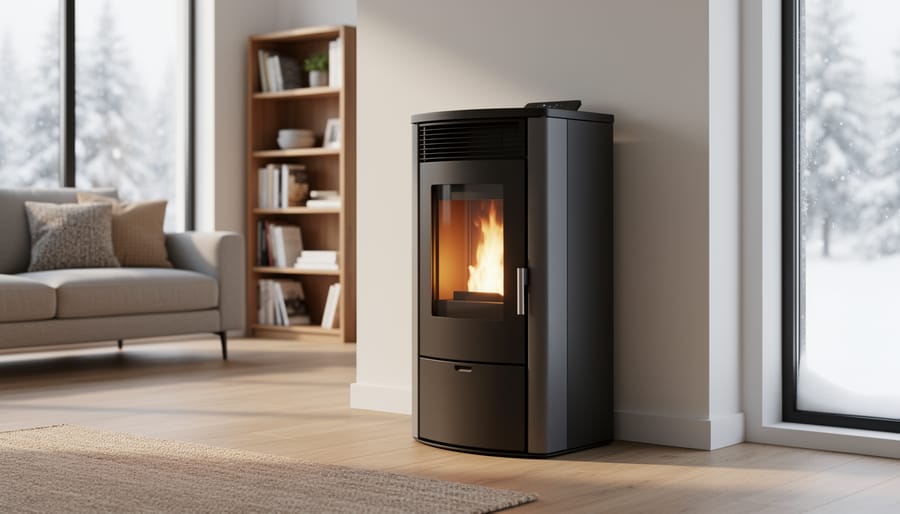


Calculate your home’s actual heating needs before falling for the biggest-is-best myth. High BTU pellet stoves—typically rated above 50,000 BTU—pack impressive heating power, but choosing one without understanding your space requirements often leads to an oversized unit that short-cycles, wastes fuel, and costs more to operate. A 2,000-square-foot well-insulated home usually needs just 40,000-50,000 BTU, while poorly insulated spaces or open floor plans may justify higher ratings.
Match BTU capacity to your square footage using the basic formula of 20-30 BTU per square foot for moderate climates, adjusting upward for harsh winters or older homes with drafty windows. Consider that a pellet stove producing 60,000 BTU sounds powerful, but if it burns through pellets rapidly while your thermostat battles between too hot and too cold, you’re missing the sweet spot of efficiency and comfort.
Prioritize efficiency ratings alongside BTU numbers. A 75% efficient 60,000 BTU stove delivers less usable heat than an 85% efficient 50,000 BTU model, while the higher-efficiency unit burns cleaner and reduces your carbon footprint. The right-sized pellet stove transforms your home into a cozy, sustainably heated sanctuary without the financial penalty of excess capacity you’ll never use.
What High BTU Really Means for Your Pellet Stove
Breaking Down BTU Numbers
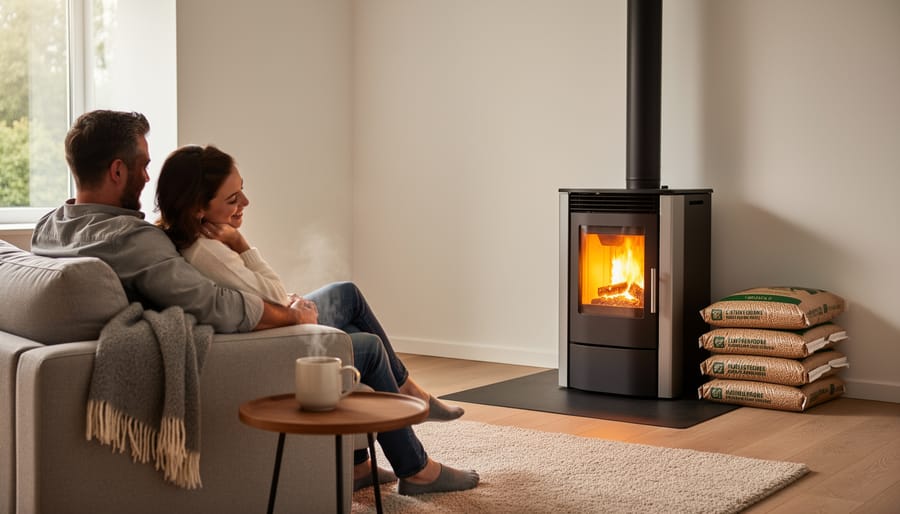
Think of BTU (British Thermal Unit) as the horsepower of your pellet stove—it measures how much heat energy the unit can produce in an hour. One BTU represents the energy needed to raise one pound of water by one degree Fahrenheit, but what really matters for homeowners is understanding what those numbers mean for heating your space.
Pellet stoves typically range from 20,000 BTU on the lower end to well over 60,000 BTU for high-output models. A stove rated at 25,000 BTU can comfortably heat approximately 1,000 to 1,500 square feet, making it perfect for smaller homes or supplemental heating. Mid-range models around 40,000 BTU handle 1,500 to 2,000 square feet, while those powerful 60,000+ BTU units are designed for larger, open-concept spaces or homes in colder climates where you need serious heating muscle.
Here’s the important part: higher BTU doesn’t automatically mean better performance for your home. A stove that’s too powerful for your space will cycle on and off frequently, reducing efficiency and potentially wasting your eco-friendly pellet fuel investment. The key is matching the BTU output to your actual heating needs.
Maximum vs. Continuous Heat Output
When you’re browsing pellet stove specifications, you’ll notice two different BTU ratings that can be confusing at first glance. The maximum BTU rating represents the stove’s peak performance when it’s running full blast with optimal fuel and conditions. Think of it like your car’s top speed—technically achievable, but not how you’ll actually use it most of the time.
The continuous or sustained BTU output tells a more practical story. This is what your stove will realistically deliver during everyday operation, typically ranging from 60-80% of the maximum rating. A stove advertised at 60,000 BTUs maximum might actually produce 40,000-48,000 BTUs during normal use. This matters tremendously for your comfort and fuel costs.
Understanding this distinction helps you avoid overbuying. If you base your decision solely on maximum ratings, you might end up with a stove that’s too powerful for your space, leading to constant on-off cycling that wastes pellets and reduces the cozy, consistent warmth you’re seeking. Instead, focus on the continuous output rating when calculating whether a stove matches your home’s heating needs—it’s the number that reflects your real-world experience.
When High BTU Pellet Stoves Make Sense (And When They Don’t)
The Right Fit for Large, Open Spaces
High BTU pellet stoves aren’t just about having the most powerful unit available. They’re designed to meet specific heating challenges that many homeowners face, and understanding when you genuinely need that extra firepower can save you money while ensuring your comfort.
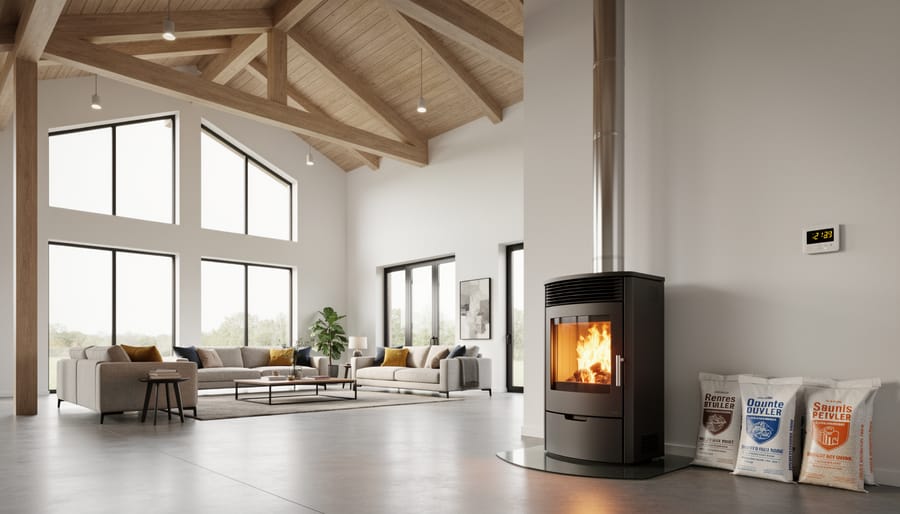
These robust heating solutions truly shine in homes with large, open spaces. If you’re living in a great room with vaulted ceilings that soar 15 feet or higher, or you’ve embraced an open floor plan where your kitchen, dining, and living areas flow together seamlessly, a high BTU pellet stove becomes more than a luxury. It’s a necessity. These spaces create unique heating challenges because warm air rises and disperses quickly, requiring a stove that can generate enough warmth to maintain consistent temperatures throughout.
Square footage matters significantly here. Generally, homes exceeding 2,000 square feet benefit from stoves rated at 50,000 BTUs or higher, especially when you’re trying to heat multiple zones from a single source. The relationship between your space and heating capacity is crucial for proper installation and performance.
Older homes present another scenario where high BTU models make practical sense. If you’re living in a charming older property with minimal insulation, drafty windows, or gaps that let precious heat escape, you’ll need extra heating capacity to compensate for these inefficiencies. Rather than viewing this as a drawback, think of it as choosing the right tool for your specific situation. The goal is creating that warm, inviting atmosphere where your family gathers comfortably, even when winter temperatures plummet outside.
Why Oversizing Creates Problems
While it might seem like bigger is better when it comes to heating power, choosing a pellet stove with too high a BTU output can actually create more problems than it solves. Think of it like trying to warm a single room with a furnace designed for an entire warehouse – the results won’t be comfortable or efficient.
When a high BTU stove runs in a space that’s too small, it reaches your desired temperature quickly, then shuts down. This constant on-off cycling, known as short cycling, is where the trouble begins. Your stove never operates long enough to achieve optimal combustion temperatures, leading to incomplete burning that creates excessive creosote buildup and wasted pellets. You’ll notice blackened glass that needs frequent cleaning and a significant increase in ash production.
The temperature swings can make your living space genuinely uncomfortable. One moment you’re toasty warm, the next you’re reaching for a sweater as the stove cycles off. These fluctuations prevent you from enjoying the consistent, cozy ambiance that makes pellet stoves such an appealing lifestyle choice for your home.
From an eco-friendly perspective, oversizing undermines the very efficiency that makes pellet heating an environmentally responsible choice. You’re burning more fuel than necessary while producing more emissions due to poor combustion. Your pellet consumption increases without providing additional comfort, which means more frequent trips to refill the hopper and higher heating costs throughout the season.
The sweet spot lies in matching your stove’s capacity to your actual heating needs, not your maximum想象ed requirements.
Calculating the Right BTU Rating for Your Space
The Basic Square Footage Formula
Figuring out the right BTU output for your space doesn’t have to be complicated. There’s a straightforward formula that works well for most homes: simply multiply your square footage by 25 to 30 BTUs. This gives you a solid baseline for typical heating needs in average-insulated homes with standard ceiling heights.
Let’s walk through a quick example. Say you’re heating a 1,200 square foot living area. Using our formula, you’d calculate 1,200 x 25 = 30,000 BTUs on the lower end, or 1,200 x 30 = 36,000 BTUs for more robust heating. This range tells you that a pellet stove rated between 30,000 and 36,000 BTUs should comfortably heat your space.
Keep in mind this is your starting point, not the final answer. The 25 BTU calculation works for milder climates and well-insulated homes, while the 30 BTU number suits colder regions or homes with average insulation. If you live in an especially frigid climate or have an older home with drafty windows, you might lean toward the higher end or even consider bumping it up slightly. This basic calculation helps you avoid the common mistake of buying an oversized stove that cycles inefficiently.
Adjusting for Your Home’s Reality
While BTU ratings provide a helpful starting point, your home’s unique characteristics significantly impact how much heating power you actually need. Think of it like finding the right-sized coat – the perfect fit depends on several factors working together.
Climate zone plays the starring role in this equation. A home in Minnesota’s frigid winters demands considerably more heating capacity than a similarly-sized house in Virginia, even if they share the same square footage. Your pellet stove needs to work harder when battling subzero temperatures compared to milder winter climates.
Insulation quality dramatically affects heat retention. A well-insulated home with modern windows holds warmth like a cozy blanket, requiring less BTU output. Conversely, older homes with drafty windows and minimal insulation lose heat quickly, potentially needing higher capacity stoves or considering other heating alternatives as supplements.
Ceiling height matters more than many homeowners realize. Cathedral ceilings or two-story great rooms create vast volumes of space requiring additional heating power beyond what square footage alone suggests. Standard 8-foot ceilings are much easier to heat efficiently.
Your home’s layout influences heat distribution too. Open floor plans allow warmth to circulate freely, while compartmentalized layouts with multiple closed-off rooms may struggle with single-source heating, regardless of BTU rating.
Finally, consider whether your pellet stove serves as primary heat or supplemental warmth. As a backup to existing heating systems, you can comfortably choose lower BTU models. However, if it’s your main heat source, factor in extra capacity for those exceptionally cold days when you need reliable, consistent warmth throughout your living space.
How Efficiency Ratings Change the High BTU Equation
Understanding Pellet Stove Efficiency Ratings
When you’re exploring pellet stoves, you’ll notice efficiency ratings prominently displayed, typically ranging from 70% to 85%. But what do these numbers really mean for your home? Think of efficiency as how well your stove converts pellets into usable heat rather than letting warmth escape up the flue. A stove rated at 80% efficiency delivers four-fifths of the energy from each pellet directly into your living space, while only 20% exits through ventilation.
This matters tremendously for both your comfort and your wallet. Higher efficiency means you’ll burn fewer pellets to achieve the same warmth, reducing your heating costs throughout the season. For example, a high BTU stove with 85% efficiency will often outperform a similar BTU model rated at 70%, using approximately 15% less fuel while delivering comparable heat.
Modern pellet stoves have made remarkable strides in efficiency compared to older heating methods, making them an eco-friendly heating solution that keeps more warmth in your home. When evaluating pellet stove pricing, remember that higher efficiency models may cost more upfront but typically pay for themselves through reduced pellet consumption over time.
The Sweet Spot: Balancing BTU and Efficiency
Here’s the reality that surprises many homeowners: bigger isn’t always better when it comes to BTU ratings. A moderate BTU stove operating at 85% efficiency will actually deliver more usable heat to your home than a high BTU model running at 65% efficiency. Think of it like fuel economy in cars—raw horsepower means nothing if you’re burning through fuel inefficiently.
The magic happens when you match the right BTU output with exceptional efficiency ratings. A 40,000 BTU stove at 85% efficiency delivers 34,000 BTUs of actual heat into your living space. Meanwhile, a 60,000 BTU model at 60% efficiency only provides 36,000 BTUs—barely more heat, but significantly higher fuel costs and more frequent refills. This sweet spot approach also prevents the constant on-off cycling that plagues oversized stoves, which wastes pellets and requires more regular maintenance.
For most homes, a stove in the 35,000-50,000 BTU range with efficiency above 75% provides optimal comfort and cost savings. It’s an eco-friendly heating solution that keeps your space consistently warm without burning through your budget.
Real-World Performance: What to Expect from High BTU Models
Pellet Consumption and Operating Costs
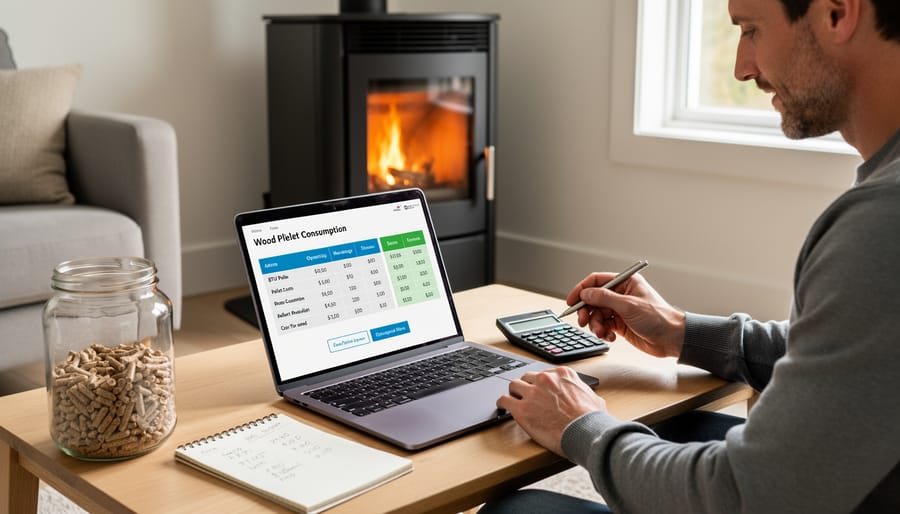
High BTU pellet stoves typically consume between 40 to 60 pounds of pellets daily when running at maximum capacity, though most homeowners won’t operate their stoves at full blast constantly. During peak winter months, expect to use approximately three to four 40-pound bags per week for consistent heating, while milder weather might require just one or two bags weekly.
Understanding these consumption patterns is essential for budgeting your eco-friendly heating solution. At current pellet prices averaging $5 to $7 per bag, monthly operating costs for high BTU stoves range from $200 to $400 during winter, depending on your climate and usage patterns. Many homeowners find this considerably more economical than traditional heating oil or propane, especially when using their pellet stove as a primary heat source.
Remember that actual consumption varies based on your thermostat settings, home insulation, and outdoor temperatures. Running a high BTU stove at lower settings in a well-insulated home will significantly reduce pellet usage compared to pushing maximum heat output in a drafty space. Most modern stoves include efficiency features that help optimize pellet consumption while maintaining comfortable warmth throughout your living space.
Heat Distribution Challenges
While high BTU pellet stoves deliver impressive heating power, that strength can create distribution challenges throughout your home. Think of it like a powerful campfire – wonderful if you’re gathered around it, but those in the next room might still be reaching for blankets.
The most common issue is uneven heating, where the room housing your stove becomes uncomfortably warm while distant rooms remain chilly. This temperature imbalance happens because heat naturally rises and concentrates near the source rather than traveling efficiently through doorways and hallways. Many homeowners discover their thermostat reads 75 degrees while their bedroom feels like 62.
Built-in circulation fans become essential partners for high BTU models. These fans actively push heated air forward and outward, helping distribute warmth more evenly across your living space. Without proper circulation, you’re essentially heating one zone intensely rather than creating comfortable warmth throughout your home.
Managing hot spots requires strategic placement and realistic expectations. Position your stove in a central location where heat can naturally flow to multiple rooms. Consider supplemental ceiling fans to pull warm air down from upper levels, and keep interior doors open to encourage airflow. Remember, even the most powerful pellet stove works best as a zone heater rather than a whole-home solution, especially in larger or multi-level homes.
Eco-Friendly Considerations for High BTU Heating
Why Proper Sizing Matters for the Planet
Choosing the right-sized pellet stove isn’t just about your comfort—it’s about being a responsible steward of our planet’s resources. When you install an oversized high BTU pellet stove in a space that doesn’t need that much heat, you’re essentially wasting renewable fuel and increasing your environmental footprint unnecessarily.
Here’s why proper sizing matters for the environment: An oversized stove running in low-burn mode operates less efficiently than a correctly sized unit running at its optimal output. This inefficient combustion means you’re burning more pellets to achieve the same warmth, releasing more particulates into the air, and depleting wood pellet supplies faster than necessary. Even though pellets are a renewable resource, producing them still requires energy and transportation.
Think of it this way—you wouldn’t leave your car idling in the driveway all day when you only need to drive to the store once. Similarly, running an overpowered pellet stove wastes the very eco-friendly advantages that likely drew you to pellet heating in the first place. By selecting a stove that matches your actual heating needs, you’ll burn fuel cleanly and efficiently, reducing emissions while maximizing the environmental benefits of this sustainable heating solution.
Choosing Sustainable High-Output Options
When shopping for a high BTU pellet stove, you don’t have to sacrifice environmental responsibility for heating power. Start by looking for EPA-certified models, which meet strict emissions standards and burn significantly cleaner than non-certified alternatives. These stoves convert more fuel into usable heat rather than sending pollutants up your chimney.
Clean burn technology is another game-changer. This feature ensures pellets combust more completely, reducing ash buildup while maximizing energy efficiency. You’ll use fewer pellets over time, which is better for both your wallet and the environment.
Don’t overlook programmable thermostats—they’re the unsung heroes of sustainable heating. These smart controls prevent your stove from running full-blast unnecessarily, automatically adjusting output based on your desired temperature. You’ll maintain consistent comfort without wasting fuel during warmer parts of the day or when you’re away from home. Together, these features prove that powerful heating and eco-friendly operation can beautifully coexist in your home.
Choosing the right pellet stove isn’t about grabbing the biggest BTU rating on the shelf. It’s about understanding your space, your lifestyle, and what truly creates comfort in your home. A properly sized pellet stove that matches your actual heating needs will reward you with consistent warmth, lower fuel costs, and years of reliable performance. Oversizing might seem like playing it safe, but it often leads to inefficient operation, wasted pellets, and a stove that never quite performs at its best.
Take the time to calculate your heating requirements honestly. Consider insulation, room layout, and climate realities. Remember that efficiency matters just as much as raw power when creating an eco-friendly heating solution that works harmoniously with your home. Armed with the knowledge you’ve gained, you’re ready to make a confident, informed decision that brings both comfort and sustainability to your living space for seasons to come.