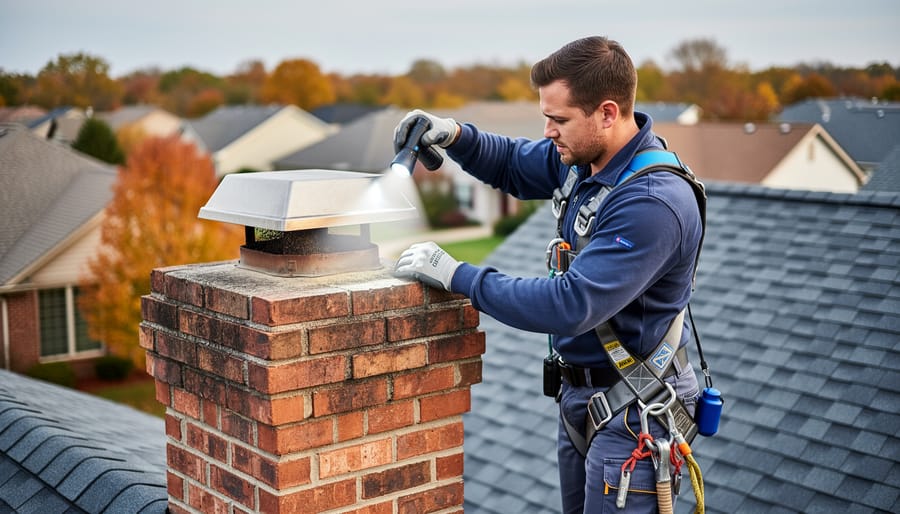
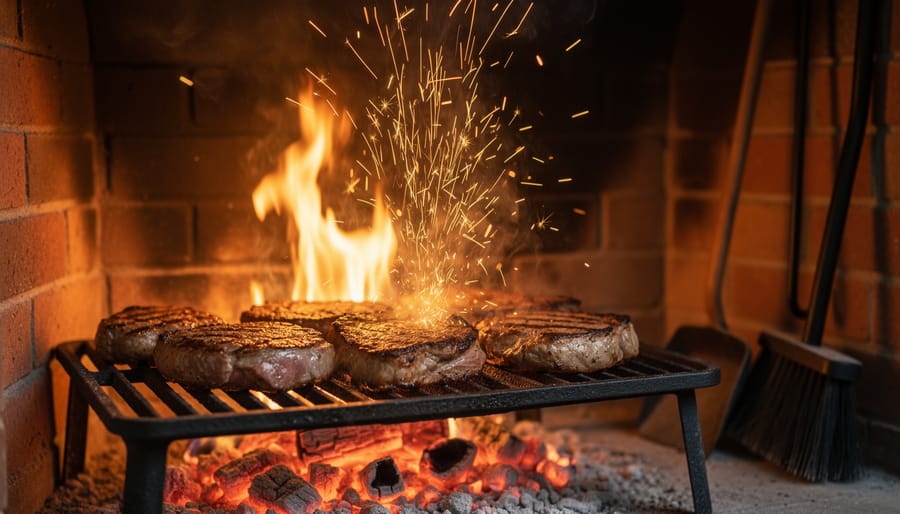


Schedule a professional chimney inspection before your first grilling session to ensure your flue can handle the intense heat and grease accumulation that indoor fireplace grilling produces—this isn’t the same as burning logs, and the risks multiply when fat drippings ignite at temperatures exceeding 2,000 degrees. Install a chimney cap with spark arrestor mesh to prevent embers from escaping while allowing proper ventilation, reducing your fire risk by up to 70%. Clean your chimney after every 40-50 grilling sessions rather than following standard wood-burning schedules, since grease buildup from cooking creates highly flammable creosote deposits that accumulate three times faster than wood residue.
The romance of cooking over an open flame in your fireplace transforms ordinary meals into memorable experiences, but this lifestyle choice demands vigilance that goes beyond traditional fireplace maintenance. Unlike conventional wood fires that burn predictably, grilling introduces volatile fats and oils into your chimney system, creating a dangerous cocktail when combined with existing creosote. Each drip of marinade, every sizzling burst of juice, adds another layer of combustible material to your flue walls.
Understanding these unique hazards empowers you to enjoy fireplace grilling safely while protecting your home and family. The key lies in recognizing that prevention isn’t a one-time checklist but an ongoing commitment to maintenance, awareness, and proper technique. This guide will walk you through comprehensive strategies to eliminate chimney fire risks, establish effective cleaning schedules, and recognize warning signs before they become emergencies.
What Makes Indoor Fireplace Grilling Different (And More Dangerous)
The Grease Factor: Your Chimney’s Hidden Enemy
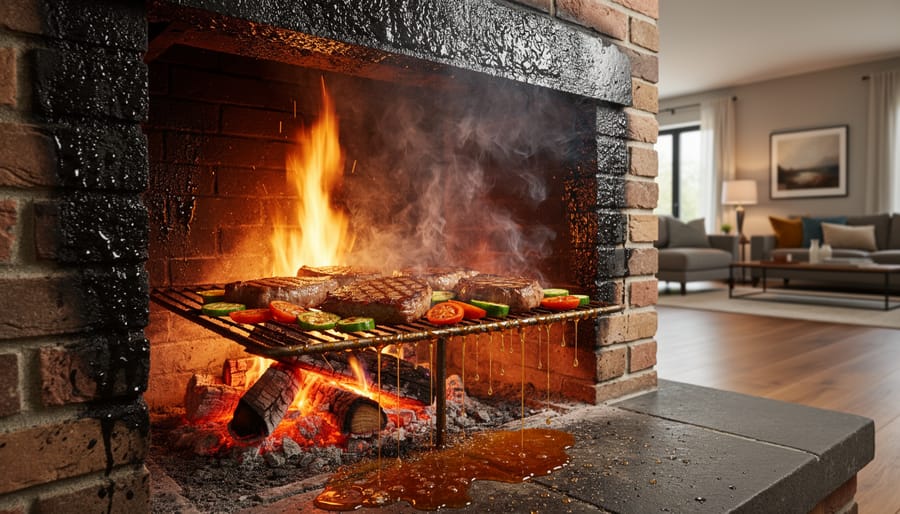
When you grill in your fireplace, something fascinating—and potentially dangerous—happens that doesn’t occur with regular wood burning. As meats sizzle and drip, cooking fats and oils don’t just disappear. They vaporize in the intense heat, transforming into tiny particles that ride the updraft through your flue like invisible hitchhikers.
Here’s where it gets concerning: these vaporized fats cool as they rise, condensing on your chimney walls alongside any creosote from wood smoke. Unlike the gradual creosote buildup from burning logs, grease deposits accumulate quickly and create a distinct hazard. These fatty deposits are incredibly flammable—even more so than standard creosote—and they ignite at lower temperatures.
Think of it this way: you’d never intentionally coat your chimney walls with cooking oil, but that’s essentially what happens during indoor grilling sessions. A single burger cookout might not seem significant, but multiple grilling sessions create layers of combustible material that standard wood burning simply doesn’t produce in comparable quantities. This grease factor is your chimney’s hidden enemy, silently building up between your cozy grilling sessions and waiting for the right spark to create a serious fire hazard that demands your attention and proactive prevention.
Temperature Spikes and What They Do to Your Flue
When you’re grilling in your fireplace, you’re creating a dramatically different thermal environment than when you’re simply enjoying a cozy evening fire. Traditional wood burning maintains relatively steady temperatures between 400-600 degrees Fahrenheit, but grilling introduces intense heat spikes that can reach 700-900 degrees or higher, especially when searing meats or cooking with high-heat techniques.
These rapid temperature fluctuations put significant stress on your chimney system. When temperatures spike suddenly, existing creosote deposits can ignite more easily, and the expanding and contracting materials within your flue can develop cracks over time. Think of it like repeatedly heating and cooling a glass jar – eventually, the stress creates weak points.
The higher heat from grilling also accelerates creosote formation. Fat and grease vaporize quickly at these elevated temperatures, rising up the flue where they cool and condense alongside wood smoke particles. This creates a particularly stubborn, glazed form of creosote that adheres tightly to chimney walls. Unlike the flaky deposits from standard wood burning, this hardened buildup requires professional removal and poses a greater fire risk since it ignites at lower temperatures and burns more intensely.
The Real Culprits Behind Chimney Fires When You Grill Indoors
Three Types of Creosote (And Why the Third One Is Your Biggest Worry)
Think of creosote buildup like a three-act play, where each stage becomes progressively more dangerous to your home’s safety and your peace of mind.
Stage one creosote appears as a flaky, sooty deposit that’s relatively easy to brush away during regular chimney cleanings. It forms when smoke cools and condenses on your chimney walls, much like morning dew on grass. This stage is manageable and responds well to routine maintenance.
Stage two creosote takes on a harder, crustier texture with a shiny black appearance. It’s tougher to remove than stage one, requiring more elbow grease and specialized tools. This stage develops when fires burn at moderate temperatures with insufficient airflow, a common scenario when you’re adjusting cooking temperatures for indoor fireplace grilling.
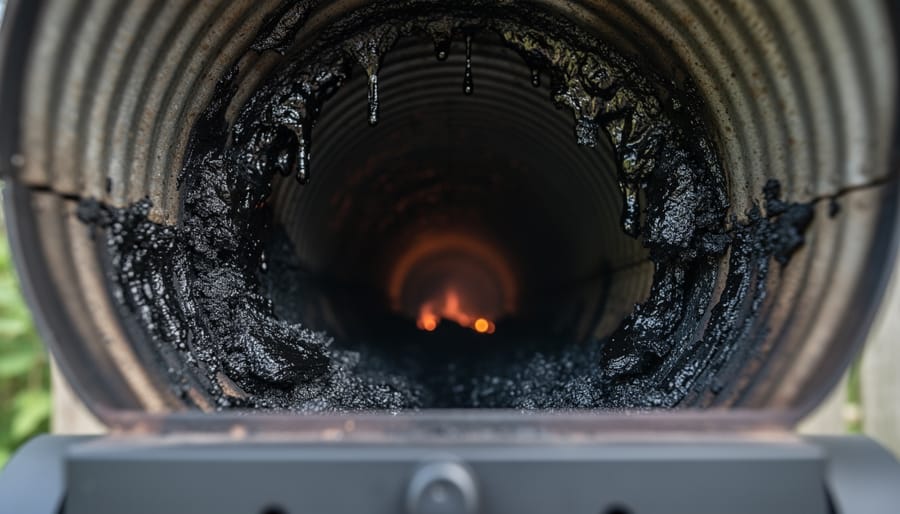
Stage three is where things get seriously concerning. This glazed creosote looks like thick, hardened tar coating your chimney interior. Here’s why it’s your biggest worry: high-heat grilling creates intense flames that can actually re-ignite existing creosote deposits, melting and then re-hardening them into this glass-like coating. It’s incredibly difficult to remove, often requiring professional intervention with specialized rotary tools or chemical treatments.
What makes glazed creosote particularly dangerous is its fuel load. It’s highly concentrated and combustible, meaning if it ignites, it burns extremely hot and fast, potentially reaching temperatures that can crack your chimney liner or even ignite nearby combustible materials in your home’s structure. Prevention truly becomes your best defense against reaching this hazardous third stage.
How Grilling Smoke Changes Your Chimney Environment
When you’re cooking over flames in your fireplace, you’re creating a completely different chimney environment than a traditional wood fire produces. Understanding these differences helps you protect your home while enjoying delicious grilled meals.
Grilling smoke contains significantly more grease and fat particles than wood smoke. As meat drips onto hot coals or flames, these fats vaporize and travel up your chimney, where they cool and condense on the flue walls. Unlike the dry, flaky creosote from wood burning, grilling residue creates a sticky, oily coating that’s particularly stubborn and highly flammable.
The moisture content also differs dramatically. Grilling produces water vapor from the food itself, along with steam from marinades and sauces. This additional moisture combines with fats to create a thicker, more adhesive residue that clings tenaciously to chimney surfaces.
The particulate matter from grilling is denser and more varied than wood smoke alone. You’re dealing with protein particles, sugar caramelization byproducts, and seasoning residues alongside traditional combustion particles. This complex mixture accumulates faster and requires more frequent cleaning attention.
Think of it this way: while wood smoke leaves behind ash and creosote, grilling essentially coats your chimney with a layer of concentrated cooking residue, making regular maintenance absolutely essential for safe operation.
Your Prevention Checklist: Before You Light That First Grilling Fire
Get the Right Professional Inspection (It’s Not What You Think)
Not all chimney inspections are created equal, especially when you’re using your fireplace for indoor grilling. A standard Level 1 inspection, while perfectly adequate for occasional wood burning, won’t cut it for the unique demands of grilling activities.
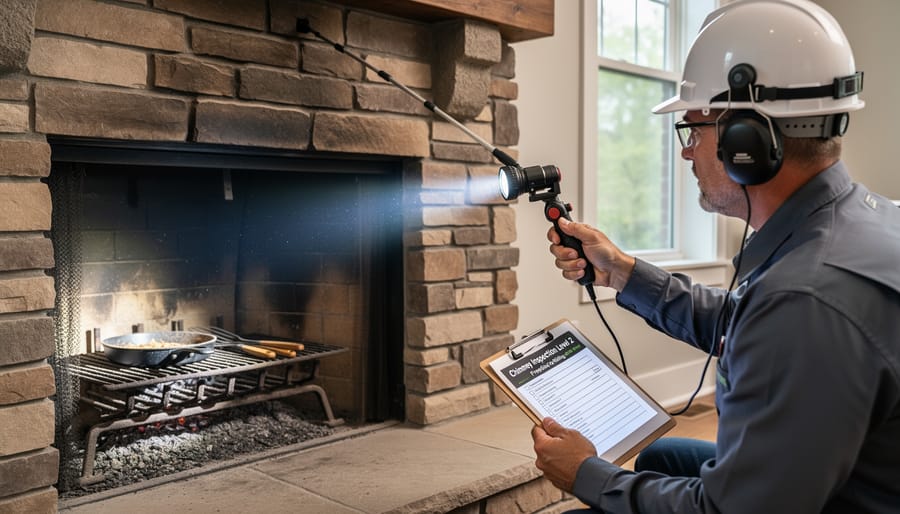
When you’re cooking indoors with your fireplace, you need what’s called a Level 2 inspection. This more comprehensive evaluation is specifically designed for situations where your chimney usage changes, which definitely applies when you transition from simple fires to preparing your favorite meals. Think of it as the difference between a routine check-up and a thorough diagnostic exam.
During a Level 2 inspection, your chimney professional will use video scanning equipment to examine the interior flue, checking for grease buildup, structural damage, and proper draft conditions that matter tremendously for grilling safety. They’ll also assess whether your chimney can handle the different temperature patterns and smoke compositions that grilling produces.
When scheduling your inspection, be upfront with your chimney sweep about your indoor grilling plans. Ask specifically about creosote and grease accumulation patterns, proper ventilation for cooking activities, and how often you should schedule cleanings based on your grilling frequency. A knowledgeable professional will appreciate your proactive approach and tailor their recommendations to keep your home safe while you enjoy this wonderful lifestyle element that combines warmth, cooking, and ambiance.
Essential Modifications That Make Grilling Safer
Before you start grilling in your fireplace, a few critical upgrades can dramatically reduce your fire risk and protect your home. Think of these modifications as essential safety investments that transform your fireplace into a proper grilling station.
First and foremost, verify your chimney liner’s condition. Grilling produces intense, concentrated heat along with grease-laden smoke that can corrode an aging liner faster than standard wood fires. A stainless steel liner designed for high-temperature applications offers superior protection against creosote buildup and heat transfer to combustible materials surrounding your chimney. If your liner is damaged, cracked, or more than 20 years old, replacement should be your top priority before any grilling begins.
Your damper system deserves special attention too. A fully functional damper allows you to control airflow precisely, which is crucial when managing grilling temperatures and smoke evacuation. Consider upgrading to a top-sealing damper if your current throat damper shows signs of warping or doesn’t seal completely. This upgrade improves draft control and prevents ember escape when you’re handling hot grates.
Don’t overlook structural elements like the firebox floor and walls. Grilling generates sustained heat that can deteriorate fire brick and refractory mortar over time. Inspect these surfaces carefully and repair any cracks or crumbling sections before starting your grilling adventures. Proper grill preparation techniques work best when your fireplace foundation is structurally sound, creating a safer environment for this wonderful lifestyle element that combines cooking with cozy ambiance.
Smart Grilling Habits That Keep Your Chimney Clean
The Woods You Should (And Shouldn’t) Use for Grilling
Choosing the right wood for fireplace grilling makes all the difference in both flavor and safety. Hardwoods like oak, hickory, and maple are your best friends here. They burn hot and clean, producing minimal creosote while infusing your food with that authentic smokiness we all love. Fruitwoods such as apple and cherry are also excellent choices, offering a milder, slightly sweet flavor profile that’s perfect for poultry and pork.
Now, let’s talk about the woods you should absolutely avoid. Softwoods like pine, cedar, and fir are grilling nightmares. They’re loaded with resins that create excessive creosote buildup, increasing your chimney fire risk dramatically. These woods also produce an unpleasant, acrid smoke that’ll ruin your meal. Never use pressure-treated lumber, painted wood, or plywood either. These materials release toxic chemicals when burned that are dangerous to breathe and contaminate your food.
Here’s a practical tip: always use seasoned wood that’s been dried for at least six months. Green or wet wood smolders rather than burns cleanly, creating more smoke and creosote. Your wood should feel light, have visible cracks in the ends, and make a hollow sound when knocked together. This simple check ensures you’re grilling safely while creating that perfect ambiance in your home.
Managing Grease Drips Before They Reach Your Flue
Grease management starts before you even light your fire. Position your grill grate at least six inches above the flames to reduce the amount of vaporized grease that can travel upward. This distance gives drippings time to burn off safely rather than becoming airborne particles that coat your flue.
Invest in a quality drip pan designed for fireplace grilling. Place it directly beneath your food to catch the majority of fat and juices before they hit the coals. Empty and clean this pan regularly during longer cooking sessions, as overflowing grease can ignite and send flames shooting upward. For an extra layer of protection, line your drip pan with aluminum foil for easier cleanup and better heat reflection.
Control your fire intensity to minimize grease vaporization. A moderate, steady flame works better than roaring heat, which can atomize fats into fine particles that coat your chimney walls. Avoid adding fresh wood while grilling, as sudden temperature spikes increase vapor production.
Keep your cooking surfaces clean between uses. Regularly maintaining your grill grates prevents buildup that can carbonize and contribute to future flare-ups. This simple habit reduces the overall grease load entering your chimney system, making every grilling session safer and more enjoyable.
Temperature Control: The Sweet Spot for Safe Grilling
Finding the right temperature balance is essential when grilling in your fireplace. You’ll want to aim for moderate, consistent heat rather than roaring flames that stress your chimney system. Think of it like maintaining a steady simmer on your stovetop rather than a rolling boil.
For most fireplace grilling, temperatures between 350-450°F provide that sweet spot where food cooks beautifully without creating excessive smoke or dangerous creosote buildup. Using a basic oven thermometer near your cooking grate helps you monitor this range accurately. When temperatures climb too high, the increased smoke and volatile compounds traveling up your flue can accelerate creosote formation, coating your chimney walls with that sticky, highly flammable residue we’re trying to avoid.
Here’s a practical approach: start with a smaller fire than you think you need, then build gradually. This controlled method gives you better temperature management and produces less smoke overall. If you notice thick, dark smoke instead of thin, almost clear wisps, your fire is running too cool or your wood might be damp. Adjust by adding smaller pieces of seasoned hardwood rather than large logs that create temperature spikes.
Remember, consistent moderate heat is kinder to your chimney’s masonry and liner, reducing thermal stress that can cause cracks where creosote accumulates.
Your Maintenance Schedule for Fireplace Grilling
How Often You Really Need to Clean (It’s More Than You Think)
The frequency of cleaning your fireplace grill setup depends heavily on how often you’re firing it up. If you’re a weekend warrior who grills every Saturday and Sunday, you’ll need a more rigorous schedule than someone who occasionally grills for special occasions.
For heavy users who grill two or more times weekly, plan on a thorough cleaning every two to three weeks. This includes brushing grates, removing ash buildup, and checking your chimney for creosote accumulation. The combination of grease and smoke from frequent grilling accelerates buildup significantly faster than traditional wood-burning fires alone.
Occasional grillers who use their fireplace for cooking once or twice monthly can extend cleaning intervals to about once per month. However, don’t let that timeline lull you into complacency. Even infrequent use creates sticky residue that hardens over time, making it tougher to remove later.
Regardless of your grilling frequency, schedule a professional chimney inspection at least once annually. Think of regular grill maintenance as an investment in your home’s safety and your family’s well-being. The few minutes spent cleaning after each session prevents dangerous buildup and keeps your cozy cooking tradition both safe and sustainable for years to come.
Between-Cleaning Checks You Can Do Yourself
You don’t need to wait for your annual professional inspection to keep tabs on your chimney’s condition. Between cleanings, make it a habit to perform simple visual checks that can help you catch potential problems early. Once a week during active burning season, grab a flashlight and peer up into your firebox. Look for any flaky, tar-like substance on the damper or smoke chamber walls—that’s creosote making itself at home. If you notice buildup that looks thicker than a credit card or has a shiny, hardened appearance, it’s time to schedule a professional cleaning.
Pay attention to how your fireplace is performing too. Smoke backing up into your room, difficulty getting fires started, or a strong odor even when the fireplace isn’t in use can all signal dangerous creosage accumulation. When you’re practicing proper grill care in your fireplace, these checks become even more important since grilling produces different residues than traditional wood burning.
Outside your home, take a monthly look at your chimney cap and spark arrestor for any visible blockages or damage that could restrict airflow and contribute to creosote formation.
Warning Signs Your Chimney Needs Immediate Attention
Your chimney often gives clear warning signals when something’s wrong, and recognizing these red flags could prevent a dangerous situation. Think of your chimney as constantly communicating with you—you just need to know what to listen for.
One of the most obvious signs is a strong, acrid smell coming from your fireplace, even when it’s not in use. This distinctive odor, often compared to asphalt or burning tar, indicates excessive creosote buildup that’s baking onto your chimney walls. If you notice this smell intensifying during warm, humid weather, it’s time to call a professional immediately.
Watch for black or brown staining around your fireplace opening or on the damper. While some discoloration is normal, heavy, flaky deposits or a shiny, glazed appearance on your chimney walls signals dangerous Stage 3 creosote—the hardest to remove and most hazardous type. This concentrated tar-like substance is extremely flammable and won’t simply brush away during regular cleaning.
Another critical warning is reduced draft performance. If smoke enters your room instead of drawing up the chimney, or if you’re having difficulty getting fires started, blockages or buildup may be restricting airflow. This creates a doubly dangerous situation: poor combustion produces more creosote while existing deposits prevent proper ventilation.
Look for small pieces of creosote falling into your firebox, which indicates the buildup has become thick enough to crack and break away. You might also notice a loud, crackling sound during fires—different from the pleasant snap of burning wood—which could signal creosote igniting in small amounts.
Finally, if you’ve been regularly grilling in your fireplace without annual inspections, consider that your warning sign. The combination of grease and wood smoke accelerates creosote formation, making professional evaluation essential for your family’s safety.
Eco-Friendly Approaches to Chimney Fire Prevention
Keeping your chimney safe doesn’t mean compromising your environmental values. In fact, embracing eco-friendly practices can enhance both your safety and your home’s harmony with nature.
Start with what you’re burning. Choosing seasoned hardwoods like oak, maple, or ash reduces creosote buildup naturally because they burn hotter and cleaner than softwoods. When selecting firewood, look for locally sourced options that have been properly dried for at least six months. This reduces transportation emissions while providing you with safer fuel that produces less smoke and residue. For grilling inside your fireplace, natural lump charcoal made from hardwood offers a cleaner burn than briquettes containing chemical binders and additives.
Natural cleaning methods can effectively maintain your chimney between professional inspections. A mixture of salt and baking soda sprinkled over hot coals creates a chemical reaction that helps loosen light creosote deposits. While this shouldn’t replace professional cleaning, it’s a gentle, non-toxic way to maintain your system throughout the season.
Consider the environmental impact of your chimney maintenance products too. Many traditional chimney cleaners contain harsh chemicals that release volatile organic compounds into your home and the atmosphere. Look for plant-based, biodegradable alternatives that accomplish the same goals without introducing toxins into your living space.
The efficiency of your burn matters tremendously for both safety and sustainability. Running smaller, hotter fires reduces creosote formation while using less fuel overall. When grilling, preheat your fire fully before cooking to ensure complete combustion, which minimizes harmful emissions and dangerous buildup.
Finally, remember that proper airflow isn’t just about safety—it’s about efficiency. A well-maintained damper and chimney cap system ensures your fire burns cleanly, reducing waste and environmental impact while protecting your home from chimney fires.
Indoor fireplace grilling opens up an exciting world of culinary possibilities right in the heart of your home, transforming your fireplace from a simple heat source into a versatile lifestyle element. When approached with the proper knowledge and preventive measures, this unique cooking method can become a safe, rewarding tradition that brings warmth, flavor, and unforgettable experiences to your household.
The key to enjoying fireplace grilling lies in being proactive rather than reactive. Regular chimney inspections and cleanings, proper fuel selection, appropriate cooking equipment, and vigilant monitoring transform potential hazards into manageable routines. By understanding how grease and food particles create different combustion risks than standard wood burning, you’re already ahead of the curve in protecting your home and loved ones.
Remember that prevention strategies work best as a comprehensive system. Annual professional inspections combined with monthly visual checks, proper ventilation practices, and immediate attention to warning signs create multiple layers of protection. Your chimney isn’t just a structural feature; it’s an essential component of your home’s safety system and an eco-friendly heating solution when maintained correctly.
Don’t let safety concerns prevent you from exploring this remarkable cooking method. Instead, let them guide you toward responsible enjoyment. With the right preparation, maintenance schedule, and awareness, you can confidently embrace fireplace grilling as a cherished part of your home life. The crackling flames, aromatic smoke, and delicious results are all within reach when you prioritize prevention and make safety second nature.