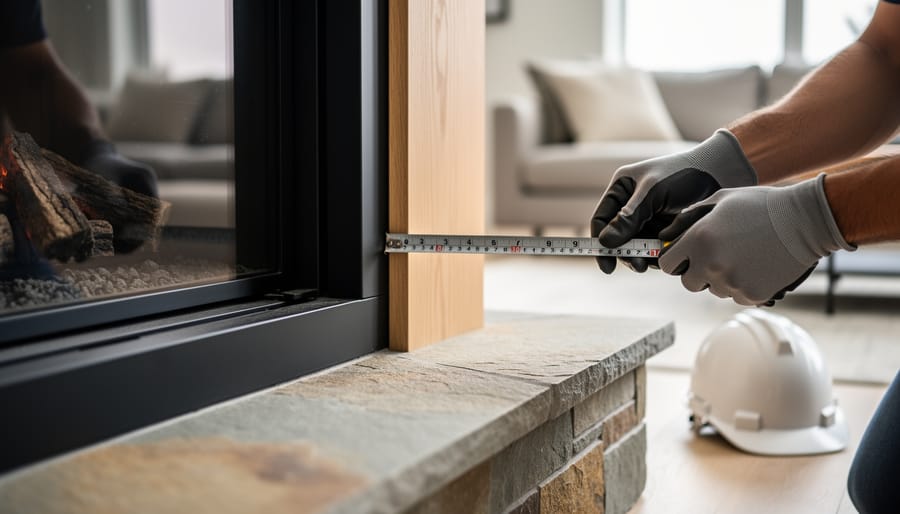


Verify your fireplace installer pulled the correct permit and requested Z359 compliance, because this Canadian standard (CSA Z359.1) actually relates to fall protection equipment, not fireplace clearances. You’re likely looking for information about NFPA 211 or ULC-S610 standards, which govern actual fireplace installation clearances to combustible materials. Contact your local building department immediately to confirm which code applies in your jurisdiction, as requirements vary significantly between U.S. and Canadian installations, and between different provinces and states.
Measure all clearances from your fireplace opening to nearby combustible surfaces using the manufacturer’s installation manual as your primary guide, which supersedes generic code minimums. Most zero-clearance fireplaces require specific distances despite their name, while traditional masonry units demand 16 to 36 inches from combustibles depending on construction type and heat output.
Install proper hearth protection extending at least 16 inches beyond the firebox opening on the sides and 18 inches in front for wood-burning units, using non-combustible materials rated for the expected heat load. This critical safety barrier prevents ember damage and radiant heat transfer to flooring, yet remains one of the common clearance mistakes that puts homes at risk.
Document everything with photographs and keep all manufacturer specifications, inspection reports, and permit records together. These prove compliance during home sales and insurance claims, while protecting your family through proper installation that balances ambiance with uncompromising safety standards.
What Is Z359 and Why Should You Care?
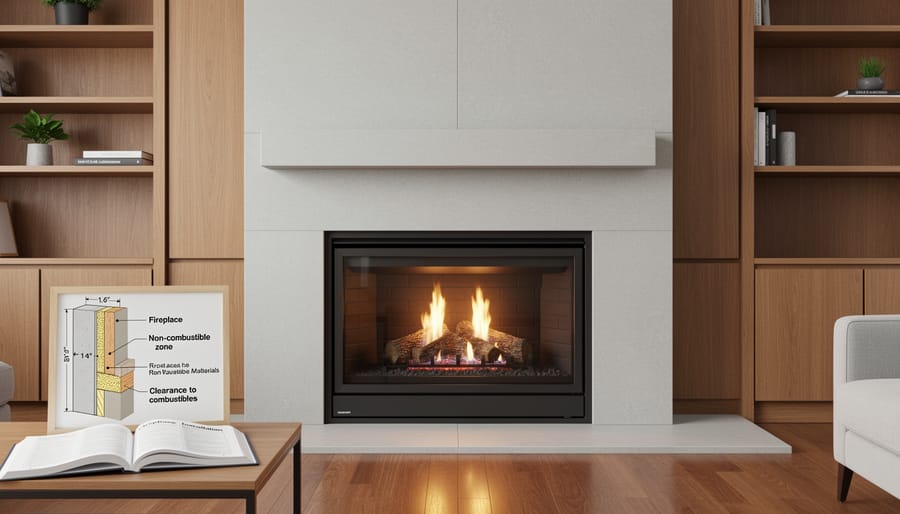
The Story Behind the Standard
The Z359 standard didn’t emerge from a boardroom brainstorming session. Like most safety codes, it was written in response to real-world tragedies. Throughout the mid-20th century, house fires caused by improperly installed heating appliances prompted safety organizations to take action. Families lost homes, and worse, because combustible materials like wood flooring, wall paneling, and furniture sat too close to hot fireplace surfaces.
In response, organizations like the National Fire Protection Association (NFPA) and Underwriters Laboratories (UL) began developing comprehensive testing protocols. They literally set rooms on fire under controlled conditions to understand exactly how heat transfers from fireplaces to surrounding materials. These tests revealed critical distances needed to prevent ignition, which became the foundation of the Z359 standard and similar codes.
Today, these standards are maintained through ongoing collaboration between fire safety experts, manufacturers, and code officials. They’re regularly updated as new fireplace technologies emerge, ensuring that whether you’re installing a traditional wood-burning hearth or exploring eco-friendly heating solutions, you have clear guidelines that protect your home and family. Understanding this history helps us appreciate that these aren’t arbitrary rules but life-saving lessons learned through decades of research and real-world experience.
When Z359 Applies to Your Home
Understanding when Z359 applies to your home is essential for staying compliant with fireplace safety rules and protecting your family. This Canadian standard applies primarily to new fireplace installations, whether you’re adding a wood-burning stove, gas fireplace insert, or traditional masonry fireplace to your home. If you’re renovating and replacing an existing fireplace with a new model, Z359 requirements will also apply.
The standard covers both factory-built and site-built fireplaces, including zero-clearance units and freestanding stoves. Importantly, existing fireplaces that aren’t being modified typically don’t need to be retroactively upgraded unless local codes specify otherwise. However, if you’re making any changes to your current setup, such as installing a new hearth pad, changing the flooring material near your fireplace, or replacing the firebox, you’ll need to meet current Z359 standards.
For eco-conscious homeowners considering upgrades to more efficient heating solutions, understanding these requirements from the start ensures your investment in warmth and ambiance meets all safety benchmarks while creating the cozy atmosphere you desire.
Understanding Clearance Requirements: The Critical Numbers
Sidewall and Ceiling Clearances
Understanding proper spacing around your fireplace is essential for both safety and peace of mind. The Z359 standard establishes specific clearance requirements that protect your home while allowing you to enjoy your fireplace’s warmth and ambiance.
For sidewalls, you’ll typically need at least 36 inches of clearance from combustible materials like wood paneling, drywall, or built-in shelving. Think of that cozy reading nook you’re planning next to your fireplace – you’ll want to ensure any wooden bookcases or fabric-upholstered chairs maintain this safe distance unless you’re using approved non-combustible shielding.
Ceiling clearances generally require a minimum of 18 inches from the top of your fireplace or stove pipe to any combustible ceiling materials. This includes standard drywall ceilings, exposed wooden beams, or decorative ceiling panels. If you have lower ceilings, you may need heat shields or other protective measures to maintain compliance.
Overhead combustibles deserve special attention. That beautiful reclaimed wood mantel you’ve been eyeing? It needs proper clearance too, typically 12 to 18 inches above the fireplace opening, depending on how far it projects from the wall. Crown molding, ceiling fans, and even hanging light fixtures all factor into these calculations, ensuring your eco-friendly heating solution remains both safe and stylish for years to come.
Mantel and Alcove Considerations
When you’re designing your fireplace area with mantels, built-in shelving, or entertainment centers, Z359 clearance requirements become especially important. These popular design elements can transform your fireplace into a stunning focal point, but they need careful planning to meet safety standards while achieving the look you want.
Mantels are considered combustible materials under Z359 guidelines, which means they require specific clearances based on how far they project from the wall. Generally, for every 1/8 inch a mantel projects outward, you need to add one inch of vertical clearance from the firebox opening. A mantel projecting 12 inches, for example, typically needs at least 15-18 inches of clearance above the opening, though exact measurements depend on your specific fireplace model.
Built-in alcoves and entertainment centers present unique challenges because they can restrict air circulation around your fireplace. You’ll need to maintain proper side clearances, usually 6-12 inches from combustible materials, and ensure adequate ventilation to prevent heat buildup. Many homeowners don’t realize that even heat-resistant materials can trap warmth in enclosed spaces, creating safety hazards over time.
Before finalizing your design, always consult your fireplace manufacturer’s specifications, as they may require greater clearances than minimum code requirements. Working with these requirements from the start helps you create a beautiful, functional space that keeps your family safe for years to come.
Combustible vs. Non-Combustible Materials
Understanding the difference between combustible and non-combustible materials is essential when planning your fireplace installation, as this distinction directly impacts how much clearance you’ll need to maintain for safe operation.
Combustible materials are anything that can catch fire or contribute to a fire’s spread. In your home, this includes most common building materials like wood framing, drywall (yes, even drywall!), plywood, hardwood floors, carpeting, fabric wallpaper, and wooden mantels. Even materials that seem fireproof can become combustible when exposed to prolonged heat, which is why Z359 standards are so specific about distances.
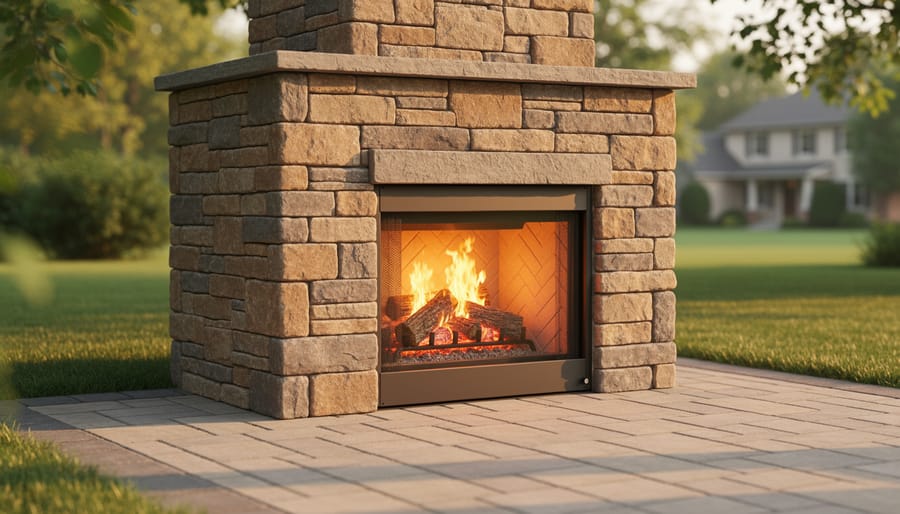
Non-combustible materials, on the other hand, won’t ignite or burn. These include concrete, brick, natural stone, cement board, ceramic tile, metal, and glass. When you hear about zero-clearance fireplaces, they’re specially designed with multiple layers of insulation and air circulation to safely sit against combustible walls, though they still require specific installation parameters.
Why does this matter? The Z359 standard requires greater clearances from combustible materials because heat doesn’t just ignite flames on contact. Prolonged exposure to temperatures as low as 200 degrees Fahrenheit can cause wood to undergo a process called pyrolysis, gradually lowering its ignition point until it eventually combusts. This is why that beautiful wooden mantel needs careful positioning, and why understanding these material categories helps you create a safer, more enjoyable hearth space.
Hearth Protection Standards That Actually Make Sense
Hearth Extension Dimensions
The hearth extension serves as your fireplace’s safety zone, catching any sparks or embers that might escape during those cozy evenings by the fire. Getting the dimensions right isn’t just about following rules—it’s about protecting your home and family.
According to NFPA 211, your hearth extension dimensions depend on your fireplace opening size. For openings under 6 square feet, you’ll need a minimum 16-inch extension in front of the fireplace and 8 inches on each side. Once your opening exceeds 6 square feet, those requirements increase to 20 inches in front and 12 inches on the sides.
Here’s a practical way to measure: multiply your fireplace opening’s height by its width to get the square footage. A 30-inch wide by 28-inch tall opening gives you 5.8 square feet, so you’d use the smaller dimensions. A 36-inch by 30-inch opening equals 7.5 square feet, requiring the larger clearances.
The hearth extension must also be at least 2 inches thick or constructed with materials providing equivalent protection. Think of it as a thermal barrier between your flooring and the heat above. Many homeowners choose attractive options like brick, stone, or tile that complement their home’s aesthetic while meeting safety standards—proving that protection and style can absolutely go hand-in-hand.
Approved Hearth Materials and R-Values
Understanding which materials protect your floors and meet code requirements doesn’t have to be complicated. The Z359 standard approves several hearth materials based on their thermal resistance, measured in R-value, which indicates how well they insulate against heat transfer.
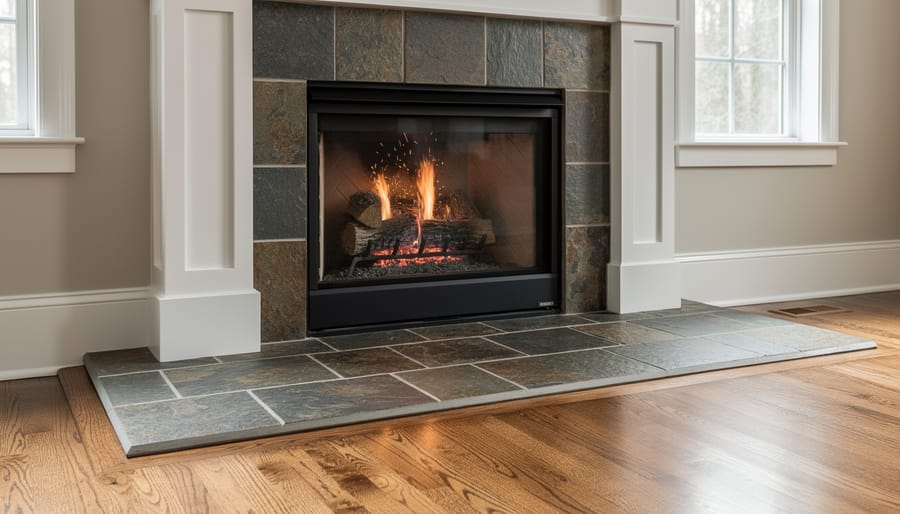
Non-combustible materials like brick, stone, tile, and cement board are your go-to options. For a standard hearth extension, you’ll need materials providing at least an R-value of 1.0, though this varies depending on your fireplace’s specific requirements and leg height. Many ceramic and porcelain tiles naturally meet this threshold, making them both practical and stylish choices.
Popular options that combine safety with aesthetics include natural stone like slate or granite, which offers excellent heat resistance while creating that timeless, rustic appeal many homeowners love. Decorative concrete tiles provide a modern look, while traditional brick brings warmth and character to your space.
If your existing floor is combustible, you can layer materials to achieve the required R-value. For example, cement board topped with tile creates an attractive, code-compliant hearth. Some homeowners choose modular hearth pads, which come pre-approved and simplify installation considerably.
Remember, the goal isn’t just checking boxes for compliance. You’re creating a safe foundation that lets you enjoy your fireplace’s warmth and ambiance for years to come, all while complementing your home’s aesthetic and supporting efficient, eco-friendly heating.
Raised Hearths and Special Configurations
If you’re planning a raised hearth or unique fireplace configuration, Z359 requirements deserve special attention. Elevated hearths create a beautiful focal point and can bring the flames closer to eye level, enhancing the cozy atmosphere of your living space. However, they introduce additional safety considerations.
When your hearth sits more than eight inches above the floor, Z359 standards typically require increased hearth extension. The raised surface becomes easier to contact, especially for children or during everyday movement around your fireplace. You’ll generally need an extra eight to ten inches of protective hearth extension beyond standard requirements.
Special configurations like corner installations, see-through fireplaces, or three-sided units also demand careful planning. Each exposed side needs appropriate clearances and hearth protection. Your fireplace manufacturer will specify these requirements based on their appliance testing, but understanding Z359 gives you the foundation to ask the right questions during planning.
Working with a professional installer familiar with these variations ensures your unique design meets safety standards while creating the warm, inviting space you envision. These configurations can absolutely work beautifully when properly planned from the start.
Common Z359 Violations Homeowners Make (And How to Avoid Them)
The TV-Above-Fireplace Trap
We’ve all seen it in design magazines and on home makeover shows: that sleek flat-screen television mounted perfectly above a beautiful fireplace. It looks stunning, creates a natural focal point, and seems like the ideal use of wall space. Unfortunately, this trendy design choice frequently violates Z359 clearance requirements and can damage your expensive electronics.
Most televisions require ambient temperatures below 90°F to function properly, but the area above your fireplace regularly exceeds this threshold during use. Beyond temperature concerns, mounting a TV above your fireplace often places it closer to combustible materials than Z359 standards allow, creating a genuine safety hazard that inspectors will flag.
If you’re determined to achieve this look, there are safer alternatives. Consider installing a properly rated mantel that meets minimum clearance requirements, which can act as a heat shield. Some homeowners opt for articulating TV mounts that pull the screen away from the wall, improving ventilation. Electric or low-emission gas fireplaces generate less heat, making them more compatible with overhead electronics. You might also explore recessing the TV into the wall with adequate insulation barriers, though this requires professional installation to ensure code compliance and protect your investment in both your fireplace and entertainment system.
Furniture Placement Mistakes
Even when you’ve measured your fireplace clearances perfectly, furniture placement can create unexpected code violations. That beautiful sectional positioned too close to your hearth might seem harmless, but inspectors consider how furniture could potentially catch fire or prevent safe emergency egress. Couches, recliners, and upholstered chairs should remain at least 36 inches from the fireplace opening when in use. Remember, kids love repositioning furniture for play, so secure larger pieces or choose arrangements that naturally maintain safe distances.
Bookshelves and entertainment centers present another challenge. Many homeowners place them beside fireplaces without realizing that combustible materials like books and wooden shelving need to follow the same clearance rules as wall materials. Even metal shelving units can become problematic if they’re loaded with flammable items within the protected zone. Consider your fireplace as having an invisible safety bubble around it, and anything entering that space needs careful consideration. The good news? Strategic furniture placement actually enhances your room’s flow while keeping your family safe and your home compliant with safety standards.
Retrofit and Remodel Pitfalls
If you’re considering updating an older fireplace or moving into a home with an existing installation, understanding your obligations regarding Z359 compliance is essential for both safety and peace of mind. Here’s the reality: when you purchased your home, that fireplace may have been grandfathered in under older standards, but certain situations can trigger the need for updates.
Major renovations, room additions, or changing the fireplace type often require bringing everything up to current code. While you’re typically not required to upgrade a functioning installation just because standards have changed, selling your home or making significant modifications can open that door. Insurance companies may also request compliance verification, especially after code compliance issues are identified during inspections.
The smartest approach? Have a certified professional assess your installation before starting any remodel project. They can identify which elements need updating and help you prioritize safety improvements. Remember, these standards exist to protect your family and home, making compliance an investment in your wellbeing rather than just a regulatory hurdle.
Getting Your Installation Inspected and Approved
What Inspectors Actually Check
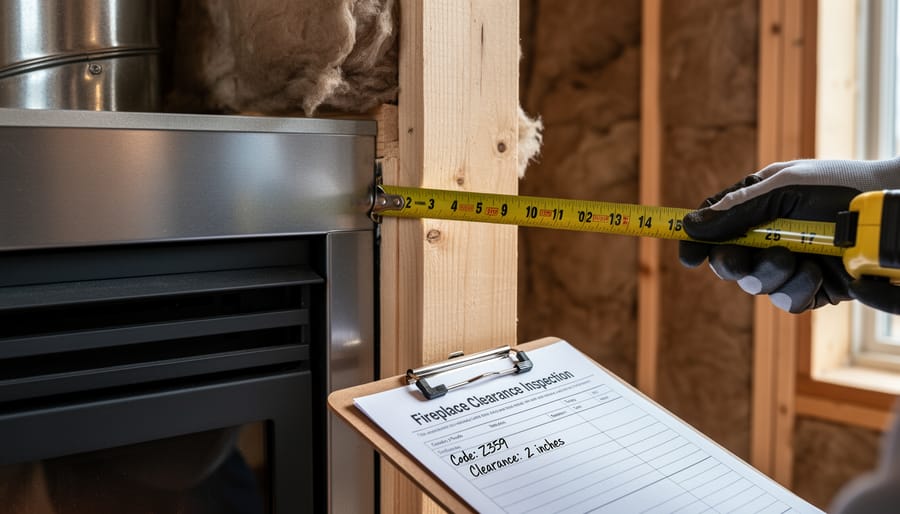
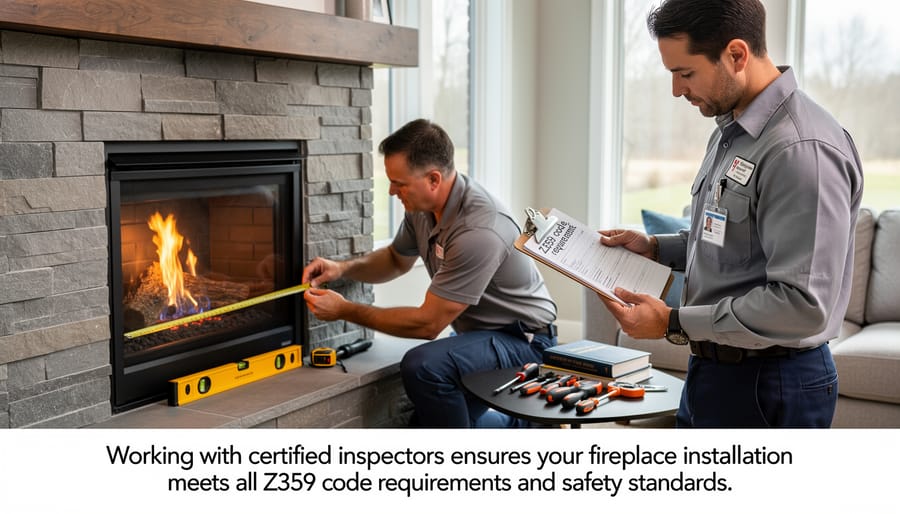
When an inspector arrives to evaluate your fireplace installation, they’re following a specific checklist based on Z359 standards. First, they’ll measure the distance between your fireplace and any combustible materials like wood framing, cabinets, or mantels. Expect them to pull out a tape measure and verify every clearance dimension matches what the manufacturer specifies.
Next, inspectors examine your hearth extension, checking both its depth in front of the fireplace opening and its width on each side. They’ll verify the hearth material is non-combustible and properly constructed. Wall protection gets scrutinized too, especially if you’ve used any heat shields or reduced-clearance systems.
They’ll also inspect the installation manual compliance, looking at ventilation, framing, and whether proper materials were used throughout. Documentation matters here, so having your manufacturer’s instructions and product approvals readily available helps tremendously.
The good news? Most failures stem from simple measurement errors or overlooked details rather than major problems. Understanding what inspectors look for before they arrive helps you pass your inspection confidently the first time, getting you closer to enjoying cozy evenings by your new fireplace.
Documentation You’ll Need
Before your installer arrives or you tackle this project yourself, gather the essential paperwork that will make the process smoother and keep you compliant with local regulations. Start with your fireplace manufacturer’s installation manual, which contains the specific clearance requirements for your model. This manual is your blueprint for safe installation and will be referenced during inspections.
You’ll also need documentation of your building permit if one was required in your area. Most jurisdictions require permits for new fireplace installations or major modifications, and having this paperwork readily available demonstrates you’re following proper channels. Contact your local building department early to understand what’s needed.
Keep your appliance’s listing label information handy, which shows it meets Z359 standards and other safety certifications. This label proves your fireplace has been tested and approved for residential use.
Finally, maintain detailed installation records, including photos of the hearth protection installation, measurements of all clearances, and receipts for materials used. These records protect you during home sales, insurance claims, and future renovations, creating a complete safety history for your home’s heating centerpiece.
Eco-Friendly Compliance: Modern Solutions That Meet Code
Modern eco-friendly fireplace options are changing the game when it comes to clearance requirements, offering you more flexibility while keeping your home safe and sustainable. If you’re exploring greener heating solutions, you’ll be pleased to know that many of these technologies work harmoniously with Z359 standards while often requiring less stringent clearances than traditional wood-burning units.
Bioethanol fireplaces represent a particularly exciting development in eco-friendly heating. Because they produce clean-burning flames without the need for venting or chimneys, many models have reduced clearance requirements compared to conventional fireplaces. The absence of hot flue pipes and chimneys means fewer surfaces reaching extreme temperatures. However, it’s important to remember that these units still produce real flames and heat, so you’ll need to maintain appropriate distances from combustible materials as specified by the manufacturer and local codes.
High-efficiency gas fireplaces have also made impressive strides in meeting both environmental and safety standards. Modern direct-vent models operate in sealed combustion systems, keeping exterior surfaces cooler than older designs. This efficiency translates to more manageable clearance requirements while reducing your carbon footprint. Many units now feature cool-touch glass and advanced insulation that minimize heat transfer to surrounding walls and materials.
Electric fireplaces offer the most flexible clearance options since they don’t produce actual combustion. While they should still follow manufacturer guidelines, the reduced heat output generally allows for closer placement to walls and furnishings, making them ideal for smaller spaces where traditional fireplace clearances would be challenging to accommodate.
Understanding Z359 standards might feel like navigating bureaucratic complexity, but here’s the truth: these guidelines exist for one fundamental reason—to protect what matters most. Your home, your family, and the investment you’ve made in creating a warm, inviting living space all depend on proper fireplace installation that respects clearance requirements and hearth protection standards.
Think of Z359 compliance not as red tape, but as your safety blueprint. Every measurement, every material specification, and every clearance requirement has been developed through decades of fire safety research and real-world testing. When you follow these guidelines, you’re not just checking boxes for an inspector—you’re ensuring that cozy winter evenings by the fire remain exactly that: cozy, not catastrophic.
We encourage you to take a moment to verify your own fireplace installation. Measure those clearances, check your hearth extension, and examine the materials used. If anything seems unclear or questionable, don’t hesitate to consult with certified professionals. There’s no substitute for expert eyes when it comes to fire safety.
By embracing these standards, you’re empowering yourself to enjoy your fireplace with complete confidence. You’ve created not just an eco-friendly heating solution, but a lifestyle centerpiece that will safely warm your home and create cherished memories for years to come.