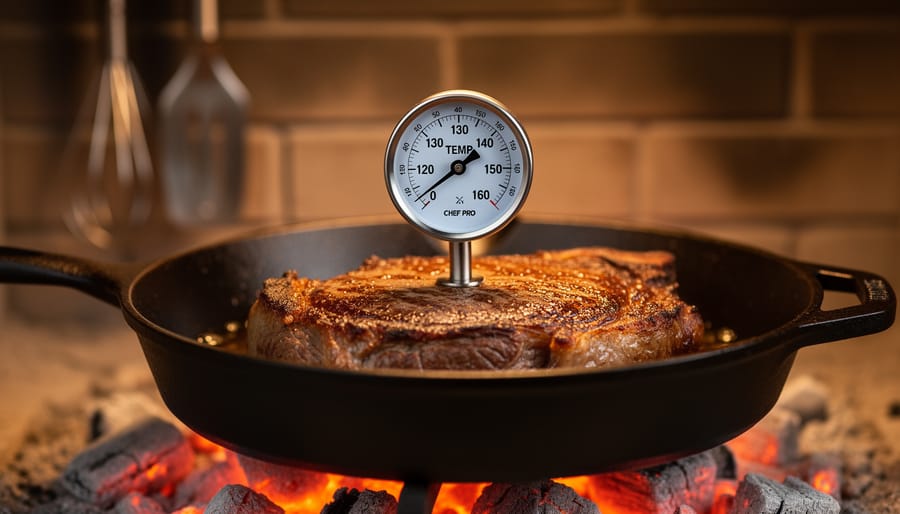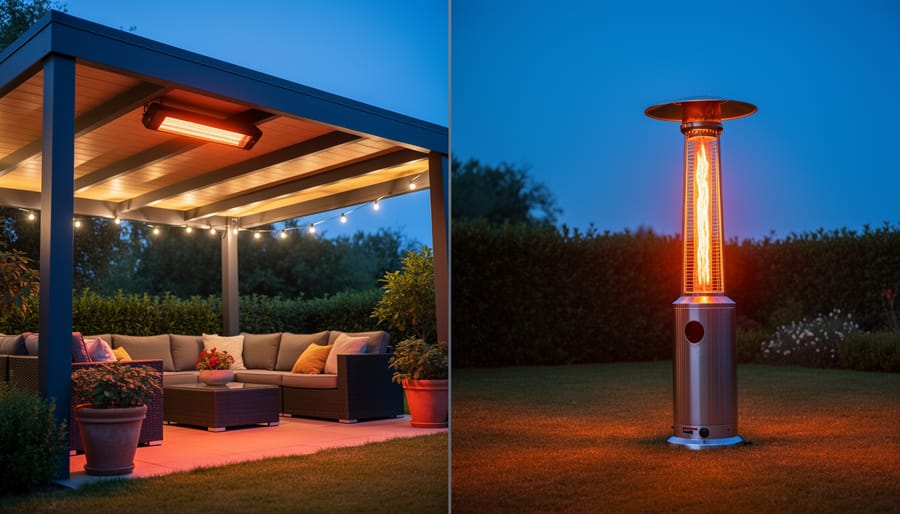
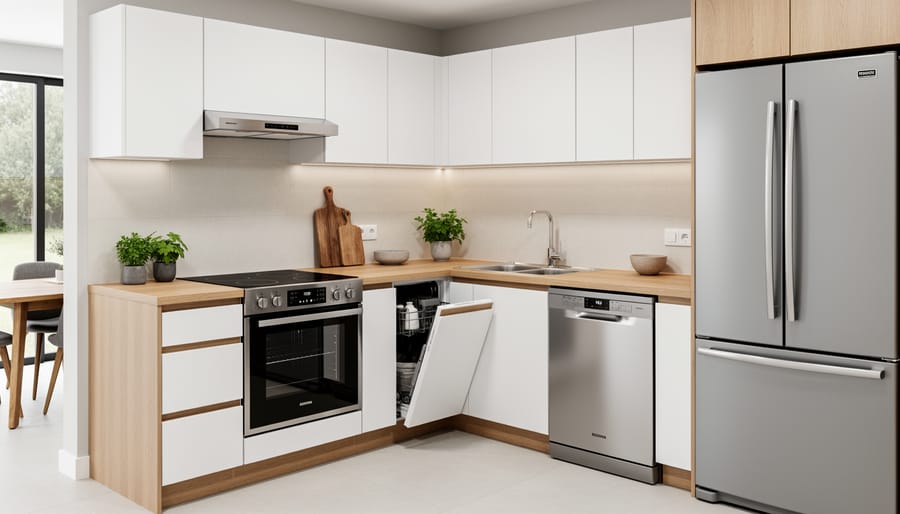


Position your range along the shorter leg of your L-shaped kitchen to create a natural work triangle with your sink and refrigerator, keeping the three points between 12 and 25 feet apart for optimal efficiency. This layout mirrors the same thoughtful planning you’d apply when positioning a fireplace as the heart of your living space—both become gathering points that define how people move through and enjoy the room.
Measure your corner space carefully before selecting appliances, ensuring at least 15 inches of counter space on one side of your cooktop and 12 inches on the other for safe food preparation. Standard ranges measure 30 inches wide, but compact 24-inch models work beautifully in tighter L configurations without sacrificing cooking capability. Consider energy-efficient induction cooktops that heat quickly while reducing your home’s carbon footprint, much like modern eco-friendly heating solutions transform how we warm our spaces.
Install your dishwasher within 36 inches of the sink along the same leg to simplify plumbing and create an efficient cleanup zone. Place your refrigerator at the end of the longer leg where it won’t interrupt your primary work area—standard 36-inch-wide models fit most layouts, while counter-depth options (24-25 inches deep) provide a streamlined look in smaller kitchens.
Reserve the corner area for lazy Susans or pull-out organizers rather than appliances, as these awkward spaces resist standard installations. Your L-shaped kitchen should feel as welcoming and functional as a well-designed hearth room, where every element serves both practical needs and creates an inviting atmosphere for family and friends.
Understanding the L-Shaped Kitchen Layout
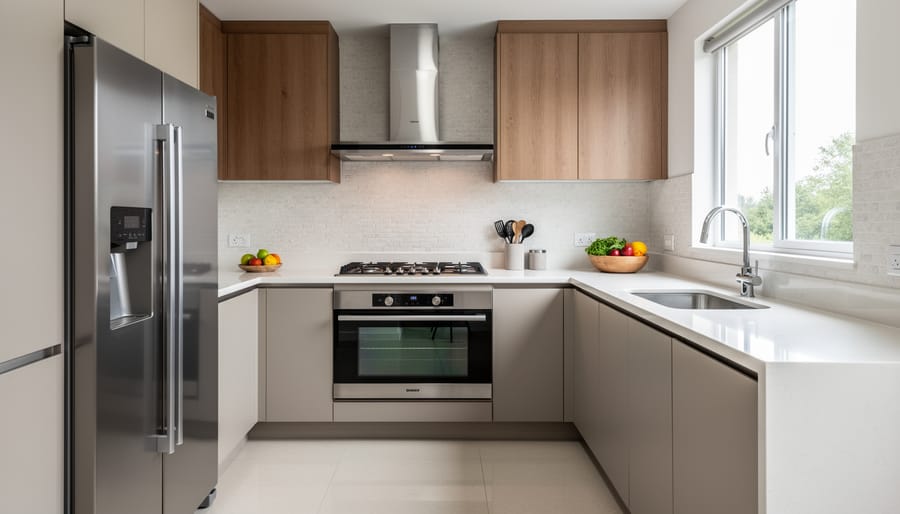
The Corner Challenge
The corner space in L-shaped kitchens presents both an opportunity and a challenge that deserves careful consideration during your planning phase. This naturally occurring nook where your two countertop runs meet can become either a highly functional area or a frustrating dead zone, depending on how thoughtfully you approach it.
Understanding the corner’s limitations helps you make smarter appliance choices. Standard base cabinets typically measure 24 inches deep, but corner configurations require specialized solutions. If you’re installing a range or cooktop near the corner, ensure you maintain at least 15 to 18 inches of landing space on one side for safe food prep and pot handling. This clearance becomes crucial for preventing accidents and creating a comfortable cooking experience.
Corner sinks offer an excellent solution, transforming what might be wasted space into a functional focal point with a pleasant view. However, verify that your chosen sink dimensions allow cabinet doors and dishwasher access to open fully without obstruction. Lazy Susans and pull-out corner organizers maximize storage accessibility, but they require specific cabinet dimensions that may affect adjacent appliance placement.
Think about traffic flow around this pivot point. The corner naturally becomes a transition zone in your kitchen’s work triangle, so keeping this area uncluttered helps maintain the warm, inviting atmosphere you’re creating throughout your home.
Traffic Flow and the Work Triangle
The L-shaped kitchen naturally creates one of the most efficient work triangles you’ll find in kitchen design. Think of the work triangle as the invisible path connecting your three main work zones: the refrigerator, sink, and cooking range. In an L-layout, these essential appliances nestle beautifully along two perpendicular walls, creating a compact triangle that minimizes unnecessary steps while cooking.
When positioning your appliances, aim to keep each leg of the triangle between 4 and 9 feet. This sweet spot means you’re never taking marathon walks between stations, yet you have enough counter space to work comfortably. Place your sink at the corner’s inner edge where the two walls meet, as this central position naturally becomes your prep hub. Your refrigerator works best at one end of the L, while your range anchors the other end.
This layout also creates a warm, inviting atmosphere where the cook isn’t isolated from family and guests. You’ll find yourself naturally facing into the room while working, making meal preparation a more social experience. The open side of the L keeps traffic flowing smoothly around your workspace rather than cutting through it, which is especially valuable in homes where the kitchen serves as the heart of daily life.
Critical Appliance Specifications for L-Shaped Kitchens
Door Swing and Clearance Requirements
When planning your L-shaped kitchen, understanding door swing clearances is crucial for creating a space that feels as welcoming as a cozy fireside gathering. The last thing you want is a refrigerator door that can’t open fully because it bumps into the perpendicular wall or cabinets.
For refrigerators positioned at the corner junction, ensure at least 36 inches of clearance from the perpendicular wall to allow doors to swing open completely. French door models work beautifully in tighter spaces since each door requires less swing radius. Consider counter-depth refrigerators that sit flush with cabinetry, creating a streamlined look while improving traffic flow.
Oven placement requires similar attention. Wall ovens need 18-24 inches of adjacent counter space and enough clearance for door drop-down without blocking walkways. Range doors typically need 20-30 inches of clearance in front when fully open. If you’re incorporating warming drawers or steam ovens as part of an energy-efficient cooking suite, position them where their operation won’t interfere with the kitchen’s natural flow.
Always measure twice before finalizing appliance placement. Think of proper clearances as creating breathing room in your kitchen, much like proper ventilation enhances any well-designed heating space. This thoughtful planning ensures your kitchen functions smoothly for years to come.
Depth Dimensions That Make or Break Your Layout
When designing your L-shaped kitchen, the depth of your appliances can dramatically impact both functionality and flow. Standard-depth refrigerators typically extend 30-34 inches from the wall, while counter-depth models align flush with your countertops at about 24-25 inches. This might seem like a minor difference, but in an L-configuration where traffic flows around corners, those extra inches matter tremendously.
Counter-depth appliances create a more open, streamlined feel that’s particularly valuable in L-kitchens where the corner junction naturally narrows your walkway. Think of it like creating breathing room in your space, similar to how a well-placed fireplace opens up a living area without overwhelming it. Standard-depth appliances offer more storage capacity, which makes sense if your L-layout has generous floor space and you’re not feeling cramped.
Consider your family’s movement patterns. If your L-kitchen connects to dining or living areas where people gather, counter-depth options prevent that awkward side-shuffle past the fridge. However, if you’re working with a larger footprint and need maximum storage for a busy household, standard-depth appliances won’t compromise your layout’s functionality. The key is measuring your actual clearance at that critical corner turn, ensuring at least 36 inches remains for comfortable passage while maintaining the warm, inviting atmosphere that makes your kitchen the heart of your home.
Width Considerations for Corner Placement
When planning your L-shaped kitchen, corner appliance placement deserves careful attention to keep your space both functional and inviting. Standard refrigerators at 30-36 inches wide work beautifully in corner areas, but leave at least 15 inches of counter space between the refrigerator and the corner wall to avoid awkward reach-in situations. For dishwashers, the standard 24-inch width is ideal near corner sinks, but position them on the side that opens away from the corner to prevent cabinet door conflicts.
Ranges and cooktops need breathing room too. A 30-inch range placed too close to a corner creates unused space behind it, so aim for at least 9 inches of counter on the corner side. This small buffer zone transforms what could be wasted space into a useful prep area. Think of your corner placement like arranging seating around a cozy fireplace, where everything needs proper clearance to function comfortably. Smart width choices here prevent those frustrating dead zones where counter space exists but remains practically unreachable, keeping your kitchen workflow as smooth and welcoming as a warm hearth on a winter evening.
Strategic Appliance Placement in the L Configuration
Range and Cooktop Positioning
Your range or cooktop serves as the heart of your L-shaped kitchen, much like a fireplace brings warmth to a living space. Position it along one leg of the L, ideally leaving at least 15-18 inches of counter space on one side for prep work and landing hot dishes safely. This creates a natural workflow that makes cooking feel comfortable rather than cramped.
Ventilation is essential for maintaining air quality and preventing moisture buildup. Install a range hood that extends at least as wide as your cooking surface, positioned 24-30 inches above electric cooktops or 30-36 inches above gas ranges. Consider eco-friendly ventilation options that recirculate air efficiently while minimizing energy consumption.
When reviewing stove specifications, remember that placement matters for both safety and function. Keep your range at least 12 inches from perpendicular walls to prevent heat damage and allow comfortable access to burners. Avoid positioning it directly beneath a window, where curtains could pose fire hazards and cross-breezes might affect gas flames.
The corner of your L-configuration should remain clear of the range, as this creates awkward angles for cooking and limits your ability to use that valuable corner storage effectively.
Refrigerator Location Strategy
Positioning your refrigerator at the end of one of your L-shaped kitchen’s legs creates a natural flow that makes meal preparation feel effortless. Think of it like arranging furniture around a cozy fireplace—you want everything to feel intuitive and inviting, not cramped or awkward.
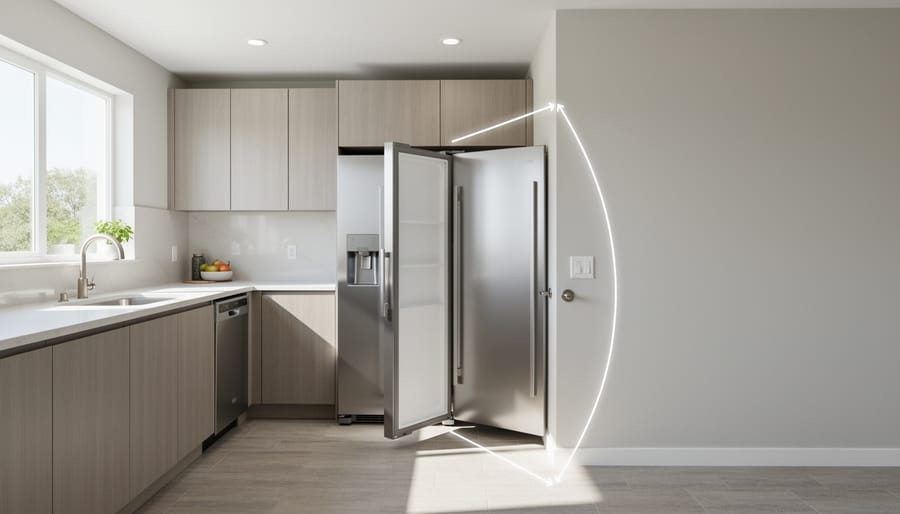
When placing your refrigerator, you’ll need at least 36 inches of clearance in front to fully open the door and comfortably access everything inside. This breathing room matters tremendously for daily use. If your refrigerator doors swing into the kitchen’s main walkway, consider models with counter-depth designs that sit flush with cabinetry, reducing protrusion by several inches.
Side clearance is equally important. Leave a minimum of 1 inch on the hinge side for proper door operation, though 2-3 inches works better for most installations. The non-hinge side typically needs about half an inch for ventilation, which helps your appliance run efficiently—an eco-friendly consideration that reduces energy consumption and keeps your kitchen comfortable.
French door and side-by-side refrigerators work beautifully at L-corners because their double doors require less swing space than traditional single doors. This thoughtful placement creates a welcoming kitchen environment where everything feels purposefully arranged, much like how a well-designed fireplace becomes the natural gathering point of a living space.
Dishwasher and Sink Specifications
When planning your L-shaped kitchen, proper spacing between your sink and dishwasher creates a workflow that feels as comfortable as gathering around a warm hearth. Position your dishwasher within 36 inches of the sink to minimize plumbing costs and reduce water line complexity. This proximity also makes loading dishes more efficient, since you’ll naturally rinse at the sink before loading.
For the most practical setup, place the dishwasher on the side of the sink that matches your dominant hand. Right-handed homeowners typically prefer the dishwasher to the right of the sink, creating a natural flow. Leave at least 21 inches of counter space on one side of the sink for dish prep and drying areas.
While considering dishwasher and stove placement, remember that corner sink installations in L-layouts require careful planning. Ensure your plumber can access shut-off valves easily, and consider energy-efficient models that conserve water and electricity, reducing your home’s environmental footprint. Modern dishwashers with soil sensors and eco-cycles align perfectly with sustainable living values while maintaining the welcoming, efficient kitchen atmosphere that makes your home’s heart truly inviting.
Heating and Warming Appliances for L-Shaped Kitchens
Warming Drawers and Their Specifications
Warming drawers bring a cozy, restaurant-quality touch to your L-shaped kitchen, perfect for keeping dishes at serving temperature while you gather loved ones around the hearth. These handy appliances typically measure 24 to 30 inches wide and 10 to 14 inches tall, making them ideal for installation beneath wall ovens or integrated into your base cabinetry along either arm of your L-layout.
Consider placing your warming drawer near the primary cooking zone for seamless workflow, particularly along the shorter leg of your L where it’s easily accessible but doesn’t interrupt your main prep area. Standard depths range from 22 to 24 inches to align with your base cabinets, creating a streamlined appearance that enhances your kitchen’s welcoming atmosphere.
Look for energy-efficient models with precise temperature controls between 90 and 200 degrees Fahrenheit, allowing you to proof bread dough or keep casseroles warm without wasting energy. Some contemporary warming drawers include humidity controls to prevent dishes from drying out, adding both functionality and comfort to your cooking experience. When planning your L-shaped layout, allocate space for this thoughtful appliance in zones where it complements your natural cooking flow while maintaining the inviting, efficient environment you’re creating.
Creating a Cozy Cooking Zone
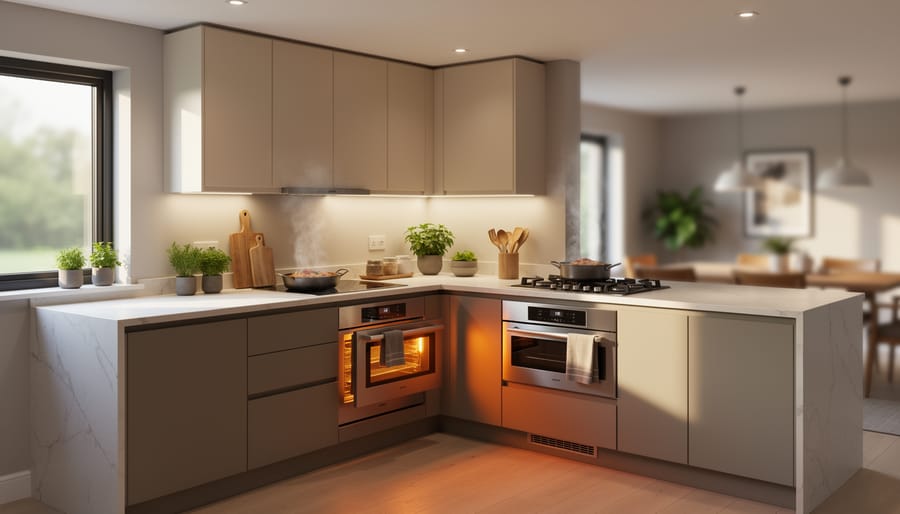
Your L-shaped kitchen naturally creates distinct zones, and one of the most delightful aspects of kitchen design is transforming your cooking area into a genuinely cozy space. Think beyond just functionality and consider how heat-generating appliances can add warmth and comfort to your daily routine.
Position your range or cooktop along one leg of the L to create a focal point that radiates welcoming warmth. When you’re preparing meals on a chilly morning, this natural heat source becomes the heart of your home. Many homeowners overlook this benefit, but a well-placed range contributes significantly to the ambient temperature and inviting atmosphere of your kitchen.
Consider combining modern cooking appliances with sustainable heating options that complement your kitchen’s design. If your L-shaped layout includes an adjoining wall, you might explore adding a small fireplace or wood-burning element nearby, creating a seamless connection between cooking and heating zones. This approach reduces energy costs while establishing a gathering space your family will naturally gravitate toward.
Double ovens are another smart choice for L-shaped kitchens, providing both cooking versatility and residual heat. Place them at a comfortable height along the shorter leg of your L, keeping the warmth accessible without crowding your primary cooking zone. The goal is creating a space where warmth, efficiency, and comfort work together harmoniously, making your kitchen the true heart of your home year-round.
Energy-Efficient and Eco-Friendly Appliance Choices
Induction Cooktops vs. Gas Ranges
When planning your L-shaped kitchen, choosing between induction cooktops and gas ranges significantly impacts both your cooking experience and energy costs. Gas ranges bring an immediate, visible warmth to your kitchen space, offering precise cooking temperature control that many home chefs appreciate. They typically consume 5,000 to 18,000 BTUs per burner and work beautifully in L-shaped layouts where proper ventilation can be easily installed along the exterior wall.
Induction cooktops, however, shine in energy efficiency, converting about 85-90% of energy directly into heat compared to gas’s 40-55%. They’re particularly appealing if you’re considering eco-friendly solutions for your home. These sleek units require less clearance space, making them ideal for tighter L-shaped configurations. Installation costs run higher initially, but monthly energy savings accumulate over time.
Consider your cooking style and environmental priorities. Gas provides that comforting, traditional warmth and works during power outages, while induction offers faster heating, easier cleanup, and reduced kitchen heat buildup during summer months. Both options complement L-shaped layouts effectively when positioned thoughtfully within your kitchen’s workflow.
Energy Star Ratings That Matter
When planning your L-shaped kitchen, choosing Energy Star certified appliances becomes particularly important because of the layout’s natural efficiency advantages. Your refrigerator should be your top priority, as it runs 24/7 and accounts for a significant portion of your kitchen’s energy consumption. Look for models with at least 15% better efficiency than minimum federal standards, and consider counter-depth options that fit seamlessly into your L-configuration without protruding into your work triangle.
Dishwashers deserve your second look, especially those using 3.5 gallons or less per cycle. In an L-shaped layout, you’ll want a model that operates quietly since the open design often flows into living spaces where noise matters. For your range or cooktop, induction technology offers superior energy efficiency compared to traditional electric or gas options, heating 85-90% faster while using less power.
Don’t overlook ventilation in your energy-efficient appliance choices. A range hood with an Energy Star rating and appropriate CFM for your cooktop size ensures proper air quality without wasting energy. These thoughtful selections not only reduce your environmental footprint but also create a more comfortable, sustainable home environment that aligns with conscious living principles.
Common Specification Mistakes to Avoid
When planning your L-shaped kitchen, overlooking key appliance specifications can turn your dream space into a daily frustration. Let’s explore the most common pitfalls homeowners face and how to sidestep them entirely.
One of the biggest mistakes is underestimating refrigerator clearance. Many homeowners fall in love with a gorgeous French-door model, only to discover it won’t open fully because the perpendicular wall of their L-layout blocks the swing. Always measure the door swing radius and add at least six inches of clearance space. Consider counter-depth models for tighter corners, which also create a more streamlined look.
Ignoring the dishwasher placement is another frequent oversight. Positioning your dishwasher at the end of a cabinet run near a corner might seem logical, but you’ll need at least 24 inches of standing room when the door drops open. If you’re tight on space, compact 18-inch dishwashers work beautifully in L-shaped designs without sacrificing functionality.
Range hood ventilation often gets shortchanged in specifications. Homeowners sometimes choose undersized hoods that can’t properly handle cooking exhaust, creating smoke and odors that drift throughout your home. This becomes especially important if you’re creating a cozy atmosphere with nearby gathering spaces. Calculate your range’s BTU output and select a hood rated for at least that capacity, preferably higher.
The warming drawer mistake is equally common. These wonderful appliances require dedicated electrical circuits and specific cabinet dimensions. Don’t assume any 30-inch space will work. Verify the exact cutout dimensions and electrical requirements before committing to cabinetry.
Finally, forgetting about appliance service access creates costly headaches down the line. Built-in refrigerators and wall ovens need pullout space for repairs. Always leave minimum clearances specified in manufacturer guidelines, typically 2-3 inches on sides and back.
Creating the perfect L-shaped kitchen comes down to more than just fitting appliances into corners. When you measure twice and choose thoughtfully, you transform your kitchen into a space that feels as welcoming as gathering around a fireplace on a cold evening. The right appliance specifications ensure smooth workflow, while thoughtful placement creates those warm, inviting moments where family and friends naturally congregate.
As you plan your L-shaped layout, remember that efficiency and ambiance work hand in hand. Consider how each appliance contributes not just to function, but to the overall atmosphere of your home. Energy-efficient models reduce your environmental footprint while creating a comfortable cooking environment that draws people in. Those extra inches you carefully measure today prevent frustration tomorrow and create space for the memories you’ll make.
Your kitchen should feel like the heart of your home, radiating warmth and practicality in equal measure. Take your time selecting appliances that fit your space perfectly, prioritize eco-friendly options when possible, and trust that attention to detail now pays dividends in comfort and joy for years to come.