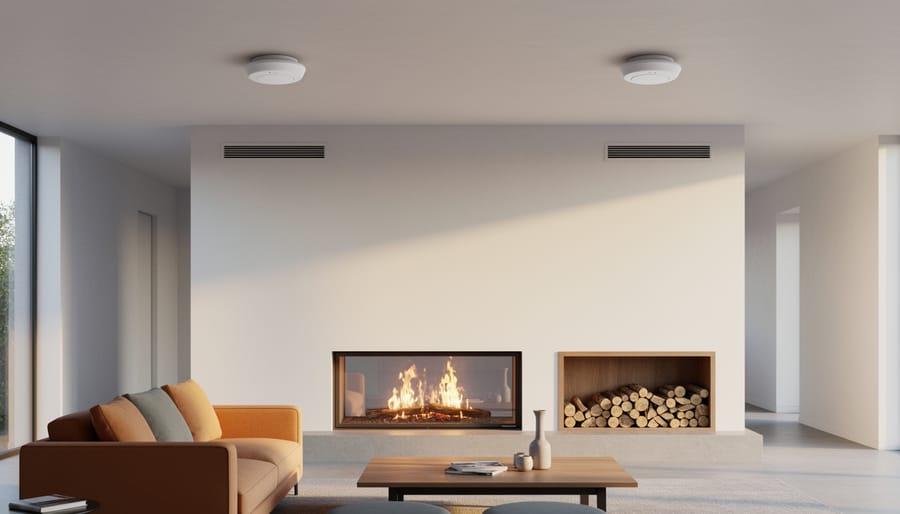


Position heat detectors at least 30 feet apart in hallways and open spaces to ensure adequate coverage without overlap, as this spacing allows each unit to effectively monitor its designated zone while avoiding false alarms from adjacent detectors responding to the same heat source. Mount your detectors on ceilings rather than walls, keeping them at least 4 inches away from any corner where dead air space can prevent proper heat circulation and delay detection response times.
Calculate your specific spacing needs based on ceiling height, recognizing that standard 10-foot ceilings accommodate wider spacing while higher ceilings require detectors positioned closer together due to heat dissipation patterns that occur as warmth rises and spreads. Install detectors within 15 feet of any potential fire hazard, including your fireplace opening, wood storage areas, and electrical panels, creating a protective perimeter that catches temperature spikes before they develop into dangerous situations.
Maintain clearance of at least 3 feet from heating vents, registers, and your fireplace mantel to prevent normal operational heat from triggering false alarms that diminish your system’s reliability and your confidence in its accuracy. Consider the heat rating of your detectors when planning placement, choosing fixed-temperature units rated at 135°F for living spaces and 190°F models for areas near your fireplace where ambient temperatures naturally run higher during normal use.
Test your detector network by creating a spacing map of your home that identifies coverage gaps, then adjust placement to eliminate blind spots where smoldering fires could develop undetected, remembering that proper spacing transforms individual detectors into a cohesive safety system protecting your entire living environment.
Understanding Heat Detectors vs. Smoke Detectors Around Your Fireplace
When Heat Detectors Make More Sense Than Smoke Alarms
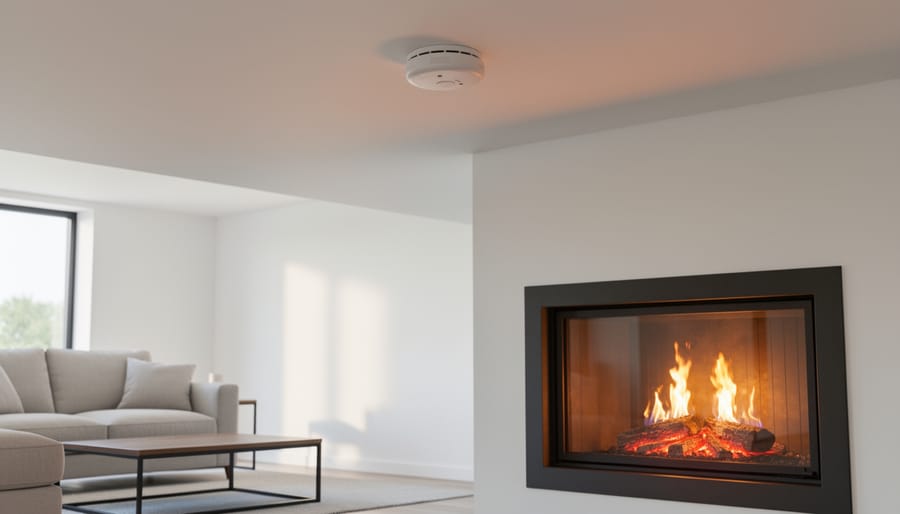
Living spaces near fireplaces, wood stoves, and cooking areas present a unique challenge for fire detection. While smoke alarms excel at early fire detection in bedrooms and hallways, they can become a source of frustration in these warmer zones. The reality is that everyday activities like stoking your fireplace, cooking Sunday breakfast, or simply enjoying the radiant warmth from your wood stove can trigger sensitive smoke alarms repeatedly.
This is where heat detectors shine as the smarter solution. Unlike smoke alarms that react to airborne particles, heat detectors respond only when temperatures reach genuinely dangerous levels, typically between 135°F and 194°F. This makes them perfect companions for your hearth area, where occasional smoke puffs and heat fluctuations are completely normal and safe.
Consider installing heat detectors within 20 feet of your fireplace opening, in kitchen areas adjacent to your cooking hearth, or near wood stoves where ambient temperatures naturally run higher. These locations benefit from fire protection without the constant false alarms that would have you climbing on chairs to silence beeping detectors every time you add a log or flip pancakes. The result is a safer home where your fire detection system works with your lifestyle rather than against it.
Types of Heat Detectors for Home Use
When protecting your home and hearth, understanding the two main types of heat detectors helps you make the right safety choice for your fireplace setup.
Fixed-temperature heat detectors activate when the room reaches a specific temperature threshold, typically between 135°F and 165°F. Think of them as dependable sentinels that sound the alarm once things get too hot. They’re reliable, affordable, and work beautifully in spaces where your fireplace creates steady, predictable warmth. These detectors are particularly well-suited for traditional wood-burning setups where gradual temperature increases are the norm.
Rate-of-rise detectors, on the other hand, respond to rapid temperature changes—usually a spike of 12-15°F per minute. They’re like having an attentive guardian that notices when something’s wrong before temperatures reach dangerous levels. This makes them excellent for detecting fast-developing fires that might occur from sparks or embers escaping your fireplace. Many modern detectors combine both technologies, offering comprehensive protection that adapts to different fire scenarios.
For most homeowners with fireplaces, combination detectors provide the best of both worlds, ensuring your cozy gathering space remains safe without frequent false alarms. Consider your fireplace type, room size, and heating patterns when choosing the right detector for your home’s unique environment.
The Science Behind Heat Detector Spacing
How Ceiling Height Affects Your Spacing Plan
Your ceiling height plays a surprisingly significant role in where you should position heat detectors around your fireplace. Think of heat as rising smoke—it behaves differently depending on how much vertical space it has to travel.
For standard 8-foot ceilings, you’re working with straightforward spacing. Heat detectors should be mounted on the ceiling about 10 to 20 feet from your fireplace opening, depending on your detector’s sensitivity and manufacturer guidelines. The heat rises quickly in these lower spaces, making detection relatively predictable.
Cathedral ceilings and vaulted designs common in great rooms with statement fireplaces present unique challenges. Heat naturally stratifies in tall spaces, meaning it can pool at the peak while leaving lower areas undetected. If you have ceilings soaring 12 feet or higher, you’ll likely need multiple detectors at different heights. Place one detector on the sloped ceiling approximately 3 feet down from the peak, positioned within the recommended distance from your fireplace. Consider adding a second detector lower on the wall, especially if your living space extends beneath the vaulted area.
For sloped ceilings, always follow the 3-foot rule from the peak, as dead air pockets form at the very top where heat may not reach effectively. This layered approach ensures your beautiful, eco-friendly fireplace setup remains as safe as it is stunning, giving you complete peace of mind while you enjoy your home’s warmth.
Standard Spacing Guidelines for Heat Detectors Near Hearths
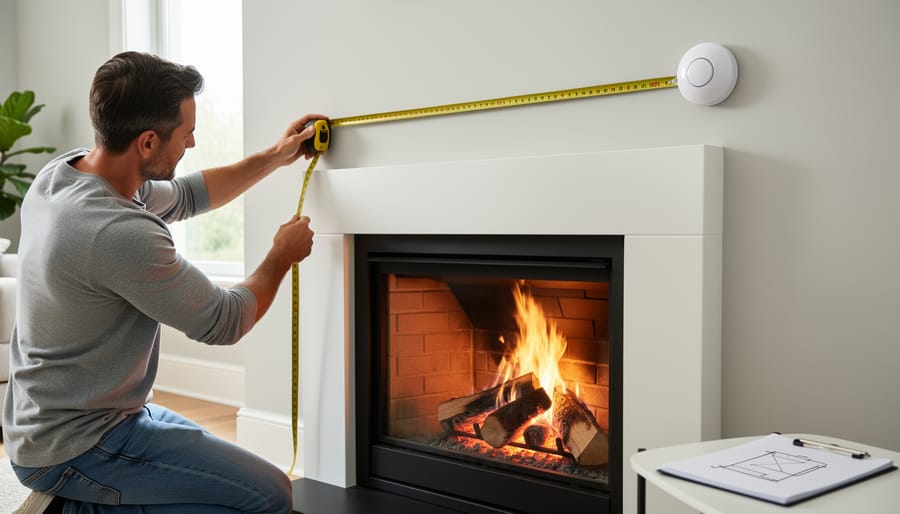
Minimum Clearance from the Fireplace Opening
When positioning heat detectors near your fireplace, maintaining proper clearance from the hearth opening is essential for creating a safe, comfortable living space without triggering unnecessary alarms. Think of it as finding the sweet spot where your detector can do its job effectively while respecting the natural warmth your fireplace brings to your home.
Generally, you’ll want to install heat detectors at least 3 feet away from the actual fireplace opening. This minimum distance helps prevent false alarms caused by the normal heat radiating from your fire during regular use. After all, your fireplace is designed to create warmth and ambiance, not set off detectors every time you enjoy a cozy evening by the flames.
However, this 3-foot guideline isn’t one-size-fits-all. Larger fireplace openings or high-efficiency units that produce more intense heat may require greater clearances, sometimes up to 5 feet or more. Consider your specific fireplace type and how it distributes heat throughout your room. Modern eco-friendly heating solutions often burn hotter and more efficiently, which might mean adjusting your detector placement accordingly.
The ceiling height above your fireplace also plays a role. In rooms with cathedral ceilings or vaulted spaces, heat disperses differently than in standard-height rooms. Your detector should be positioned where it can sense dangerous temperature increases without being overwhelmed by your fireplace’s normal operating temperatures. When in doubt, consult your local building codes and consider professional guidance to ensure your home stays both warm and wonderfully safe.
Room Coverage: How Many Detectors Do You Need?
Determining how many heat detectors your room needs doesn’t require advanced mathematics, just some simple measurements and attention to fire safety standards. Think of it as creating invisible safety zones throughout your space, with each detector serving as a watchful guardian over its designated area.
The general rule of thumb follows the 50-foot spacing guideline. Most heat detectors effectively cover approximately 500 square feet in rooms with standard 8 to 10-foot ceilings. To calculate your needs, measure your room’s length and width, multiply them together to get square footage, then divide by 500. Round up to ensure complete coverage. For example, a 600-square-foot living room with a beautiful stone fireplace would need at least two detectors.
However, room shape matters significantly. Long, narrow spaces require more strategic placement than square rooms. A 20-by-30-foot room might technically fit within one detector’s range, but its rectangular layout benefits from two units positioned to eliminate blind spots.
Ceiling height also influences your calculation. Rooms with vaulted or cathedral ceilings, popular in homes showcasing dramatic fireplace installations, may need additional detectors because heat rises and disperses differently in taller spaces. Consider adding an extra detector if your ceiling exceeds 12 feet.
Remember that obstacles like ceiling beams, large furniture pieces, or room dividers can block heat flow. When your cozy gathering space features these architectural elements, err on the side of caution and add another detector to maintain comprehensive protection for your home and loved ones.
Special Considerations for Different Fireplace Types
Wood-Burning Fireplaces and Heat Detector Placement
Traditional wood-burning fireplaces bring unmatched charm and warmth to your home, but they also generate significant heat and occasional smoke, requiring thoughtful heat detector placement. Here’s what you need to know to keep your space safe while enjoying those cozy flames.
Position heat detectors at least 20 feet away from your wood-burning fireplace opening. This distance prevents false alarms triggered by the natural heat radiating during normal operation. If your room layout doesn’t allow for 20 feet, consider installing detectors in adjacent hallways or rooms instead. Remember, smoke detectors are better suited for areas immediately around fireplaces, while heat detectors work best in spots where smoke might naturally accumulate during regular use.
For rooms with cathedral ceilings or unique architectural features, mount your heat detector at least 4 inches from the highest point of the ceiling, where heat naturally rises and pools. This positioning ensures reliable detection without unnecessary triggers from your evening fire.
Consider this spacing part of your broader commitment to creating a safe, sustainable heating solution. Properly placed detectors protect your home while allowing you to enjoy the timeless appeal and eco-friendly benefits of heating with responsibly sourced wood.
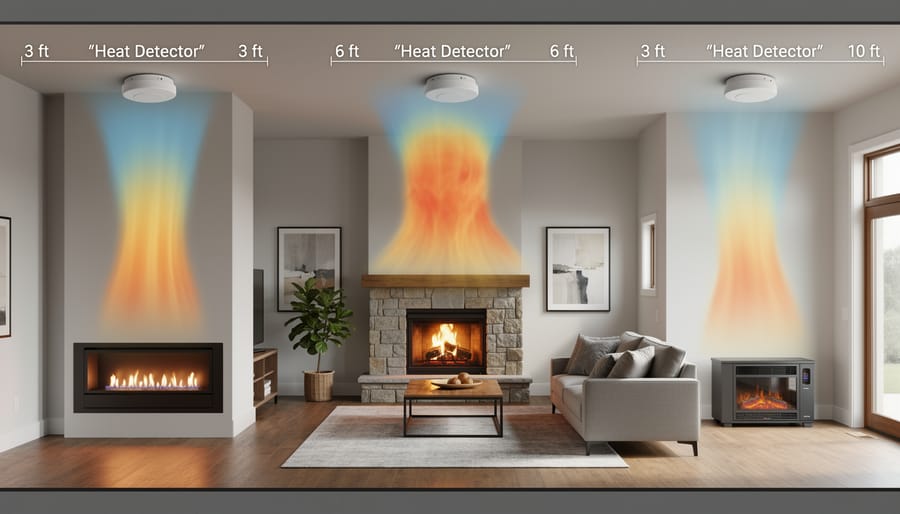
Gas and Bioethanol Fireplaces: Adjusting Your Approach
If you’ve embraced the cleaner-burning advantages of gas or bioethanol fireplaces, you’re in for some good news when it comes to heat detector placement. These modern heating solutions produce significantly less heat and virtually no airborne particles compared to traditional wood-burning units, which can influence how you position your safety equipment.
Gas and bioethanol fireplaces typically generate lower ceiling temperatures, meaning you might have slightly more flexibility in detector spacing. However, this doesn’t mean you should skimp on safety measures. While these eco-friendly heating solutions burn cleaner, they still produce heat that rises and spreads across your ceiling space.
The key difference lies in the heat plume characteristics. Since these fireplaces create a gentler, more consistent heat pattern without the intense spikes of wood combustion, detectors positioned according to standard guidelines will respond more predictably. You’ll still want to maintain that 30-foot maximum spacing between detectors, but the reduced heat intensity means less worry about nuisance alarms from temperature fluctuations.
Always consult your local fire marshal about specific requirements for your fireplace type, as some jurisdictions have updated codes that recognize the unique properties of these contemporary heating options.
Common Heat Detector Spacing Mistakes That Put Your Home at Risk
Even with the best intentions, many homeowners make critical mistakes when positioning heat detectors around their fireplaces and heating systems. Understanding these common pitfalls can mean the difference between a truly safe home and a false sense of security.
One of the most frequent errors is placing detectors too close to your fireplace or wood stove. When positioned directly above or immediately beside your heat source, detectors may trigger false alarms from normal operational temperatures. This leads to frustration and, worse, homeowners disconnecting or disabling the devices entirely. The sweet spot exists in that careful balance where your detector can sense dangerous temperature spikes without responding to everyday warmth from your cozy fire.
Another significant mistake involves creating coverage gaps in your home’s protection network. Many people assume one detector near the fireplace provides sufficient coverage, but heat doesn’t always travel in predictable patterns. Open floor plans, vaulted ceilings, and multiple stories require strategic placement to ensure every area receives adequate monitoring. Think of your heat detector network like creating layers of protection rather than relying on a single sentinel.
Ignoring airflow patterns represents perhaps the most overlooked mistake. Your home’s ventilation system, ceiling fans, and natural air currents dramatically affect how heat distributes throughout your space. A detector placed in a dead air pocket might never detect rising heat from a developing fire, while one positioned in a high-traffic airflow zone could miss localized temperature buildups. Consider how air moves through your rooms during different seasons, especially if you’re embracing eco-friendly heating solutions that rely on natural circulation.
Finally, many homeowners fail to account for seasonal changes. That perfect detector placement during summer might prove inadequate once you’re regularly using your fireplace throughout winter. Temperature baselines shift, airflow patterns change, and your heating habits evolve. Regular reassessment ensures your protection adapts alongside your lifestyle, keeping your family safe while you enjoy the warmth and ambiance of your hearth.
Creating Your Personalized Heat Management Plan
Mapping Your Coverage Zones
Creating a simple sketch of your space is one of the most practical steps you can take before positioning heat detectors. Start by grabbing a piece of paper and drawing a basic floor plan of your room, noting where your fireplace sits and marking any doors, windows, or ceiling features like beams or vents. This doesn’t need to be perfect—a rough outline works beautifully.
Once you have your layout, measure the room’s dimensions and mark where ceiling joists run, since detectors should mount on solid backing. Identify the highest points in your ceiling, as heat naturally rises and accumulates there first. If you have a vaulted ceiling near your fireplace, note the peak location.
Next, use your measurements to plot detector locations based on the spacing guidelines we discussed earlier—typically every 50 feet in standard residential settings, with the first detector positioned appropriately from your heat source. Mark these spots on your sketch with a pencil, making adjustments if furniture placement or architectural features create obstacles.
This visual map becomes your roadmap for installation, helping you communicate clearly with contractors or tackle the project yourself. Plus, keeping this sketch with your home safety documents creates a helpful reference for future maintenance or upgrades to your heating setup.
Integration with Your Home’s Fire Safety System
Your home’s fire safety is like a carefully orchestrated symphony, where each instrument plays a vital role in creating harmonious comprehensive protection. Heat detectors work best when they’re part of a coordinated system alongside smoke alarms and carbon monoxide detectors, especially in homes with fireplaces and wood-burning appliances.
Think of it this way: smoke alarms are your first line of defense in living areas, detecting smoldering fires quickly. Heat detectors excel in spaces like kitchens and near your fireplace where smoke alarms might false-alarm from cooking or wood smoke. Carbon monoxide detectors are essential wherever combustion occurs, monitoring the invisible threat from any heating appliance.
For true peace of mind, position smoke alarms in bedrooms and hallways, heat detectors within 20 feet of your fireplace or wood stove, and carbon monoxide detectors on every level of your home, particularly near sleeping areas. Many modern systems allow these devices to communicate wirelessly, so when one sounds, they all alert you to danger.
This layered approach ensures that whether you’re enjoying a cozy evening by the fire or sound asleep, your home’s safety network has you covered from every angle.
Installation Tips and Maintenance for Long-Term Protection
Installing your heat detectors correctly is just as important as placing them at the proper intervals. Start by carefully reading the manufacturer’s instructions, as mounting requirements can vary between models. Most heat detectors attach to ceiling joists or solid backing rather than just drywall, ensuring they stay securely in place through temperature fluctuations and vibrations from your fireplace. When mounting near sloped or vaulted ceilings common in rooms with statement fireplaces, position detectors within three feet of the peak where heat naturally accumulates.
For a DIY-friendly installation, use a stud finder to locate solid mounting points and ensure your detector sits flush against the ceiling without gaps that could affect heat sensing. If you’re working around exposed beams or decorative ceiling elements that add character to your fireplace room, maintain the recommended spacing from walls and corners while accommodating these architectural features.
Testing your heat detectors should become a monthly ritual, just like checking your smoke alarms. Most models include a test button that simulates heat detection without requiring actual temperature changes. Additionally, perform a visual inspection every few months to check for dust buildup, which can interfere with sensors. A gentle vacuum with a soft brush attachment keeps detectors clean without damaging sensitive components.
Professional inspections matter too. Schedule an annual review by a certified fire safety technician, especially before attempting to pass inspection for new installations or renovations. They can verify proper placement, test sensitivity levels, and ensure your entire fire detection system integrates seamlessly with your home’s safety plan.
Replace detector batteries annually, or whenever the low-battery warning chirps. Most heat detectors have a lifespan of 8-10 years, after which sensors degrade and should be replaced entirely, keeping your home protection fresh and reliable.
Properly spacing your heat detectors isn’t just about checking boxes on a compliance list—it’s a genuine investment in your family’s safety and your own peace of mind. When you take the time to get this right, you’re creating a home environment where you can truly relax and enjoy those cozy evenings by the fire without nagging worries in the back of your mind.
Think of it this way: every moment you spend planning your heat detector layout is a moment invested in protecting what matters most. The warmth and ambiance your fireplace brings to your home should be a source of comfort, not concern. By following proper spacing guidelines and regularly reviewing your setup, you’re taking control of your home’s safety in a meaningful way.
We encourage you to take action today. Walk through your space, measure those distances, and honestly assess whether your current detector placement meets the standards we’ve discussed. If adjustments are needed, make them a priority. Your future self—and everyone who gathers around your hearth—will thank you for it. With thoughtful heat management planning, you’re not just installing safety devices; you’re crafting a sanctuary where warmth, beauty, and protection coexist perfectly.