

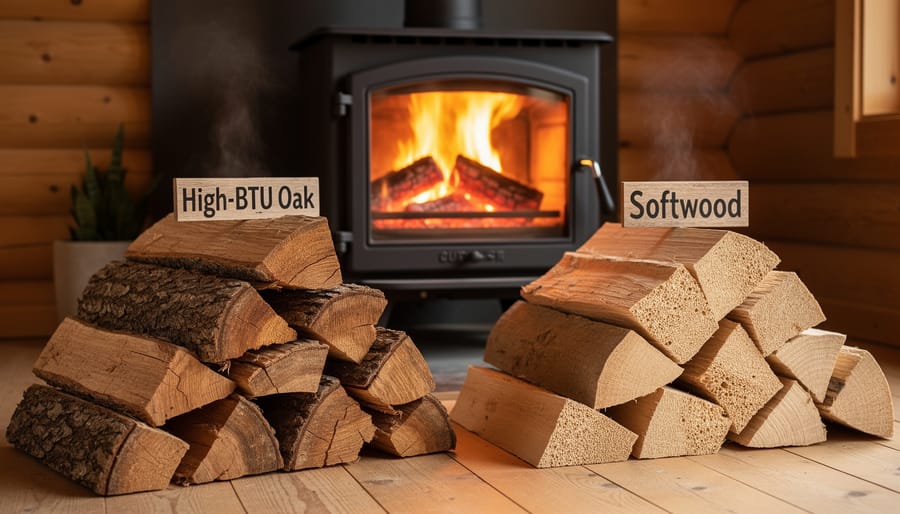
Choose hardwoods over softwoods to nearly double your heat output per cord. Oak, hickory, and ash deliver 24-28 million BTUs per cord, while pine and spruce provide only 14-18 million BTUs, meaning you’ll burn through softwood twice as fast to achieve the same warmth.
Match your firewood selection to your burning timeline. Dense hardwoods like oak and beech require 12-24 months of seasoning but reward your patience with long-lasting coals that maintain steady heat through cold nights. If you need firewood this season, cherry and ash dry in just 6-9 months while still delivering excellent BTU ratings above 20 million per cord.
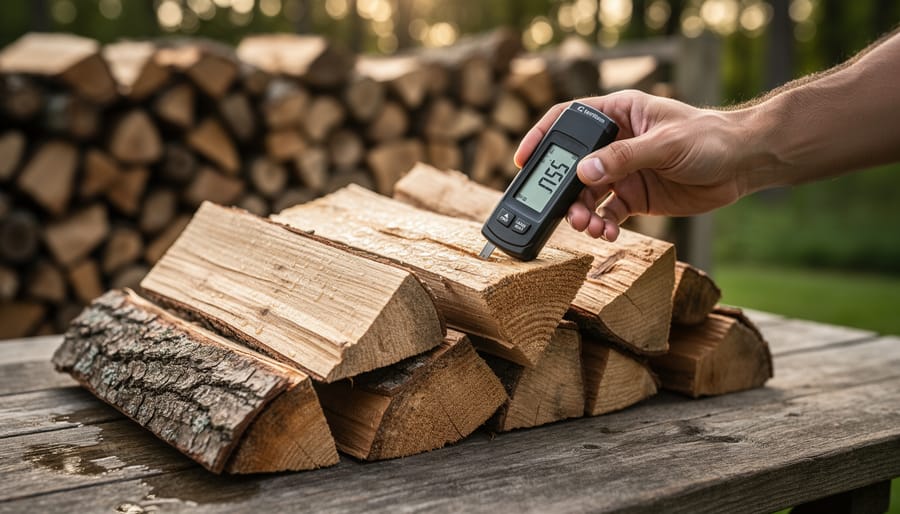
Prioritize moisture content over species ratings for maximum efficiency. Even high-BTU woods like hickory perform poorly when improperly seasoned, losing up to 25% of their heat potential to evaporating excess water. Invest in a moisture meter and only burn wood measuring below 20% moisture to ensure you’re getting the full heating value you paid for.
Balance BTU performance with practical considerations in your area. The highest-rated species means nothing if it’s expensive, unavailable locally, or difficult to split. Ash and maple offer excellent heat output while being widely available and easier to process than dense species like hickory, making them ideal choices for most homeowners seeking reliable, eco-friendly heating solutions that don’t require professional log-splitting equipment.
Understanding BTU ratings transforms firewood from a simple purchase into a strategic decision that impacts your heating costs, comfort, and environmental footprint throughout the burning season.
What BTU Ratings Really Mean for Your Fireplace
If you’ve ever wondered why some firewood seems to blaze hotter and longer than others, the answer lies in a simple measurement: BTU, or British Thermal Unit. Think of BTU as the currency of heat—it tells you exactly how much warmth you’re getting for your investment.
In practical terms, one BTU represents the amount of energy needed to raise one pound of water by one degree Fahrenheit. When we talk about firewood, we’re measuring how many million BTUs a cord of wood releases when burned. This number reveals the true heating power hiding inside those logs stacked in your garage.
Here’s why this matters for your fireplace: a cord of oak doesn’t just burn differently than pine because of the way it looks or crackles—it literally contains more potential heat energy. This means BTU ratings are far more important than simply counting how many logs you’re loading into your firebox. Volume can deceive you, but BTUs tell the truth about performance.
So what makes one species outperform another? The answer comes down to three key factors. First and foremost is density. Hardwoods like hickory and oak pack more wood fiber into each cubic inch, creating a denser fuel source that releases more energy as it burns. Picture the difference between burning a block of balsa wood versus mahogany—the denser wood simply has more to give.
Second, moisture content dramatically affects heat output. Water trapped in wood requires energy to evaporate, stealing BTUs that should be warming your home. Properly seasoned wood delivers its full potential.
Finally, resin content plays a role. While resinous softwoods like pine ignite quickly and burn hot initially, they typically contain less overall energy than their hardwood counterparts. Understanding these factors helps you choose firewood that transforms your fireplace from a simple amenity into an efficient, eco-friendly heating solution.
The Heavy Hitters: Premium Firewood Species
Oak: The Gold Standard for Home Heating
When it comes to reliable, high-performance firewood, oak stands head and shoulders above the competition. Both red and white oak varieties deliver impressive heat output ranging from 24 to 28 million BTUs per cord, making them among the most efficient choices for keeping your home cozy throughout the colder months.
What makes oak particularly special is its exceptional burn characteristics. Once your fire gets going, oak logs burn slowly and steadily, creating those long-lasting fires that let you relax without constantly tending the flames. You’ll appreciate fewer trips to the woodpile on chilly evenings when you’re settled in with a good book.
Oak also earns high marks for practical considerations. Unlike some hardwoods that can be stubborn to process, oak splits relatively easily, especially when properly seasoned. This means less frustration and effort when preparing your wood supply.
Perhaps the best news for homeowners is oak’s widespread availability. Whether you’re in the Northeast, Midwest, or Southern regions, you’ll likely find oak readily accessible from local suppliers. This regional abundance often translates to reasonable pricing compared to more exotic hardwoods.
As an eco-friendly heating solution, oak makes excellent sense. It’s a renewable resource that, when sourced responsibly, supports sustainable forestry practices while providing the dependable warmth your family deserves.
Hickory and Black Locust: Maximum Heat Output
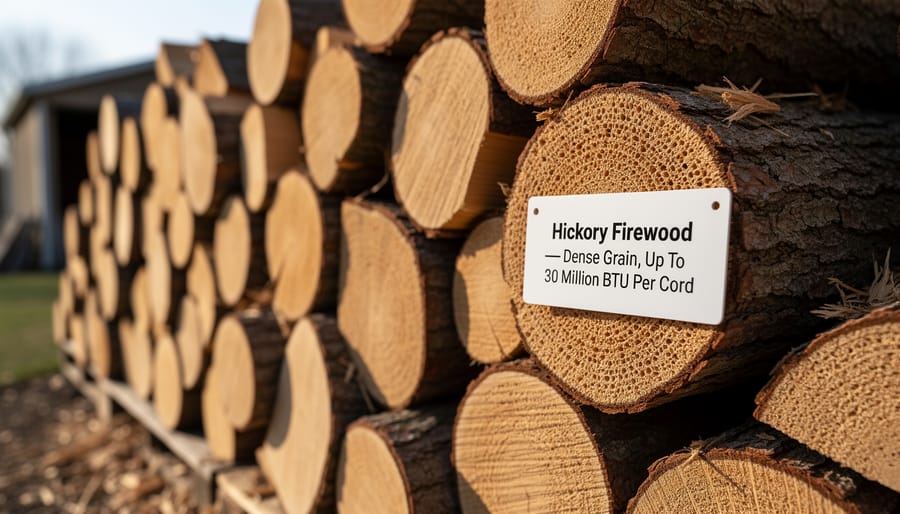
When you’re looking for the absolute champions of heat output, hickory and black locust stand at the top of the mountain. These powerhouse species deliver an impressive 27-30 million BTU per cord, making them the gold standard for serious wood-burning enthusiasts who want maximum warmth from every log they load.
What sets these woods apart isn’t just their impressive numbers. Their incredibly dense composition means they pack more actual wood fiber into each piece, translating directly to longer, more consistent heat. You’ll notice the difference immediately when you lift a piece of hickory or black locust compared to softer woods—there’s substantial weight that signals the concentrated energy within.
The real magic happens in their exceptional coaling properties. These species produce thick beds of glowing embers that radiate steady heat long after the flames have died down. This means fewer trips to reload your firebox during cold winter nights and more consistent temperatures throughout your home—a genuine comfort that transforms your fireplace from a pleasant accent into a reliable heating solution.
Yes, splitting these dense hardwoods requires more effort and sharper tools, but the payoff makes it worthwhile. If you’re committed to efficient, eco-friendly heating that maximizes every cord you purchase, seeking out hickory or black locust is an investment that pays dividends in warmth and satisfaction all season long.
Maple, Ash, and Beech: The Balanced Performers
If you’re looking for the sweet spot between heating performance and practical usability, maple, ash, and beech are your firewood champions. These hardwoods deliver impressive BTU outputs ranging from 23 to 26 million per cord, placing them just a step below the heavyweight oak and hickory while offering some distinct advantages that make them favorites among experienced wood burners.
Sugar maple leads this group at around 24 million BTU per cord, producing long-lasting coals and minimal smoke that creates a wonderful ambiance in your living space. White ash is particularly beloved for its low moisture content even when freshly cut, meaning you can sometimes burn it sooner than other species. It’s also known for easier splitting, which saves time and effort during firewood preparation.
Beech rounds out this trio with excellent heat output and beautiful glowing coals, though it does require proper seasoning to reach its full potential. All three species ignite more readily than denser woods like oak, making them perfect for those cozy evening fires when you want warmth without the wait.
From an eco-friendly perspective, these balanced performers burn cleanly when properly seasoned, reducing emissions while maximizing the renewable energy from your firewood investment.
Fruit Woods: When Flavor Meets Function
Fruit woods bring something special to your fireplace—they’re excellent performers that transform your heating experience into something truly memorable. Apple and cherry are the stars here, delivering respectable BTU ratings between 24-27 million BTUs per cord while filling your home with subtle, sweet aromatics that make winter evenings feel extra cozy.
These hardwoods burn clean and steady, making them perfect for dual-purpose use. While they won’t match oak’s heavyweight heat output, they’re wonderful for shoulder-season burning when you want warmth without overwhelming heat. Many homeowners keep a dedicated stack of fruit wood for special occasions or weekend fires when they can fully appreciate the aromatic experience.
The real magic happens when you’re also a grilling enthusiast—seasoned fruit wood becomes premium smoking wood for your outdoor cooking adventures. Cherry produces beautiful smoke rings on meats, while apple offers that classic sweet flavor profile. You’re essentially stocking both your fireplace and your smoker with one strategic wood purchase, making these species a smart lifestyle choice for homes that value both indoor comfort and outdoor entertaining.
The Middle Ground: Decent Heating Woods
Not every firewood choice needs to be a marathon-burning champion to earn a place in your woodpile. The middle-tier species, typically producing between 18 and 22 million BTUs per cord, offer a practical balance that many homeowners find perfectly suitable for their heating needs.
Think of these woods as your reliable everyday performers. Yellow birch, elm varieties, and soft maple all fall into this category, delivering respectable heat output without the premium price tag or splitting challenges that come with the heavy hitters. They’ll keep your home cozy and your fireplace glowing, though you’ll find yourself reaching for another log a bit more frequently than you would with oak or hickory.
The trade-off here is straightforward: you’ll need about 20 to 30 percent more wood compared to premium species to achieve the same seasonal heating. This means planning for additional storage space and making a few extra trips to your woodshed during cold snaps. For many homeowners, especially those using their fireplace for ambiance and supplemental heat rather than as a primary heat source, this is entirely manageable.
One significant advantage of moderate-BTU woods is their typically faster seasoning time. Many species in this range dry more quickly than dense hardwoods, meaning you can potentially use wood that’s been seasoned for 8 to 12 months rather than waiting the full 18 to 24 months required for oak or hickory. This quicker turnaround can be a lifesaver if you’re building your firewood supply from scratch.
From an eco-friendly perspective, these species often represent locally available options that reduce transportation emissions. Yellow birch thrives throughout the Northeast, while various elm species grow across multiple regions. Sourcing wood that’s already abundant in your area creates a more sustainable heating solution while supporting local suppliers.
These middle-ground options shine brightest when you’re home to tend the fire regularly or when you’re using your fireplace to enhance your home’s warmth and character rather than relying on it exclusively for heat.
Low-BTU Species: When to Use Them (And When to Avoid)
Let’s clear up a common misconception: low-BTU woods aren’t “bad” firewood. They’re simply specialized tools in your firewood arsenal, perfect for specific situations but less ideal as your go-to heating solution.
Softwoods like pine, fir, cedar, and poplar typically deliver between 12-17 million BTUs per cord. That’s roughly 40-50% less heat than premium hardwoods, which means you’ll burn through your woodpile much faster if you’re relying on them for primary heating. During the coldest winter months, that difference translates to significantly more trips to your wood stack and higher consumption overall.
However, these species truly shine in three scenarios. First, they’re exceptional kindling. Their lower density and higher resin content mean they ignite quickly and establish a hot fire fast, making them ideal for getting those stubborn hardwood logs burning. Second, they’re perfect for shoulder-season burning in spring and fall, when you want a cozy fire for ambiance but don’t need intense, long-lasting heat. A pine fire on a cool October evening creates wonderful atmosphere without overheating your living space. Third, if you have a fireplace primarily for occasional enjoyment rather than heating, the pleasant aroma of cedar or the cheerful crackling of pine adds to the experience.
The downsides? Beyond lower heat output, softwoods burn faster, requiring more frequent reloading. Some species, particularly pine and fir, contain more creosote-producing resins, though this is manageable with proper chimney maintenance and good burning practices.
From an eco-friendly perspective, softwoods do offer one advantage: they’re often locally abundant and faster-growing than hardwoods, making them a more sustainable choice for casual burning. Just season them properly for 6-12 months to reduce excess moisture.
Think of low-BTU woods as supporting players rather than starring roles in your firewood strategy. Mix them with hardwoods, use them strategically, and you’ll appreciate what they bring to your fireplace experience.
Beyond BTU: What Else Matters When Choosing Firewood
Moisture Content Trumps Everything
Here’s the truth that matters more than any BTU chart: moisture content will make or break your wood-burning experience, regardless of species. A perfectly split piece of oak at 30% moisture delivers half the heat—or less—of properly seasoned pine. When wood is wet, energy gets wasted evaporating water instead of warming your home, creating excessive smoke and creosote buildup that compromises both efficiency and safety.
The gold standard is 20% moisture content or below. Most hardwoods need 12-24 months of proper seasoning times, while softer woods like pine or poplar dry in 6-12 months. Stack your wood in a sunny, well-ventilated area with the top covered but sides exposed to airflow.
Testing is simple and worthwhile. Invest in a moisture meter—they’re inexpensive and accurate. Insert the pins into a freshly split face (not the bark or ends) for a true reading. No meter? Listen for a sharp crack when pieces knock together, check for radial cracks on the ends, and notice if the wood feels noticeably lighter than fresh-cut pieces. These signs indicate your firewood is ready to deliver its full heating potential.
Creosote, Sparking, and Safety Considerations
While BTU ratings tell you about heat output, understanding safety characteristics helps you choose the right firewood for your specific fireplace setup. Different species create varying levels of creosote buildup and sparking, which directly impact your family’s safety and your chimney maintenance schedule.
Softwoods like pine, spruce, and fir burn faster and cooler, leading to increased creosote accumulation in your chimney. This tar-like substance is highly flammable and poses a serious fire hazard if allowed to build up. If you’re burning primarily softwoods, plan for more frequent chimney cleanings—typically twice per season rather than once annually.
Certain hardwoods present sparking concerns. White oak and some eucalyptus varieties tend to pop and send embers flying, making them less suitable for open fireplaces without screens. Cedar and other aromatic woods also spark frequently, though their pleasant scent makes them popular for outdoor fire pits where flying embers pose less risk.
For the safest experience, stick with well-seasoned hardwoods like ash, maple, or beech in open fireplaces. These species produce minimal creosote and rarely spark. If you have a wood stove or enclosed insert, you have more flexibility with your wood choices since the controlled environment manages both issues more effectively. Always use a quality fireplace screen and maintain regular chimney inspections regardless of which species you burn—safety should never take a backseat to ambiance.
Splitting Difficulty and Storage Reality
While those impressive BTU numbers matter, they’re only part of your firewood decision. That beautiful oak with its stellar 24 million BTUs per cord? It’s notoriously tough to split. If you’re wielding an axe or maul yourself, the splitting difficulty becomes a real consideration for your time and energy.
Think practically about your setup. Dense hardwoods like hickory and oak require more storage time—typically 1-2 years for proper seasoning—and take up premium space in your yard. Softer woods like pine dry in just 6 months but you’ll burn through your stack faster, potentially needing more storage volume overall.
Here’s a balanced approach: choose high-BTU hardwoods for overnight burns and cold snaps, but keep some easier-to-split species like ash or black cherry on hand for quick fires and shoulder season heating. Consider your physical capabilities and available storage when making bulk purchases.
The best firewood is the wood you can actually process and store efficiently. A cord of medium-BTU wood that’s properly seasoned beats premium wood that’s still wet because it was too difficult to handle.
Making Smart Firewood Decisions for Your Situation
Choosing the right firewood isn’t a one-size-fits-all decision. Your unique situation matters just as much as BTU ratings when creating the perfect fire experience for your home.
Start by considering your heating goals. If you’re relying on your wood stove as a primary heat source during harsh winters, those high-BTU hardwoods like oak and hickory become essential investments. They’ll burn longer and generate the consistent warmth you need to stay comfortable. However, if your fireplace serves mainly as a weekend ambiance feature or occasional supplemental heat, you have more flexibility to prioritize availability and cost over maximum heat output.
Your climate zone plays a significant role too. Northern homeowners facing months of freezing temperatures benefit most from dense hardwoods that deliver sustained heat throughout long winter nights. In milder regions where you might only light fires occasionally, medium-BTU woods like cherry or ash provide plenty of warmth without breaking the budget.
The type of fireplace you’re using matters tremendously. Wood stoves with their controlled airflow excel at extracting every BTU from dense hardwoods, making them ideal for premium species. Open fireplaces, while wonderful for atmosphere, lose much of their heat up the chimney. For these, you might choose moderately-rated woods that create beautiful flames and pleasant aromas without the premium price tag of top-tier heating woods.
Local availability often trumps BTU charts in real-world decision-making. Sourcing wood that grows abundantly in your area supports sustainability, reduces transportation emissions, and typically costs less. A locally-available medium-BTU wood often outperforms imported high-BTU species when you factor in the eco-friendly benefits and fresher quality.
Here’s a smart strategy many experienced wood burners use: mix your species strategically. Keep high-BTU hardwoods for cold nights when you need maximum heat, and blend in softer woods or fruit woods when ambiance matters more than heating power. This approach balances your budget while ensuring you always have the right wood for the right moment.
Remember, properly seasoned medium-BTU wood consistently outperforms poorly dried high-BTU wood, so prioritize moisture content alongside species selection for the best results.
The Eco-Friendly Perspective on Firewood Selection
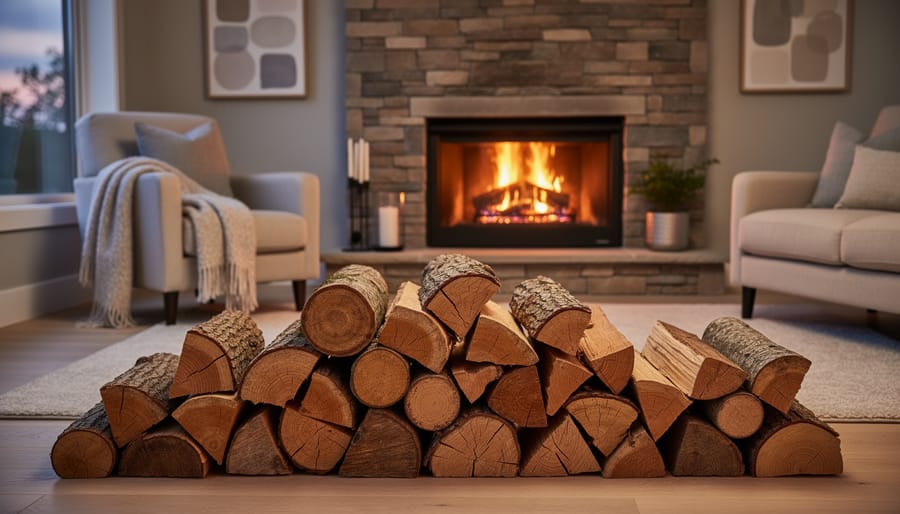
Choosing firewood isn’t just about keeping your home cozy—it’s also an opportunity to make environmentally conscious decisions that benefit both your local ecosystem and the planet. When you understand the connection between BTU ratings and sustainability, you’ll discover that high-efficiency burning actually supports your eco-friendly goals.
Start by sourcing your firewood locally whenever possible. Wood that travels hundreds of miles to reach your fireplace generates significant transportation emissions that undermine the carbon-neutral benefits of wood burning. Local suppliers not only reduce this carbon footprint but also support your community’s economy. As a bonus, locally sourced wood is typically better adapted to your climate and has often been properly seasoned for optimal burning.
Here’s an eco-win many homeowners overlook: prioritize invasive species when they’re available in your area. Woods like tree of heaven, Russian olive, or ailanthus can actually benefit local forests when removed. You’re helping restore native ecosystems while heating your home—that’s a choice you can feel genuinely good about.
The BTU connection matters more than you might think. High-BTU hardwoods like oak, hickory, and maple burn longer and hotter, meaning you’ll use less wood overall to achieve the same warmth. This efficiency translates directly to fewer trees needed and reduced harvesting impact. Think of it as getting more heat per log—your fireplace becomes a more sustainable heating solution simply by choosing wisely.
Finally, ask your supplier about their harvesting practices. Responsible providers use selective cutting methods that maintain forest health rather than clear-cutting. They leave younger trees to mature and ensure regeneration for future seasons. When you combine locally sourced, high-BTU firewood from sustainably managed forests, you’re not just making a purchase—you’re investing in a heating solution that respects both your comfort and the environment.
Understanding BTU ratings puts the power back in your hands when it comes to choosing firewood that truly delivers. You’re no longer at the mercy of whatever happens to be available or whatever a supplier tells you is “good wood.” Armed with this knowledge, you can confidently ask the right questions: What species is this? What’s the moisture content? Has it been properly seasoned? These simple inquiries transform you from a passive buyer into an informed consumer who gets genuine value for their investment.
Remember, the highest BTU rating doesn’t automatically mean the best choice for your situation. The perfect firewood balances heat output with practical considerations like what’s locally available, how much effort you want to invest in processing, and your budget. A cord of readily available oak that’s been properly seasoned might serve you better than expensive hickory that’s still too wet to burn efficiently.
Choosing the right firewood isn’t just about numbers on a chart. It’s about creating that warm, inviting atmosphere that transforms your house into a home. There’s something magical about gathering around a crackling fire, knowing you’ve selected wood that will burn cleanly, efficiently, and beautifully throughout those chilly evenings. Whether you’re heating your entire home or simply enjoying the ambiance, making informed firewood choices elevates the entire experience.
Ready to maximize your fireplace’s potential? Explore more expert tips and guides on our site to ensure every fire you build delivers comfort, efficiency, and that irreplaceable cozy feeling.