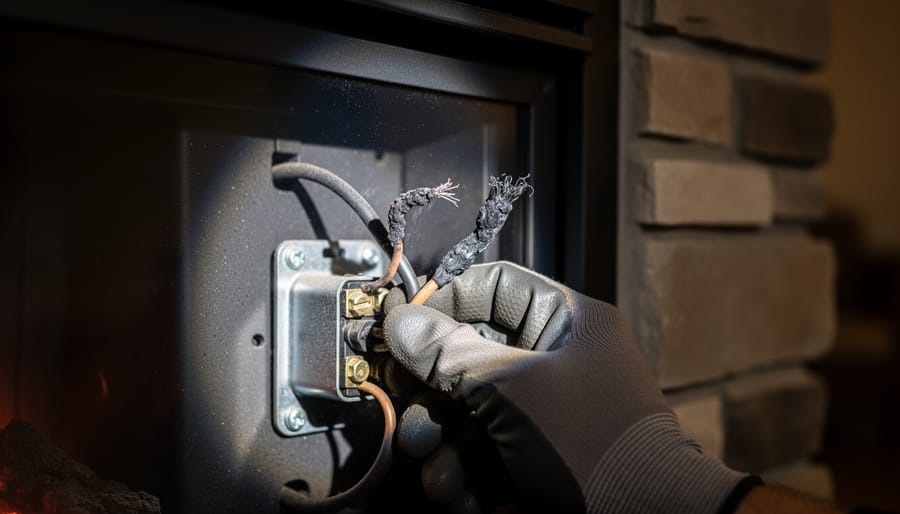


Inspect your fireplace’s electrical connections every six months for frayed wires, scorch marks, or loose outlets that could spark a devastating fire in your home. These visual cues often appear weeks before a serious incident, giving you precious time to act. Check that your gas fireplace’s electrical components meet current National Electrical Code standards, particularly the requirement for dedicated 15 or 20-amp circuits that prevent dangerous overloads. Never plug space heaters, electric fireplace inserts, or blowers into extension cords, as these temporary connections can’t handle sustained high-wattage demands and frequently cause residential fires.
Test your GFCI outlets monthly if your fireplace system includes water features or is located in moisture-prone areas like basements. A malfunctioning ground fault circuit interrupter won’t protect you from electrical shock or potential fire hazards. Keep combustible materials at least three feet away from all electrical components, including junction boxes, switches, and transformer housings that can generate significant heat during operation.
Schedule professional inspections annually, especially for gas fireplaces where electrical failures can create carbon monoxide risks alongside fire dangers. Licensed electricians identify hidden problems like deteriorating wire insulation behind walls or improper grounding that DIY checks miss. Remember that your fireplace represents both a lifestyle centerpiece and a significant safety responsibility. Understanding these electrical fundamentals protects your family while preserving the cozy ambiance you’ve worked to create in your home.
The Hidden Electrical Risks in Modern Fireplaces
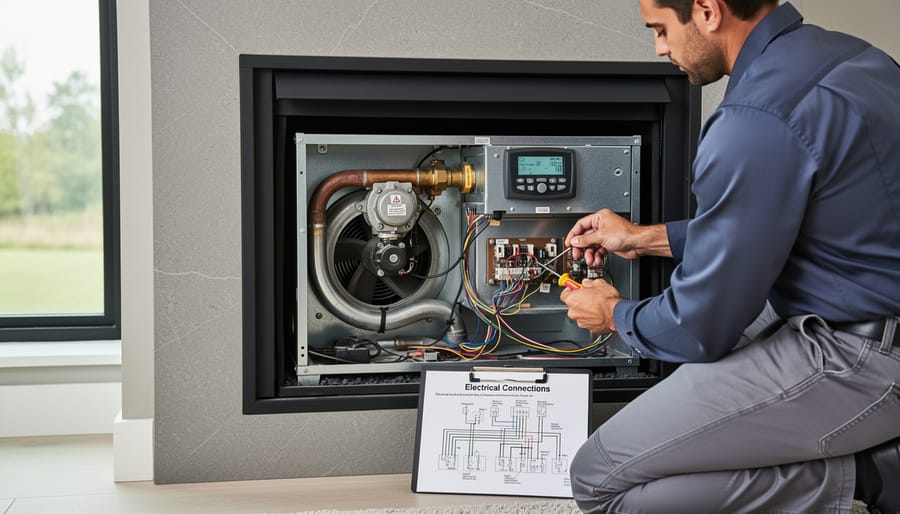
What Makes Fireplace Electrical Connections Different
Your fireplace brings warmth and ambiance to your home, but the electrical connections powering it face unique challenges that standard household circuits don’t encounter. Understanding these differences helps you appreciate why proper installation matters so much for your family’s safety.
Heat exposure is the most obvious consideration. While your electric fireplace generates heat as its primary function, the electrical components and wiring must withstand continuous exposure to elevated temperatures without degrading. This demands specialized heat-resistant wiring and strategic placement of electrical boxes away from the hottest zones. Think of it like asking your electrical system to work overtime in a challenging environment.
Moisture considerations add another layer of complexity, particularly for fireplaces near bathrooms or in basement installations where humidity levels fluctuate. Condensation can develop when warm fireplace surfaces meet cooler ambient air, potentially creating electrical hazards if connections aren’t properly sealed and protected.
Continuous operation demands distinguish fireplace circuits from those powering occasional-use appliances. Many homeowners run their fireplaces for hours during cold months, creating sustained electrical loads that generate heat within the wiring itself. This constant demand requires circuits capable of handling prolonged use without overheating.
That’s why dedicated circuits are typically required for fireplace installations. A dedicated circuit ensures your fireplace has exclusive access to electrical capacity without competing with other appliances, preventing overloads and reducing fire risk. This isn’t just a recommendation—it’s often mandated by electrical code and represents a crucial eco-friendly heating solution when implemented correctly.
Code Compliance Essentials Every Homeowner Should Know
GFCI Protection: When You Need It and Why
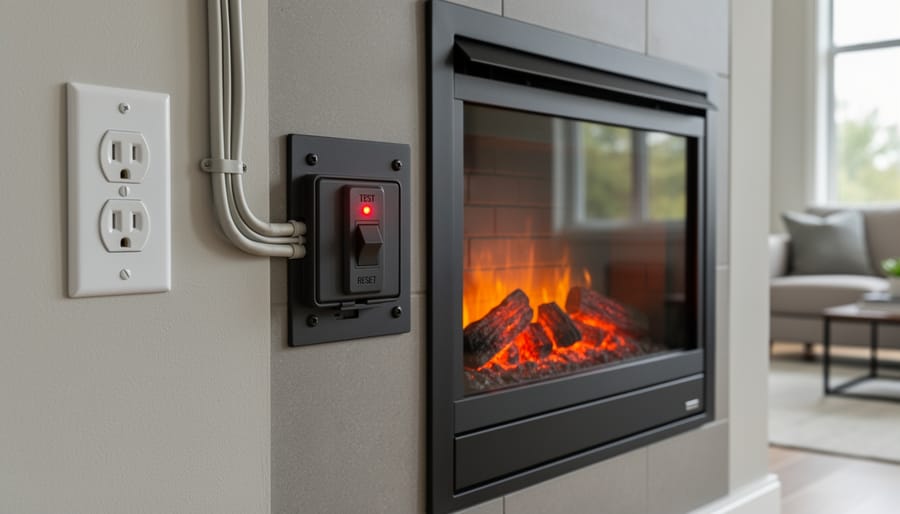
Think of a GFCI, or Ground Fault Circuit Interrupter, as a vigilant guardian for your electrical circuits. This small but mighty device monitors the flow of electricity and instantly cuts power when it detects even the slightest irregularity, potentially saving your home from fire and protecting you from dangerous shocks.
Here’s how it works in simple terms: electricity should flow in a balanced loop through your circuits. When a GFCI senses that current is escaping where it shouldn’t be, perhaps through water, a damaged wire, or a faulty appliance, it shuts off the power in a fraction of a second. You’ve probably encountered these devices in bathrooms and kitchens, where they’re recognizable by their test and reset buttons.
For your fireplace system, GFCI protection becomes essential in specific situations. If you’re installing an electric fireplace or gas fireplace with electrical components like blowers, lighting, or electronic ignition systems, these circuits may require GFCI protection depending on their location and local electrical codes. This is particularly important if your fireplace is near water sources or in damp areas like basements.
Modern building codes typically mandate GFCI protection for receptacles within six feet of water sources and in various locations throughout the home. When planning your fireplace installation, a qualified electrician will evaluate whether your specific setup requires this additional layer of protection. While it might seem like a small detail, this investment in safety technology can prevent electrical fires before they start, giving you true peace of mind as you enjoy your fireplace’s warmth.
Dedicated Circuits and Proper Amperage
Your fireplace is more than just a cozy gathering spot—it’s a significant electrical appliance that deserves respect when it comes to power requirements. Understanding when your fireplace needs its own dedicated circuit is essential for both safety and optimal performance.
Most electric fireplaces and gas fireplaces with electronic components require a dedicated circuit, meaning no other appliances or outlets share that electrical pathway. Think of it like giving your fireplace its own private highway to the electrical panel, ensuring it gets the power it needs without competing with other devices. This isn’t just a nice-to-have feature; in many cases, it’s actually required by electrical codes.
Determining the proper amperage starts with checking your fireplace’s specifications. Most electric fireplaces draw between 12 to 15 amps and require a 15 or 20-amp circuit. Larger models or those with powerful heating elements might need even more. You’ll find this information in your owner’s manual or on a label attached to the unit itself.
Here’s where things get dangerous: overloaded circuits are a leading cause of electrical fires in homes. When you plug your fireplace into a circuit that’s already powering other devices, you’re asking that circuit to carry more electrical current than it was designed to handle. The wiring heats up, insulation breaks down, and suddenly you’re facing a serious fire hazard.
Warning signs of an overloaded circuit include frequently tripping breakers, dimming lights when the fireplace runs, warm outlets, or a burning smell near electrical components. If you notice any of these, stop using the fireplace immediately and call a licensed electrician. Your family’s safety is worth far more than a temporary heating solution.
Red Flags That Scream ‘Electrical Fire Hazard’
Your home speaks to you in subtle ways, and when it comes to electrical hazards near your fireplace, learning its language could save your life. Let’s walk through the warning signs that deserve your immediate attention.
Start with the obvious but often overlooked: flickering or dimming lights when your fireplace system kicks on. This isn’t atmospheric lighting—it’s your electrical system telling you it’s struggling under the load. Your circuits shouldn’t compete for power, and if they are, you’re looking at potential overheating issues.
Next, touch test your outlets (gently, of course). Outlets near your fireplace should never feel warm to the touch when in use. If they do, the connections inside are working too hard, generating heat that has nowhere to go. The same goes for any switches controlling fireplace features—warmth is a red flag, not a feature.
Trust your nose. That burning smell isn’t leftover fireplace ambiance if it’s coming from outlets, switches, or your breaker panel. A hot, acrid odor suggests insulation breaking down or connections burning—both scenarios that can escalate quickly.
Watch your breaker panel’s behavior. If breakers trip frequently when running your fireplace, your system is crying uncle. This is a protective feature working overtime, and you shouldn’t simply keep resetting it and hoping for the best.
Look for visible damage around your fireplace area: frayed wires, discolored outlets with black marks, loose connections, or exposed wiring. These aren’t cosmetic issues—they’re urgent safety concerns that need professional attention.
Finally, evaluate your setup honestly. Are you daisy-chaining extension cords to power fireplace accessories? Have you or a previous owner made DIY electrical modifications to accommodate the fireplace? Extension cords are temporary solutions, not permanent infrastructure, and amateur electrical work near heating elements is genuinely dangerous.
When you spot any of these warning signs, resist the temptation to troubleshoot yourself. Your fireplace should be a source of comfort and warmth, not worry. Call a licensed electrician who understands both electrical systems and fireplace installations—because some risks simply aren’t worth taking.
Safe Installation Practices That Protect Your Home
Proper Wire Types and Ratings for High-Heat Environments
When your fireplace system faces high temperatures, standard electrical wiring simply won’t cut it. Think of it like choosing the right gloves for your fireplace – you wouldn’t use fabric gloves to handle hot logs, and similarly, your wiring needs special protection in heated environments.
Heat-resistant wiring is essential for any electrical connections near your fireplace. Look for wire types rated for at least 90°C (194°F), with many installations requiring even higher ratings depending on proximity to heat sources. Common options include THHN (Thermoplastic High Heat-resistant Nylon-coated) wire, which handles everyday heat exposure beautifully, or specialized high-temperature wire for areas directly exposed to extreme warmth.
Wire gauge matters tremendously for safety. Thicker wires (lower gauge numbers) carry more current safely without overheating. A 14-gauge wire might work for a simple control system, while heavier-duty components need 12-gauge or thicker. Using undersized wiring is like trying to pour a gallon of water through a coffee straw – dangerous resistance builds up, creating fire risk.
Protective conduit acts as armor for your wiring, shielding it from direct heat exposure and physical damage. Metal conduit provides excellent heat dissipation and durability, making it the preferred choice for fireplace installations. This extra layer of protection ensures your electrical system remains safe and functional for years of cozy evenings by the fire.
Junction Box Placement and Accessibility
When planning electrical work for your fireplace, where you place junction boxes matters just as much as how you wire them. These essential connection points need strategic positioning to keep your home safe while maintaining the warm, cozy atmosphere you’re creating.
First and foremost, junction boxes must be located away from direct heat sources. Installing them too close to your fireplace or heating elements creates a serious fire hazard, as excessive heat can damage wiring insulation and box components over time. Following proper clearance requirements isn’t just about meeting code—it’s about protecting your investment and your family.
Accessibility is equally crucial. While you might be tempted to hide junction boxes completely for aesthetic reasons, electrical codes require that they remain accessible for future maintenance and inspections. This doesn’t mean they need to be eyesores in your beautiful living space. Consider placing them in discreet but reachable locations, perhaps behind removable panels or in adjacent utility areas.
Remember that your fireplace system may need servicing years down the road. A qualified electrician should be able to access these boxes without demolishing walls or moving heavy furniture. Planning ahead saves money and headaches while ensuring your home’s electrical safety remains uncompromised as you enjoy countless cozy evenings by the fire.
When to Call a Professional (And When It’s Non-Negotiable)
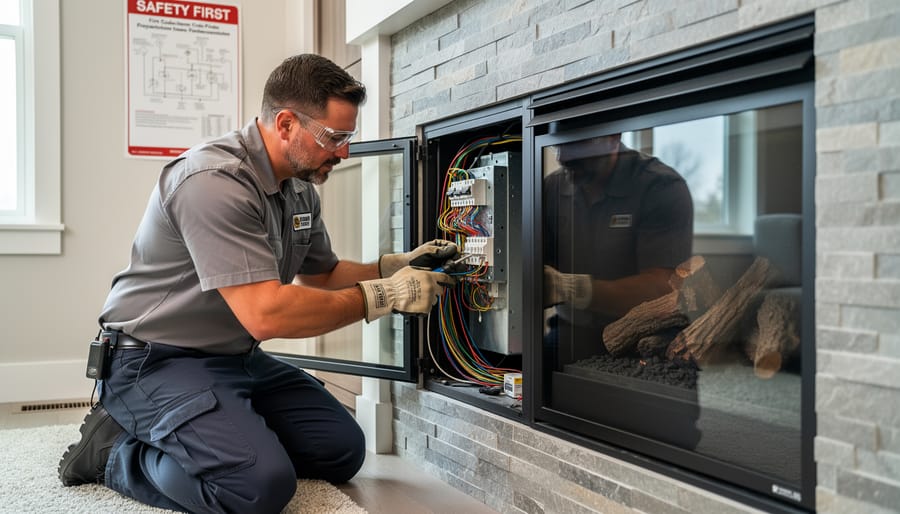
Let’s be honest about something important: when it comes to electrical work and fireplace installations, the line between DIY projects and professional territory isn’t just a suggestion—it’s often a legal requirement that protects your home, your family, and your investment.
Here’s the non-negotiable truth: any electrical work involving your fireplace system requires a licensed electrician. This includes installing dedicated circuits, upgrading electrical panels, and wiring gas fireplace ignition systems. Similarly, gas line work must be handled by certified professionals. These aren’t areas where YouTube tutorials and confidence will suffice, no matter how handy you are.
Why such strict rules? Beyond the obvious safety concerns, there are serious practical implications. Unlicensed electrical work can void your homeowner’s insurance, leaving you financially exposed if something goes wrong. Additionally, unpermitted work creates headaches when selling your home, as inspectors will flag code compliance issues that require costly corrections.
What you can handle yourself includes changing lightbulbs in fireplace fixtures, replacing batteries in carbon monoxide detectors, and basic cleaning around electrical components after disconnecting power. Everything else needs professional attention.
When hiring, look for licensed electricians with fireplace system experience. Request proof of licensing, insurance, and references. Reputable professionals will readily obtain necessary permits and schedule required inspections—if someone suggests skipping these steps, that’s your red flag to find someone else.
Remember, permits and inspections aren’t bureaucratic annoyances—they’re your assurance that work meets current safety standards. Think of professional installation as an investment in your home’s safety and your family’s peace of mind. It’s worth every penny.
Maintaining Electrical Safety Season After Season
Think of electrical safety like tending your fireplace itself—it’s not a one-and-done task, but rather an ongoing commitment that keeps your home cozy and secure season after season. Creating a regular maintenance routine ensures your fireplace continues to provide warmth efficiently while protecting what matters most.
Start each heating season with a simple visual inspection. Before your first fire, examine all visible electrical connections for any signs of wear, discoloration, or loose fittings. Check that your gas fireplace’s power cord hasn’t been damaged over the summer months and that outlets show no signs of scorching or melting around the edges. If you notice any fraying, exposed wires, or unusual warmth near electrical components, it’s time to call a professional before lighting up.
Your annual maintenance routine should include testing your carbon monoxide and smoke detectors, replacing batteries even if they seem fine, and verifying that all safety clearances remain unobstructed. Many homeowners don’t realize that furniture rearrangements or new décor can inadvertently compromise both ventilation and electrical safety zones.
Consider scheduling a professional inspection every two to three years, or more frequently if your system is older than fifteen years. Certified technicians can spot issues invisible to the untrained eye, like internal wiring degradation or connection corrosion that develops gradually over time.
Here’s the eco-friendly bonus: well-maintained electrical systems operate more efficiently, reducing energy waste and lowering your utility bills. When connections are clean and secure, your fireplace draws only the power it needs, making your comfort both safer and more sustainable. By integrating these electrical checks into your regular fireplace care routine, you’re not just preventing hazards—you’re ensuring your fireplace remains an efficient, reliable source of warmth for years to come.
Your home’s warmth and comfort depend on more than just the beautiful flames dancing in your fireplace—they rest on the foundation of safe, properly installed electrical systems. While meeting code requirements is essential, electrical safety goes deeper than checking boxes on an inspection form. It’s about protecting the sanctuary you’ve created, the cozy evenings with loved ones, and the peaceful nights knowing your family is secure.
The good news? Taking charge of your electrical safety is entirely within reach. Schedule that professional inspection you’ve been considering, especially if your system is over ten years old or you’ve noticed any warning signs. Don’t wait for a problem to announce itself. Connect with qualified electricians who understand both safety standards and the unique needs of modern fireplace systems.
Remember, properly maintained electrical systems do double duty—they keep you safe while supporting energy-efficient, eco-friendly operation that reduces your environmental footprint and utility bills. When your electrical infrastructure works as designed, your heating solutions perform optimally, wasting less energy and delivering more comfort.
Your home deserves nothing less than complete safety. Make the commitment today to never compromise on electrical inspections, professional installations, or quality components. The warmth and ambiance you cherish will shine brighter knowing everything behind the scenes is protecting what matters most.