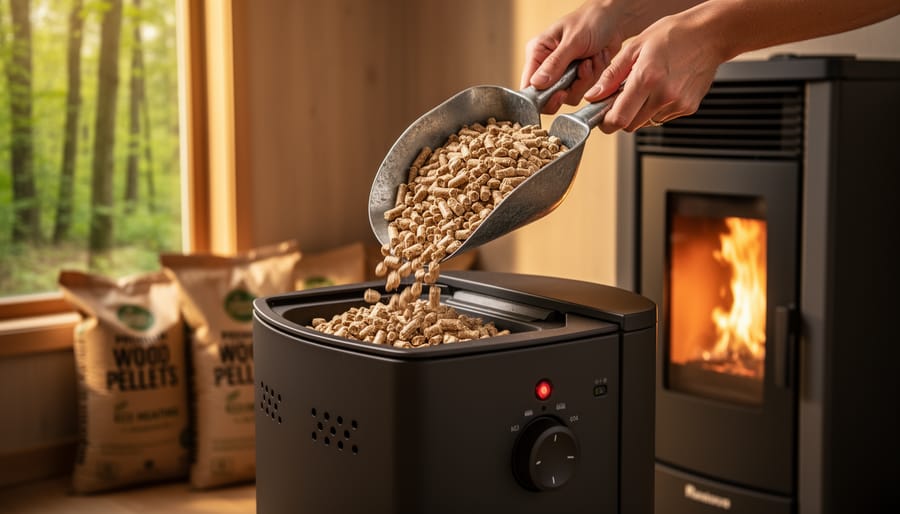


Choose pellet biomass made from 100% post-consumer wood waste or sustainably harvested timber, verified through certifications like ENplus A1 or Pellet Fuels Institute (PFI) standards, which guarantee low ash content, minimal additives, and traceable sourcing that doesn’t contribute to deforestation. Look for bags displaying clear origin information and avoid pellets containing construction debris, treated lumber, or excessive bark, as these produce more emissions and reduce your stove’s efficiency.
Purchase from suppliers who provide transparent documentation about their raw materials, including whether sawdust comes from FSC-certified mills or agricultural residues like wheat straw and corn stalks. These locally-sourced options typically have lower transportation emissions and support regional economies while delivering the same heating performance as conventional wood pellets. Request a test bag before buying in bulk to verify the pellets produce minimal dust, maintain consistent diameter, and burn cleanly in your specific stove model.
Calculate your true environmental impact by considering the entire supply chain, from forest management practices to delivery distance. Pellets manufactured within 100 miles of your home significantly reduce carbon footprint compared to imported options, even if they cost slightly more per ton. Many eco-conscious homeowners find that premium sustainable pellets actually save money long-term through improved burn efficiency, reduced maintenance costs, and fewer chimney cleanings.
Stock up during off-season months when sustainable producers offer discounts, allowing you to secure environmentally responsible heating fuel without premium pricing. This strategic purchasing approach transforms your fireplace from a simple comfort feature into a genuinely sustainable heating solution that aligns with your values while maintaining the cozy ambiance you love.
What Makes Biomass Pellets ‘Sustainable’ (And What Doesn’t)
The Raw Materials Behind Your Pellets
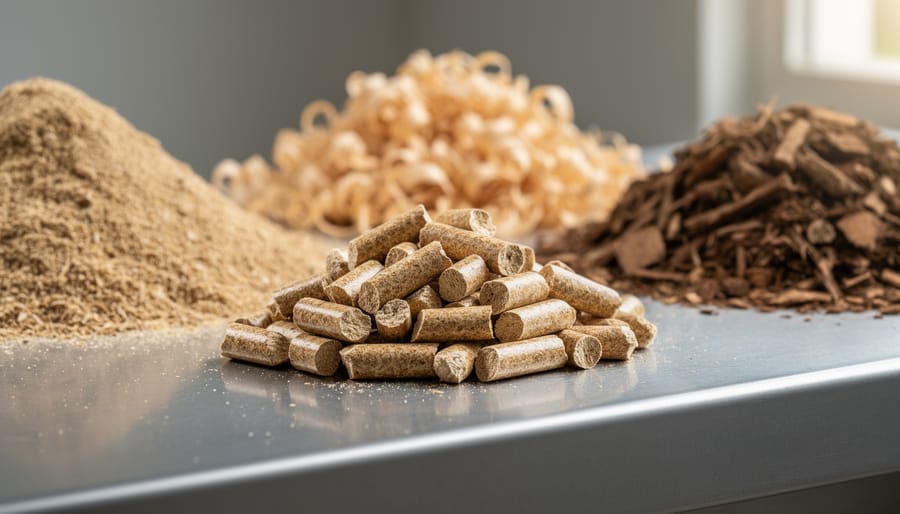
When you grab a bag of biomass pellets, you’re holding the result of some pretty clever recycling. These compact fuel sources are typically made from materials that might otherwise end up in landfills—sawdust from lumber mills, wood shavings from furniture manufacturing, and even agricultural leftovers like corn stalks, wheat straw, or sunflower husks.
The beauty of pellet production lies in transforming waste into warmth. Sawmills generate mountains of sawdust daily, and instead of burning it or hauling it away, manufacturers compress these wood particles under intense pressure. The natural lignin in the wood acts as a glue, binding everything together without chemical additives. This means you’re burning pure, compressed wood fiber—nothing more, nothing less.
Why does the source material matter for your home heating? It all comes down to performance and sustainability. Hardwood pellets from oak or maple typically produce more heat and less ash than softwood varieties, though both burn cleanly. Agricultural pellets offer another eco-friendly option, giving new life to crop residues while supporting farmers.
The most sustainable pellets come from local sources, reducing transportation emissions while supporting your regional economy. When mills and farms partner with pellet manufacturers nearby, everyone wins—including the planet. You get reliable heat, waste materials find purpose, and forests aren’t logged solely for fuel production.
Understanding what goes into your pellets helps you make informed choices that align with both your heating needs and environmental values, creating that cozy fireside experience you love with a clearer conscience.
Certifications That Actually Mean Something
When you’re shopping for pellet biomass, those little badges and logos on the bags aren’t just decoration—they’re your assurance that what you’re burning aligns with your values. Understanding pellet certifications helps you make informed choices without second-guessing your purchase.
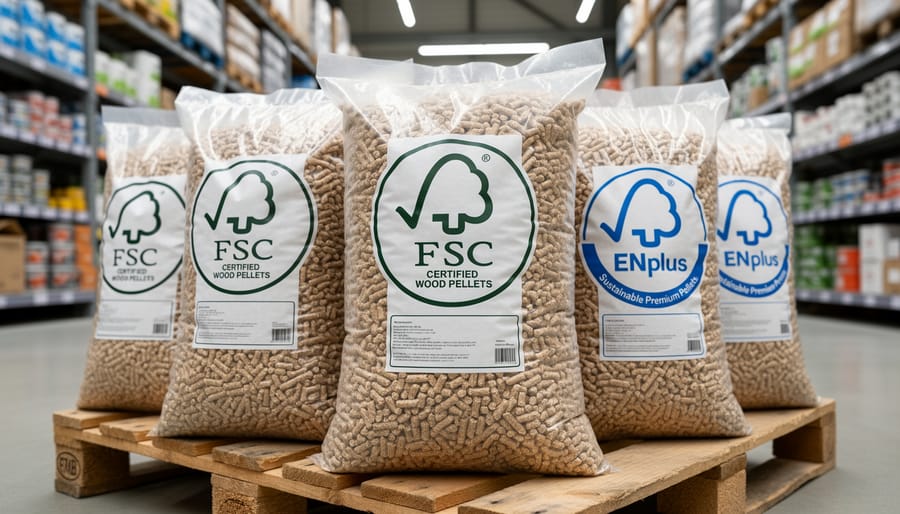
FSC (Forest Stewardship Council) certification guarantees your pellets come from responsibly managed forests where trees are replanted and ecosystems protected. Look for the distinctive checkmark-tree logo on the bag.
SFI (Sustainable Forestry Initiative) focuses on North American wood sources and ensures sustainable harvesting practices. While slightly less stringent than FSC, it still represents a solid commitment to forest health.
ENplus takes a different approach, certifying the pellet quality itself rather than just the source material. This European standard guarantees consistent ash content, moisture levels, and heating performance. You’ll find A1, A2, or B ratings—A1 being premium grade with the lowest ash content, perfect for home heating.
These certifications mean independent auditors have verified claims, so you’re not just taking the manufacturer’s word. When comparing bags at your local supplier, check for these logos prominently displayed. If you can’t find any certification marks, it’s worth asking questions before loading up your cart.
The Hidden Environmental Impact of Your Pellet Choice
Transportation Miles Add Up
Here’s something many eco-conscious homeowners overlook: those wonderfully sustainable wood pellets might lose their environmental edge if they’ve traveled hundreds of miles to reach your home. Transportation emissions can significantly impact the carbon footprint of your heating fuel, sometimes offsetting the renewable benefits you’re trying to achieve.
Think of it this way—a bag of pellets manufactured 500 miles away has already accumulated a substantial carbon debt before you even light your first fire. The diesel fuel burned during long-haul trucking adds greenhouse gases that wouldn’t exist if you’d sourced locally.
The good news? Finding local pellet suppliers is easier than you might think. Start by checking with your local fireplace and hearth retailers, as they often stock regionally-produced pellets. Many farm supply stores also carry pellets made from agricultural waste generated right in your area. Don’t hesitate to ask retailers directly about sourcing locations—responsible suppliers are usually proud to share this information.
Another smart approach is searching online for pellet mills in your state or region. Some manufacturers sell directly to consumers, which eliminates middleman transportation entirely. Community forums and homeowner groups focused on wood heating can also provide valuable recommendations for nearby sources.
By choosing pellets produced within 100-200 miles of your home, you’re maximizing the environmental benefits while supporting local economies.
Old Growth vs. Waste Wood: Why It Matters
Not all wood pellets share the same environmental story, and understanding the difference can help you make choices that align with your values while keeping your home cozy and warm.
Pellets made from forestry waste—like sawdust, wood chips, and trimmings left over from lumber production—represent a genuinely sustainable option. This waste wood would otherwise decompose or be burned without purpose, so transforming it into heating fuel makes excellent ecological sense. You’re essentially giving new life to materials that already exist as byproducts of necessary forestry operations.
Virgin timber pellets tell a different tale. When forests are harvested specifically for pellet production, especially old-growth trees that have stood for decades or centuries, the environmental benefit diminishes significantly. These established forests serve as crucial carbon sinks, wildlife habitats, and ecosystem anchors. Cutting them down releases stored carbon and disrupts complex ecological relationships that take generations to rebuild.
The good news? Most reputable pellet manufacturers clearly label their sourcing practices. Look for products certified by organizations that verify sustainable forestry practices and prioritize waste wood utilization. When you choose waste-wood pellets, you’re supporting a circular economy that reduces landfill burden while creating efficient, renewable heat for your home—a win for both your family’s comfort and the planet’s future.
How to Spot Truly Sustainable Pellets at the Store
Reading Between the Lines on Pellet Bags
When you’re standing in front of those neatly stacked pellet bags, the marketing language can feel overwhelming. Terms like “natural,” “green,” or “eco-friendly” sound wonderful, but they don’t always tell the whole story. Here’s what to look for when separating genuine sustainability from clever marketing.
First, specific certifications matter more than vague claims. Look for labels like FSC (Forest Stewardship Council) or SFI (Sustainable Forestry Initiative), which indicate the wood comes from responsibly managed forests. If a bag simply says “sustainable” without backing it up with third-party verification, consider it a red flag.
Pay attention to the source material description. Bags that specify “100% post-industrial sawdust” or “reclaimed wood waste” are genuinely utilizing materials that would otherwise go to landfills. Contrast this with phrases like “premium wood” or “natural ingredients,” which could mean anything.
Check the origin location too. While pellets from across the country might be sustainably sourced, those produced locally reduce transportation emissions significantly. A bag showing a regional manufacturer demonstrates commitment to reducing the overall carbon footprint.
Finally, transparency wins trust. Brands that provide detailed information about their sourcing practices, manufacturing process, and supply chain on their website typically have nothing to hide. If you can’t find this information easily, that silence speaks volumes about their actual environmental commitment.
Questions Your Supplier Should Answer Easily
A trustworthy pellet supplier should welcome your questions about their products with transparency and enthusiasm. Start by asking where their wood material comes from and whether it’s sourced from sustainably managed forests. Inquire about certifications like FSC or SFI that verify responsible forestry practices. Don’t hesitate to ask about their production process—do they use binding agents, or are the pellets held together purely by natural lignin from the wood? Request information about their ash content percentage, moisture levels, and BTU ratings, as these directly affect your fireplace’s performance. Ask if they conduct regular quality testing and whether results are available to customers. A reputable supplier should also explain their storage recommendations and how quickly you should use the pellets after purchase. Finally, inquire about their carbon footprint and whether they offset emissions from transportation. Quality suppliers view these questions as opportunities to showcase their commitment to excellence and sustainability, not as challenges to their credibility.
Regional Sourcing: Finding Local Sustainable Options
The Advantages of Buying Local
Choosing locally-sourced pellet biomass offers surprising advantages that extend far beyond simple convenience. When you buy from regional suppliers, you’re directly reducing the carbon footprint associated with long-distance transportation. Those emissions savings can be substantial, especially when pellets travel hundreds or thousands of miles from manufacturer to your fireplace.
Local pellets also tend to be fresher, which matters more than you might think. Pellets stored for shorter periods maintain their low moisture content and structural integrity better, meaning they’ll burn more efficiently and produce more heat for your home. You’ll notice the difference in both warmth and how cleanly they burn.
There’s also the economic ripple effect to consider. Supporting local pellet producers keeps money circulating in your community, strengthening the regional economy and potentially creating jobs nearby. It’s a feel-good factor that aligns perfectly with the eco-conscious values driving your biomass choice in the first place.
Perhaps most importantly, buying local makes verification much easier. You can actually visit production facilities, ask questions directly, and see firsthand how your pellets are manufactured and sourced. This transparency gives you confidence that your sustainable heating choice truly lives up to its environmental promises.
Performance Meets Sustainability: Getting the Best Burn
Why Quality and Sustainability Go Hand-in-Hand
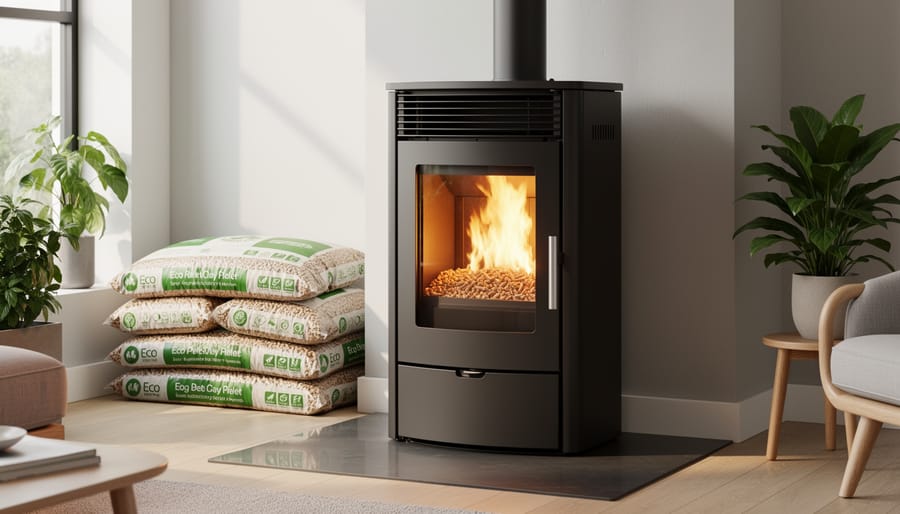
Here’s the wonderful news: choosing sustainably sourced pellets isn’t just good for the planet—it’s good for your home heating experience too. High-quality pellets from responsible producers typically contain lower moisture content, fewer impurities, and more consistent density, which translates directly to better burn performance and higher heat output. Think of it as premium fuel for your cozy evenings.
When manufacturers follow sustainable forestry practices, they’re usually also committed to quality control throughout their production process. These well-made pellets produce less ash, meaning less maintenance for you and cleaner combustion overall. They’ll help you maximize pellet stove efficiency while reducing harmful emissions.
The connection makes perfect sense when you think about it: companies investing in environmental responsibility tend to care about every aspect of their product. This attention to detail means your pellets will burn more predictably and efficiently. Plus, with proper pellet storage, these premium sustainable pellets maintain their quality longer, giving you reliable warmth season after season. It’s truly a win-win situation where doing right by the environment means getting the best performance for your fireplace investment.
The Real Cost of Sustainable Pellets
Let’s talk honestly about what you’ll pay for sustainable pellets versus conventional options. Yes, sustainably sourced pellets typically cost more upfront, usually running about 10-20% higher than standard pellets. That might mean paying $280-$320 per ton instead of $250, depending on your region and supplier.
But here’s where the conversation gets interesting. That price premium often reflects better manufacturing standards, which translates to cleaner burns, less ash buildup, and fewer maintenance headaches down the road. When you’re spending less time cleaning your stove and more time enjoying the warmth, that premium starts feeling less steep.
Bulk buying can significantly narrow the price gap. Many sustainable pellet suppliers offer substantial discounts when you purchase multiple tons at once, especially during off-season months like spring and summer. We’re talking savings of $30-$50 per ton, which can make sustainable options competitive with conventional pellets while also reducing heating costs through improved efficiency.
So when is the premium worth it? If you’re committed to your pellet stove as a primary heat source, the answer is almost always yes. The environmental benefits combined with performance advantages justify the investment. However, if you’re only using your stove occasionally for ambiance, conventional pellets from reputable manufacturers might serve you just fine.
The sweet spot for most homeowners is finding a certified sustainable supplier who offers bulk discounts and building a relationship with them. Many offer loyalty programs or seasonal promotions that make responsible choices more budget-friendly. Think of it as investing in both your home’s comfort and the planet’s future, one bag at a time.
Making the switch to sustainably sourced pellet biomass doesn’t require a complete lifestyle overhaul. Every small choice you make for your home heating creates ripples of positive change, from supporting responsible forestry practices to reducing your carbon footprint. The beauty of this transition is that you can start exactly where you are, with just one simple adjustment.
Perhaps you begin by choosing certified pellets for this season, or you decide to support a local supplier who sources responsibly. Maybe you commit to researching one certification mark before your next purchase. These seemingly modest decisions collectively drive demand for eco-friendly heating solutions and encourage more producers to adopt sustainable practices.
Remember, your fireplace represents more than just warmth. It’s a lifestyle element that reflects your values and care for the environment. By choosing pellet biomass from sustainable sources, you’re not sacrificing comfort or performance. You’re enhancing your home’s ambiance while making a conscious choice that benefits forests, communities, and future generations. Start with one change today, and let that momentum carry you forward on your journey toward more responsible home heating.