

Understanding combustion air venting requirements now prevents dangerous carbon monoxide buildup, failed inspections, and costly retrofits later. Every fireplace and fuel-burning appliance in your home needs two things to operate safely: adequate air to fuel the fire and a clear path to remove toxic gases. Without proper ventilation, these appliances can’t burn efficiently and may pull dangerous exhaust back into your living spaces—a condition called backdrafting that sends families to emergency rooms every year.
Modern homes present unique challenges that older building codes never anticipated. Today’s energy-efficient construction seals homes so tightly that fireplaces literally suffocate, starving for the oxygen they need while competing with exhaust fans, dryers, and HVAC systems. That beautiful new gas fireplace might be stealing air from your water heater down the hall, or your kitchen range hood could be reversing the flow in your chimney. These aren’t just theoretical concerns—building inspectors routinely flag combustion air violations, and insurance companies scrutinize these systems after incidents.
The good news is that combustion air requirements follow logical principles rooted in physics and safety, not arbitrary rules designed to frustrate homeowners. Whether you’re installing a new fireplace, troubleshooting a smoking problem, or preparing for an inspection, understanding these requirements empowers you to make informed decisions. You’ll learn to recognize warning signs like persistent odors, soot stains, or flames that burn yellow instead of blue. More importantly, you’ll discover practical solutions that maintain both your home’s safety and the cozy ambiance that drew you to fireplace living in the first place. Getting combustion air right means enjoying your fireplace with complete peace of mind.
What Is Combustion Air and Why Does Your Fireplace Need It?
The Science Made Simple: Fire Needs to Breathe Too
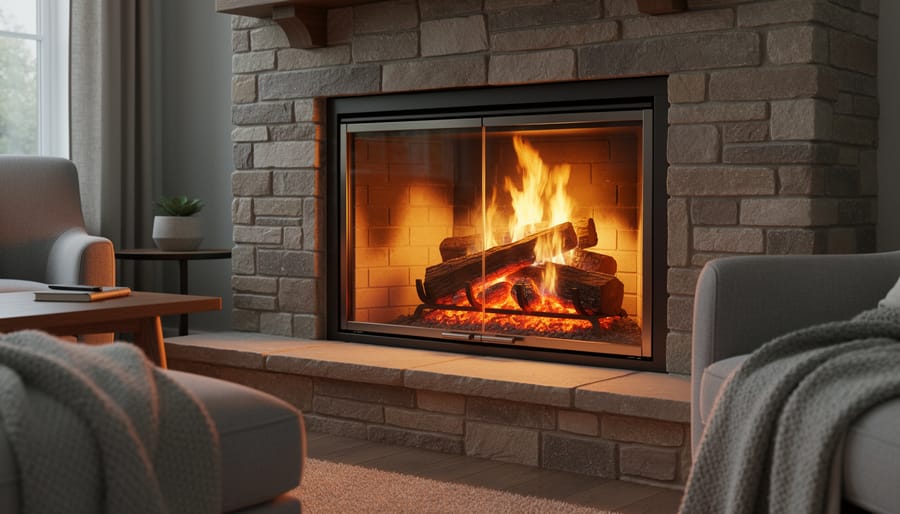
Think of your fireplace or heating appliance like your own lungs – it needs a constant supply of fresh air to function properly. When fuel burns, whether it’s wood, gas, or oil, it’s consuming oxygen from the surrounding air in a chemical reaction we call combustion. This process releases heat (wonderful for keeping your home cozy) along with byproducts like water vapor and carbon dioxide.
Here’s where things get critical: when your appliance doesn’t get enough fresh air, it can’t complete this combustion process efficiently. Imagine trying to breathe through a straw – you’re getting some air, but not nearly enough. The same struggle happens with your fireplace when combustion air is restricted.
Incomplete combustion creates several serious problems. First, your appliance won’t generate as much heat, wasting fuel and money. You might notice weak flames, soot buildup, or persistent odors – all signs your fire is literally gasping for air. More alarming, insufficient oxygen causes the production of carbon monoxide, an invisible, odorless gas that’s extremely dangerous to your family.
Carbon monoxide forms when there isn’t enough oxygen to convert fuel completely into harmless carbon dioxide. This is why proper ventilation isn’t just about performance – it’s a fundamental safety requirement. Your heating appliance needs adequate combustion air to burn cleanly and safely, protecting both your home’s efficiency and your family’s wellbeing. Understanding this simple principle helps you appreciate why building codes take combustion air requirements so seriously.
Modern Homes vs. Vintage Homes: The Air Supply Challenge
If you’ve recently bought or renovated a home, you’ve likely heard about energy efficiency: better insulation, new windows, sealed ductwork, and weather stripping. These improvements are wonderful for lowering utility bills and creating a cozy environment, but they’ve created an unexpected challenge for fireplace owners.
Your grandparents’ drafty old farmhouse never had combustion air problems. Cold air leaked in through gaps around windows, under doors, and through countless tiny cracks in the walls. While this made heating bills higher, it meant plenty of fresh air was constantly entering the home. When they lit a fire, there was always enough oxygen available for proper combustion, and the natural air movement helped exhaust gases vent properly up the chimney.
Fast forward to today’s homes, built with advanced building science and sealed tight as a drum. Modern construction methods are designed to prevent air leakage, which is excellent for energy conservation but creates a dilemma. When you light your fireplace, it needs a substantial amount of air to burn properly and to create the draft that carries smoke up the chimney. In a tightly-sealed home, the fireplace essentially competes with your living space for available oxygen.
Many homeowners discover this issue when they notice their fireplace smoking back into the room, struggling to stay lit, or creating negative pressure that makes doors difficult to open. Understanding this fundamental difference between vintage and modern construction is the first step toward creating a safe, eco-friendly heating solution that works harmoniously with your home’s efficient design.
Code Requirements: What the Law Says About Combustion Air
The Two Methods: Indoor Air vs. Outdoor Air
When your fireplace needs oxygen to burn fuel efficiently, it can get that air from one of two places: inside your home or directly from outdoors. Understanding which method is right for your situation is essential for both safety and comfort.
Drawing combustion air from inside your home is the simpler, traditional approach. Your fireplace pulls the oxygen it needs from the room air around it. This works fine for smaller, occasional-use fireplaces in well-ventilated homes. However, it creates negative pressure inside your living space, which means other air has to flow in from somewhere to replace what’s being consumed. In older, draftier homes, this replacement air naturally seeps in through cracks and gaps. But in today’s energy-efficient, tightly sealed homes, there simply isn’t enough “extra” air to spare without creating problems.
Dedicated outdoor combustion air, on the other hand, brings fresh air directly from outside through a separate vent or duct. This method is increasingly required by building codes, especially for newer construction and larger heating appliances. By creating a direct air supply, you’re not stealing oxygen from your living space or creating uncomfortable drafts. It’s the more eco-friendly approach too, since your heating system won’t be fighting against air loss and forcing your furnace to work overtime.
Building codes typically require outdoor combustion air when your home is tightly constructed, when you’re using high-BTU appliances, or when you have multiple fuel-burning devices. Just like proper safety clearances protect your home from fire hazards, adequate combustion air protects you from carbon monoxide dangers and ensures your fireplace operates at peak efficiency. Your local building inspector or fireplace professional can help determine which method your specific installation requires.
How Much Air Does Your Fireplace Actually Need?
Understanding how much air your fireplace needs isn’t as complicated as it might sound. Think of it like this: your fireplace is breathing, and just like us, it needs the right amount of oxygen to perform at its best.
The basic rule of thumb is surprisingly straightforward. For every 1,000 BTUs your fireplace produces, you need approximately 50 cubic feet of air per hour. So if you have a typical wood-burning fireplace rated at 40,000 BTUs, you’re looking at needing about 2,000 cubic feet of air hourly to keep that fire burning cleanly and efficiently.
Let’s break this down with some real-world examples that might match your situation. A cozy medium-sized gas fireplace rated at 30,000 BTUs requires around 1,500 cubic feet of air per hour. For those beautiful large wood-burning fireplaces that can output 50,000 BTUs or more, you’re talking about 2,500 cubic feet of air per hour. Even smaller ventless gas units, though they work differently, typically need adequate room ventilation based on the square footage of your space.
Here’s where it gets practical for your home. Most building codes calculate this requirement based on your room size. A common standard requires one square inch of permanent opening for every 4,000 BTUs, with openings placed both high and low in the room to create proper air circulation. That same 40,000 BTU fireplace would need at least 10 square inches of permanent ventilation opening.
The good news? These calculations ensure your fireplace has enough fresh air to burn efficiently, preventing dangerous backdrafts and keeping harmful combustion gases flowing safely up and out of your chimney where they belong.
Different Fireplaces, Different Air Needs
Wood-Burning Fireplaces and Inserts
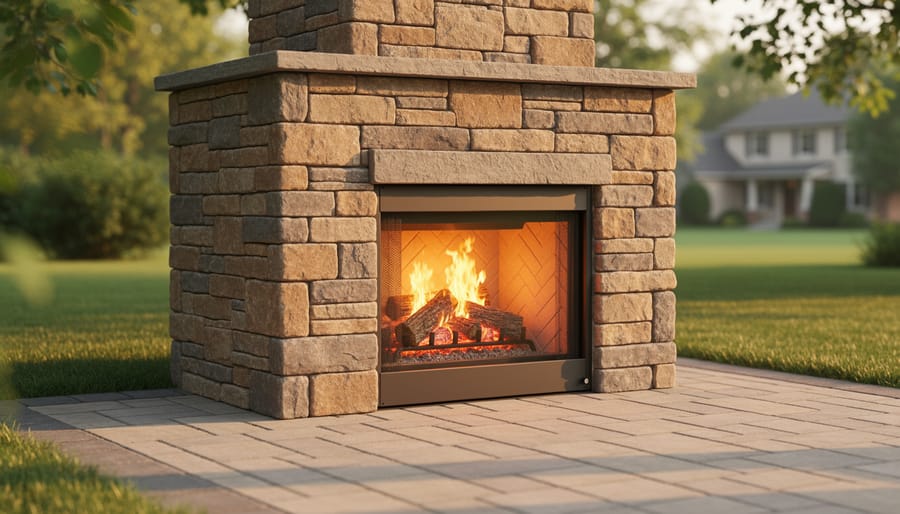
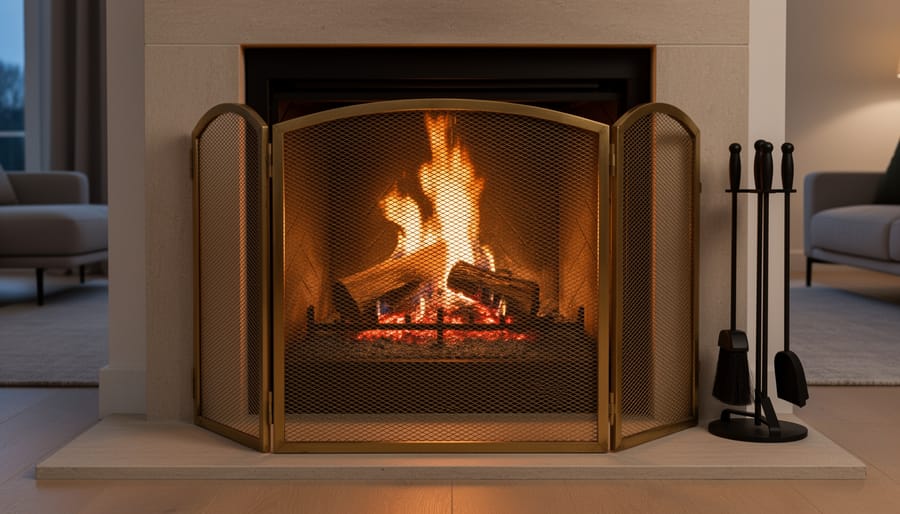
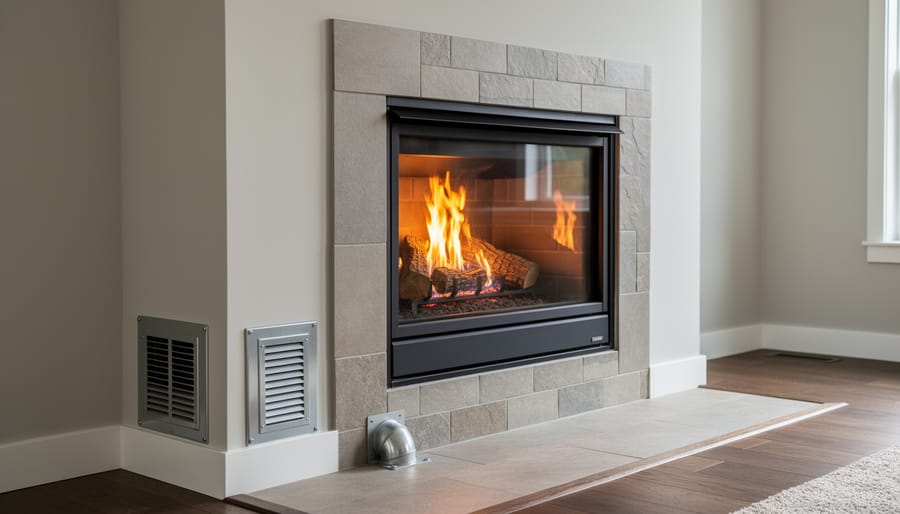
Wood-burning fireplaces hold a special place in our hearts, offering that authentic crackling ambiance and natural warmth that defines cozy living. Whether you’re enjoying a traditional masonry fireplace or a modern prefab insert, understanding combustion air requirements ensures your wood-burning unit operates safely and efficiently while keeping your home comfortable.
Traditional wood-burning units need substantial airflow to function properly. The general rule of thumb is that for every 5,000 BTUs of heat output, you need one square inch of combustion air opening. Most wood-burning fireplaces require between 50 to 100 square inches of combustion air, depending on their size and design. This air can come from your home’s interior or through dedicated outdoor air vents.
Masonry fireplaces, with their generous fireboxes, typically need more combustion air than prefab models. Many newer homes are built so tightly that relying on natural air infiltration alone won’t provide enough oxygen for complete combustion. This can lead to smoky fires, difficulty lighting, and even dangerous backdrafting.
Prefab wood-burning inserts often come with built-in provisions for direct air intake from outside, which is an excellent eco-friendly solution. This design prevents the fireplace from pulling heated air from your living space, maintaining your home’s energy efficiency while ensuring clean, complete combustion. Installing an outside air kit is one of the smartest upgrades you can make for both performance and comfort.
Gas Fireplaces: Vented vs. Ventless
When choosing a gas fireplace, understanding the ventilation type is essential for both safety and code compliance. Gas fireplaces fall into two main categories: vented and ventless units, each with distinct combustion air requirements.
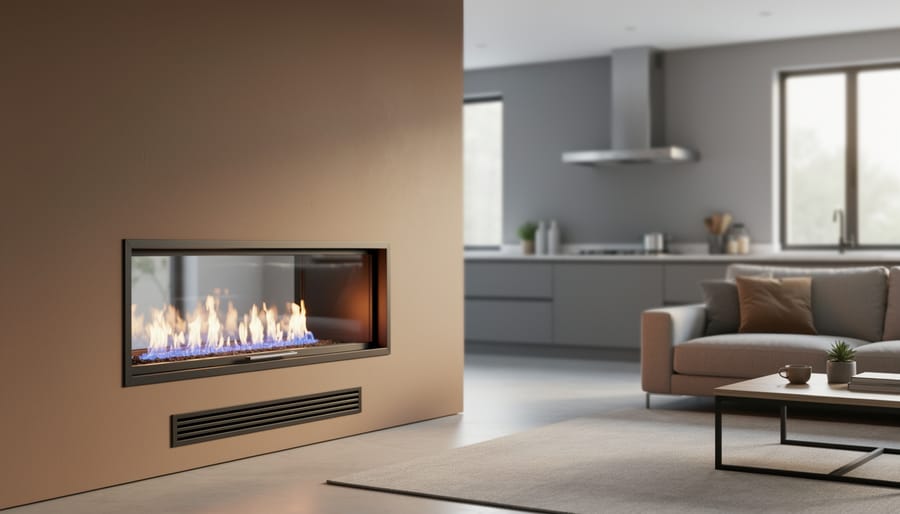
Vented gas fireplaces include direct-vent and B-vent models. Direct-vent fireplaces are sealed units that draw combustion air from outside through a dedicated pipe and exhaust fumes directly outdoors, making them incredibly efficient and safe for your indoor air quality. B-vent fireplaces, also called natural-vent units, draw air from your room and exhaust through a vertical chimney. These require adequate indoor air supply and proper chimney draft to function safely.
Ventless gas fireplaces operate without any exterior venting, burning fuel so efficiently that manufacturers claim they can safely release combustion byproducts into your living space. However, they still consume oxygen from your room and produce water vapor and trace amounts of carbon dioxide.
Here’s the catch: many jurisdictions actually ban ventless units due to safety concerns about indoor air quality, moisture buildup, and potential carbon monoxide risks. States like California and Canada prohibit their installation entirely. Even where they’re permitted, building codes typically limit their BTU output and require rooms to meet minimum size requirements.
For your family’s wellbeing and long-term home value, vented options generally provide greater peace of mind and broader installation flexibility.
Bioethanol and Alternative Fuel Options
Bioethanol fireplaces are gaining popularity as stylish, eco-friendly heating options that offer a unique advantage when it comes to combustion air requirements. Because bioethanol burns cleanly and produces minimal emissions, many models are designed as ventless units, eliminating the need for traditional chimney systems or complex venting arrangements. However, it’s important to understand that even though they don’t require flue venting, these fireplaces still consume oxygen from your living space during combustion.
For safe operation, ensure your room has adequate size and ventilation. Most manufacturers recommend using bioethanol fireplaces in spaces of at least 300 square feet with periodic fresh air circulation. While you won’t need to worry about carbon monoxide from a properly functioning bioethanol unit, maintaining good air quality remains essential for comfort and safety.
Other alternative fuel options like pellet stoves and electric fireplaces each have their own ventilation considerations. Pellet stoves typically require dedicated outside air intake systems, while electric units need no combustion air at all since they generate heat without burning fuel, making them the most flexible choice for tight spaces or apartments where traditional venting isn’t feasible.
Warning Signs Your Fireplace Isn’t Getting Enough Air
Performance Issues You Can See and Smell
Your fireplace will tell you when it’s struggling to breathe properly. One of the most obvious signs of inadequate combustion air is visible smoke backing up into your room instead of going up the chimney where it belongs. You might also notice black soot accumulating around the fireplace opening or on the glass doors, creating an unsightly mess that requires frequent cleaning.
When your fire struggles to get started or won’t stay lit despite using properly seasoned wood, insufficient air supply is often the culprit. The flames themselves provide important clues too. Healthy flames should dance with bright orange and blue hues, while oxygen-starved fires produce lazy, yellow flames that seem to struggle and produce excessive smoke.
Perhaps the most concerning sign is odor. If you’re detecting smoky smells in your living space or unusual combustion odors that linger after you’ve finished using your fireplace, your system isn’t venting properly. These aren’t just comfort issues; they’re safety warnings that shouldn’t be ignored. Poor combustion creates carbon monoxide and other harmful byproducts that need to exit your home, not circulate through it. Think of these visible and aromatic signs as your fireplace’s way of asking for help, signaling that it needs better airflow to perform safely and efficiently.
The Silent Dangers: What You Can’t See
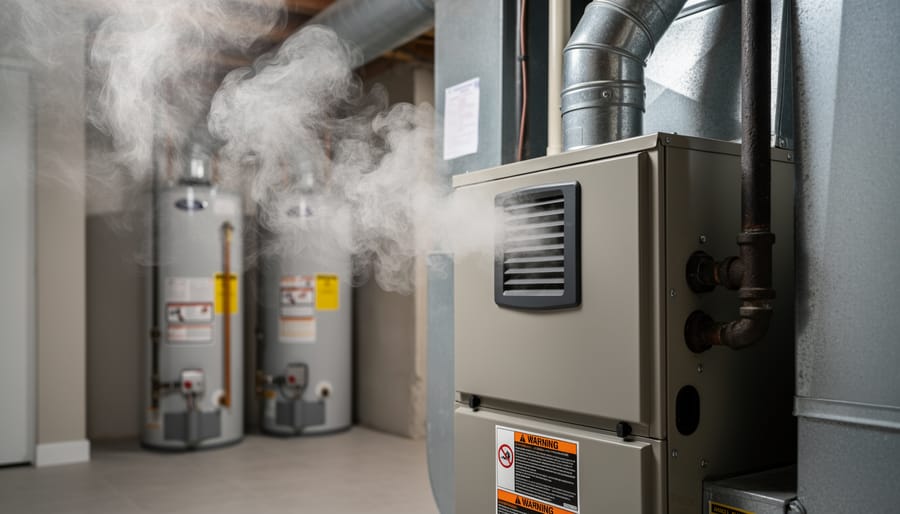
The most frightening aspect of inadequate combustion air isn’t what you can see—it’s what remains invisible until it’s too late. When your fireplace doesn’t receive proper ventilation, dangerous gases can silently accumulate in your living space, creating serious health risks for your family.
Carbon monoxide poses the greatest threat. This odorless, colorless gas results from incomplete combustion and can cause symptoms ranging from headaches and dizziness to unconsciousness or worse. Without proper combustion air, your fireplace essentially competes with your home’s HVAC system, creating negative pressure that can pull exhaust gases back down the chimney—a phenomenon called backdrafting.
Think of your home as needing to breathe. When modern, tightly sealed homes lack adequate makeup air for combustion appliances, they create a vacuum effect. Your range hood, bathroom fans, and dryer all exhaust air outside. If fresh air can’t replace what’s leaving, your fireplace’s exhaust takes the path of least resistance—right back into your living room.
This is why carbon monoxide detectors aren’t optional—they’re essential lifesaving devices. Install them on every level of your home, especially near sleeping areas. Consider these detectors as important as smoke alarms, because while eco-friendly heating solutions bring wonderful ambiance to your space, they require respect for proper ventilation principles to keep your family safe and comfortable.
Solutions: How to Provide Proper Combustion Air
Direct Vent Systems: The Gold Standard
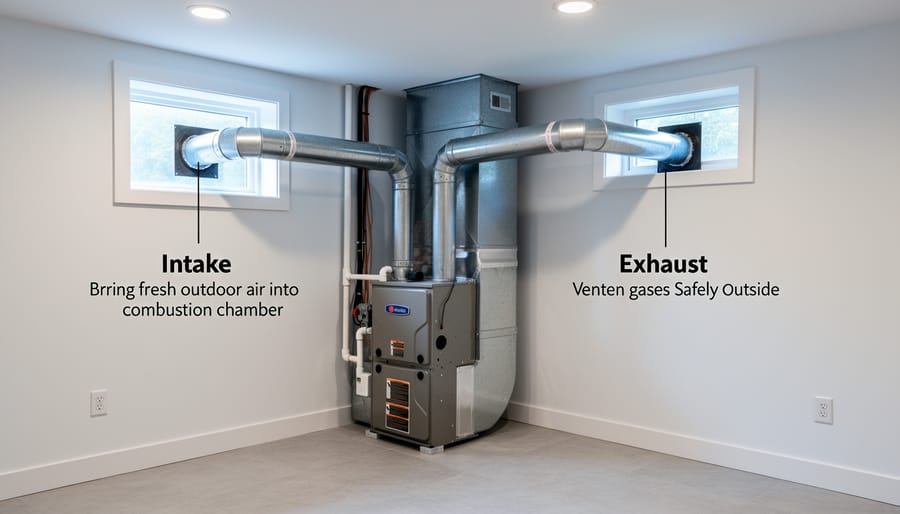
If you’re looking for the most reliable and efficient option for combustion air, direct-vent systems truly represent the gold standard in fireplace technology. These innovative systems bring outdoor air directly into the fireplace through a dedicated pipe that runs through your exterior wall, creating a completely sealed combustion environment that keeps your indoor air quality pristine.
Here’s what makes direct-vent systems so impressive: they use a clever coaxial design, meaning one pipe sits inside another. The outer pipe draws in fresh combustion air from outside, while the inner pipe exhausts the combustion byproducts back out. This sealed system means nothing from the burning process ever enters your living space, making it incredibly safe for your family and meeting safety compliance standards with ease.
From an efficiency standpoint, direct-vent fireplaces shine because they’re not competing with your home’s heated air. Traditional fireplaces often pull warm air from your room to feed the flames, but direct-vent systems sidestep this problem entirely. You’ll enjoy consistent heat output without drafts or air pressure issues. They’re also incredibly flexible for installation since they don’t require a traditional chimney, and they represent an eco-friendly heating solution that maximizes every BTU while minimizing environmental impact.
Adding Combustion Air Vents to Existing Fireplaces
If you’re dealing with an existing fireplace that’s struggling to get enough combustion air, don’t worry—there are several effective retrofit solutions that can transform your fireplace’s performance without major renovations. Let’s explore your options for bringing fresh air to your hearth.
The most straightforward approach is installing dedicated air intake ducts that connect directly to your fireplace. These ducts draw outside air into the firebox, creating a closed combustion system that doesn’t compete with your home’s heated air. If your fireplace sits on an exterior wall, a contractor can often route a duct horizontally through the wall with minimal disruption. For interior fireplaces, vertical ducts through the floor or basement work beautifully.
Floor vents offer another practical solution, especially if your fireplace has accessible space underneath. These grilles allow air to flow from lower levels or crawl spaces directly to the combustion area. Position floor vents within three feet of the fireplace opening for optimal effectiveness, and size them according to your fireplace dimensions—typically one square inch of vent area for every 1,000 BTUs of heat output.
Wall vents provide excellent flexibility when floor options aren’t feasible. Install these at least 6 inches from the fireplace opening and as close to floor level as possible, since cooler air naturally settles low. Many homeowners appreciate that modern vent covers come in attractive designs that complement their décor.
When planning your retrofit, consider that larger fireplaces need more combustion air—a good rule is providing at least 50 square inches of free vent area for standard fireplaces. Always consult local building codes and consider hiring a certified professional to ensure proper sizing and placement for safe, eco-friendly operation.
Ventilation Strategies for Room Air Sources
When your fireplace draws air directly from the room, understanding your space becomes essential for both performance and safety. Think of it like this: your fireplace needs to breathe just like you do, and it’s competing with you for the same air supply.
Start by calculating your room volume—multiply length by width by height in feet. As a general rule, you’ll need about 50 cubic feet of space per 1,000 BTUs your fireplace produces. So for a typical 40,000 BTU gas fireplace, that’s roughly 2,000 cubic feet, or a room about 20 by 20 feet with standard 8-foot ceilings.
Here’s where modern homes present a challenge: they’re built tight for energy efficiency, which is wonderful for your heating bills but can starve your fireplace of air. If you notice your fireplace smoking back into the room or struggling to stay lit, insufficient combustion air is often the culprit.
The solution is providing makeup air—a dedicated source of fresh air to replace what the fireplace consumes. This might mean cracking a window slightly when using your fireplace, though that’s not ideal for comfort. Better options include installing passive air vents near the fireplace or adding a ducted outdoor air supply.
Pay special attention if you have exhaust fans, range hoods, or whole-house ventilation systems. When these run simultaneously with your fireplace, they create negative pressure that can pull dangerous combustion gases backward into your living space—a serious safety concern requiring professional evaluation.
Working With Your HVAC System and Exhaust Fans
The Backdrafting Risk: When Kitchen Fans Fight Your Fireplace
Picture this: you’re enjoying a cozy evening by the fireplace when someone turns on the range hood to make popcorn. Suddenly, smoke starts billowing into your living room instead of going up the chimney. What just happened? You’ve experienced backdrafting, one of the sneakiest safety issues in modern homes.
Your home operates like a breathing system, and when powerful exhaust fans kick in, they can create a tug-of-war for air. Range hoods are particularly notorious culprits, especially those high-powered models that can move 600 cubic feet per minute or more. When they’re running, they’re essentially sucking air out of your home faster than it can naturally replace itself. The result? Your home develops negative pressure and starts desperately searching for air anywhere it can find it, including pulling combustion gases and smoke back down your chimney.
But kitchen fans aren’t the only troublemakers. Bathroom exhaust fans, whole-house ventilation systems, and even your HVAC system can gang up against your fireplace. The more airtight and energy-efficient your home is (which is great for your heating bills!), the more pronounced this problem becomes. Modern homes simply don’t have the natural air leaks that older homes relied on.
This isn’t just about smoke in your eyes. Backdrafting can pull dangerous carbon monoxide into your living space, turning your cozy fireplace into a genuine safety hazard. That’s why understanding how your home’s various systems interact isn’t just technical knowledge, it’s essential for keeping your family safe while enjoying your fireplace as the lifestyle centerpiece it deserves to be.
Makeup Air Solutions for Multi-System Homes
If your home features multiple fireplaces, a wood stove, water heater, furnace, and powerful kitchen or bathroom exhaust fans, you’re creating a complex dance of air pressure that needs careful choreography. These systems all compete for the same indoor air, and without proper coordination, you might experience backdrafting or poor performance across your heating appliances.
Think of makeup air as a peace treaty between your exhaust systems and combustion appliances. A makeup air system automatically introduces fresh outdoor air when your exhaust fans kick on, preventing negative pressure that could pull dangerous gases back into your living spaces. This is especially important if you’ve upgraded to energy-efficient windows and doors, which make your home more airtight but reduce natural air infiltration.
Modern solutions include dedicated makeup air units that can be integrated with your HVAC system or standalone units that activate when pressure drops. These systems often include filtration and tempering features, so you’re not just dumping cold winter air into your kitchen. For homes with multiple fireplaces and combustion appliances, working with an HVAC professional to design a whole-house ventilation strategy ensures every system gets the air it needs while maintaining comfort and safety throughout your home.
Installation and Inspection: Getting It Right
DIY vs. Professional Installation: Making the Right Choice
Understanding when to call in a professional versus tackling combustion air venting yourself can save you money, time, and potentially prevent dangerous situations. Here’s the honest truth: while some basic maintenance tasks are DIY-friendly, most combustion air installations require professional expertise.
You can handle simple tasks like cleaning existing vents, replacing damaged vent covers, or ensuring exterior vents remain unobstructed. These straightforward maintenance items keep your system running safely without requiring special tools or permits.
However, cutting new openings in your home’s walls, installing ductwork, modifying your fireplace system, or making any changes that affect combustion air flow should always be left to certified professionals. Building codes mandate permits for these alterations, and inspectors will verify the work meets fireplace safety standards. More importantly, improper combustion air installation can lead to carbon monoxide buildup, a silent and deadly threat to your household.
Licensed HVAC technicians and fireplace installers understand local codes, proper sizing calculations, and manufacturer specifications. They carry insurance protecting you if something goes wrong. When it comes to your family’s safety and your home’s efficient, eco-friendly heating performance, professional installation isn’t just recommended—it’s essential. Consider it an investment in peace of mind and long-term comfort.
Inspection and Maintenance: Keeping Your System Safe
Just like your fireplace brings warmth to your home, proper maintenance keeps your combustion air system running safely and efficiently. Think of inspections as a seasonal tune-up for your heating system’s lifeline.
Schedule professional inspections annually, ideally before heating season begins. A qualified technician should examine vent terminations for blockages like bird nests, leaves, or ice buildup that can restrict airflow. They’ll also check for corrosion, loose connections, and proper sealing around vent pipes.
Between professional visits, you can do simple monthly checks yourself. Walk outside and visually inspect external vent caps for obstructions. Inside, listen for unusual sounds near your fireplace and watch for soot buildup or condensation around vents, which signal ventilation problems.
Clean external vent screens quarterly to prevent lint and debris accumulation. Never paint over vent openings or block them with furniture, storage, or landscaping. Remember that meeting proper installation requirements is just the beginning; ongoing care ensures your system continues protecting your home and family.
If you notice persistent odors, difficulty starting fires, or excessive smoke, contact a professional immediately. Your combustion air system works quietly behind the scenes, but regular attention keeps it performing its essential safety role while supporting your eco-friendly heating goals.
Getting your combustion air venting right isn’t just about checking boxes on a code compliance form. It’s about creating the fireplace experience you’ve always wanted—one where flames dance beautifully, warmth radiates throughout your room, and you can relax knowing your family is completely safe. When your fireplace has the proper air supply, everything simply works better. You’ll notice cleaner burning, less soot buildup, and that satisfying crackle without the worry of lingering smoke or harmful gases backing up into your living space.
Think of proper combustion air venting as the foundation of your fireplace enjoyment. Just as you wouldn’t compromise on quality fuel or maintenance, you shouldn’t overlook this critical element that keeps your entire system running efficiently and safely. The peace of mind that comes from knowing your setup meets all requirements and protects your home is invaluable.
Now’s the perfect time to take a closer look at your own fireplace setup. Walk around and check those vents, observe how your fireplace performs, and notice if anything seems off. If you have any doubts or questions about whether your system is properly ventilated, don’t hesitate to reach out to a certified professional for an inspection. A qualified technician can assess your specific situation, ensure you’re meeting local code requirements, and recommend solutions tailored to your home. Your family’s safety and your enjoyment of cozy, eco-friendly warmth are worth that investment.