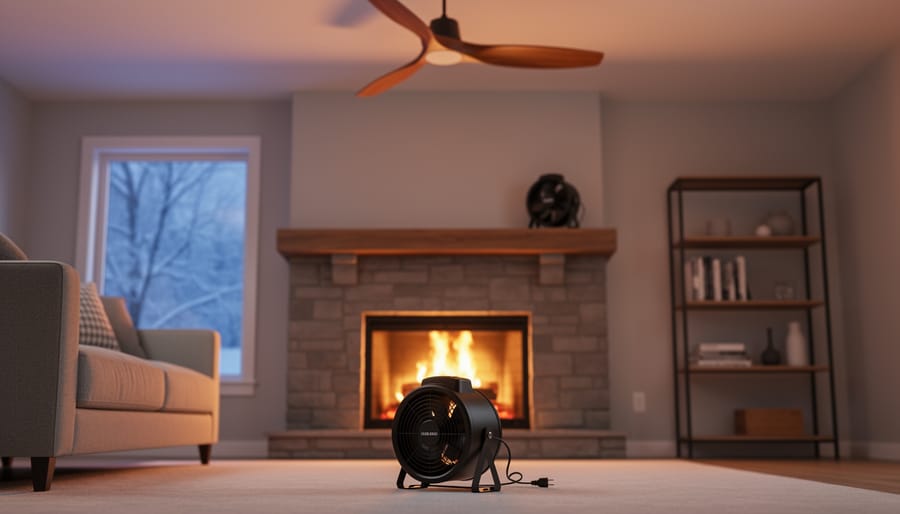


Position a fireplace blower fan directly in front of your fireplace opening to push warm air into your living space, instantly transforming wasted heat rising up the chimney into comfortable warmth that circulates throughout your room. These affordable fans, starting around $30, can increase your fireplace’s heating efficiency by up to 50 percent without any permanent installation.
Install heat-powered stove fans on your fireplace mantel or hearth that require zero electricity—they automatically spin faster as temperatures rise, using thermoelectric technology to distribute heat silently and sustainably. This eco-friendly solution works beautifully with wood-burning fireplaces and creates gentle air circulation that reaches every corner of your room.
Mount fireplace blower inserts directly into your existing fireplace if you have a built-in unit, as these powerful systems channel heated air through vents using integrated fans that can warm spaces up to 1,400 square feet. Professional installation takes just a few hours and dramatically improves heat output while maintaining your fireplace’s aesthetic appeal.
Combine ceiling fans running in reverse (clockwise) with any fireplace fan system to push warm air down from the ceiling where it naturally accumulates, creating a complete heat circulation strategy that maximizes comfort and reduces your reliance on central heating. This simple adjustment helps your fireplace become a genuine heating source rather than just an attractive focal point, aligning perfectly with energy-conscious home heating goals while enhancing the cozy ambiance you love.
The Science Behind Your Cold Living Room
Ever wonder why you’re roasting marshmallows by the hearth while your family shivers on the couch just ten feet away? There’s actually fascinating physics at play in your living room, and understanding it is the first step toward solving your cold room problem.
Here’s what’s happening: when your fireplace burns, it creates intense heat that behaves in ways that work against your comfort. The wood fire temperature can reach over 1,100 degrees Fahrenheit, yet somehow your feet stay cold while the ceiling feels like summer. This phenomenon is called heat stratification, and it’s the invisible force keeping your living room chilly.
Think of heat like helium balloons at a party – it rises and wants to stay up. As your fire heats the air directly in front of it, that warm air immediately shoots upward, collecting at your ceiling while denser cold air remains at floor level. You’ve probably noticed this if you’ve ever stood on a stepladder near your fireplace – it’s noticeably warmer up there.
Adding to this challenge is the chimney draft, which acts like a vacuum cleaner for your warmth. Your chimney needs to pull air upward to function safely and draw smoke out of your home, but it doesn’t discriminate. Along with the smoke, it’s constantly pulling your precious heated air straight outside. In fact, a fireplace can actually remove more heat from your home than it produces if the draft is particularly strong.
Meanwhile, convection currents create a frustrating circulation pattern. Cold air rushes toward the fireplace along the floor to replace the rising hot air, creating a perpetual loop that leaves your ankles frozen. If you’ve tried measuring fireplace temperature at different heights, you’ve witnessed this dramatic difference firsthand.
The good news? Understanding these natural forces means you can work with them rather than against them, and that’s exactly where heat fans become your fireplace’s best friend.
What Heat Distribution Fans Actually Do
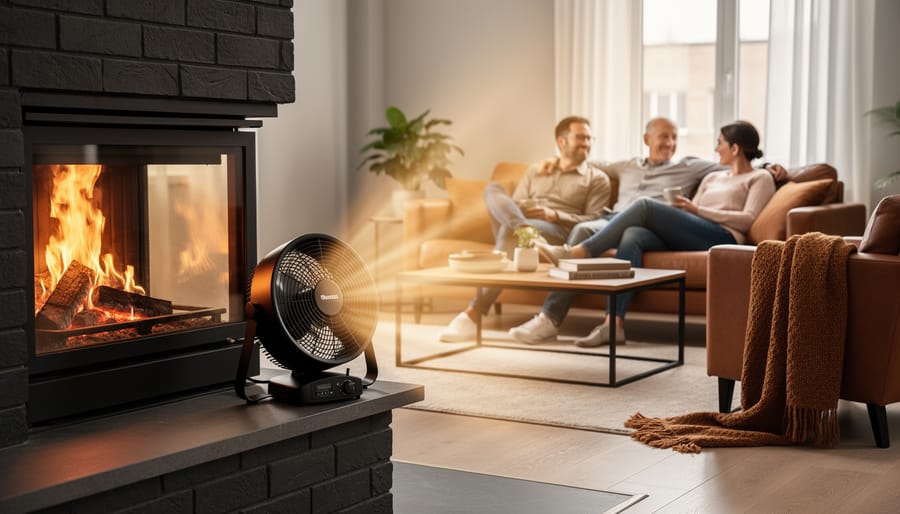
Think of a heat distribution fan as your fireplace’s productivity coach—it transforms all that beautiful warmth from a cozy corner indulgence into an efficient whole-room heating solution. Instead of letting precious heat gather at the ceiling or hover exclusively around your hearth, these fans actively move the air where you need it most.
The magic happens through strategic air circulation. When your fireplace burns, it creates heated air that naturally wants to rise and pool near the ceiling. A heat fan interrupts this lazy pattern by pulling in cool air from the room, directing it across the hot surfaces of your fireplace or insert, and then pushing the newly warmed air back into your living space. This creates a gentle convection loop that keeps working as long as your fire burns.
The mechanics are refreshingly straightforward. Most fireplace fans use small, quiet motors that activate automatically when temperatures reach certain thresholds—typically around 110 to 130 degrees Fahrenheit. As the air passes through or around heated components, it absorbs warmth and carries it forward with surprising efficiency. Rather than a focused blast from one direction, quality heat fans create layered airflow that gradually fills your room with consistent warmth.
What makes this particularly appealing from an eco-friendly perspective is the multiplication effect. You’re essentially getting more heating value from the same amount of firewood or gas you’d burn anyway. Many homeowners discover they can keep their central heating dialed down several degrees once their fireplace fan kicks in, reducing overall energy consumption while maintaining that comfortable, lived-in warmth throughout their home. The result transforms your fireplace from mere ambiance into a legitimate heating asset.
Types of Fireplace Heat Fans That Actually Work
Fireplace Blowers (Built-In Systems)
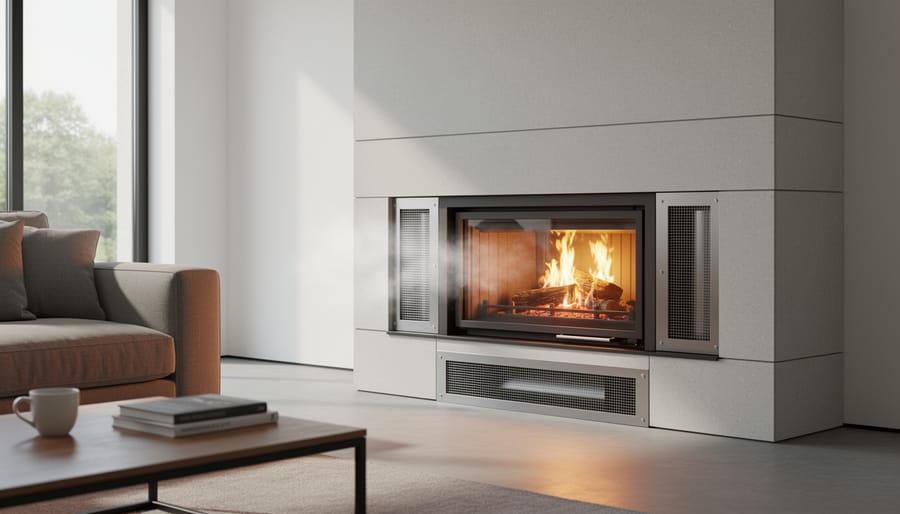
If you’re planning a new fireplace installation or undertaking a major renovation, built-in blower systems offer the most seamless and efficient solution for transforming your fireplace into a powerful heat source. These integrated systems are designed to be installed directly within or behind your fireplace during construction, creating a professional, nearly invisible heating solution that maximizes both performance and aesthetics.
Built-in blowers work by drawing cool air from your room through intake vents, warming it as it passes through chambers around the firebox, and then pushing the heated air back into your living space through strategically placed outlets. This continuous circulation process can increase your fireplace’s heating efficiency by up to 50 percent compared to fireplaces without fans, making them an excellent eco-friendly heating solution that reduces reliance on your primary heating system.
The main advantage of these systems is their superior performance and quiet operation. Since they’re designed as part of the fireplace structure, they can accommodate larger, more powerful fans without compromising your home’s visual appeal. The installation does require professional expertise and coordination with your fireplace builder, but the long-term benefits include better heat distribution, lower energy costs, and increased home value.
When planning your installation, discuss variable-speed options with your contractor, as these allow you to adjust airflow based on your comfort needs. Also consider thermostatic controls that automatically activate the blower once your firebox reaches optimal temperature, adding convenience to your fireplace lifestyle. While the upfront investment is higher than portable alternatives, built-in systems deliver unmatched reliability and efficiency for decades of comfortable warmth.
Stove-Top Eco Fans
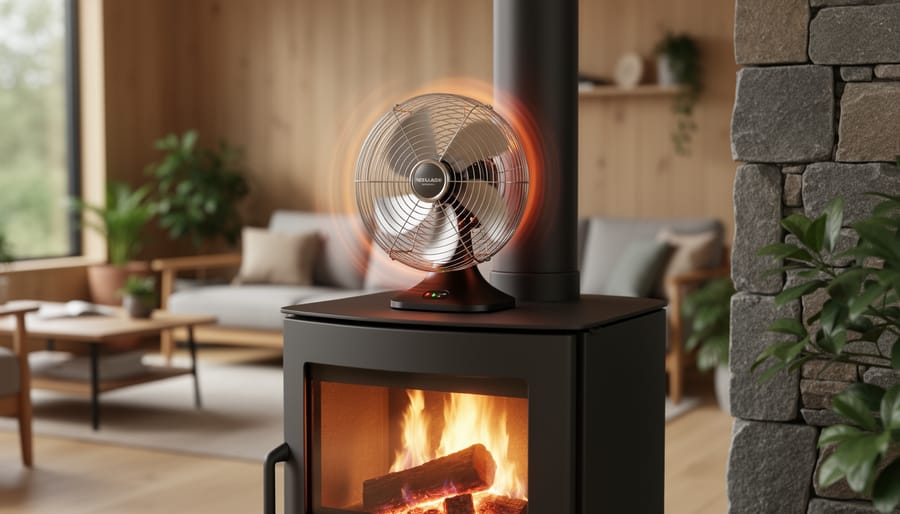
If you’re looking for an elegant solution that operates completely off-grid, stove-top eco fans might be exactly what you need. These clever devices harness the heat from your fireplace or wood stove to generate their own power, requiring absolutely no batteries or electrical connection. It’s a beautiful example of sustainable home heating that aligns perfectly with an eco-conscious lifestyle.
The magic behind these fans lies in thermoelectric technology. A thermoelectric module sits at the base of the fan, creating electricity from the temperature difference between the hot stove surface and the cooler air above. As your fire burns, the heat rises through the fan’s base while cooling fins at the top dissipate excess warmth. This temperature gradient generates enough power to spin the blades, typically reaching speeds of 800-1200 RPM. The hotter your stove surface, the faster the fan spins, automatically adjusting to your fire’s intensity.
Placement is crucial for optimal performance. Position your eco fan on a flat surface toward the side or back of your stove top, ensuring the base makes solid contact with the metal surface. Avoid placing it directly over the firebox where extreme temperatures could damage the thermoelectric module. Most models operate best between 150-650 degrees Fahrenheit on the surface temperature.
These fans represent a smart investment for homeowners who value both functionality and sustainability. They’re whisper-quiet, maintenance-free, and can distribute heat across your room for years without any operating costs. While they won’t match the raw power of electric blowers, their silent operation and zero energy consumption make them an attractive choice for environmentally minded fireplace enthusiasts.
External Circulation Fans
External circulation fans offer the simplest entry point into fireplace heat distribution without any installation requirements. These standalone units plug into a standard outlet and position anywhere near your fireplace to capture rising warm air and redirect it throughout your room.
Think of these as your fireplace’s helping hand, working independently to move heat where you need it most. They’re particularly appealing if you’re renting your home or want to test the waters before committing to more permanent solutions. Most models range from $30 to $150, making them the most budget-friendly option available.
The beauty of external fans lies in their flexibility. You can experiment with placement, moving them closer or farther from the hearth to find the sweet spot where they capture maximum warmth without overheating. Many homeowners position them at an angle to push heated air toward frequently used seating areas or toward hallways leading to adjacent rooms.
While these fans won’t match the efficiency of built-in systems, they offer immediate results without modifying your fireplace structure. They’re also portable, meaning you can store them away during warmer months or relocate them to other rooms when needed. For those embracing eco-friendly heating solutions, this approach maximizes your existing fireplace’s output without additional energy-intensive modifications, making every log burn more effectively throughout your living space.
Whole-House Fan Integration
For those seeking a comprehensive heating solution, integrating your fireplace heat distribution with your home’s existing systems offers the most efficient approach. This method leverages your HVAC system’s blower fan or strategically placed ceiling fans throughout multiple rooms to create a whole-home heating network.
The beauty of this approach lies in its ability to transform your fireplace from a single-room amenity into a primary heat source. By running your HVAC fan on circulation mode while your fireplace operates, you draw warm air through return vents and distribute it evenly across your entire floor plan. Many modern thermostats allow you to run the fan independently without triggering heating or cooling cycles, making this an energy-smart option.
For optimal results, consider pairing this system with smart temperature sensors placed throughout your home. These sensors help you monitor temperature variations and adjust fan speeds accordingly, ensuring consistent comfort while minimizing energy waste. This eco-friendly solution maximizes your fireplace’s heating potential while reducing reliance on traditional heating systems, making it both environmentally responsible and cost-effective for dedicated homeowners.
Choosing the Right Heat Fan for Your Fireplace
Finding the perfect heat fan for your fireplace doesn’t have to feel overwhelming. Think of it as matching the right tool to your specific situation, and you’ll be enjoying a warmer, more comfortable home in no time.
Start by considering your fireplace type. If you have a wood-burning fireplace, you’ll want a heat-powered fan that sits directly on the stove or a standalone blower that can handle higher temperatures and occasional ash exposure. These fans are built tough and designed for the robust heat output of wood fires. Gas fireplace owners have more flexibility, as their consistent, controlled heat works beautifully with both integrated blower systems and external fans. For those with bioethanol or decorative fireplaces, a simple room circulation fan positioned nearby can work wonders, as you’re primarily moving warm air rather than intense heat.
Room size matters significantly in your decision. A cozy 200-square-foot bedroom might only need a compact heat-powered fan or a small blower system, while a sprawling open-concept living area of 500 square feet or more will benefit from a more powerful electric blower or multiple circulation fans working together. Consider the layout too. Rooms with high ceilings or multiple doorways often need fans with stronger airflow to overcome the natural tendency of heat to rise and escape.
Your budget plays a practical role as well. Heat-powered fans typically range from 50 to 150 dollars and require no electricity, making them wonderfully eco-friendly and cost-effective over time. Electric blower kits run between 100 and 300 dollars but deliver more powerful, controllable airflow. For those wanting the ultimate in comfort and efficiency, programmable smart fans start around 200 dollars and give you precise control over your heating environment.
Finally, think about your heating goals. Are you trying to reduce your central heating bills and embrace a more sustainable lifestyle? A quality fan that effectively distributes fireplace heat can genuinely lower your energy consumption. Looking to make one room significantly warmer? Focus on higher CFM ratings and direct airflow patterns. Remember, the best heat fan is one that fits seamlessly into your home’s heating strategy while respecting both your comfort needs and environmental values.
Installation Tips That Make the Difference
Getting your heat fan installed correctly makes all the difference between a cozy room and wasted potential. Let’s walk through the essentials to ensure your investment pays off in comfort and efficiency.
Start by choosing the right location. For blower inserts, position them where air can circulate freely from the fireplace opening into your living space. Avoid placing furniture or drapes within three feet of the unit, as blocked airflow defeats the purpose and creates safety hazards. If you’re installing a hearth-mounted fan, center it about two to three feet in front of the fireplace for optimal heat capture and distribution.
Safety clearances aren’t just suggestions—they’re essential for protecting your home and family. Most manufacturers specify minimum distances from combustible materials, typically 12 to 18 inches. Never compromise on these measurements. Consider investing in fireplace safety monitoring equipment to track temperatures and ensure everything operates within safe parameters.
For DIY enthusiasts, thermoelectric and battery-powered fans offer straightforward installation that requires no special tools or expertise. Simply position the fan according to manufacturer guidelines, and you’re set. However, hardwired blower systems demand electrical work that most building codes require a licensed professional to complete. This isn’t the time to cut corners—improper electrical installation poses serious fire risks.
Here’s an optimization tip that many miss: angle adjustable fans slightly upward rather than straight ahead. Heat naturally rises, so directing airflow at a gentle angle helps it spread throughout the room more effectively. Test different positions during your first few fires to find the sweet spot for your space.
Remember, even the best heat fan won’t compensate for a poorly maintained fireplace. Clean your chimney regularly and ensure proper damper operation. When your fireplace functions efficiently and your fan placement maximizes circulation, you’ll transform that beautiful focal point into a genuine heating asset that warms both your home and your lifestyle.
Maximizing Your Heat Fan’s Performance
Getting your heat fan to work at peak efficiency transforms your fireplace from a cozy focal point into a genuine heating powerhouse. Start by positioning your fan at the optimal distance from the fireplace—typically 12 to 18 inches away—where it can capture rising heat without risking damage from excessive temperatures. You can verify you’ve found the sweet spot using an infrared thermometer to measure surface temperatures and ensure your fan operates within its recommended range.
Don’t overlook your ceiling fans when maximizing heat distribution. During winter months, reverse them to spin clockwise at low speed. This gentle updraft pushes warm air that’s collected near the ceiling back down into your living space, working in harmony with your fireplace fan to create an efficient circulation system throughout the room.
Room layout plays a surprisingly significant role in heat flow. Remove unnecessary obstacles between your fireplace and seating areas, as furniture can block warm air from circulating freely. Consider rearranging heavy pieces like bookcases or large sofas that might be creating thermal barriers.
Seasonal maintenance keeps your fan performing efficiently year after year. Before each heating season, clean dust and debris from fan blades and vents, as buildup forces the motor to work harder and reduces airflow. Check electrical connections for corded models, and replace batteries in thermoelectric fans if applicable. Lubricate moving parts according to manufacturer guidelines to ensure whisper-quiet operation.
Finally, remember that your heat fan works best when your fireplace operates efficiently too. Keep your chimney clean, use properly seasoned firewood, and maintain adequate airflow to your fire. This holistic approach to fireplace heating maximizes both comfort and energy efficiency, making your home warmer while reducing your environmental footprint.
The Eco-Friendly Heating Advantage
When you choose to enhance your fireplace with a heat fan, you’re not just making your home more comfortable—you’re making an environmentally conscious decision that benefits both your wallet and the planet.
Here’s the beautiful thing about heat fans: they transform your fireplace from a cozy focal point into an efficient heating system without requiring any additional fuel consumption. By capturing and redistributing heat that would otherwise rise straight up your chimney, these simple devices maximize every BTU your fire produces. This means you can achieve the same level of warmth throughout your space while burning less wood, which translates directly to reduced emissions and a smaller carbon footprint.
The ripple effect of better heat distribution is where the real environmental advantage shines. When your fireplace effectively warms multiple rooms instead of just one spot, you can lower your thermostat by several degrees. This reduced dependency on your central heating system—whether it runs on natural gas, oil, or electricity—means decreased energy consumption across your entire home. Many homeowners report turning down their thermostats by 3-5 degrees when using a heat fan with their fireplace, which can reduce overall heating costs by 10-15%.
Think of it as creating sustainable warmth that works smarter, not harder. You’re embracing renewable heating from wood while eliminating waste heat, resulting in a heating solution that honors both comfort and conservation. It’s the kind of practical eco-friendly choice that makes sense for modern living.
Your fireplace doesn’t have to remain just a stunning centerpiece that sends most of its heat up the chimney. With the right heat distribution fan, you can transform it into the efficient, practical heating solution you’ve always wanted. The investment is modest, especially when you consider the comfort improvements and potential energy savings that come from actually using the heat your fireplace produces instead of warming the winter sky.
Whether you choose a simple blower insert, elegant fireplace grate fan, or whole-room circulation system, you’re making a smart choice for both your home and the environment. By maximizing the heat from each fire, you’ll burn less wood, reduce your reliance on conventional heating, and create a cozier living space where family and friends naturally gather. The technology is proven, installation options fit every skill level, and the results speak for themselves.
Take that next step toward enjoying the full potential of your fireplace. Your future self, wrapped in warmth on a cold winter evening while knowing you’re heating efficiently and sustainably, will thank you for it.