

Standing in front of the firewood rack, you’re faced with a choice that affects more than just your wallet—it impacts how quickly you’ll enjoy crackling flames tonight, how much heat you’ll actually get, and whether you’ll spend your evening coaxing stubborn logs or relaxing by a roaring fire.
The difference between kiln dried and seasoned firewood comes down to moisture content and time. Kiln dried wood is heated in controlled chambers to rapidly reduce moisture to 10-20%, making it ready to burn immediately with maximum heat output and minimal smoke. Seasoned firewood achieves similar results naturally over 6-18 months of outdoor drying, typically reaching 20-25% moisture content when properly stored.
Your decision hinges on three practical factors: how soon you need the wood, your budget flexibility, and your storage capabilities. If you’re lighting fires this weekend or lack covered storage space, kiln dried delivers instant gratification and consistent performance. If you plan ahead and have room to stack cordwood properly, seasoned firewood offers excellent value while still providing that authentic fireplace experience you’re after.
Both options burn cleaner than green wood and support eco-friendly heating when sourced responsibly. Understanding what you’re actually getting for your money—and what that means for your specific situation—transforms this from a confusing purchase into a confident choice that keeps your home warm all season long.
What Makes Firewood Actually Burn Well
Understanding what makes firewood burn efficiently starts with one crucial factor: moisture content. Think of wet wood like trying to boil water while simultaneously heating your home—you’re wasting energy on evaporating moisture instead of generating warmth. This isn’t just about convenience; it’s about getting the most from every log you burn.
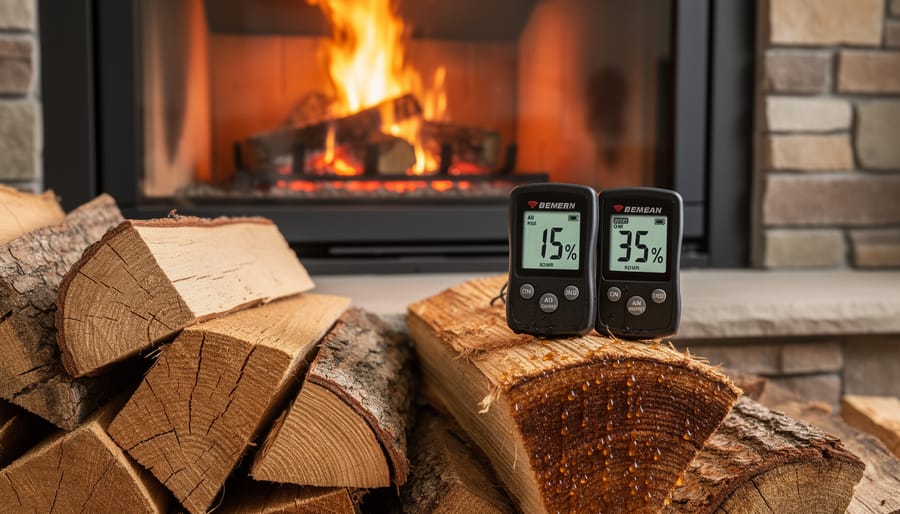
The sweet spot for firewood moisture sits between 15-20%. At this level, wood burns cleanly and efficiently, producing maximum heat with minimal frustration. When moisture exceeds 20%, you’ll notice the difference immediately. Your fire struggles to ignite, produces excessive smoke, and generates far less heat. In fact, burning wood with 30% moisture content can reduce your heat output by nearly half compared to properly dried wood at 18%.
Here’s why moisture matters so much: water doesn’t burn. Every bit of moisture in your firewood must first evaporate before the wood can combust. This process consumes energy that should be warming your living space. Beyond lost heat, wet wood creates dense smoke and significantly increases creosote buildup in your chimney—a serious safety concern that can lead to chimney fires.
Creosote forms when smoke cools and condenses on chimney walls. Wet wood produces cooler, smokier fires that accelerate this dangerous buildup. Drier wood burns hotter and cleaner, sending most combustion byproducts up and out rather than coating your flue. This principle applies whether you’re choosing quality firewood or burning recycled wood safely.
The takeaway? Lower moisture content means better fires, cleaner burns, and a safer, more efficient home heating experience.
Seasoned Firewood: The Traditional Approach
How Long Does Seasoning Actually Take?
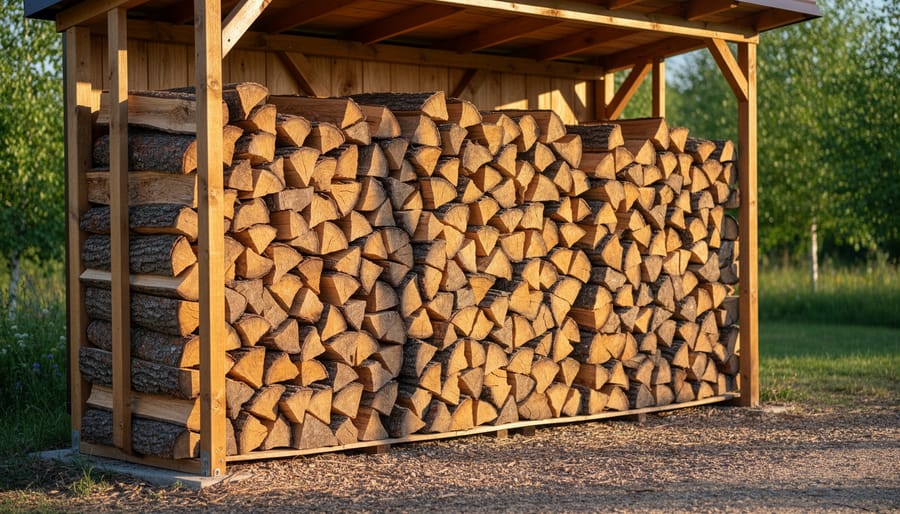
Here’s the reality about seasoning timelines that might surprise you: truly seasoned firewood takes considerably longer than many people realize. Most hardwoods like oak, maple, and ash need 12 to 24 months to season properly, while softer woods like pine can be ready in 6 to 12 months. The difference comes down to density and moisture content.
Several factors influence how quickly your firewood dries. Wood split into smaller pieces seasons faster than large rounds because there’s more surface area exposed to air. Stacking methods matter too—a well-ventilated stack in a sunny, breezy location can cut drying time significantly compared to a pile shaded under dense trees. Climate plays a huge role as well; wood seasons much faster in dry, warm regions than in humid or cool areas.
Here’s where things get tricky: many commercially sold “seasoned” logs aren’t actually ready to burn efficiently. Some suppliers stack wood for just a few months and label it seasoned, even though it still contains 30% or more moisture. This happens because there’s no strict regulation on the term “seasoned,” and rushing inventory to market is more profitable than waiting the full drying period.
When you’re investing in firewood to create that perfect ambiance in your home, buying truly seasoned wood means asking vendors about their drying process and timeline. Better yet, use a moisture meter to verify before purchasing. Remember, patience with proper seasoning delivers better burns, less creosote buildup, and a more eco-friendly heating solution for your space.
The Real Moisture Content of Seasoned Wood
When you purchase seasoned firewood, you’re typically getting wood with a moisture content between 20-25%. While this is considerably better than freshly cut green wood (which sits around 50-60% moisture), it’s important to understand that seasoned doesn’t mean standardized.
The reality is that moisture levels in seasoned wood can vary significantly, even within the same cord. Several factors create this inconsistency. The species of wood matters—oak takes much longer to season than pine or ash. The size of the splits affects drying time, as does the initial moisture content when the wood was first cut. Climate plays a crucial role too; wood seasons faster in dry, sunny conditions than in humid or shaded environments.
Here’s where things get tricky for your cozy fires: how you store your seasoned wood after purchase dramatically impacts its actual moisture content. Stack it outdoors without proper cover, and it’ll absorb moisture from rain and humid air, potentially jumping back up to 30% or higher. Even well-seasoned wood stored in a damp garage or against a wet wall can reabsorb moisture over time.
This variability means seasoned firewood performance can be unpredictable. Some pieces might burn beautifully while others hiss and struggle, even from the same pile. It’s a natural product responding to natural conditions, which is part of its charm but also its challenge.
When Seasoned Firewood Works Best
Seasoned firewood remains a smart, budget-friendly choice for many homeowners. If you’re an occasional fireplace user who lights a fire a few times during the coldest months, traditional seasoned wood delivers perfectly adequate warmth and ambiance without the premium price tag of kiln-dried options. The cost difference becomes especially meaningful when you’re burning through smaller quantities throughout the season.
For those with the outdoor space and patience, processing your own firewood offers exceptional value. Cutting and stacking wood from your property or purchasing green logs transforms into a rewarding seasonal routine that costs significantly less per cord. The six to twelve month seasoning timeline works beautifully when you plan ahead, cutting this year’s supply for next winter’s fires.
Budget-conscious households appreciate that properly seasoned wood performs reliably once it reaches that optimal moisture content below twenty percent. While it won’t ignite quite as quickly as kiln-dried alternatives, seasoned firewood still produces satisfying heat and that cozy crackling atmosphere you’re seeking, making it the practical everyday choice for regular use.
Kiln-Dried Firewood: The Modern Solution
The Kiln-Drying Process Explained
Kiln-drying transforms freshly cut wood into premium firewood through a carefully controlled industrial process that’s both fascinating and efficient. Unlike traditional seasoning that relies on Mother Nature’s timeline, commercial kilns use heated chambers to dramatically accelerate moisture removal.
The process begins with loading fresh-cut wood into large industrial kilns where temperatures typically range between 160°F and 240°F. These controlled heat levels are maintained for 24 to 72 hours depending on the wood species and starting moisture content. The sustained warmth forces water molecules to evaporate rapidly from deep within the wood fibers, achieving that ideal 10-15% moisture content in just days rather than the 6-18 months traditional seasoning requires.
What makes kiln-drying particularly attractive for homeowners seeking reliable firewood is the quality control aspect. The high temperatures don’t just remove moisture—they also eliminate insects, larvae, and mold spores that might otherwise hitch a ride into your home. Each batch can be tested with moisture meters to ensure consistency, giving you predictable performance every time you light your fire.
This precision comes at a higher price point, but you’re essentially paying for convenience and guaranteed readiness. No guessing games about whether your wood is dry enough, no storage concerns for months on end—just premium, ready-to-burn firewood that delivers immediate warmth and ambiance to your living space.
Guaranteed Low Moisture Content
When you’re investing in firewood to create those cozy evenings by the fire, consistency is everything. There’s nothing more frustrating than loading your fireplace with wood that promises a beautiful burn, only to find it hissing, smoking, and refusing to catch properly. This is where kiln-dried firewood truly shines.
The kiln-drying process eliminates guesswork entirely. By heating wood in a controlled chamber at temperatures between 160-240°F for several days, moisture content is reliably reduced to between 10-20%. Most quality kiln-dried suppliers guarantee this moisture level, and many even provide documentation proving it. This scientific approach means every piece of wood performs predictably, every single time.
Compare this to seasoned firewood, which relies on natural air-drying over months or years. While properly seasoned wood can reach similar moisture levels, there’s inherent variability. Environmental factors like humidity, rain exposure, and storage conditions all affect the final product. You might get excellent pieces one week and damp disappointments the next.
For your fireplace performance, this consistency translates to easier lighting, cleaner burning with less smoke, more heat output, and reduced creosote buildup in your chimney. You’re not just buying firewood; you’re investing in reliable warmth and peace of mind for your home’s comfort.
The Pest and Mold Advantage
One of kiln-dried firewood’s standout advantages is what happens during that intense heat treatment. When wood reaches temperatures between 160 and 240 degrees Fahrenheit, something remarkable occurs—any insects, larvae, eggs, and mold spores hiding in the wood simply can’t survive. This high-temperature process essentially sterilizes your firewood, making it genuinely safe to bring into your home.
If you’re storing wood indoors near your fireplace or in a basement, this matters more than you might think. Seasoned firewood, while dried naturally outdoors, can harbor unwanted hitchhikers like powder post beetles, carpenter ants, or mold that thrives in damp conditions. Bringing these guests into your cozy living space isn’t just unpleasant—it can pose real concerns for your home’s air quality and structural integrity.
For homeowners who value both the warmth and ambiance of their fireplace and the cleanliness of their indoor environment, kiln-dried wood offers genuine peace of mind. You’re not just choosing cleaner-burning fuel; you’re protecting your home from potential pest problems before they start.
Immediate Use: No Waiting Required
One of kiln dried firewood’s biggest advantages is its ready-to-burn convenience. The moment you bring it home, you can light that fire—no waiting, no planning ahead. This makes it ideal for those spontaneous evenings when you want to create instant warmth and ambiance without the hassle of preparation. If you’ve suddenly realized your seasoned wood supply has run out on a chilly weekend, kiln dried firewood saves the day. It’s perfect for busy homeowners who value their time and prefer the flexibility of purchasing firewood as needed rather than storing large quantities months in advance. This immediate availability transforms your fireplace into a truly on-demand lifestyle element.
Head-to-Head: Performance Where It Matters
Ignition Speed and Ease of Lighting
Nothing dampens the cozy fireside experience quite like struggling to get your fire started. This is where moisture content makes its biggest first impression. Kiln dried firewood lights remarkably fast, often catching flame with minimal kindling and a single match. The ultra-low moisture content means you’re not wasting precious energy evaporating water before combustion begins.
Seasoned firewood requires a bit more patience and preparation. You’ll typically need more kindling, better fire-building technique, and perhaps a few extra attempts to get things going. It’s not dramatically difficult, but on a cold evening when you’re eager for warmth, those extra minutes can feel longer than they are.
For homeowners new to wood burning or those who prefer convenience as part of their lifestyle, kiln dried wood eliminates much of the learning curve and frustration. Seasoned wood rewards those who enjoy the traditional craft of fire-building and don’t mind investing a little extra time in the ritual.
Heat Output and Burn Efficiency
Here’s where the real difference becomes clear in your day-to-day experience. Kiln dried firewood delivers significantly more heat to your home because it’s not wasting energy on evaporating water. With moisture content below 20%, nearly all the wood’s energy goes directly into warming your living space. Seasoned firewood, even when properly dried to around 20-25% moisture, still uses some of that precious energy to boil off remaining water instead of heating your room.
Think of it this way: burning wet wood is like trying to warm your hands over a pot of boiling water instead of a campfire. The BTU output is essentially the same for both types when completely dry, but kiln dried wood converts more of those BTUs into actual warmth you can feel. You’ll notice kiln dried logs ignite faster, burn hotter, and produce a more consistent flame throughout the evening.
The burn duration also differs noticeably. Kiln dried firewood typically burns slightly faster due to its lower density after moisture removal, meaning you might add logs a bit more frequently. However, many homeowners find this worthwhile since each piece delivers cleaner, more efficient heat that truly enhances your home’s cozy atmosphere without the frustration of struggling fires.
Smoke Production and Air Quality
The moisture content in your firewood directly affects how much smoke billows from your fireplace. Kiln dried firewood, with its remarkably low moisture level of 15-20%, produces significantly less smoke than seasoned wood, which typically retains 20-25% moisture. When wood burns efficiently, you’ll notice cleaner glass doors, less creosote buildup in your chimney, and fresher indoor air quality—important factors for your family’s comfort and health.
Less smoke means fewer particulates entering your living space and the surrounding environment. If you’re eco-conscious about your heating choices, drier wood reduces emissions and helps maintain better air quality both inside and outside your home. The cleaner burn also translates to less ash cleanup and reduced maintenance on your fireplace system.
For homeowners exploring ways to minimize their environmental footprint, choosing properly dried firewood represents a simple yet meaningful step. You might also consider researching sustainable fuel alternatives as complementary options for different occasions, giving you flexibility while maintaining your commitment to cleaner burning practices.
Creosote Buildup and Chimney Health
Moisture content plays a crucial role in your chimney’s long-term health and safety. When you burn wood with high moisture levels, it creates more smoke and combustion byproducts that cool rapidly in your chimney, forming sticky, tar-like creosote deposits. Kiln dried firewood, with its ultra-low moisture content (typically 12-15%), produces minimal creosote compared to seasoned wood (20-25% moisture). This difference directly impacts creosote buildup risks and chimney fire potential. Less creosote means fewer professional cleanings needed annually, translating to lower maintenance costs over time. For homeowners prioritizing both safety and budget, choosing drier wood is an eco-friendly investment that protects your chimney while keeping your family secure.
The Cost Reality: Is Kiln-Dried Worth the Premium?
Let’s talk dollars and sense—because choosing between kiln-dried and seasoned firewood isn’t just about performance, it’s about whether that premium price tag makes financial sense for your household.
Kiln-dried firewood typically costs 30-50% more than seasoned wood, and that sticker shock is real. You might pay $400-500 per cord for kiln-dried versus $250-350 for seasoned. That’s a substantial difference when you’re stocking up for winter. But here’s where the math gets interesting.
Seasoned wood comes with hidden costs that don’t appear on the invoice. First, there’s the storage factor—you need dry, covered space for at least 6-12 months before it’s truly ready to burn. If you’re renting storage or building a woodshed, add those costs to your calculation. Then there’s the moisture gamble. That “seasoned” wood might still be sitting at 25-30% moisture content, meaning you’re literally burning money as excess water evaporates instead of producing heat.
The chimney equation changes everything. Burning wet or inadequately seasoned wood creates more creosote buildup, requiring professional chimney cleaning twice yearly instead of annually. At $150-300 per cleaning, that’s an extra $200-400 annually—suddenly erasing much of your upfront savings.
For occasional users who burn 5-10 fires per season, seasoned wood probably makes economic sense. But if you’re heating regularly throughout winter, kiln-dried pays for itself through better heat output (you’ll use less wood), reduced chimney maintenance, and zero storage headaches. Similar to weighing wood pellets vs cordwood, the cheapest option upfront isn’t always the most economical long-term.
The break-even point typically hits around two cords annually. Above that usage level, kiln-dried becomes the smarter investment—delivering immediate warmth, peace of mind, and actually protecting your fireplace system rather than slowly damaging it.
Which One Should You Choose?
Choose Kiln-Dried If…
Kiln-dried firewood makes the most sense when you’re looking for immediate results without the wait. If you use your fireplace frequently throughout the colder months, you’ll appreciate the consistent burn quality and higher heat output that kiln-dried wood delivers every single time. It’s particularly ideal for those who prioritize convenience over cost savings—you can purchase it and burn it the same day without any preparation or planning ahead.
Living in an apartment or home with limited outdoor storage space? Kiln-dried firewood is your friend. Since it’s already dried to optimal moisture levels, you can store smaller quantities indoors without worrying about insects, mold, or excess moisture damaging your living space. New to wood burning? Starting with kiln-dried removes the guesswork about moisture content and burning readiness, helping you build confidence while enjoying cozy fires right away. Additionally, if eco-friendly heating matters to you, kiln-dried wood burns cleaner with less smoke and creosote buildup, reducing your environmental footprint and keeping your chimney healthier between cleanings.
Choose Seasoned If…
Seasoned firewood makes perfect sense if you’re working within a tighter budget and have space to store wood properly. The cost savings can be significant—sometimes 30-40% less than kiln dried options—making it an attractive choice when you’re heating regularly throughout the winter. If you enjoy hands-on projects and take pride in managing your home’s resources, seasoning your own firewood can be deeply satisfying work. This approach works especially well when you have access to free or inexpensive raw wood from tree removals, land clearing, or local suppliers. The key is planning ahead—start stacking your wood at least six months to a year before you need it, ensuring proper airflow and weather protection. With patience and adequate covered storage space, you’ll develop quality firewood that burns beautifully while keeping more money in your pocket for other home improvements.
The Hybrid Approach
Many savvy homeowners have discovered a practical middle ground that maximizes both performance and budget. The strategy is simple: use kiln dried wood for quick fires and special occasions when you need immediate, reliable heat, while relying on well-seasoned firewood for everyday burning. This approach lets you enjoy the convenience of kiln dried wood without the premium cost for every fire. Keep a smaller supply of kiln dried logs for those cold mornings or unexpected guests, and stack seasoned wood as your primary fuel source. Some folks even explore cleaner-burning fuel options alongside traditional wood for maximum flexibility in their heating routine.
At the end of the day, there’s no universally wrong choice between kiln dried and seasoned firewood—only what’s wrong for your particular situation. Both options have earned their place in the world of home heating, each offering distinct advantages depending on what matters most to you.
If convenience and peak performance are your priorities, kiln dried firewood delivers immediate results without the wait or storage challenges. It’s the perfect choice when you want guaranteed quality and don’t mind investing a bit more upfront. On the other hand, if you’re budget-conscious, have ample storage space, and enjoy planning ahead, properly seasoned firewood offers excellent value and satisfying results at a fraction of the cost.
The key is understanding what you’re getting with each option. Now that you know the differences in moisture content, burn efficiency, storage requirements, and cost implications, you’re empowered to make a decision that aligns with your lifestyle, budget, and heating needs. Consider your specific circumstances: How often do you use your fireplace? Do you have storage space? What’s your timeline?
Whichever path you choose, remember that a well-burning fire has brought warmth, comfort, and connection to homes for generations. There’s something deeply satisfying about watching flames dance on a cold evening, knowing you’ve made an informed choice that works perfectly for your home. Here’s to many cozy nights ahead.