

Understanding your home’s structural capacity determines whether your dream fireplace becomes reality or remains an impossible vision. Every floor, wall, and foundation has weight limits engineered into its design, and exceeding these limits creates dangerous situations that compromise your family’s safety and your home’s integrity.
Before you fall in love with that stunning stone fireplace or cast-iron wood stove, you need to know the numbers. A typical masonry fireplace weighs between 4,000 and 8,000 pounds, while a full stone chimney can add another 10,000 pounds or more. Your standard residential floor joist system was designed to support about 40 pounds per square foot for living spaces, far less than what many traditional hearth installations demand. This gap between what you want and what your home can handle is where structural loading knowledge becomes essential.
The good news? Structural challenges rarely mean abandoning your fireplace dreams entirely. Most loading issues have practical solutions, from reinforcing floor joists and adding support beams to choosing lighter alternative materials or relocating your installation to a ground-floor position. The key is identifying potential problems early in your planning phase, before you’ve committed to contractors or purchased equipment. This foresight saves thousands in remediation costs and prevents the heartbreak of discovering mid-project that your chosen fireplace simply won’t work in your selected location.
Making informed decisions about structural loading protects your investment, ensures compliance with building codes, and creates a safe, lasting addition to your home.
What Is Structural Loading and Why It Matters for Your Hearth
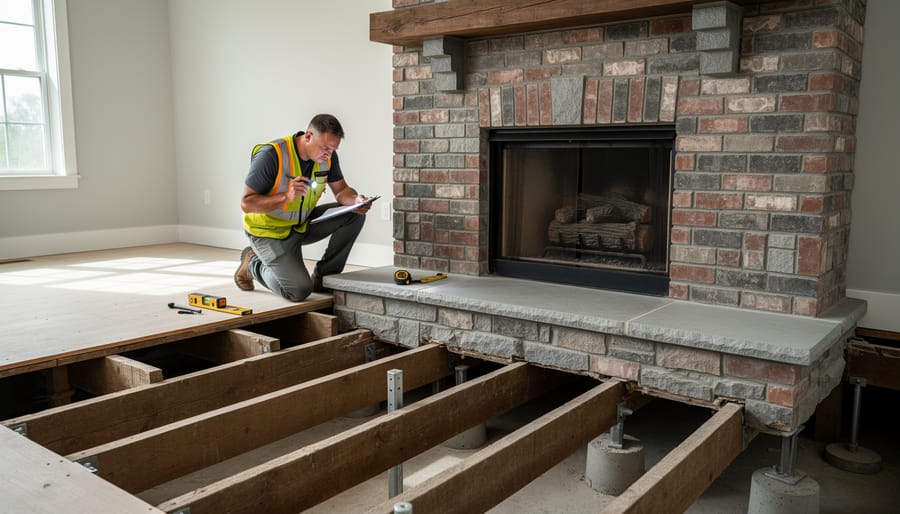
The Real Weight of Your Dream Fireplace
Before you fall in love with that grand stone fireplace in the design magazine, let’s talk numbers. Understanding what your dream fireplace actually weighs is the foundation of any safe installation plan.
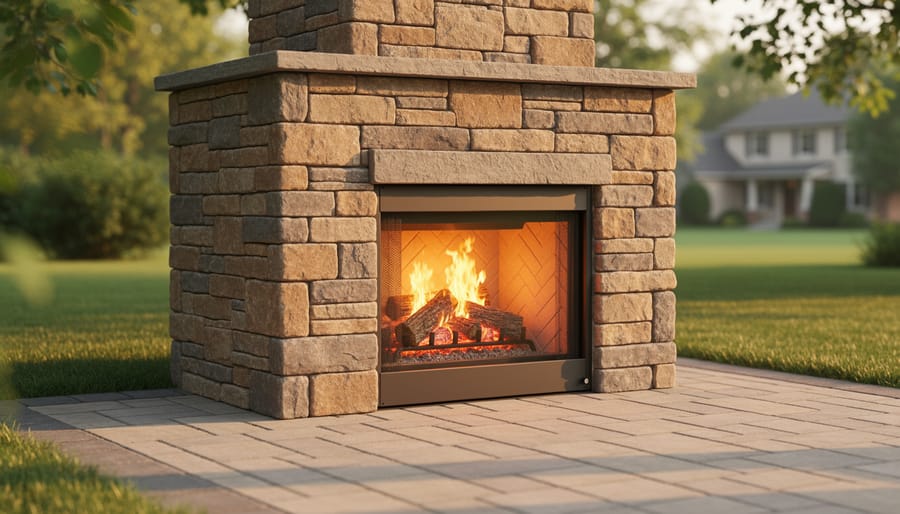
Traditional masonry fireplaces are the heavyweights of the hearth world, and for good reason. A full masonry fireplace with chimney can tip the scales at 5,000 to 7,000 pounds or more. That’s roughly the weight of two compact cars sitting in your living room. The brick or stone chimney alone accounts for much of this weight, adding anywhere from 200 to 400 pounds per linear foot as it rises through your home.
Gas fireplaces offer a lighter alternative, typically weighing between 400 and 800 pounds when you include the surround and necessary venting components. These provide that cozy ambiance you’re after without the structural demands of their masonry cousins, making them an eco-friendly heating solution that’s easier on your home’s bones.
Wood-burning inserts, popular for their efficiency and sustainability, generally weigh 300 to 500 pounds. Add a hearth pad for safety, and you’re looking at an additional 50 to 150 pounds, depending on materials.
The lightest option? Bioethanol fireplaces often weigh less than 100 pounds, offering maximum flexibility for placement without significant structural concerns.
Don’t forget those finishing touches. A solid wood mantel adds 50 to 200 pounds, while stone mantels can exceed 300 pounds. These details matter when calculating your home’s total load requirements.
Where the Weight Goes: Understanding Load Distribution
Think of your fireplace weight like water flowing downhill—it always follows the path of least resistance to the ground. When you install that beautiful stone hearth or cast-iron wood stove, its weight doesn’t just press down on one spot. Instead, it spreads and travels through your home’s structural skeleton.
Here’s how it works: The fireplace sits on your floor, which transfers the load to the floor joists beneath (those horizontal beams running under your floorboards). These joists act like a team of workers carrying a heavy couch—they share the burden. The weight then moves down through support beams and posts, eventually reaching your foundation, where it disperses into the earth.
Older homes with traditional 2×8 or 2×10 joists spaced 16 inches apart were typically designed for standard living loads, not the concentrated weight of a 1,500-pound masonry fireplace. This is why understanding your home’s load path matters. If the weight concentrates on too few joists, or if the joists span too far without adequate support underneath, you’ll need structural reinforcement. It’s not about whether your floor can hold you standing on it—it’s about whether it can safely support that weight in one spot, year after year, without sagging or compromising your home’s integrity.
Reading Your Home’s Structural Story: Assessment Basics
Signs Your Floor Might Not Be Ready
Before you get too excited about that beautiful new fireplace, it’s worth taking a moment to assess whether your floor is sending you any warning signals. Think of your home as a living space that communicates with you—sometimes it’s trying to tell you something important.
Start by observing how your floor behaves when you walk across the area where you’re planning your fireplace installation. Does it feel bouncy or springy underfoot? That’s often a red flag that the floor structure may already be stressed or weakened. Similarly, if you notice any visible sagging or dipping in the floor surface, especially in older homes, this could indicate that the underlying support system is compromised.
Take a close look at the surrounding walls and baseboards. Cracks running diagonally from door frames or windows, or gaps between the floor and baseboards, can signal that your home is settling unevenly or experiencing structural stress. These aren’t just cosmetic issues—they’re clues about what’s happening beneath the surface.
Water damage is another critical concern. Check for any history of water intrusion, staining on floors or ceilings below, or musty odors that might indicate moisture problems. Water can seriously weaken wooden floor joists and subflooring, compromising their ability to safely support heavy loads like masonry fireplaces or large wood stoves.
If you notice any of these warning signs, don’t panic—but do take them seriously. They’re simply indicators that you’ll want to have a structural engineer or qualified contractor evaluate your space before proceeding with your fireplace dreams.
When to Call a Structural Engineer (And When You Might Not Need To)
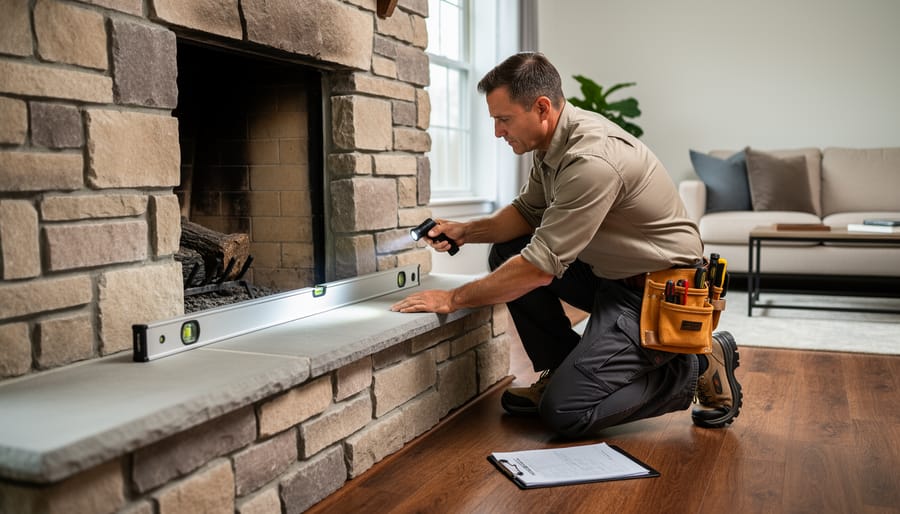
Knowing when to bring in a structural engineer can save you time, money, and potential headaches. As a general rule, if you’re installing a traditional masonry fireplace with a full chimney, a professional assessment is essential. These installations can weigh several tons and require foundation considerations. Similarly, if your home is older and you’re unsure about floor joist conditions, or if you’re planning to install a fireplace on an upper level, an engineer’s expertise becomes invaluable.
You’ll also want professional guidance if you notice any existing structural concerns like sloping floors, cracks in walls, or if your home has experienced water damage. Installing anything on a weakened structure is simply not worth the risk.
However, for lighter installations, you might proceed with confidence. Modern electric fireplaces and many ventless models weigh considerably less than traditional options, often under 100 pounds. These can typically be installed without structural concerns in most homes built to code. Wall-mounted electric units, in particular, require only basic stud-finding and proper anchoring, similar to mounting a large television.
Gas inserts being fitted into existing masonry fireplaces also generally don’t require additional structural assessment, since you’re working within an already-supported space. When in doubt, though, remember that a consultation usually costs far less than repairs from an installation gone wrong. Your local building department can also provide guidance on when permits and professional assessments are required in your area.
Structural Solutions That Make Heavy Hearths Possible
Joist Reinforcement and Sister Beams
When your existing floor joists need a strength boost to support your dream fireplace, sister joists offer an effective solution. This technique involves attaching new joists alongside existing ones, essentially doubling their load-bearing capacity. Think of it like adding a supportive companion to share the weight, which is particularly useful when planning a heavy stone or masonry fireplace that could weigh several thousand pounds.
The process involves securing identical or larger dimensional lumber directly against your current joists using construction adhesive and bolts or nails at regular intervals. For a typical residential installation supporting a fireplace, you might need to sister several joists spanning the fireplace footprint plus additional space on either side for proper load distribution.
Cost-wise, this is one of the more accessible structural upgrades, typically ranging from $1,500 to $4,000 depending on your home’s accessibility and the number of joists requiring reinforcement. The complexity level is moderate, requiring a skilled contractor who can work in tight crawl spaces or basements. The beauty of this approach is that it strengthens your floor system without major demolition, allowing you to create a cozy gathering space around your new fireplace while maintaining your home’s structural integrity and safety standards.
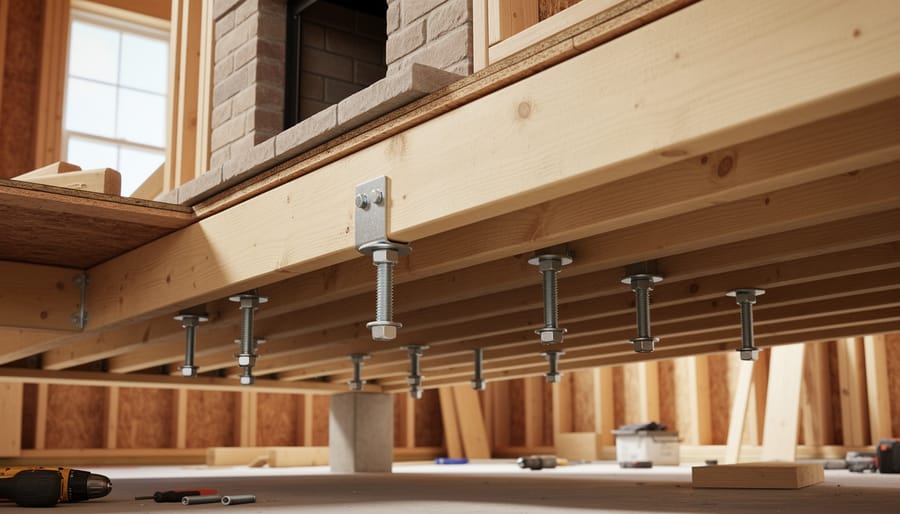
Creating Independent Support: Posts, Piers, and Footings
Sometimes your existing floor structure simply can’t handle the weight of your dream fireplace, no matter how much reinforcement you add. That’s when dedicated support systems become your best friend. Think of these as creating a direct pathway from your fireplace straight down to the foundation, completely bypassing your floor joists.
Independent support typically involves installing vertical posts or piers beneath the fireplace location. These structural columns extend from a new footing poured in your basement or crawlspace right up to where your fireplace will sit. The beauty of this approach is that it transfers the entire weight directly to the ground, leaving your floor system to handle only what it was originally designed for.
This solution works particularly well for heavy masonry fireplaces or when you’re adding a fireplace to a room with questionable floor strength. Your contractor will dig down to stable soil, pour a concrete footing sized for your specific load, and build up the support structure from there. While it sounds intensive, this method often proves more cost-effective than extensively rebuilding existing floors.
Keep in mind this is definitely a job for licensed professionals who understand local building codes. They’ll need to calculate precise load requirements and ensure proper integration with your home’s existing foundation without compromising structural integrity.
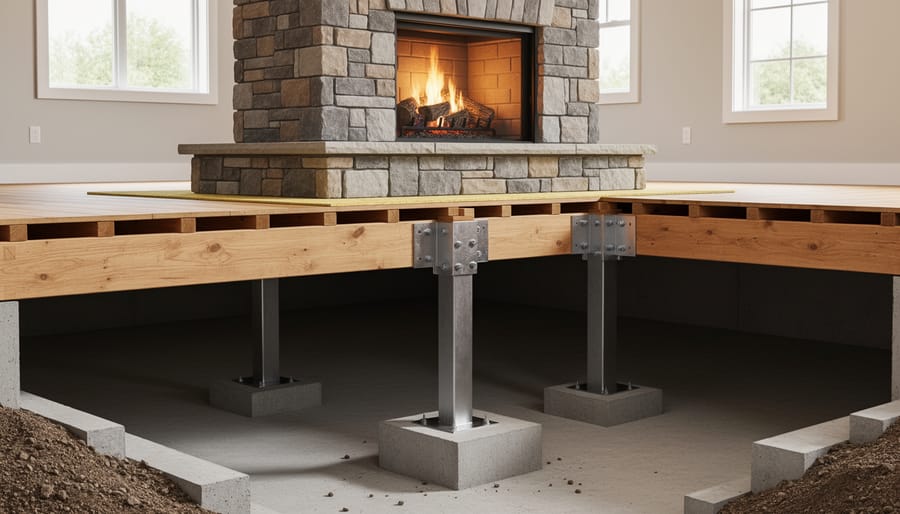
Distributing the Load: Hearth Pad and Platform Strategies
Think of a hearth pad as nature’s own solution to weight distribution, much like how a snowshoe keeps you from sinking into deep powder. When you install a heavy fireplace or wood stove, concentrating all that weight on a single point of your floor creates unnecessary stress on your home’s structure. A properly designed hearth pad acts as your fireplace’s snowshoe, spreading that considerable weight across a much larger surface area.
This spreading effect, what professionals call load distribution, is your secret weapon for making fireplace dreams come true without expensive structural renovations. By designing a pad that extends well beyond the fireplace footprint, you’re essentially asking more floor joists to share the burden. Instead of one or two joists carrying the entire load, a well-proportioned platform might engage six or eight joists working together as a team.
The beauty of this approach is its simplicity and effectiveness. Many homeowners discover they can safely install their desired heating solution by working with their contractor to design an appropriately sized platform. The pad becomes both a functional necessity and an attractive design element that frames your fireplace, creating that cozy focal point you’re envisioning while keeping your home structurally sound and safe for years of enjoyment.
Planning by Fireplace Type: Tailored Load Considerations
Masonry and Traditional Wood-Burning: The Heavy Hitters
Now we’re talking about the true heavyweights of the hearth world. Traditional masonry fireplaces and wood-burning units with full chimney systems represent the most demanding structural challenges you’ll encounter.
A full masonry fireplace and chimney can weigh anywhere from 6,000 to 10,000 pounds or more. That’s the equivalent of parking several cars on your floor. This kind of weight isn’t something your standard residential floor joists were designed to handle, which is why these installations almost always require their own independent foundation that extends below the frost line.
If you’re dreaming of a grand stone hearth with a towering chimney, understand that this vision likely means breaking through your existing foundation and pouring a dedicated footing. This isn’t just about reinforcing what’s there, it’s about creating an entirely separate structural support system that carries the load directly to the ground.
Even smaller traditional wood-burning inserts often require significant reinforcement. The combination of the unit itself, hearth materials, and any chimney components can easily exceed 1,000 pounds.
This is precisely why consulting a structural engineer before committing to these installations is essential. They’ll evaluate your home’s existing structure and design the proper support system, ensuring your beautiful new fireplace becomes a lasting centerpiece rather than a costly mistake.
Gas Fireplaces and Inserts: The Middle Ground
Gas fireplaces and inserts occupy a comfortable middle ground when it comes to structural demands. These popular options typically weigh between 200 and 400 pounds when fully installed, making them substantially lighter than their masonry counterparts while still providing authentic flame ambiance and supplemental heating.
The good news? Most standard residential floors can support gas units without additional reinforcement. Your typical floor joists and subfloor systems are designed to handle these moderate loads, especially when the weight is distributed across the fireplace footprint. This makes gas fireplaces an attractive option for second-story installations or rooms where structural modifications would be challenging or costly.
That said, it’s still important to verify your specific situation. Older homes with compromised floor joists, installations planned for areas with already-heavy furniture loads, or larger statement gas fireplaces may require professional assessment. The beauty of gas units lies in their flexibility—they offer efficient, eco-friendly heating without the structural complications of traditional masonry. Plus, many modern gas fireplaces incorporate energy-efficient technology that reduces your environmental footprint while keeping your space cozy and inviting. When planning your installation, consult with both your fireplace dealer and a structural professional to ensure your floor can safely accommodate your chosen unit.
Bioethanol and Electric: Lighter Options That Still Need Planning
Here’s the good news: if you’re considering bioethanol or electric fireplaces, you’re already looking at some of the lightest, most structurally forgiving options available. These modern alternatives typically weigh significantly less than traditional masonry or even many heavy cast-iron wood-burning units, making them appealing for apartments, upper floors, or homes where extensive structural work isn’t feasible.
However, lighter doesn’t mean you can skip planning entirely. Even wall-mounted electric fireplaces require proper anchoring to studs or blocking to prevent accidents, especially if children or pets are part of your household. The weight may be minimal, but safety never is.
Bioethanol fireplaces present their own considerations. While the units themselves are lightweight, you’ll still need appropriate hearth protection beneath and around them. Real flames mean real heat, and flammable flooring materials need protection regardless of the fireplace’s weight. Consider heat-resistant tiles, stone, or specialized hearth pads to safeguard your floors and surrounding walls.
Think of it this way: structural planning isn’t just about preventing your floor from collapsing. It’s about creating a safe, long-lasting installation that protects your home and family while you enjoy the ambiance these eco-friendly heating solutions provide.
The Installation Planning Process: Your Step-by-Step Approach
Building Department Requirements and Permits
Before breaking ground on your fireplace project, you’ll need to secure the proper permits from your local building department. While it might feel like extra paperwork, this step is essential for ensuring your installation meets safety codes and protects your home’s value. Most jurisdictions require permits for any fireplace installation that affects structural elements, including foundation work, floor reinforcement, or chimney construction.
Building inspectors will evaluate your plans to verify that structural loading calculations are sound and that your home can safely support the new hearth system. They’ll check foundation specifications, floor joist sizing, and proper load distribution. During installation, expect multiple inspection points, typically after foundation work, framing modifications, and final completion.
Think of permits as your safety net. They ensure qualified professionals review your project and that the work meets established standards. This documentation also becomes invaluable when selling your home, proving to potential buyers that your beautiful fireplace was installed correctly and safely. Insurance companies may also request this information if you file a claim related to your heating system. While permit costs vary by location, they’re a small investment compared to potential problems from unpermitted work, which can include fines, required removal, or complications with insurance coverage.
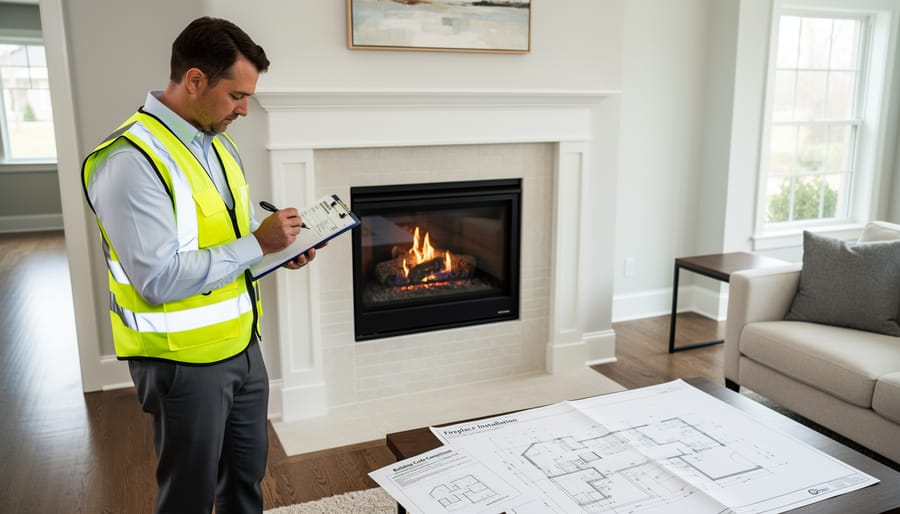
Assembling Your Team: Contractors, Engineers, and Specialists
Planning your dream fireplace is exciting, but bringing the right professionals on board ensures your project moves smoothly from vision to reality. Think of building your team as creating a safety net for your home and investment.
Your first call should be to a structural engineer, who’ll assess whether your floors, foundation, and walls can handle your fireplace’s weight. Expect to pay between $500 and $1,500 for a residential structural assessment, with the engineer providing detailed load calculations and recommendations. This typically takes one to two weeks.
Next, you’ll need a licensed contractor experienced in fireplace installations. While general contractors can manage the overall project, specialists who focus on hearth installations bring invaluable expertise about building codes, clearances, and proper venting. Request references and verify their licensing before committing.
For masonry fireplaces or outdoor installations, a skilled mason becomes essential. Their craftsmanship affects both structural integrity and aesthetic appeal. If you’re considering eco-friendly heating solutions like high-efficiency inserts or pellet stoves, look for contractors certified in these technologies.
Your team works together like this: the engineer provides the structural blueprint, the contractor coordinates the build, and specialists handle technical installations. Budget-wise, expect structural modifications to range from $2,000 for minor reinforcements to $10,000 or more for significant foundation work. Timeline-wise, most fireplace projects take four to eight weeks once permits are secured.
Don’t skip the permit process. Your contractor should handle applications, but you’re ultimately responsible for code compliance. This protects your home’s value and your family’s safety, making every dollar and day invested absolutely worthwhile.
Safety First: Red Flags and Risk Prevention
Let’s be honest: when it comes to adding that dream fireplace to your home, cutting corners on structural planning isn’t just risky—it’s potentially catastrophic. Your family’s safety depends on getting the load-bearing calculations right, and no aesthetic goal is worth compromising the integrity of your home.
One of the most dangerous mistakes homeowners make is assuming their floor can handle whatever fireplace catches their eye. A gorgeous stone fireplace might weigh several thousand pounds, and those joists underneath weren’t necessarily designed for that kind of concentrated weight. I’ve seen situations where homeowners installed heavy masonry fireplaces without proper assessment, leading to sagging floors, cracked walls, and in extreme cases, structural failure. The cost of fixing these problems dwarfs what proper planning would have required.
Another red flag? DIY structural modifications. While we all love a good home improvement project, removing or cutting floor joists, adding support beams, or modifying foundation elements requires professional engineering expertise. Even well-intentioned contractors without structural engineering backgrounds can make critical errors. Always insist on working with licensed professionals who pull proper permits and follow building codes to the letter.
Watch out for professionals who dismiss your structural concerns or suggest “shortcuts” to avoid engineering assessments. If someone tells you that permits aren’t necessary or that calculations are overkill for your project, that’s your cue to find a different contractor. Legitimate professionals understand that proper load evaluation protects everyone involved.
Remember, your home is likely your largest investment, and it’s where your family lives every day. Proper structural planning isn’t an unnecessary expense—it’s essential insurance that your beautiful new fireplace will bring warmth and joy for decades without compromising safety. Taking the time to do things right means you’ll enjoy cozy fires with complete peace of mind, knowing your home is as safe as it is inviting.
Here’s the truth that we hope resonates with you: understanding structural loading isn’t about discovering reasons why you can’t have your dream fireplace. It’s about discovering exactly how you can make it happen safely and beautifully.
Yes, structural planning requires some upfront investment of time, attention, and resources. You’ll need to ask questions, consult with professionals, and perhaps adjust your original vision. But this preparation is what transforms a fireplace from a potential liability into a lasting source of warmth and joy for your family. Think of it as laying the groundwork, quite literally, for countless cozy evenings ahead.
The encouraging news is that most homes, with proper assessment and planning, can accommodate a fireplace or hearth installation. Whether you’re working with a wood-burning stove, a modern gas insert, or an eco-friendly pellet system, there’s almost always a solution that respects both your home’s structural integrity and your lifestyle aspirations.
Don’t let concerns about load-bearing capacity or floor reinforcement discourage you before you begin. Instead, let them guide you toward smarter decisions. Engage qualified professionals early, ask detailed questions about your specific situation, and view structural considerations as your home’s way of communicating its needs. When you honor those needs through thoughtful planning, you’re not just installing a fireplace; you’re creating a safe, sustainable source of comfort that will serve your household for decades to come.