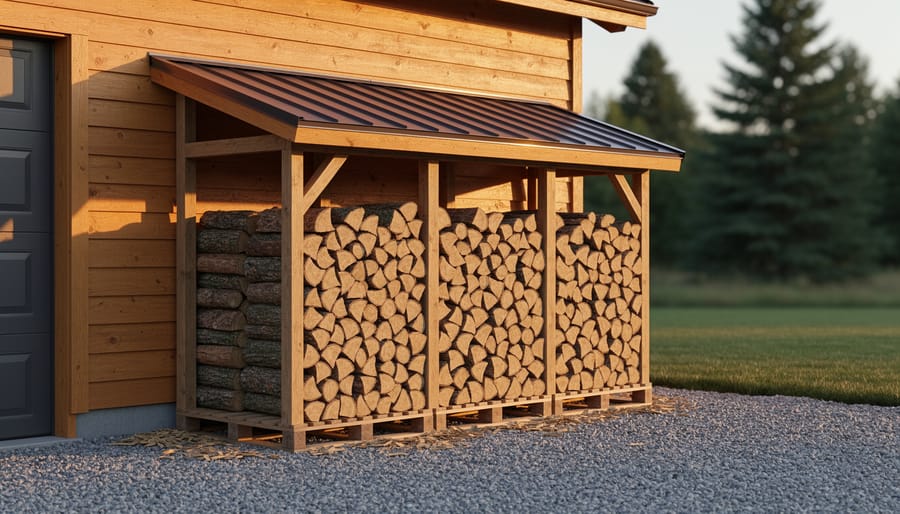
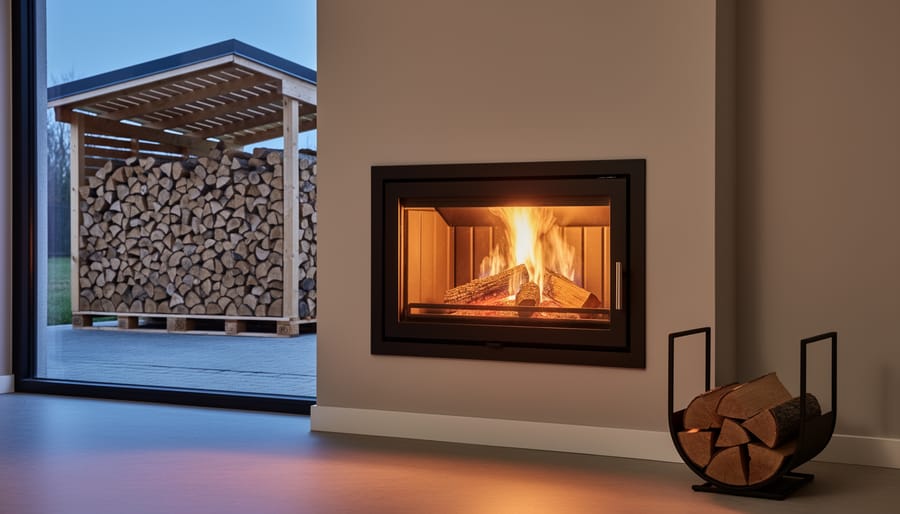


Store your firewood in a covered, ventilated structure at least 20 feet from your home, keeping it elevated 6 inches off the ground to prevent moisture absorption that reduces burn efficiency in EPA-certified units. These high-performance inserts require wood with 15-20% moisture content to achieve their rated efficiency levels and minimize creosote buildup.
Season your split wood for a minimum of six months in dry climates or 12-18 months in humid regions, with bark-side up stacking to shed rain naturally. EPA-certified fireplace inserts burn significantly hotter and cleaner than traditional fireplaces, but this advanced combustion technology depends entirely on properly dried fuel to function as designed.
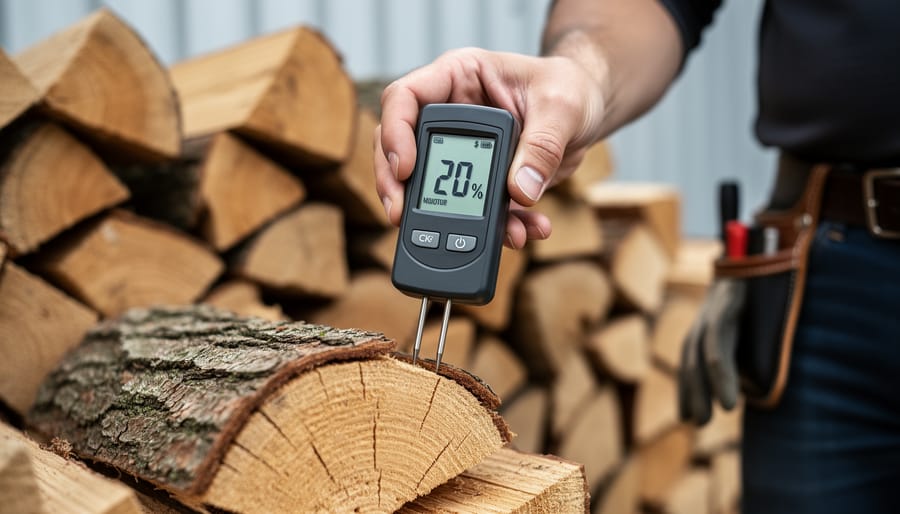
Test your firewood moisture using an inexpensive moisture meter before burning, inserting the probes into freshly split surfaces rather than the exterior. Wood reading above 20% moisture creates excess smoke, reduces heat output by up to 25%, and forces your EPA-certified insert to work harder while producing fewer BTUs per log.
Bring only enough wood indoors for 24-48 hours of burning, allowing it to reach room temperature in a ventilated area away from living spaces. This final drying period ensures optimal ignition and burn characteristics while preventing bark debris and insects from accumulating near your fireplace.
Your investment in an EPA-certified insert represents a commitment to efficient, eco-friendly heating that dramatically reduces emissions while lowering fuel costs. Maximizing these benefits requires understanding that modern combustion technology and proper fuel preparation work together as an integrated system, not separate concerns.
What Makes EPA-Certified Inserts Different (And Why It Matters for Your Firewood)
The Clean Burn Technology Inside Your Insert
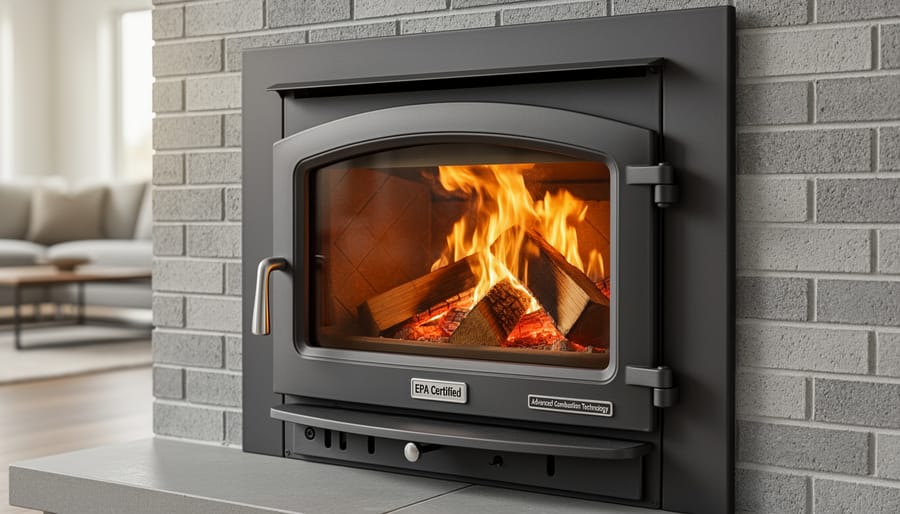
Your EPA-certified fireplace insert isn’t just a pretty face with flames dancing behind glass. It’s actually a sophisticated heating system designed to squeeze every bit of warmth from your firewood while keeping emissions remarkably low. Understanding how this technology works helps you appreciate why the quality and moisture content of your fuel matters so much.
At the heart of your insert is a secondary combustion system. Think of it as giving your fire a second chance to burn the smoke. Fresh air enters through carefully positioned intake vents, heats up inside the firebox, and ignites the gases and particles that would otherwise escape up the chimney as pollution. Those beautiful flames you see dancing near the top of your firebox? That’s secondary combustion in action, turning what used to be waste into usable heat.
EPA-certified inserts come in two main varieties: catalytic and non-catalytic. Catalytic models use a honeycomb-like component that lights off smoke at lower temperatures, making them exceptionally efficient but requiring occasional catalyst replacement. Non-catalytic designs rely on insulation, baffles, and precise air routing to achieve similar results with less maintenance.
Here’s the catch: both systems demand properly seasoned wood to work their magic. Wet or green wood produces excess moisture and creosote that can coat your catalyst or clog those precision air channels. When your fuel preparation falls short, these ingenious systems can’t perform as designed. You’ll get less heat, more smoke, and potentially expensive repairs. Your insert’s clean burn technology is only as good as the fuel you feed it.
Why Poor Fuel Ruins Your Investment
Your EPA-certified fireplace insert represents a significant investment in your home’s comfort and value, but burning poor-quality fuel can quickly undermine everything it’s designed to deliver. Wet or improperly stored wood is the silent destroyer of these high-efficiency systems.
When wood contains more than 20% moisture, it burns inefficiently and produces excessive smoke. This creates creosote, a sticky, tar-like substance that accumulates inside your chimney and insert. Creosote buildup isn’t just a maintenance headache; it’s a serious fire hazard that can ignite and cause chimney fires. Your EPA-certified insert works hard to burn cleanly, but wet wood sabotages this technology at every turn.
The performance penalty is equally frustrating. Wet wood produces roughly half the heat output of properly seasoned fuel because energy gets wasted evaporating moisture instead of warming your home. You’ll burn through your woodpile faster while staying colder, completely negating the efficiency gains that make EPA certification valuable.
Even worse, burning wet wood dramatically increases particulate emissions, the very pollutants your certified insert is engineered to minimize. This defeats the purpose of investing in eco-friendly heating solutions and potentially harms your indoor air quality.
Here’s the financial kicker: many manufacturers will void your warranty if inspection reveals damage from burning inappropriate fuel. Those who prefer versatility might consider dual fuel fireplace inserts, but for wood-burning models, fuel quality isn’t negotiable. Protecting your investment starts with what you burn, making proper fuel storage absolutely essential for long-term satisfaction and performance.
The 20% Moisture Rule: Getting Your Firewood Season-Ready
How to Season Firewood for Maximum Efficiency
Properly seasoned firewood is the secret ingredient to getting the most from your EPA-certified fireplace insert. Think of it as the difference between premium and regular fuel—your high-efficiency insert deserves the best to perform at its peak.
Start by understanding that seasoning simply means reducing moisture content to around 20% or less. Your EPA-certified insert needs this dry wood to burn cleanly and efficiently, producing more heat and less creosote buildup. Fresh-cut or “green” wood contains 45-60% moisture, which creates smoky, inefficient fires that can damage your investment.
Different wood species require varying seasoning times. Hardwoods like oak, maple, and ash need 12-18 months to properly season, while softer woods like pine and spruce can be ready in 6-9 months. The denser the wood, the longer it takes, but the longer burn time you’ll enjoy later.
Split your firewood to pieces about 3-6 inches in diameter. Smaller splits expose more surface area, accelerating moisture evaporation. As the old saying goes, wood heats you twice—once when you split it, and again when you burn it.
To speed up the drying process, stack your wood in a sunny, breezy location with the bark side up to shed rain. Create rows with space between them for airflow, and elevate the bottom layer off the ground using pallets or lumber to prevent moisture absorption. Cover only the top third with a tarp, leaving the sides exposed—wood needs to breathe.
Use a moisture meter to verify your wood is ready. This inexpensive tool takes the guesswork out of seasoning, ensuring your EPA-certified insert operates at maximum efficiency while keeping your home cozy and your environmental footprint minimal.
Testing Your Wood’s Moisture Content
Checking your firewood’s moisture content is essential for getting the most from your EPA-certified insert. The gold standard is using a moisture meter, an affordable tool available at most hardware stores. To get an accurate reading, split a piece of wood and insert the meter’s prongs into the freshly exposed surface, not the outer bark where readings can be misleading. Take measurements from several pieces to get a reliable average. Your target is 20% moisture or below for optimal burning.
If you don’t have a moisture meter handy, try the hiss test. Well-seasoned wood doesn’t hiss or sizzle when burning because there’s minimal water content to evaporate. If your fire sounds like it’s cooking bacon, your wood is too wet.
Visual and weight indicators offer additional clues. Properly dried wood has cracks radiating from the center, darkened ends, and loose bark that peels away easily. Pick up a piece and compare it to freshly cut wood—seasoned logs feel noticeably lighter since much of the water weight has evaporated. The wood should also make a satisfying hollow sound when you knock two pieces together, rather than a dull thud that indicates moisture is still present.
Storage Solutions That Keep Your Firewood Insert-Ready
The Perfect Outdoor Wood Storage Setup
Creating the right outdoor wood storage setup transforms your EPA-certified fireplace insert experience from good to exceptional. Think of it as creating a mini drying and aging facility right in your backyard, one that works around the clock to ensure your firewood reaches its peak performance potential.
Location is everything when it comes to wood storage. Choose a spot that receives plenty of sun exposure, particularly southern exposure if you’re in the northern hemisphere. The sun acts as nature’s dehydrator, helping reduce moisture content significantly. Equally important is air circulation. Position your woodpile away from dense vegetation and structures that might block wind flow. That gentle breeze moving through your stack is constantly wicking away moisture and preventing mold growth.
Distance from your home deserves careful consideration. While you want convenient access during winter storms, storing wood directly against your house invites unwanted guests like termites and carpenter ants. Aim for at least 20 feet from your home’s foundation, striking that balance between accessibility and protection.
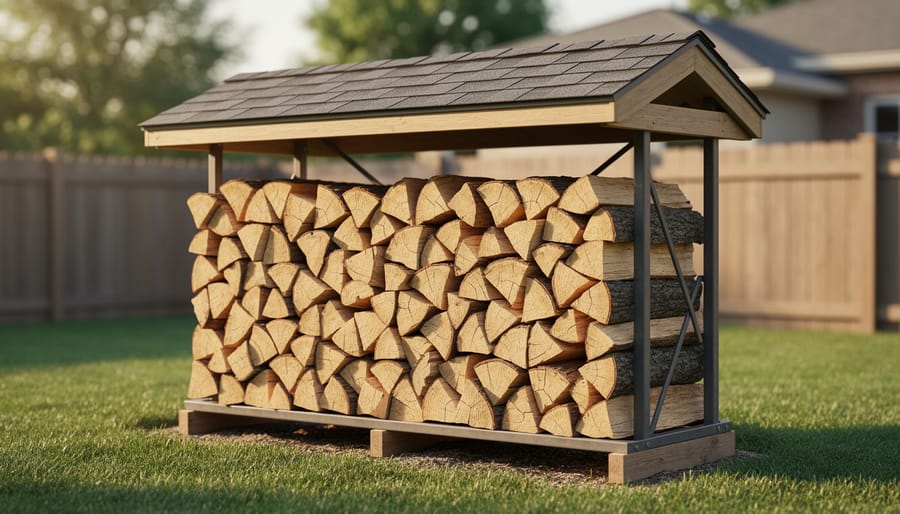
Ground contact is the enemy of dry wood. Raise your woodpile at least six inches off the ground using pallets, treated lumber, or commercial firewood racks. This elevation prevents moisture from wicking up from the soil and allows air to circulate underneath, creating a complete drying environment around each piece.
When stacking, embrace the principle of loose but stable. Stack wood bark-side up in rows no more than four feet high, leaving small gaps between pieces for airflow. The traditional crisscross pattern at the ends provides stability while maximizing air exposure. Avoid tight, compact stacking that might look neater but traps moisture inside.
Covering requires a delicate balance. Cover only the top third of your woodpile with a tarp, metal roofing, or a purpose-built wood shed roof. Leave the sides completely open to wind and air. Many homeowners make the mistake of wrapping their entire pile in tarps, essentially creating a moisture trap. Your EPA-certified insert deserves wood that breathes, not wood that steams.
Indoor Staging: Your 24-48 Hour Secret Weapon
Here’s a little-known secret that can dramatically improve your EPA-certified fireplace insert’s performance: bring tomorrow’s firewood inside today. This simple 24-48 hour staging period allows your wood to reach room temperature, creating ideal conditions for the clean, efficient combustion these advanced systems are designed to deliver.
Why does temperature matter so much? When you place cold wood from an outdoor pile directly into your firebox, it requires extra energy just to warm the wood before actual burning begins. This delays ignition, creates more smoke, and reduces the efficiency that makes EPA-certified units so valuable. Room-temperature wood, however, ignites faster and burns more completely, allowing your insert’s advanced combustion technology to work exactly as intended.
The staging process couldn’t be simpler. Choose a spot near your fireplace where wood can rest safely away from the firebox opening. A decorative log holder, sturdy basket, or purpose-built wood rack works beautifully while adding to your home’s cozy ambiance. Keep the wood at least three feet from your insert to maintain proper clearances, and place it on a protective mat or tray to catch any bark debris.
This practice offers an unexpected bonus: as the wood warms, any remaining surface moisture evaporates into your home’s air rather than creating problematic smoke during burning. You’ll notice easier starts, cleaner glass doors, and that satisfying crackle of perfectly prepared fuel. It’s the simplest upgrade you can make to your burning routine, requiring nothing more than a bit of planning and patience.
Choosing and Handling the Right Wood Species
Best Hardwoods for EPA-Certified Inserts
Choosing the right hardwood for your EPA-certified insert makes all the difference in achieving those clean, efficient burns these units are designed for. Let’s talk about which woods work best with your advanced heating technology.
Oak stands as the gold standard for EPA-certified inserts, delivering an impressive 24-26 million BTUs per cord. White oak and red oak both provide long, steady burns that let your insert’s catalytic or non-catalytic systems work their magic. The trade-off? Oak needs 12-24 months of proper seasoning, but that patience pays off in consistent heat output and minimal creosote buildup.
Maple offers similar BTU performance to oak, ranging from 24-25 million BTUs per cord, with a slightly faster seasoning time of 6-12 months. Sugar maple burns particularly clean, producing that satisfying ember bed that modern inserts manage so efficiently. It’s an excellent choice if you’re planning ahead but working with a shorter timeline.
Ash deserves special mention as the most user-friendly option. With 23-24 million BTUs per cord and the ability to burn relatively green compared to other hardwoods, ash can be ready in just 6-12 months. It splits easily and produces minimal smoke, making it perfect for those new to wood burning with EPA technology.
Whether you’re investing in premium fireplace fuel or planning to grow sustainable fuel in your backyard, matching the right hardwood to your EPA-certified insert ensures you’re getting maximum efficiency while minimizing emissions.
What Never to Burn in Your Certified Insert
Your EPA-certified insert is designed to burn clean and efficiently, but only when you’re burning the right materials. Certain fuels can seriously damage your investment, void your warranty, and create dangerous emissions that compromise both your health and the environment.
Never burn treated or pressure-treated lumber in your insert. The chemicals used to preserve this wood release toxic compounds when burned, including arsenic and chromium. These aren’t just harmful to breathe—they’ll corrode your insert’s internal components and potentially damage the catalytic combustor if your unit has one.
Painted or stained wood is equally problematic. The paint releases heavy metals and volatile organic compounds that create hazardous fumes and leave stubborn deposits throughout your system. Similarly, plywood, particle board, and manufactured wood products contain glues and resins that produce excessive creosote and harmful emissions.
While exploring alternative fireplace fuels might seem appealing, stick with what your insert was designed for: properly seasoned hardwood. Green or wet wood is a frequent mistake—burning wood with moisture content above 20 percent creates smoke, wastes energy, and builds dangerous creosote deposits in your chimney.
Avoid using softwoods like pine or fir for overnight burns. While acceptable for kindling, they burn too quickly and produce more creosote than hardwoods. Also steer clear of cardboard, trash, glossy magazines, and wrapping paper—these materials create toxic fumes and excessive ash that clogs your system.
Your certified insert represents a significant investment in clean, efficient heating. Protecting it means being selective about what goes inside.
Daily Handling Practices That Protect Your Investment
The Right Way to Load Your Insert
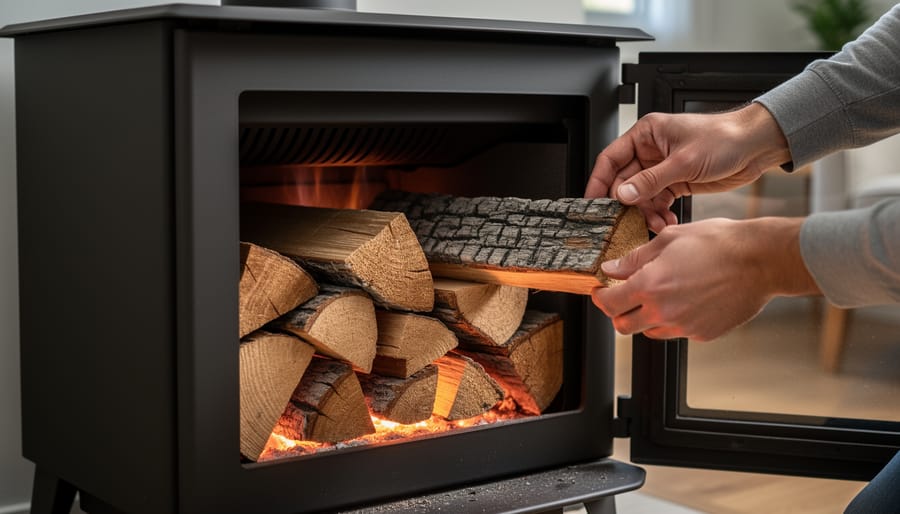
Loading your EPA-certified insert properly isn’t just about tossing wood in and lighting a match. The way you arrange your fuel makes all the difference between a clean, efficient burn and a smoky, underperforming fire that wastes your carefully seasoned wood.
Start with the size of your logs. For optimal performance, choose pieces that are 3-6 inches in diameter and cut to fit your firebox with about 3 inches of clearance on each side. Oversized logs restrict airflow, while pieces that are too small burn too quickly and can actually cool down the secondary combustion system that makes EPA-certified inserts so efficient.
When arranging your wood, think airflow first. Use the top-down method: place your larger logs on the bottom in a loose crisscross pattern, then add progressively smaller pieces as you build upward, finishing with kindling on top. This arrangement allows air to circulate through the entire load, feeding oxygen to the flames from multiple angles and ensuring those secondary burn tubes work their magic.
Here’s where many well-meaning homeowners go wrong: they overload their fireboxes, thinking more wood equals more heat. In reality, cramming in too much fuel smothers the fire, reduces oxygen availability, and defeats the very technology that makes your insert burn cleanly. Leave space between logs, about a finger’s width apart. This breathing room lets the combustion air do its job, activating those secondary flames that turn smoke into heat rather than pollution. Your insert was engineered for efficiency, but only proper loading techniques will unlock its full potential.
Maintaining Peak Performance Between Burns
Your EPA-certified insert performs beautifully when you give it a little love between burns. Think of these simple tasks as keeping your investment in top shape while ensuring every fire burns as cleanly and efficiently as designed.
Empty ash when it builds up to about an inch deep in the firebox. While a thin ash bed actually helps insulate and reflect heat, too much restricts airflow and reduces combustion efficiency. Always wait until the ashes are completely cool, then transfer them to a metal container with a lid and store it outdoors away from your home.
Inspect door gaskets every month during burning season. These rope-like seals create the airtight environment your EPA insert needs for controlled combustion. Run a dollar bill test: close the door on a bill and try pulling it out. If it slides easily, the gasket needs replacement. Fresh gaskets ensure your insert maintains proper air control and burns at peak efficiency.
Keep the glass clean for both safety and ambiance. Creosote buildup on glass signals incomplete combustion, often caused by wet wood or insufficient air. Use fireplace glass cleaner or damp newspaper dipped in ash for a natural cleaning solution. Clear glass lets you monitor the fire and enjoy the warm glow that makes your fireplace the heart of your home.
Check air control mechanisms monthly to ensure they move smoothly. These components are essential for maximizing your insert’s efficiency and getting the most heat from properly stored firewood.
Eco-Friendly Benefits When You Get It Right
When you combine an EPA-certified fireplace insert with properly stored, seasoned wood, you’re doing more than creating a cozy home—you’re making a meaningful difference for the environment. The numbers tell an impressive story about what’s possible when efficiency meets responsible fuel practices.
EPA-certified inserts already reduce particulate emissions by up to 90% compared to older, non-certified units. But here’s where your fuel storage efforts amplify those benefits: burning properly seasoned wood with less than 20% moisture content can boost your insert’s efficiency by an additional 25-30%. That means you’re extracting more heat from every log while releasing fewer pollutants into the air your family and neighbors breathe.
Think about it this way—when you burn wet or improperly stored wood, you’re essentially creating smoke instead of heat. That smoke contains harmful particulates and creosote that contribute to air quality problems. By following proper storage guidelines, you’re preventing those emissions from ever forming. Studies show that households using seasoned sustainable fireplace fuel in EPA-certified inserts can reduce their overall carbon footprint by up to 75% compared to conventional heating methods.
The environmental benefits extend beyond emissions. Better efficiency means you’ll burn less wood overall—often 30-40% less per heating season. That translates to fewer trees harvested and lower transportation impacts. You’re also reducing creosote buildup in your chimney, which means less frequent cleanings and the associated chemical treatments.
Your commitment to proper fuel storage and handling transforms your fireplace from a simple heat source into an eco-conscious heating solution. Every carefully stacked cord of wood, every decision to let logs season fully, contributes to cleaner air and a healthier planet.
Your EPA-certified fireplace insert represents a significant investment in both your home’s comfort and environmental responsibility. But remember, the technology inside that firebox can only perform as well as the fuel you feed it. Think of proper fuel storage and handling as an extension of your fireplace lifestyle, not a chore but a rewarding ritual that connects you to the warmth you’re creating.
The relationship is simple: EPA certification demands efficiency, and efficiency demands quality fuel. By keeping your firewood dry, well-seasoned, and properly stored, you’re honoring the engineering that went into your insert. Stack it right, store it smart, and bring only what you need indoors. Check that moisture content, and you’ll see the difference immediately in longer burn times, less ash, and that mesmerizing flame that transforms a cold evening into something special.
When you settle into your favorite chair and watch perfectly seasoned wood ignite cleanly in your EPA-certified insert, you’ll know the preparation was worth it. That’s the beauty of mindful fireplace ownership—every step, from splitting to stacking to lighting, becomes part of the experience. Here’s to many warm, efficient, and beautifully burning fires ahead.