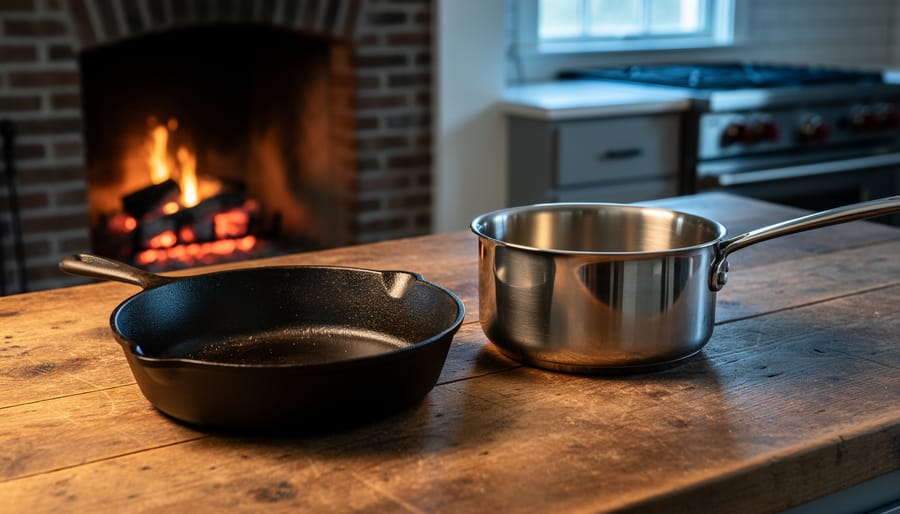


Compare cookware materials by testing heat distribution yourself: place a thin layer of flour in a pan over your fireplace grate or stovetop and watch how evenly it browns. Cast iron shows hot spots but retains heat beautifully for hearth cooking, while tri-ply stainless distributes warmth more uniformly but cools faster when moved from the flames.
Check manufacturer specifications for maximum safe temperatures before using any cookware over open flames or wood-fired heat sources. Modern non-stick coatings typically fail above 500°F, making them unsuitable for fireplace cooking, whereas enameled cast iron and bare metals handle the intense, fluctuating heat of wood fires without releasing harmful fumes or degrading.
Evaluate weight against your actual cooking style rather than following trends. That heavyweight Dutch oven performs magnificently nestled in fireplace coals for slow-braised stews, but becomes impractical for everyday stovetop use if you struggle lifting it. Lighter carbon steel offers similar heat retention with half the weight, making it ideal for those who want versatility between hearth and kitchen.
Consider longevity and repairability as part of your investment. Quality cast iron and carbon steel cookware lasts generations, develops natural non-stick seasoning, and requires minimal resources to maintain. Modern multi-layer stainless construction resists warping and corrosion but cannot be reseasoned if the cooking surface degrades. For homeowners embracing traditional cooking methods alongside contemporary convenience, understanding these practical performance differences transforms cookware selection from overwhelming to empowering.
What Actually Makes Cookware ‘Modern’
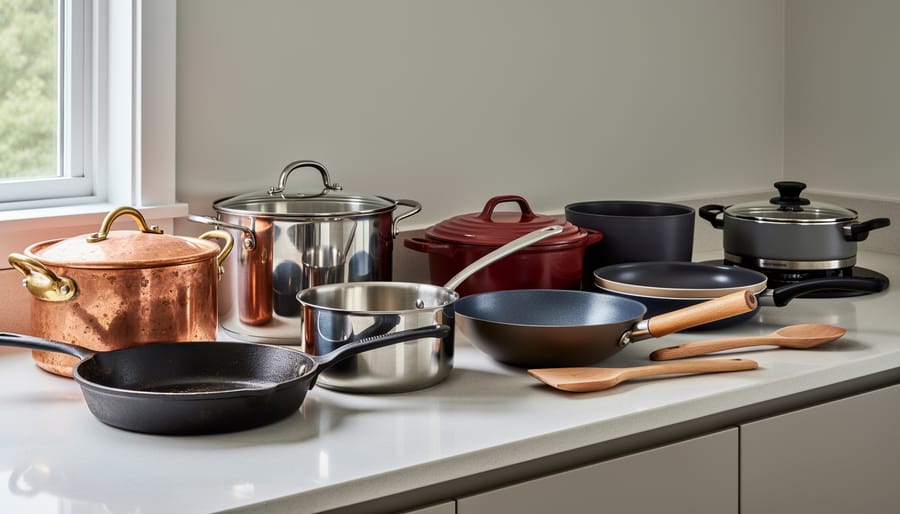
Material Science Behind Today’s Pots and Pans
Today’s cookware represents a fascinating blend of chemistry and engineering, designed to make your cooking experience safer and more enjoyable. Whether you’re preparing meals on your gas range or experimenting with hearth cooking, understanding these materials helps you choose the right tools.
Anodized aluminum has become incredibly popular, and for good reason. This process transforms regular aluminum through an electrochemical treatment that hardens the surface, making it scratch-resistant and naturally non-stick. The resulting cookware heats evenly and quickly, while being lighter than cast iron—a real bonus when you’re moving pots around your cooking space. Even better, the anodizing process seals the aluminum, preventing any metal from leaching into your food.
Ceramic coatings offer another modern solution, providing a non-stick surface without traditional PTFE compounds. These mineral-based coatings can withstand high temperatures, making them suitable for various cooking methods. They’re also an eco-friendly choice, as they typically contain no harmful chemicals and produce fewer emissions during manufacturing.
Multi-layer construction, often called clad or tri-ply, combines different metals to maximize performance. Typically, you’ll find stainless steel on the outside for durability, aluminum or copper in the middle for heat conductivity, and stainless steel inside for a safe cooking surface. This engineering delivers restaurant-quality results at home, distributing heat evenly to prevent hot spots that can burn your carefully prepared meals.
How Heat Distribution Changed Everything
Understanding heat distribution is like comparing the warmth of a traditional fireplace to modern heating systems—both work, but one does the job more consistently. Traditional cookware, especially cast iron pieces our grandparents used over open flames, relied on sheer mass and time to distribute heat. These pieces would develop hot spots directly over the fire, requiring constant attention and rotation.
Modern cookware takes a smarter approach through layered construction and advanced materials. Stainless steel pans now feature aluminum or copper cores that spread heat rapidly across the entire cooking surface, eliminating those frustrating hot spots that can burn your food. For those who enjoy fireplace cooking, this innovation means you can achieve restaurant-quality results even with the unpredictable heat patterns of live flames.
The difference becomes especially noticeable when you’re working with a wood fire or positioning cookware on stovetops. Modern tri-ply or five-ply constructions respond quickly to temperature changes, giving you better control whether you’re simmering a sauce or searing vegetables. This responsive heating also means more energy efficiency—your cookware works with your heat source rather than fighting against it, which aligns beautifully with eco-conscious cooking practices that minimize fuel consumption while maximizing results.
Modern Cookware vs. Traditional Cast Iron: The Real Performance Test
Heat Retention: Why Your Grandma’s Pan Still Wins
There’s a reason your grandmother’s cast iron skillet has survived decades while modern nonstick pans get replaced every few years. When it comes to heat retention, traditional cookware still holds the crown, especially if you’re cooking over your fireplace or hearth.
Think of it this way: cast iron and heavy stainless steel are like the thermal batteries of the cooking world. They absorb heat slowly and release it evenly over time, which is perfect for the fluctuating temperatures you encounter with wood fire cooking. Modern lightweight aluminum pans, while they heat up quickly on a gas stove, simply can’t maintain that steady warmth when you pull them away from direct flame.
This difference becomes critical during fireplace cooking. When you’re roasting vegetables or searing meat over coals, you need cookware that won’t lose its heat the moment you adjust position or add ingredients. Traditional heavy-gauge materials keep your food cooking consistently, even as the fire naturally ebbs and flows.
Here’s the practical advantage: that Dutch oven grandma used isn’t just nostalgic, it’s genuinely superior for slow-cooked stews and bread baking in your fireplace. The thick walls create an even heat envelope around your food, mimicking a traditional oven’s performance.
Modern cookware has its place in convenience and quick weeknight meals, but for authentic hearth cooking where heat retention directly impacts your results, traditional heavy cookware remains unmatched. Plus, you’re making an eco-friendly choice by using pieces that last generations rather than ending up in landfills after a few years of use.
Cleaning and Maintenance Reality Check
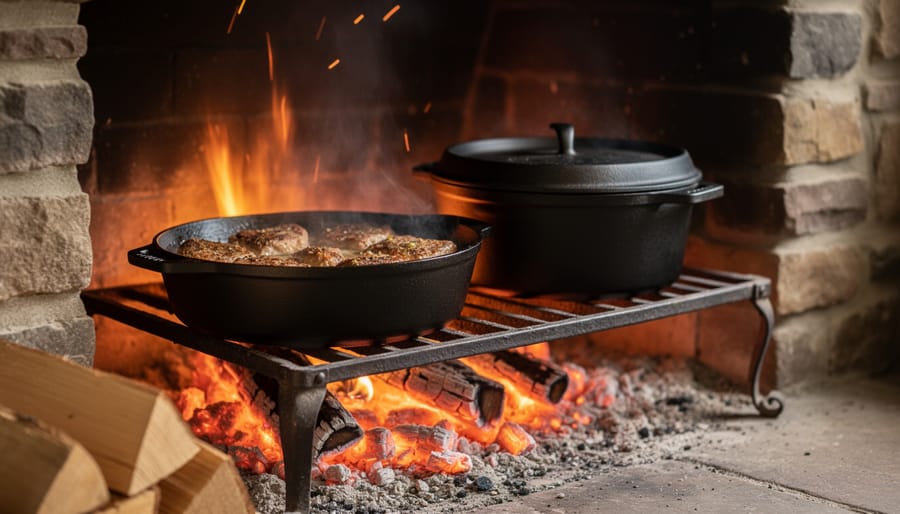
Let’s be honest about what daily cleanup really looks like. Modern non-stick cookware promises easy cleaning, and it mostly delivers. A quick wipe with a soft sponge and warm soapy water typically does the trick. However, these coatings can degrade over time, especially if you’re cooking over the intense heat of a hearth fire, which makes proper care essential for longevity.
Cast iron and carbon steel require a different mindset. Yes, you’ll need to maintain the seasoning, but it’s not the daunting task many fear. After cooking, a simple scrub with coarse salt and a light coating of oil usually suffices. The payoff is a pan that actually improves with use rather than deteriorating.
Stainless steel sits somewhere in between. Food may stick occasionally, requiring a bit more elbow grease, but these pans handle anything you throw at them, including metal utensils and high-heat cooking situations common in fireplace cooking.
The real question isn’t which is easiest, but which maintenance routine fits your lifestyle. If you cook daily and value durability, seasoning a cast iron pan becomes second nature. If you prefer grab-and-go convenience, quality non-stick might suit you better.
Durability Over Decades: What Actually Lasts
When you’re investing in cookware, thinking long-term makes both financial and environmental sense. Cast iron stands as the champion of longevity, often lasting generations when properly maintained. These pieces actually improve with age, developing seasoning that enhances their non-stick properties naturally. Many families pass down cast iron skillets as heirlooms, making them perhaps the most sustainable cookware choice available.
Stainless steel comes in a close second, resistant to rust and corrosion when you choose quality pieces with thick, multi-layered construction. These pans can serve you faithfully for 20-30 years or more, making the higher upfront cost worthwhile over time.
The durability of ceramic cookware varies significantly by brand and usage. While beautifully aligned with eco-friendly values through non-toxic coatings, ceramic typically lasts 2-5 years with careful handling. Non-stick surfaces generally have the shortest lifespan, requiring replacement every few years as coatings degrade.
For those embracing hearth cooking as part of sustainable living, investing in cast iron and quality stainless steel means fewer replacements, less manufacturing impact, and cookware that transitions beautifully between your stovetop, oven, and fireplace. True durability means buying once and using mindfully for decades.
The Best Modern Cookware for Fireplace and Hearth Cooking
Carbon Steel: The Modern Alternative Nobody Talks About
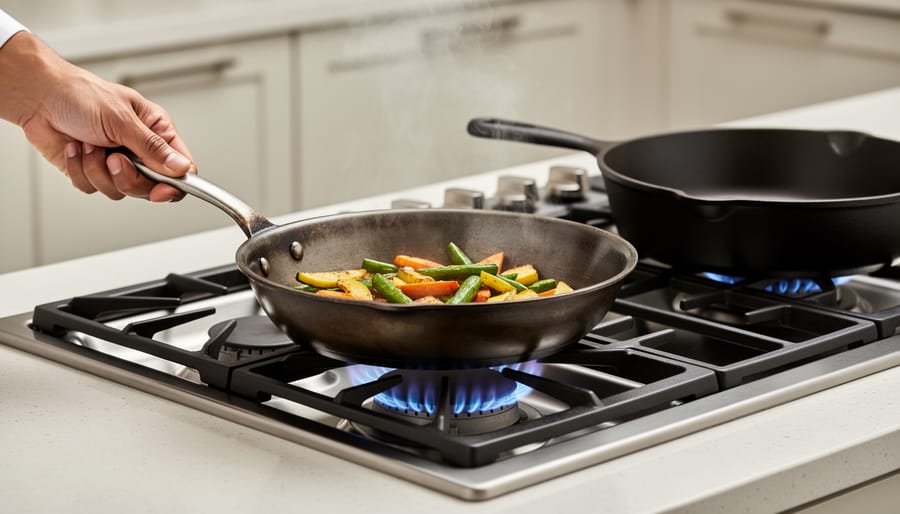
Here’s a cookware material that deserves far more attention than it gets: carbon steel. Think of it as the best-kept secret among serious home cooks, especially those who love the romance and practicality of cooking over live flames in their fireplace.
Carbon steel sits beautifully between cast iron’s rustic charm and stainless steel’s modern convenience. It heats up quickly and evenly, making it ideal for searing steaks over your hearth or preparing a quick vegetable sauté. Unlike cast iron, which can feel cumbersome, carbon steel pans are surprisingly lightweight and maneuverable, perfect for those moments when you need to adjust your cookware over shifting coals.
What makes carbon steel particularly appealing for fireplace cooking enthusiasts is its incredible heat tolerance and natural non-stick properties once seasoned. You’ll develop that coveted patina over time, creating a unique cooking surface that’s entirely your own. It’s a living piece of cookware that improves with use, much like how a well-tended fireplace becomes the heart of your home.
From an eco-friendly perspective, carbon steel checks all the boxes. It’s made from simple, recyclable materials without chemical coatings, and with proper care, these pans last generations. They embody that sustainable, back-to-basics approach that aligns perfectly with using your fireplace as both a heat source and cooking platform. Plus, watching a carbon steel pan develop character over countless fireside meals adds another layer of satisfaction to your cooking experience.
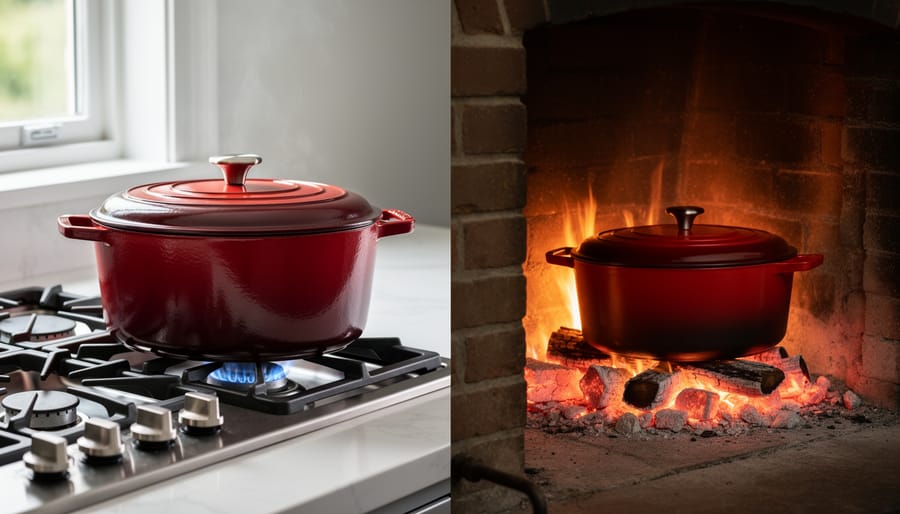
Enameled Cast Iron: When Modern Meets Traditional
Enameled cast iron represents the perfect marriage of old-world durability and contemporary convenience, making it an exceptional choice for both modern kitchens and traditional hearth cooking. This innovative cookware takes the legendary heat retention of cast iron and coats it with a smooth, glassy enamel finish that eliminates the need for seasoning while providing a non-reactive cooking surface.
For fireplace enthusiasts exploring hearth cooking, enameled cast iron Dutch ovens and casseroles are game-changers. The enamel coating protects the iron from direct flame damage while still delivering that wonderfully even heat distribution that makes cast iron perfect for slow-braising stews, baking artisan bread, or roasting vegetables over glowing coals. Unlike traditional cast iron, you won’t need to worry about acidic ingredients like tomatoes or wine affecting the surface or imparting metallic flavors.
The maintenance benefits alone make this a smart investment for modern homeowners. Simply wash with soap and water—no elaborate seasoning rituals required. The enamel surface resists staining and doesn’t absorb odors, meaning your beef stew won’t flavor tomorrow’s berry cobbler. While the enamel coating does require gentler handling than bare cast iron to prevent chipping, quality pieces from reputable manufacturers often come with lifetime warranties.
From an eco-friendly perspective, enameled cast iron’s exceptional longevity means less waste and fewer replacements over the years. These pieces become cherished heirlooms that bridge generations, combining timeless functionality with modern practicality. Whether you’re cooking on your stovetop or embracing the warmth of hearth cooking, enameled cast iron delivers consistent, reliable performance that respects both tradition and contemporary lifestyles.
Safety Considerations: What You Need to Know Before Buying
Temperature Limits That Actually Matter
When cooking over your fireplace, understanding temperature limits isn’t just about performance—it’s about safety and protecting your investment. Unlike stovetop cooking where you control the dial, hearth cooking requires you to know your cookware’s boundaries.
Cast iron and carbon steel are your champions here, safely handling temperatures up to 1500°F. This makes them perfect for positioning directly in hot coals or hanging over open flames. Stainless steel with aluminum or copper cores typically manages up to 500-600°F, which works beautifully for moderate hearth cooking but requires more careful placement away from intense heat.
The real caution comes with nonstick coatings. Traditional Teflon starts breaking down around 500°F, releasing potentially harmful fumes—a temperature you’ll easily reach in fireplace cooking. If you love the convenience of nonstick, ceramic-coated options offer better heat tolerance up to about 800°F, though they still require vigilance.
For oven-safe cookware with wooden or plastic handles, those components typically fail between 350-450°F. When cooking by the fire, choose pieces with metal handles or those specifically designed for open-flame use. Your cookware should enhance your fireside cooking experience, not create hazardous situations that compromise your home’s cozy atmosphere.
Coating Degradation and Health Concerns
Let’s talk honestly about non-stick coatings without creating unnecessary worry. Modern non-stick cookware has come a long way since concerns about PFOA emerged years ago. Today’s reputable manufacturers have eliminated PFOA from their production processes, making current products significantly safer than older versions.
The main consideration with non-stick coatings is proper use. When heated beyond 500°F, some coatings can begin to break down and release fumes. For everyday stovetop cooking, this isn’t typically an issue, but it matters for high-heat applications like searing over a wood fire or close to hearth flames. If you’re cooking near your fireplace, you’ll want to maintain moderate temperatures and avoid leaving empty pans near intense heat.
Over time, all non-stick coatings will show wear. Once you notice flaking or peeling, it’s time to replace the pan. While accidentally consuming small flakes isn’t considered dangerous, degraded coatings lose their effectiveness and can transfer particles to food.
For those seeking peace of mind, consider stainless steel safety or cast iron alternatives for high-heat fireplace cooking, reserving non-stick pans for gentler stovetop tasks where their convenience truly shines.
Making the Right Choice for Your Cooking Style
When Modern Cookware Actually Wins
Let’s be honest—modern cookware absolutely has its place in your kitchen, even if you love the romance of hearth cooking. For everyday meal preparation, nonstick pans make weeknight dinners manageable when you’re tired after work. They clean up quickly, require less oil, and let you focus on getting food on the table rather than scrubbing stubborn residue.
If you’re managing specific dietary needs, modern options shine. Ceramic and quality nonstick surfaces allow for low-fat cooking without sacrificing results. They’re also lighter weight, making them accessible for cooks with mobility concerns or those who simply don’t want to wrestle with heavy cast iron after a long day.
Temperature precision matters too. When you need exact heat control for delicate sauces or tempering chocolate, modern cookware on a conventional stovetop gives you that consistency. While modern cookware comparisons often focus on performance differences, they rarely mention that these pieces excel in situations requiring predictable, adjustable heat.
For busy households, the convenience factor is real. Modern cookware heats faster, requires less maintenance, and doesn’t need seasoning. If your lifestyle includes quick meals between activities rather than leisurely hearth-side cooking sessions, these practical advantages make modern options the smarter everyday choice. It’s about matching your tools to your actual cooking patterns.
When to Stick With Traditional
Sometimes the old ways truly are the best ways, especially when it comes to cooking over an open flame. If you’re passionate about authentic hearth cooking and embracing your fireplace as more than just a heat source, traditional cast iron and wrought iron cookware remain unmatched champions.
For open-fire cooking, traditional materials handle the intense, uneven heat of burning wood far better than their modern counterparts. That heavy cast iron Dutch oven can sit directly in hot coals without warping or releasing questionable fumes, something many modern non-stick surfaces simply cannot do safely. The thermal mass of traditional cookware actually becomes an advantage when you’re working with fluctuating fire temperatures, providing steady, even cooking despite the dancing flames.
There’s also something wonderfully authentic about preparing a hearty stew in the same type of pot your great-grandparents used. If you’re creating a genuine hearth-cooking experience, perhaps for family gatherings or to embrace a more self-sufficient lifestyle, traditional cookware connects you to centuries of culinary heritage.
Consider sticking with traditional options when you’re planning regular fireplace cooking sessions, want equipment that lasts generations with proper care, or value the eco-friendly aspect of owning fewer items that never need replacing. These time-tested tools align perfectly with sustainable living practices while delivering uncompromising performance where it matters most.
The choice between modern and traditional cookware isn’t about declaring one superior to the other—it’s about finding what works best for your kitchen, cooking style, and values. Both have earned their place in today’s homes, and many passionate cooks find themselves reaching for different pieces depending on the task at hand.
If you’re drawn to the romance of hearth cooking or regularly use your fireplace for preparing meals, cast iron and other traditional materials offer unmatched durability and heat retention that modern nonstick simply can’t match for those high-heat, rustic cooking experiences. There’s something deeply satisfying about using cookware that connects us to time-honored cooking methods while gathering around the warmth of a fire.
For everyday stovetop cooking, however, modern options like stainless steel, anodized aluminum, and ceramic coatings provide convenience and versatility that fit our busy lives. The key is being honest about how you actually cook, not how you imagine you might cook someday.
When making your decision, consider these practical factors: How much time do you have for maintenance? What’s your budget for both initial purchase and long-term replacement? How important are eco-friendly and sustainable options to your household? Do you cook over open flames or primarily on conventional heat sources?
The most sustainable choice might be investing in quality pieces—whether modern or traditional—that will serve you for years rather than constantly replacing cheaper alternatives. Your kitchen can happily accommodate both worlds, creating a collection that truly serves your lifestyle.