

Verify your pellet supplier holds FSC or SFI certification before purchasing—these third-party standards guarantee your fuel comes from responsibly managed forests where trees are replanted and ecosystems protected. Request documentation showing chain-of-custody tracking, which proves your pellets weren’t mixed with non-sustainable materials during manufacturing and distribution.
Source pellets locally within a 100-mile radius whenever possible. Transportation accounts for a significant portion of biomass fuel’s carbon footprint, and regional suppliers typically use agricultural byproducts or mill waste that would otherwise decompose and release methane. Local sourcing also supports your community’s economy while reducing the environmental cost of long-haul shipping.
Examine the pellet composition listed on packaging—premium sustainable options use 100% sawdust, wood chips, or agricultural residues like corn stalks and grass clippings, not virgin timber. Additives and binders should be minimal or non-existent, as pure biomass burns cleaner and produces less ash while maintaining the eco-friendly heating profile that makes biomass fireplace inserts attractive alternatives to fossil fuel systems.
Calculate your annual pellet consumption and establish a relationship with certified suppliers who can provide consistent sourcing documentation. Most households using biomass inserts as primary heat sources consume 3-5 tons per season, and bulk purchasing from verified sustainable sources often includes delivery and storage consultation. This forward planning ensures you’re never forced to compromise your environmental standards during winter shortages, while also locking in better pricing and building trust with suppliers who prioritize transparency about their forestry and agricultural practices.
What Makes a Biomass Fireplace Insert Truly Sustainable
When you think about sustainability, it’s tempting to focus solely on the fireplace insert sitting in your living room. But here’s the truth: a biomass fireplace insert is only as sustainable as the complete journey of the fuel it burns. The real story of eco-friendly heating begins long before those pellets reach your firebox and continues well after the warmth fills your home.
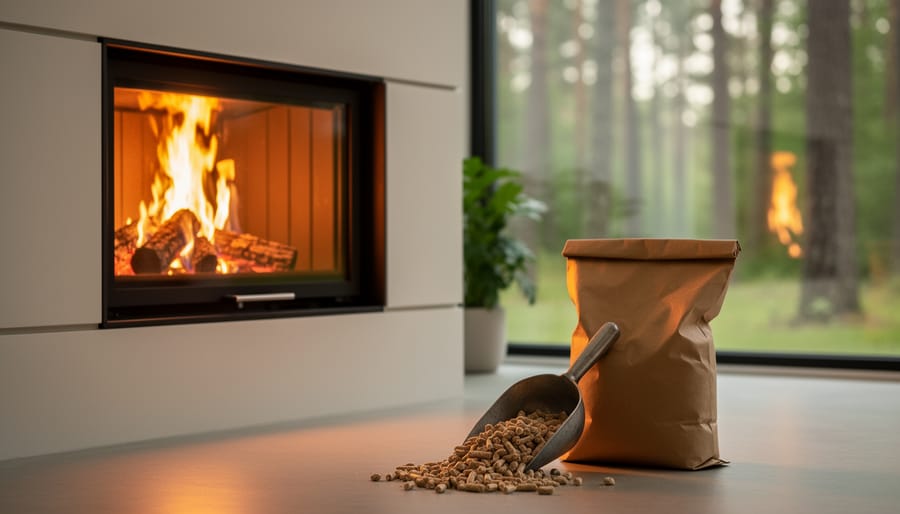
Biomass fireplace inserts work by burning compressed wood pellets made from sawdust, wood shavings, and other forestry byproducts. These inserts feed pellets automatically into a combustion chamber where they burn at extremely high temperatures, converting nearly all the fuel into heat with minimal waste. The efficiency here is remarkable, with quality units converting up to 85% of the fuel’s energy into usable heat for your space. That’s significantly better than traditional wood-burning fireplaces that lose most of their heat up the chimney.
But efficiency is only half the sustainability equation. The other half lies in where those pellets come from, and this is where pellet quality matters enormously. Sustainable pellets come from responsibly managed forests where trees are harvested at a rate that allows natural regeneration. They’re often made from waste materials that would otherwise decompose and release carbon anyway, creating a clever closed-loop system. When trees grow, they absorb carbon dioxide. When you burn pellets made from those trees, you’re essentially releasing that same carbon back, making the process carbon-neutral when done correctly.
The technology inside your insert plays a crucial role in biomass insert performance, but even the most advanced combustion system can’t compensate for poorly sourced fuel. Low-quality pellets from unsustainable sources undermine the entire environmental benefit, producing more emissions and supporting forestry practices that damage ecosystems. That’s why understanding your pellet source isn’t just an afterthought, it’s essential to creating a truly sustainable heating solution that aligns with your values and actually benefits the planet.
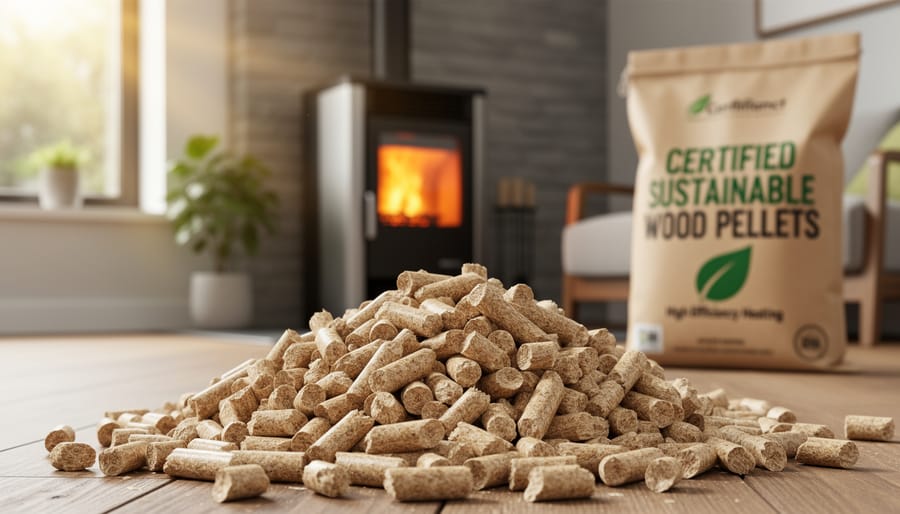
The Real Story Behind Your Fireplace Pellets
Sustainable Sources: What to Look For
When choosing biomass fuel for your fireplace insert, knowing where your pellets come from makes all the difference for both environmental impact and heating performance. The most sustainable sources transform what would otherwise be waste into efficient warmth for your home.
Sawmill waste and wood manufacturing byproducts represent some of the greenest options available. These materials—sawdust, wood shavings, and chips—are leftovers from furniture production, lumber processing, and other wood industries. Rather than ending up in landfills, they’re compressed into dense pellets that burn cleanly and efficiently. You’re essentially giving new life to materials that have already served one purpose.
Forest thinning projects offer another excellent sustainable source. These initiatives remove excess vegetation and smaller trees to prevent catastrophic wildfires and promote forest health. The removed material becomes pellet fuel, creating a win-win scenario where fire prevention efforts also generate heating resources for your home.
Look for pellets sourced from certified managed forests, which operate under strict sustainability standards. Organizations like the Forest Stewardship Council (FSC) and the Sustainable Forestry Initiative (SFI) certify forests that replant trees, protect wildlife habitats, and maintain ecological balance. These certifications appear on pellet bags, giving you confidence in your purchase.
The beauty of biomass lies in its carbon-neutral cycle. Trees absorb carbon dioxide as they grow, then release that same carbon when burned—creating no net increase in atmospheric carbon. This natural balance, combined with minimal processing (pellets require far less energy to produce than fossil fuels to extract and refine), makes biomass an authentically eco-friendly heating solution.
When shopping, check packaging for certifications and source information. Reputable manufacturers proudly display where their materials originate, demonstrating transparency in their sustainability commitments. Your biomass fireplace insert becomes truly green when fueled by these thoughtfully sourced materials.
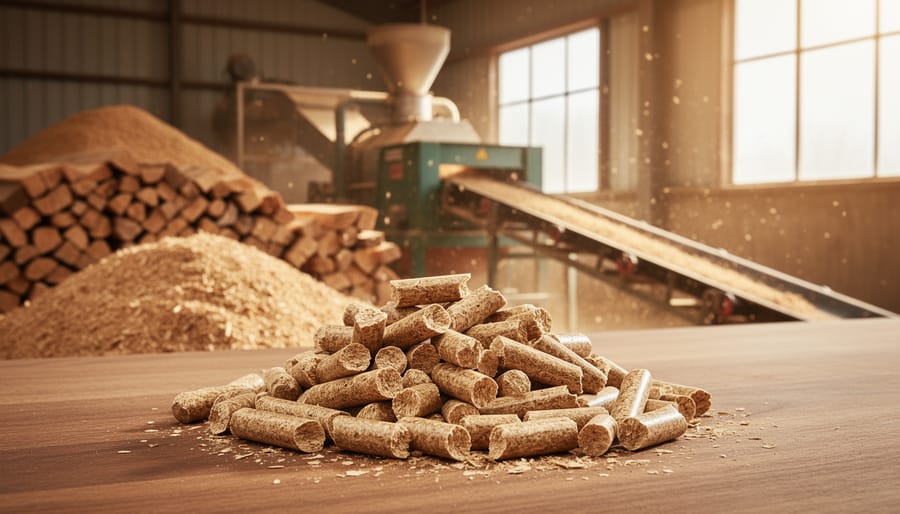
Red Flags in Pellet Sourcing
While most pellet producers operate responsibly, staying alert to certain warning signs helps ensure your biomass fireplace insert truly delivers on its eco-friendly promise. Understanding what to watch for empowers you to make purchasing decisions that align with your environmental values.
One significant concern is pellet production linked to old-growth forest harvesting. These ancient woodlands represent irreplaceable ecosystems that took centuries to develop. Pellets should come exclusively from sustainably managed forests, mill residues, or reclaimed wood sources. If a manufacturer can’t clearly explain their wood sources, that’s your first red flag.
Clear-cutting practices present another troubling issue. When forests are completely leveled specifically for pellet production rather than using sawmill byproducts, the environmental equation changes dramatically. This defeats the purpose of choosing biomass as a sustainable heating option. Responsible pellet manufacturers source their raw materials from forestry operations that practice selective harvesting or utilize waste materials that would otherwise decompose without purpose.
Transportation distance matters more than you might realize. Pellets shipped across oceans or continents carry a substantial carbon footprint that undermines their renewable credentials. Ideally, your pellets should originate within a few hundred miles of your home, supporting regional forestry management while minimizing transportation emissions.
Perhaps the biggest red flag is opacity in supply chains. Manufacturers who can’t or won’t share details about their sourcing practices likely have something to hide. Legitimate producers proudly display their certifications, explain their raw material sources, and maintain transparent relationships with forestry suppliers.
When sellers seem evasive about origin details, lack third-party certifications, or offer suspiciously cheap pellets without explanation, trust your instincts. Quality sustainable pellets reflect responsible practices throughout the entire production chain, and that transparency should extend all the way to you, the conscientious homeowner seeking genuinely eco-friendly warmth.
How to Identify Sustainably Sourced Pellets
Certifications That Actually Matter
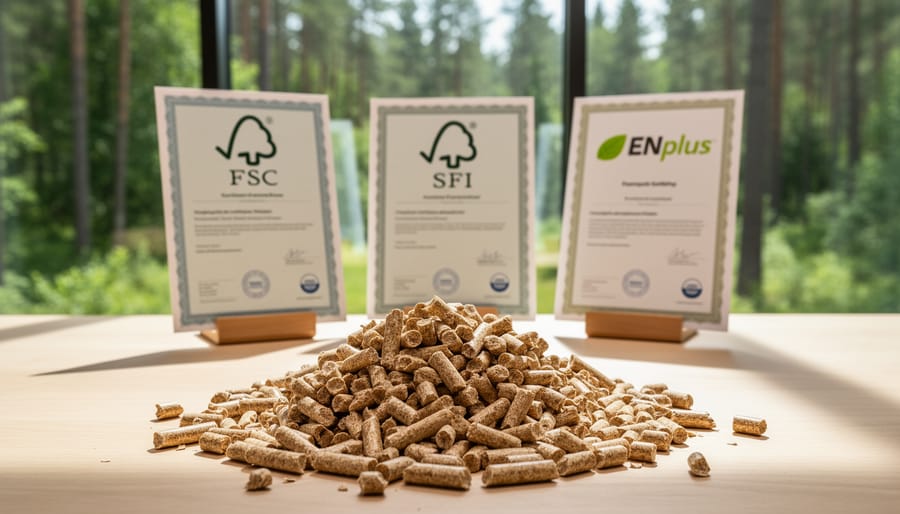
When you’re investing in a biomass fireplace insert, understanding pellet certifications helps ensure you’re getting fuel that’s truly sustainable and performs as promised. Let’s break down the three certifications that genuinely matter.
The Forest Stewardship Council (FSC) certification is your gold standard for responsibly sourced wood materials. When pellets carry the FSC label, it guarantees the wood comes from forests managed with strict environmental, social, and economic standards. This means no illegal logging, protection of indigenous rights, and maintenance of biodiversity. To verify authenticity, look for the FSC trademark with a unique license code on the bag, which you can cross-reference on the FSC database website.
The Sustainable Forestry Initiative (SFI) offers similar assurances with a North American focus. SFI-certified pellets come from forests managed to protect water quality, biodiversity, and wildlife habitat while supporting local communities. The certification emphasizes continuous improvement in forest management practices. You’ll find the SFI label prominently displayed on certified products, complete with a certification number you can verify through their online registry.
ENplus takes a different approach by focusing on pellet quality and production transparency rather than just forest sourcing. This European-born certification, now gaining traction worldwide, guarantees consistent pellet diameter, low moisture content, minimal ash production, and clean-burning performance. ENplus pellets are tested throughout the supply chain, not just at production. Look for the ENplus seal with a unique ID number, which you can verify on the ENplus website to confirm your dealer’s legitimacy.
These certifications work together to ensure your heating choice supports both environmental responsibility and reliable home comfort.
Questions to Ask Your Pellet Supplier
Finding a reliable pellet supplier is just as important as choosing the right biomass fireplace insert. When you’re investing in eco-friendly heating, you want to ensure every aspect of your setup aligns with sustainable values. The right questions can reveal whether a supplier truly prioritizes environmental responsibility or simply markets their products with green-sounding buzzwords.
Start by asking about sourcing location. Where do the raw materials come from, and how far do they travel to reach your home? Local sourcing reduces transportation emissions and supports your regional economy. A trustworthy supplier should readily share this information and take pride in short supply chains.
Next, inquire about wood origin specifically. Are the pellets made from sustainably harvested timber, or do they use sawmill waste and wood byproducts? The best pellets repurpose materials that would otherwise go to waste, turning excess sawdust and wood chips into valuable fuel. Ask if the wood comes from certified sustainable forests and what percentage consists of recycled materials.
Production methods matter too. How are the pellets manufactured? Look for suppliers who use minimal additives and rely on the wood’s natural lignin to bind pellets together. Chemical-free production ensures cleaner burning and better air quality in your home.
Don’t shy away from questions about supply chain transparency. Can they provide documentation of their sustainability claims? Do they work directly with mills and foresters, or through multiple intermediaries? Companies committed to genuine sustainability will welcome these questions and provide clear, detailed answers. If a supplier seems evasive or can’t back up their environmental claims, that’s your signal to keep searching for someone who can.
Local vs. Imported: The Geography of Sustainable Pellets
When you’re committed to eco-friendly heating, the journey your pellets take matters almost as much as what they’re made from. Think of it this way: sustainably harvested pellets that travel thousands of miles by truck may lose much of their environmental advantage before they ever reach your fireplace insert.
The carbon footprint of transportation is a significant piece of the sustainability puzzle. Pellets sourced within 100-200 miles of your home typically require minimal fuel for delivery, keeping emissions low and supporting your region’s green economy. Local sourcing also means fresher pellets with lower moisture content, since they spend less time in transit and storage. You’re not just reducing environmental impact; you’re often getting a better-burning product that produces more heat and less ash.
Beyond the environmental benefits, buying local creates a wonderful ripple effect in your community. You’re supporting regional forestry operations, local manufacturing jobs, and small businesses that share your commitment to sustainable living. Many homeowners find that establishing relationships with nearby pellet producers gives them access to better prices, reliable supply during peak heating season, and valuable insights about what’s actually in their fuel.
That said, local isn’t always an option. If you live in regions without robust forestry industries or pellet manufacturing, you may need to source from farther away. The key is finding the sweet spot between sustainability and practicality. Look for suppliers who consolidate shipments efficiently or use rail transport rather than long-haul trucking when possible.
Regional availability varies dramatically across the country. The Pacific Northwest, Northeast, and parts of the Midwest tend to have abundant local options, while some Southern and Western states may have limited choices. Check with regional forestry associations or biomass energy groups to discover suppliers you might not find through typical retail channels. Sometimes the most sustainable choice available to you is still far better than conventional heating alternatives, even if it’s not perfectly local.
Performance Benefits of Quality Sustainable Pellets
Choosing quality sustainable pellets isn’t just good for the planet—it’s one of the smartest decisions you can make for your biomass fireplace insert’s performance and longevity. When you invest in premium, sustainably sourced pellets, you’re actually getting a superior product that delivers tangible benefits throughout your heating season.
High-quality sustainable pellets burn hotter and more consistently than lower-grade alternatives, translating directly into better heating efficiency for your home. These pellets typically have lower moisture content and higher density, which means more heat per pound and fewer trips to refill your hopper. You’ll notice the difference on those chilly winter evenings when your insert maintains a steady, comfortable warmth with less fuel consumption.
The cleaner burn of quality pellets creates significantly less ash and residue. Instead of cleaning out your firebox every few days, you might only need to do it weekly or even less frequently. This reduction in ash production also means less buildup in your chimney and venting system, which translates to safer operation and reduced annual maintenance costs. Think of it as your insert’s way of thanking you for the premium fuel.
Sustainably produced pellets contain fewer contaminants, additives, and impurities that can damage your insert’s internal components over time. The consistent quality protects delicate parts like the burn pot, heat exchanger, and auger system from premature wear. This means your investment in a biomass fireplace insert will serve you reliably for many more years.
You’ll also appreciate the cleaner glass door that quality pellets provide. The efficient combustion produces minimal soot, keeping your viewing window clear so you can enjoy the mesmerizing flame without constant scrubbing. It’s a small detail that makes a big difference in your daily fireplace experience, allowing you to fully embrace the ambiance and warmth that drew you to biomass heating in the first place.
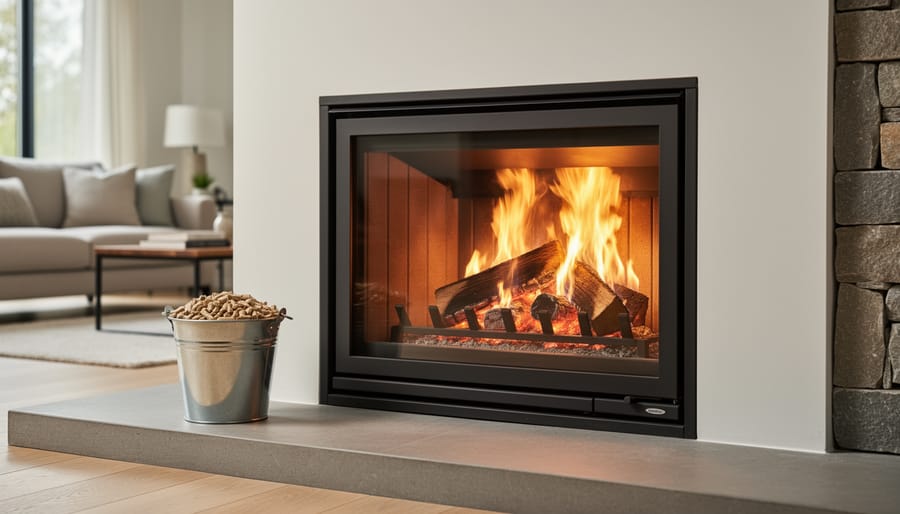
Making the Switch: Your Action Plan
Making the transition to sustainably sourced pellets for your biomass fireplace insert is easier than you might think. With a clear action plan, you’ll be enjoying eco-friendly warmth in no time while supporting responsible forestry practices.
Start by identifying reputable pellet suppliers in your area. Local farm supply stores, specialty fireplace retailers, and home improvement centers typically carry pellet options. Many suppliers now prominently display sustainability certifications, making your search straightforward. Don’t hesitate to ask staff about the origin of their pellets and whether they carry certified sustainable options. Building a relationship with a knowledgeable local supplier can provide ongoing support and reliable sourcing.
When comparing prices, expect to pay slightly more for certified sustainable pellets, typically an additional five to fifteen percent over conventional options. However, this modest premium often comes with benefits beyond environmental stewardship. Higher quality sustainable pellets usually produce less ash, burn more efficiently, and reduce maintenance needs, potentially offsetting the initial cost difference through improved performance and fewer cleaning requirements.
Order your pellets during off-season months, usually late spring through early fall, when prices drop and availability increases. Many suppliers offer bulk discounts for purchasing multiple tons at once. A typical household using their biomass insert as a primary heat source burns two to three tons per heating season, so planning ahead makes financial sense.
Once your pellets arrive, proper pellet storage becomes crucial for maintaining their quality and efficiency. Keep pellets in a dry, well-ventilated space away from moisture, which can cause them to swell and become unusable. Many homeowners dedicate a corner of their garage or basement for pellet storage, using pallets to elevate bags off the floor.
Track your results during the first few weeks of use. Note burn efficiency, ash production, and heat output compared to your previous pellets. Quality sustainable pellets should burn cleanly with minimal residue. Take photos of ash levels after several burns to compare performance over time. If you notice issues like excessive clinkers or poor heat output, contact your supplier, as these problems might indicate pellet quality concerns rather than sustainability certification issues.
Your choice of pellets matters more than you might think. Every time you load your biomass fireplace insert, you’re making a decision that ripples far beyond the warmth of your living room. By prioritizing sustainably sourced pellets, you’re actively participating in a cleaner, greener future while enjoying the cozy ambiance that makes a house feel like home.
The beauty of pellet heating lies in its unique position as both a practical heating solution and an environmental statement. When you select certified, locally produced pellets from responsible suppliers, you’re supporting forests managed for long-term health, reducing transportation emissions, and helping build a market that rewards good stewardship. Your fireplace becomes more than just a source of heat—it becomes a reflection of your values.
Making sustainable choices doesn’t require sacrifice. In fact, the highest-quality pellets often come from the most responsibly managed sources, meaning you’re likely to see better performance, cleaner burns, and improved efficiency alongside the environmental benefits. This is home heating that genuinely works with nature rather than against it.
As you move forward, remember that information is power. Ask questions, seek certifications, and don’t hesitate to connect with suppliers who share your commitment to sustainability. Your biomass fireplace insert is an investment in comfort, efficiency, and environmental responsibility—and the pellets you choose bring that investment full circle.