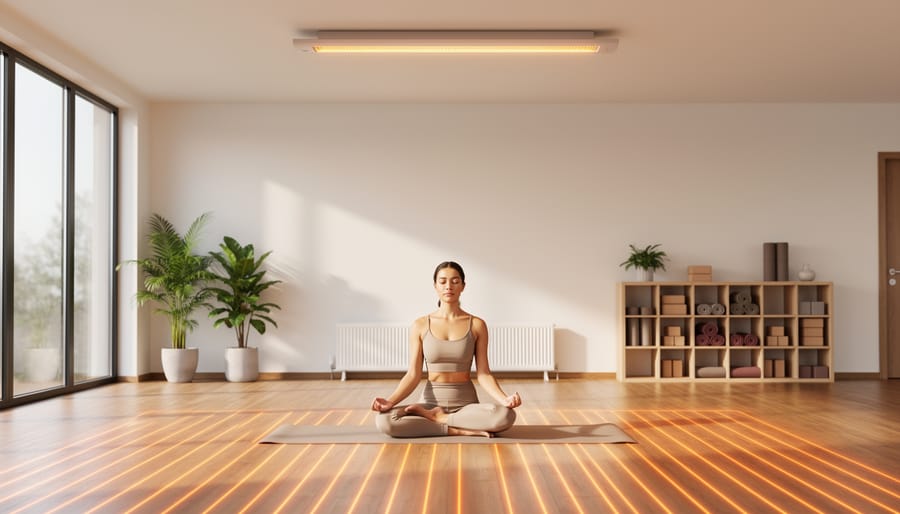


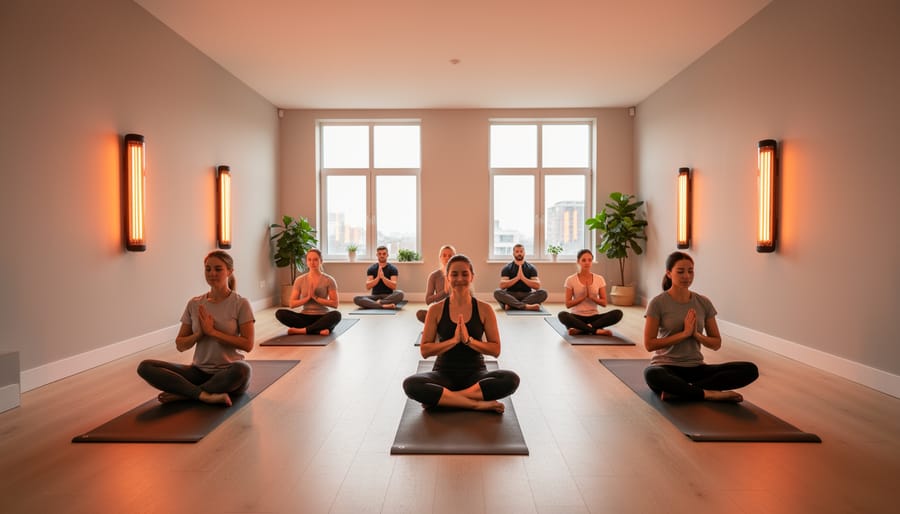
Choose infrared panel heaters for your yoga space to deliver silent, even warmth that radiates from walls or ceilings without disrupting breath work or meditation. These efficient units warm bodies and surfaces directly rather than circulating dusty air, creating the gentle, consistent heat essential for safe stretching and holding poses.
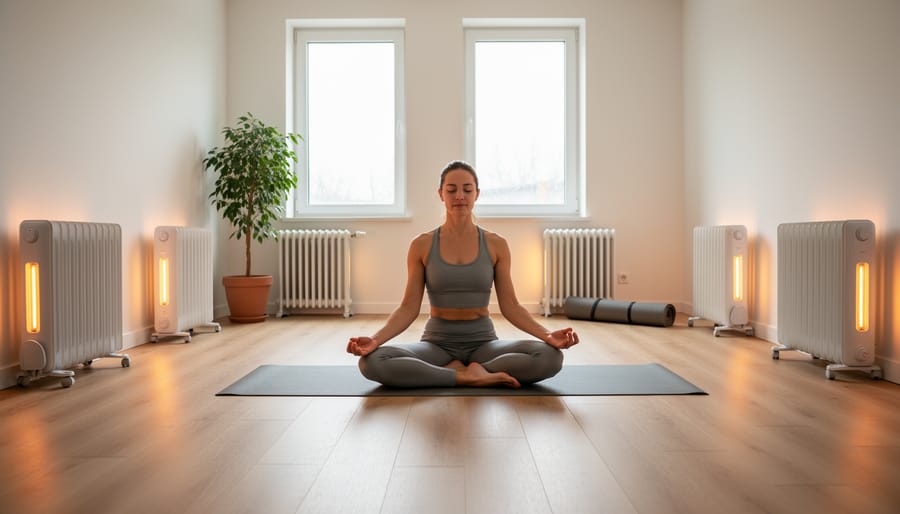
Position oil-filled radiators along perimeter walls at least three feet from your mat to prevent burns during floor exercises while maintaining stable temperatures between 75-80°F. Unlike forced-air systems, these quiet heaters won’t dry out airways or create distracting noise during practice, and their portability lets you move them between home spaces when your yoga room isn’t in use.
Install electric radiant floor heating beneath yoga studio flooring for the ultimate barefoot comfort and zero visual intrusion. This eco-friendly solution eliminates tripping hazards, operates silently, and distributes warmth evenly across the entire practice area, though it requires higher upfront investment and professional installation.
Avoid fan-forced heaters and traditional space heaters that blow air directly onto practitioners, as they create uneven hot spots, stir up dust particles, and generate white noise that interferes with focused breathing. Your yoga space deserves heating that supports mindful movement rather than competing with it, making the choice of heater as intentional as your practice itself.
What Makes a Yoga Room Heater Different?
Creating a comfortable yoga space requires more than just a standard room heater. The unique demands of yoga practice call for specific heating characteristics that traditional heating solutions often overlook.
Unlike typical living spaces where you might tolerate temperature fluctuations or occasional hot spots, a yoga room needs gentle, consistent warmth throughout. When you’re moving through poses and spending time on the floor, you’ll immediately notice cold zones or drafty areas. This is where even heat distribution becomes essential. Your body temperature naturally rises and falls during practice, so the heating solution needs to maintain a stable environment without creating uncomfortable warm pockets near the unit itself.
Noise levels matter tremendously in yoga spaces. The whirring of a fan or the clicking of a thermostat can disrupt the meditative quality of practice. Your yoga room heater should operate whisper-quiet, allowing you to focus on breath work and mindful movement without mechanical distractions.
Air quality considerations also set yoga heating apart from standard room heating. Since yoga emphasizes deep, controlled breathing, you want a heating method that doesn’t dry out the air excessively or circulate dust and allergens. Many practitioners find that eco-friendly heating solutions like radiant panels or infrared heaters work better than forced-air systems that can compromise air freshness.
Safety takes on extra importance when you’re moving through dynamic sequences and floor poses. Your heating solution needs to be floor-friendly, with no hot surfaces that could cause burns during stretches or inversions. Many yogis prefer wall-mounted or carefully positioned heaters that keep the practice area completely clear.
Finally, your yoga room heater should support the lifestyle element of your practice space. It should enhance the sanctuary-like quality of the room while providing the warmth needed for comfortable, safe movement. The right heating solution becomes an invisible support system for your practice rather than a distraction from it.
The Best Heater Types for Your Yoga Space
Infrared Heaters: The Silent Warmth Champion
Infrared heaters have emerged as the silent warmth champion for yoga spaces, and it’s easy to understand why once you experience their gentle, penetrating heat. Unlike traditional heaters that warm the air around you, infrared technology works by directly warming your body and the surfaces in your practice room—much like the sun’s natural rays on a pleasant spring day.
The silence factor alone makes infrared heaters ideal for yoga. There’s no fan noise, no clicking, no mechanical sounds to disrupt your meditation or break your concentration during savasana. You’ll maintain that peaceful sanctuary atmosphere essential for deepening your practice.
What truly sets infrared heaters apart is their ability to create targeted warmth without drying out the air. Traditional forced-air systems can leave your practice space feeling stuffy and parched, but infrared heat maintains natural humidity levels while keeping you comfortably warm. This means easier breathing during pranayama exercises and more comfortable extended floor work.
From an eco-friendly perspective, infrared heaters shine brightly. They’re remarkably energy-efficient because they heat objects and people directly rather than wasting energy warming empty air space. You’ll notice lower utility bills while maintaining consistent comfort throughout your practice session. Questions about infrared heating safety are common among new users, but these systems are designed with multiple safety features and produce no harmful emissions.
The quick heat-up time means your yoga room reaches optimal temperature faster, perfect for spontaneous practice sessions without lengthy waiting periods.
Oil-Filled Radiators: Steady Heat for Long Sessions
If you’re settling in for those long, restorative yoga sessions, oil-filled radiators deserve serious consideration. These gentle giants work beautifully for extended practice because they maintain remarkably consistent temperatures without the peaks and valleys you’ll get from quick-heating alternatives.
The magic happens through thermal oil that circulates within sealed columns, radiating warmth gradually and evenly throughout your space. This creates the kind of steady, enveloping heat that supports your practice without becoming distracting. You won’t find yourself adjusting the thermostat mid-downward dog because the room suddenly feels too warm or cool.
Safety stands out as another major advantage. Most oil-filled models feature tip-over protection and overheat safeguards, giving you peace of mind during floor-based sequences. The exterior surfaces stay warm rather than dangerously hot, which matters when you’re moving through poses close to the unit.
Perhaps most importantly for yogis, these heaters operate in complete silence. There’s no fan noise to interrupt your breathing exercises or meditation. The quiet operation preserves that peaceful atmosphere essential to mindful practice.
From an eco-conscious perspective, oil-filled radiators shine with their energy efficiency. Once they reach your desired temperature, they cycle on and off automatically, using minimal electricity to maintain warmth. They’re ideal investments for dedicated yoga practitioners who value both comfort and sustainability in their home practice space.
Ceramic Heaters: Quick Warmth with Caution
Ceramic heaters offer an accessible entry point for warming your yoga space without breaking the bank. These compact units heat up quickly—often within minutes—making them practical for spontaneous practice sessions. They work by passing electricity through ceramic plates that radiate warmth efficiently throughout small to medium-sized rooms.
However, yogis should approach ceramic heaters with awareness. Most models include fans that circulate warm air, which creates two potential challenges for your practice. First, the fan noise can disrupt meditation and quiet breathing exercises. Second, the constant air movement may stir up dust particles and create drafts during floor poses like child’s pose or savasana, when you’re closest to the ground.
These heaters shine in specific scenarios: pre-heating your space before practice begins, or in rooms under 150 square feet where their concentrated warmth proves effective. For the most yoga-friendly experience, position ceramic heaters at least six feet from your mat to minimize air disturbance, and consider running them on low settings during gentle practices.
If you choose this route, look for models with adjustable fan speeds and thermostats that cycle off automatically. While not the quietest or most eco-friendly solution, ceramic heaters can serve dedicated practitioners on a budget who understand their limitations.
Why Gas and Wood-Burning Options Fall Short
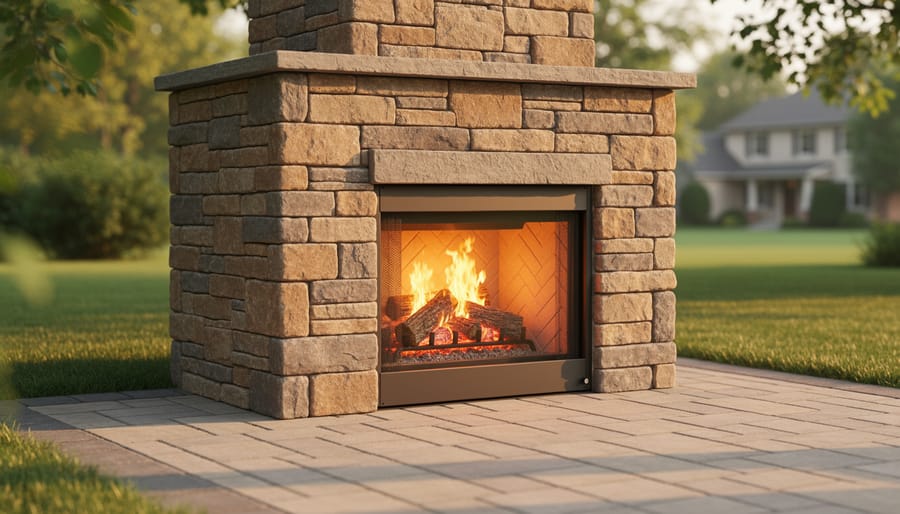
While traditional fireplaces and gas heaters create wonderful ambiance in many home spaces, they present unique challenges for dedicated yoga rooms that make them less than ideal choices.
The primary concern is air quality. Gas heaters release combustion byproducts into your practice space, even when properly vented. During yoga, when you’re taking deep, intentional breaths and holding poses, you want the cleanest possible air. Wood-burning fireplaces generate smoke particles and ash that can linger in the room, irritating respiratory passages during pranayama breathing exercises.
Moisture control is another significant issue. Gas combustion produces water vapor, which can increase humidity levels in your yoga space. Excessive moisture creates an uncomfortable environment and may damage yoga mats, props, and wood flooring over time.
Traditional fireplaces and gas heaters also create uneven heat distribution, with intense warmth near the source and cooler zones elsewhere. This makes it difficult to maintain the consistent, comfortable temperature needed throughout your entire practice area.
Ventilation requirements add another layer of complexity. Both options need adequate airflow for safety, yet yoga rooms benefit from controlled, draft-free environments. The open flames and glowing embers, while beautiful in living spaces, pose safety concerns when you’re moving through floor poses and inversions in close proximity to heating elements.
Room Heater Comparison: Top Picks for Yoga Practitioners
Now that we’ve explored what makes a great yoga room heater, let’s compare some standout options that combine warmth, safety, and the peaceful ambiance your practice deserves.
To help you choose the perfect heating companion for your yoga space, I’ve selected four models that excel in different scenarios. Each brings something special to your practice environment, whether you’re flowing through vinyasa or settling into meditation.
The Dyson HP01 Pure Hot + Cool stands out as a premium choice for yoga enthusiasts who value air quality alongside comfort. Priced around $400, this sleek tower heater covers rooms up to 300 square feet while quietly purifying the air as it heats. Its bladeless design eliminates exposed heating elements, making it exceptionally safe for floor-based stretches and inversions. The oscillation feature ensures even heat distribution throughout your practice space. However, the higher price point may give some practitioners pause, and its modern aesthetic might not suit everyone’s sanctuary vision.
For those seeking an eco-friendly infrared option, the Dr. Infrared Heater DR-968 delivers impressive performance at approximately $150. This compact unit efficiently heats spaces up to 400 square feet using gentle infrared warmth that mimics natural sunlight. It operates whisper-quiet, won’t dry out the air, and includes overheat protection plus a tip-over switch. The wooden cabinet adds an organic touch that complements mindful spaces beautifully. The main drawback is its bulkier footprint, which requires dedicated floor space away from your mat.
Budget-conscious yogis will appreciate the Lasko 754200 Ceramic Space Heater, typically available for under $30. Despite its modest price, this portable unit provides reliable warmth for smaller yoga rooms up to 200 square feet. It heats quickly, includes automatic overheat protection, and its lightweight design allows easy repositioning between sessions. The compact size makes storage simple when not in use. Keep in mind that it runs slightly louder than premium models and lacks the advanced features found in higher-end options.
Finally, the Vornado MVH Vortex Heater, priced around $90, offers an excellent middle-ground solution. Its unique vortex technology circulates warm air throughout rooms up to 300 square feet without creating distracting hot spots. The tip-over protection and cool-touch exterior make it ideal for active practices, while the simple controls keep operation intuitive. This model works beautifully for practitioners who want reliable performance without unnecessary complexity. The trade-off comes in its basic appearance, which won’t serve as a decorative element in your sanctuary.
Consider your practice style, room size, and budget when making your selection. Each of these heaters brings dependable warmth to support your journey while respecting the tranquil atmosphere essential to meaningful practice.
Safety First: Heating Your Practice Space Responsibly
Creating a safe, nurturing environment for your yoga practice means choosing a heater that works harmoniously with your movements and mindfulness practice. When you’re flowing through poses close to the floor, the last thing you want is worrying about accidentally bumping into a hot surface or knocking over your heat source.
Look for heaters with tip-over protection as an absolute must-have. This safety features automatically shuts off the unit if it gets knocked over during a particularly enthusiastic warrior pose. Cool-touch surfaces are equally important since yoga involves plenty of floor work where you might inadvertently brush against your heater. Ceramic and infrared models typically offer these protective features, making them ideal companions for your practice.
Placement matters tremendously in a yoga space. Position your heater at least three feet away from your mat, ensuring clear space around all sides. This creates a safety buffer while still allowing heat to circulate effectively. Never place heaters where they might get draped with a towel or blanket during your cool-down stretches.
Ventilation deserves special attention in yoga rooms since proper breathing is central to practice. While maintaining warmth, crack a window slightly or ensure your room has adequate air circulation. This prevents that stuffy, oxygen-depleted feeling that can interrupt your flow and mindfulness.
Consider eco-friendly heating options that maintain excellent air quality. Look for heaters without fans that stir up dust, and avoid combustion-based models that could introduce pollutants. Energy-efficient infrared and ceramic options provide clean heat while respecting both your practice and the planet, creating that perfect warm sanctuary where you can breathe deeply and move freely.
Creating the Perfect Temperature for Every Yoga Style
Finding your ideal yoga room temperature transforms your practice from uncomfortable to transcendent. Different yoga styles require distinct warmth levels to support your body’s needs and maximize the benefits of each session.
For hot yoga or Bikram practices, aim for temperatures between 95-105°F. This intense heat promotes deep muscle flexibility and cardiovascular engagement. Your heater should reach this temperature 30-45 minutes before class begins, allowing walls and floors to radiate consistent warmth throughout your session.
Vinyasa and power yoga flourish in moderate warmth, typically 80-85°F. This temperature range supports fluid movement without overwhelming your system. Pre-heat your space for 20-30 minutes to achieve even distribution.
Restorative and yin yoga benefit from gentler warmth around 75-80°F. Since you’ll hold poses longer with minimal movement, you need steady, enveloping heat that prevents cooling down without causing drowsiness.
Room size and insulation significantly impact heating efficiency. Smaller spaces under 150 square feet heat quickly with infrared panels or oil-filled radiators. Larger studios may require multiple heating sources or higher-wattage units positioned strategically around the perimeter.
Consider your room’s insulation quality when timing pre-heating. Well-insulated spaces retain warmth beautifully, while rooms with large windows or concrete floors need extended warm-up periods and potentially supplemental heating solutions. Draft-proofing doors and windows creates a more energy-efficient practice environment, reducing heating costs while maintaining the perfect temperature for your chosen style.
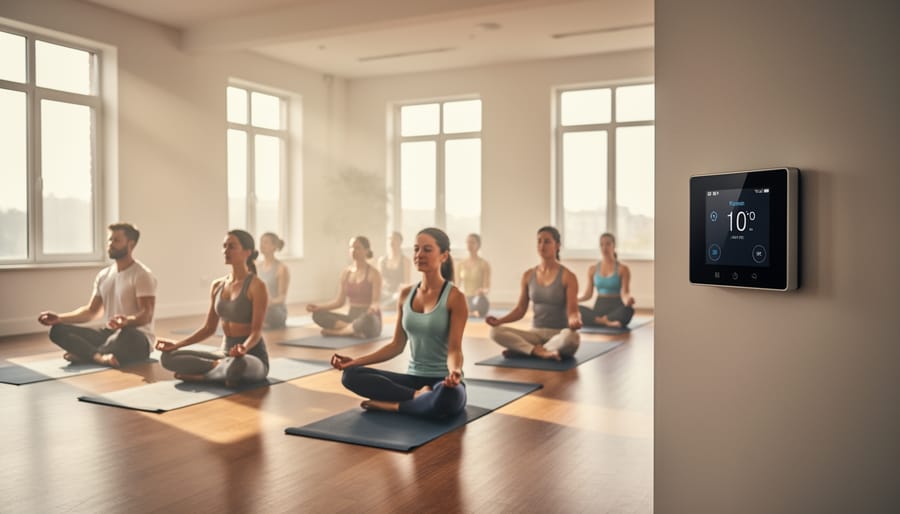
Choosing the right heater for your yoga space truly transforms your practice experience. The perfect yoga room heater creates a warm, peaceful sanctuary that supports deeper stretches and mindful breathing without distraction. When selecting your ideal heating solution, prioritize three essential features: whisper-quiet operation that won’t interrupt your flow, gentle even heat distribution that eliminates cold spots during floor work, and robust safety features including tip-over protection and cool-touch surfaces. Consider eco-friendly options like energy-efficient infrared or ceramic models that warm your space effectively while minimizing environmental impact. Your yoga practice deserves a heating solution that enhances comfort and focus, creating the serene atmosphere where mind and body can truly connect.