

Outdoor heating and cooling units represent a game-changing solution for homeowners who want to enjoy their patios, decks, and outdoor living spaces year-round. These dual-function systems, commonly known as heat pumps or ductless mini-splits, use advanced technology to extract warmth from outdoor air during winter and reverse the process to provide cooling relief in summer. Unlike traditional patio heaters that simply radiate heat in one direction, these units create controlled climate zones that transform your outdoor space into a genuine extension of your home.
The beauty of these systems lies in their versatility and efficiency. While a classic outdoor fireplace creates ambiance and focal-point warmth perfect for gathering around, an outdoor heating and cooling unit maintains consistent comfort across your entire outdoor area. They’re particularly valuable for enclosed or semi-enclosed spaces like screened porches, covered patios, and three-season rooms where you want reliable temperature control without the smoke, ash, or constant fuel management that comes with wood-burning options.
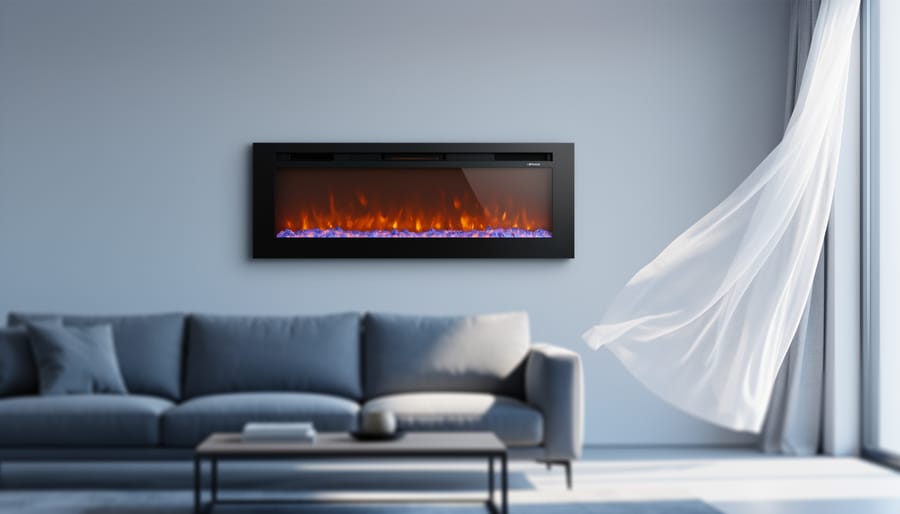
Most homeowners discover these units complement rather than replace their existing outdoor heating features. Picture enjoying your outdoor fireplace’s crackling flames and cozy glow while the heating unit maintains comfortable ambient temperature throughout the space. This combination delivers both the emotional warmth and practical comfort that makes outdoor living truly enjoyable, whether you’re hosting summer barbecues or winter evening gatherings around the fire.
What Exactly Is an Outdoor Heating and Cooling Unit?
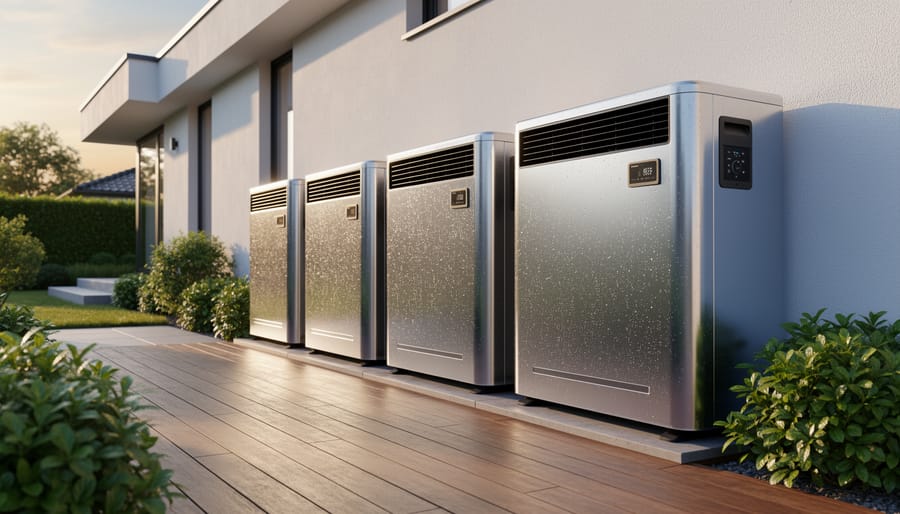
The Technology Behind the Comfort
At their heart, outdoor heating and cooling units operate on a beautifully simple principle: they move heat from one place to another rather than creating it from scratch. Think of it as a reversible comfort system for your outdoor space.
These units rely on heat pump technology, which works much like your refrigerator but in reverse. During cooling mode, the system pulls warm air from your outdoor area and releases it elsewhere, leaving behind a refreshing breeze. When you need warmth on chilly evenings, the process flips. The unit extracts heat from the outside air (yes, even cold air contains some heat energy) and concentrates it to warm your space.
The magic happens through a refrigerant that flows through coils, absorbing and releasing heat as it changes between liquid and gas states. A reversing valve is what makes these units dual-function, allowing the refrigerant to flow in either direction depending on whether you need heating or cooling.
What makes this technology particularly eco-friendly is its efficiency. Instead of burning fuel to create heat like traditional methods, heat pumps simply transfer existing thermal energy. For every unit of electricity used, they can move several units of heat, making them remarkably energy-efficient compared to resistance heating.
This means you’re not just getting versatile comfort for your outdoor living space. You’re choosing a solution that aligns with sustainable living principles while keeping your patio, deck, or outdoor room comfortable year-round. The system quietly works in the background, letting you focus on enjoying your outdoor retreat.
Indoor vs. Outdoor Units: Key Differences
The fundamental difference between indoor and outdoor heating and cooling units boils down to their ability to withstand Mother Nature’s moods. While your indoor furnace enjoys a cozy, protected environment, outdoor units face rain, snow, scorching sun, and everything in between.
Outdoor units feature heavy-duty weatherproof casings, typically constructed from galvanized steel or powder-coated aluminum that resists rust and corrosion. These protective shells shield delicate components like compressors, coils, and electrical connections from moisture damage. Think of it as the difference between a regular jacket and a rugged outdoor parka – both keep you warm, but only one is built for harsh conditions.
Durability requirements extend beyond just the exterior. Outdoor units incorporate specialized filters and drainage systems to handle debris, leaves, and moisture accumulation. Their electrical components are sealed and rated for outdoor exposure, preventing short circuits during storms.
Design considerations also differ significantly. Outdoor units prioritize ventilation and airflow accessibility, which is why you’ll notice those distinctive louvered sides. They’re engineered to operate efficiently in temperature extremes, from summer heat waves to winter freezes. This resilience comes at a premium, but it’s essential for reliable year-round performance in your outdoor living spaces, whether you’re complementing your patio fireplace setup or creating a comfortable outdoor entertainment area.
When an Outdoor Heating and Cooling Unit Makes Sense
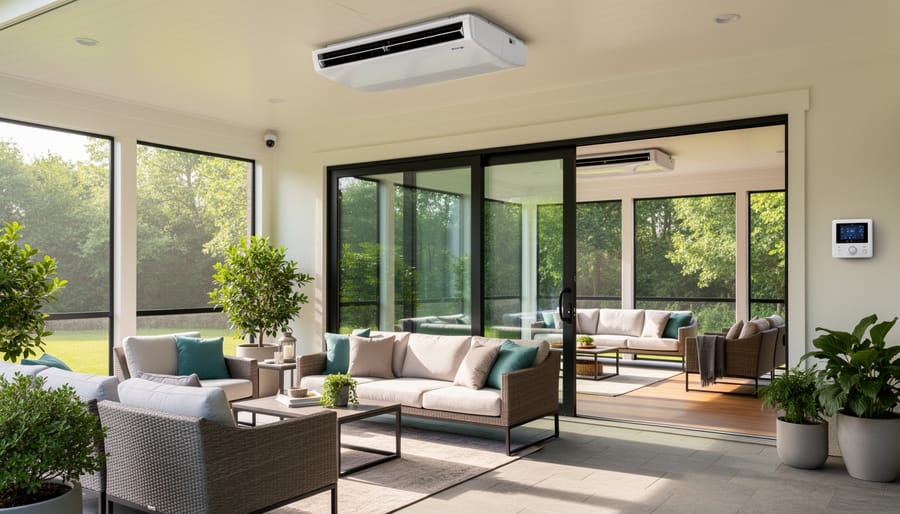
Perfect Spaces for Year-Round Climate Control
Outdoor heating and cooling units truly shine in specific spaces where you’ve invested in creating comfortable, weather-protected outdoor living areas. Enclosed patios with solid roofing represent ideal candidates for these dual-function systems, offering protection from the elements while still maintaining that connection to the outdoors you love. The contained environment allows these units to work efficiently without fighting against open-air conditions.
Screened porches are another perfect match, especially in regions with varying seasonal temperatures. These spaces benefit tremendously from climate control that adapts throughout the year—cooling during humid summer evenings and warming up chilly spring and fall gatherings. Three-season rooms, designed to extend your living space beyond traditional boundaries, become truly year-round retreats with proper heating and cooling support.
Outdoor kitchens deserve special consideration since these cooking spaces naturally generate heat during warmer months. A climate control unit helps maintain comfortable temperatures while you’re grilling, making the experience enjoyable for both the chef and guests. The cooling function proves particularly valuable here, while heating extends your outdoor cooking season well into cooler months.
Pool houses, garden studios, and converted garages used as entertainment spaces also benefit significantly from these versatile systems. The key factor connecting all these spaces is partial enclosure—enough structure to contain conditioned air effectively while maintaining that outdoor ambiance that makes these areas special gathering spots for family and friends.
Climate Considerations for Your Region
Your local climate plays a surprisingly big role in how well an outdoor heating and cooling unit will serve your needs and your budget. Think of it as matching the right tool to the job—what works beautifully in Arizona might struggle in Minnesota, and vice versa.
In regions with mild winters and scorching summers, these units truly shine. They excel at cooling outdoor spaces during those long, hot months while providing just enough warmth for the occasional chilly evening. The cooling function gets far more use, making the investment particularly worthwhile. Your unit won’t have to work overtime in extreme cold, which means better efficiency and lower energy bills.
For those living in areas with harsh winters, you’ll want to consider how your unit handles temperature extremes. Most outdoor heating and cooling systems have a minimum operating temperature—typically around 5 to 15 degrees Fahrenheit. Below that threshold, efficiency drops significantly or the unit may not function at all. In these climates, you might find that a traditional outdoor fireplace or fire feature serves as a better primary heat source during winter months, while your dual-function unit handles shoulder seasons beautifully.
Four-season climates offer the sweet spot for these systems. You’ll genuinely use both functions throughout the year, maximizing your return on investment. Spring and fall become more enjoyable as you extend your outdoor living season comfortably.
Consider your region’s humidity levels too. In damp climates, the dehumidifying benefit of cooling mode adds extra comfort value beyond just temperature control.
Types of Outdoor Heating and Cooling Systems
Ductless Mini-Split Systems
Ductless mini-split systems have become the go-to choice for homeowners wanting year-round comfort in their outdoor living spaces. Think of them as a streamlined version of your home’s central air system, but without the need for extensive ductwork that traditional systems require.
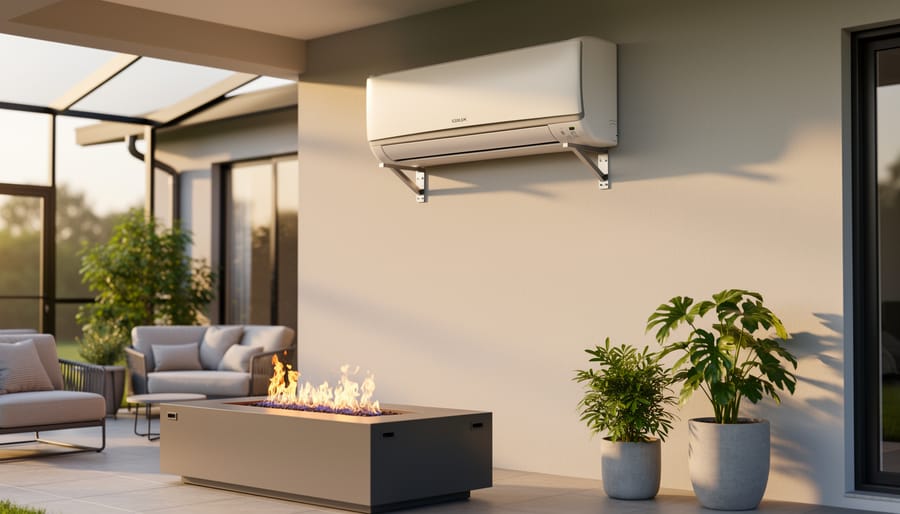
Here’s how they work: an outdoor compressor unit connects to one or more indoor air handlers through a small conduit. These sleek wall-mounted units quietly heat or cool your covered patio, sunroom, or outdoor kitchen with remarkable efficiency. The beauty of this setup is its flexibility—you can control each zone independently, so your outdoor dining area stays perfectly comfortable while your enclosed porch runs at a different temperature.
What makes mini-splits especially popular is their straightforward installation. Unlike traditional HVAC systems that demand major renovations, these units only need a small hole through the wall to connect components. This means less disruption to your outdoor space and quicker enjoyment of your investment.
They’re also surprisingly eco-friendly, using significantly less energy than space heaters while providing both heating and cooling capabilities. For homeowners who appreciate the ambiance of an outdoor fireplace but want consistent, controllable temperature regulation throughout the seasons, mini-splits offer the perfect complement to your existing outdoor heating solutions.
Through-the-Wall Units
If you’re looking to heat or cool a smaller outdoor room like a screened porch, workshop, or three-season sunroom, through-the-wall units offer a practical, self-contained solution. These systems work similarly to window air conditioners but are installed permanently through an exterior wall, creating a neat, integrated look without taking up valuable floor or window space.
The beauty of through-the-wall units lies in their simplicity. They’re completely self-contained, meaning you won’t need to coordinate outdoor and indoor components or run extensive ductwork. Installation does require cutting through your exterior wall, so you’ll want to consider structural implications and ensure proper weatherproofing around the unit. Most homeowners hire professionals for this work to maintain their home’s integrity and energy efficiency.
These units work best for spaces up to about 500 square feet, making them ideal companions to a cozy outdoor fireplace setup. While your fireplace provides ambiance and supplemental warmth during cool evenings, a through-the-wall unit can handle climate control when you need consistent cooling in summer or reliable heating during shoulder seasons. Keep in mind that unlike central systems, these units only condition the single room where they’re installed, so they’re not suitable for larger outdoor living areas or open patios.
Portable Dual-Function Units
If you’re not ready to commit to a permanent outdoor climate control installation, portable dual-function units offer an attractive middle ground. These freestanding systems roll or move easily around your patio, deck, or poolside area, giving you the freedom to reposition them based on where you’re entertaining or how the seasons change.
The biggest advantage of portable units is their flexibility. Host a dinner party on the patio in spring? Roll your unit over for comfortable cooling. Move your gathering to the fire pit area on a chilly fall evening? Bring the unit along for supplemental warmth that complements your flames without the smoke. This adaptability makes them perfect for renters or homeowners who like to experiment with different outdoor layouts before making permanent decisions.
However, portability comes with trade-offs. These units typically have smaller coverage areas than permanent installations, usually heating or cooling spaces of 150-300 square feet effectively. They also require accessible electrical outlets and may have visible cords that need strategic placement. Storage during off-seasons becomes another consideration, though most models are compact enough for garage or shed space. While they won’t replace the ambiance of a crackling outdoor fireplace, portable units excel as practical, eco-friendly companions to your existing outdoor living setup.
Installation Essentials Every Homeowner Should Know
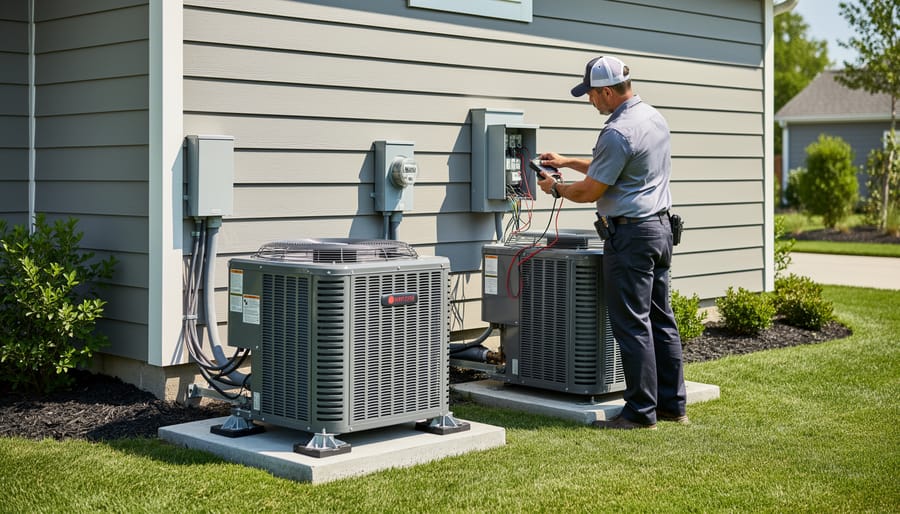
Electrical and Structural Requirements
Before investing in an outdoor heating and cooling unit, you’ll need to evaluate whether your space can properly support it. The good news is that most outdoor areas can accommodate these systems with some planning.
First, consider your power supply. These units typically require a dedicated 220-240 volt electrical circuit, similar to what powers your indoor HVAC system. You’ll need a qualified electrician to assess your current electrical panel’s capacity and install the appropriate wiring and disconnect box near the unit’s location. Don’t try to run these systems on standard outdoor outlets—they simply won’t provide enough power.
Next, think about placement and mounting. Most outdoor units need a stable, level surface like a concrete pad or reinforced platform. The area should allow for adequate airflow around all sides, typically requiring at least two feet of clearance. If you’re mounting the unit on an exterior wall, ensure the structure can support the weight, which usually ranges from 100 to 200 pounds.
Finally, consider protection from the elements. While these units are weatherproof, positioning them under an overhang or pergola can extend their lifespan and efficiency. Just remember to maintain proper ventilation—you want to protect your investment while letting it breathe and perform at its best.
Finding the Right Professional
Selecting the right HVAC professional for your outdoor heating and cooling unit installation can make all the difference between a system that performs beautifully for years and one that causes endless headaches. Start by looking for technicians who specialize in outdoor installations rather than just indoor systems. These outdoor-focused professionals understand the unique challenges of weatherproofing, proper drainage, and exposure to the elements that indoor-only technicians might overlook.
When interviewing potential contractors, ask about their specific experience with outdoor unit installations. How many have they completed in the last year? Can they provide references from homeowners with similar setups? Don’t hesitate to request photos of previous outdoor installations to assess the quality of their work, particularly how they’ve handled electrical connections, mounting systems, and weather protection.
Insurance and licensing are non-negotiable. Verify that your chosen technician carries both liability insurance and workers’ compensation coverage. This protects you from potential accidents during installation and ensures accountability if something goes wrong.
Ask detailed questions about their recommended placement for your specific property. A qualified professional should conduct a thorough site assessment, considering sun exposure, shade patterns, wind directions, and proximity to your outdoor living areas. They should also discuss integration with your existing outdoor features and any eco-friendly options available.
Finally, request a detailed written estimate that breaks down equipment costs, labor, and any additional materials needed. The cheapest bid isn’t always the best choice—focus on value, experience, and peace of mind for this important investment in your outdoor comfort.
Energy Efficiency and Operating Costs
How They Compare to Patio Heaters and Portable ACs
When comparing dual-function outdoor heating and cooling units to outdoor heating solutions like patio heaters or portable air conditioners, the upfront cost tells only part of the story. While a combined unit typically costs more initially—ranging from $800 to $3,000—than buying a standalone patio heater, you’re essentially getting two appliances in one footprint.
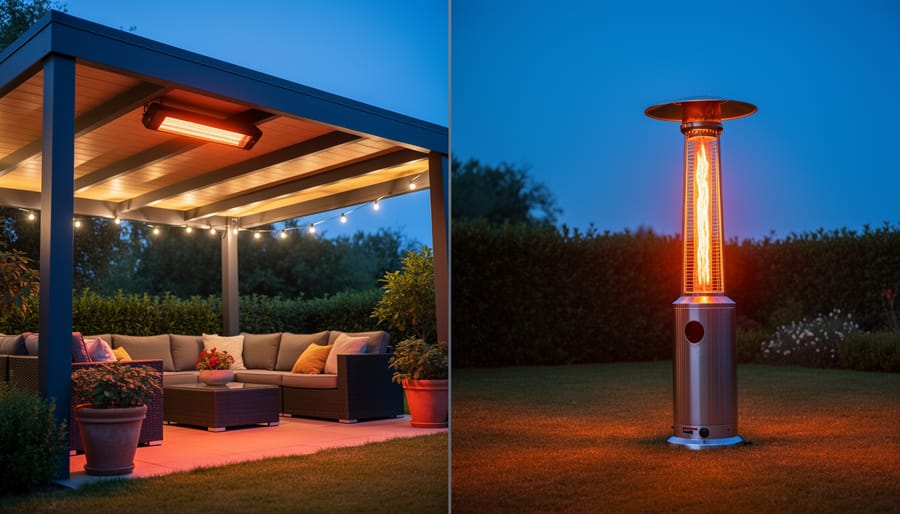
Patio heaters excel at creating that cozy, radiant warmth perfect for cool evenings, while portable ACs can handle summer heat but struggle outdoors. Dual units offer convenience and space-saving benefits, but they won’t replicate the ambiance of a fire feature or the focused heat of traditional outdoor heating methods.
The long-term value shines through reduced storage needs, simplified maintenance of one unit versus two, and energy efficiency—many dual systems use inverter technology that adjusts output based on need. For homeowners seeking versatility and year-round functionality without cluttering their outdoor space, these units complement rather than replace the warmth and character that traditional fire features bring to outdoor living.
Eco-Friendly Benefits Worth Considering
If you’re working toward a more sustainable lifestyle, outdoor heating and cooling units deserve a closer look. Unlike traditional propane patio heaters or wood-burning outdoor fireplaces that rely on combustion, heat pumps operate on electricity and transfer existing heat rather than generating it through burning fuel. This fundamental difference means significantly lower carbon emissions, especially when powered by renewable energy sources or cleaner grid electricity.
These units typically consume less energy than conventional heating methods while providing both heating and cooling functions in one system. That versatility means you’re investing in year-round comfort without purchasing separate appliances, reducing overall resource consumption and waste. Many modern heat pump systems use eco-friendly refrigerants with lower global warming potential than older models.
For homeowners already committed to green living choices, outdoor heat pumps complement other sustainable features like solar panels beautifully. They’re also whisper-quiet compared to noisy generators or gas heaters, preserving the peaceful ambiance of your outdoor space. While they work alongside your cherished fire features for atmosphere, heat pumps handle the practical climate control with minimal environmental impact. It’s a partnership that lets you enjoy outdoor living responsibly without compromising on comfort or charm.
Maintenance and Safety Guidelines
Seasonal Maintenance Checklist
Keeping your outdoor heating and cooling unit in peak condition doesn’t require a degree in HVAC, but it does need consistent attention throughout the year. Before each cooling season, clear away any debris, leaves, or dirt that have accumulated around the unit. A gentle rinse with your garden hose can work wonders for the exterior fins and coils. Check that nothing is blocking airflow—remember, your unit needs breathing room just like outdoor fireplaces and fire pits need proper ventilation.
Each month during active use, inspect and replace air filters as needed. This simple task can dramatically improve efficiency and lower your energy bills. Listen for unusual sounds and watch for any changes in performance—these are often early warning signs that something needs attention.
However, some tasks belong in professional hands. Schedule annual service visits with a certified technician before heavy-use seasons begin. They’ll check refrigerant levels, test electrical connections, calibrate thermostats, and catch potential problems before they become expensive repairs. Think of professional maintenance as an investment in your outdoor comfort and the system’s longevity, ensuring many seasons of reliable performance ahead.
Safety Considerations for Outdoor Installation
When integrating heating and cooling units into your outdoor living space, safety should always be your top priority. These electrical systems require proper grounding and GFCI-protected outlets to prevent shocks, especially in wet conditions. Position units at least three feet away from combustible materials like wooden decks, outdoor furniture, or pergola supports. Ensure your installation includes weatherproof electrical connections rated for outdoor use, and consider adding a dedicated circuit to handle the unit’s power requirements safely. Professional installation is strongly recommended to meet local electrical codes and manufacturer specifications. Regular maintenance checks should include inspecting cords for damage, clearing debris from vents, and ensuring drainage systems function properly to prevent water accumulation. During severe weather, unplug portable units and store them in protected areas. By following these guidelines alongside your other outdoor heating elements like fire pits or patio fireplaces, you’ll create a comfortable, safe environment for year-round enjoyment.
Creating the Complete Outdoor Living Experience
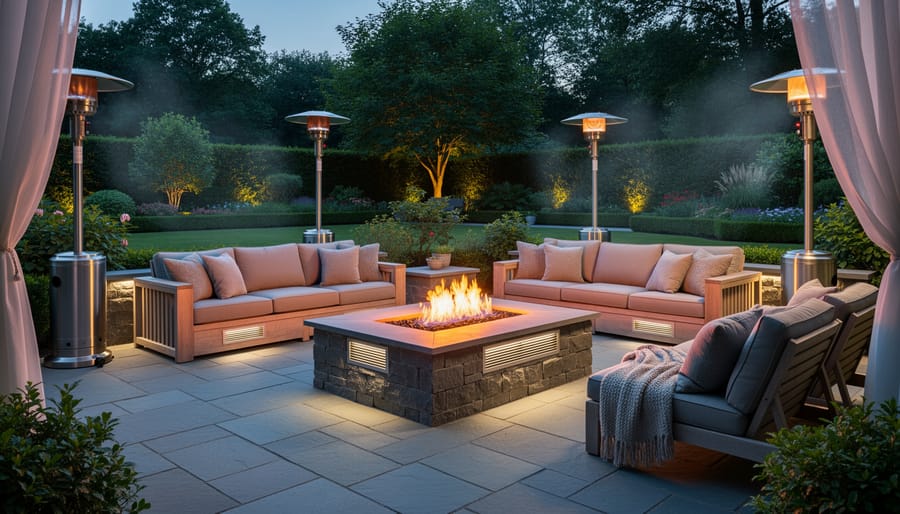
Pairing with Outdoor Fireplaces and Fire Features
Think of outdoor heating and cooling units and fire features as best friends rather than competitors in your outdoor living space. While a beautiful fireplace or fire pit creates that irresistible gathering spot with flickering flames and crackling sounds, heating and cooling units work behind the scenes to maintain consistent comfort throughout your entire patio or deck area.
The magic happens when you layer these solutions together. Your outdoor fireplace becomes the visual and emotional centerpiece, drawing people in with its warmth and ambiance, while the heating unit ensures everyone stays comfortable, even those seated away from the flames. On cooler evenings, the fireplace provides focused radiant heat for intimate gatherings, while the heating function extends your outdoor season by tempering the chill in surrounding areas.
This combination approach is particularly effective for larger outdoor spaces where a single fire feature can’t adequately heat every zone. You’re not choosing between ambiance and practicality—you’re creating a complete comfort ecosystem. Plus, on milder days when you want the cozy atmosphere without intense heat, you can enjoy your fire feature while the cooling function keeps the space pleasant. It’s about building flexibility into your outdoor lifestyle, ensuring every season brings maximum enjoyment.
Design Integration Tips
Your outdoor heating and cooling unit doesn’t have to be an eyesore in your carefully designed patio space. Modern units come in sleek, neutral colors that blend seamlessly with outdoor furniture and architectural elements. Consider positioning your unit behind decorative screens, lattice panels, or tall planters filled with evergreens to mask its presence while maintaining proper airflow. If you’re planning a complete outdoor living area, work with your landscaper to create a dedicated equipment zone that’s tucked away but accessible for maintenance. Many homeowners successfully integrate these units by matching the unit’s finish to existing outdoor features like metal railings or furniture frames. Remember, strategic placement near natural sight-line breaks—like the corner of a deck or alongside an existing outdoor fireplace—helps the unit disappear into your design rather than dominate it. The goal is creating a comfortable outdoor environment where technology enhances your experience without disrupting the warm, inviting atmosphere you’ve worked to achieve.
Investing in an outdoor heating and cooling unit is ultimately about creating a space you’ll actually use throughout the changing seasons. These dual-function systems represent more than just climate control—they’re an investment in extending your home’s living area beyond four walls, transforming your patio, deck, or outdoor room into a genuine year-round retreat.
Think about how you envision using your outdoor space. Perhaps you’re imagining cool summer evenings without the oppressive humidity, or crisp autumn gatherings where your guests stay comfortable well past sunset. Maybe you dream of enjoying your morning coffee outside even on chilly spring mornings. An outdoor heating and cooling unit makes these experiences not just possible, but genuinely enjoyable.
These systems work beautifully alongside traditional outdoor ambiance elements, complementing rather than replacing the warmth and character that fire features bring to your outdoor environment. Consider how climate control handles the practical comfort needs while your outdoor fireplace or fire pit creates that inviting focal point that draws people together.
Take time to evaluate your outdoor space honestly. How often do you avoid it because of temperature extremes? What gatherings have you postponed or cut short due to weather? The answers might reveal that dual-function climate control could genuinely transform how you live and entertain at home.