

Walk through your home on a cold winter morning and notice which rooms feel like the Arctic while others stay toasty warm. That temperature difference isn’t just uncomfortable—it’s costing you money and forcing your heating system to work overtime. Ductwork balancing solves this frustrating problem by ensuring heated air flows evenly throughout every room, eliminating those cold spots that make you pile on extra blankets or crank up the thermostat.
Think of your duct system as a network of highways delivering warm air to different destinations. When one route gets too much traffic and another gets too little, the whole system becomes inefficient. Balancing adjusts the airflow at each vent, creating consistent temperatures room by room. This process involves measuring air pressure at supply registers, adjusting dampers inside your ductwork, and fine-tuning the distribution until every space receives its fair share of heated air.
The benefits extend beyond comfort. Properly balanced ductwork reduces energy waste by preventing your furnace from running longer cycles to heat neglected rooms. It also helps supplemental heating sources like fireplaces work more effectively, since you’re not fighting against an uneven distribution system. Cold rooms often indicate sealed-off or restricted ducts that need professional attention, while overheated spaces usually mean too much unrestricted airflow that needs dampening. Understanding these dynamics transforms your home from an uncomfortable patchwork of hot and cold zones into a consistently warm, efficient living space.
The Real Reason Your Fireplace Room Is Toasty While the Bedroom Freezes
Understanding Air Pressure and Your Ductwork
Think of your ductwork like a network of garden hoses delivering air throughout your home. Just as water flows more easily through a straight, clean hose than one that’s kinked or clogged, air moves best through smooth, properly sized ducts. When you turn on your heating system, the blower creates pressure that pushes warm air through these pathways to every room.
Here’s where things get interesting. Not all paths are created equal. A room closer to your furnace with a short, straight duct run will naturally receive stronger airflow than a distant bedroom at the end of a long, twisting duct path. It’s like choosing between a direct route and a winding back road – the shorter path always wins.
Resistance builds up from several sources: tight corners that force air to change direction, undersized ducts that create bottlenecks, and leaks where conditioned air escapes into your attic or walls. Even dust buildup inside ducts acts like cholesterol in arteries, restricting flow. These same air circulation issues can affect how well your fireplace draws and how efficiently warmth spreads throughout your living spaces.
The result? Some rooms become stuffy and warm while others remain perpetually chilly, forcing your system to work harder and driving up energy costs. Understanding these basics helps you see why balancing your ductwork isn’t just about comfort – it’s about creating an efficient, eco-friendly heating system that works harmoniously with all your home’s warmth sources.
Signs Your Ducts Are Out of Balance
Your home gives you clear signals when your ductwork isn’t balanced properly. The most obvious sign is noticeable temperature differences between rooms. You might find your bedroom freezing while the living room feels toasty, or one side of your house stays chilly no matter how high you crank the thermostat.
Pay attention to the airflow coming from your vents. If some registers blow strong while others barely whisper, that’s a red flag. This uneven distribution means your HVAC system is working overtime in some areas while neglecting others, which directly impacts your comfort and how efficiently supplemental heat sources like your fireplace can work.
Rooms that never quite reach a comfortable temperature are another telltale sign. These problem spots often force you to make constant thermostat adjustments throughout the day, trying to find a setting that works for the whole house. Spoiler alert: you won’t find one until the ductwork is balanced.
Your energy bills tell a story too. If they’ve been creeping up despite no changes in your heating habits, unbalanced ducts could be the culprit. The system runs longer and works harder trying to compensate for poor air distribution.
Finally, excessive dust in certain rooms or noisy ductwork when your system runs can indicate pressure imbalances. These issues not only affect comfort but can strain your entire heating system. Improving airflow distribution through proper duct balancing helps your central heating and fireplace work together harmoniously, creating the warm, inviting home you deserve.
What Duct Balancing Actually Does
The Role of Dampers in Your Ductwork
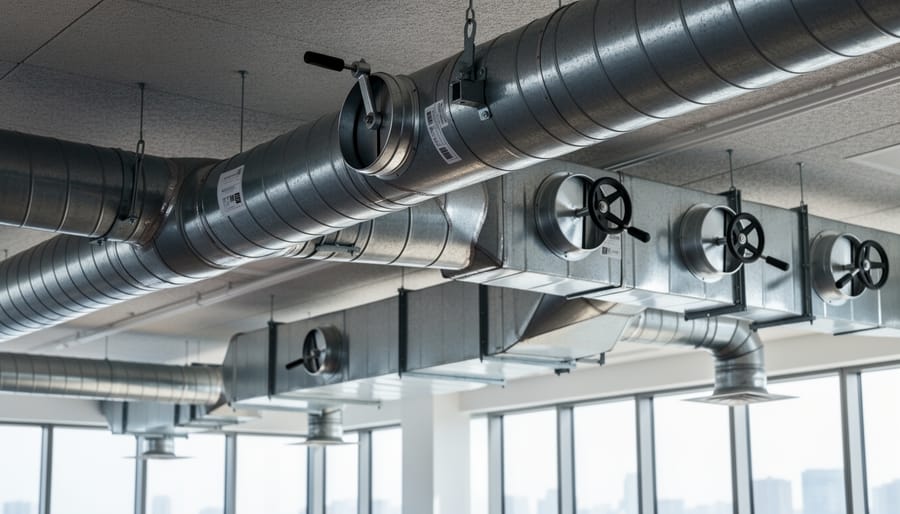
Think of dampers as adjustable gates inside your ductwork that control how much air flows to each room. These metal plates sit within your ducts, typically at branch points where the main trunk line splits off to serve different areas of your home. You’ll usually find them near registers or where ducts connect to your main system, though they’re often hidden behind walls or in your basement or attic.
By opening or closing these dampers, you can direct more heated air to rooms that need it and less to spaces that tend to overheat. It’s like fine-tuning the balance of warmth throughout your entire home. A skilled HVAC technician adjusts these dampers by loosening a small wingnut and rotating the plate to increase or decrease airflow, then locking it back in place.
This matters tremendously if you’re heating with a fireplace as your primary or supplemental heat source. When you light up your fireplace, that room naturally gets warmer while other areas might feel chilly. Properly adjusted dampers let you compensate by reducing forced air to the fireplace room and directing more heated air to cooler zones. This creates a comfortable, even temperature throughout your home without fighting against your fireplace’s natural warmth.
Without balanced dampers, your central heating system works overtime trying to heat the already-warm fireplace room, wasting energy and leaving distant rooms cold. Getting your dampers properly adjusted creates harmony between your whole-home heating and that cozy fireplace ambiance you love.
How Duct Sealing and Balancing Work Together
Finding and Fixing Duct Leaks
Before you can balance your ductwork effectively, you need to address any leaks that might be sabotaging your comfort. Even small leaks can waste up to 30% of your heated air, leaving rooms cold and your energy bills unnecessarily high.
Start your inspection at the most common trouble spots: joints where duct sections connect, areas around vents and registers, and anywhere ducts pass through walls or floors. On a cool day, hold your hand near these connections while your system runs. Feel for escaping air. You can also use a lit incense stick near suspected leaks and watch for telltale smoke movement.
Check your attic and basement carefully, as these are prime locations for deteriorated connections. Look for visible gaps, separated joints, or sections that have pulled apart over time. Even ductwork serving your fireplace zones needs this attention to ensure supplemental heating works efficiently alongside your central system.
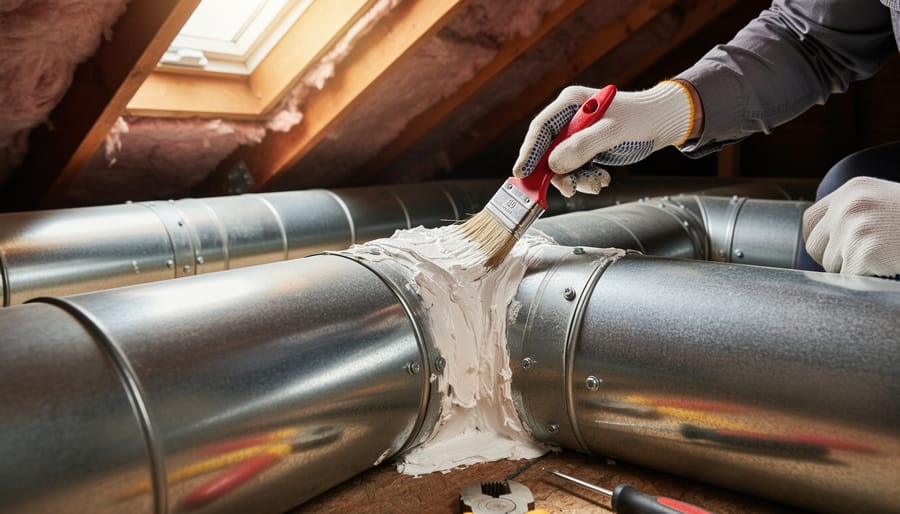
Here’s an important myth to bust: standard duct tape is actually terrible for sealing ducts. Despite its name, it deteriorates quickly under temperature changes. Instead, use mastic sealant or metal-backed foil tape specifically designed for HVAC applications. These products create lasting, airtight seals that can handle the temperature variations your ducts experience.
For accessible straight runs and visible connections, sealing leaks is definitely a DIY-friendly project. However, if you’re dealing with extensive damage, hard-to-reach areas, or you’re unsure about the severity of your leaks, calling an HVAC professional makes sense. They have specialized equipment like duct blasters that can quantify exactly how much air you’re losing.
The Balancing Process Step-by-Step
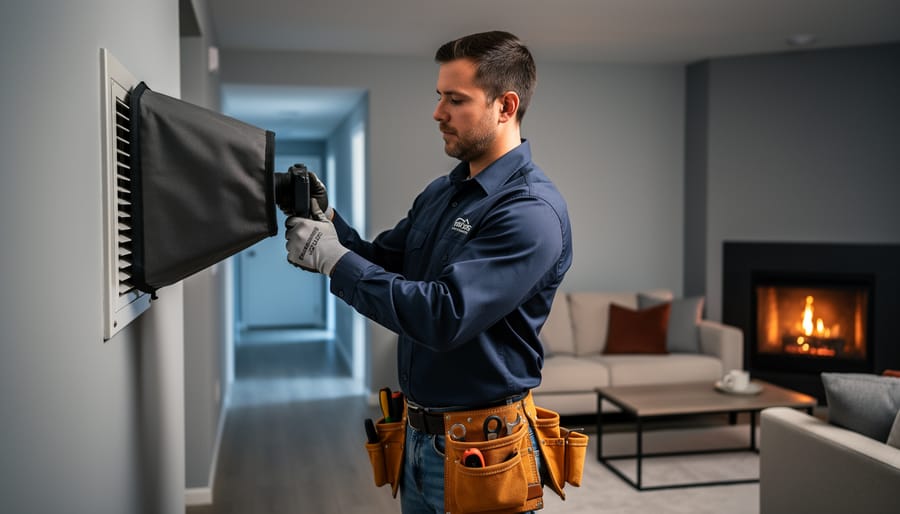
Balancing your ductwork isn’t as mysterious as it sounds, though it does require patience and some detective work. The process starts with measuring airflow at each vent throughout your home. Professionals use tools called anemometers or flow hoods to get precise readings, but homeowners can get a general sense using the tissue test—hold a tissue near each vent and notice how forcefully it’s pulled. Write down your observations room by room.
Next comes calculating proper distribution. A balanced system doesn’t mean equal airflow everywhere—it means each room gets the right amount based on its size and heating needs. Your master bedroom needs more conditioned air than a small bathroom. This is where professional help really shines, as HVAC technicians use load calculations to determine ideal distribution.
The actual adjustment happens at the dampers, which are levers or handles on your ductwork that control airflow. Located inside the ducts or at vent boots, you’ll adjust these to reduce flow to over-served rooms and increase it to under-served areas. Start conservatively—small adjustments make a bigger difference than you’d expect.
Testing and fine-tuning is the final step. After adjustments, live with the changes for a few days during typical weather. Notice which rooms feel comfortable and which still need attention. This iterative process might take several rounds.
For DIY enthusiasts, basic damper adjustments are manageable if you can access your ductwork safely. However, homes with complex layouts, significant comfort problems, or those integrating multiple heating sources benefit enormously from professional balancing. A trained technician brings specialized equipment and experience that ensures your system—whether it’s supporting your central heating or working alongside a cozy fireplace—delivers consistent comfort throughout your home.
Making Your Fireplace and Central Heating Work in Harmony
Zone Control Strategies for Multi-Heat Homes
When you’re heating your home with both a central HVAC system and a fireplace, balancing your ductwork becomes a dynamic dance that changes throughout the day and season. The key is adjusting your dampers based on which heat sources are actively running.
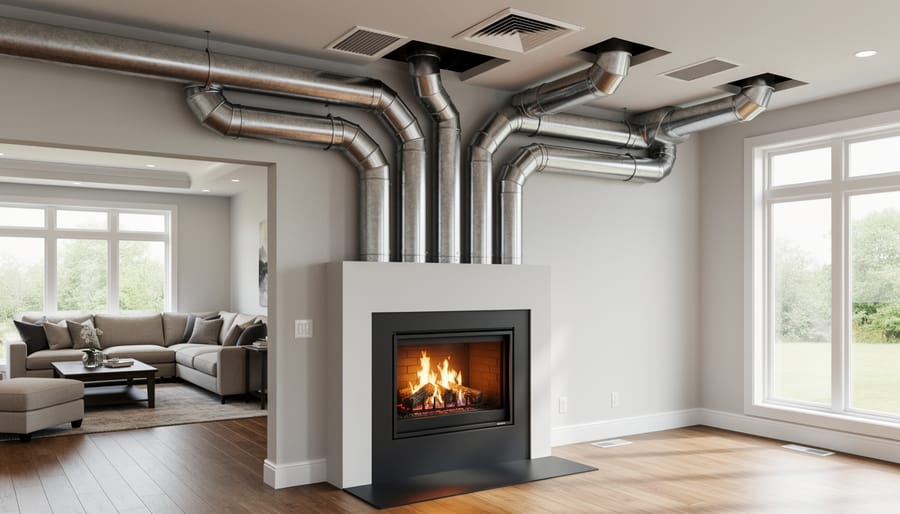
When your fireplace is blazing, you’ll want to partially close dampers in the room where it’s located. This prevents your furnace from pumping heated air into an already-warm space, wasting energy and creating uncomfortable hot spots. Instead, that conditioned air redirects to cooler areas of your home. Think of it as teamwork between your heating systems rather than competition.
Seasonal adjustments matter too. During winter months when you’re using your fireplace regularly, mark your damper positions so you can easily switch between fireplace mode and standard heating. In shoulder seasons when the fireplace stays dark, open those dampers fully to ensure even distribution from your central system.
Smart thermostats take this strategy to the next level. Modern models can detect temperature differences between rooms and signal when to adjust airflow. Some even integrate with air circulator fans to help move fireplace heat throughout your home more efficiently. You can program specific damper positions for different scenarios, making zone control nearly automatic.
Keep a simple log of your damper settings for various heating situations. This practical approach ensures consistent comfort while maximizing the eco-friendly benefits of using multiple heat sources strategically. Your home becomes more efficient, your energy bills shrink, and every room stays comfortable.
Energy Savings and Comfort Benefits You’ll Actually Notice
When your ductwork is properly balanced, the improvements show up where it matters most: in your wallet and your everyday comfort. Let’s talk about the real benefits you’ll actually experience.
First, your energy bills will drop noticeably. Balanced ductwork means your heating system doesn’t have to work overtime trying to compensate for rooms that aren’t getting enough heat. Most homeowners see energy savings of 15-30% after balancing their ductwork, with some seeing even greater reductions when combined with regular HVAC maintenance. That’s money back in your pocket every single month.
Comfort improvements are immediate and obvious. Those cold bedrooms you’ve been avoiding? They’ll finally match the temperature of the rest of your home. You’ll stop battling over the thermostat because different rooms won’t feel like different climate zones anymore.
Your furnace will thank you too. When airflow is balanced, your heating system cycles on and off as designed rather than running continuously. This reduces wear and tear, extending your equipment’s lifespan and preventing costly breakdowns.
Air quality gets a boost as well. Balanced ductwork ensures proper circulation throughout your home, reducing stale air pockets and helping your air filters work more effectively.
Here’s something fireplace enthusiasts will love: balanced ductwork makes your fireplace work better as a supplemental heat source. When your central heating distributes evenly, you can rely on your fireplace to warm common areas while the HVAC system maintains comfortable temperatures in the rest of the house. It’s the perfect harmony between ambiance and efficiency, creating that cozy whole-home warmth without wasteful energy use.
DIY Balancing Versus Hiring a Professional
What to Expect From a Professional Duct Balancing Service
A professional duct balancing service typically begins with a comprehensive assessment of your home’s airflow patterns. The technician will measure temperature differentials between rooms, test air pressure at each register, and evaluate your existing duct system using specialized equipment. Most services take between two to four hours for an average-sized home, with costs ranging from $300 to $800 depending on your home’s size and complexity.
Before hiring a contractor, ask about their certification credentials, whether they use calibrated instruments, and if they’ll provide a detailed report of before-and-after measurements. A quality service should include adjustments to dampers, recommendations for any necessary duct repairs, and guidance on optimal register settings throughout different seasons.
Expect reputable contractors to guarantee their work for at least one year and provide documentation showing improved airflow balance. They should also explain how proper balancing enhances your entire heating system, including how it helps your fireplace or other supplemental heating sources work more efficiently by reducing the burden on your central system. Quality professionals will take time to answer your questions and ensure you understand the improvements being made to your home’s comfort system.
Creating a truly cozy, efficiently heated home isn’t just about choosing the right fireplace or cranking up the thermostat. Ductwork balancing is the often-overlooked foundation that makes everything work together harmoniously. When your ducts are properly balanced, your central heating system and supplemental heat sources like fireplaces can complement each other beautifully, delivering comfort to every corner of your home without wasted energy or frustrating cold spots.
The good news? You can start improving your home’s heating balance today. Begin with simple steps like checking for obvious air leaks around duct connections, ensuring vents aren’t blocked by furniture, and adjusting dampers in problem areas. If you’re experiencing persistent issues, a professional duct assessment can reveal exactly where improvements will make the biggest difference.
Think of duct balancing as an investment in your family’s comfort and your home’s efficiency. Whether you’re enjoying the ambiance of a crackling fire or relying on your heating system during the coldest months, balanced ductwork ensures that warmth reaches everywhere it should. Your home deserves to feel welcoming in every room, and proper duct balancing is how you make that vision a reality.